





RyoCity
Between Sea and Light
Honfleur, France
RyoCity
Between Sea and Light
Honfleur, France
2.6 km
Distance
1h00
Durée
20
Audios
Boucle
Parcours
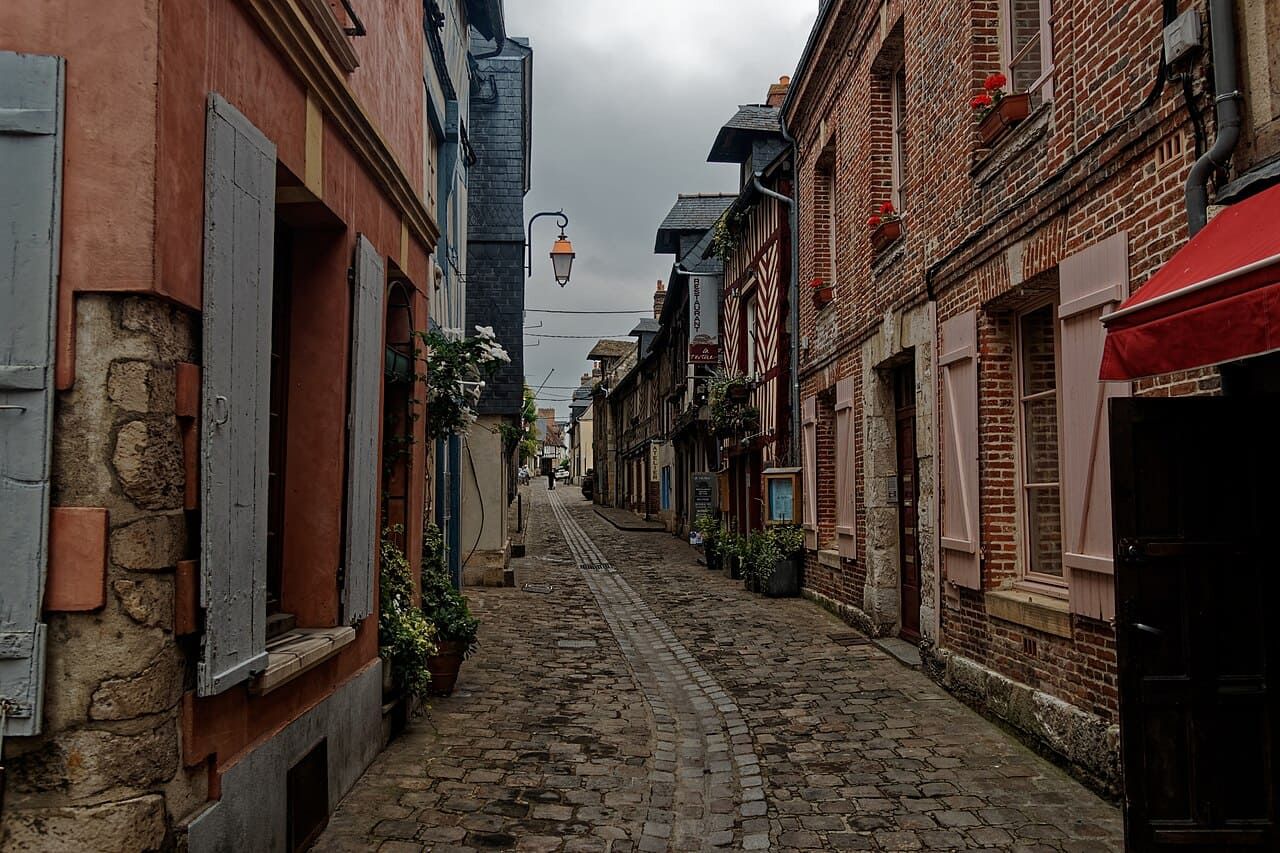
©Txllxt TxllxT CC BY-SA 4.0.
You’ve now stepped into Rue de l’Homme de Bois, in english, The Wooden Man: a name as mysterious as it is intriguing, and one that’s sparked plenty of debate. So where does it come from? The truth is, no one really knows for sure. The most common explanation points to a carved wooden sign that once decorated a house here. Back in the days before street numbers, carved figures like this served as landmarks to identify homes. L’homme de Bois may have been one of those markers, eventually giving its name to the entire street. But there’s another theory, and it’s a darker one. In the eighteenth century, Honfleur was one of France’s major slave-trading ports. At that time, enslaved people were cruelly referred to as “ebony wood,” a term that evoked the dark color of the timber while reducing human beings to mere merchandise. Some believe that the name of the street may be a distortion of that chilling expression. And then there’s a softer version, a local legend about a sailor from Honfleur who once saved a man from Africa. The street, they say, was named in memory of that unlikely friendship. So between a vanished sign, a painful memory, and a story of fraternity, the name remains uncertain. If you look up at number 27, you’ll spot a face carved into the facade. It isn’t the original medieval figure but a modern reconstruction that keeps the mystery alive. Take a moment when you pass by: is this the wooden man who gave the street its name, or just a nod to the legend? That part’s left to your imagination. Today, this street is known for its old houses and art galleries, but its name still stirs curiosity in everyone who walks along it.
