





RyoCity
A Matter of Time
Besançon, France
RyoCity
A Matter of Time
Besançon, France
5.3 km
Distance
2h10
Durée
26
Audios
Boucle
Parcours
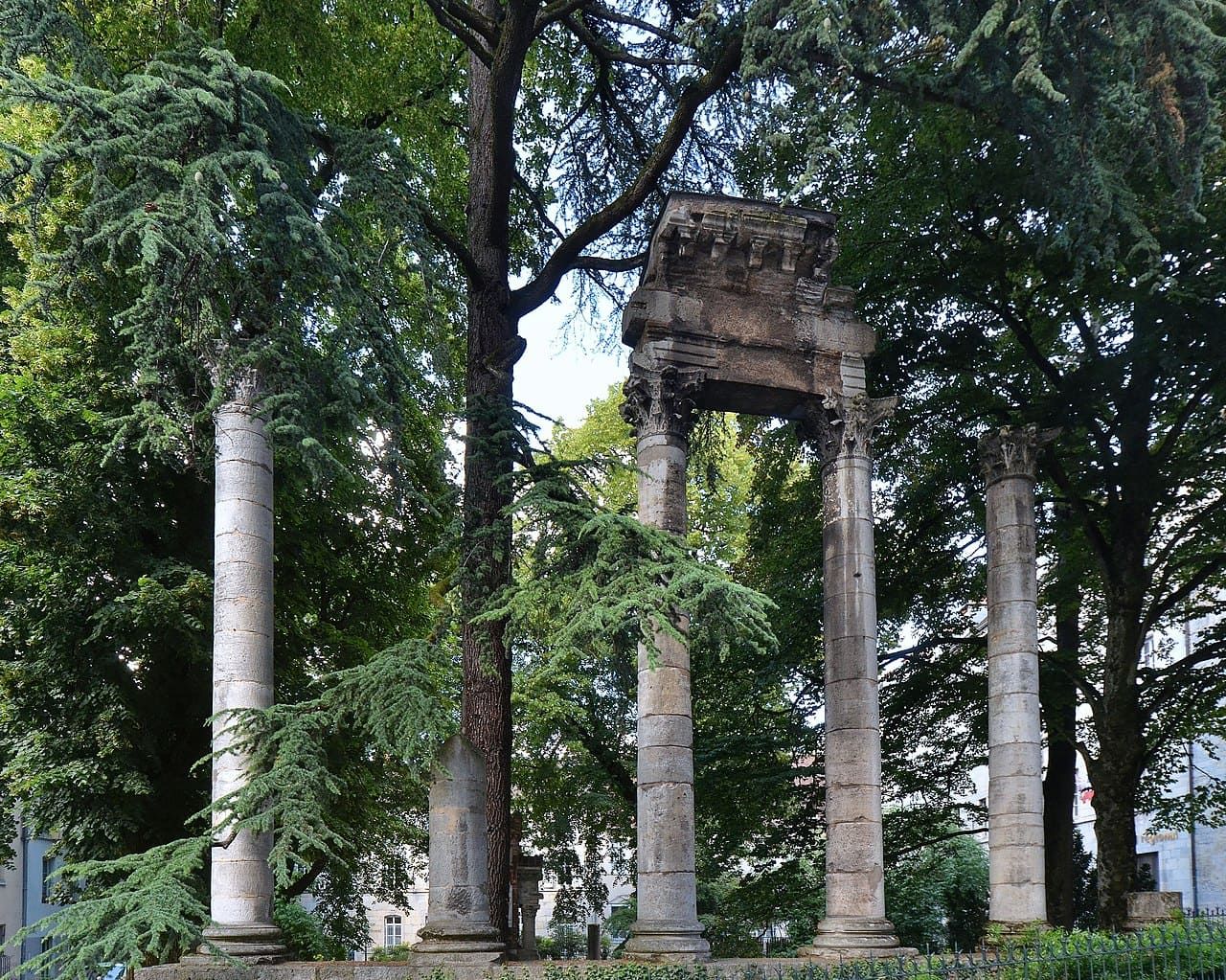
©Patrick CC BY-SA 2.0. <https://creativecommons.org/licenses/by-sa/2.0/deed.fr>via Wikipedia Commons
Square Castan is known by every local in Besançon. But for first-time visitors to the city, this might feel like a step into the unknown. This is the perfect time to learn more about this place. Back in 1870, a local archaeologist and librarian named Auguste Castan launched an excavation right here, and his instincts were spot on. He uncovered eight Corinthian columns, the remains of a semicircular structure, and traces of a water distribution basin. It’s estimated that these remains date back to the 2nd or 3rd century, when Besançon was still known as Vesontio, an important Gallo-Roman city. But the exact purpose of the site remains a matter of debate. Some imagine it was an ancient theatre, others think it could’ve been a podium bordering a public esplanade, or even a nymphaeum, a kind of ornamental fountain or water reservoir. Since no theory has been proven, the mystery remains unsolved. The area was transformed into an English-style garden in 1874, which has since showcased these Roman fragments. Twelve years later, the ruins were listed as historic monuments, a well-deserved title for these remarkable witnesses of the past.
