



RyoCity
The Phoenix City of the Atlantic
Royan, France
RyoCity
The Phoenix City of the Atlantic
Royan, France
3.2 km
Distance
1h30
Durée
17
Audios
Boucle
Parcours
©Jack ma CC BY SA 3.0. <https://creativecommons.org/licenses/by-sa/3.0/deed.fr>via Wikipedia Commons
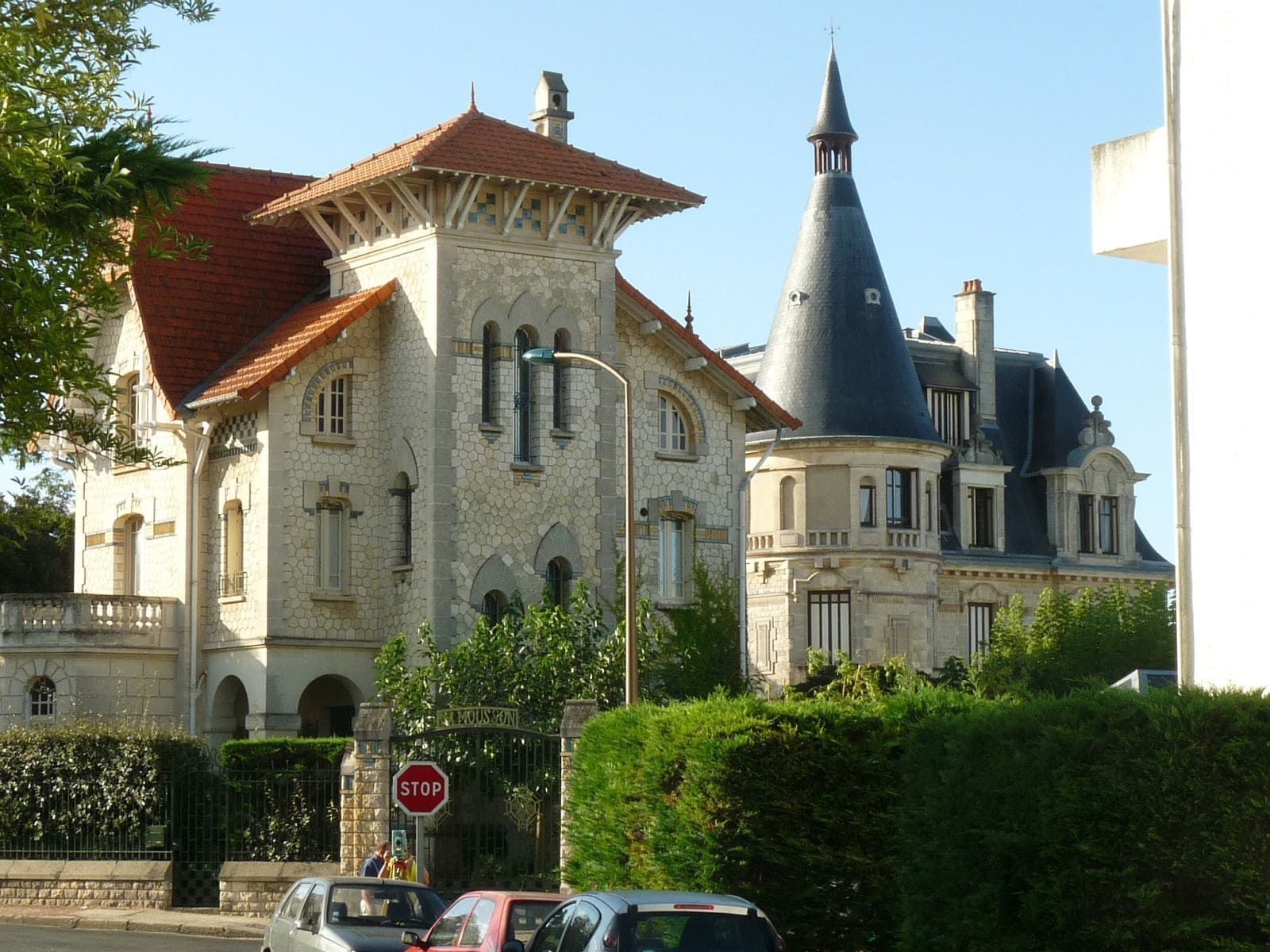
The boulevard to your left is Boulevard Frédéric-Garnier, one of Royan’s most beautiful promenades. It runs alongside the Grande Conche beach and through the Parc district, an area miraculously spared from the bombings of 1945. That means a walk along here will take you past an exceptional heritage, the last grand seaside villas built before the war, survivors of the Belle Époque. Laid out in the 1880s, Boulevard Garnier was one of Royan’s very first major urban projects. These houses reflect the city’s golden age, when the Bordeaux elite, and later Parisians, came here for their seaside holidays. Local architect and builder Henry Boulan, a key figure in Royan’s history, designed many of the villas you’ll see along the waterfront or set back from the road, each with ornate details and a distinctive style. Of the four thousand villas that stood in Royan before the Second World War, only about two hundred and fifty remain, and many of them are here, lining this boulevard. It’s an open-air museum of seaside architecture, where several signature styles coexist: the chalet style, with its carved wooden balconies; the castel style, inspired by medieval castles; and the cottage style, more Anglo-Saxon, with steep roofs and bow windows. Some villas have remarkable stories. At number 100, Villa Aigue-Marine, nicknamed “Chambord by the Sea”, was once home to photographer Jacques-Henri Lartigue. A little further down, at number 38, Villa Rose Rouge became the residence of actor Sacha Guitry from 1926. Writer Émile Zola also stayed on this boulevard, in two villas that have since been transformed: “Le Rêve” at number 58 and “Les Arcades” at number 52. Today, most are still lived in or converted into apartments, but their façades, protected as part of the local heritage, still preserve all the charm of prewar Royan.