



RyoCity
Open to the World
Hamburg, Germany
RyoCity
Open to the World
Hamburg, Germany
8 km
Distance
3h10
Durée
25
Audios
Boucle
Parcours
Shutterstock
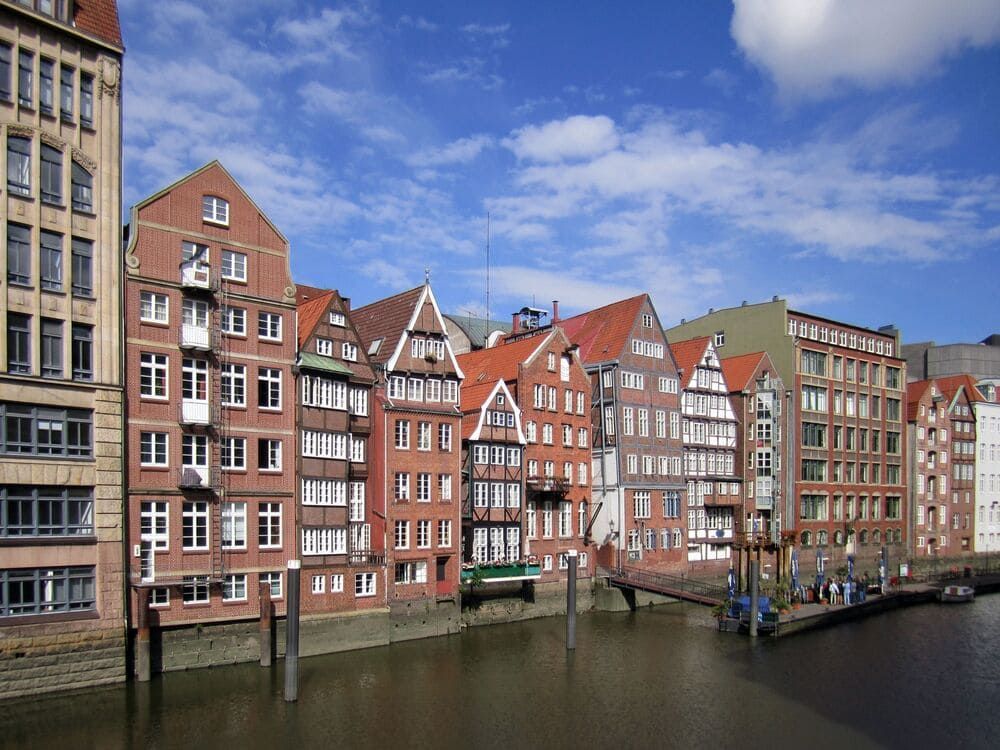
You’ve now arrived on Deichstrasse, which translates to “Dike Street.” This historic street holds a special place in Hamburg, as it’s the only remaining glimpse of what the city looked like in the 15th and 16th centuries. At the start of the modern era, Hamburg experienced a major population boom and had to expand onto the dikes. The few townhouses you see here today are typical of that time and remarkably survived both the Great Fire of 1842 and the heavy bombings of 1943. These houses were innovative for their time, combining a living space, workspace, and storage under one roof. You’ll notice that the street-facing façades look very different from the canal-facing sides, which were equipped with barns, loading hatches, and pulley systems to unload goods directly from the barges. You’ll get a closer look at that side in just a bit. Number 37 is the most significant house on the street. It’s the last surviving Baroque merchant house built in the so-called “outer-dike style,” dating all the way back to 1686. After the Great Fire of 1842, which started on this very street and destroyed 1,700 houses, the trend shifted towards separating work and home life. Wealthy merchants began building their residences in the suburbs, returning to the city centre only to go to the office. That shift gave rise to a brand-new concept, the office building. In the 1970s, the city council planned to demolish the entire street. In response, a grassroots movement formed the “Save the Deichstrasse” association. Thanks to generous donations, the group restored the houses and preserved the street’s historical and touristic significance.