





RyoCity
See Naples and Die
Naples, Italy
RyoCity
See Naples and Die
Naples, Italy
3.8 km
Distance
1h30
Durée
19
Audios
Boucle
Parcours
Shutterstock
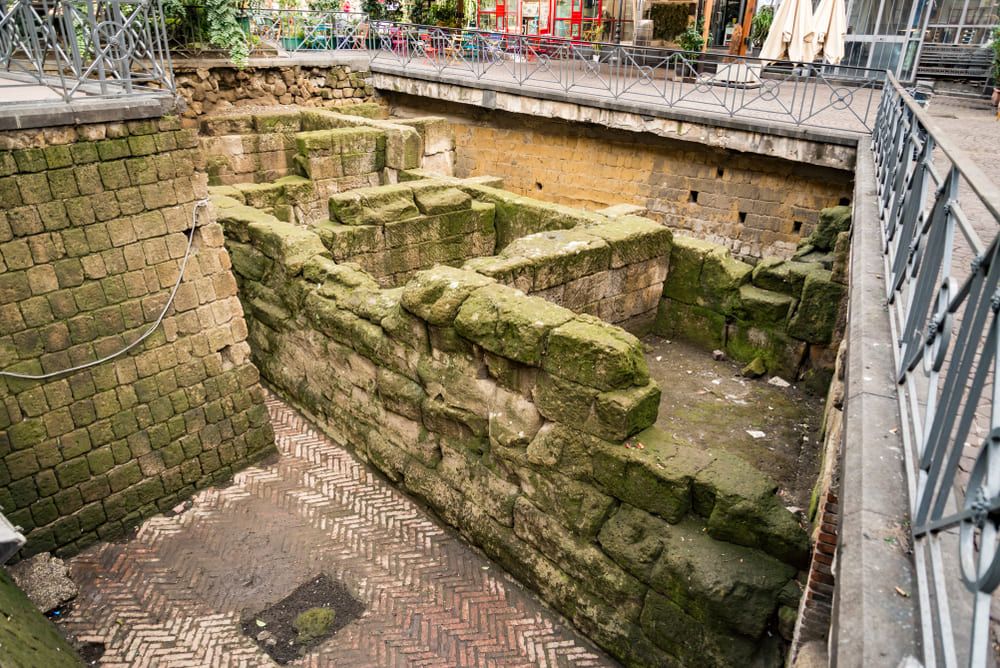
You’ve arrived at the charming Piazza Bellini, a cozy spot where colorful façades, café terraces, greenery, and ancient Greco-Roman ruins come together to capture the simple joys of Naples. It’s the perfect place to pause for a drink away from the city’s hustle and bustle. The square dates back to the 17th century and was once surrounded by grand palaces and the monastery of Sant’Antonio, which today houses the library of Naples’ Faculty of Arts and Philosophy. In the center stands a statue of the composer Vincenzo Bellini, alongside the remains of the ancient Neapolis city wall uncovered in 1954. Neapolis, meaning “new city,” is a quintessential Greek naming convention. Parthenope, the original settlement by the bay, became Paleopolis, aka the “old city,” and the newer city, Neapolis, emerged where Naples’ historic center now stands and took center stage. Over time, the name Neapolis would be linguistically shortened to simply Napoli. And that’s how Naples got its name.
