





RyoCity
Japan’s lively and food-loving scene
Osaka, Japan
RyoCity
Japan’s lively and food-loving scene
Osaka, Japan
4 km
Distance
1h45
Durée
19
Audios
Boucle
Parcours
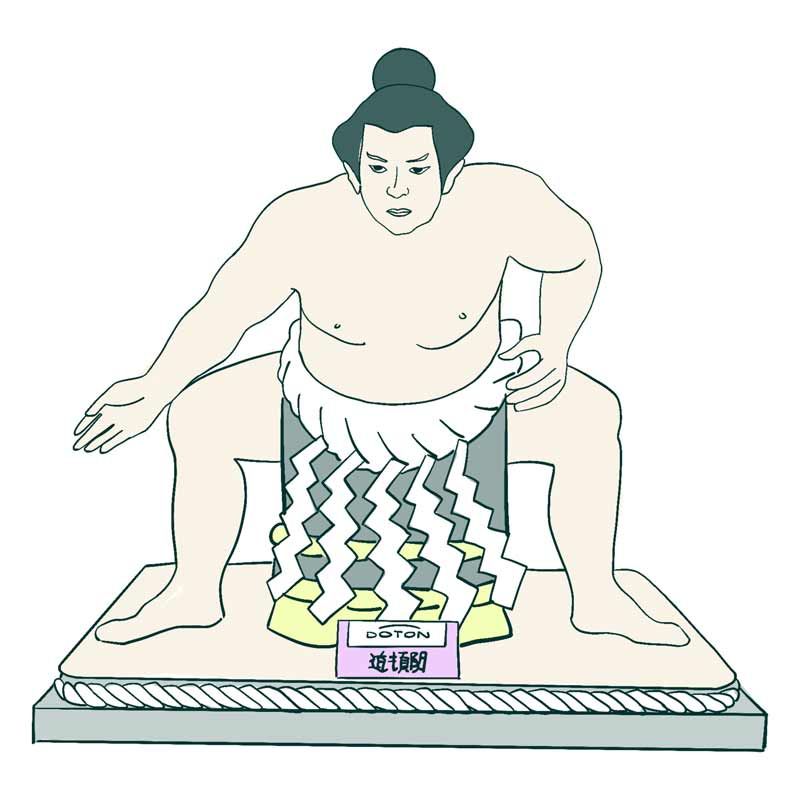
Take a look to your right, or step a little closer to the shop located there. Right at the entrance stands Dōton-zeki, a statue of a sumo wrestler installed here in 2017. At first glance, it shows an imposing yokozuna, the highest rank in sumo, recognizable by the sacred white rope tied around his waist. His posture represents the shiko, the ceremonial movement performed when wrestlers enter the ring, a gesture that symbolizes both strength and respect for tradition. The wrestler itself is entirely fictional, created as a cultural and tourist tribute. Sumo is one of the oldest sports in Japan, with origins that go back more than a thousand years to Shinto religious rituals. In the beginning, matches were organized to entertain the deities and to pray for good harvests. Wrestlers competed within shrine grounds, and every gesture had a symbolic meaning, which explains why the sport remains highly ritualized even today. From the medieval period onward, sumo gradually moved away from its strictly religious setting and became a popular spectacle supported by feudal lords. During the Edo period, between the seventeenth and nineteenth centuries, it truly became professional. Regular tournaments were organized, rules were established, and wrestlers adopted ring names and rankings that structured the hierarchy of the sport. The name of the statue in front of you, Dōton-zeki, directly refers to Yasui Dōton, the merchant who financed the digging of the Dōtonbori Canal at the beginning of the seventeenth century and from whom the district takes its name. Right beside the statue, you can also see a commemorative stone dedicated to him and to his associate, recalling their role in the creation of the district. As for the building just behind you, it is DOTON PLAZA, a large duty-free shopping center mainly aimed at international visitors. Many Japanese products are sold here tax-free, which makes it both a practical shopping stop and a popular photo spot.