





RyoCity
The Echo of the Temples in the Ancient Capital
Kyoto, Japan
RyoCity
The Echo of the Temples in the Ancient Capital
Kyoto, Japan
5.4 km
Distance
2h15
Durée
25
Audios
Boucle
Parcours
©J o BY-SA 4.0
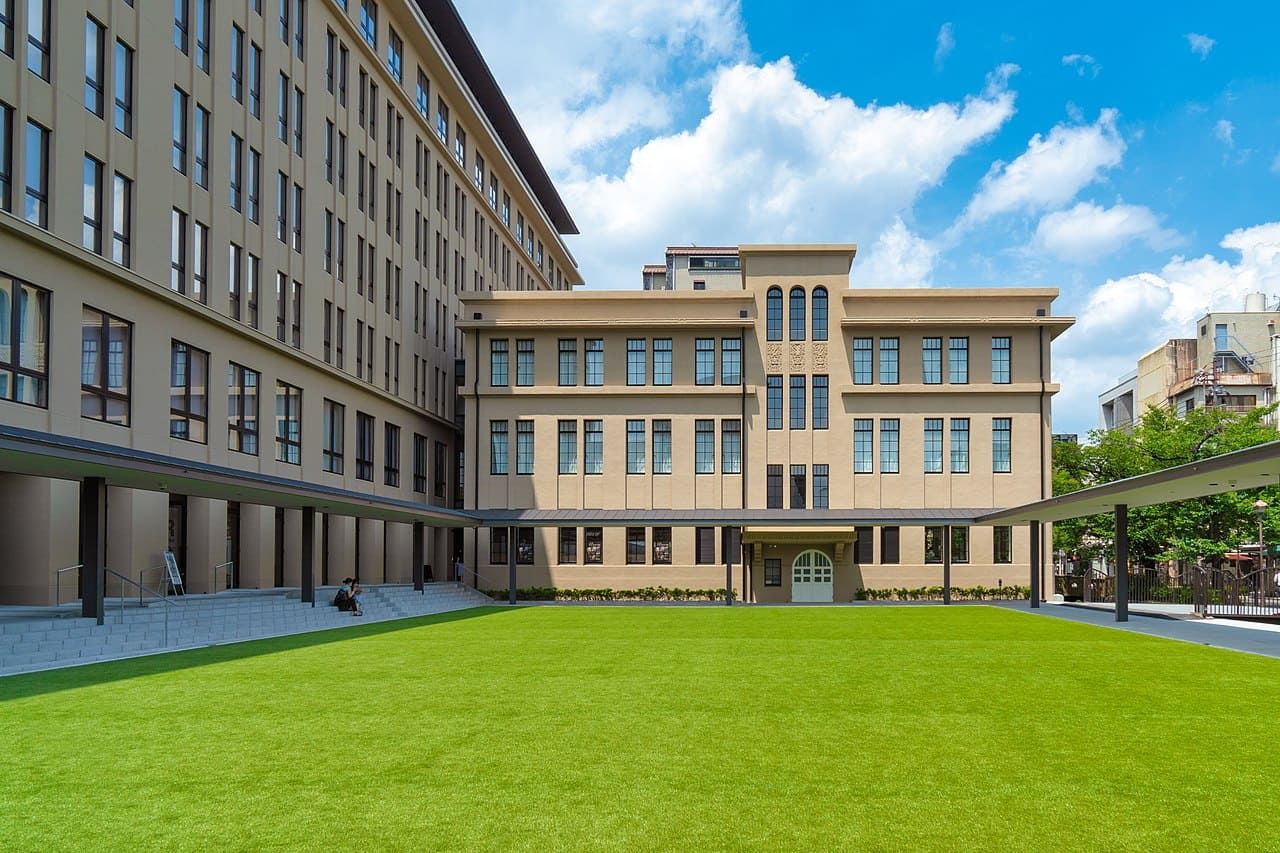
You’re standing in front of a place where memory and modern city life meet: Rissei Garden Hulic Kyoto. The building before you was once an elementary school, completed in 1928, and for decades it stood at the heart of the neighborhood, with generations of children passing through its hallways, until it closed in the early 90s as fewer families remained in central Kyoto. But the story of this site goes back even further. Before the school was built, this was home to Kyoto’s first electric power company, and in 1897 it hosted what is considered the first public film screening in Japan, using a cinematograph developed by the Lumière brothers. In a sense, the history of Japanese cinema began right here. After the school closed, the building found a new role as an alternative cultural space, welcoming art galleries, an independent cinema, and a wide range of creative events, and it gradually became a symbol of Kyoto’s more underground artistic scene. The former playground has since been turned into a green public square, open to everyone, where markets, concerts, and outdoor film screenings now take place. Today, the complex also includes a design hotel, an open library, restaurants, and cultural venues, bringing together its layered past and a lively contemporary spirit in one shared space.
