





RyoCity
Between Maya Heritage and Colonial Elegance
Mérida, Mexico
RyoCity
Between Maya Heritage and Colonial Elegance
Mérida, Mexico
5.6 km
Distance
2h30
Durée
28
Audios
Boucle
Parcours
Shutterstock
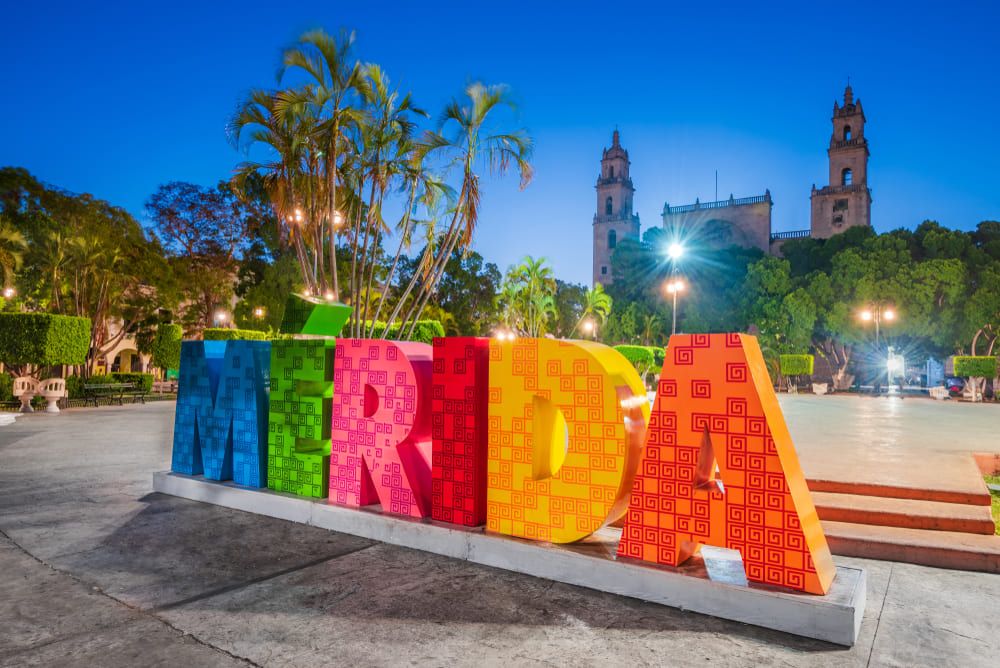
You are standing on the Plaza Grande, also known as Plaza de la Independencia, the true historical and symbolic heart of Mérida. This is far more than just a public square, as it has played a central role here long before the arrival of the Spanish. In pre-Hispanic times, this site was already part of the great Maya city of T’ho, an important ceremonial center where pyramids and open plazas structured political and religious life. When Mérida was founded in 1542 by Francisco de Montejo, this very spot became the focal point of the new colonial city. From here, the Spanish grid plan spread outward, with the main square serving as the setting for ceremonies, official announcements and public life. Throughout the colonial era, the Plaza Grande witnessed major events, from religious processions and oaths of loyalty to celebrations and civic gatherings. After Mexico gained independence in 1821, it was renamed Plaza de la Independencia, reinforcing its powerful symbolic role in national history. Over the centuries, the square has continued to evolve: its layout has changed, its center became circular, modern lighting was added, yet it has always remained a place where people come together. The tall trees that frame the square, now famous for the flocks of birds that gather at dusk, offer shade and a welcome sense of coolness in a city shaped by heat. Beneath your feet, recent excavations have uncovered both colonial and pre-Hispanic remains, reminding us that this square rests on many layers of history. Even today, it remains a vibrant place, alive with performances, markets, leisurely walks and everyday encounters.
