Walk
The City of Sails
Auckland, New Zealand
Walk
The City of Sails
Auckland, New Zealand
3.8 km
Distance
1h30
Durée
18
Audios
Loop
Parcours
At the ends of the earth, between two islands that are at once worlds apart and deeply connected, New Zealand stands as one of the most captivating destinations on the planet. Smoking volcanoes, vertiginous fjords, ancient forests and vast beaches: every landscape seems sculpted to awaken the senses. Travelling here means moving at your own pace, letting the stories of Māori culture resonate at every turn in the road. For travellers who want to explore the country differently, Ryo's audio-guided tours offer a sensory and intimate gateway into the soul of this land.
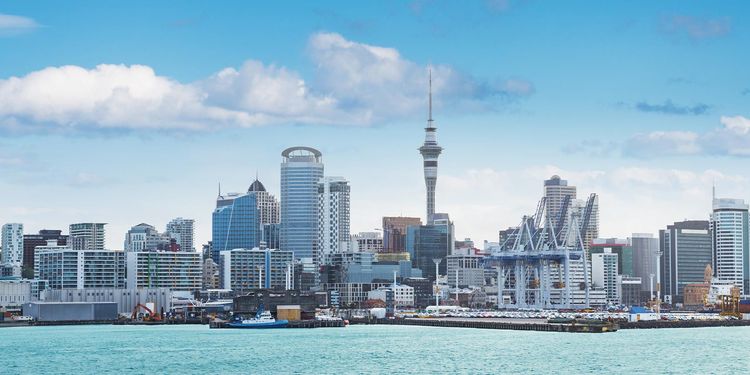
Nestled between two harbours, facing the Pacific, Auckland is far more than a metropolis: it is a crossroads of cultures, flavours and horizons. Its nickname, the City of Sails, speaks to the visceral relationship this city has with the ocean. From neighbourhood to neighbourhood, from volcanic heights to the bustling wharves of the Viaduct, Ryo's audio-guided tour invites you to uncover the layers of history that overlap here: the Māori heritage, Polynesian influences, and the cosmopolitan energy of a young and open city. An ideal first step for visiting New Zealand with depth and curiosity.
Beyond the cities, the country unfolds in a succession of natural tableaux that never cease to amaze. The North Island offers travellers subtropical forests, volcanic plateaus and the bubbling heat of Rotorua, a landmark of Māori culture where the earth itself seems alive. Wellington, the capital, charms with its creative energy and remarkable cultural scene.
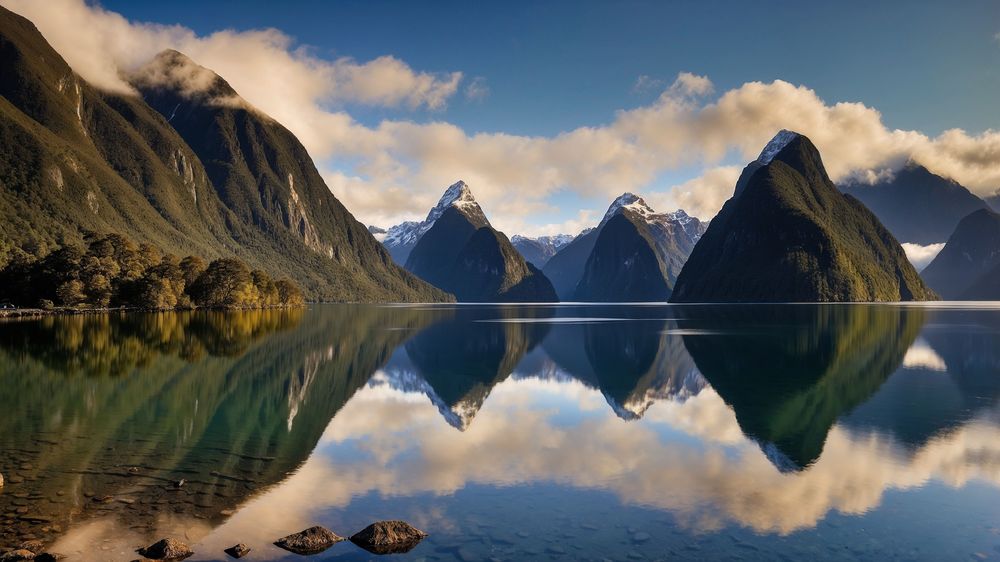
The South Island, even wilder, stretches beneath mountain ranges with snow-capped peaks. Fiordland National Park, a UNESCO World Heritage Site, alone contains a dozen majestic fjords, rainforests and lakes of absolute serenity. Milford Sound, which can be reached by kayak to glide across its turquoise waters, remains one of the most breathtaking panoramas on earth. Further north, the Waitomo Caves reveal an extraordinary underground world, where thousands of glowworms transform the caverns into a miniature night sky. On the west coast, the Franz Josef Glacier descends almost to the temperate rainforest, offering a contrast that is rare anywhere in the world.
New Zealand follows a seasonal rhythm that is the reverse of Europe's. The austral summer, which generally runs from December to February, offers ideal conditions for enjoying beaches, high-altitude hikes and road trips across the South Island. Spring and autumn bring mild temperatures, contrasting landscapes and quieter crowds. Winter, particularly pronounced in the south, draws skiing enthusiasts and lovers of vast, silent spaces. Depending on the season and the region you have in mind, the face of the country changes dramatically.
Cars and campervans remain the preferred modes of transport for freely exploring a country where distances between sites are often considerable. The New Zealand road trip is almost a rite of passage: coastal and mountain roads lend themselves to contemplative driving, with windows open onto ever-changing scenery. Ferry services connect the two main islands, making the crossing itself a journey in its own right. Domestic flights save time over long distances, while intercity buses offer alternatives for travellers who wish to reduce their footprint.
The most popular period is the austral summer, generally between December and February, when the days are long and temperatures are mild across the entire country. Spring and autumn appeal to travellers seeking fewer crowds and landscapes dressed in shifting hues. Every season has its own draw, depending on whether you favour the beach, hiking or winter sports.
A stay of two to three weeks generally allows you to cover the must-sees of both islands without rushing. For a deeper exploration of each region, taking in the landscapes and Māori culture, allowing more time is advisable. The country rewards those who choose to slow down.
The ferry crossing between Wellington and Picton is the most iconic option: the passage through the Cook Strait offers spectacular views of the fjords and coastlines. Domestic flights also connect the main cities of both islands for those short on time. Once there, hiring a vehicle remains the most flexible solution for exploring freely.
A successful New Zealand itinerary typically combines the vibrancy of Auckland, the geothermal magic of Rotorua, the glowworm caves of Waitomo, the fjords of Fiordland, the Franz Josef Glacier and the alpine scenery of the Southern Alps. Each stop brings a different emotion, somewhere between raw nature and cultural encounters.
The Māori culture is at the heart of New Zealand's identity. In Rotorua or at numerous sites across the country, it is possible to attend traditional ceremonies, hear the haka in all its power and discover the art of tā moko, an ancestral tattoo that carries stories within it. Approaching it with respect and curiosity profoundly enriches any travel experience.






