




RyoCity
The City of Sails
Auckland, New Zealand
RyoCity
The City of Sails
Auckland, New Zealand
3.8 km
Distance
1h30
Durée
18
Audios
Boucle
Parcours
Shutterstock
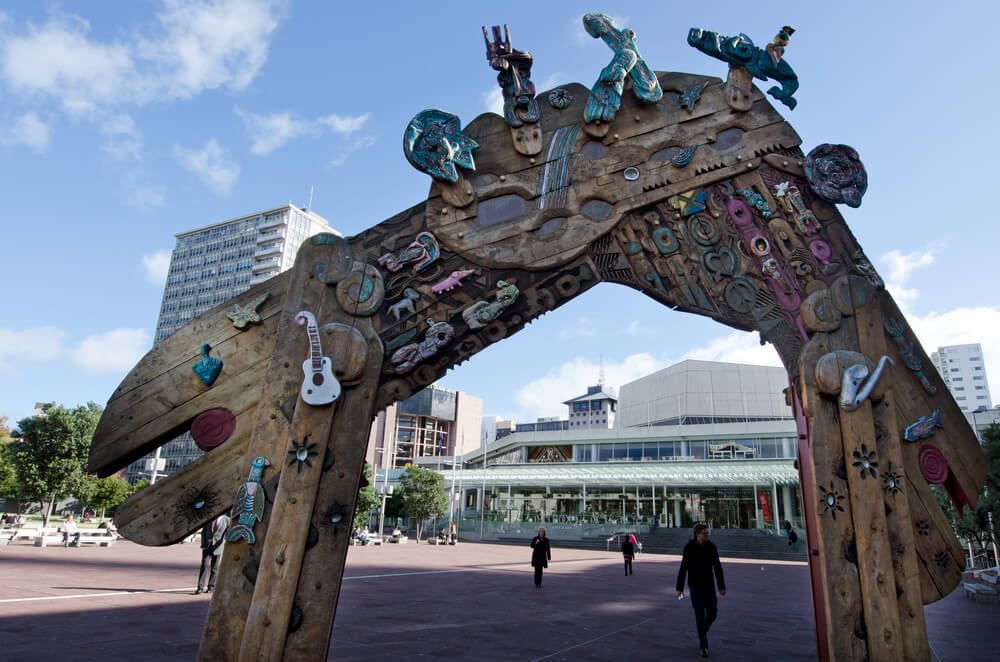
Aotea Square is surrounded by major cultural buildings and an impressive sculpture called Waharoa. It represents a traditional Māori gateway made of wood and copper, and was created in 1990 by the Māori sculptor Selwyn Muru. The sculpture depicts four gods: Tamanuiterā, god of the sun; Tangaroa, god of the sea and fish; Tāne-mahuta, god of forests and birds; and Tāwhirimātea, god of wind, rain, and storms. There are also crescent moons and stars incorporated into the sculpture. Today, Māori people make up about 17% of New Zealand’s population. They migrated to the archipelago from Polynesia around the 13th century. When Dutch and later British settlers arrived, the Māori did not give up their land. Instead, the settlers and the Māori developed somewhat peaceful relations, solidified by the Treaty of Waitangi. This treaty formalised Britain’s annexation of New Zealand, while protecting Māori property rights and the autonomy of Māori tribes. Despite conflicts, the relationships between Europeans and Māori helped preserve the traditions and culture of these Polynesian settlers, who have been part of New Zealand’s history for nearly a thousand years. This sculpture reflects their important place in the country’s history and identity, honouring their unwavering presence.
