





RyoCity
The Princess of the Fjords
Bergen, Norway
RyoCity
The Princess of the Fjords
Bergen, Norway
7.5 km
Distance
3h00
Durée
25
Audios
Boucle
Parcours
Shutterstock
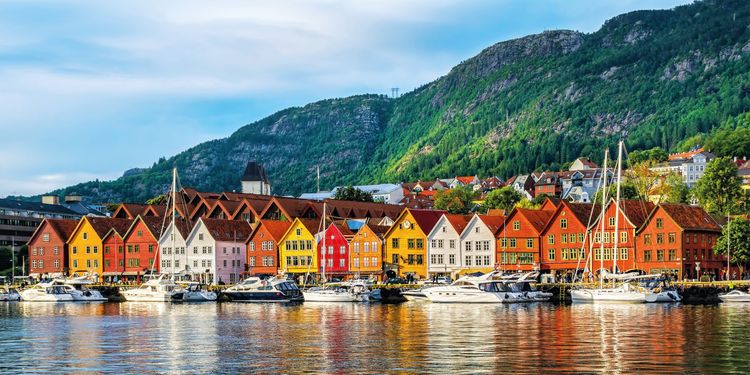
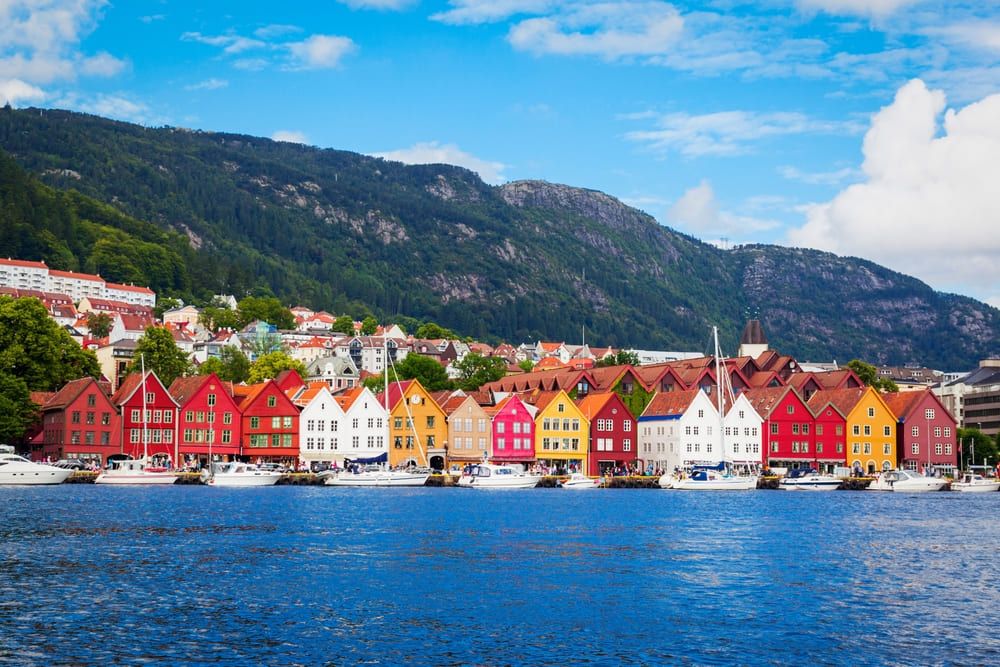
We’ve now arrived at the heart of it all. You are standing in front of what most people come to see in Bergen, the city’s oldest and most iconic district: Bryggen, which means “wharf” in Norwegian. Its silhouette has come to symbolise Norway, and the entire area is listed as a UNESCO World Heritage Site. It’s Bergen’s must-see neighborhood, so let’s take a moment to uncover the story behind these old walls. King Olaf III founded the port city of Bergen in 1070. Around the same time, new cities were emerging across northern Germany and the Baltic region. Back then, the Holy Roman Empire was a patchwork of small, scattered territories, and travel was dangerous. Pirates and robbers were a constant threat, so merchants began travelling in groups for protection. These early alliances eventually grew into a vast network: the Hanseatic League, or simply “the Hanse.” It became the most powerful trade organisation in northern Europe and remained so for over 300 years. The League was independent of kings and feudal lords. It established permanent trading outposts as far as Novgorod in Russia, Bergen in Norway, London, and Bruges. Its merchants enjoyed huge advantages, such as reduced taxes, and in some places, complete tax exemption. The Hanse grew powerful, holding a monopoly over the North and Baltic Seas. It even created its own currency system using only silver coins, way back in 1380! The League fiercely defended its interests. It wasn’t a state, but it could raise an army, impose a blockade, or start a war at the drop of a hat. Still, that wasn’t enough to guarantee its survival. The Hanse faced growing competition. Italian merchants, particularly the Lombards, dominated banking and finance. England and the Netherlands were becoming strong producers, especially of cloth. Local rulers also began challenging the wealth and independence of Hanseatic cities, dragging them into costly wars. Then came the discovery of the Americas, which shifted global trade routes and marked the beginning of the League’s decline. But here’s where Bergen is unique, of all the Hanseatic trading posts, this is the only one left standing. It was the last to close, operating from 1278 all the way up to 1754. Hanseatic merchants came here to source fish from all across Norway, mainly dried cod, which, at the time, accounted for 9 out of every 10 exports! Bergen was the commercial hub of Norway, and its most international city. Over the centuries, Bryggen was devastated by numerous fires. You’d think in Europe’s rainiest city, fire wouldn’t be an issue, but when everything’s made of wood, well... What you see today has been rebuilt many times, and reflects the layout after the great fire of 1702. The medieval structure was preserved, with long, narrow rows of buildings facing the harbour. There are still 62 buildings standing, giving you a rare glimpse into the lives of the German merchants who once lived and worked here. It’s the perfect place to explore this living piece of history, so I’ll leave you to it.
