





RyoCity
Between Myth and Reality
Edinburgh, Scotland
RyoCity
Between Myth and Reality
Edinburgh, Scotland
8.3 km
Distance
3h20
Durée
25
Audios
Boucle
Parcours
Shutterstock
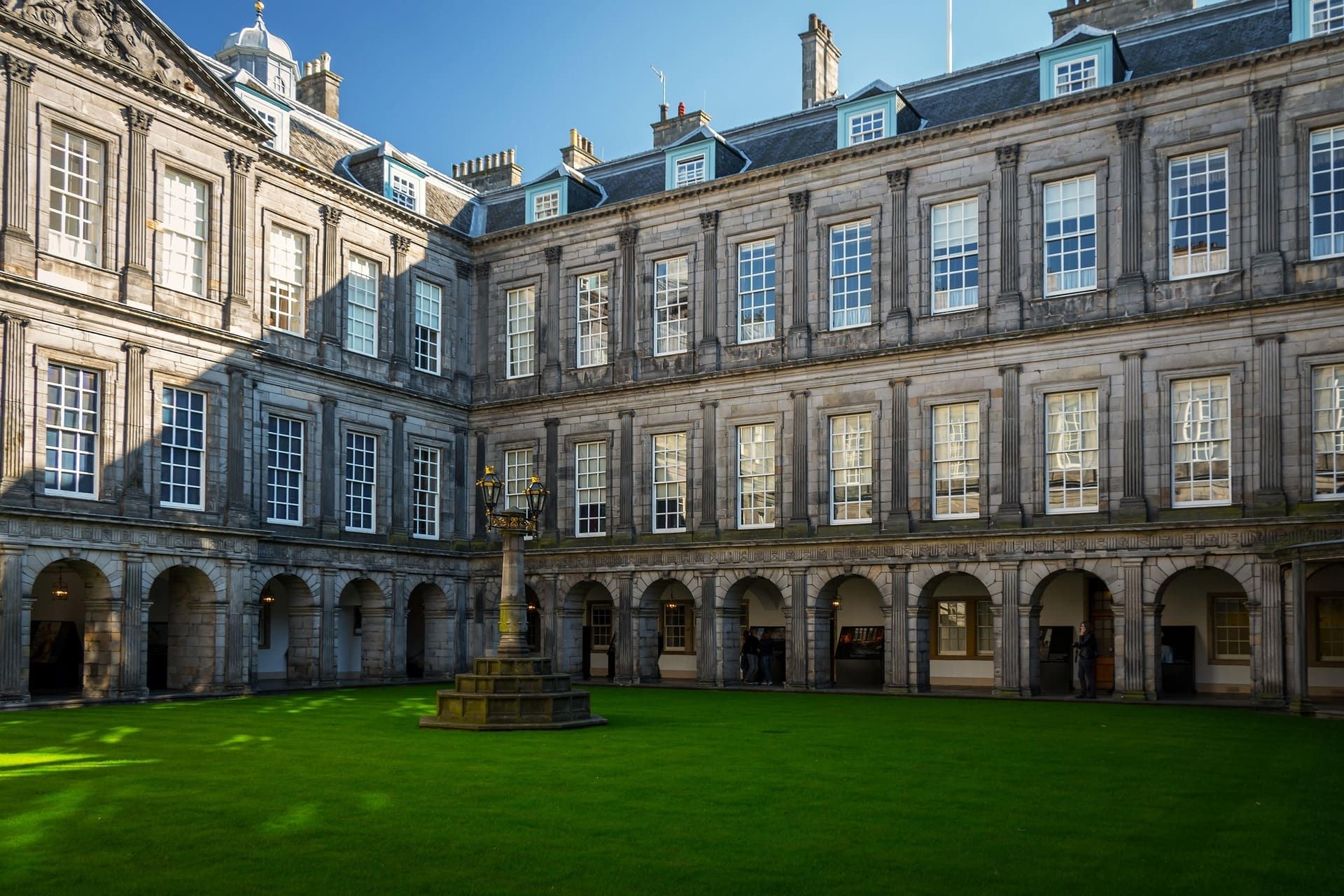
The Palace of Holyroodhouse is one of Edinburgh’s most important historic and architectural treasures, marking the edge of the city’s Old Town. It serves as the official Scottish residence of the monarch, Queen Elizabeth II stayed here during her visits to Scotland, just as kings and queens have done since the 16th century. It was in 1503 that King James IV ordered the construction of this splendid palace, on the site of a guesthouse that had already been welcoming royals for years. A century later, King James V expanded and embellished the residence, adding a tower that would become the home of his daughter, the legendary Mary, Queen of Scots. And that, of course, is the perfect excuse to tell you about her turbulent life, a life that captured the world’s imagination and ended in tragedy. Born in 1542, Mary was crowned Queen of Scotland at just nine months old after the sudden death of her father, James V. At the time, tensions between Scotland and England were still high: England sought to unite the two countries, while Scotland allied with France to avoid English domination. Raised in France, Mary married King Francis II, becoming both Queen of Scotland and Queen of France, until Francis’s untimely death just two years later. Returning to Scotland as a young widow, she found herself in a land transformed by the Protestant Reformation. A devout Catholic, she faced suspicion and hostility. She married her cousin, Lord Darnley, and had a son, James VI, but three years later Darnley was murdered. Mary became the prime suspect, especially after marrying James Hepburn, Earl of Bothwell, another suspect in the crime, only months later. Her enemies moved quickly: she was imprisoned and forced to abdicate in favor of her son, who would later rule as James VI of Scotland and James I of England. Escaping captivity, Mary fled to England seeking help from her cousin, Queen Elizabeth I. But rivalry between the two women ran deep, and instead of offering support, Elizabeth had Mary imprisoned for over 14 years before ordering her execution. The story goes that her executioner was drunk that day and needed three blows of the axe to end her life, an end as cruel as it was tragic. And that’s only the short version of her extraordinary story. If you want to know more, the Palace of Holyrood has an entire section dedicated to Mary, with rooms and artifacts that bring her dramatic life to vivid detail. You can also explore the remains of a 12th-century abbey, once one of Scotland’s most important, which served as the royal place of worship until Canongate Kirk replaced it in the 17th century. A visit here is a must for anyone curious about Scotland’s history.
