





RyoCity
The Land of the Morning Calm
Seoul, South Korea
RyoCity
The Land of the Morning Calm
Seoul, South Korea
8 km
Distance
3h15
Durée
20
Audios
Boucle
Parcours
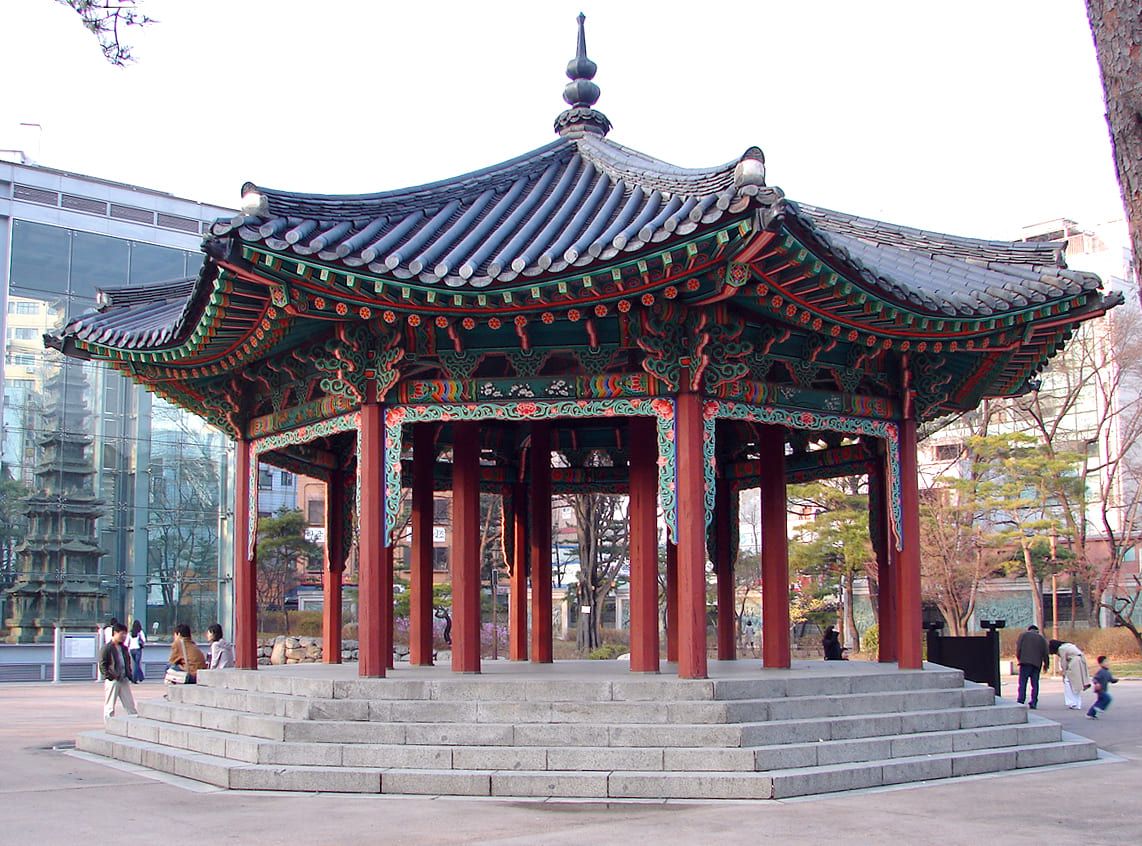
©Steve46814 CC BY-SA 3.0. <https://creativecommons.org/licenses/by-sa/3.0/deed.fr>via Wikipedia Commons
You’re now in Tapgol Park, a small green space in the very heart of downtown Seoul. But before it became a park in 1897, this was the site of a 15th-century Buddhist temple, traces of which can still be seen today, including the Wongaksa Monument, dating back to 1471. Beyond its historical relics, this place holds deep symbolic meaning for Koreans. It was here, in the pavilion at the park’s center, that Korea’s Declaration of Independence was publicly read in 1919, sparking the March 1st Movement, mass demonstrations during which many Koreans lost their lives at the hands of Japanese forces, who were occupying the country and refusing to grant its freedom. Built in 1902, the pavilion has since become a true landmark in Korea’s fight for independence. Just behind it stands one of the finest examples of a stone pagoda from the Joseon dynasty, so significant that it’s recognized as South Korea’s second national treasure, after the Great South Gate, located further down the city near Seoul Station. Rising ten stories and 12 meters high, this historic pagoda is a masterpiece of Korean stonework. As the first modern park in Seoul and home to such remarkable heritage, Tapgol Park is without doubt a must-see stop on any visit to the Korean capital.
