





RyoCity
Isle of Kings
Palma de Mallorca, Spain
RyoCity
Isle of Kings
Palma de Mallorca, Spain
5 km
Distance
2h00
Durée
26
Audios
Boucle
Parcours
Shutterstock
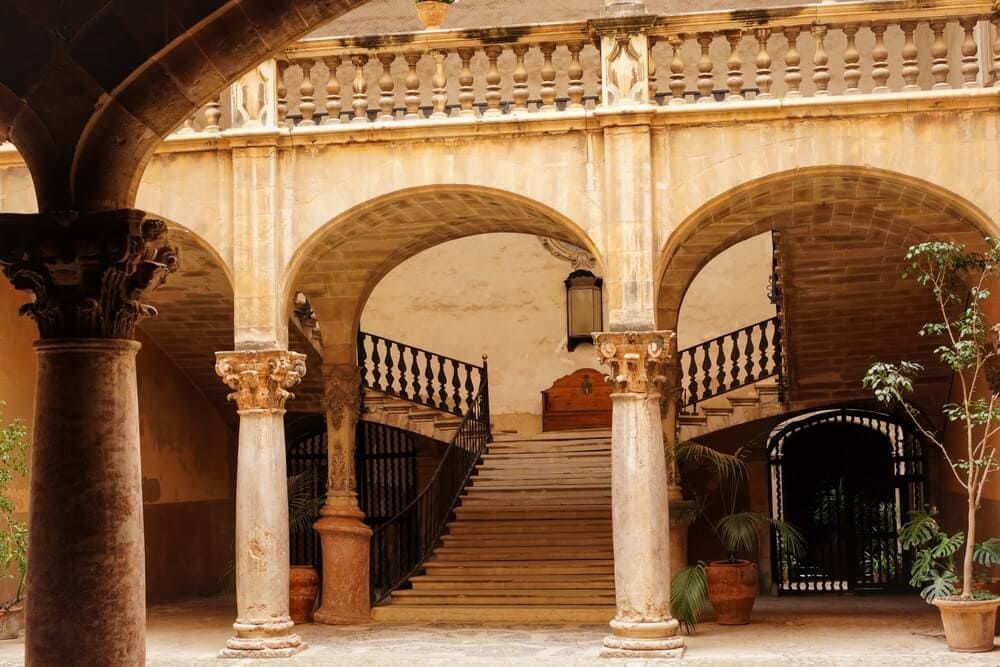
You may have noticed since your arrival in Palma that the city is full of patios. In the past, there were no fewer than 500 patios recorded in Palma. Most of them have disappeared over time due to building renovations—only 150 are left in the city today. Their origins date back to Roman times, though they gained importance throughout the 13th century. These interior courtyards, often located in the centre of a building, are typical elements of Mediterranean architecture. You’ll find them in the south of France, in Spain, and of course, in Italy. The reason people in the South decided to create an open space in the middle of their homes was simply to bring in cool air and, above all, to collect rainwater. Sometimes, you’d even find a well at the center. These patios—although belonging to one or more families—were considered semi-public and open to passersby. The oldest ones were austere and Gothic, then by the 18th century with the rise of nobility, they became increasingly ornate, drawing inspiration from Baroque and Renaissance styles. Here, you have the chance to observe two of the oldest patios in Palma—one on your right, and the other on your left. They both date back to the 15th century and still belong to the same family, the Villalongas. The patio you see in front of you is called Can Vivot, named after the Marquis of Vivot, Mr. Villalonga. Many would agree that it is the most beautiful and most famous patio in Palma. With a baroque style and a grand imperial staircase, it has been classified as an artistic monument of the city, then as a site of cultural interest in Spain. Now part of guided tours organised by the city, this patio offers a glimpse into Palma’s past—and into one of its most treasured hidden gems.
