

RyoCity
Capital of the Nasrid Kingdom
Granada, Spain
RyoCity
Capital of the Nasrid Kingdom
Granada, Spain
7.3 km
Distance
3h00
Durée
24
Audios
Boucle
Parcours
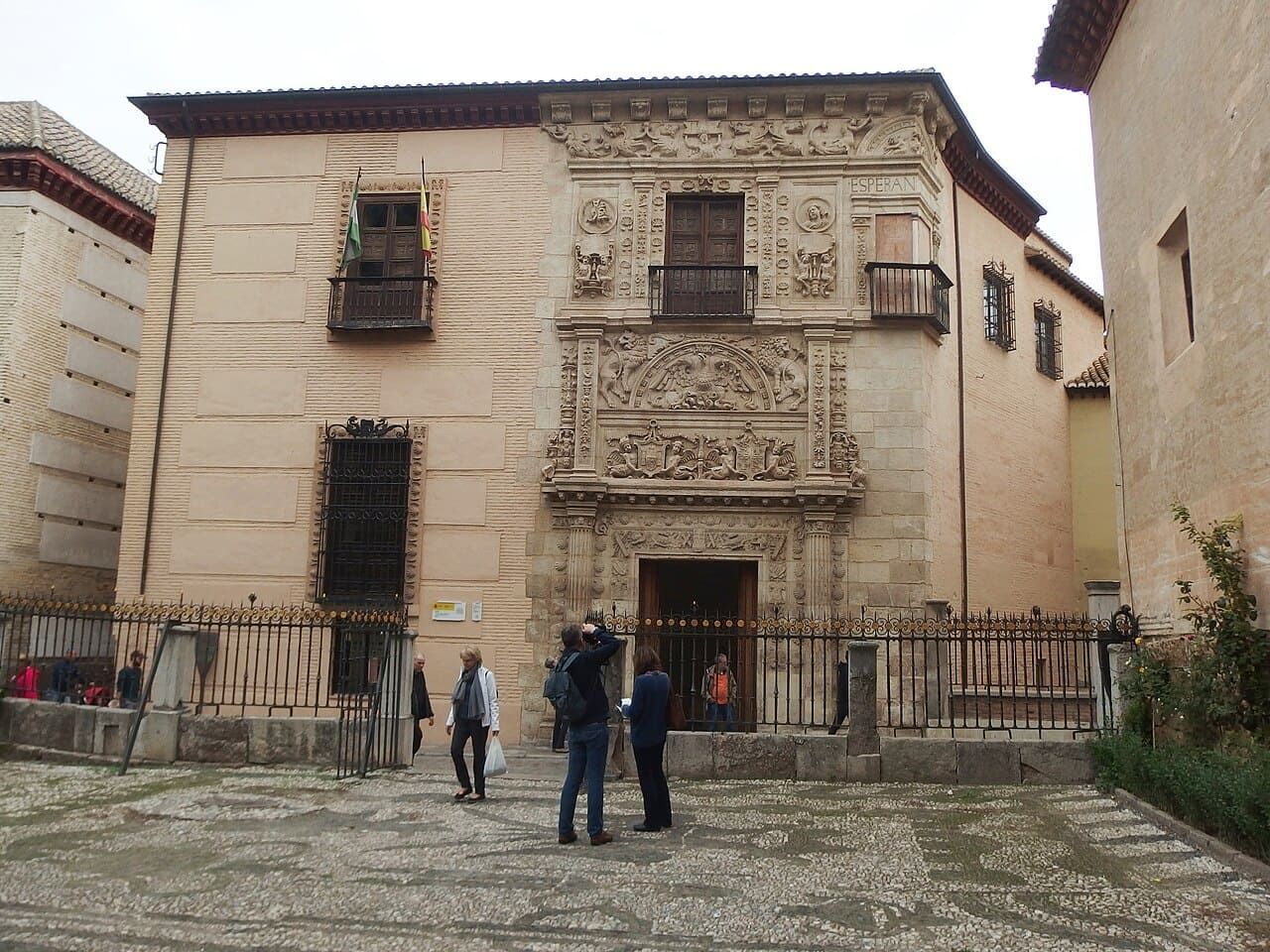
©Palickap CC BY-SA 4.0. <https://creativecommons.org/licenses/by-sa/4.0/deed.fr>via Wikipedia Commons
The richly decorated house on your right is known as the Casa de Castril, one of Granada’s most iconic buildings. This former 16th-century palace is among the finest examples of Renaissance architecture in the city. It once belonged to the family of Hernando de Zafra, secretary to the Catholic Monarchs and a key figure in the reconquest of Granada. Today, the Casa de Castril houses the Archaeological and Ethnological Museum of Granada, home to collections ranging from the Paleolithic period to the Nasrid era. But the house is also known for a dramatic legend. According to the tale, Zafra lived here with his daughter Elvira, who secretly fell in love with a young man. With the help of a servant, her lover would sneak into her room unnoticed. One day, Zafra came home earlier than expected and found his daughter alone with the servant, who was actually trying to help her lover escape. Believing the worst, Zafra, in a fit of rage, hanged the servant from the balcony. Heartbroken and locked away in her room, Elvira is said to have taken her own life by drinking poison. A tragic tale… but don’t worry, it’s pure fiction. In reality, Hernando de Zafra had already died by the time this house was built, in 1539.