





RyoCity
The Little Land of the Mediterranean
Valencia, Spain
RyoCity
The Little Land of the Mediterranean
Valencia, Spain
4.7 km
Distance
2h00
Durée
27
Audios
Boucle
Parcours
Shutterstock
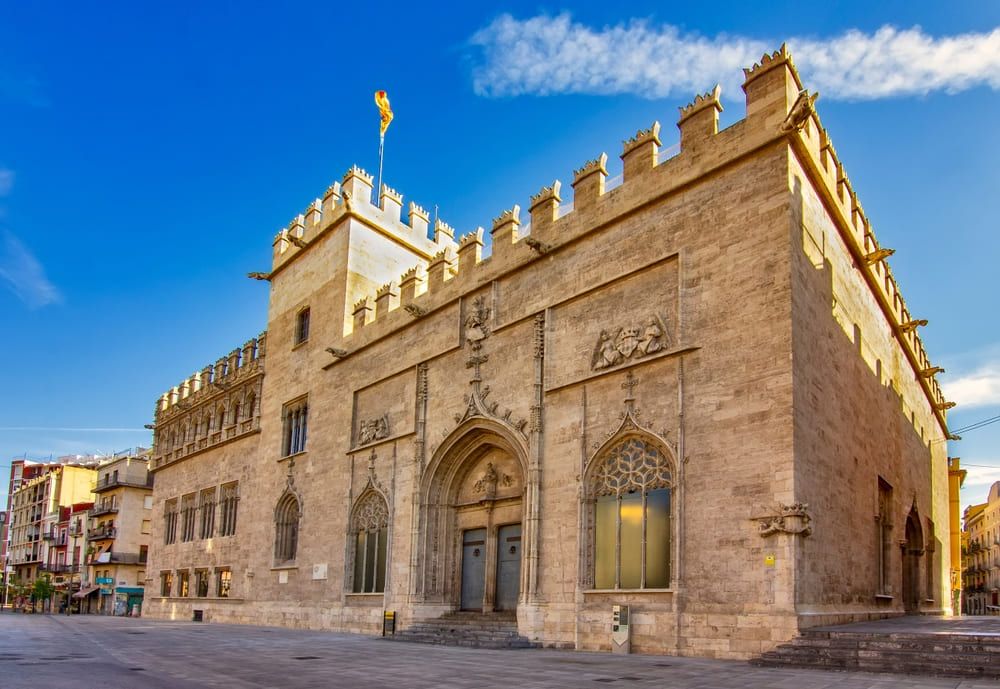
You’re now standing on the Plaça del Mercat—the Market Square. The red building behind you is part of it, and next door is the Church of Saint John of Valencia. Take a moment to admire its elegant façade. Built in the 14th century on the site of a former mosque, this church blends Gothic and Baroque styles in perfect harmony. The real eye-catcher is the grand building in front of you: La Lonja de la Seda, or the Silk Exchange. A stunning example of Gothic architecture, it was designed by a Catalan architect and declared a UNESCO World Heritage Site in 1996. Construction began in 1492, and over time, the Lonja became the striking building you see today. If you look closely at the façade, you can spot three distinct sections. To the left is the Consulate of the Sea hall, with the Orange Tree Courtyard behind it. In the middle stands a tower, which once served as a chapel and a prison for merchants in debt. Beyond the grand doorway is the Hall of Columns, where the exchange table once stood at the heart of the city’s commercial life. Covering nearly 2,000 square metres, this building is a powerful symbol of Valencia’s historical and artistic wealth — a reminder of the city’s Golden Age in the 15th century, when it was a major Mediterranean capital. Take a moment to admire the rich Gothic detailing on the outside—including the 28 gargoyles watching from above. Then step into the courtyard, a quiet oasis where merchants once negotiated trades in silk and other valuable materials. Silk, introduced to the region by Arab traders, played a central role in Valencia’s prosperity — and gave this landmark its name. If you want to see more, you can step inside and explore it yourself—for just a few euros.
