





RyoCity
Isle of Kings
Palma de Mallorca, Spain
RyoCity
Isle of Kings
Palma de Mallorca, Spain
5 km
Distance
2h00
Durée
26
Audios
Boucle
Parcours
Shutterstock
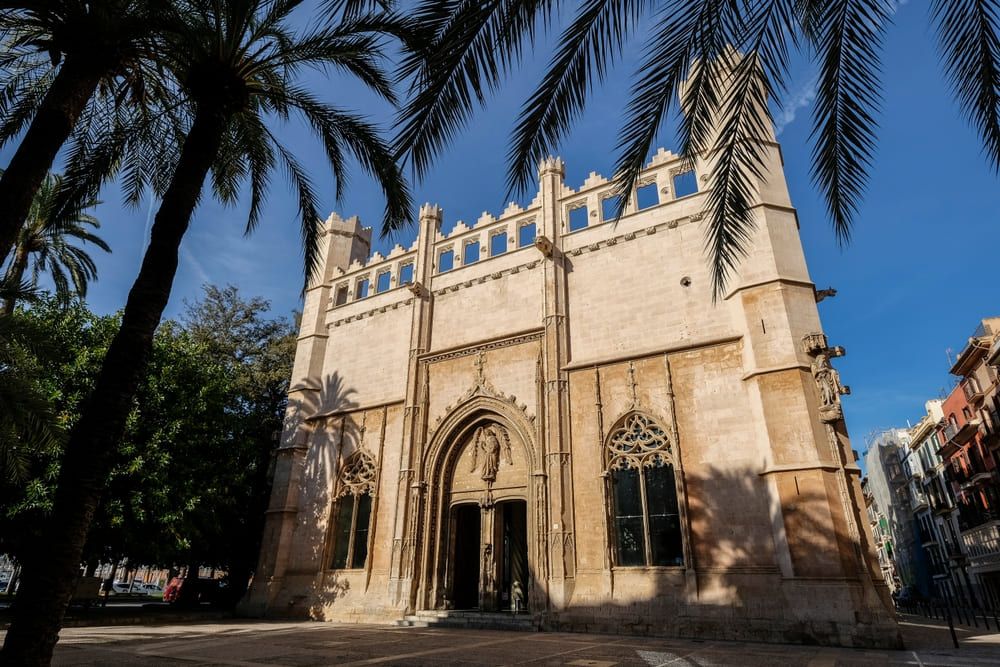
You’ve now arrived in front of the Llotja de Palma, which means "The Exchange". This landmark was once the former maritime trade exchange, active until 1830, as well as the seat of the merchants’ guild. If you look at the tympanum of the pediment, you can even spot a sculpture of the Àngel de la Mercaderia — the angel of commerce. A Gothic masterpiece, the Llotja is an absolute must-see in Mallorca. It was built by Majorcan architect Guillem Sagrera between 1420 and 1452, and is classified as a Spanish site of cultural interest. Entry is free, so don’t be shy to step inside and admire the beautifully twisted columns and the magnificent ribbed vaults, whose ribs are directly integrated into the walls. In 1830, the Llotja became the Palace of Justice and served until 1886. Afterwards, it was converted into a museum of art and archaeology by the city. Today, if you decide to visit its interior, you’ll discover free temporary exhibitions. The entire Llotja district around you reflects the wealth of its commercial and maritime past, offering a lively maze of streets full of heritage — a part of the old town that’s best discovered by simply strolling through it.
