





RyoCity
The cultural soul of Switzerland
Basel, Switzerland
RyoCity
The cultural soul of Switzerland
Basel, Switzerland
3.2 km
Distance
1h30
Durée
25
Audios
Boucle
Parcours
Shutterstock
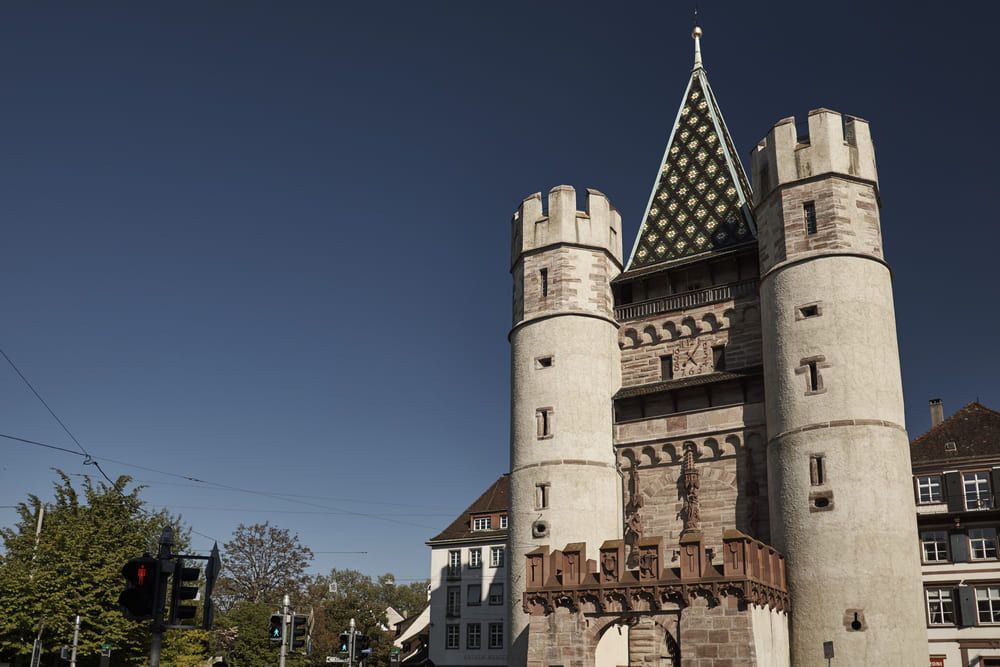
You are now standing in front of the impressive Spalentor, one of the most remarkable medieval gates in Basel and one of the few visible remains of the city’s former fortifications. It was built after the great earthquake of 1356, which destroyed much of the city walls. The inhabitants then decided to rebuild and strengthen the defenses, and this gate was completed around 1398 to protect the western entrance to the city. At the time, it was part of a vast defensive system made up of ramparts, moats, numerous towers and several other gates. The Spalentor served both as a watch post and as a checkpoint. Anyone arriving from the west, especially from neighboring Alsace, had to pass through here. Goods, travelers and merchants were inspected and taxed at this point, which also made it an important place for trade. The architecture of the gate is typically Gothic. The tall central tower, rising more than forty meters high, is flanked by two slightly lower round towers. Originally the roofs were simpler, but after a storm in the nineteenth century they were replaced by the crenellations you see today, reinforcing its medieval appearance. On the city side you can also notice decorative elements and coats of arms recalling that Basel was once a city governed by a bishop. In the nineteenth century, when the city expanded, most of the walls were demolished to make room for new neighborhoods. Only three gates were preserved, and the Spalentor is the largest and best preserved of them. Today it no longer serves to defend the city, but it remains a powerful symbol of its past. Now let’s walk under its arch, just as travelers did here more than six centuries ago.
