





RyoCity
The cultural soul of Switzerland
Basel, Switzerland
RyoCity
The cultural soul of Switzerland
Basel, Switzerland
3.2 km
Distance
1h30
Durée
25
Audios
Boucle
Parcours
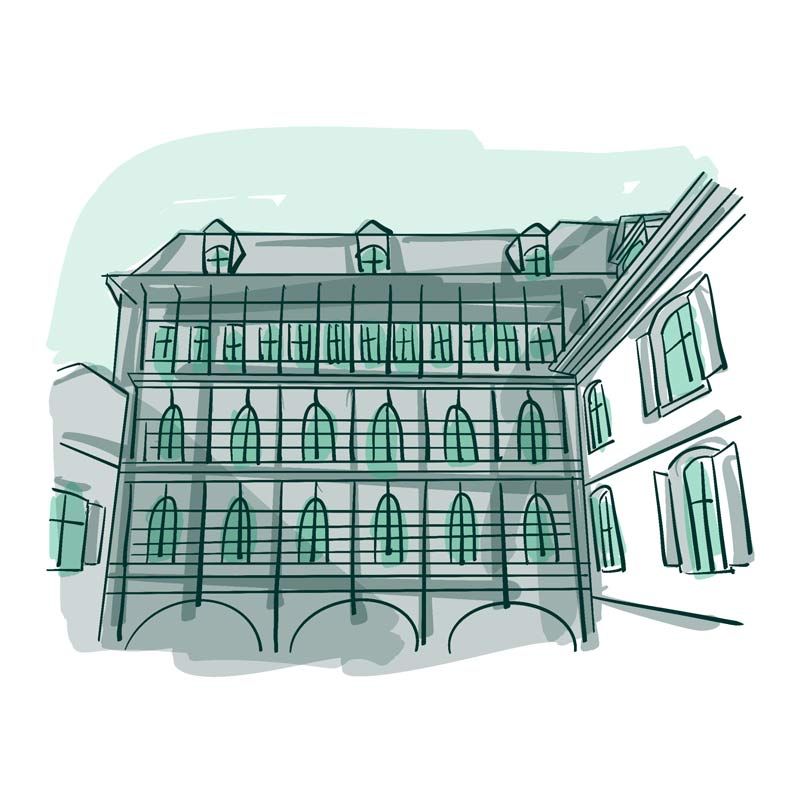
The Spiesshof is one of the discreet treasures of Basel’s old town. This remarkable building was constructed between 1585 and 1590 by the architect Daniel Heintz the Elder, an important figure of the Renaissance in Switzerland. It was originally built as a patrician residence, an urban palace for an influential family. Its elegant façade, structured by engaged columns and very balanced proportions, clearly reflects the Renaissance style, which was still relatively rare in Basel at the time. The building actually combines several influences. Behind this classical appearance, traces of the late Gothic tradition can still be seen, especially in certain interior spaces such as the large vaulted hall. The Spiesshof therefore reflects a transitional moment in architecture at the end of the sixteenth century, when new ideas coming from Italy were still blending with local medieval traditions. The building is also linked to a darker story. It is said that David Joris, a sixteenth-century Anabaptist religious leader, once lived here under a false identity. After his death, his writings were declared heretical, and his body was exhumed and publicly burned in Basel. This episode later gave rise to a local legend claiming that his ghost still haunts the place. Today, the Spiesshof is a protected private building and is generally closed to the public, but its façade can still be admired from the street by taking a moment to observe the architectural details and imagine life here during the Renaissance, when this part of the city was home to some of Basel’s most influential families.
