





RyoCity
From a Historic Pueblo to Contemporary Art
Los Angeles, United States
RyoCity
From a Historic Pueblo to Contemporary Art
Los Angeles, United States
4.5 km
Distance
2h00
Durée
29
Audios
Boucle
Parcours
Shutterstock
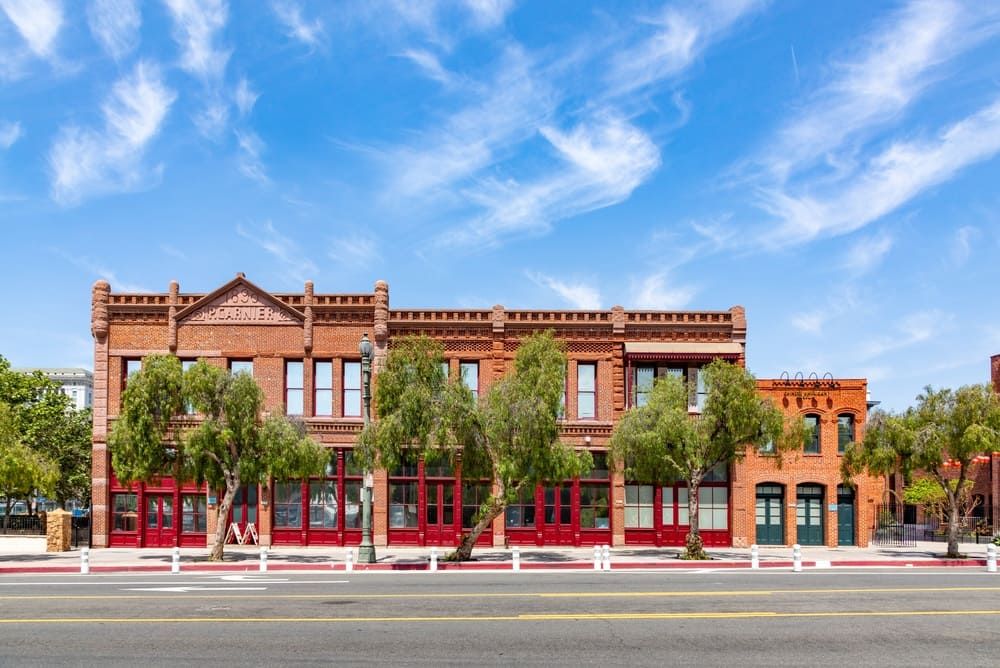
You’re now in front of the Garnier Building, a structure that has seen far more than just visitors over the years. Built in 1890 by Philippe Garnier, a forward-thinking French entrepreneur, it might look like an ordinary red-brick building at first glance. Yet for more than half a century, it served as the beating heart of Los Angeles’ original Chinatown. People came here to shop, visit herbalists, send their children to school, pray in temples, discuss politics, and celebrate major festivals. In other words, it was a marketplace, a town hall, a school, and a place of worship all under one roof. Known as Chinatown’s “city hall,” the Garnier Building hosted dozens of associations and organizations that are still active today. When the old Chinatown was demolished in the 30s to make way for Union Station, this building emerged as one of the few remaining links to a neighborhood that no longer exists. Since 2003, it has housed the Chinese American Museum, telling a story of exile, discrimination, but also ingenuity and community solidarity. When you look up at its façade, you’re not just seeing an old wall—you’re looking at one of the last tangible connections to that vanished neighborhood and a concentrated piece of Los Angeles’ Chinese-American history.
