





RyoCity
From a Historic Pueblo to Contemporary Art
Los Angeles, United States
RyoCity
From a Historic Pueblo to Contemporary Art
Los Angeles, United States
4.5 km
Distance
2h00
Durée
29
Audios
Boucle
Parcours
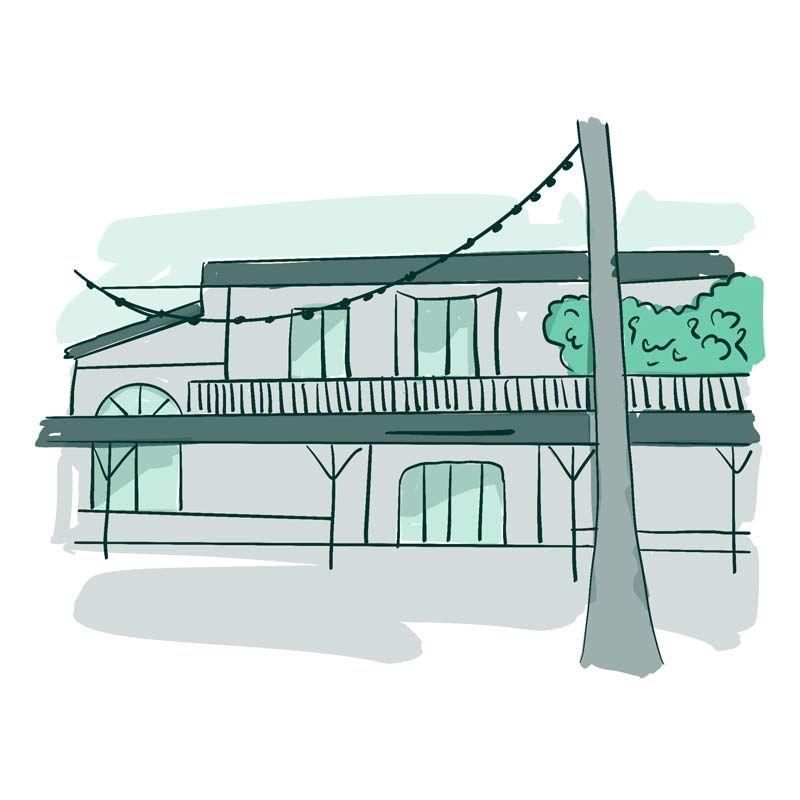
The Pelanconi House is a modest but important building in the neighborhood’s history, often cited as the oldest surviving brick structure in the city. It was built in the 1850s by Giuseppe Covaccichi, an Italian vintner who settled in Los Angeles, and reflects a time when the region was still largely agricultural and focused on wine production. Originally, the ground floor housed a wine cellar, while the upper floor served as living quarters- a common setup for merchants of the era. Later, the building was bought by Antonio Pelanconi, another prominent member of the local Italian community, whose name it still bears today. The Pelanconi House is a reminder that there was once a “Little Italy” around the Plaza, long before the city took on its modern form. It also speaks to a period when Los Angeles was one of the country’s main wine-producing centers, with vineyards spread across the region. Wine was made on a large scale and shipped east across the United States. That boom gradually faded by the late nineteenth and early twentieth centuries, under the combined effects of real estate speculation, the arrival of the railroad favoring other wine regions, and above all, Prohibition from 1920, which dealt a fatal blow to most vineyards. With the city’s twentieth-century expansion, the vineyards almost entirely disappeared, replaced by housing developments, roads, and movie studios. Today, winemaking has nearly vanished from Los Angeles itself, though in recent years there’s been a symbolic revival with small urban vineyards, artisan cellars, and experimental projects in the hills.
