© Shutterstock
 Votre guide Ryo
Experience a Unique Winter Adventure in Austria
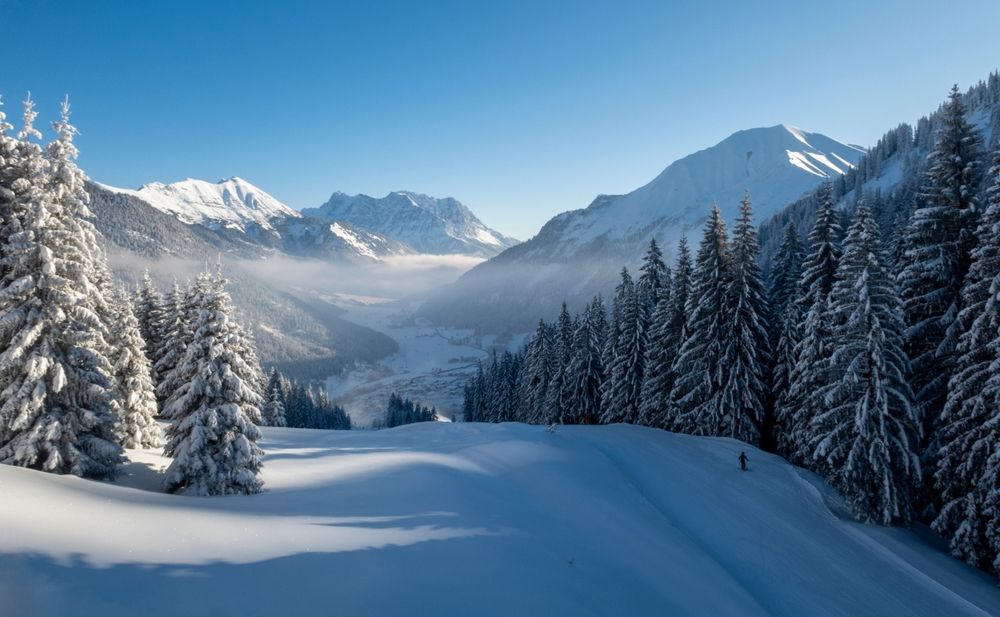
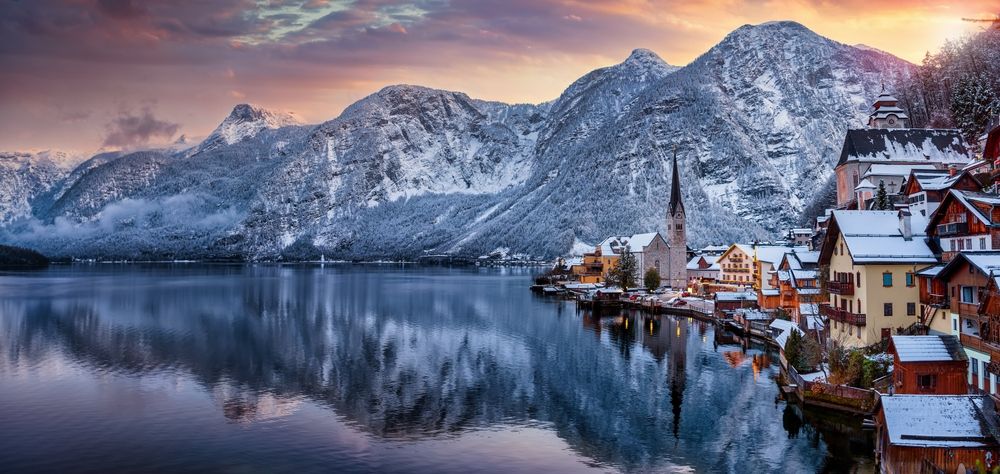
Champion of après-ski, convivial evenings and comforting gastronomy, Austria is a top destination for snow holidays! Austrian villages, with their wooden chalets and baroque churches, immerse us in a magical atmosphere when winter arrives. Christmas markets are renowned and ski resorts are modern and well-maintained, at prices slightly lower than French ones. All this, set in breathtaking alpine scenery!
Salzbourg Christmas Market
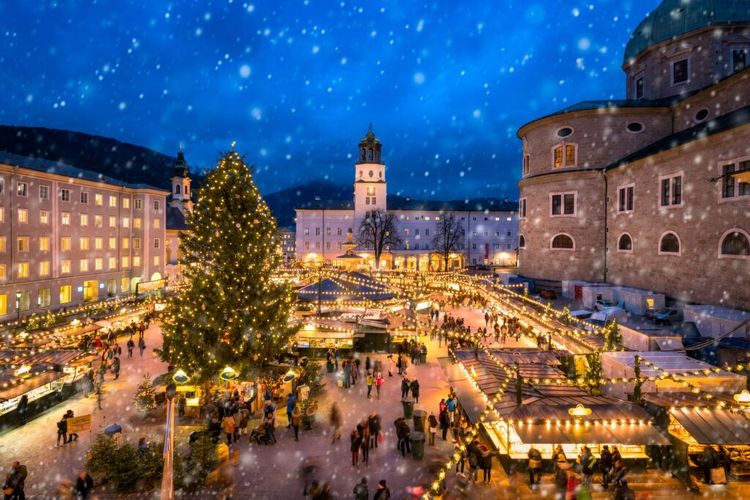
Going to Salzbourg during the holidays allows you to participate in one of the most beautiful and oldest Christmas markets in the world! The origin of the market at the cathedral square dates back to the end of the 15th century. Then, in the 17th century, it was dedicated to Saint Nicholas and people began selling toys and sweets for children around December 6th, his feast day. Today the market features a hundred magnificent stalls, but also reveals a daily cultural program, including children's tales, Krampus parades (similar to Père Fouettard), choirs, etc.
Opening: from late November to early January
More information: Salzbourg Christmas Market
Skiing (and more) in Innsbruck
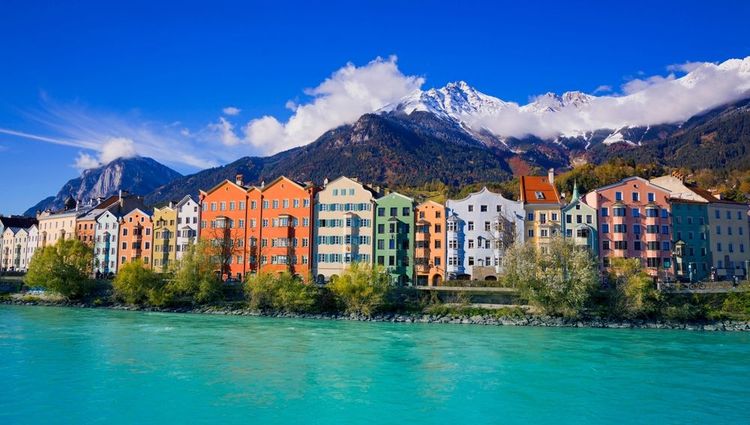
The capital of Tyrol is definitely the perfect city for a snow holiday! If you're traveling with friends or family and everyone likes different things, you'll all find what you're looking for! The city that has hosted the Winter Olympics twice offers the perfect balance between sports, culture, traditions, heritage and nightlife. Moreover, finding accommodation is much simpler and less expensive in the city than at a resort.
1/ Paradise for skiing enthusiasts:
Skiers will have the choice between several quality resorts, easily accessible thanks to free shuttles (20-60min depending on the chosen resort), and can thus vary the pleasures by discovering different ski areas.
Main ski areas around Innsbruck
- Nordkette: The easiest to access, accessible directly from the city center thanks to the funicular and cable car! This area, renowned for freeride and appreciated by good skiers, offers spectacular views of the city as a bonus.
- Axamer Lizum: About 20 minutes from the city, you can go down the slopes that hosted the 1964 and 1976 Olympics. The slopes are varied and suitable for all levels. Great for freeride and freestyle.
- Stubai Glacier: About 45 minutes away, it's Austria's largest skiable glacier. Snow guaranteed! Its wide slopes are particularly appreciated by families.
- Patscherkofel: Innsbruck's iconic mountain with its rounded summit and radio antenna, you'll find slopes suitable for beginners and intermediate skiers, with a friendly atmosphere.
- Schlick 2000: Located in the Stubai valley, it's the resort to go to enjoy panoramic slopes and have fun at the snowpark.
The Ski + City Pass
The city of Innsbruck has set up a unique combination, including access to the 12 ski areas around the city, as well as several flagship cultural attractions of the city. An ideal option to save money and combine sport and culture!
2/ A city full of heritage
Those who don't like winter sports can enjoy Innsbruck's beautiful historic center! It's the ideal place for group holidays mixing skiers and non-skiers. Here are some sites not to be missed!
- The Golden Roof (Goldenes Dachl): This is Innsbruck's ultimate symbol! A magnificent overhanging balcony covered with 2,657 golden tiles, built for Emperor Maximilian I in the 16th century.
- The Hofkirche: The imperial church, where you'll find the symbolic tomb of Maximilian I surrounded by 28 life-size bronze statues.
- Saint James Cathedral: A baroque church to see for its frescoes and remarkable organ.
- The Triumphal Arch (Triumphpforte): unmissable in the city, it has dominated the main street since its construction for the marriage of Leopold II and Marie-Louise of Spain.
- Maria-Theresien-Straße: lively street where you can stroll, shop and admire the colorful facades.
- The Imperial Palace (Hofburg): superb baroque and rococo palace, witness to the influence of the powerful Habsburg dynasty.
- The Tyrol Museum: to discover an interesting collection on local art and culture.
- Ambras Castle: overlooking Innsbruck, this Renaissance castle houses art collections, armor and historical objects tracing the destiny of those who lived there.
3/ Incredible surroundings to explore
But there's more than just the city center to discover! Don't hesitate to explore the region a bit more during your stay.
Must-sees around Innsbruck
- Wilten Basilica: Simply one of Austria's most beautiful baroque churches
- Markthalle Innsbruck market: Ideal for discovering local products and tasting Tyrolean specialties.
- Bergisel: Climbing to the top of this famous ski jump, to step into the shoes of a champion, can be dizzying, but above all offers an exceptional view!
- Hungerburgbahn funicular: for those who don't go to the top of the slopes, the funicular will give you a breathtaking panoramic view of the Alps.
Waltzing in Vienna during ball season
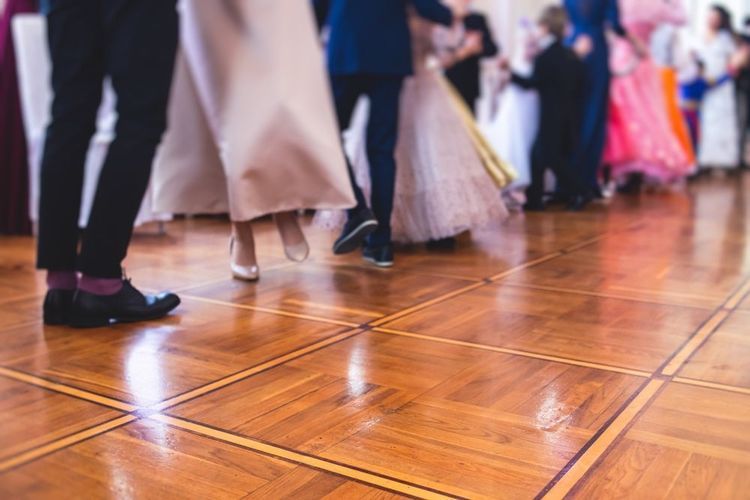
Vienna, Austria's empress, is already magical all year round, but it becomes downright enchanting in winter! Enchanting Christmas markets, outdoor ice rinks, cafes with sumptuous decor to warm up, the city lends itself wonderfully to winter pleasures.
Ball season
On November 11th, at 11:11 AM, the Viennese ball season is officially open! Notice to enthusiasts, more than 450 balls take place every year in Vienna from November to March, offering more than 2000 hours of dancing! Don't panic if you don't know how to dance, you can take waltz lessons almost everywhere in the city. Each profession organizes its ball, there are among others, the lawyers' ball, the hunters' ball, the industry and technology ball, the confectioners' ball, etc. The first is traditionally the chimney sweeps' ball, and you know, the most famous are those of the opera and the philharmonic. The famous opera ball begins with a debutante ball, women in white evening gowns and men in tailcoat suits. After which, the other dancers join them on the dance floor.
How to attend?
If waltzing in evening gowns and/or three-piece suits in the middle of fantastic historical settings makes you dream, here's how you should proceed.
1/ Choose the ball that speaks to you most (read the evening descriptions, theme and associated atmosphere carefully). You can consult the ball calendar on the Tourist Office website to discover the one that suits you.
2/ Take an intensive waltz course to be sure of yourself!
3/ Buy a ticket! Available online, ticket prices vary enormously from one ball to another, as well as depending on whether you want to be a dancer or spectator.
4/ Table tickets: Attention, if you want to sit at a table, you'll need to buy an additional ticket.
5/ Respect the dress code! Etiquette can be very strict for a Viennese ball, especially for the most prestigious ones. You can be refused entry if you don't respect the dress code, even with a valid ticket. You can rent an evening gown or suit, and even jewelry in certain specialized boutiques.
Alles Walzer! (everyone waltz!) it's time to join the dance floor and let yourself go to the intoxicating rhythm of Vienna's famous waltzes.
Traditions to know
1/ The Quadrille: at midnight, change of atmosphere with the famous quadrille, a lively and joyful dance that is generally danced in groups of eight people made up of four couples forming a square. Instructions are often given so it's time to mingle with the crowd and have fun!
2/ The Damenwahl: ladies' choice! If you hear this word at some point in the evening, it means that now, only women can invite a gentleman to dance! This can happen several times during the evening to add an element of conviviality and surprise. Men are obliged to accept, it's a moment of meeting and humor that's much appreciated.
3/ Tombolas: Practically all Viennese balls organize a tombola for charity. Tickets are bought on site and the prizes are often tempting (travel, cruise, car, etc.)
4/ The Damenspende: The ball gift for ladies. Traditionally women receive a small gift, upon arrival or departure from the ball as a souvenir. In the 19th century, it was a beautiful decorated dance card to note the dances, today, you might receive a fan, costume jewelry, confectionery, etc.
5/ The End: the end of the ball usually comes around 5 AM. The musicians play the Radetzky March by Johann Strauss. It's common to clap your hands to accompany the famous rhythm of the chorus that you'll recognize among thousands!