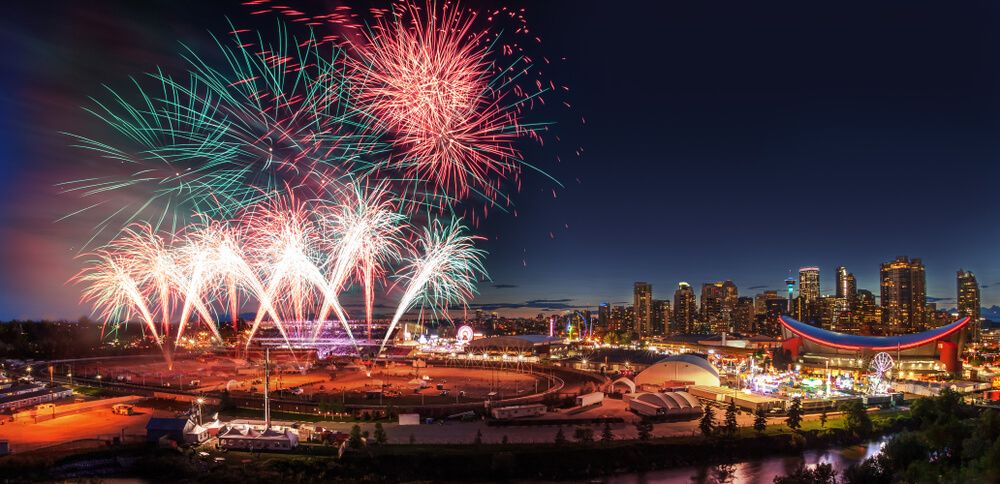

Créé par Romane, le 7 mai 2026
Votre guide Ryo
© Shutterstock
Do you know the Calgary Stampede?
If you've been to Western Canada, you probably know that Calgary, the largest city in the province of Alberta, has a strong agricultural tradition and represents the idea of the Canadian Wild West. It's not for nothing that it's nicknamed "Cowtown" (if you have trouble with English ;))
If you've seen the beautiful film "Brokeback Mountain", well, know that it was largely filmed in the Rockies around Calgary.
Here's a bit of setting and cowboys for you.
A bit of history
The Calgary region has been inhabited for as long as we can remember. Human presence has been found there for over 10,000 years. Many First Nations peoples have lived there: the Niitsitapi, the Tsuutʼina peoples, and the Metis.
In 1787, a young 17-year-old cartographer, David Thompson, arrived. He was the first European (for whom we have written trace) to visit the region.
In 1873, the first settler, John Glenn, arrived. Then, two years later, three priests settled by the river.
In 1875, the site became a North-West Mounted Police post, responsible for protecting the fur trade. A fortress was built and in 1876, Fort Calgary was established.
In 1877, the First Nations "ceded" the region.
In 1881, the federal government, to encourage immigration to the Canadian prairies (and so that the USA could not claim the lands), offered plots of land for cattle ranching in Alberta.
In 1884, the city of Calgary was founded as well as the "Calgary and District Agricultural Society," which organized its first agricultural fair.
The origins of the Stampede
It all begins, as often, with an inspired man: Guy Weadick.
He visited Calgary in 1908 on the occasion of "the Dominion Exhibition," a large traveling fair meant to promote the different regions of the country.
For its "Dominion Exhibition," Calgary went all out! The city spent 145,000 CAD to have 6 new pavilions and a hippodrome built. It organized a spectacular parade as well as rodeo competitions, horse races and rope tricks (Trick roping, you know the thing with lassos that you skillfully throw to catch animals!), but also airship flights, concerts, etc.
So our friend Guy Weadick attended all this and found that the city of Calgary perfectly represented the balance between modernity and traditions inherited from the Wild West. He thought it would be nice to create an event celebrating the cowboy profession and the region's know-how.
He surrounded himself with the Big 4, four prominent wealthy businessmen, who became enthusiastic about the project and financed it.
The first edition took place in the rain, which didn't help, but the parade saw about 80,000 curious onlookers flock in, twice the population of Calgary at the time.
In 1923, the tradition of free pancake breakfast in downtown, shop decoration by merchants, and chuckwagon races, a sort of horse-drawn wagon, was added.
In 1946, Patsy Rodgers was crowned the first Stampede Queen and became its ambassador, thus inspiring the creation of an annual contest. Today, the Stampede Queen and Princesses participate in over 400 events per year.
The Stampede today
With a few exceptions (between World Wars and Covid epidemic), the Stampede has taken place every year in July for over a hundred years.
Between 1912 and 2015, more than 67 million people attended the Stampede (including the royal family of the United Kingdom, which came several times).
The inhabitants take out their best pairs of cowboy boots, their tight jeans and their fringed jackets and live 10 days of festivities filled with all kinds of events!
The Parade
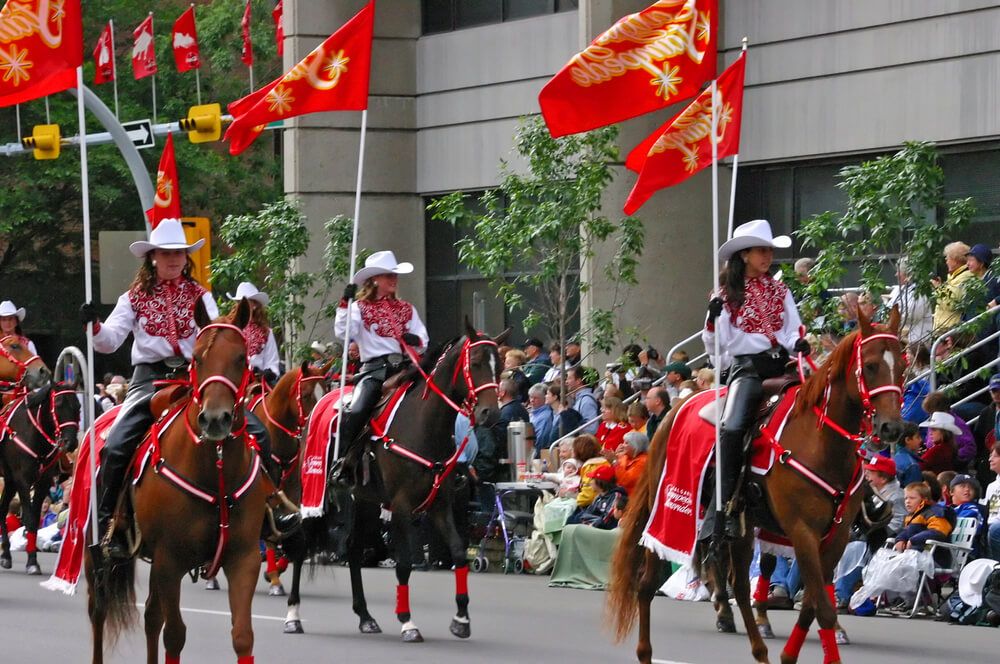
Kick-off of the festivities, the grand parade marches for 4.5 km through downtown Calgary.
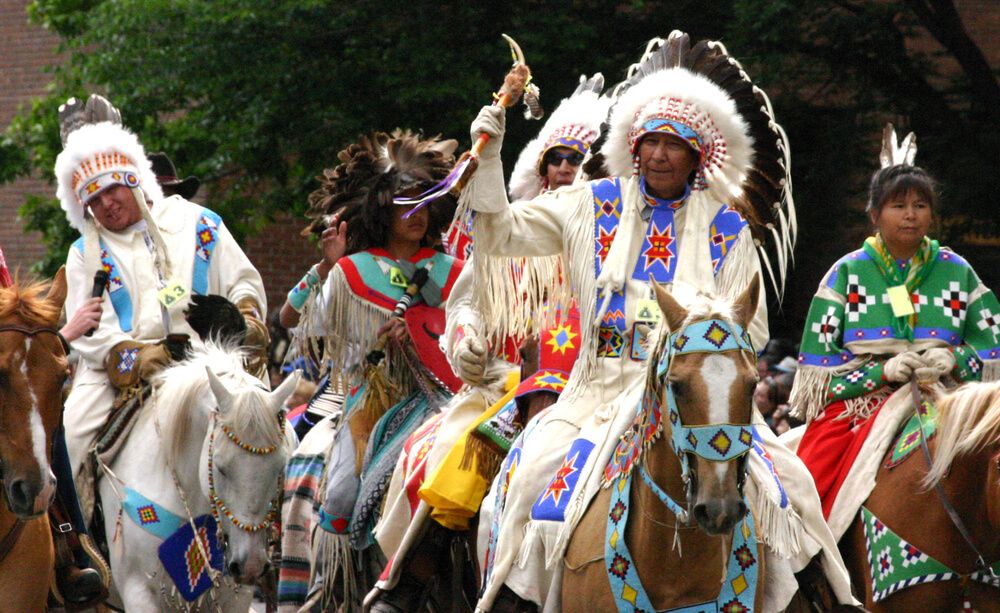
Cheered by the crowd, hundreds of marching bands, floats, riders, folk dancers, cheerleaders, and many cowboys and First Nations peoples, not forgetting the Royal Canadian Mounted Police in red tunics, parade behind the parade marshal. Said marshal is generally a personality, an actor/actress, an athlete, or even a politician...
The parade starts a little before 9:00 AM on Friday, and attracts a huge crowd! With a record of 420,000 people in 2011, due to the presence of Prince William and Kate Middleton, Duke and Duchess of Cambridge.
The Rodeo
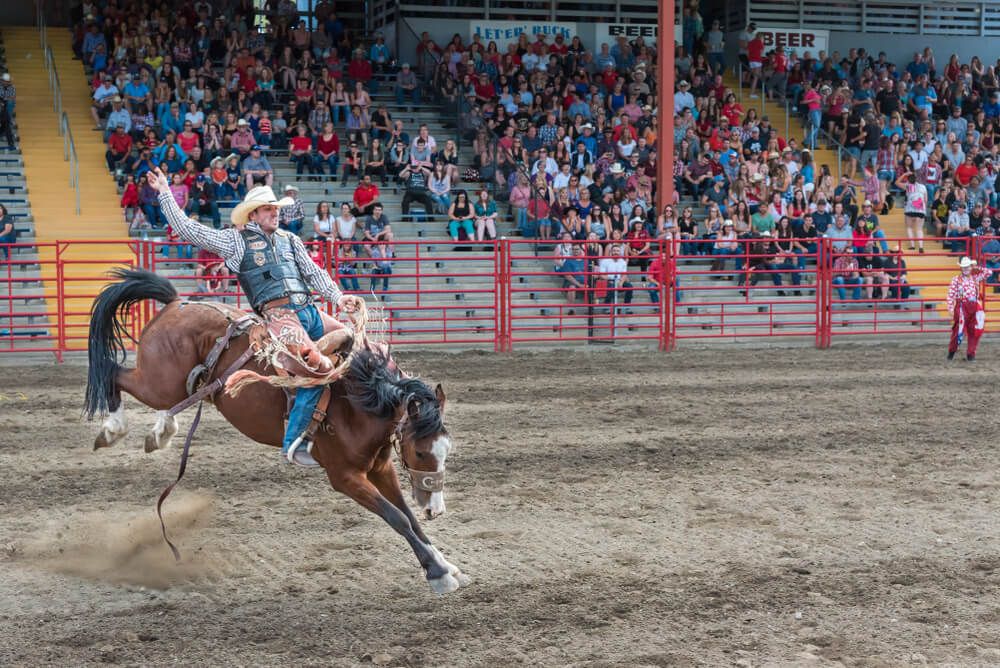
The Rodeo is the beating heart of the Stampede. It's what makes its reputation, as if the rest of the events simply gravitated around the star of the moment.
We said it, we repeat it, it's simply the biggest rodeo in the world, and the most famous event of its kind in the world!
20,000 fans gather to see the best cowboys in the country compete in a series of 6 disciplines:
- Bull riding : the main image you have of a rodeo, that of a rider who must stay as long as possible on a bull, while the animal tries to get rid of its mount.
- Barrel racing (generally female): when the rider and her mount must draw a clover in the arena by passing around 3 barrels placed in a triangle.
- Steer wrestling: event during which the rider must fall from his horse onto a young bull, grab it by the horns and bring it down to the ground (discipline condemned by animal rights communities that denounce its cruelty).
- Calf roping: as its name suggests, it's an ancestral task of cowboy life that consists of catching a calf with a lasso.
- Bareback bronc: competitors must stay at least 8 seconds on a horse (of a breed known for bucking), without a saddle, reins, or halter (the straps that usually go around horses' heads), holding on with one hand to a surcingle, a sort of belt equipped with a handle, like for equestrian vaulting.
- Saddle bronc: here, the idea is also to hold on to a bucking horse, but with a special saddle and a simple braided rein.
The winner of each discipline wins $100,000
The Derby
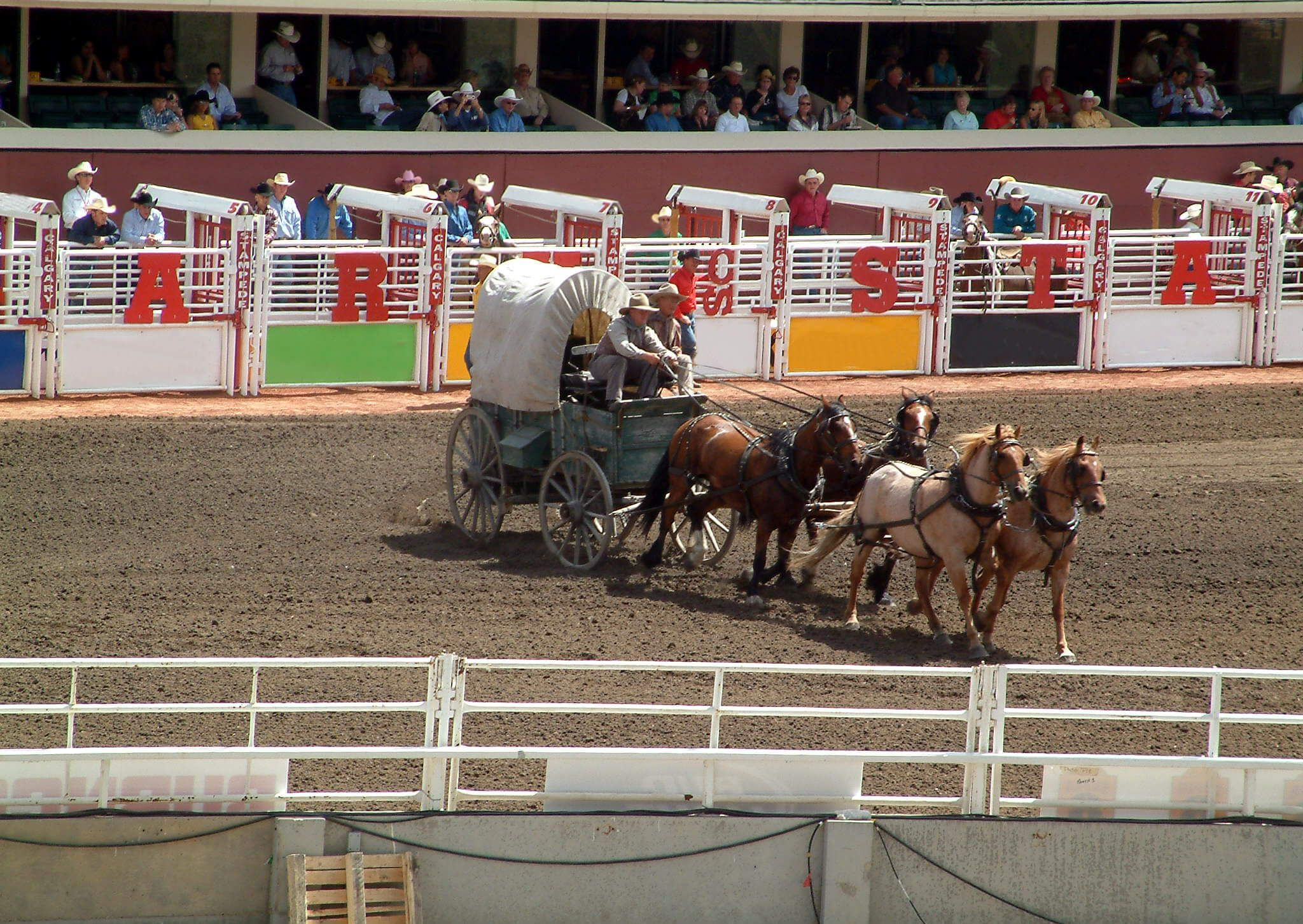
In 1923, Weadick invented the wagon race to add a dose of adrenaline and excitement to the event. Ranchers were invited to get in their "chuckwagons," their covered wagons and race to win numerous prizes.
The enthusiasm was immediate! The Rangeland Derby, nicknamed the "Half-mile of hell," was a success and the first advertisements began to appear on the now-sponsored wagons.
Each racing team is composed of a driver and his 4 horses pulling the wagon, supported by two or four riders mounting individual thoroughbreds and following the wagon.
The first to cross the finish line is declared the winner. The total prize money over the 10 days exceeds 2 million Canadian dollars!
This sport is controversial, as it has led to the death of horses and drivers over the years.
The agricultural exhibition
When it all began in 1886, Alberta was a rural province. This is no longer the case today, but the agricultural exhibition remains an important part of the Calgary Stampede.
Visitors come to see various demonstrations, cattle breed presentations, or competitions, like the best blacksmith competition.
The Midway
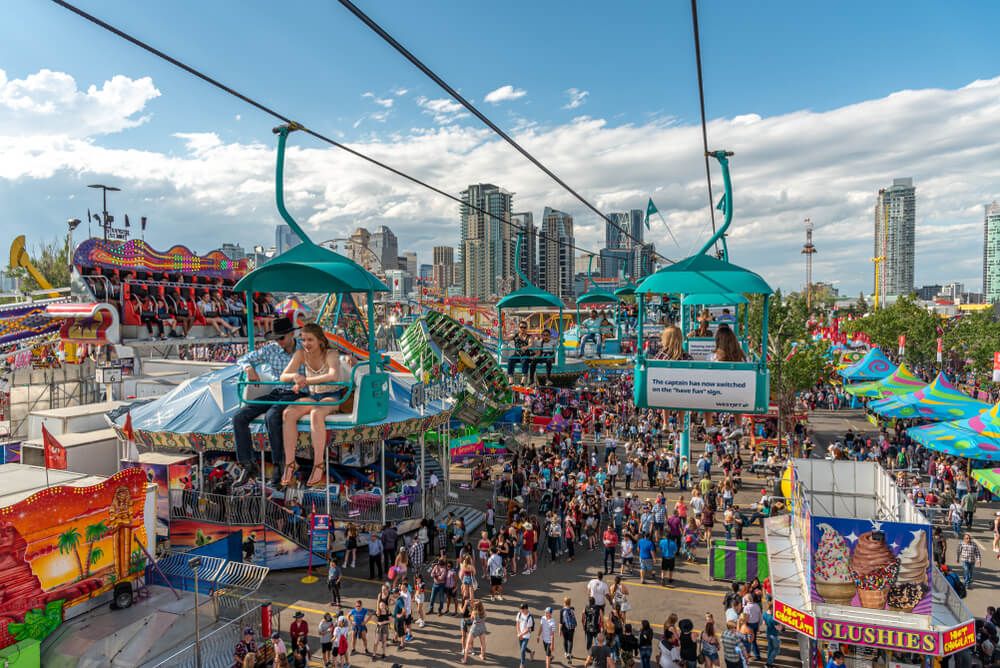
The only profit-making part of the event, the Midway is both an integral part of the Stampede while being completely apart from the main theme. It's a giant amusement park that opens for the duration of the festival, with traditional rides as well as stages for concerts.
The Pancake Breakfast
Offering pancakes for breakfast has become an institution at the Stampede!
It all started in 1923, when one of the wagon drivers, Jack Morton, invited people passing by to share his breakfast.
Nothing more was needed to launch a beautiful tradition of sharing!
Today, the largest breakfast site in the city is at Chinook Center mall. 400 volunteers are present to offer pancakes to over 60,000 people!
First Nations
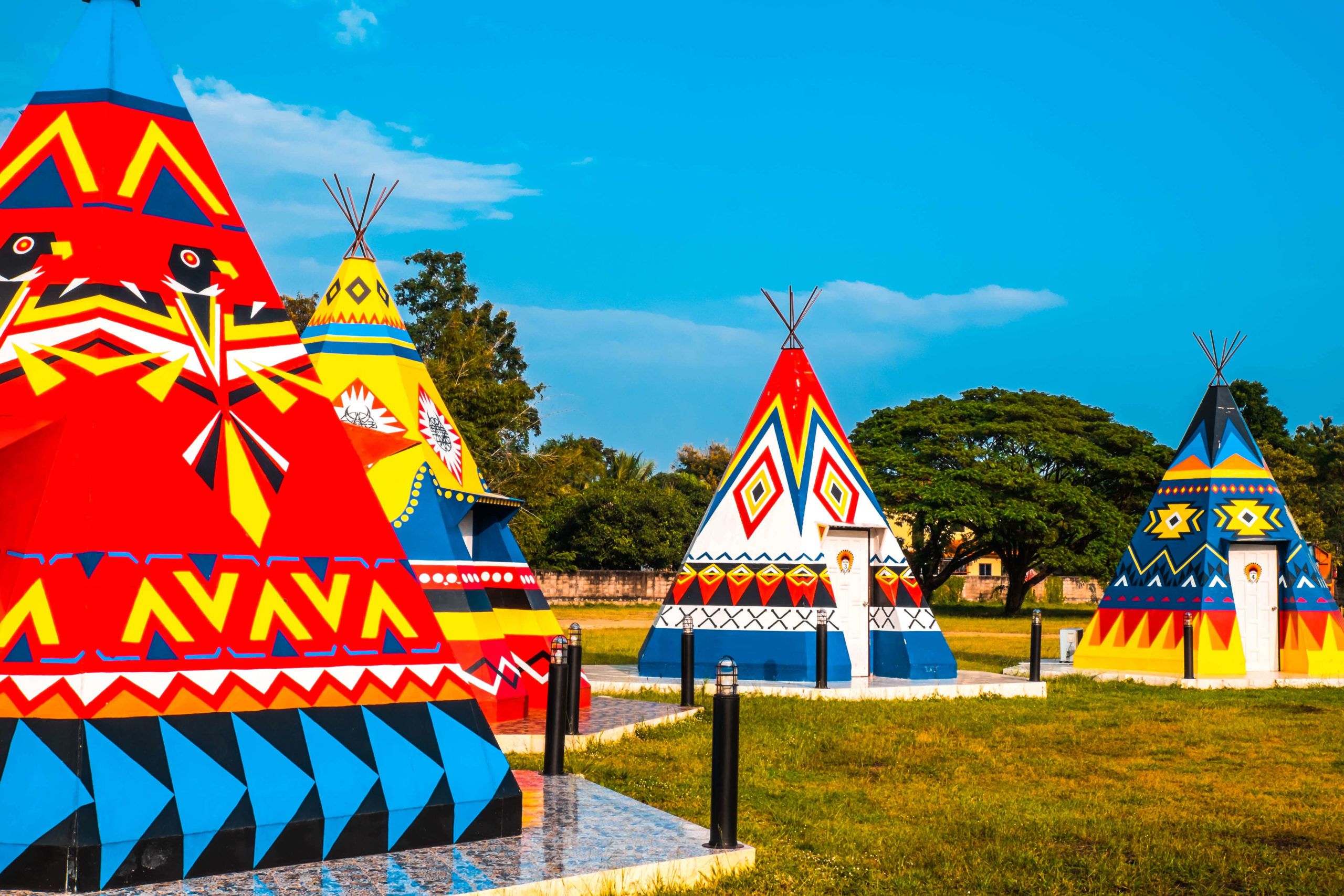
During the first exhibition in 1886, First Nations took part in the festivities. They participated in parades and sporting events and shared their traditional songs and dances with an excited audience. Weadick was firmly intent on creating a Stampede that included Indigenous peoples. But in 1912, the Department of Indian Affairs, wanting to end First Nations rites and traditions, violently opposed the idea and almost succeeded in banning their participation. Weadick, counting on the support of the future prime minister, was able to stand up to the department, and hundreds of members from 6 different tribes participated in the 1912 Stampede. They set up their most beautiful tipis, were the most popular in the parade, and Tom Three Persons, from the "Blood" tribe, was the first hero of the Stampede, the only Canadian champion, and first man to successfully ride "Cyclone," a famous untameable horse.
So all's well that ends well? Well no, that would be too simple.
The history of Canada and its First Nations is much more complex. And between 1914 and 1932, the Department of Indian Affairs and Guy Weadick would engage in a fierce struggle, with modifications to the "Indian Act," making their presence illegal, to restoration of their right to participate, and so on.
Despite all these conflicts, the Indigenous peoples around the Calgary region have always been enthusiastic participants and their "Indian village," where they present crafts and organize pow-wows, has always been one of the great must-sees of the Stampede and is still today a great favorite of the festival. The tipi owners are descendants of the first participants and, generation after generation, they show gratitude toward the event for having helped preserve and spread their culture.
In 2018, the Indian village was renamed "Elbow River Camp" to reflect, I quote: "reconciliation and a better understanding of Indigenous peoples as being modern, strong and resilient."
In conclusion
The Stampede is Canada's most profitable festival, ahead of Ottawa's "Snow Ball," Toronto's "Canadian National Exhibition," and Montreal's "Just for Laughs" festival. The economic impact of the festival is enormous! It's estimated that over 10 days, the province generates more than 220 million dollars!
The Stampede was originally created to promote Calgary's traditions, but its current impact goes far beyond Canada's borders!
It's a typical event not to be missed if you're in Western Canada at this time.
A show you won't soon forget, and guaranteed change of scenery!