© Shutterstock
 Votre guide Ryo
What to Do in Cyprus: 19 Must-See Attractions to Visit in 2026
Cyprus may be the most underrated Mediterranean destination in Europe. The third-largest island in the Mediterranean, it is full of paradoxes: a capital still cut in two by a demarcation line patrolled by UN peacekeepers, Roman mosaics from the 2nd century buried just metres from hotel complexes, mountain villages at 1,700 metres altitude where it snows in January, and fine sandy beaches where the water reaches 28°C in September. If you are wondering what to do in Cyprus for a one-week or ten-day trip, this island has more than enough to keep you well beyond your sunlounger. Our Ryo app lets you explore the main sites with detailed audio commentary, at your own pace, with no group or imposed guide.
In this article, expect an ancient theatre perched 70 metres above the Mediterranean, flamingos wintering just two kilometres from an international airport, the best-preserved medieval city in the eastern Mediterranean, and the limestone rock where the goddess Aphrodite is said to have been born from the sea foam according to the ancient Greeks. From the mythical rock of Petra tou Romiou to the lace-making villages of the Troodos, from the diving wrecks of Larnaca to the Crusader fortresses of Kyrenia, here are nineteen experiences that make Cyprus unforgettable.
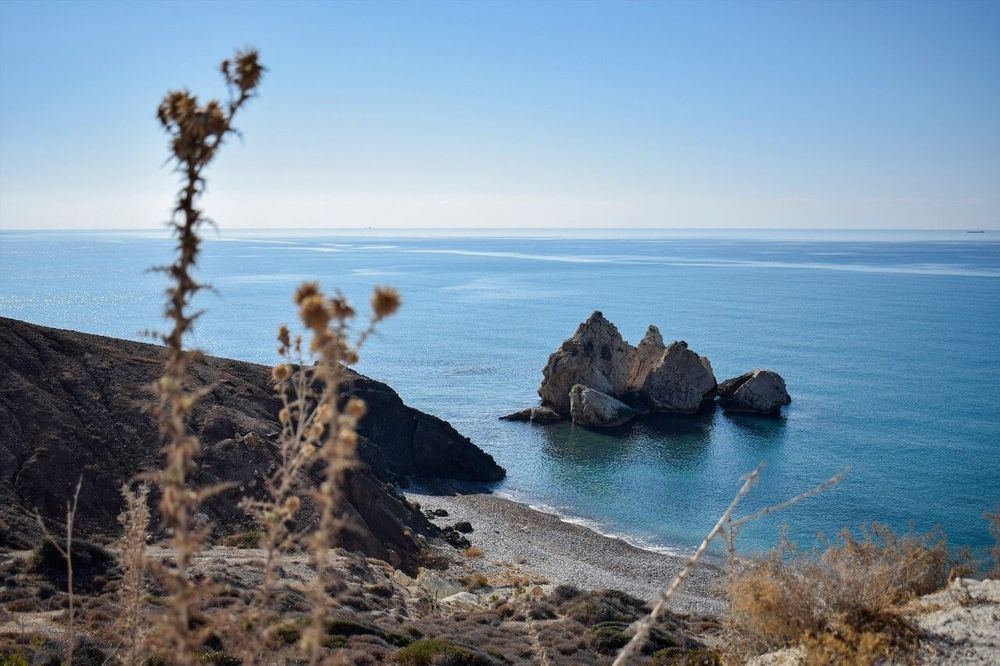
1. Petra tou Romiou: Where Aphrodite Was Born
Petra tou Romiou (B6, Kouklia 8500, Cyprus, rated 4.7/5 on Google based on 349 reviews), 'the Rock of the Roman', is one of the most iconic sites in the entire Mediterranean. This limestone rock formation rises from a striking blue-green sea on the south-west coast of the island, halfway between Paphos and Limassol. Ancient Greek tradition places the birth of Aphrodite, goddess of love, here — born from the sea foam breaking against the rocks. Legend has it that swimming three times around the rock at sunset guarantees eternal beauty and lasting love.
Access to the site is free. The grey pebble beach at the foot of the rocks is not really suited to a comfortable beach day, but that is not the point: what matters is the panorama, especially in the late-day light when the sun bathes the rock in a copper hue. The parking area overlooking the coastal road is paid (around €2), but a few free spots can be found a little further along the roadside.
The site is listed as a UNESCO World Heritage Site as part of the Paphos archaeological ensemble (inscribed in 1980). A few kilometres away, in the village of Kouklia, the site of ancient Palaepaphos houses the ruins of one of the most important sanctuaries of Aphrodite in the ancient world. If you have a car, combine both in a half-day: Kouklia in the morning, Petra tou Romiou for the golden hour in the late afternoon.
Plan to arrive early (before 10am) or late (after 4pm) between June and September. The low-angle evening light transforms the site into an almost cinematic setting, and you avoid the tour buses that unload their groups in the middle of the day.
2. The Archaeological Park of Paphos
If you were to visit only one archaeological site in Cyprus, it would be this one. The archaeological park of Paphos (Kato Paphos) has been a UNESCO World Heritage Site since 1980 and concentrates, across just a few hectares by the sea, remains spanning from the Hellenistic period to the Middle Ages.
The centrepiece of the park is its Roman mosaics, discovered from 1962 onwards in the Houses of Dionysos, Aion, Theseus and Orpheus. These floor mosaics, dating from the 2nd to the 5th century AD, depict mythological scenes with remarkable precision and vividness of colour: the first harvest of Dionysos, Theseus's battle with the Minotaur, the labours of Heracles. They survived seventeen centuries beneath Cypriot soil, protected by the shelters that cover them today. These canopies also serve a dual purpose in sunny weather: they shade visitors too — a welcome consideration in summer.
Two kilometres to the north, the Tombs of the Kings are the second highlight of the park (separate ticket). The name is misleading — no kings were ever buried there — but the scale is impressive. These hypogea carved into the limestone in the 4th century BC mimic the architecture of the houses of the living, with peristyle, Doric columns and a central shaft. The late-day light casts shadows that give the visit an almost cinematic atmosphere.
Round off the visit with the medieval castle of Paphos, reachable on foot from the park in about twenty minutes along the seafront. Built by the Byzantines, reinforced by the Lusignans and ultimately used by the Venetians as a munitions warehouse, it dominates the harbour in a way that neatly sums up Cyprus's historical layering. Allow a minimum of three hours for the main park alone, or a full day if you include the Tombs of the Kings and the castle. Bring water and wear closed shoes — the ground is uneven and the Cypriot sun is unforgiving. The Ryo audio-guided tour of Paphos guides you from one mosaic to the next, bringing the myth behind each scene to life — ideal for not missing anything without a paper guide.
3. Nicosie: The Still-Divided Capital
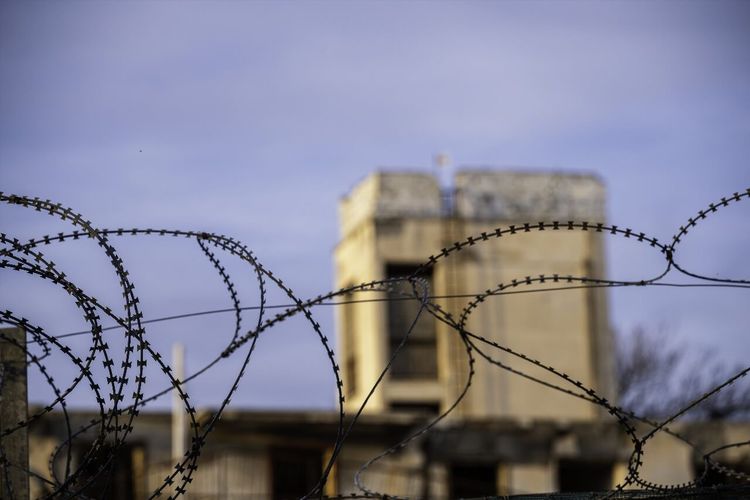
Nicosie is the only capital in the world still cut in two by an active demarcation line. The green line, drawn in pencil by a British general in 1963 and then materialised in concrete and barbed wire after the Turkish military intervention of 1974, crosses the island from east to west for 180 kilometres. In the old city, it passes just metres from café terraces and souvenir shops.
Crossing the line via the Ledra Street checkpoint is one of the most singular experiences the island has to offer. On the southern side, the Greek Cypriot old city with its Venetian ramparts from the 16th century (eleven bastions connected by compacted-earth walls, forming a polygon 4.5 kilometres in circumference), its jewellery shops, its lively cafés and its excellent archaeological museum. On the northern side, under Turkish Cypriot administration, the atmosphere changes dramatically: mosques, spice markets, street names in Turkish, and the melancholy of British colonial buildings undergoing rehabilitation. The Selimiye mosque, formerly the Gothic Cathedral of Saint Sophia, built between 1209 and 1326 and converted into a mosque after the Ottoman conquest of 1570, is worth the crossing on its own. The Gothic ribbing of the nave and the Oriental carpets create a unique architectural syncretism.
To understand the complexity of the division, stop at the Ledra Checkpoint Museum (southern side, free entry): period photographs, testimonies, and a timeline. Then, on the northern side, the Bandabuliya covered market offers spices, textiles and halloumi in 19th-century colonial halls.
Set aside a full day for Nicosie, starting the visit in the morning on the Greek side. Cross over at midday — restaurants in the northern city are cheaper and the food is excellent. Return to the southern side in the late afternoon; the light on the Venetian ramparts is particularly beautiful between 5pm and 7pm. Identity documents are required at the checkpoint.
4. The Kykkos Monastery
The Kykkos Monastery is the richest and most famous in Cyprus. Founded in the late 11th century in the Troodos mountains, at an altitude of 1,318 metres, it overlooks a forest of black pines and cedars that contrasts seasonally with the coastal beaches. The current complex, entirely rebuilt after several successive fires, dazzles with the opulence of its gilded mosaics, marble and carved woodwork.
The central relic is an icon of the Virgin attributed to the evangelist Luke himself. It is kept behind a silk veil that no one — not even the monks — is permitted to lift. Local tradition holds that anyone who has attempted to do so was struck with blindness or some other calamity. Entry to the monastery is free, but a strict dress code applies: shoulders and knees must be covered for both men and women, enforced at the entrance without exception.
Two kilometres above the monastery, on Throni peak, a large bronze statue and the tomb of President Makarios III, the first president of the independent Republic of Cyprus, offer a panoramic view over the Troodos ridges. On a clear day, the sea is visible on both sides of the island. It is both a national pilgrimage site and an exceptional viewpoint — a duality characteristic of Cyprus.
The monastery can be included in a day exploring the Troodos, combined with the villages of Omodos and the painted Byzantine churches. Plan your visit in the morning: the influx of tourists in the middle of the day between June and August is considerable.
5. The Troodos Mountains and Their Villages
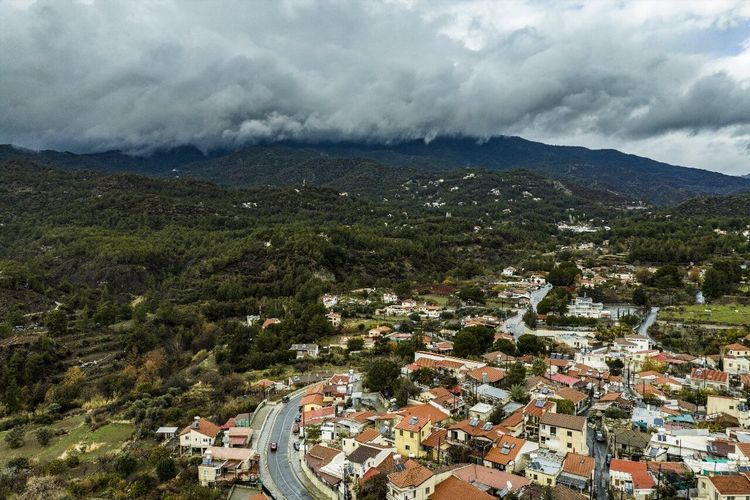
The vast majority of travellers spend their holidays in Cyprus on the coast. This is often a missed opportunity. The Troodos mountains, which peak at Mount Olympus at 1,952 metres, form a world of their own: winding roads through pine forests, villages with volcanic stone houses, and ten painted Byzantine churches inscribed on the UNESCO World Heritage List since 1985.
These medieval frescoes survived because the mountain villages were difficult to access — iconoclastic destruction and looting largely spared these sanctuaries. The Church of Archangelos Michaïl in Pedoulas, Stavros tou Agiasmati in the Pitsilia region (whose 15th-century frescoes foreshadow Italian Renaissance painting) and the Church of Panagia Asinou near Nikitari are among the most remarkable. They are small, sometimes open only a few hours a day (check opening times at the local tourist office), and of a sober beauty that contrasts with the ostentation of the Kykkos Monastery.
In winter (December to March), the Troodos slopes host a modest ski resort — two ski lifts, a few accessible runs — enough for a few hours of improbable skiing on a Mediterranean island. It is a curiosity that attracts Cypriots themselves on family outings. In summer, temperatures at the summit are 8 to 10°C lower than on the coast, making it a precious refuge during the heatwaves of July and August.
The village of Kakopetria, in the Solea valley, is one of the best-preserved on the island: stone houses with wooden balconies, cobbled alleyways, tavernas with terrace tables. Two of the most accessible painted churches (Panagia Podithou in Galata and Archangelos Michaïl in Pedoulas) are less than half an hour's drive away.
6. Larnaca and the Hala Sultan Tekke Mosque
Larnaca is the most accessible city in Cyprus — its international airport is the island's main point of entry — and yet one of the least appreciated by travellers who head straight to Paphos or Ayia Napa on arrival. A mistake.
The Hala Sultan Tekke mosque (Larnaca Salt Lake, Larnaca, Cyprus, rated 4.2/5 on Google based on 4,698 reviews), built on the edge of the Larnaca salt lake just a few kilometres from the airport, is one of the most important pilgrimage sites in Islam. The lake itself is spectacular from November to March: it hosts flamingos by the thousands — up to 12,000 individuals in some years — which turn the surface into a pink cloud at dawn. In summer, the lake dries out and is covered in a blinding white salt crust. The contrast between the two seasons is striking.
In the old city, the Chapel of Saint Lazarus is one of the finest examples of Byzantine architecture on the island. Built in the 9th century over the supposed tomb of Lazarus, who is said to have lived in Larnaca after his resurrection before becoming the city's first bishop, it blends Byzantine and Gothic influences in an unexpected harmony. The crypt, accessible via a staircase behind the iconostasis, houses a marble sarcophagus attributed to Lazarus himself.
The Larnaca seafront (Finikoudes) is one of the most pleasant in Cyprus for an evening stroll: palm trees, lively restaurant terraces and the medieval castle that closes the promenade to the south. The atmosphere is that of a relaxed seaside resort, without the bustle of Ayia Napa. Allow half a day to a full day to visit the city properly.
7. Limassol and Its Medieval Castle
Limassol is Cyprus's second city and its most economically dynamic. It makes up for the lack of Nicosie's historical character and Paphos's archaeological abundance with an old town undergoing rehabilitation and a luxury marina opened in 2014 that ranks among the most active in the eastern Mediterranean.
The medieval castle of Limassol is the city's most symbolic building. Built by the Lusignans in the 14th century on Byzantine foundations, it is famous for one particular reason: in May 1191, Richard the Lionheart is said to have married Berengaria of Navarre here — the only royal union ever celebrated in Cyprus. Converted into a medieval museum, it displays armour, ceramics, seals and sculptures covering ten centuries of Frankish and Crusader presence on the island. The Turkish bazaar adjacent to the castle — a maze of alleyways with craftsmen's shops, antique dealers and spice merchants — is worth an hour of exploration at your own pace.
Wine lovers should note that the Limassol region produces Commandaria, a rich dessert wine whose appellation is one of the oldest in the world. The Crusaders were exporting it to Europe as early as the 12th century. Several large wineries on the outskirts of the city welcome visitors for tastings, by appointment or without reservation.
The Molos, the seafront promenade, stretches for several kilometres between the old harbour and the marina, with sculptures, cafés and gardens. It is the ideal place to stretch your legs after a day of sightseeing, especially at sunset.
8. Kourion: The Roman Theatre Facing the Sea
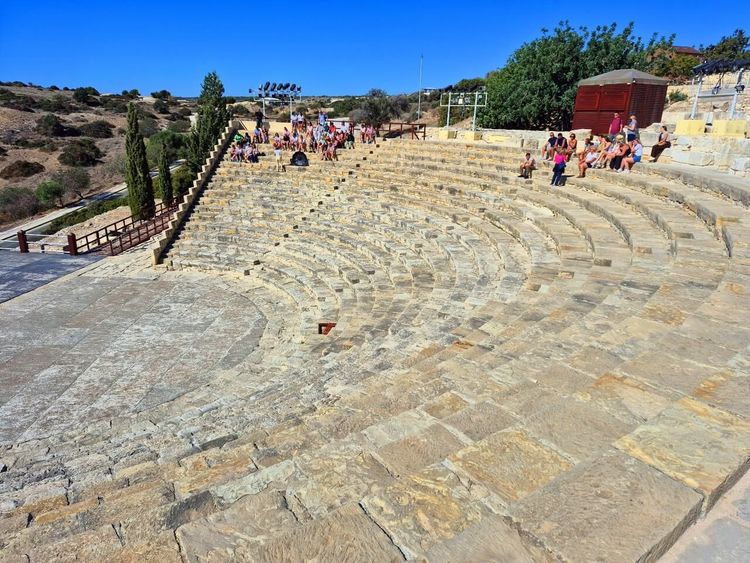
Few archaeological sites in the Mediterranean offer as spectacular a setting as Kourion. This ancient city perched on a cliff 70 metres above the south coast, about twenty kilometres west of Limassol, commands a panoramic view over the sea that makes the visit memorable even for those not passionate about ancient history.
The Greco-Roman theatre is the centrepiece of the site. Partly rebuilt to allow for contemporary performances — concerts in July and August, among others — it can seat 3,500 spectators with the Mediterranean stretching as far as the eye can see as a backdrop. The magic works even outside of performances. Excavations around the theatre have uncovered several 4th-century Roman houses with their mosaics in situ, including the famous House of Eustolios: its floor mosaics depict an Allegory of Creation, and a welcoming inscription still conveys, after fifteen centuries, a formula of hospitality.
Two kilometres west of the main site, the Sanctuary of Apollo Hylates makes an interesting addition: an intact temple in a woodland setting, with restored Doric columns that give a sense of the sanctuary's original appearance. Admission to the main site is €2.50; a combined Kourion–Kolossi ticket is available for €4.50. Allow two to three hours for the whole visit.
9. Cape Greco: The Wildest Coast of the South-East
At the eastern tip of Cyprus, Cape Greco forms a limestone peninsula classified as a national park, where cliffs plunge into a sea of an almost unreal blue. It is one of the most renowned diving sites in the eastern Mediterranean basin.
The natural sea arches carved by erosion into the white rock are the most photographed visual attractions in the area. The most accessible can be reached on foot from the cape's car park in about twenty minutes along a marked trail. To see them from the sea, boat excursions departing from Ayia Napa include them as a matter of course. The waters around the arches offer 30 metres of visibility in fine weather — ideal conditions for scuba diving or snorkelling.
The park also contains several sea caves accessible by swimming from the shore, including the Blue Hole — a natural cylinder carved into the rock that creates a spectacular light effect around midday. The coastal path of 7 kilometres linking Cape Greco to Ayia Napa follows the cliffs with successive viewpoints over gradients of blue and turquoise.
If you are staying in Ayia Napa or Protaras, Cape Greco is less than 20 minutes by car. ## 10. Ayia Napa: Beyond Its Nightlife Reputation
Ayia Napa is the party capital of Cyprus — its clubs, terraces and fine sandy beaches attract a young European party crowd every summer. Reducing it to its nightclubs would, however, mean missing part of what it has to offer.
Right in the heart of the town, the Ayia Napa Monastery is a welcome anomaly: founded in the 16th century around a chapel carved into the rock, surrounded by a defensive wall and a garden shaded by a sycamore said to be 600 years old, it forms an island of serenity set between cocktail bars and souvenir shops. Entry is free.
The Museum of the Sea in Ayia Napa displays remains from Cypriot shipwrecks and a full-scale replica of a 4th-century BC Phoenician vessel. Even more unexpected: since 2021, the town has hosted the first underwater sculpture park in the eastern Mediterranean — a dozen works submerged at a depth of 8–10 metres, accessible with fins and a mask from the shore.
For beaches, Nissi Beach (Ayia Napa, Cyprus, rated 4.5/5 on Google based on 8,286 reviews) is the most famous and the most crowded. Makronissos Beach to the west and Limnara Beach to the east, slightly further from the bustle, offer waters just as beautiful in a more peaceful setting. Outside of July and August, Ayia Napa changes completely: the beaches empty out, prices drop and the town regains the atmosphere of a quiet seaside resort.
10. The Blue Lagoon of Akamas
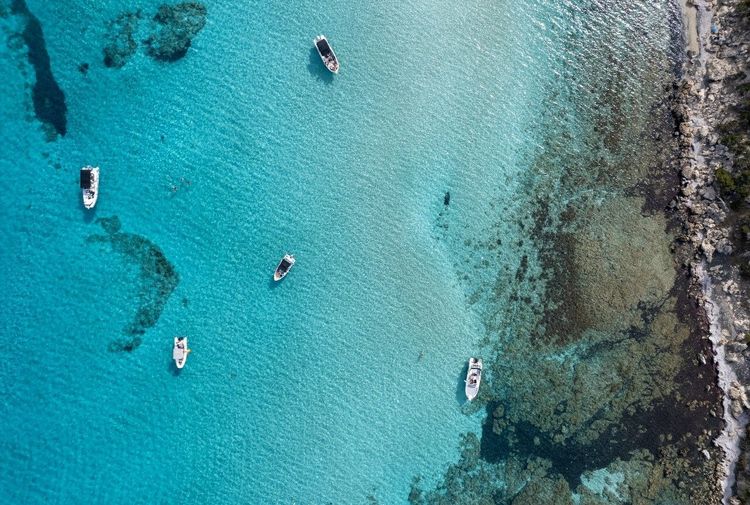
The Blue Lagoon of the Akamas peninsula is not a closed lagoon but a semi-sheltered bay between two rocky headlands at the north-western tip of Cyprus. The colour of the water here has a transparency and turquoise intensity rarely matched in the Mediterranean.
Access is either by boat from Latchi (half-day excursions, approximately €15–20), or on foot via the trails of the Akamas National Park — allow 2h30 to 3h return via the Aphrodite Trail or the Adonis Trail from the visitor centre at Baths of Aphrodite (8820 Polis, Cyprus, rated 4/5 on Google based on 4,413 reviews). On foot, you cross fragrant garrigue of wild thyme and cistus before arriving at the bay from above, with a plunging view over the turquoise water. The boat trip is more relaxing but less memorable in terms of atmosphere.
The Blue Lagoon is also an exceptional snorkelling site: groupers, moray eels, octopuses and posidonia seagrass fill the rocks beneath the surface. There are no bars or restaurants on site — bring sufficient water and food, especially in summer when temperatures regularly exceed 35°C.
The Akamas peninsula as a whole is the last great preserved wilderness of Cyprus, integrated into the Natura 2000 network. It is home to 530 plant species, 35 of them endemic to Cyprus, and its Lara beaches host the nesting of loggerhead and green sea turtles every summer. If you are staying in Paphos, a day in Akamas is essential.
11. Lefkara: Lace and Medieval Architecture
The village of Pano Lefkara is one of the most beautiful in Cyprus. Perched in the southern foothills of the Troodos at an altitude of 650 metres, about an hour's drive from Larnaca, it is famous for its bobbin lace (the lefkaritika, inscribed on the UNESCO Intangible Cultural Heritage list in 2009) and its artisan silverwork.
The ochre stone houses with wooden balconies, the cobbled alleyways too narrow for cars, the women working lace on their doorsteps in the more secluded neighbourhoods — Lefkara has retained an authenticity that many Mediterranean villages lost long ago. Leonardo da Vinci is said to have purchased a lace tablecloth here during his visit to Cyprus in 1481; Milan Cathedral reportedly still holds a piece attributed to him.
The Museum of Art and Lace at the heart of the village presents the history of the lefkaritika with exceptional pieces. The craft shops are numerous but prices vary considerably from one shop to another — take the time to look at several before buying. Allow one to two hours for a visit, longer if you wish to have lunch in one of the village tavernas, some of which serve excellent mezze at very reasonable prices.
12. The Baths of Aphrodite and the Akamas Peninsula
At the north-western tip of Cyprus, the Baths of Aphrodite (Loutra tis Aphroditis) are the official starting point for hikes in the Akamas National Park. A natural grotto shaded by a centuries-old fig tree, fed by a spring that fills a small pool: according to tradition, Aphrodite loved to meet Adonis here.
The reality is less romantic than the legend — the pool is less than two metres in diameter and swimming is prohibited to protect the site — but the atmosphere of a cool grotto and lush vegetation is pleasant after the heat of the road. The site is free and accessible from the village of Polis (11 km away).
From the baths, two marked trails allow you to cross the peninsula: the Aphrodite Trail (7.5 km return) follows the ridge with panoramic views over the north coast; the Adonis Trail (8 km return) descends toward viewpoints over the sea and coastal vegetation. Both are manageable from October to May without particular difficulty, but demanding in summer (intense heat, little shade). Autumn is the best season for hiking in Akamas: the garrigue is fragrant, the light is golden and the sea turtles have finished their nesting season.
13. Famagusta: The Gothic City of the North
Famagusta (Gazimağusa in Turkish) is probably the most fascinating city on the entire island. Located in the northern part under Turkish administration, accessible from the south via the checkpoints without difficulty for European nationals, it preserves a medieval city of a scale and state of conservation that leaves visitors speechless.
The Venetian walls protecting the old city are impressive in scale: 3.8 kilometres of ramparts, massive towers and bastions built in the 1490s, a few decades before the Ottomans stormed them in 1571 after an eleven-month siege. The Citadel (or Othello Castle) owes its nickname to the fact that Shakespeare is said to have set his play in Famagusta — a Genoese governor named Cristoforo Moro did indeed rule there a century before the tragedy was written. You can climb the ramparts for a view over the old city and the sea.
The Cathedral of Saint Nicholas, converted into the Lala Mustafa Pasha Mosque after 1571, is a masterpiece of Mediterranean Gothic. Built between 1298 and 1401, it openly imitates Reims Cathedral in its dimensions and façade, earning it the nickname 'the Reims of the Mediterranean'. Inside, the whitewashed walls, the mihrab and the 16th-century minaret coexist with the original Gothic ribbing in a striking architectural syncretism.
Varosha (Maraş in Turkish), the ghost resort abandoned in 1974 during the Turkish intervention, has been partially reopened to visitors since 2020. This seafront of hotels and apartment buildings in ruins, overrun by vegetation for fifty years, stands as a poignant historical document on the human consequences of the island's partition. Access is via a checkpoint; photography restrictions apply in certain areas.
Allow a full day for Famagusta. Leave early — tour groups arrive around 10:30am. Have lunch in a Turkish restaurant in the old city; the mezze are generous and affordable. The city deserves an overnight stay to be truly appreciated.
14. Kyrenia: The Castle and the Medieval Harbour
Kyrenia (Girne in Turkish), in the northern part of the island, is often described as the most beautiful city in Cyprus. Its medieval castle, its semi-circular old harbour ringed with restaurants and corbelled houses, its carob trees and palm trees — the whole scene has something perfectly composed about it.
The Castle of Kyrenia is one of the best-preserved on the island. Built by the Byzantines in the 7th century, reinforced by the Lusignans and massively extended by Venice in the 16th century, its extraordinarily thick walls give a sense of the military power it once represented. From the corner towers, the view over the harbour, the sea and the Pentadaktylos mountains is remarkable.
Inside, the naval museum displays the city's greatest archaeological treasure: the Kyrenia Ship, the oldest merchant vessel to have been fully recovered in the Mediterranean. This trading boat loaded with wine amphorae, dating from the 4th century BC, was discovered by divers in 1965 at a depth of thirty metres, raised and restored over ten years. It has been on display since 1976 in the castle along with part of its cargo, accompanied by a replica that has made several sea crossings to validate the reconstruction. It is one of the most fascinating maritime collections in the entire region.
The old harbour of Kyrenia is the most photogenic in Cyprus. The Ottoman and Venetian corbelled houses that line it, the colourful boats at moorings, the late-afternoon light — everything explains why Kyrenia consistently features among the most beautiful harbours in the Mediterranean. Restaurants around the harbour charge tourist prices; the adjacent alleyways offer better quality at a better price.
From Kyrenia, a short excursion of a few hours to Saint Hilarion Castle (at 700 metres altitude on the Pentadaktylos ridge) is a must: this Byzantine fortress transformed into a summer residence by the Lusignans in the 12th century is said to have inspired the Sleeping Beauty castle for Walt Disney during his visit to Cyprus. The view from the upper towers takes in both coasts of the island on a clear day.
15. Fig Tree Bay and the Beaches of Protaras
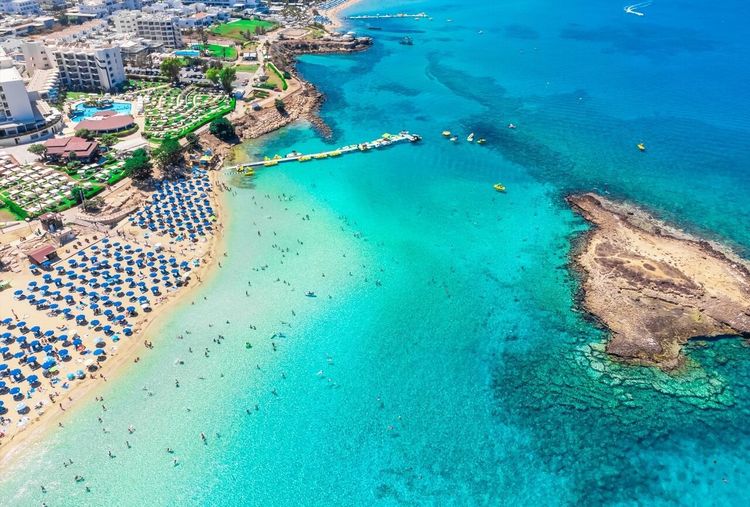
Fig Tree Bay, near Protaras on the east coast, is regularly ranked among the ten best beaches in Europe by travel comparison sites. Its shallow, crystal-clear waters, its fine golden sand and a small island accessible by swimming about a hundred metres from the shore make it a benchmark beach for families.
The facilities (sunloungers, showers, lifeguard in season) are well maintained. High season — July and August — saturates it with British and Nordic tourists: to enjoy it in better conditions, come in May–June or September–October — the water remains swimmable and the beaches breathe. Green Bay beach, reachable on foot heading south in about twenty minutes, is almost as beautiful and far less crowded. Protaras as a whole is calmer and more family-oriented than Ayia Napa — a reasonable alternative for those who enjoy beaches without the party scene.
16. Diving the Zenobia Wreck
The Zenobia regularly features among the ten best dive wrecks in the world. This 172-metre ro-ro ferry sank in June 1980 on its maiden voyage, a few miles from Larnaca, after a failure of its stabilisation system. It rests on its port side at a depth of 18 to 42 metres, accessible to certified intermediate-level divers.
Visibility can reach 30 metres in fine weather, allowing you to take in the entire silhouette of the vessel from the surface. The wreck is inhabited by thousands of fish — barracudas, groupers, moray eels — and hundreds of trucks and trailers that have remained trapped in the car decks since 1980, a surreal image that few wrecks can rival. Several diving centres in Larnaca offer daily trips; expect to pay €50 to €70 for a guided dive on the wreck, equipment included. Even without diving, glass-bottomed boat excursions pass over the wreck and allow its outline to be perceived in fine weather.
17. The Cyprus Museum in Nicosie
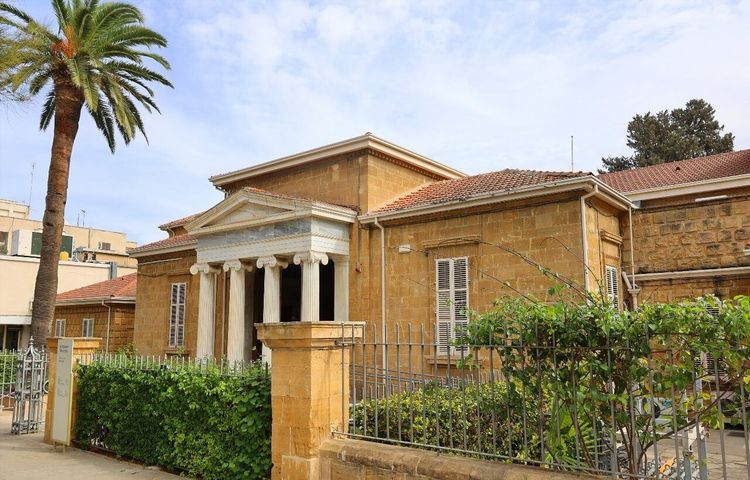
The Cyprus Museum, housed since 1909 in a neoclassical building in the centre of southern Nicosie, is the island's main archaeological museum. Its collection covers the history of Cyprus from the Neolithic period to the Roman era and represents one of the most comprehensive collections of ancient Cypriot art in the world.
Highlights include the Chalcolithic cross-shaped Cypriot idols (2,500–2,000 BC) — terracotta figurines in the shape of crosses with rounded arms of a surprisingly modern appearance — the bronze statue of Septimius Severus (2nd century AD) and an army of some 2,000 terracotta figurines from the 7th century BC discovered at Agia Irini, displayed in a circle in their original arrangement as found in 1929. This last ensemble makes a particularly strong impression: a frozen snapshot of a ceremony 2,700 years old. Admission is €4.50; allow approximately two hours for the visit.
18. Omodos and the Flavours of the Troodos
Omodos is the most visited wine village in the Troodos mountains, and arguably the most photogenic. Its alleyways paved with black and white pebbles, its stone houses with painted shutters, its central square shaded by trellised vines — the atmosphere is that of a medieval village maintained with care and pride.
The Monastery of the Holy Cross (Timios Stavros), at the heart of the village, is said to house relics of the True Cross. Entry is free and open. The tavernas around the central square offer tastings of local wines — red, white, rosé and commandaria — paired with artisan mezze at very reasonable prices. An hour is enough for the village itself, but gastronomy and wine enthusiasts can easily linger for half a day. The village fits naturally into a full day exploring the Troodos.
19. Cypriot Gastronomy: Halloumi, Mezze and Commandaria
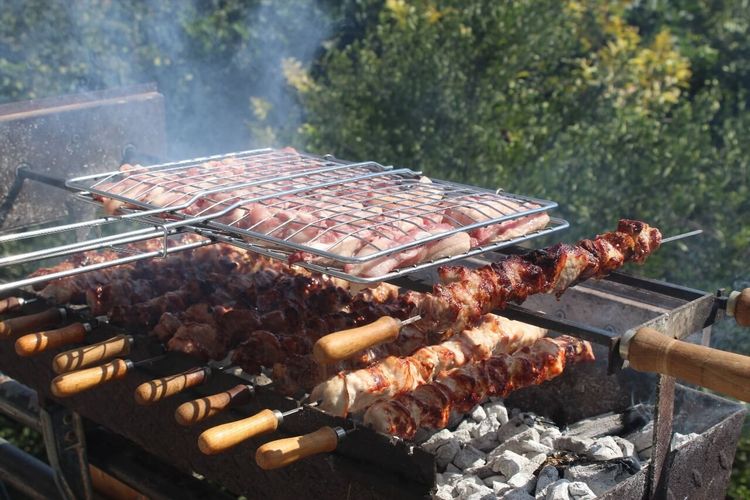
Cypriot cuisine is one of the great surprises of the island for visitors who don't anticipate it. It borrows from Greece, Turkey and the Levant, but develops its own irreducible specialities that deserve to be explored in their own right.
Halloumi, a semi-firm cheese that can be grilled without melting, is the culinary symbol of Cyprus, protected by a European Protected Designation of Origin since 2021. It accompanies virtually every meal: grilled at breakfast with pitta bread, fried as a starter, or served cold in a summer tomato salad.
The Cypriot mezze is the most complete form of gastronomic exploration: a succession of twenty to forty small dishes covering the full local palette — houmous, taramosalata, keftedes (lamb and herb meatballs), loukaniko (red wine sausage), afelia (pork marinated in wine and coriander), koupepia (vine leaves stuffed with rice and minced meat). Expect to pay €20–25 per person in a traditional restaurant (taverna) outside the most touristy areas.
Cypriot wine deserves particular attention. Commandaria, a naturally sweet wine produced in the Troodos villages since at least the 12th century, is considered one of the oldest wines in continuous production in the world. The Order of Saint John of Jerusalem was exporting it to Europe from Cyprus nine hundred years ago. The dry red and white wines from Troodos estates and the Paphos region have improved considerably in quality since the 2000s, with several now winning international awards.
FAQ
What Is the Best Time to Visit Cyprus?
Spring (April–May) and autumn (September–October) offer the best conditions: mild temperatures (22–28°C), warm and swimmable sea, and uncrowded archaeological sites. July and August are sweltering (38–42°C inland) and very busy on the coasts. Winter allows you to visit sites without crowds, but the beaches are closed. A snow-covered Troodos between December and February pleasantly surprises those who don't expect it.
Do You Need a Car to Visit Cyprus?
Yes, a car is almost essential. Public transport (buses) exists between the main cities but is slow and limited. To reach the Troodos, Akamas, remote archaeological sites or secluded beaches, only a car provides the necessary freedom of movement. Driving is on the left (a British legacy). Roads are in good condition, traffic is reasonable outside the main cities. Rentals are affordable except in July and August.
Can You Visit Northern Cyprus Easily?
Yes. Since 2003, several checkpoints have allowed EU nationals to cross freely with a valid identity card. The most convenient are the Ledra Street checkpoint in Nicosie (pedestrians) and the Agios Dometios checkpoint (vehicles). Cars rented in the south are generally not permitted in the north: check your rental agreement. The currency is different: euros in the south, Turkish lira in the north. Whether you are planning a week-long stay or wondering what to do in Cyprus over ten days, the north combines seamlessly with the south.
Is Cyprus a Safe Destination?
Cyprus is one of the safest Mediterranean destinations. The crime rate is very low, and incidents involving tourists are rare. Crossing the green line has presented no difficulties since 2003. The only notable precaution concerns the warm waters of July and August, which can concentrate jellyfish in certain coastal bays.
How Long Does It Take to Visit Cyprus?
One week allows you to cover the main sites in the south — Paphos, Limassol, Larnaca — and take a trip to the Troodos. Ten days offer a more comfortable pace. Two weeks allow for an in-depth exploration, including mountain villages and the Akamas peninsula.
Cyprus rewards curious travellers who venture beyond the main beaches and most obvious sites. From the Roman mosaics of Paphos to the green line of Nicosia, from the medieval harbour of Kyrenia to the Troodos vineyards, each site takes on a new dimension when you know its history. Our audio guide accompanies you site by site with the historical context and anecdotes that information panels never mention — a way to turn each visit into a deep exploration rather than a simple tick on a list. Our audio-guided tours cover the island's cities and major sites, from the archaeological park of Paphos to the ramparts of Nicosia, letting you move at your own pace, with no group or set schedule. Plan your itinerary with Ryo and discover Cyprus freely, one step at a time.