
Créé par Romane, le 20 juin 2026
Votre guide Ryo
12 Villages Around Lake Bourget to Discover in 2026 (and Their Well-Kept Secrets)
© Shutterstock
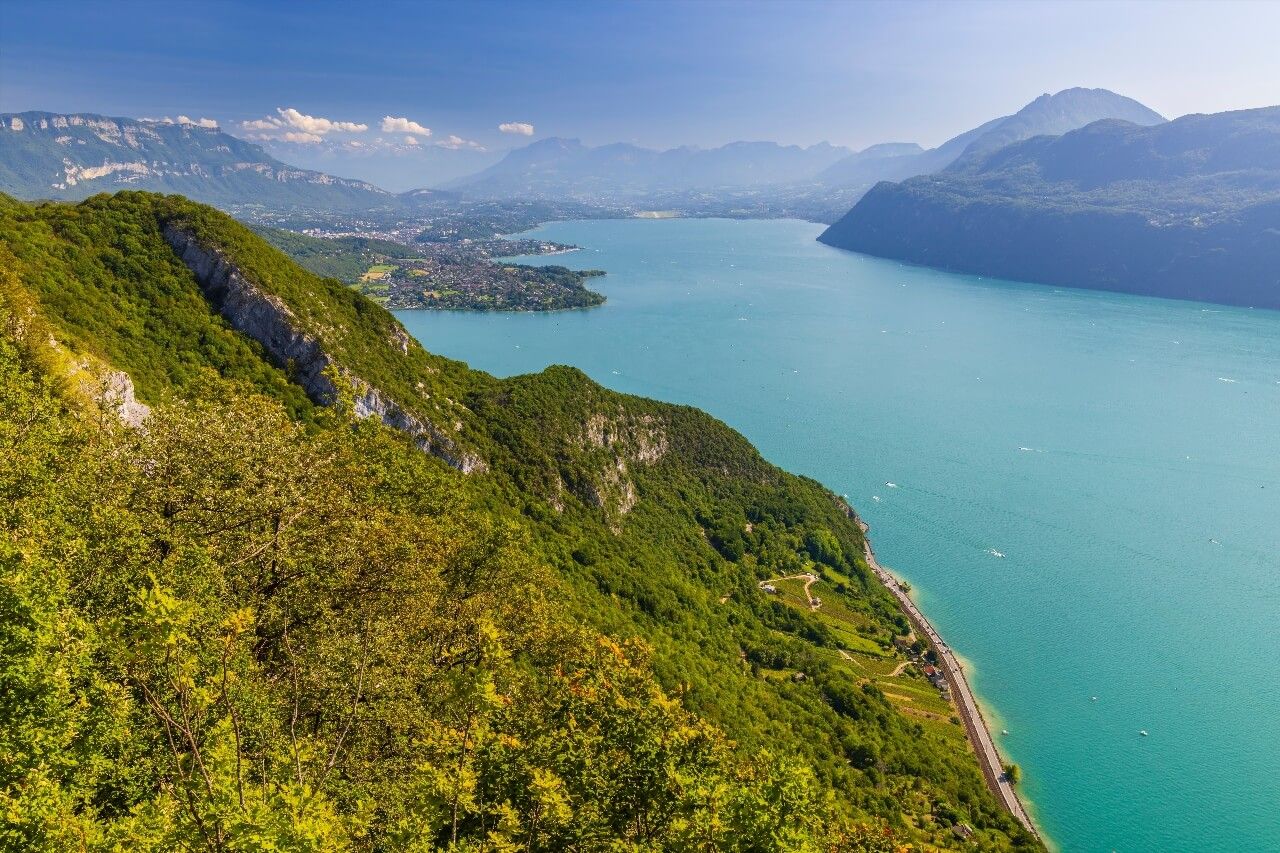
France's largest natural lake covers 45 km² of cold, deep water, framed by limestone cliffs that sometimes plunge from 200 meters high. This guide brings together the most beautiful villages around Lake Bourget, as it's often the shores and their villages that deserve as much attention as the water body itself. Chanaz and its shaded canals, Hautecombe and its abbey perched above the waves, Conjux where fishermen still set their nets at sunrise: the Savoyard geography generates rare diversity here in less than 30 kilometers of circumference.
We have selected 12 villages and hamlets to explore in 2026, from the Savoyard shore to the foothills of Bugey, via the Bauges. Some have barely 300 inhabitants and rank among France's most beautiful villages; others, like Aix-les-Bains, offer real spa town life just steps from the water. To prepare or extend your visits on foot, the Ryo app offers audio-guided Ryo tours in France's most beautiful villages, a way to miss nothing even on the spur of the moment. Happy exploring.
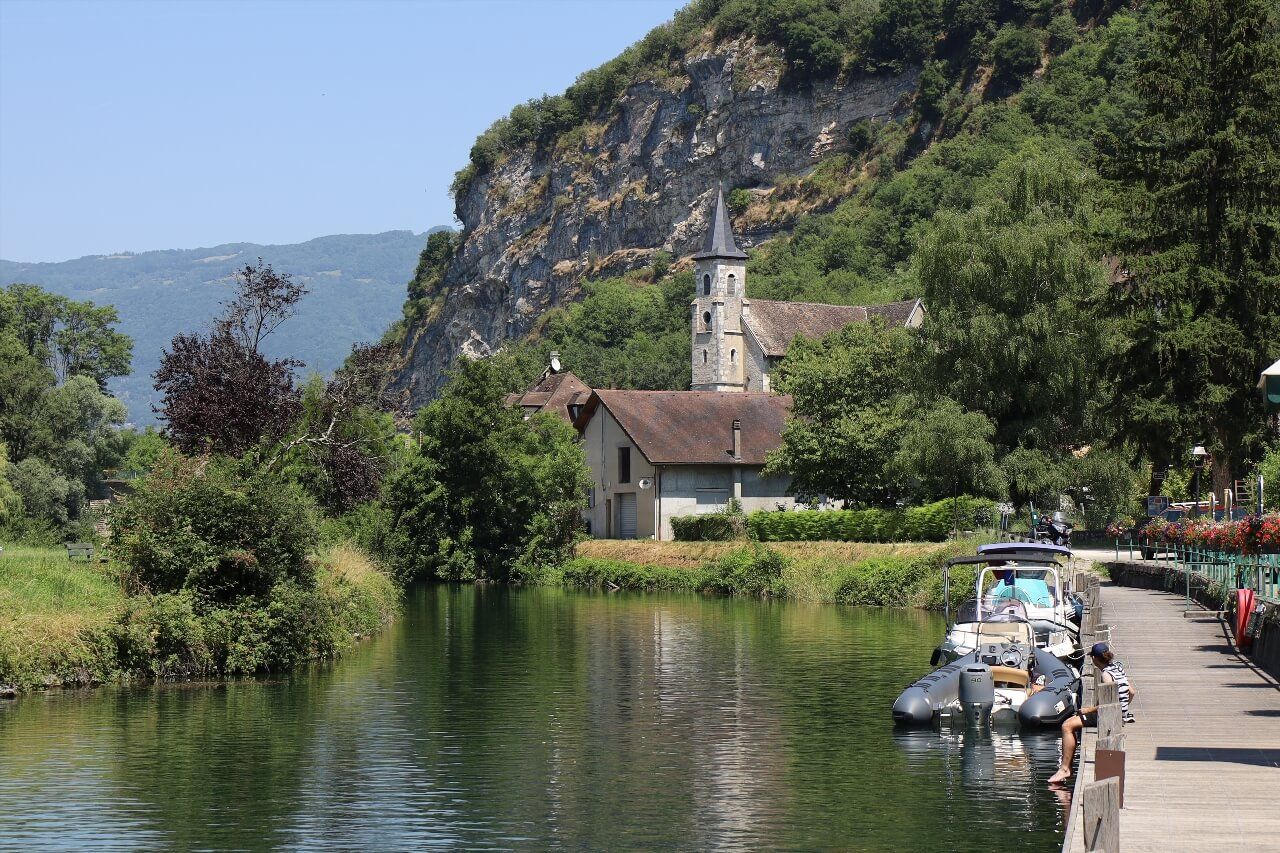
Chanaz, the Little Savoyard Venice
Of all these communes, Chanaz (Village de Chanaz, 73310 Chanaz, rated 4.6/5 on Google with 1.2K reviews) is the one whose reputation has traveled the farthest. The nickname "Little Savoyard Venice" is well-deserved: a canal penetrates the heart of the village, lined with colorful-shuttered houses and bicentennial walnut trees whose fruits are still pressed to extract oil. In season, flat-bottomed boats glide on the green water between two rows of terraces where tome des Bauges cheese and crozets are served. The village, classified as a "Small City of Character," attracts over 150,000 visitors per year.
Allow at least two hours for strolling. The walnut oil mill (a hydraulic mill from 1868, one of the last operating ones in Savoy) can be visited and produces remarkably fine oil: plan for €12 to €18 for half a liter, depending on the harvest. Nearby, Saint-Pierre chapel overlooks the village from a limestone peak: the ascent takes less than ten minutes and offers a view over the flagstone roofs and channel meanders.
Chanaz is above all the natural gateway to the Savières canal, this 3.5 km waterway that connects the lake to the Rhône, and which changes flow direction when the river, in flood, exceeds the canal level: it's one of the rare European waterways to reverse naturally along its entire length. Local boat operators offer trips from the landing stage, ideal for observing gray herons and beavers that populate the banks. Navigation is particularly beautiful between May and September, before summer algae.
For those wishing to venture further, the hamlet of Seillonnaz, perched on the Bugey ridges about twenty kilometers away, offers a 360° view over the Ain plain, but the access road is narrow, reserved for drivers comfortable with hairpin bends.
Le Bourget-du-Lac, Between Abbey and Vineyards
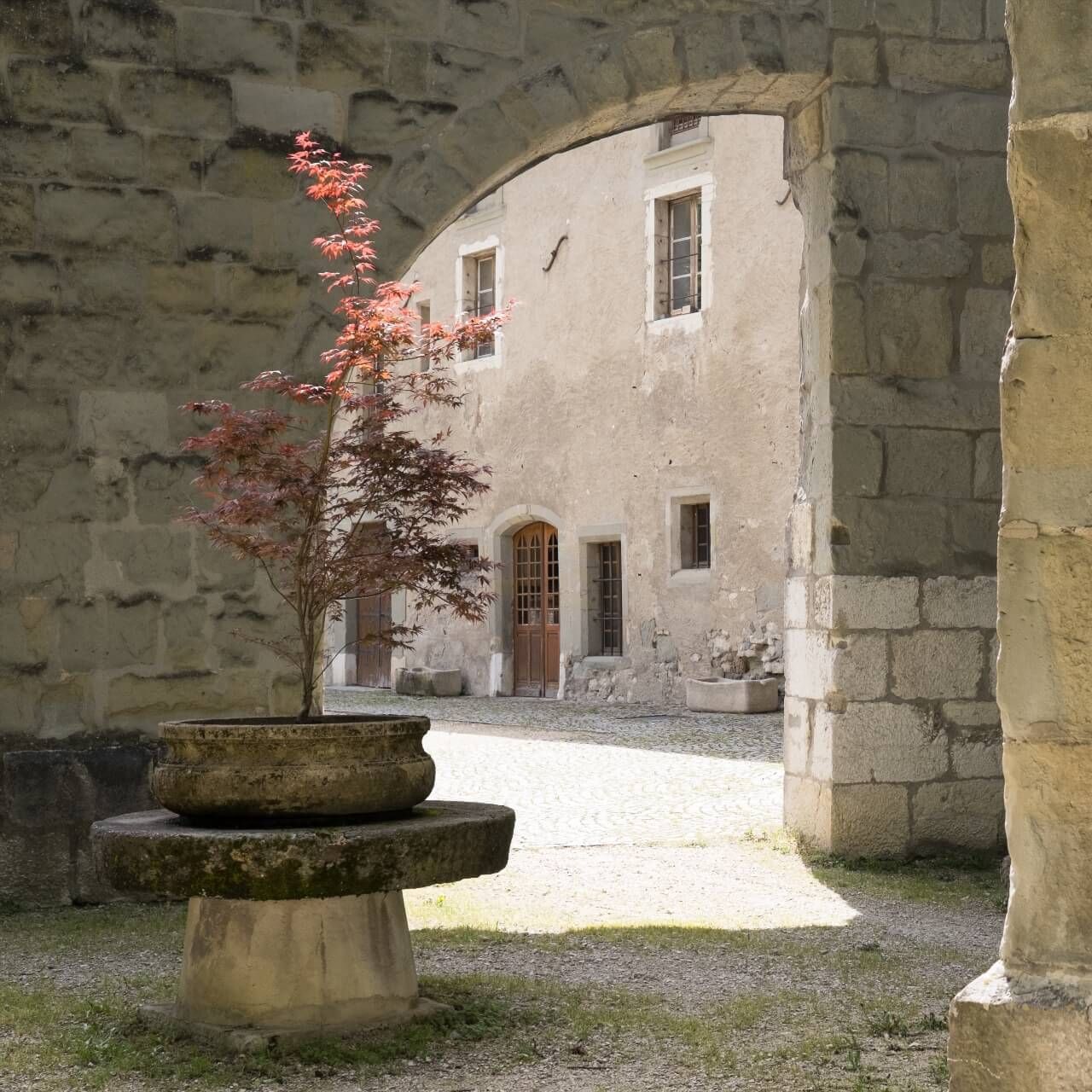
At the southern tip of the lake, Le Bourget-du-Lac is the village most directly linked to the site's history. This is where the Counts of Savoy had established their lakeside residence in the 13th century, and the remains of the Le Bourget-du-Lac Priory (Place du Prieuré, 73370 Le Bourget-du-Lac, rated 4.4/5 on Google with 18 reviews), a Cluniac priory founded around 1040, still bear strong witness. The partially restored cloister houses Romanesque capitals of sculptural quality comparable to the great Burgundian projects of the same period.
The commune stretches along a wooded shore where free public beaches and small marinas alternate. Its beach (free access, supervised in July-August) is one of the best-equipped in the region, with parking 5 minutes' walk away and proper sanitary facilities. In the evening, it's the favorite spot to watch the sun set behind the Épine massif, whose cliffs turn pink before shifting to purple.
The wine terroir also deserves a detour: the Vin de Savoie appellation produces light Roussette and Gamays on limestone soil that local restaurateurs serve at very reasonable prices (€8 to €14 per bottle in cellars). Several family estates open their cellars by appointment. Allow half a day to combine the priory visit, a beach stop, and a tasting, all without a car if you arrive by train from Chambéry (15 minutes, station 10 minutes' walk from the center).
Yenne, Wild Gateway to Bugey
Yenne (Place de la Mairie, 73170 Yenne, rated 3.9/5 on Google with 16 reviews) is often presented as a hiking base, and deservedly so: the town backs onto the first foothills of the Épine massif, with marked trails that climb to the Col de l'Épine (987 m) in less than two hours from the main square. But reducing it to a starting point would be unfair.
The old village preserves a collection of wooden-galleried houses that recalls Aosta Valley architecture rather than central Savoy. Saint-Pierre church, Romanesque in its oldest parts, houses a remarkably preserved 17th-century baroque altarpiece. The central square, shaded by century-old plane trees, hosts a market on Saturday mornings: cheeses, cold cuts, and Bugey wines rub shoulders with market gardeners from the nearby Rhône plain.
Yenne also offers direct access to the Rhône (4 km to the west), allowing you to combine lake and river in the same day. The towpath along the bank is cyclable, ideal for a 25 km loop from the town.
Saint-Pierre-de-Curtille and Hautecombe Abbey
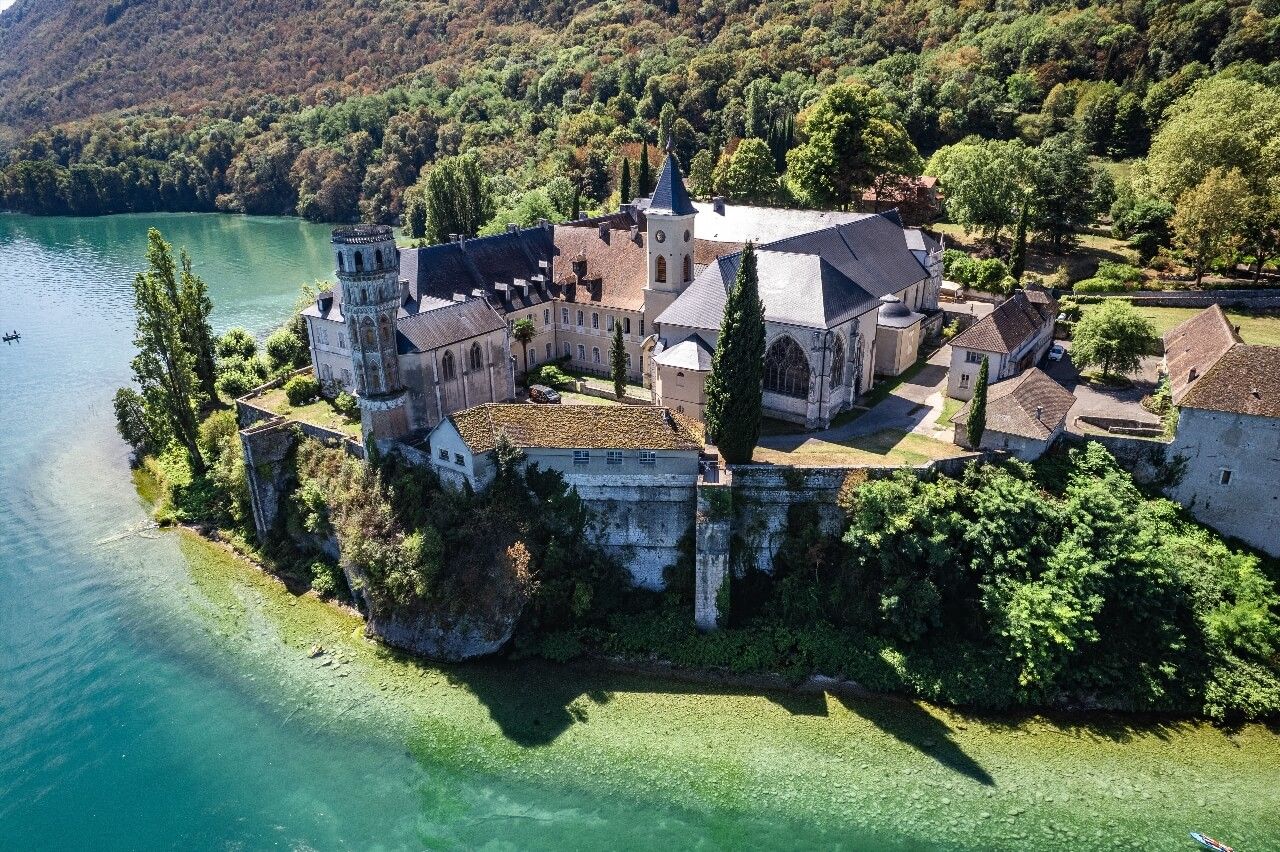
Technically, Saint-Pierre-de-Curtille is a small commune of 450 inhabitants on the west shore. But what attracts visitors is Hautecombe Royal Abbey (Abbaye de Hautecombe, 73310 Saint-Pierre-de-Curtille, rated 4.4/5 on Google with 4,440 reviews), directly accessible by a 3 km forest road or by boat from Aix-les-Bains (daily crossing in season, about 20 min).
Founded in the 12th century by Cistercian monks, Hautecombe became from the 14th century the historic necropolis of the House of Savoy: about thirty princes and princesses rest there, as well as the last kings and queens of Italy. The current abbey church, entirely redesigned in the 19th century in flamboyant neo-Gothic style, is inhabited by the Community of the Chemin Neuf, which ensures daily sung offices. Only the church can be visited, the monastery interior remaining reserved for the community; the nave's acoustics are striking. The visit (30-minute audioguide available in 8 languages) costs about €4.50 for adults and remains free up to 18 years.
The abbey's position on a rocky promontory plunging into the water gives it a silhouette well known to photographers: taken from a boat at dusk, with the façade's reflections on the dark water, it ranks among Savoy's iconic images. Allow one hour thirty on site for the complete visit and terraced garden.
Conjux, the Fishermen's Hamlet
Less than 5 km from Chanaz on the Savoyard shore, Conjux (Hameau de Conjux, 73310 Conjux, rated 4.4/5 on Google with 310 reviews) has fewer than 300 inhabitants and still lives partly from fishing. Professionals go out at dawn to bring back lavaret, arctic char, and perch, three lake species that shore restaurants offer poached or meunière-style. The cooperative sells directly some mornings: arrive before 8:30 AM to find fresh fish.
The marina is tiny but well-equipped for boats under 6 meters. The adjacent beach, little known, often remains empty even in mid-July: to prioritize if you're looking for a quiet spot away from the Aix-les-Bains crowds. The hamlet can be visited in thirty minutes, but the site's tranquility justifies staying for lunch.
Bourdeau and Mont du Chat
Bourdeau (Village de Bourdeau, 73370 Bourdeau, rated 4.5/5 on Google with 190 reviews) is perched on a cliff face, halfway between Le Bourget-du-Lac and Chambéry. The commune has barely 500 inhabitants, but its position overlooking the water from 250 meters high makes it one of the most spectacular viewpoints on the Savoyard shore. The access road is vertiginous and narrow: motorhomes and caravans must absolutely avoid it.
From Bourdeau, a marked GR trail leads to Col du Chat (638 m) and the summit of Mont du Chat (1504 m) in about three hours one way. The view from the summit encompasses the entire lake, from the Savières canal to the south to the Épine slopes to the north; on clear days, you can distinguish Mont Blanc to the east. It's one of the region's most rewarding hikes, accessible to most walkers with moderate level.
Grésine and Brison-Saint-Innocent
These two hamlets of Brison-Saint-Innocent commune constitute the northern shore of Aix-les-Bains, between vineyards and wild beaches. Grésine beach (Plage de Grésine, 73100 Brison-Saint-Innocent, rated 4.3/5 on Google with 178 reviews) is one of the best free beaches in the area: clear water, fine gravel bottom, picnic area under poplars. It attracts Aix families on weekends, but remains calm on weekdays.
The hamlet of Brison proper deserves a few minutes' walk through its wine-growing streets: the dry stone walls and vaulted cellars testify to active viticulture since Roman times. Several producers offer informal tastings on request. The wine route connects Brison to Chanaz via the east shore, a beautiful 18 km bike ride without significant elevation change.
Aix-les-Bains, the Big Neighbor
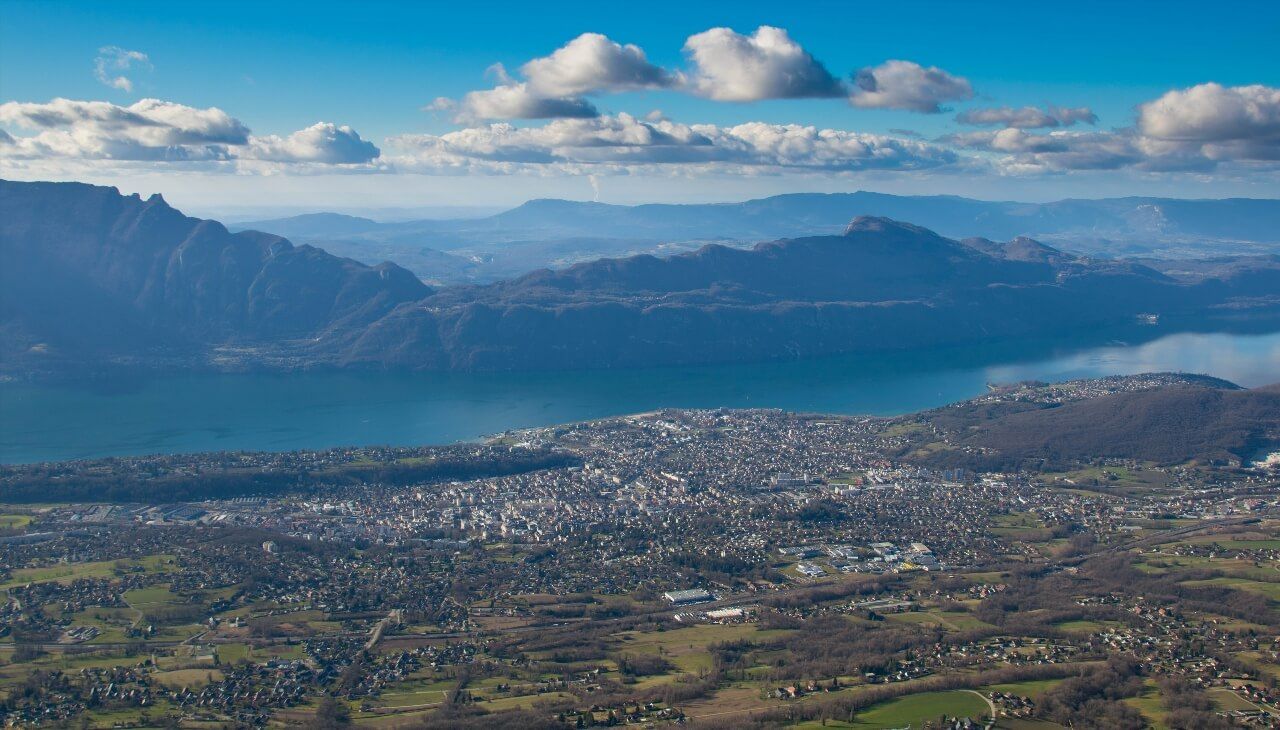
Aix-les-Bains is not a village: it's a city of 30,000 inhabitants with a thermal center active since Roman antiquity. But its role as a hub fully justifies including it in this overview. It's from here that most boats depart for Hautecombe, that kayak rentals are organized, and that hotels and restaurants on the Savoyard shore are concentrated.
The Grand Cercle Casino (circa 1850), the bourgeois villas on the waterfront, and the Roman Temple of Diana (2nd century) form an architectural ensemble that few French spa towns can match. The Aix-les-Bains thermal baths (Avenue Charles de Gaulle, 73100 Aix-les-Bains, rated 3.9/5 on Google with 3,423 reviews) (Chevalley establishment), modernized, welcome tens of thousands of spa guests each year (rheumatology, phlebology) and also offer day wellness packages without medical prescription: expect €45 to €85 depending on treatments.
To explore the city at your own pace, the Ryo audio guide details thematic routes along the shores in its application. The selection of the most beautiful villages around Annecy offered by Ryo can usefully complement your Alpine itinerary if you plan to stay several days in the region.
The Grand Port municipal beach (free access, supervised July-August) borders the waterfront for 800 meters. In off-season, its surroundings are frequented by cyclists and joggers on a greenway completely separated from automobile traffic.
Belley, Capital of Bugey
Belley is technically 25 km from the shore, but its position as the historic city of Bugey makes it the cultural center of gravity of the western slope. Birthplace of Brillat-Savarin (author of "The Physiology of Taste," 1825), it proudly claims its attachment to gastronomy. The 18th-century Hôtel-Dieu, Belley Cathedral (Place Louis Cartier, 01300 Belley, rated 4.5/5 on Google with 196 reviews) (Saint-Jean), and the ochre-façaded manor houses in the historic center form a coherent ensemble often ignored by regional tourist circuits.
The Bugey wines (AOC since 2009) are local pride: cerdon, manicle, montagnieu, names little known outside the region but of serious quality, notably the sparkling rosé cerdon, sweet and fruity, which ideally accompanies desserts. Belley cellars organize free tastings on Saturday mornings. The Saturday market, one of the most well-stocked in the Ain department, is worth the trip alone.
From Belley, the tourist route goes north through Yenne and along the Guiers gorges, a 35 km journey that can be done by bike in a day, with about 400 m of positive elevation gain.
Morestel, the Painters' Village
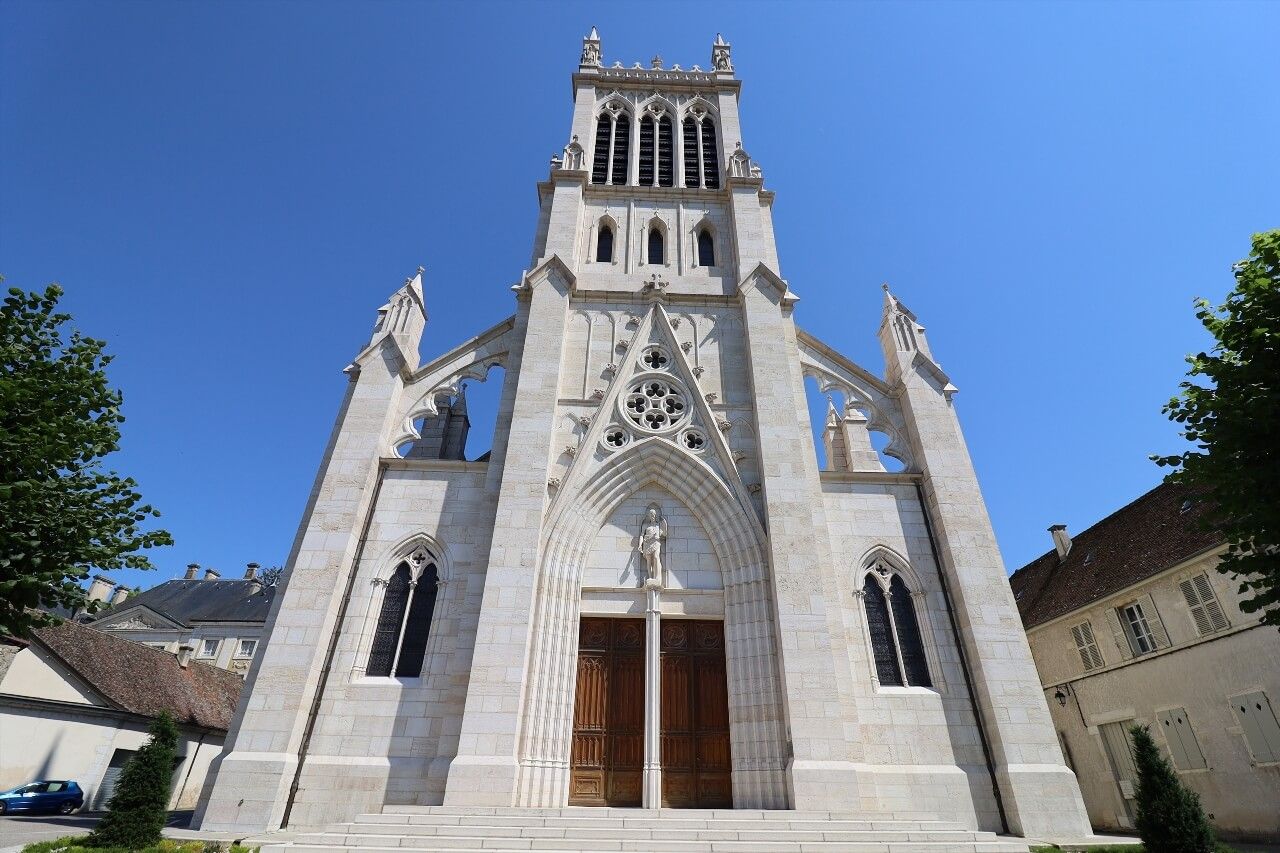
Morestel is often called the "capital of Dauphiné impressionism": marketing exaggeration or historical reality? A bit of both. Jean-Baptiste-Camille Corot painted several canvases there in the 1850s, attracting in his wake a colony of artists that lasted until the early 20th century. The medieval tower of Morestel (Place de la Tour, 38510 Morestel, rated 4.4/5 on Google with 146 reviews), from the 13th century, the only remnant of the old castle, overlooks the town from a wooded hill and now houses a municipal museum focused on this pictorial tradition (free entry).
Morestel is located 30 km away, in Isère. It's more of a half-day excursion than a lakeside stop proper, but the road connecting it to the lake via Lhuis and Montagnieu crosses a wine-growing plateau of great beauty. Plan for the Friday morning market for provisions.
Beaufort and the Bauges: The Peaks That Dominate the Shores
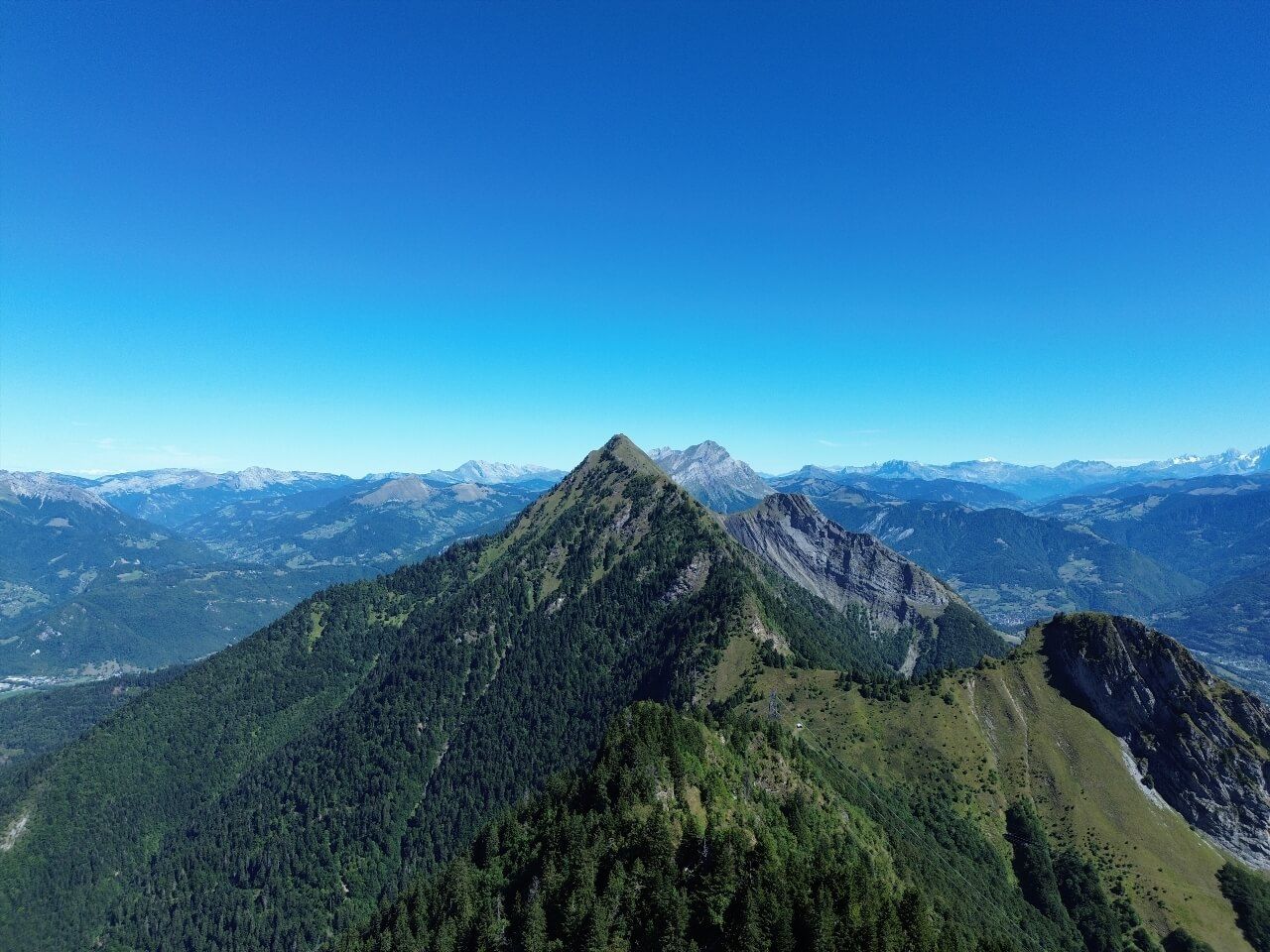
The Bauges massif forms the mountain wall that borders the east shore. Several high valley villages deserve a detour, starting with Beaufort, located 40 km southeast: it's not a lakeside commune, but is directly linked to the site's universe by the cheese makers who come down to supply the markets.
The Beaufort-sur-Doron cheese cooperative (Place du Marché, 73270 Beaufort, rated 4.6/5 on Google with 472 reviews) (founded in 1959) produces more than 500 tons of famous Beaufort cheese each year, a PDO pressed cooked paste cheese. The guided tour of the aging cellar (1 hour, €5/adult) is one of the best introductions to Alpine cheese-making technique. In summer, herds go to high pastures from mid-June and chalets offer tastings at altitude.
In the Bauges, the village of Saint-François-de-Sales opens the Regional Natural Park trails with plunging views from the Revard ridge (1537 m). The Trévignin cable car, in Tresserve commune, goes up to the Revard plateau in all seasons: 15 minutes from Aix-les-Bains to suddenly switch to a high mountain landscape.
Practical Information: How to Explore the Region
How to get there. Chambéry is the main railway hub: station 10 km away, TGV connection from Paris in 3h15. From there, regional buses serve Aix-les-Bains (15 min) and Le Bourget-du-Lac (20 min). The car remains the most practical way to connect the west shore communes (Chanaz, Conjux, Hautecombe), poorly accessible by public transport.
When to go. May-June and September are ideal months: pleasant temperatures (18-25°C), limited crowds, dense vegetation. July-August remain very busy around Aix-les-Bains, but west slope villages retain their character. Winter offers striking misty landscapes, and hotel prices drop 30 to 50%.
Navigation. Boats provide crossings between Aix-les-Bains and Hautecombe from April to October (expect about thirty euros round trip). Kayak and paddleboard rentals are present in Aix-les-Bains, Chanaz, and Le Bourget-du-Lac.
Accommodation. Aix-les-Bains concentrates the largest choice of hotels (€15 to €200/night depending on category). For a more intimate atmosphere, gîtes in Chanaz and Conjux are fully booked from April: reserve three to four months in advance.
FAQ
What Is the Most Beautiful Village Around Lake Bourget?
Chanaz is regularly cited as the prettiest, thanks to its navigable canal, its Savoyard houses, and its walnut oil mill still in operation. Saint-Pierre-de-Curtille also attracts attention for its Hautecombe Abbey, accessible by boat from Aix-les-Bains.
How to Visit Hautecombe Abbey?
Only the abbey church can be visited (about €4.50 for adults, free up to 18 years, 30-minute audioguide included). The site is closed on Tuesdays, a day reserved for the religious community. In season (April-October), boats provide a crossing from Aix-les-Bains: about 20 minutes, one of the most beautiful approaches to the water body. Off season, access is by forest road from Saint-Pierre-de-Curtille.
Is Lake Bourget Suitable for Swimming?
Yes. Several supervised beaches exist on the shores: Grand Port beach in Aix-les-Bains, Le Bourget-du-Lac beach, and Grésine beach in Brison-Saint-Innocent are the most popular. Water reaches 22-24°C in July-August. Water quality is regularly monitored by health authorities, with some episodes of blue-green algae proliferation in August during heat waves.
Can You Cycle Around the Lake?
Yes, but there is no continuous cycle path around the entire perimeter yet. The most complete route is about 55 km via Chambéry to the south and Chanaz to the north. The east shore (between Le Bourget-du-Lac and Brison-Saint-Innocent) has a well-developed greenway. The wilder west shore requires using small departmental roads with little traffic.
What Are the Best Places to Eat in the Area?
For lake fish (lavaret, arctic char, perch), restaurants in Le Bourget-du-Lac and Aix-les-Bains regularly offer them. In Chanaz, several crêperies and inns serve Savoyard specialties (raclette, tartiflette, fondue) at reasonable prices. For Bugey wines, the cellars of Belley and Montagnieu are worth the detour.
Conclusion
From Chanaz and its canals to Hautecombe Abbey perched over the water, via Belley's vineyards and Beaufort's mountain pastures, these communes draw an itinerary of richness that most visitors don't imagine. The lake itself is impressive, but it's its human and architectural periphery that really gives it character.
To prepare your visits and not miss the details that matter, the Ryo app offers thematic audio-guided tours in the region's cities and villages. Also consult the Ryo guide to the most beautiful villages around Annecy and the top villages around Toulouse to extend the exploration of Alpine villages and the great Southwest of France.