
Créé par Emilie, le 20 juin 2026
Votre guide Ryo
France's Most Beautiful Villages: 17 Must-See Destinations for 2026
© Shutterstock
France has 184 officially labeled villages 'Most Beautiful Villages of France', a title that must be earned and can be lost. The association's charter is binding: population under 2,000 inhabitants in the main borough, at least two protected sites or monuments, and a strict evaluation grid covering public space quality, absence of visual nuisances, and tourist vitality. This guide takes you to 17 of them, chosen because they combine what France does best: unusual geography, stone that speaks, and a sense of place that no reconstruction can simulate. Gordes and its 15,000 daily visitors in July, Rocamadour clinging to 120 meters of cliff, Eguisheim built in a spiral around an octagonal castle - each village in this selection has something irreducible. You'll find concrete information here: the best time to arrive, what classic guides don't mention, and which neighboring major city to use as a base. To extend exploration of cities that serve as anchor points for these villages, the Ryo audio guide of Strasbourg covers 32 points of interest in 2h40 from your phone, an excellent starting point before exploring the depths of Alsace.
An upfront warning: 'most beautiful' doesn't mean 'easiest to visit'. Rocamadour is exhausting at 35°C. Gordes is impassable on a Sunday in July between 11am and 4pm. This list assumes its biases and warns you of each one.
The 'Most Beautiful Villages' Label: What the 184 Communes Have in Common
The association was born in 1982 on the initiative of Charles Ceyrac, then mayor of Collonges-la-Rouge, in Corrèze. The idea was simple and ambitious: create a demanding label that promotes rural villages without transforming them into theme parks. Forty years later, the 184 labeled communes are spread across 14 regions and 72 departments. Some figures: the label exists in 10 other countries (Italy, Belgium, Japan, Canada...), which have adopted the French approach. In France, an application takes an average of three years before completion, and between five and ten villages lose their label each decade for failing to maintain criteria.
Selection criteria rest on three pillars. First pillar: built heritage (classified or registered monuments, architectural coherence, facade maintenance). Second pillar: natural and landscape environment (absence of intrusive advertising panels, preserved vegetation borders, access quality). Third pillar: local dynamics (associative life, living crafts, organized tourist reception). A village can be refused for a commercial zone at the village entrance, for poorly concealed satellite antennas, or for too marked demographic decline. The label isn't a decoration, it's a renewable contract.
Useful clarification: the association's label is independent of the television ranking 'Village Préféré des Français' broadcast on France 3. Some television winners are not labeled, and vice versa.
Gordes (Vaucluse): The Most Photographed in Europe
Gordes, in the Luberon, is probably the most reproduced French village worldwide. The silhouette of the fortified village on its limestone spur, with the Renaissance castle at the summit and houses in cascades of dry stone, has graced dozens of magazine covers since the 1960s. Fame has a well-documented downside: the village attracts up to 15,000 visitors per day in peak summer, transforming the streets into human bottlenecks between 10am and 5pm.
The solution is known to repeat visitors: arrive before 8:30am in summer or after 6:30pm. The village empties with surprising speed in late afternoon when tour buses return to Avignon. These golden hours, literally - Provence light tints facades warm yellow, are what you're looking for. Same advice for autumn and spring: on April weekdays, you'll have the streets to yourself before 9am.
The Village des Bories (Route des Bories, 84220 Gordes, rated 4.2/5 on Google for 4,811 reviews), 3 km from the center, is one of France's best open-air museums. About a hundred dry stone huts built without mortar, the oldest dating to the Bronze Age. This classified site illustrates better than any exhibition the ancestral relationship of Provençals with their local limestone. Allow 1h30 visit, admission 6 euros. In high season, the morning visit (8:30am, at opening) guarantees tranquility.
The Abbey of Sénanque, 4 km north, is the most reproduced image of Provence after Gordes itself: the 12th-century Cistercian abbey nestled in a valley of lavender fields. It's only accessible by guided tour (reservation required in July-August, 8 euros), but even from the small road overlooking it, the view justifies the detour. Lavender around Sénanque blooms between mid-June and mid-July depending on the year, not in full August, contrary to popular belief.
For accommodation, bastides and hotels in Gordes are among Provence's most expensive. The sensible alternative: use Apt (15 min) or Coustellet (20 min) as a base, and go up to Gordes for morning light. Avignon, 45 minutes away, offers a much wider choice of accommodations for all budgets, with the TGV Paris-Avignon in 2h40.
Best time: mid-June for lavender in bloom around Sénanque before crowds. October for Luberon autumn colors without a soul in the streets.
Les Baux-de-Provence: The Fortress Between Sky and Scrubland
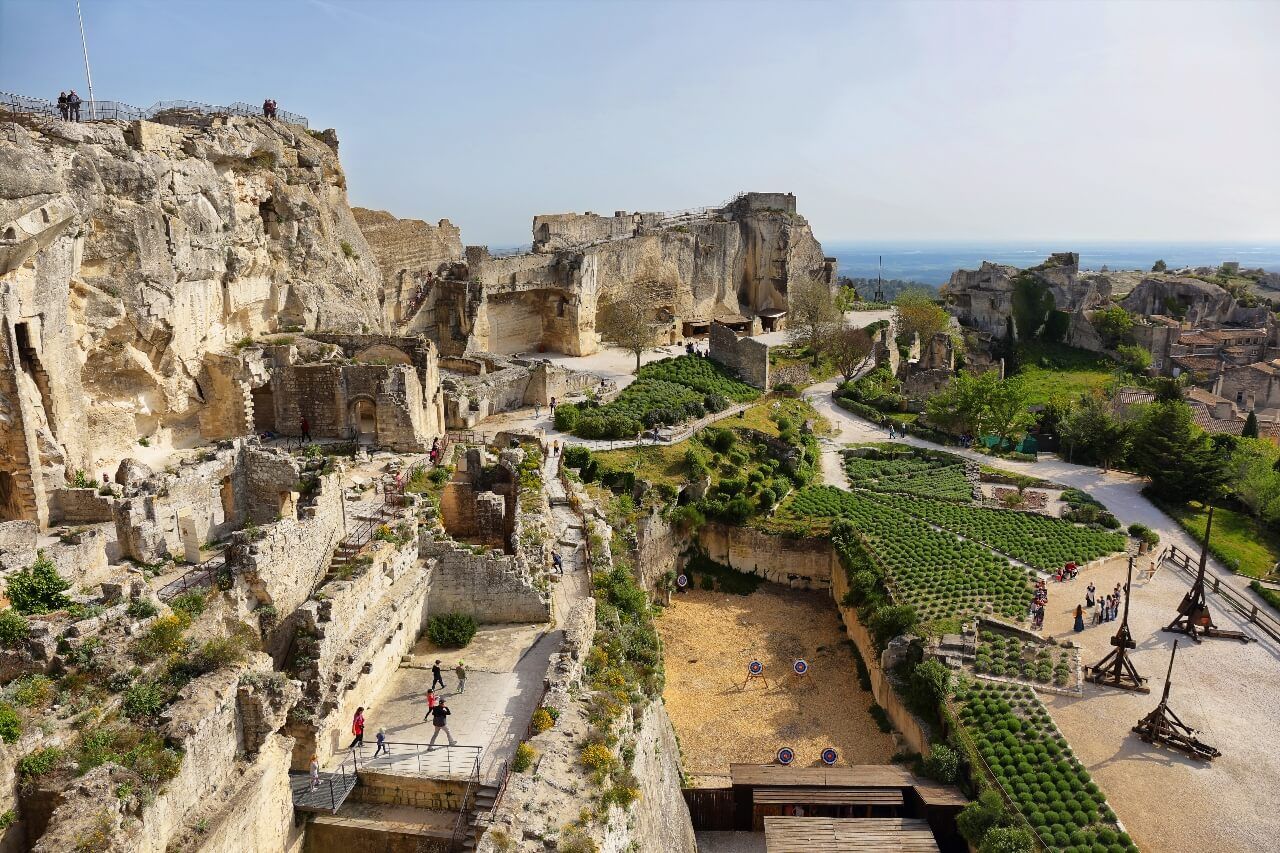
A few kilometers southeast of Arles, Les Baux-de-Provence occupies a rocky plateau of the Alpilles with almost lunar aridity. The medieval castrum has crowned the summit since the 11th century; at its peak, the lords of Baux boasted of descending from the wise king Balthazar and represented one of the most powerful houses in the South. In 1632, Louis XIII ordered the fortress razed to punish local Protestant resistance. What we visit today is a deliberate ruin, not abandonment.
The Château des Baux is the heart of the visit. Allow 2 hours to explore the ruins, reconstructed siege engines (trebuchet, large-scale catapult), and partially covered rooms. Price: 10 euros adult, free for under-7s. The siege engines are impressive and fascinate adults as much as children, with demonstrations organized several times daily in high season.
The Carrières de Lumières, at the village entrance, transforms each summer a former bauxite quarry into a giant immersive exhibition hall: painting masterpieces are projected onto 20-meter-high walls. The show lasts 40 to 50 minutes depending on the season's program. The space is naturally temperature-controlled by rock, making it a refreshing stop in full Provence heat.
From Arles (20 km), access is quick. The ancient city, Roman arenas, Augustus theater, cryptoporticus, constitutes the ideal practical anchor to explore the entire Alpilles in one or two days. Essential practical point: no parking in the village. The only paid parking is below (about 8 euros per day) and it's saturated before 10am in July-August. Come by bike from Arles if you can, the Alpilles cycle path is marked.
Rocamadour (Lot): The Vertical Sanctuary
Rocamadour defies geography as much as gravity. The village literally clings to a 120-meter cliff above the Alzou canyon, tiered on three distinct levels: the medieval city at the rock's foot, the religious sanctuary mid-height with its seven chapels grouped on a single square, and the castle at the summit. Since the 12th century, millions of pilgrims have climbed on their knees the 216 steps of the Grand Escalier to reach the Notre-Dame chapel and its Black Virgin in walnut wood, 68 cm tall, whose blackness comes from hemp burned from thousands of votive candles.
Rocamadour receives 1.5 million visitors per year, making it one of France's most visited sites outside Paris. This figure should alert you to timing. The ideal visit is off-season (September-October or Easter excluding holiday weekends) or weekdays early morning in July-August. At noon in July, the Rue de la Mercerie, the only pedestrian street in the city, is a compact crowd.
The most famous viewpoint isn't in the village but on the L'Hospitalet road, 2 km north: from this plateau, the complete silhouette of the sanctuary on its cliff appears in full, in all its architectural excess. Many visitors stop there for photos and leave without going down - this would be a mistake. The Notre-Dame chapel (12th century), with its Black Virgin venerated for eight centuries, is a place of particular presence even for non-believers. The silence that reigns there at 8am contrasts radically with the street's daytime bustle.
The Rocher des Aigles, just above the castle, is one of Europe's best aviaries: Rüppell's vultures with their 2.80m wingspan, South American condors, peregrine falcons, and red kites - free-flight demonstrations above the canyon are spectacular. Sessions at 11am, 3pm and 5pm in season, expect 13 euros adult.
The Forêt des Singes, 400m from the castle, completes the picture for families: 150 Barbary macaques in semi-freedom on 10 hectares of causses. It's one of the only places in France where you can freely feed these monkeys - handfuls of popcorn are sold at the entrance. For children, it's often the day's strongest memory.
For accommodation base, Sarlat-la-Canéda (55 km) is the reference city for exploring Périgord noir as a whole. Rocamadour naturally combines with La Roque-Gageac, Domme, and Beynac on a two-day itinerary.
Collonges-la-Rouge (Corrèze): One Material, Absolute Power
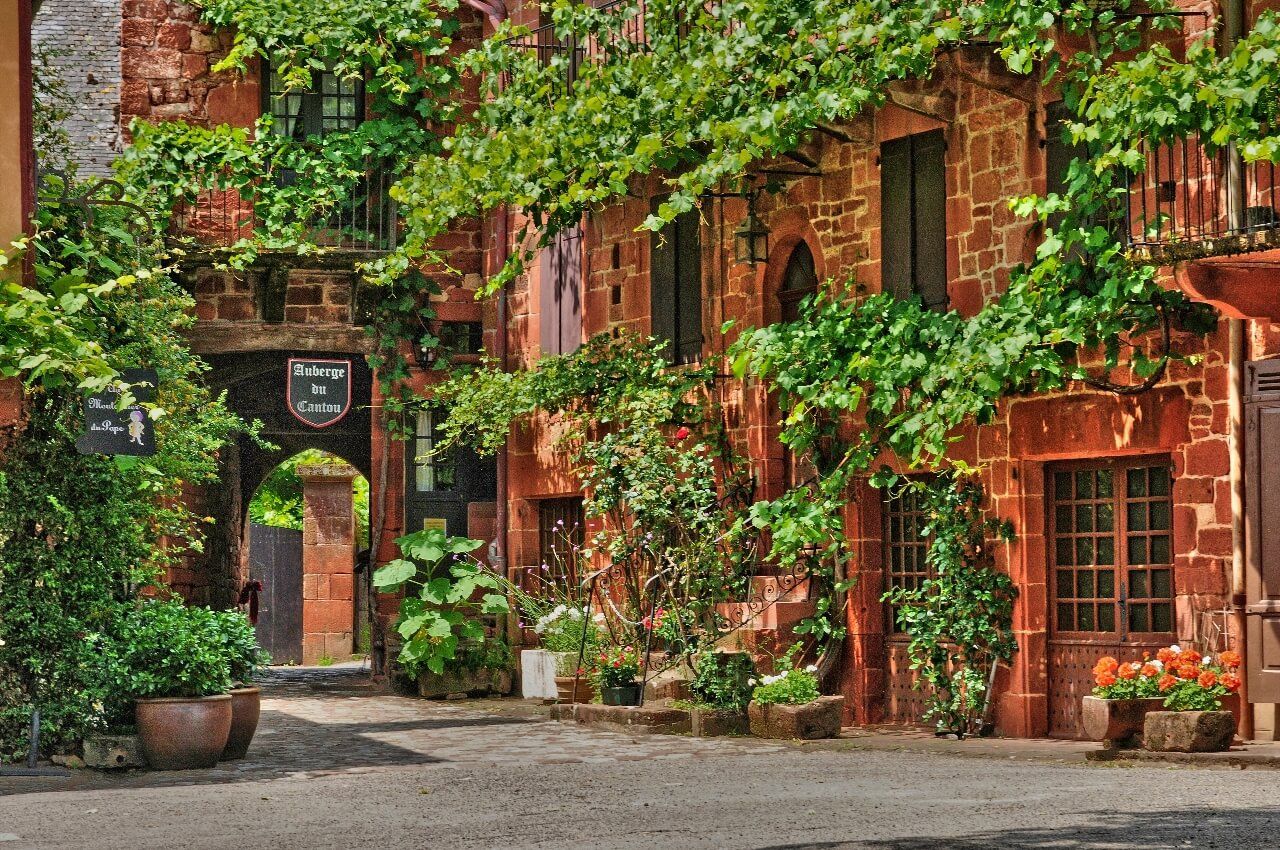
Collonges-la-Rouge (Collonges-la-Rouge, 19500 Collonges-la-Rouge, rated 4.5/5 on Google for 4.1K reviews) is one of the world's few villages entirely built from a single material: red Brive sandstone. Not a facade, not a bell tower, not a portal deviates from this rule. The chromatic coherence is striking, especially in overcast weather when the red stone turns deep bordeaux. In bright sun, the village seems to glow.
The village owes its grandeur to historical proximity to the vicomty of Turenne, whose lords had granted exceptional tax privileges to their vassals. Hence the turreted mansions and notable houses that give Collonges its prosperous village appearance for the era. The 12th-century Romanesque church preserves a Last Judgment tympanum carved with remarkable precision, sheltered under a Gothic porch added two centuries later.
Collonges is also the label's historical birthplace: it was its mayor, Charles Ceyrac, who founded the association in 1982 and organized the first constituent meeting. The label officially saw the light of day in Salers (Cantal), but the intellectual and political impulse came from Corrèze.
The Maison de la Sirène (16th century) is the most reproduced building on village postcards: its facade bears a mermaid carved in red sandstone, wearing a pointed hat, scales rendered with goldsmith precision despite five centuries of weather exposure.
To explore this part of Corrèze and Limousin, Limoges (80 km) imposes itself as the natural base. The Limoges Ryocity covers the Ryo audio guide of Limoges in 17 points, notably Saint-Étienne Gothic cathedral and porcelain quarters. Brive-la-Gaillarde (15 km from Collonges) also offers TGV station and wide choice of accommodations.
Pérouges (Ain): The Middle Ages 35 km from Lyon
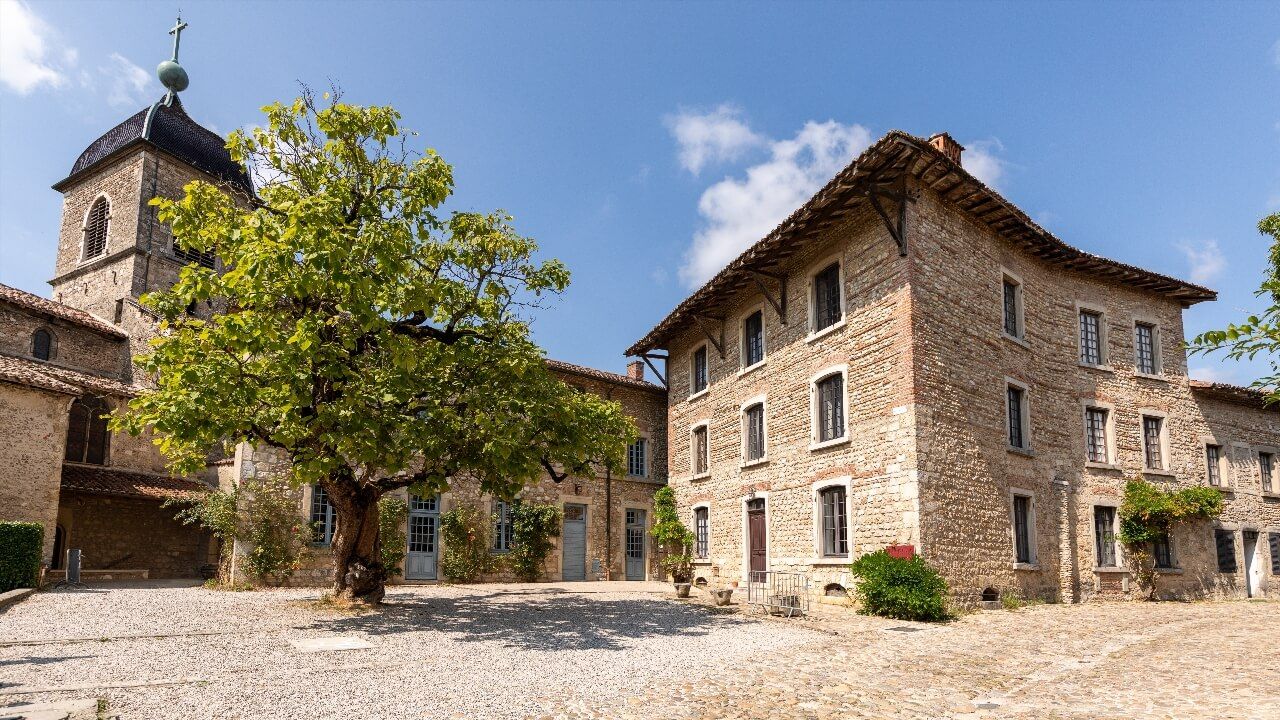
Pérouges, in Ain, combines two rare advantages: being an integrally preserved medieval village and being located 35 km northeast of Lyon, 30 minutes by car from Part-Dieu. This proximity to a two-million-inhabitant metropolis brings significant tourist flow, but also a vibrant economy that keeps the site in good condition.
The village almost disappeared in 1909: abandoned after 19th-century rural exodus, only 12 inhabitants remained and several houses threatened ruin. A safeguarding committee composed of Lyon artists and intellectuals rebuilt everything identically, respecting medieval techniques. Result: the streets paved with Dombes pebbles and half-timbered houses constitute today one of France's most used historical film sets - 'The Three Musketeers' (1961 and 1974), 'Monsieur Vincent' (1947), and several dozen television productions have succeeded here.
The galette de Pérouges is a culinary must: thin sweet tart with cream, butter, and sugar, served hot in village inns. It alone justifies the stop. Prices in the village are consistent with the place's reputation - prefer lunch on the central square on weekdays for more serenity.
Before or after Pérouges, Lyon amply rewards a full day's visit between traboules and peninsula. Best period for Pérouges: autumn weekends with foliage in the moats, or the Christmas market in December, one of the region's most authentic.
Vézelay (Yonne): Burgundy's Eternal Hill
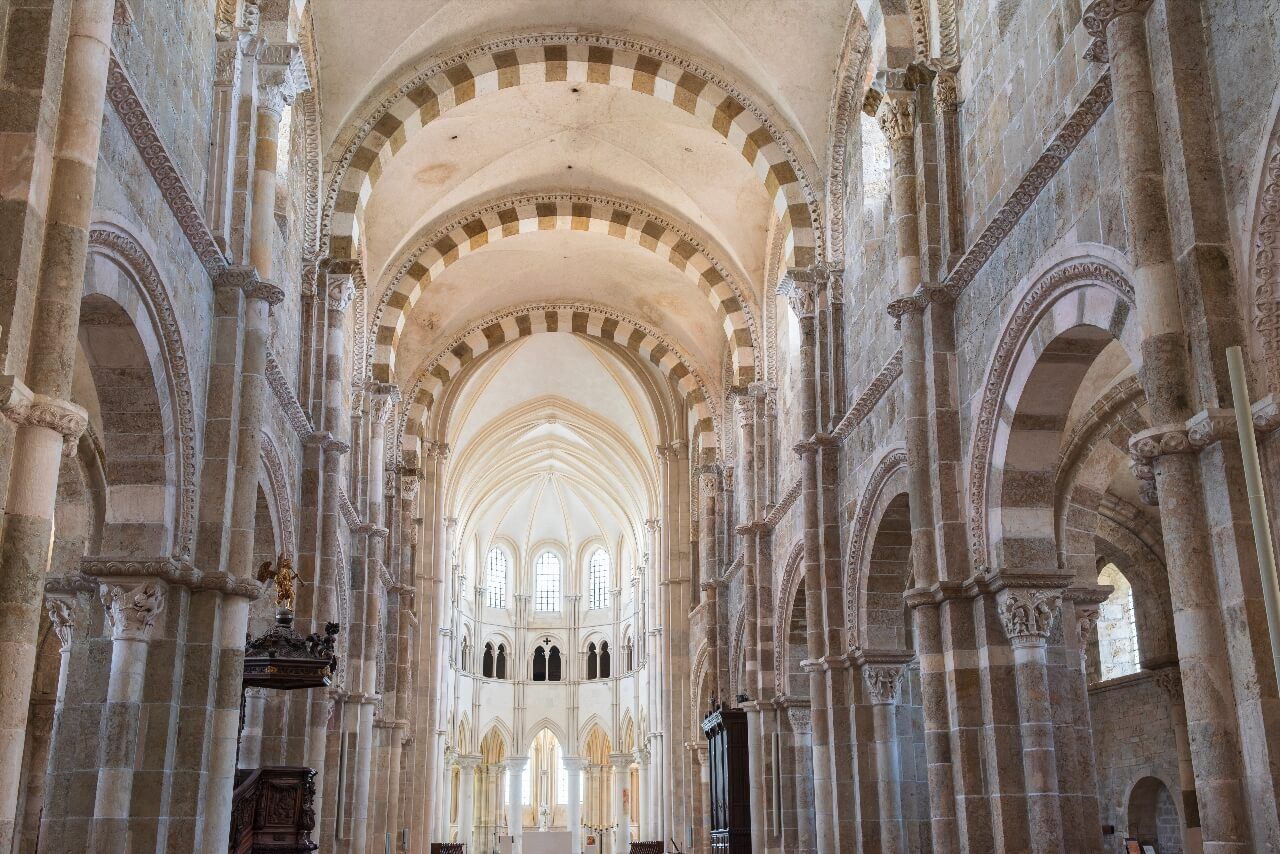
Vézelay, in Yonne, is one of four starting points for the Saint James Way since the Middle Ages. The Basilica Sainte-Marie-Madeleine, at the hilltop, is a masterpiece of Burgundian Romanesque art, UNESCO World Heritage since 1979. This isn't an honorary title - the basilica has been active for nearly a thousand years, with daily services.
The narthex tympanum represents Pentecost with sculptural power rarely equaled in Western medieval art: Christ in majesty radiates toward the apostles, arms disproportionately elongated to fill the entire tympanum space. The basilica interior reserves a surprising effect: during summer solstices (and surrounding weeks), sunlight aligns exactly on the central nave floor medallions, an effect intended by 12th-century architects with precision that defies period instruments.
The village below is itself classified. The Grande Rue climbing toward the basilica is lined with medieval houses from the 12th to 15th centuries, with some galleries and fine food shops offering great Burgundy wines at honest prices. Vézelay is 15 km from Avallon and 50 km from Auxerre, two practical bases for exploring northern Burgundy. Serious wine lovers will note that Chablis is 45 minutes by car.
For those wishing to anchor their Burgundy stay in a major city, the Ryo audio tour of Dijon covers Burgundy's capital in 24 points over 1h30 - Dukes of Burgundy, mustard, covered markets, before radiating toward Vézelay and Côte-d'Or wine villages.
Practical point: Vézelay is perched and all parking is at the village bottom. Allow 10 to 15 minutes walking uphill. In season, a minibus connects bottom parking to the summit for people with reduced mobility.
Eguisheim (Alsace): The Snail-Shell Village
Eguisheim, 5 km from Colmar, is built in a concentric circular plan around a 13th-century octagonal castle, giving the unique impression when strolling of turning in a spiral. This deliberate geography, designed for medieval defense, today creates this selection's most enveloping walking effect. In 2013, France 3 viewers designated it 'France's Favorite Village'.
The village's half-timbered houses rank among Alsace's best preserved, some dating from the 16th century. Facades are covered with red geraniums from May to October - residents participate in an annual flowering contest dating to the 1960s. Place du Château Saint-Léon IX forms the village heart: Pope Leo IX, born here in 1002, is represented by a statue and fountain. It's France's only village to have seen a pope's birth.
Eguisheim is at the heart of the Alsace Wine Route. Its eight grand crus (Eichberg, Pfersigberg, Hatschbourg, Goldert among others) rank among France's greatest dry whites. Several family cellars offer tastings directly with winemakers - prefer those away from Grand-Rue for less touristy prices and more sincere exchanges.
Colmar is the natural base for this sector, 5 minutes by car or 20 minutes by bike on the marked path. The city with its Little Venice quarter and tanner houses deserves at least half a day. To go further in Alsace from Strasbourg, 70 km from Eguisheim, the Ryocity of Strasbourg offers 32 listening points over 2h40, from Gothic cathedral to European quarter, ideal anchoring before descending toward vineyard villages.
Neighboring villages complete the Alsatian picture: Riquewihr (7 km), Kaysersberg (15 km), and Hunawihr (18 km) are all labeled. In four days from Colmar, you can visit four without rushing.
Èze (Alpes-Maritimes): The Eagle Village Between Nice and Monaco
Èze is the archetype of the Côte d'Azur perched village. Clinging to 429 meters altitude on a rocky spur overlooking the Mediterranean, it simultaneously sees Cap Ferrat, Monaco waters, and on clear days - most of the time between May and October - Corsica's distant silhouette on the horizon.
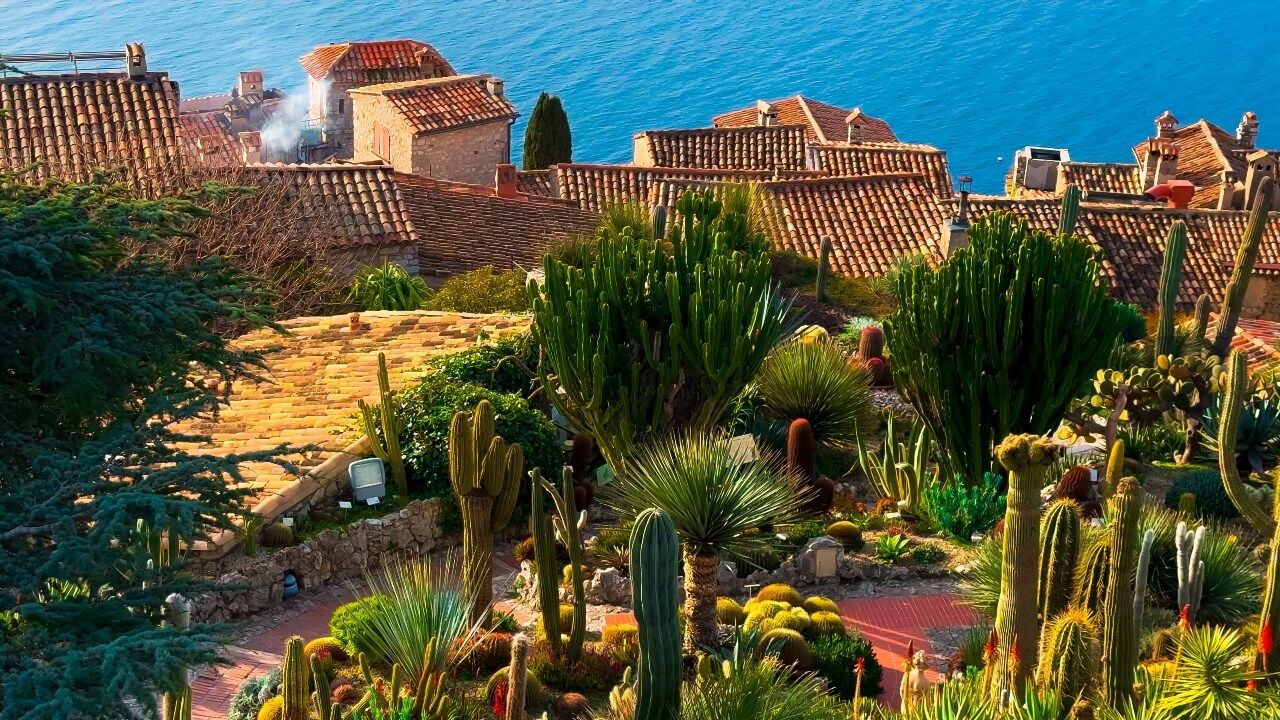
The medieval village is small: allow 1h30 to 2h for the complete tour. The visit's essence concentrates on paved streets, medieval vaults, and especially the Exotic Garden occupying the castle ruins razed in 1706 on Louis XIV's orders. This rock-suspended garden is one of France's most spectacular: 3-meter giant cacti, Madagascar euphorbias, South African aloes, all with 360° sea and snow-capped Alpine views in winter. Admission: 6 euros.
Nietzsche wrote part of 'Thus Spoke Zarathustra' during his Èze stays. The Nietzsche path descending toward the coast bears his name: 45 minutes descent on a steep scrubland path, with sea views at each switchback. It joins Èze-sur-Mer station, allowing you to go up by bus from Nice (line 112) and descend on foot, avoiding the climb.
The Fragonard House, Nice perfumer established in the village since the 1970s, offers free visits of its distillation workshop. The technical presentation is instructive even without purchase intention.
From Nice (20 minutes by car, 40 minutes by bus), Èze naturally fits into a Côte d'Azur itinerary. Nice old town, Cours Saleya market, Castle hill, seafront, deserves a full day before going up to Èze in late afternoon for golden light on the sea.
The Black Périgord in Three Days: La Roque-Gageac, Domme and Beynac
The Périgord noir golden triangle concentrates several labeled villages within 20 km of each other, all linked to the Dordogne valley. A two to three-day itinerary from Sarlat-la-Canéda allows covering four without driving more than 30 minutes at a stretch.
La Roque-Gageac is the first to see, preferably early morning when river mist still rises against the cliff. Houses are literally carved from rock or pressed against the overhanging limestone wall, a few meters above Dordogne level.
The microclimate created by the south-facing cliff allows cultivation of dwarf palms and citrus fruits in full Périgord, a bizarreness that locals claim with mischief. The gabares, these flat-bottomed boats that once served wood and wine transport on the Dordogne, have been returned to service for hour-long river trips. From the water, Beynac castle (Beynac-et-Cazenac, 24220 Beynac-et-Cazenac, rated 4.6/5 on Google for 17,673 reviews) appears at its best angle and La Roque-Gageac cliff takes full measure.
Domme (10 km), on its peak overlooking the valley at 250 meters, is Périgord's most complete fortified village. The medieval Porte des Tours served as Templar prison - graffiti carved by prisoners in stone are still visible in the lower room. The Barre terrace offers the broadest panorama over the Dordogne valley: at a glance, you see La Roque-Gageac, Castelnaud, and Beynac.
Beynac-et-Cazenac completes the triptych. Its medieval castle perched 150 meters above the river is Périgord's best preserved and one of France's best preserved - Richard the Lionheart besieged it unsuccessfully. The guided tour lasts 45 minutes and gives access to the patrol path with plunging views over the Dordogne and its meanders.
Cordes-sur-Ciel (Tarn): The Cathar City in the Clouds
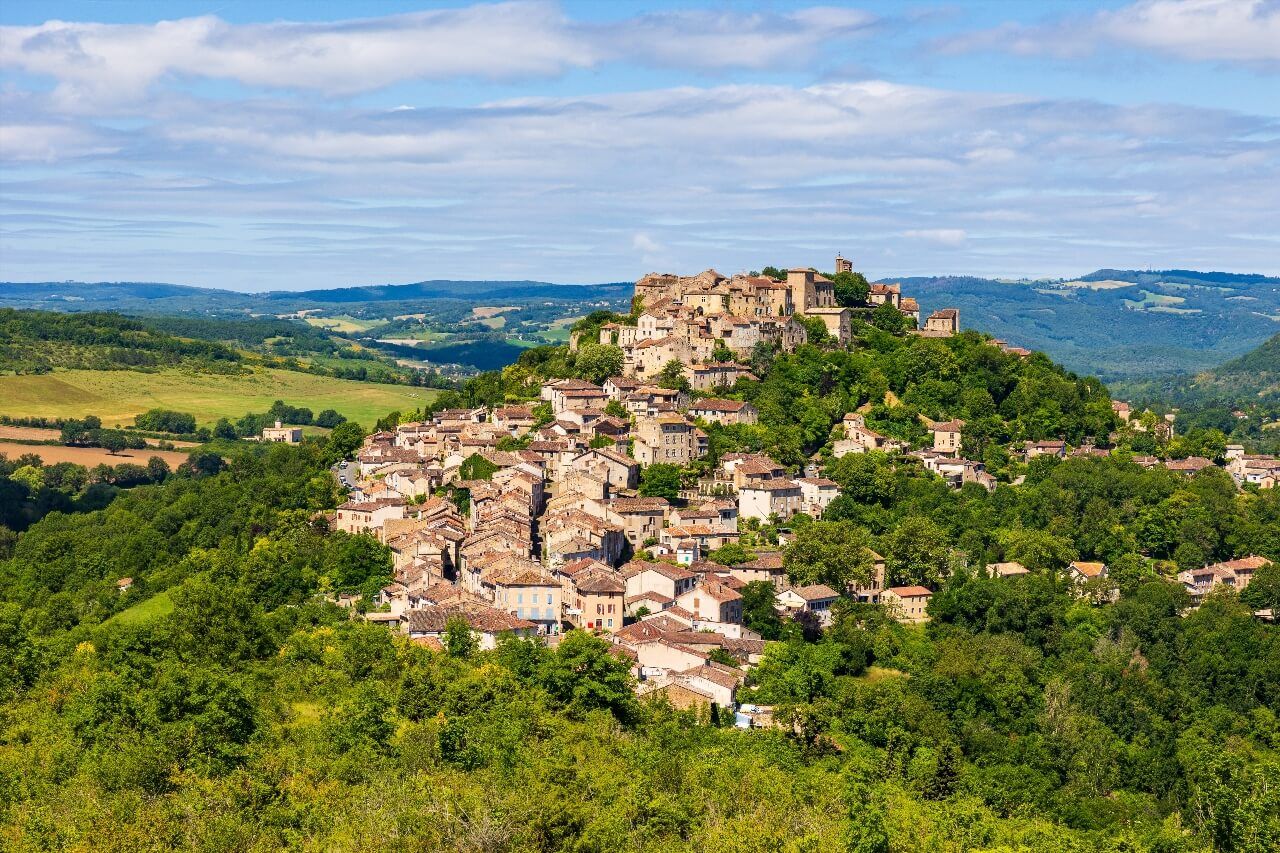
Cordes-sur-Ciel (Grand-Rue Haute, 81170 Cordes-sur-Ciel, rated 4.2/5 on Google for 285 reviews), founded in 1222 by the Count of Toulouse after the Albigensian Crusade, sits on a hilltop whose summit regularly disappears in morning mist, earning its current name, adopted in 1993 to replace the simple 'Cordes'.
The architecture has rare homogeneity for a medieval village: the 14th-century Gothic houses lining Grand-Rue Haute are adorned with animal and mythological sculptures of unusual finesse - falconers, hunters, mermaids, and chimeras cover the facades. The Maison du Grand Fauconnier is most spectacular, with first-floor bas-reliefs of precision suggesting a court craftsman rather than simple local stonemason.
Each July, the Fêtes du Grand Fauconnier transform the village into a medieval scene: armored riders, equestrian jousts, starlit banquets, and fire jugglers. The event is one of Tarn's most attended and justifies booking several weeks ahead if you want to stay locally.
From Albi (25 km), the 'Red City' and its fortified Sainte-Cécile cathedral, the world's largest brick Gothic cathedral, deserve at minimum half a day. The Ryo audio tour of Albi covers 26 points in 1h40, from cathedral fortifications to Toulouse-Lautrec museum. The Cordes morning, Albi afternoon combination works very well from a central Tarn base.
From there, Carcassonne (90 km) is a logical stage if you have a car. The UNESCO classified medieval City is ideally visited with the Ryo audio guide of Carcassonne, 27 points in 2h30 covering outer wall towers, Saint-Nazaire basilica, and Cathar siege legends, without needing a physical guide.
Brittany and Normandy: Locronan, Beuvron-en-Auge
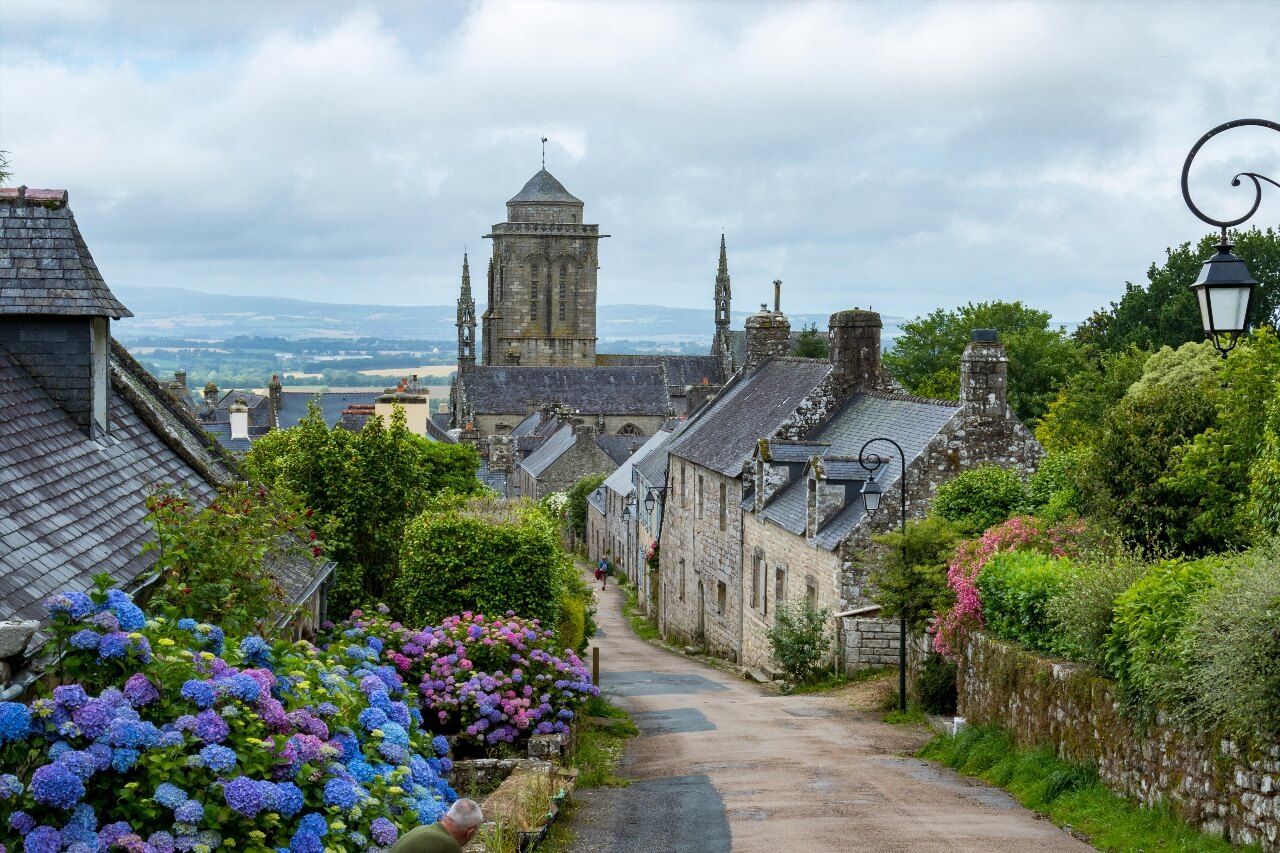
Locronan, in Finistère, is one of Brittany travel's surprises. The village owes its improbable grandeur to sail cloth industry: in the 16th and 17th centuries, Locronan supplied sails for the French royal navy and Portuguese fleet. Wealth accumulated by master weavers financed an exceptional central square surrounded by 16th-century gray granite houses, perfectly preserved, a scene many directors have found too beautiful to be true and used as film sets.
The Saint-Ronan church and Pénity chapel form a flamboyant Gothic ensemble at the square's heart. Medieval recumbent figures and 15th-century polychrome wooden statues inside rank among Brittany's most remarkable. The Troménie, religious procession over about ten kilometers around Mont Locronan, occurs annually in July and every six years as 'Grande Troménie' (next edition in 2031). From Quimper (17 km), Saint-Corentin Gothic cathedral deserves an hour before going up to Locronan.
Beuvron-en-Auge (Place Michel Vermughen, 14430 Beuvron-en-Auge, rated 4.5/5 on Google for 2.8K reviews), in Calvados, is the archetypal Norman village type: half-timbered houses painted red and black, flower gardens from June to September, cider and calvados on every corner. The village is at the heart of Pays d'Auge, production zone for great Norman cheeses (Camembert, Livarot, Pont-l'Évêque AOP) and AOP calvados.
The cider route passes through Beuvron and connects a dozen villages and producing farms over 40 km, the ideal day excursion in autumn for fermented apple lovers. Deauville (20 km) is the natural accommodation base for this corner of Normandy. The Ryocity of Deauville covers 19 points in 2h, from emblematic boardwalks to Belle Époque villas, a striking contrast with Norman granite's sobriety in Beuvron. Rouen (80 km) constitutes another more urban base, covered by a Ryo audio tour of Rouen in 27 stages, cathedral, Gros-Horloge, medieval quarters.
Three Southern Villages: Saint-Guilhem-le-Désert, Najac, Tournemire
Saint-Guilhem-le-Désert, in Hérault, is one of France's oldest continuously active Christian worship sites. The Abbey of Gellone, founded in 804 by Guillaume, Charlemagne's cousin and legendary figure of chanson de geste, houses a True Cross relic that once made it an essential stop on the Saint James Way. The village has preserved its medieval plan around the Romanesque abbey, with scrubland covering surrounding slopes to the Verdus canyon.
The chapter house preserves 11th-century Romanesque capitals among the finest in southern Romanesque art. The cloister column history is painful: sold in the 19th century during a disaffection period, they're now at New York's Metropolitan Museum of Art - local guides tell it with rancorous precision. The Cirque de l'Infernet, accessible in 45 minutes walking from the village, offers limestone cliffs with griffon vultures soaring above. The Hérault river at the village foot is suitable for swimming from July to September. From Nîmes (60 km), the Ryo audio guide of Nîmes covers Roman arenas and Maison Carrée in 2h45, an ideal ancient counterpoint before diving into medieval scrubland.
Najac, in Aveyron, stretches on a narrow ridge above an Aveyron meander. The 13th-century royal castle, built by Alphonse de Poitiers and enlarged by Saint Louis, dominates the village from a 35-meter round tower accessible in 40 minutes walking from the lower village. The main street follows the ridge for 800 meters with plunging views over the wooded gorge on both sides, one of Aveyron's most dramatic walks.
Tournemire, in Cantal, is one of this list's least known villages, making it one of the most pleasant to visit. The Château d'Anjony, 15th-century fortress with four round towers, is still inhabited by its founding family's descendants after 25 generations, extremely rare in France. Interior 16th-century frescoes (nine worthies, Sibyls, and Passion scenes) are surprisingly fresh. The guided tour lasts 45 minutes and gives access to the patrol path with views over Cantal high-altitude pastures. Aurillac, 20 km away, serves as practical base.
Preparing Your Itinerary: Practical Advice
Visiting these exceptional villages isn't improvised, especially in high season. A few principles radically change experience quality.
Timing is the most important variable. Eighty percent of visitors arrive between 10am and 4pm in July-August. The most famous villages - Gordes, Rocamadour, Èze - are unrecognizable at 8am or after 6:30pm. Plan the busiest for early or late day, save midday for secondary villages or hiking in surrounding landscapes.
Season makes the village. Eguisheim with its red geraniums exists fully from May to October. Lavender around Gordes blooms between mid-June and mid-July by altitude. Tarn gorges are navigable May to September. Beuvron-en-Auge makes full sense in autumn for apples and cider. Locronan is more beautiful under Breton rain than July sun with tour buses. Choose village according to season, not the reverse.
Car remains essential for most of these villages. A few notable exceptions: Èze (bus line 112 from Nice), Pérouges (summer shuttle from Lyon via Amberieu-en-Bugey train), Les Baux-de-Provence (bus from Arles in season). For others, car rental from the nearest major city is the only realistic solution.
Group by geographical cluster. Several zones concentrate four to six labeled villages within 30 km radius. Most efficient:
- Black Périgord: La Roque-Gageac, Domme, Beynac, Castelnaud, all within 20 km of Sarlat, a very coherent two-day circuit from the city.
- Lot: Rocamadour, Saint-Cirq-Lapopie, Carennac, Loubressac, two days from Cahors or Figeac.
- Alsace: Eguisheim, Riquewihr, Kaysersberg, Hunawihr, the wine route connects these villages in 40 km from Colmar.
- Luberon: Gordes, Les Baux, Roussillon, Ménerbes, Bonnieux, four labeled within 30 km from Apt.
- Tarn: Cordes-sur-Ciel, Castelnau-de-Montmiral, Puycelsi, within an hour of Albi.
Label and reality. Not all labeled villages merit the same detour. Some are geographically spectacular but heritage-thin. Others are unknown but exceptional. This list privileges villages combining both: strong natural setting and remarkable built heritage. Don't rely solely on travel app star ratings.
Prices in labeled villages. Restaurants and shops in the most touristy perimeters (Gordes, Les Baux, Eguisheim) practice high rates. Simple rule: lunch in the neighboring major city or prepare a picnic. Book accommodation two to three months ahead for July-August in Luberon and Alsace zones - capacities are limited and prices explode last minute.
FAQ
How many villages are labeled 'Most Beautiful Villages of France'?
The association currently lists 184 labeled villages spread across 14 regions and 72 departments. The label was created in 1982 by Charles Ceyrac, then mayor of Collonges-la-Rouge. To obtain it, a village must meet strict conditions: less than 2,000 inhabitants in the main borough, at least two classified or registered sites or monuments, and positive evaluation on the public space quality grid. An application takes an average of three years. About two to three villages obtain the label each year, and some can lose it if they don't maintain criteria - there have been about ten withdrawals since 1982. The label also exists in ten other countries (Italy, Belgium, Japan, Canada) that have adopted the French approach.
What is the most beautiful village in France according to the French?
The show 'Le Village Préféré des Français' on France 3 designates a public vote winner each year. Successive winners include Hunspach (Bas-Rhin) in 2020, Eguisheim (Haut-Rhin) in 2013, and Saint-Cirq-Lapopie (Lot) in 2012. Note: this television ranking is completely independent of the association's official label. Some villages very popular with viewers are not labeled, and vice versa. The criteria are fundamentally different: television voting is emotional and media-driven, the association label is heritage and urban planning-based.
What's the best time to visit France's most beautiful villages?
There's no single good season, each region has its optimal calendar. April-May: Burgundy (Vézelay before first heat), Périgord (before summer influx), Brittany. June before 14th: Provence and Alsace, before summer peak, lavender around Gordes is in bloom, Eguisheim geraniums are at their peak. July-August: reserve these months for lesser-known villages or morning visits (before 9am) in major destinations. September-October: undoubtedly the best overall period for most regions, reduced crowds, golden light, harvest in Alsace and Burgundy, chestnuts and autumn colors in Périgord. December: Alsatian villages (Eguisheim, Riquewihr, Kaysersberg) with their Christmas markets are in a state of grace.
Can you visit several labeled villages in a single weekend?
Yes, provided you choose the right region. The most efficient clusters for a weekend: Alsace (Eguisheim, Riquewihr, Kaysersberg connected by wine route in 40 km from Colmar), Luberon (Gordes, Les Baux, Roussillon in an 80 km circuit from Apt), and Black Périgord (La Roque-Gageac, Domme, Beynac from Sarlat in less than 20 km). Avoid trying to do too much: one well-visited village is worth more than four crossed between signposts. Two villages per day is reasonable pace allowing time for lunch, getting lost in streets, and understanding what you're looking at.
Are these villages free to visit?
The village itself (streets, squares, building exteriors) is always freely accessible. Interior monuments are often paid: castles (5 to 15 euros), abbeys (4 to 8 euros), gardens (5 to 8 euros). Some villages offer no paid access: Collonges-la-Rouge, Beuvron-en-Auge, and Tournemire are entirely free. National monuments (classified castles and abbeys) are free for under-18s and European citizens under 26. Parking in busiest villages (Gordes, Les Baux, Rocamadour) is paid: expect 6 to 10 euros per day.
Are there labeled villages accessible without a car?
Few, but some stand out: Èze is accessible from Nice by bus (line 112, 40 min) then on foot via Nietzsche path for descent. Pérouges is accessible from Lyon via Ambérieu-en-Bugey station (45 min by TER) then summer shuttle. Les Baux-de-Provence are connected to Arles by seasonal bus. Locronan is accessible from Quimper by regional bus. For all others, especially Périgord, Lot, and Cantal villages, car remains the only realistic option. Rent from the nearest major city: Sarlat, Cahors, Colmar, Avignon, or Nice depending on target region.
What's the difference between a labeled village and a historic monument classified village?
These are two totally distinct protections. Historic monument classification (or Supplementary Inventory inscription) concerns a specific building or built ensemble, managed by the Ministry of Culture. It protects structure but says nothing about the village's landscape environment. The 'Most Beautiful Villages of France' label is an association certification evaluating the village as a whole: built environment, public space, surroundings, signage, tourist vitality, and visual nuisance management. A village can have several classified monuments and not be labeled (if suffering from an industrial zone at village entrance, for example). And vice versa.
Conclusion
These 17 villages aren't visited like checking boxes. They're discovered on foot, slowly, preferably outside rush hours and July-August months that blur their reading. What you seek in a labeled village - built coherence, harmony between geography and stone, the feeling of history condensed into a few streets - is perceived in morning silence or late afternoon light, never amid a rushed crowd.
To explore major cities serving as anchor points for these villages, our Ryo app offers audio-guided tours in all French regions: Strasbourg for Alsace, Dijon for Burgundy, Albi for Tarn, Nîmes for Languedoc, Rouen for Normandy. The Ryocity of Carcassonne is the ideal starting point for exploring Languedoc Cathar villages from a UNESCO classified major city. Safe travels.