
Créé par Emilie, le 20 juin 2026
Votre guide Ryo
The Most Beautiful Villages of the French Basque Country: 14 Essential Stops in 2026
© Shutterstock
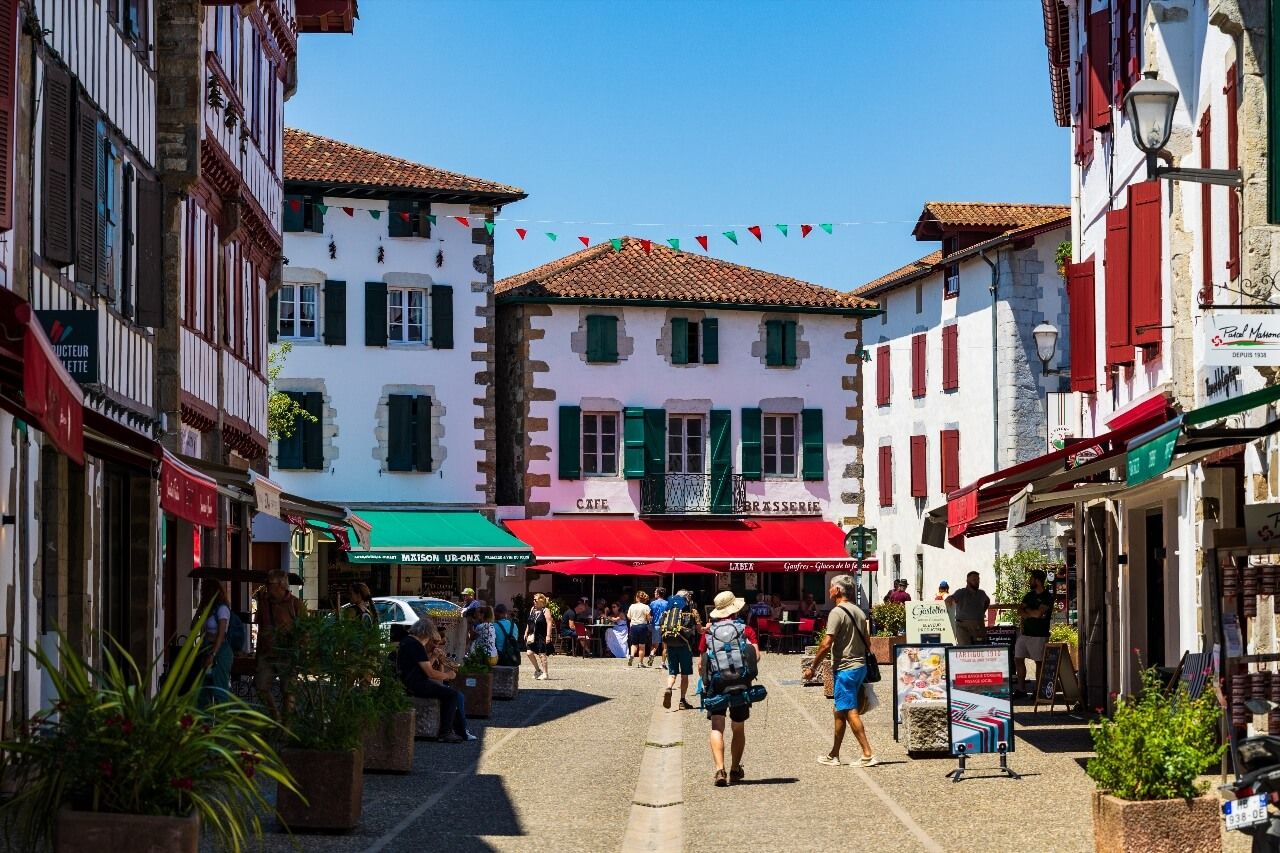
We think of the Basque Country for its beaches and surf, for Biarritz or the ocean coastline. But it's the villages, especially those inland, that carry the densest Basque identity: half-timbered houses in red and green, pelota courts where the ball echoes, the scent of dried peppers hanging on white facades. This top 10 of Basque villages goes further and covers fourteen stops between coastal Labourd, Basse-Navarre and its Pyrenean passes. For each one, you'll find the details that other guides omit: real opening hours, tips for avoiding crowds, curiosities that even locals rarely mention to tourists. Our Ryo audio guide allows you to explore them at your own pace, without internet connection, with stories that give meaning to each facade.
Expect a few surprises. Ainhoa preserves a main street whose proportions have barely changed since the 17th century. Saint-Jean-Pied-de-Port sees more than 30,000 pilgrims pass through each year heading to Compostela, making it the second most frequented Jacobean departure point on the Camino Francés. La Bastide-Clairence, founded in 1312, carries in its streets the memory of a Sephardic community that settled there in the 17th century. And Sare has forged, through a long tradition of smuggling with neighboring Spain, a tenacious reputation as a village with a fiercely independent character.
1. Espelette
Espelette (Village of Espelette, 64250 Espelette, rated 4.7/5 on Google for 3,200 reviews) (64250 Espelette) carries on its facades the most recognizable culinary symbol of the Basque Country: strings of red peppers hung to dry in the autumn sun. This isn't just staging for visitors. The Espelette Pepper obtained its AOC in 2000 then its AOP in 2008, two recognitions that regulate the cultivation of a unique variety, the Gorria, over a territory of ten municipalities. Each year, the last weekend of October, the Pepper Festival transforms the village: producers, cooks, demonstrations, and thousands of visitors who leave with a string of peppers under their arm.
The village deserves a visit that goes far beyond the main commercial street. The Castle of the Barons of Ezpeleta, built around the year 1000 and now the town hall, dominates the village from a rocky hill. The climb to Saint-Étienne church is worth it as much for the clear view over the Labourd hills as for the building itself: the typically Labourdin interior lines up three-level wooden galleries where men once sat during mass, separated from women who remained in the side aisle. The pelota court, right next to it, is still used for amateur games on weekends.
Practical side: Espelette is only 22 km from Biarritz and 8 km from Cambo-les-Bains. Allow half a day to enjoy it without rushing. In high season (July-August), park at the village entrance by 9am, as the center spots are taken before 10am. Among the pepper shops, prioritize producers who offer guided tastings to grasp the nuances between fresh, dried and powdered pepper. The road connecting Espelette to Ainhoa (7 km) crosses green hills typical of inland Labourd: it's one of the most pleasant routes in the region, to travel by car or bike.
2. Ainhoa
Ainhoa (Main street of Ainhoa, 64250 Ainhoa, rated 4.8/5 on Google for 53 reviews) (64250 Ainhoa) is officially classified among France's "Most Beautiful Villages," a distinction verified upon arrival at its central street. Built in the 17th century on the route of a medieval bastide from the 12th century, this unique street, wide, straight, bordered by half-timbered houses in white and red, has remained in remarkable condition. The facades all respect the same template: white for the render, red or green for the woodwork, inscription of the house name above the lintel.
The Church of Notre-Dame-de-l'Assomption, dating from the 17th century, houses a gilded baroque altarpiece whose polychromy surprises in an externally sober building. The three-level interior galleries, identical to those in Espelette, remind us that this spatial organization is an architectural specificity of Labourd, not an exception. The adjacent cemetery deserves particular attention: the Basque discoidal stelae, called hilarri, round and engraved with solar motifs, constitute one of the oldest funerary forms in the region, predating Christianization.
Ainhoa is located 7 km from Espelette and 3 km from the Spanish border. Fewer than 700 inhabitants, which means weekend tourist flows seem very concentrated there. Come on weekdays if possible, or early in the morning before the buses arrive from the coast. The Way of Saint James crosses the main street: you'll see pilgrims at any hour. The path that climbs to the Notre-Dame de l'Aubépine chapel (Haritxague) offers in twenty minutes of walking a clear view over the Basque hills up to the first Pyrenean foothills.
3. Sare
Sare (64310 Sare) is also classified among France's "Most Beautiful Villages," but it's its character that stands out: the sararrak (inhabitants of Sare) have forged over the centuries a reputation as an independent-spirited village, inherited from a long tradition of smuggling between France and Spain. The village is organized around a central pelota court and several hamlets scattered in the hills, giving it a less compact appearance than Ainhoa but more rooted in daily life.
The main natural attraction is La Rhune, an emblematic mountain of 905 meters that dominates the entire Basque coast. The small cog railway that climbs it departs from the col de Saint-Ignace, 4 km from Sare center. In service since 1924, it offers a 35-minute ascent in period wagons, with a progressive view over the Atlantic, the Basque hills and, on clear days, the Pyrenees extending into Spain. The wild ponies (pottoks) that live freely on La Rhune's slopes are part of the spectacle.
Back in the village, Saint-Martin Church and its cemetery with hilarri are worth a stop. The Sare caves, accessible 4 km from the center, are equipped for guided sound and light visits. They testify to human occupation spanning from 35,000 to 10,000 years before our era, with remains of flint tools, reindeer antlers and arrowheads. Allow about an hour for the visit. The Ryo audio guide tour we offer you to explore the Basque Country can prepare you for each of these stops before you even arrive on site. Sare is located 14 km from Saint-Jean-de-Luz and is easily reached from the coast.
4. Saint-Jean-Pied-de-Port
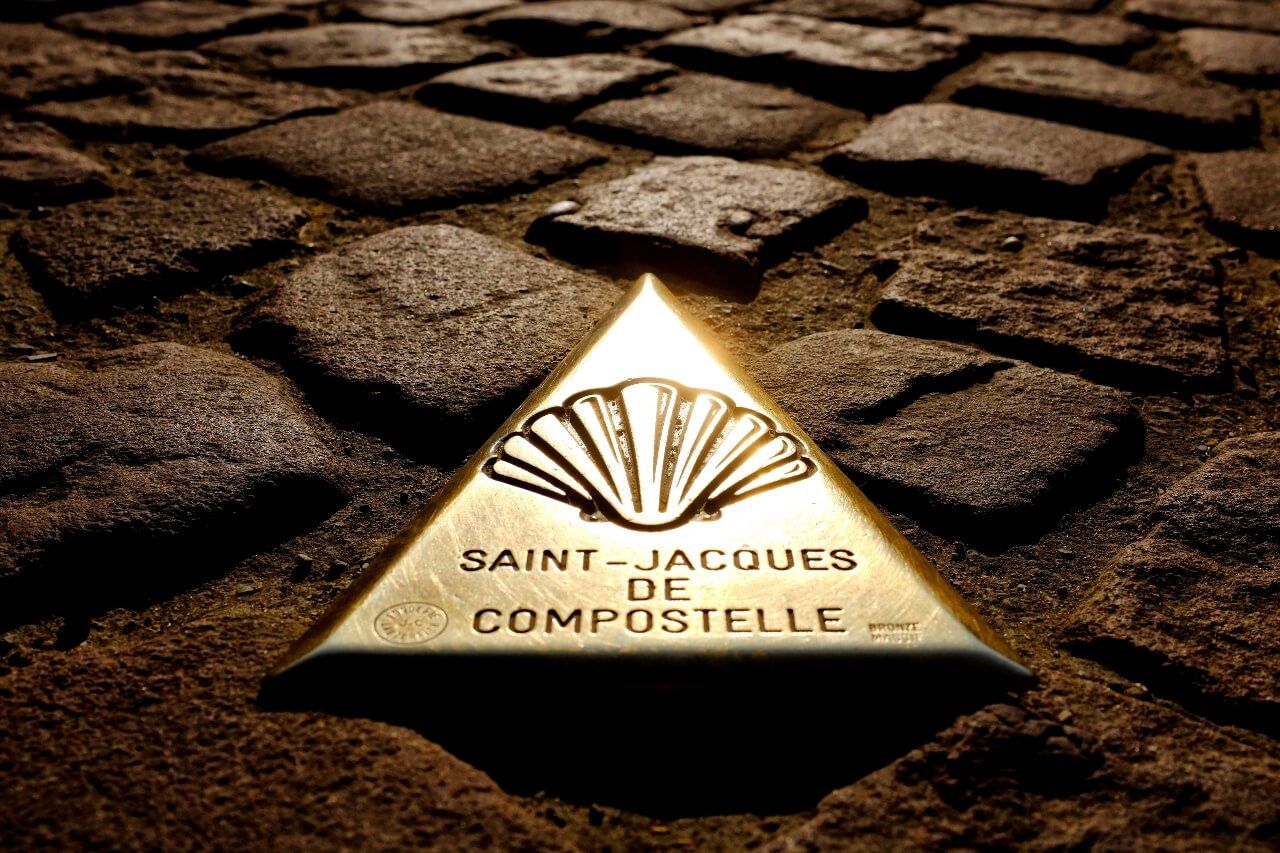
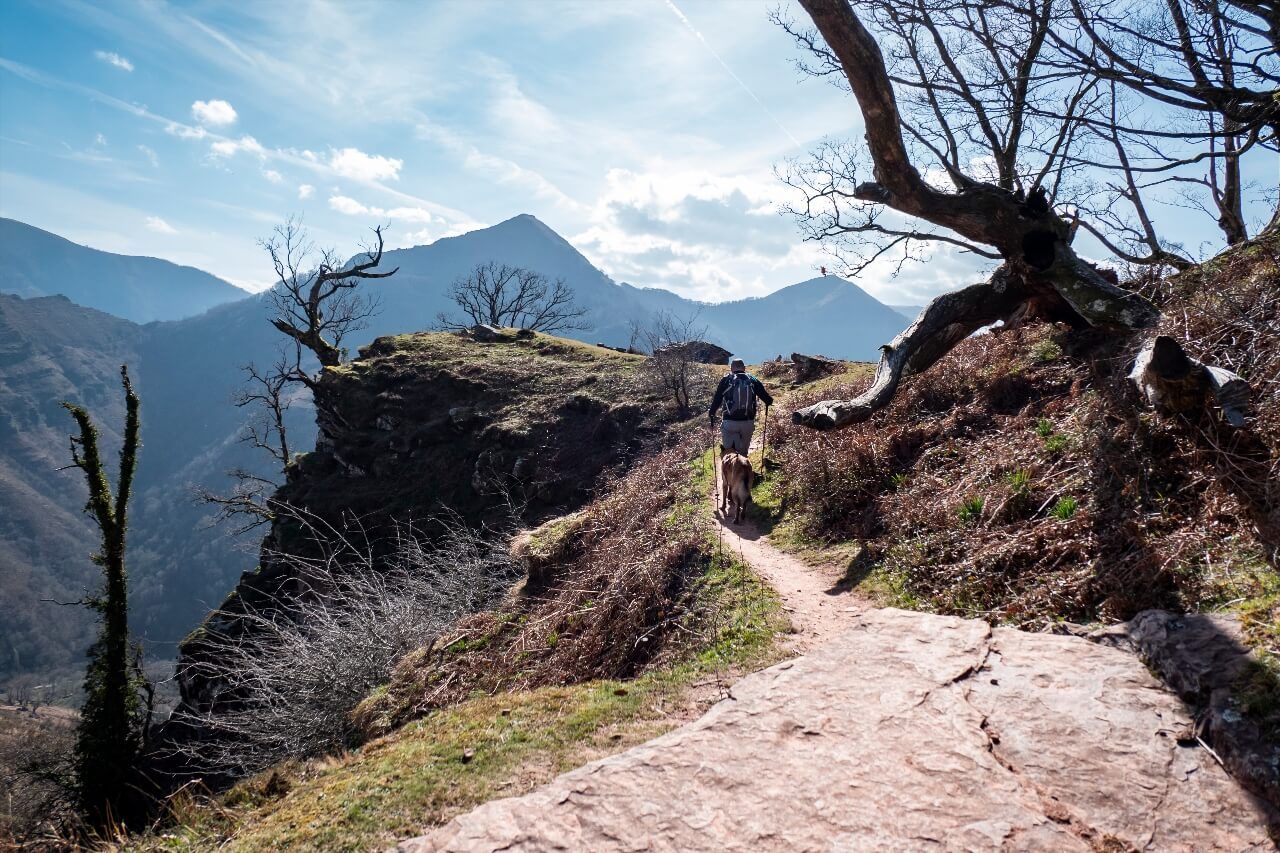
Saint-Jean-Pied-de-Port (Place Charles de Gaulle, 64220 Saint-Jean-Pied-de-Port, rated 4.8/5 on Google for 5,100 reviews) (64220 Saint-Jean-Pied-de-Port), classified among France's "Most Beautiful Villages," is France's best-known Jacobean stop. Its name says it all: "at the foot of the port," the "port" designating in medieval Gascon a mountain pass. This is where several of the great French Jacobean routes converge, notably from Tours, Le Puy-en-Velay and Vézelay, before crossing the Pyrenees via the Cize passes towards Roncevaux, then Spain. More than 30,000 walkers begin their journey here each year, making the village the second departure point of the Camino Francés. From there, 780 km still remain to Santiago de Compostela.
The old town is surrounded by 16th-century ramparts. The rue de la Citadelle, paved and steeply sloped, constitutes the backbone of the medieval quarter: bordered by pink sandstone houses with white frames, several date from the 15th and 16th centuries. At the top of the street, the citadel, built around 1625-1627 then reinforced following Vauban's inspection in 1685, offers a panorama over the Nive valley, the canal tile roofs and the first Pyrenean ridges. Access is free, and the climb from the Saint-Jacques gate requires about fifteen minutes of effort.
The pilgrims' office, open from March to November, issues the credencial (pilgrim's passport) to walkers beginning their journey here. The presence of pilgrims gives the village an atmosphere you won't find anywhere else in the Basque Country: faces from all continents, backpacks leaning against pink sandstone walls, conversations in ten languages around a coffee. It's lively and moving, even for those who don't walk.
The Nive crosses the town and a Roman bridge spans it at the heart of the medieval quarter. Monday morning's market gathers local producers and artisans in the lower streets. On the gastronomic side, Saint-Jean-Pied-de-Port concentrates some solid tables where Basque mountain cuisine, veal axoa, piperade, Ossau-Iraty cheese, finds its best expressions. The town is 53 km from Bayonne and constitutes an excellent base for exploring Basse-Navarre and the Aldudes valley. Plan at least one night if you're coming from the coast.
5. La Bastide-Clairence
La Bastide-Clairence (Place des Arcades, 64240 La Bastide-Clairence, rated 4.4/5 on Google for 96 reviews) (64240 La Bastide-Clairence) is a bastide founded in 1312 by Louis I of Navarre, away from the most frequented tourist circuits. Classified among France's "Most Beautiful Villages," it stands out for its rigorously medieval urban plan, streets crossing at right angles, central square surrounded by arcades, and for a singular community history. In the 17th century, 70 to 80 families of Portuguese and Spanish Jews fleeing the Inquisition settled there, leaving an architectural and cultural imprint still readable in the names of certain houses and in the design of some facades.
The central square with its arcades is the heart of the village. The low galleries once allowed commercial exchanges sheltered from bad weather. Today, artisans, potters, painters, weavers, have invested several of these spaces. Notre-Dame Church and its adjacent cemetery house Basque discoidal stelae and tombs of the former Sephardic community, a rare cultural mix in France. The village can be visited on foot in an hour and a half without rushing. La Bastide-Clairence is 25 km from Bayonne, easily accessible from the coast.
6. Itxassou
Itxassou (Itxassou village, 64250 Itxassou, rated 4.6/5 on Google for 980 reviews) (64250 Itxassou) is known for two things: its black cherries and Roland's Pass. The Itxassou cherry, a local variety with deep juice and firm flesh, has given the village a solid gastronomic identity. Each June, the Cherry Festival celebrates the harvest with events and tastings of jam, Basque cake and fresh cherries. Outside the festival, local producers sell their production directly at the farm, an address you can request from the Cambo-les-Bains tourist office.
The village stretches along the Nive des Aldudes in a verdant setting. Several hikes start from the village, including the ascent of Roland's Pass: a gorge carved according to legend by the brave knight's sword to allow his army to reach Spain. The site is accessible in 30 minutes of walking from the center and offers a beautiful view over the sunken river and forest. Itxassou is 7 km from Cambo-les-Bains and 20 km from Saint-Jean-Pied-de-Port, making it a natural stop on an interior Basque itinerary.
7. Saint-Jean-de-Luz
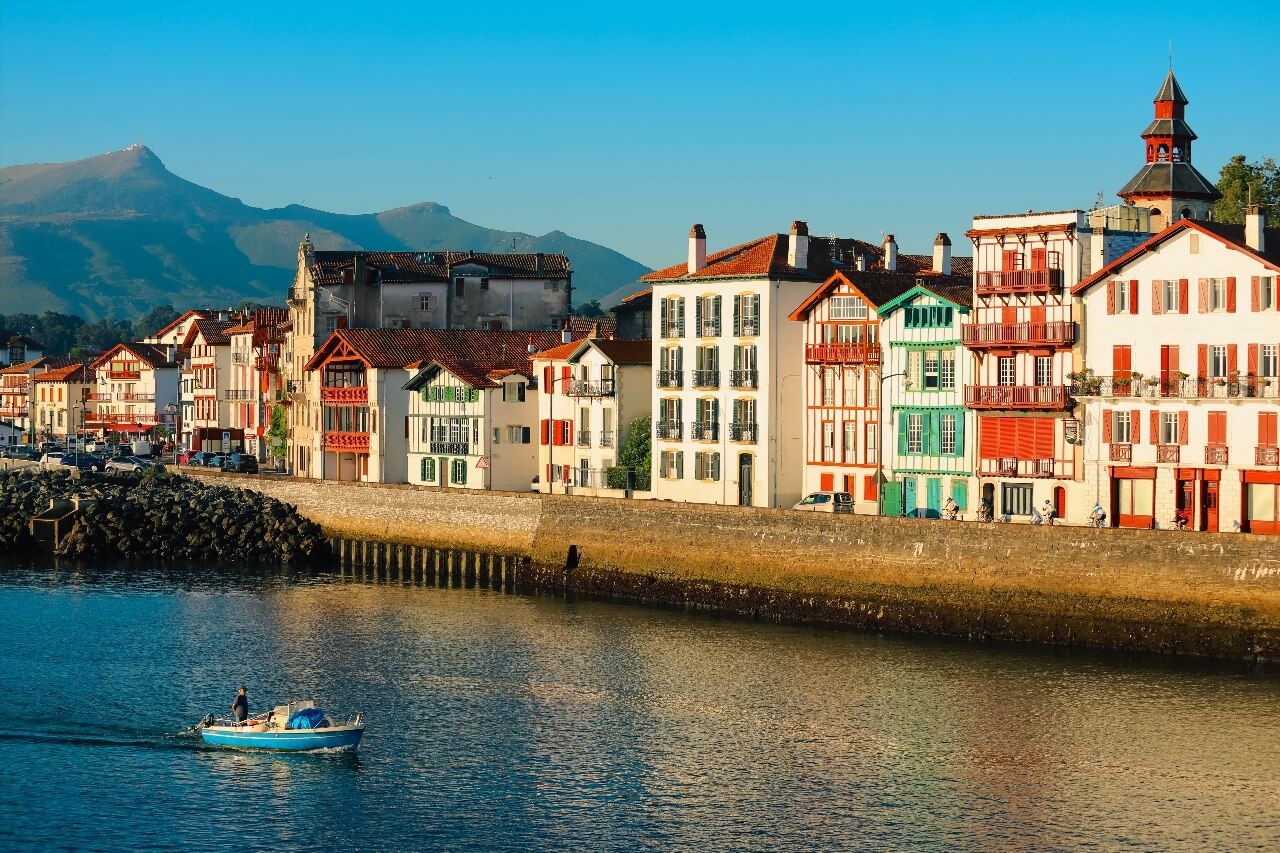
Saint-Jean-de-Luz (Place Louis XIV, 64500 Saint-Jean-de-Luz, rated 4.7/5 on Google for 8,400 reviews) (64500 Saint-Jean-de-Luz) is the only coastal town in this selection, and it fully deserves its place. Its historic center, classified and protected, preserves a remarkably coherent 17th-century architectural ensemble. It was here that the marriage of Louis XIV to the Infanta Marie-Thérèse of Austria was celebrated on June 9, 1660, a diplomatic union that marked the end of the Franco-Spanish war. The Saint-Jean-Baptiste Church where the ceremony took place is the largest religious building in the French Basque Country: its imposing gilded baroque altarpiece, completed in 1669 and adorned with dozens of statues on three levels, ranks among the most remarkable in Southwest France.
The Place Louis XIV, surrounded by half-timbered houses, is the lively heart of the center. The Maison Louis XIV (where the Sun King stayed) and the Maison de l'Infante (where Marie-Thérèse lodged) face each other across the bay. The beach, protected by two breakwaters, remains one of the safest for swimming on the entire Basque coast.
The morning covered market, held in a 19th-century building, offers marinated anchovies, sheep cheeses and Basque cake made locally. The old town can be visited on foot in two hours; allow more if you linger by the water. To deepen your discovery of the historic center beyond the self-guided walk, the Ryo audio guide of the Basque coast is a resource you can download before departure and use offline.
8. Guéthary
Guéthary (Village of Guéthary, 64210 Guéthary, rated 4.6/5 on Google for 1,500 reviews) (64210 Guéthary) is the smallest village on the Basque coast, squeezed between Biarritz and Saint-Jean-de-Luz on barely 3 km of coastline. What distinguishes it: a cliff overlooking the Atlantic directly, an old church flanked by a cemetery with spectacular ocean views, and a reputation as one of Europe's best surf spots. The Parlementia waves, offshore, reach heights that attract international-level surfers each winter.
The village has no large beach, a small cove and a fishing port constitute its access to the sea, and it's precisely this that preserves it from mass tourism. The Belle Époque villas built overlooking the cliffs by Madrid and Basque bourgeoisie in the early 20th century give Guéthary a discreet elegance that Biarritz lost long ago. Saint-Nicolas Church and its pelota court form the center of the village. Guéthary is 8 km from Biarritz; accessible by train (station on the Bayonne-Hendaye line) or by bike via the coastal greenway.
9. Bidart
Bidart (Place du Village, 64210 Bidart, rated 4.6/5 on Google for 37 reviews) (64210 Bidart) extends between Guéthary and Biarritz on a plateau overlooking the Atlantic. Its village center preserves an authenticity that the tourist development of the 1980s-2000s hasn't entirely erased: around Saint-Joseph Church and its fronton, some paved streets and white Labourdin houses recall what the Basque coast was before vacation residences.
Bidart's beaches, notably Erretegia and Ilbarritz, attract local surfers who prefer to avoid Biarritz crowds. The cliff between the two beaches can be walked in twenty minutes with a continuous view over the Atlantic. Bidart is 5 km from Biarritz and often constitutes a less expensive accommodation option than its big neighbor, without sacrificing proximity.
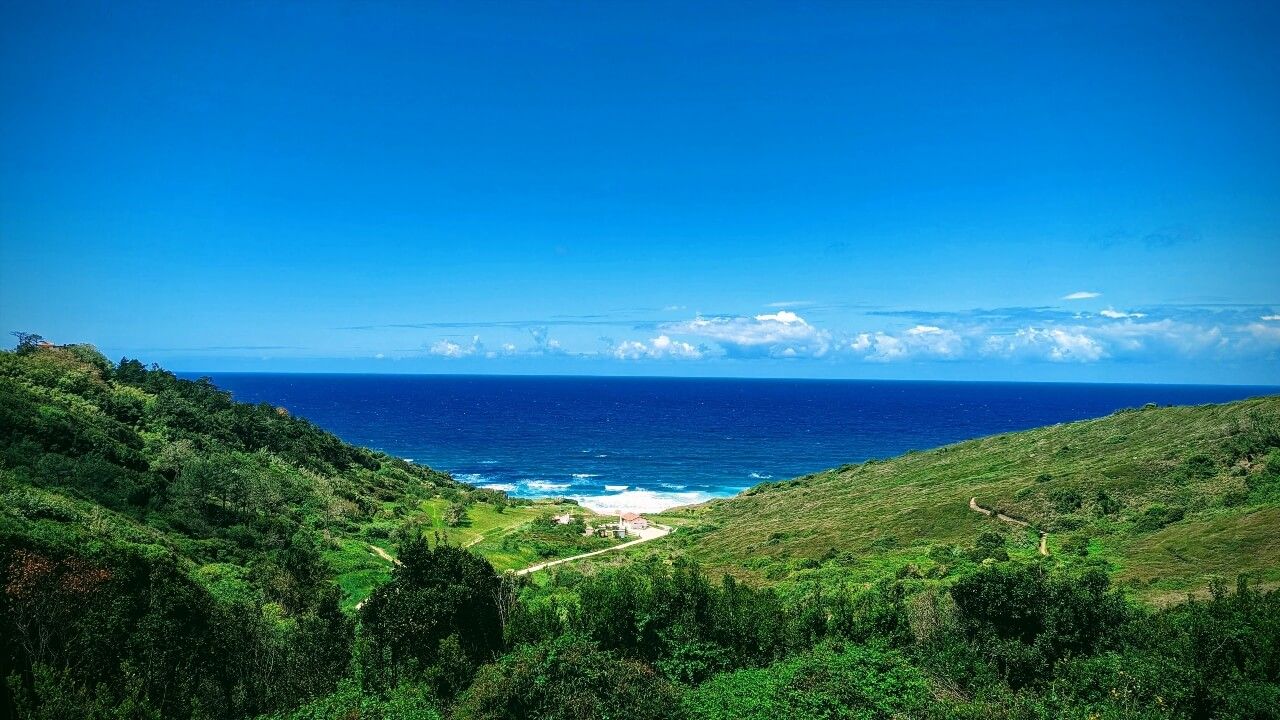
10. Saint-Pée-sur-Nivelle
Saint-Pée-sur-Nivelle (Village of Saint-Pée-sur-Nivelle, 64310 Saint-Pée-sur-Nivelle, rated 4.4/5 on Google for 620 reviews) (64310 Saint-Pée-sur-Nivelle) is one of the most populated villages in inland Labourd, nearly 6,000 inhabitants, while maintaining its rural character. Lake Saint-Pée, 2 km from the center, is the only natural lake in the French Basque Country. In summer, it constitutes a swimming and water sports area appreciated by families fleeing the crowded beaches of the coast.
The Saint-Pierre Church, flanked by its fronton, sets the tone of a living Basque village, not very touristy, with its local shops and weekly market. Saint-Pée is located 15 km from Saint-Jean-de-Luz and constitutes a logical stop between the coast and Sare or Ainhoa in a circular itinerary.
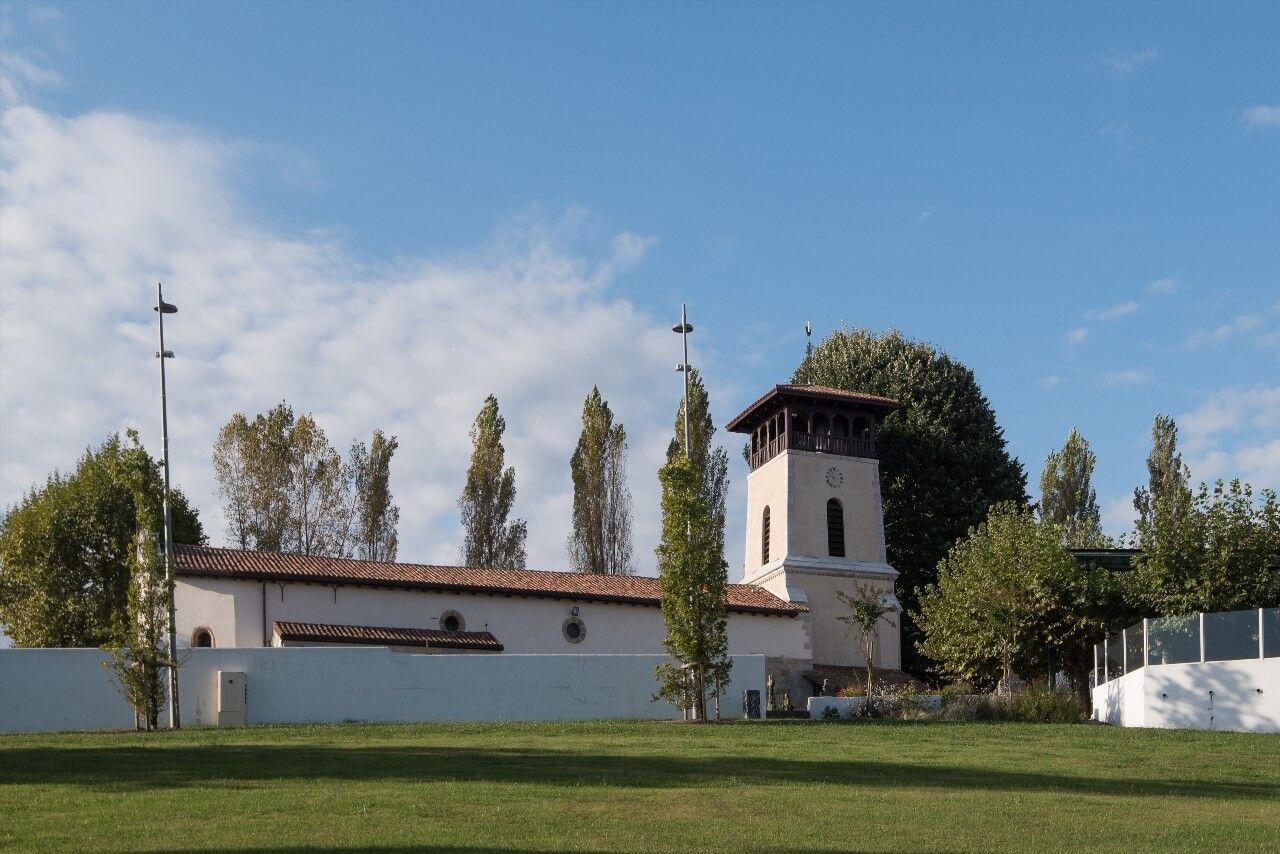
11. Arcangues
Arcangues (Village of Arcangues, 64200 Arcangues, rated 4.6/5 on Google for 2,100 reviews) (64200 Arcangues) reserves a surprise for those unfamiliar with its history: this village of fewer than 3,500 inhabitants, only 7 km from Biarritz, welcomes thousands of visitors each year who come to pay their respects at the tomb of Luis Mariano, the Basque singer whose popularity in France and Spain remains intact decades after his death in 1970. Saint-Étienne Church and its cemetery with hilarri constitute a sober and touching ensemble.
The village itself, built around its fronton, deserves an hour's stop for its calm and views over the Labourd hills. Basque pelota enthusiasts can attend amateur games on some spring and summer weekends. Arcangues is accessible by car from Biarritz in less than fifteen minutes.
12. Ciboure
Ciboure (Quai Maurice Ravel, 64500 Ciboure, rated 4.6/5 on Google for 1,800 reviews) (64500 Ciboure) faces Saint-Jean-de-Luz from the other side of the bay, separated only by the port channel. Less known and less frequented than its neighbor, it nevertheless contains an exceptional fishermen's quarter: the Socoa quarter, with its multicolored half-timbered mariners' houses, constitutes one of the best-preserved popular architectural ensembles on the Basque coast.
Ciboure is the birthplace of Maurice Ravel, born on March 7, 1875 in a house on the quay that now bears his name. The Tour Bordagain, remnant of a 16th-century fortification, and Saint-Vincent Church with its octagonal Basque bell tower complete the visit. Allow an hour to walk through Ciboure from the bridge connecting it to Saint-Jean-de-Luz. If you're a music lover, Ravel's birth facade is easily spotted from the quay, a commemorative plaque has been placed there. For this type of sensitive discovery mixing architecture and biographical anecdotes, the Ryo audio guide is the most suitable format: you hear the story at the precise moment you look at the place.
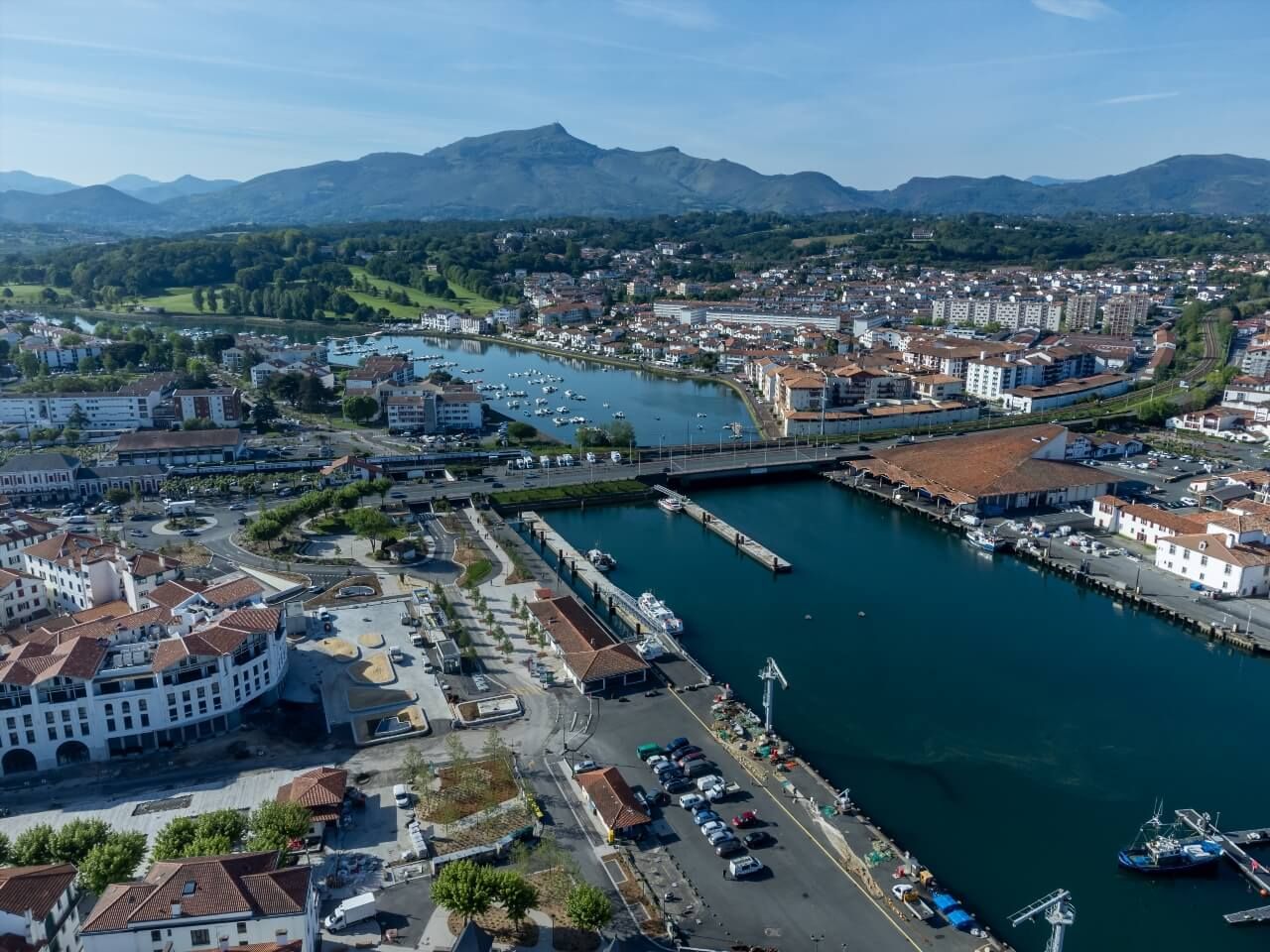
13. Cambo-les-Bains
Cambo-les-Bains (Villa Arnaga, 64250 Cambo-les-Bains, rated 4.7/5 on Google for 4,461 reviews) (64250 Cambo-les-Bains) occupies a central position in inland Labourd, on the banks of the Nive. A spa town since the 19th century, it owes its cultural renown to Villa Arnaga, the imposing residence that Edmond Rostand, author of Cyrano de Bergerac, had built in 1903 in an extravagant neo-Basque style. The villa, classified as a historic monument, can be visited from April to October: its French gardens, Art Nouveau interior and reconstruction of the playwright's study are worth the trip.
The Haut-Cambo district, perched on a hill above the spa town, preserves the character of a traditional Basque village with its church and fronton. Cambo is an ideal starting point for trips to Espelette (8 km), Itxassou (7 km) or the prehistoric caves of Sare. You'll find more restaurants and accommodation there than in the smaller surrounding villages, making it a good overnight base for an interior circuit.
14. Saint-Étienne-de-Baïgorry
Saint-Étienne-de-Baïgorry (Village of Saint-Étienne-de-Baïgorry, 64430 Saint-Étienne-de-Baïgorry, rated 4.6/5 on Google for 740 reviews) (64430 Saint-Étienne-de-Baïgorry) is the gateway to mountainous Basse-Navarre. Crossed by the Nive des Aldudes, the village stretches in a sunken valley dominated by terraced vineyards: those of Irouléguy, the only AOP vineyard of the Basque Country. Cooperative cellars and independent estates offer tastings of this mountain wine with firm tannins, both red and rosé.
The Roman bridge, which spans the Nive on a single arch, is the village landmark and one of the most photographed sites in Basse-Navarre. Saint-Étienne Church, with its wooden galleries and 17th-century altarpiece, shows that Labourdin sacred architecture extends well beyond Labourd's borders. From the village, the mountain pass road to Spain via Col d'Ispéguy (672 m) offers a panoramic route appreciated by cyclists. Saint-Étienne-de-Baïgorry is located 11 km from Saint-Jean-Pied-de-Port and 50 km from Bayonne.
FAQ
What is the most beautiful village in the French Basque Country?
It's a subjective question, but Ainhoa and Sare are the two villages most often cited for their architectural coherence and natural setting. Both are classified among France's "Most Beautiful Villages." Saint-Jean-Pied-de-Port is the largest and most lively; La Bastide-Clairence is the choice for lovers of medieval and community history.
When to visit the Basque villages?
Spring (April-June) and autumn (September-October) are the best periods: mild temperatures, no crowds, contrasting landscapes. July and August concentrate the majority of visitors on the coast and in the best-known villages. Winter remains pleasant in Labourd, even if some sites have reduced hours.
How to organize a circuit of Basque villages by car?
A two-day itinerary easily covers the inland villages. Day 1: Espelette, Ainhoa, Sare with an optional ascent of La Rhune. Day 2: Itxassou, Cambo-les-Bains, Saint-Jean-Pied-de-Port, Saint-Étienne-de-Baïgorry, La Bastide-Clairence. The coastal villages (Saint-Jean-de-Luz, Guéthary, Bidart, Ciboure) can be visited in one day from the coast. A car remains essential for the Basque interior, where public transport is infrequent.
Are Basque villages accessible by public transport?
Saint-Jean-de-Luz, Guéthary, Bidart and Ciboure are served by the Bayonne-Hendaye train line. For inland villages, bus connections from Bayonne exist but are infrequent and impractical for a circuit. Electric bikes are a serious alternative for Labourd villages, located 7 to 15 km from each other.
Is the Basque Country worth the detour beyond the coast?
Absolutely. The Basque interior, Labourd, Basse-Navarre and Soule, concentrates the majority of the region's architectural, gastronomic and cultural heritage. Mountain villages like Saint-Jean-Pied-de-Port or Saint-Étienne-de-Baïgorry offer a radically different experience from the coast: calmer, more rooted in local traditions, with Pyrenean landscapes of great beauty.
Where to eat in the Basque villages?
In the villages, look for inns (ostatuak) that serve the daily menu on weekdays: veal axoa, ttoro (fish soup), piperade, sheep cheese with Itxassou black cherry jam. In Espelette, tables focusing on peppers deserve attention. In Saint-Jean-Pied-de-Port, several restaurants offer hearty pilgrim menus at reasonable prices. Saint-Jean-de-Luz's covered markets and Itxassou's producer farms remain the best options for buying directly from the source.
The French Basque Country is among the regions with the highest density of remarkable villages per square kilometer in Europe. These fourteen stops outline a coherent itinerary, from the Atlantic coast to the first foothills of the Pyrenees, crossing landscapes that Flaubert already called the "most beautiful in the world" in 1858. Whether you're starting from Bayonne for a day or from Paris for a week, each village in this selection justifies the stop. The Ryo app accompanies you at each halt with audio stories prepared by Basque history specialists, to download before departure and available offline in valleys where network coverage is lacking. And if you want to extend exploration beyond the Basque Country, our selection of France's most beautiful villages opens other equally inspiring itineraries to explore with your Ryo audio guide.