© Shutterstock
 Votre guide Ryo
Visit the Étretat Cliffs in Normandy
The Étretat cliffs are among France's most spectacular natural sites. Located on the Alabaster Coast in Normandy, these exceptional geological formations attract millions of visitors from around the world every year. With their majestic arches sculpted by marine erosion, their famous Needle and their breathtaking panoramas, the Étretat cliffs offer a grandiose natural spectacle that has inspired many artists, from Claude Monet to Maurice Leblanc. Whether you are a hiking enthusiast, photography passionate or simply seeking exceptional landscapes, visiting the Étretat cliffs is an unforgettable experience during a stay in Normandy.
1. How to get to the Étretat cliffs
The Étretat cliffs are easily accessible from the main cities of Normandy and the Paris region. The town of Étretat is located in the Seine-Maritime department, about 200 kilometers from Paris, 90 kilometers from Rouen and 30 kilometers from Le Havre. To visit the Étretat cliffs, several options are available depending on your starting point.
By car, from Paris, allow about 2 hours by taking the A13 motorway towards Rouen, then the N27 towards Dieppe and finally the D925 to Étretat. From Visit Le Havre, located just 30 kilometers away, you will reach Étretat in less than 30 minutes via the D940. Be careful though, parking can be complicated during high season. Several paid parking lots are available in the city center, with rates varying from 2 to 5 euros depending on duration. It is strongly recommended to arrive early in the morning to find a spot easily, especially in summer and during sunny weekends.
By public transport, the nearest train station is in Le Havre. From Paris, take a train to Le Havre (about 2 hours), then take bus line 24 which serves Étretat directly from Le Havre station. The bus journey takes about 1 hour. Remember to check schedules in advance, especially off-season when bus frequency is reduced. For those who want a more autonomous approach, Ryo offers an audio-guided itinerary to discover Visit Le Havre in depth before reaching Étretat.
2. What to see on the Étretat cliffs
The Étretat cliffs offer a set of exceptional rock formations that have made this natural site world-famous. Each formation has its particularities and deserves special attention during your visit.
The Aval cliff and its emblematic arch
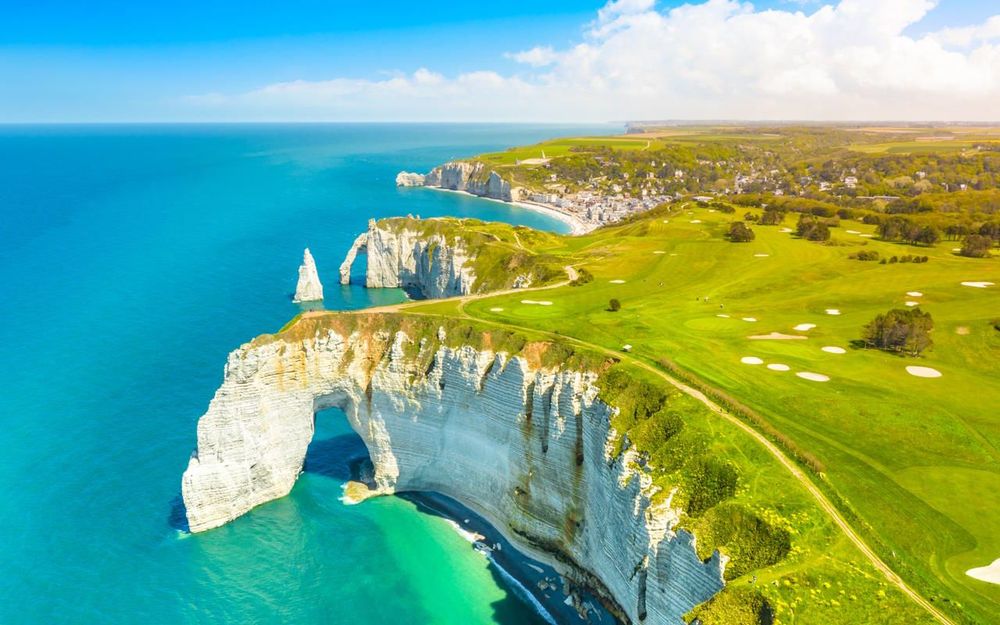
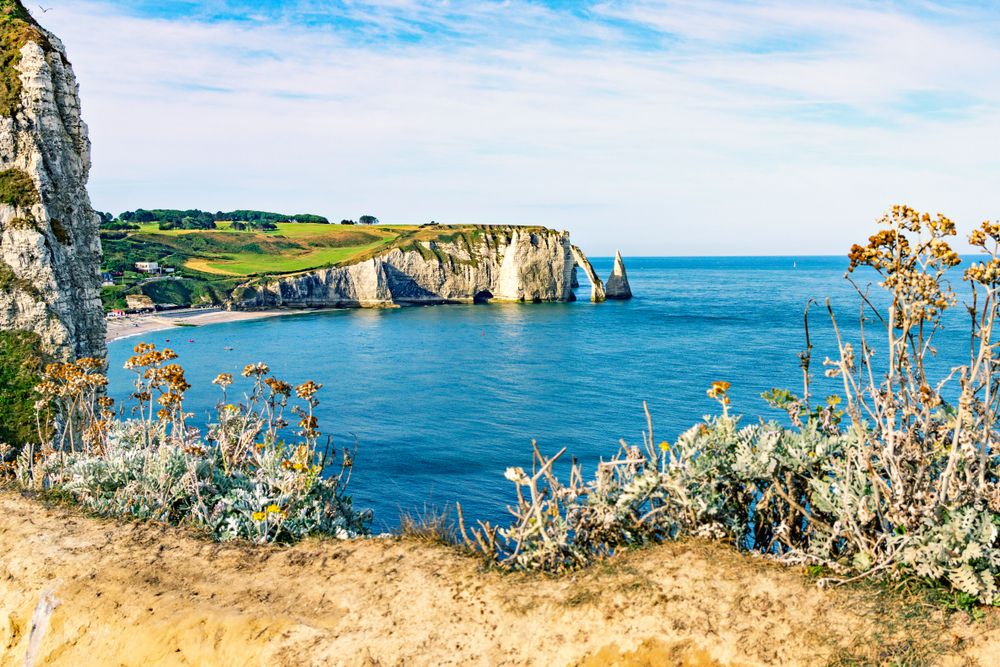
The Aval cliff is undoubtedly the most photographed formation in Étretat. Located west of the beach, it is distinguished by its spectacular natural arch, the Porte d'Aval, which waves have patiently sculpted over millennia. This monumental arch rises more than 70 meters above sea level and offers a striking spectacle, particularly at sunset when orange rays illuminate the white chalk. At the top of the Aval cliff, you will discover a well-maintained path that allows you to admire the arch from different angles. The panorama from this viewpoint embraces the entire bay of Étretat and reveals the majesty of the Needle, this stone obelisk that rises 55 meters opposite the arch.
The Needle and its legendary mystery
The Étretat Needle, with its 55 meters height, fascinates as much as it intrigues. This isolated rock formation at sea inspired Maurice Leblanc for his famous novel "L'Aiguille creuse" (The Hollow Needle), in which he imagines that this chalk pillar houses Arsène Lupin's secret treasure. If reality differs from fiction, the Needle remains no less impressive. Seen from the top of the Aval cliff, it seems fragile facing the repeated assaults of the waves, and yet it has resisted for millennia. Photographers particularly appreciate the light effects created around the Needle, offering different shots depending on the time of day and weather conditions.
The Manneporte, the monumental arch
Even more imposing than the Porte d'Aval, the Manneporte is located to the southwest, accessible after about a 30-minute walk from the center of Étretat. This colossal arch measures nearly 90 meters in height and 30 meters in width, making it one of the largest natural arches in France. Guy de Maupassant claimed that a ship could have passed under the Manneporte at high tide, which testifies to its extraordinary dimensions. The path to reach it requires good physical condition, with steep passages and stairs, but the effort is largely rewarded by the spectacular view. At low tide, it is possible to approach the foot of the Manneporte to better appreciate its vertiginous size.
The Amont cliff and the chapel Notre-Dame de la Garde
The Amont cliff, located east of Étretat beach, offers a complementary panorama of the entire site. At the summit stands the chapel Notre-Dame de la Garde, a neo-gothic building constructed in the 19th century that has watched over sailors and fishermen for generations. The ascent of the Amont cliff is done by a staircase from the promenade. Once at the top, you will discover not only the chapel with its beautiful colored stained glass windows, but also a breathtaking view of the Aval cliff, the Needle and the entire Norman coast. Near the chapel stands the Nungesser and Coli monument, erected in 1963 in tribute to the two French aviators who attempted to cross the Atlantic in 1927. This historic site adds an emotional dimension to the natural beauty of the place.
3. The best hikes on the Étretat cliffs
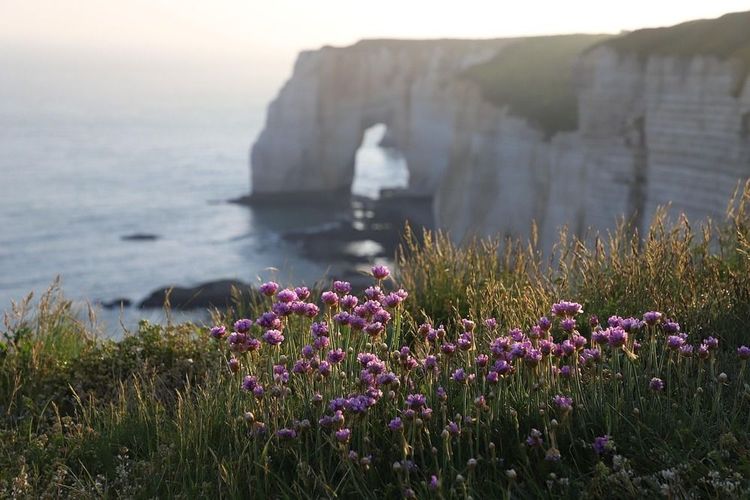
The hiking trails that run through the Étretat cliffs offer unforgettable experiences for all levels. The GR21, long-distance trail that runs along the entire Alabaster Coast, crosses Étretat and allows you to explore the cliffs in their entirety.
Download the audio-guided circuit to discover Le Havre on foot and independently
To extend your discovery of the Norman region, don't hesitate to explore Le Havre, located just 30 kilometers from Étretat. This port city with unique architectural heritage, UNESCO listed, deserves a thorough visit. The Ryo itinerary of Le Havre guides you through 18 major points of interest, from Notre-Dame cathedral to MuMa (André Malraux Museum of Modern Art), including the emblematic Saint-Joseph church by Auguste Perret. This Le Havre audioguide allows you to discover the city autonomously, with enriching commentary on its history, reconstruction architecture and port dynamism.
The path from Aval cliff to Manneporte
This approximately 3-kilometer round trip hike is the most popular route to visit the Étretat cliffs. Allow 1.5 to 2 hours to complete the full loop. The departure is from the city center, taking the stairs that go up to the Aval cliff. The well-marked path then runs along the edge of the cliff, offering spectacular views of the Aval arch and the Needle. After about 30 minutes of walking, you will reach the Manneporte. Be careful, some passages can be slippery, especially in wet weather, and the edge of the cliff does not always have safety barriers. Wear appropriate shoes and stay alert, especially with children.
The Amont cliff loop
Shorter and more accessible, this approximately 2-kilometer hike is perfect for families. From the beach, take the staircase that goes up to the Amont cliff to reach the chapel Notre-Dame de la Garde and the Nungesser and Coli monument. The path then continues along the cliff towards the north, offering magnificent panoramas of Étretat and the cliffs opposite. This walk takes about 1 hour and allows you to appreciate the cliffs from a different angle. The return can be done by the same path or by going back down to the city center via rue Guy de Maupassant.
The great GR21 hike
For experienced hikers, the GR21 offers longer and more demanding sections. From Étretat, you can reach the Antifer lighthouse to the north (about 10 kilometers, 3 hours) or the village of Yport to the south (about 7 kilometers, 2.5 hours). These itineraries allow you to discover other sectors of the Alabaster Coast, with varied landscapes alternating vertiginous cliffs, green valleuses and exceptional viewpoints over the English Channel. Bring water, provisions and check the weather before leaving, as these routes are exposed to wind and can become difficult in bad weather.
4. Visit the Gardens of Étretat
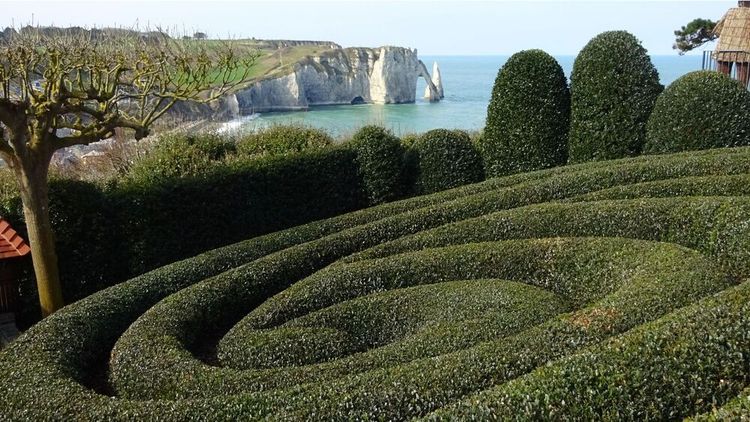
Created by Russian landscape architect Alexandre Grivko and inaugurated in 2017, the Gardens of Étretat constitute a unique experience that combines contemporary art, vegetal sculptures and extraordinary maritime panoramas. Perched on the Aval cliff, these gardens extend over more than 7000 square meters and offer a walk through seven thematic spaces where nature meets artistic creation.
The Avatar garden immerses you in a universe inspired by lush nature, with organic-shaped topiaries that seem to come out of a science fiction movie. The Emotions garden plays with perspectives and volumes to create surprising atmospheres. The Elements garden celebrates the force of nature with sculptures evoking water, fire, earth and air. Don't miss the Zen garden, a haven of peace inviting meditation facing the immensity of the sea.
Visiting the Gardens of Étretat takes about 1.5 to 2 hours. The entrance fee is 10 euros for adults and 5 euros for children (2025 rates). The gardens are open all year round, with variable hours according to seasons. From the different terraces, you will benefit from spectacular views of the cliffs, the Needle and the English Channel. To complete your discovery of Étretat, let yourself be guided by the Ryo itinerary which will allow you to explore the region autonomously.
5. Étretat beach and its activities
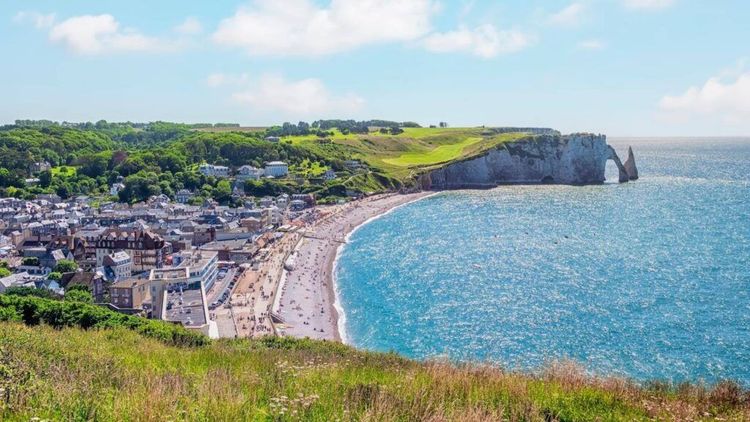
Étretat's pebble beach, framed by the majestic Aval and Amont cliffs, offers an exceptional setting to relax and enjoy the English Channel. Unlike sandy beaches, the pebbles create a particular atmosphere with the characteristic noise of waves rolling the stones. This beach experienced its heyday in the 19th century when Étretat became a seaside resort popular with Parisian aristocracy. Today, it retains its authentic charm and attracts visitors who come to admire the unique panorama of the cliffs.
Several nautical activities are offered on Étretat beach. Sea kayaking allows you to approach the cliffs from the sea, offering a completely different perspective on these chalk giants. This kayak excursion generally lasts 2 hours and takes you to the foot of the Aval arch and the Needle. For the more adventurous, paddle boarding also allows you to coast along the cliffs while enjoying the calm of the sea. Boat trips are also organized from the beach, with commentary on the geology and history of the cliffs.
Swimming is supervised in summer, but beware, the sea can be cool even in midsummer and currents sometimes strong. Find out about conditions before diving in. Families will appreciate the numerous restaurants and cafes on the beachfront that offer Norman specialties, especially freshly caught seafood.
6. The Clos Lupin and Arsène Lupin's legacy
Maurice Leblanc, creator of the gentleman thief Arsène Lupin, lived in Étretat and was largely inspired by the cliffs to write "L'Aiguille creuse" (The Hollow Needle), one of the most famous novels in the series. The Clos Lupin, the writer's former residence transformed into a museum, allows you to discover the fascinating universe of Arsène Lupin through an immersive and playful scenography.
Visiting the Clos Lupin immerses you in the atmosphere of the Belle Époque and makes you follow in the footsteps of the famous burglar through different thematic rooms. You will discover Maurice Leblanc's office, period objects, original documents and reconstructions of scenes from the novels. An outdoor route in the garden also allows you to admire the cliffs that so inspired the writer. The museum offers rates around 8 euros for adults and 5 euros for children. Allow about 1 hour for the complete visit. It's an excellent family activity, particularly appreciated by children who can play apprentice detectives.
7. The geological history of the Étretat cliffs
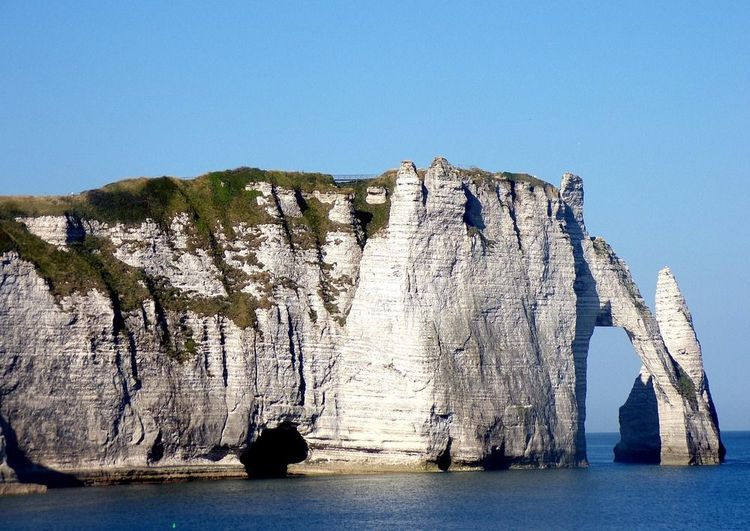
The Étretat cliffs were formed about 90 million years ago, during the Upper Cretaceous. At that time, the entire region was covered by a warm and shallow sea. The countless shells and marine micro-organisms that lived in these waters accumulated at the bottom of the sea over millennia. Their compression and transformation gave birth to chalk, this white limestone rock that today makes up the cliffs.
Marine erosion then sculpted these cliffs for millions of years. Waves, wind, frost and thaw carved the soft chalk, creating the spectacular arches we admire today. This erosion process continues currently, and the cliffs retreat by about 20 centimeters per year on average. Rockfalls are frequent, especially after periods of frost or heavy rain, which explains the prohibition of approaching the unsecured edge.
The horizontal stripes visible on the cliffs correspond to different layers of sediments deposited over millions of years. The darker bands are made of flint, a very hard rock formed by the concentration of silica. These flints were actually used by prehistoric men to make tools.
8. Practical advice for visiting the Étretat cliffs
To fully enjoy your visit to the Étretat cliffs, some advice is essential. First, choose your visit period well. Summer offers the best weather conditions, but it's also the busiest period. Spring and autumn are excellent compromises, with fewer crowds and often beautiful light for photographers. Winter can be magnificent, especially after a storm, but expect difficult conditions with wind and rain.
Check tide times before your visit, especially if you plan to approach the cliffs from the beach. At high tide, some passages become inaccessible and dangerous. The best times to photograph the cliffs are sunrise and sunset, when the slanting light enhances the white chalk and creates spectacular shadows.
Equip yourself properly for hiking with closed and non-slip shoes. The paths can be muddy and slippery, especially after rain. Also bring warm and windproof clothing, as the wind often blows strongly at the top of the cliffs. A hat and sunscreen are essential in summer, as there is no shade on the cliffs.
Strictly respect safety instructions. Don't approach the unstable edge of the cliffs and stay on marked paths. Rockfalls are unpredictable and can occur without warning. Watch children carefully who may be tempted to approach the void. For an even more enriching discovery of the Norman region, consider using Ryo audio-guided circuits available in several Normandy cities.
9. Where to eat in Étretat
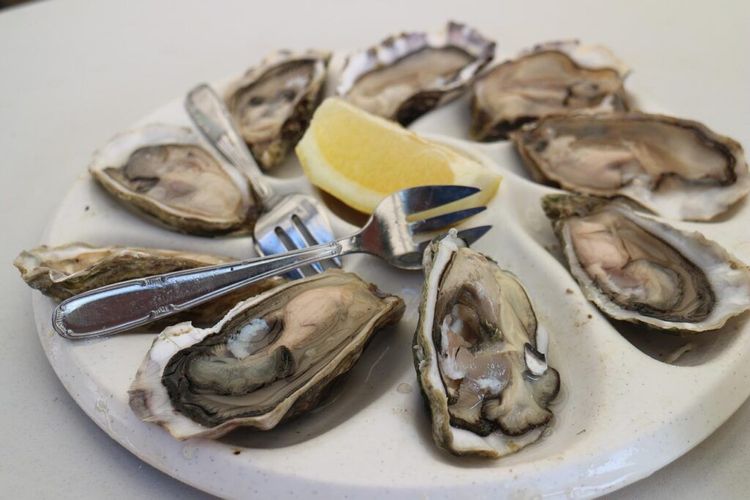
Étretat is full of good addresses where you can taste Norman specialties. Seafood naturally occupies a place of honor in local gastronomy. Beachfront restaurants offer platters of oysters, scallops and freshly caught langoustines. Don't miss tasting the Dieppe stew, a delicious fish and seafood soup with Norman cream.
Crêperies are also numerous and offer excellent value for money. Buckwheat galettes with fillings and sweet crêpes with salted butter caramel will delight the taste buds. For a quick lunch, small kiosks on the beach sell sandwiches and fried fish to enjoy facing the sea.
Regarding regional specialties, Normandy is renowned for its cheeses. Camembert, livarot, pont-l'évêque and neufchâtel are unmissable. Accompany them with a glass of Norman cider, the region's emblematic drink. For dessert, let yourself be tempted by a Norman apple tart flambéed with calvados.
10. Where to stay to visit the Étretat cliffs
Étretat offers a wide choice of accommodations for all budgets. Charming hotels in the city center offer the luxury of being able to reach the cliffs on foot in just a few minutes. Several establishments occupy former Belle Époque villas with sea and cliff views. Expect between 80 and 200 euros per night depending on standing and season.
Bed and breakfasts are an excellent alternative to enjoy the warm welcome of Normans. Many traditional houses offer comfortable rooms with breakfast included, often prepared with local products. Rates generally vary from 60 to 120 euros per night for two people.
For tighter budgets, campsites and vacation rentals allow you to stay in Étretat or neighboring villages at more affordable prices. Book well in advance during high season, as accommodations fill up quickly. If you also plan to Visit Le Havre, you can consider staying there and making day trips, as the port city offers a wider choice of accommodations.
11. Artists inspired by the Étretat cliffs
The Étretat cliffs have exerted an irresistible fascination on many artists since the 19th century. Claude Monet is among the most famous painters to have been inspired by these landscapes. The impressionist artist stayed in Étretat several times between 1883 and 1886, creating nearly eighty canvases representing the cliffs under different lights and atmospheric conditions. His works, preserved in the world's greatest museums, have largely contributed to the international fame of the site. The MuMa in Le Havre preserves several of these major works of impressionism.
Gustave Courbet also immortalized the Étretat cliffs in several remarkable paintings, notably "La Mer orageuse" (The Stormy Sea) painted in 1869. His more realistic vision contrasts with Monet's impressionist approach. Guy de Maupassant, who knew the region intimately, described the cliffs in several of his short stories, notably comparing the Aval cliff to "a giant elephant plunging its trunk into the water." This poetic image has remained famous and continues to inspire visitors.
More recently, the Étretat cliffs have served as a backdrop for many films and television series. Their instantly recognizable silhouette makes them a prized filming location for French cinema. This multiple cultural presence considerably enriches the visit to the site, each viewpoint recalling a work of art or a novel scene.
In conclusion, visiting the Étretat cliffs constitutes an unforgettable experience that combines the discovery of an exceptional natural heritage, hiking practice in a spectacular setting and immersion in the cultural and artistic history of Normandy. Whether you come for a day or for a longer stay, these chalk giants will offer you imperishable memories. Don't forget to complete your discovery of the region by exploring neighboring cities like Le Havre thanks to Ryo audio-guided circuits, which will allow you to grasp all the richness of Norman heritage autonomously.
Frequently asked questions
How long does it take to visit the Étretat cliffs?
Half a day is enough to discover the main viewpoints on the Aval and Amont cliffs. Allow a full day if you want to hike to the Manneporte and visit the Gardens of Étretat or the Clos Lupin.
What is the best time to visit the Étretat cliffs?
Spring (April-May) and autumn (September-October) offer the best conditions with fewer crowds and beautiful light. Summer is magnificent but very busy. Winter can be spectacular after a storm, but weather conditions are more difficult.
Are the Étretat cliffs accessible to people with reduced mobility?
The beach and center of Étretat are accessible, but the paths on the cliffs include stairs and steep slopes that make them difficult to navigate for people in wheelchairs or with reduced mobility. Contact the Tourist Office for information about available facilities.
Can you swim in Étretat?
Yes, swimming is supervised in summer on Étretat's pebble beach. Be careful though of the coolness of the water and currents which can be strong. Find out about conditions before swimming and respect lifeguard instructions.
Are there guided tours of the Étretat cliffs?
Yes, the Étretat Tourist Office offers guided walking tours with commentary on the geology, history and legends of the cliffs. Boat excursions are also organized to admire the cliffs from the sea. To explore the region autonomously, discover the Ryo audio-guided circuits available in several Normandy cities.