© Shutterstock
 Votre guide Ryo
The 10 Most Beautiful Hiking Trails in Vercors
Located between Isère and Drôme, the Vercors massif offers hikers breathtaking landscapes and an exceptional diversity of trails. From iconic peaks like Grand Veymont to secret waterfalls, including wild plateaus and grandiose cirques, this preserved territory holds true gems for walking enthusiasts. Whether you're a beginner or experienced hiker, these 10 most beautiful hikes in Vercors promise unforgettable adventures in the heart of one of the most beautiful massifs in the French Prealps.
1. Grand Veymont: The ascent to the roof of Vercors
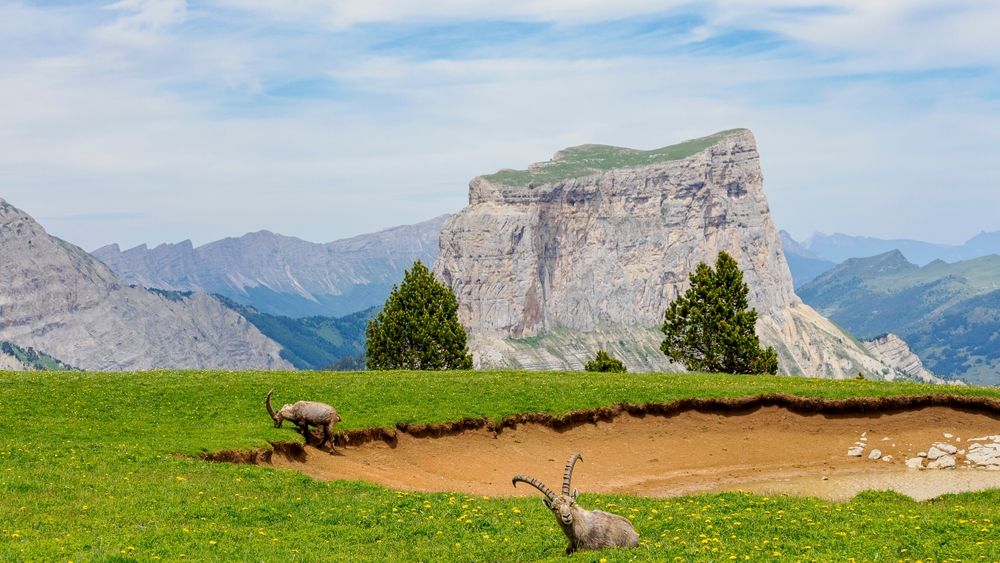
The highest point of the massif at 2,341 meters altitude, Grand Veymont represents the ultimate objective for any hiker visiting Vercors. This demanding 19-kilometer hike with 1,037 meters of elevation gain takes you to the heart of the Hauts-Plateaux Nature Reserve, a wild territory home to ibex, marmots and exceptional alpine flora.
The trail winds through grandiose landscapes, offering striking panoramas of Mont Aiguille and, on clear days, of visiting Grenoble and the Isère valley. This 5h30 adventure rewards efforts with a 360° view from the summit, embracing the entire French Alps.
Download the audio-guided circuit to discover Grenoble on foot and independently
Capital of the Alps, Grenoble stands majestically facing the Vercors, Belledonne and Chartreuse massifs. Our audio-guided circuit of Grenoble invites you to discover this dynamic city, from Place Grenette to Fort de la Bastille, passing through historic districts and secret gardens. Let yourself be guided for a complete exploration of this alpine city with its unique character.
2. The Mont Aiguille circuit: around a stone giant
Nicknamed "the marvel of Dauphiné," Mont Aiguille (2,087m) imposes its unique silhouette in the Vercors landscape. This 17.9-kilometer hike with 1,148 meters of elevation gain reveals all facets of this mythical summit, cradle of modern mountaineering since its first ascent in 1492.
The route circles this natural fortress via Col de Papavet and Col d'Aupet, revealing in turn the impressive faces of this limestone monolith. Viewpoints follow one another, each revealing a different perspective on this inaccessible mountain that has fascinated for centuries.
3. Moucherotte: the belvedere of Grenoble
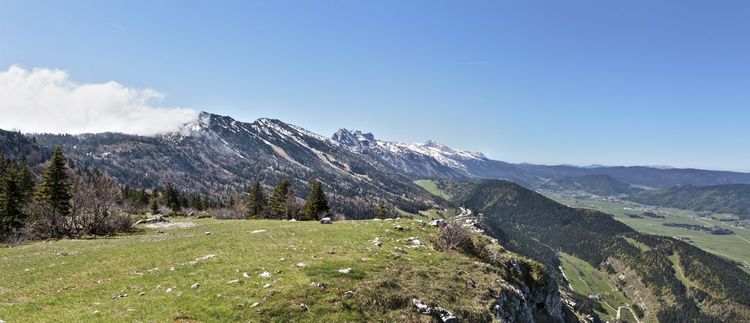
Proudly dominating the Isère valley at 1,901 meters altitude, Moucherotte offers one of the most beautiful panoramas in Vercors. This 10.9-kilometer hike with 572 meters of elevation gain starts from the Lans-en-Vercors plateau and follows the historic trail of Croix des Rames.
At the summit, the view encompasses not only Grenoble and its valley, but also the Chartreuse and Belledonne massifs. This demanding but accessible ascent rewards effort with grandiose landscapes and total immersion in Vercors' unique atmosphere.
4. Pic Saint-Michel: a panoramic ridge
Perched at 1,966 meters on Vercors' continuous ridge, Pic Saint-Michel reveals exceptional panoramas over the two valleys it dominates. This 8.4-kilometer hike with 565 meters of elevation gain offers a constant but rewarding ascent to this emblematic summit.
The trail, mostly exposed to sun, gradually reveals breathtaking views of Vercors Regional Natural Park, Grenoble in the distance, and surrounding Alpine peaks. Be sure to bring sun protection and plenty of water for this ascent in exposed terrain.
5. Tête Chevalière via Vallon de Combeau
This cross-border hike of 11.1 kilometers with 508 meters of elevation gain takes you from Drôme to Isère, perfectly illustrating the geological richness of the Vercors massif. Starting from Vallon de Combeau offers a gentle approach to Tête Chevalière (1,951m).
Surrounded by Montagnette and Tête de Praorzel, this gradual ascent reveals remarkable panoramas of Mont Aiguille and the first foothills of Grand Veymont. The route crosses varied landscapes, from alpine pastures to rocky areas, testifying to Vercors' ecological diversity.
6. Ambel plateau and Tête de la Dame
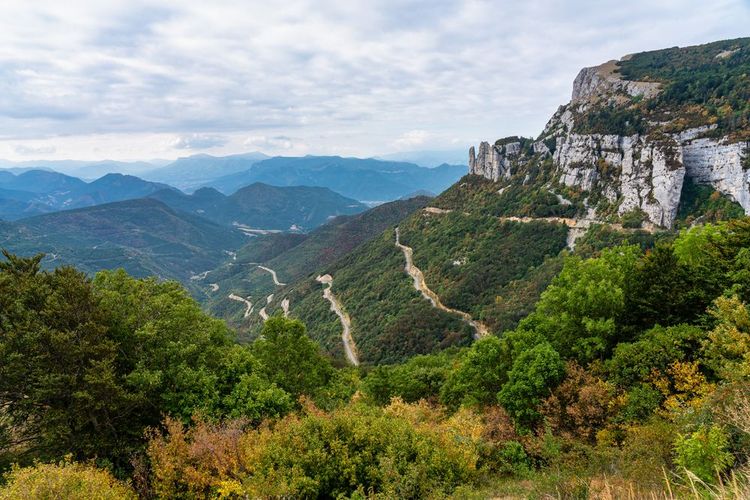
Accessible from Col de Rousset, this 15-kilometer hike with 560 meters of elevation gain immerses you in the majestic solitude of Ambel plateau. This wild territory, bordered by the impressive cliffs of Vercors, offers a unique hiking experience in a preserved setting.
Tête de la Dame, the highest point of the route, reveals spectacular views of Vercors' eastern line, dominated by the imposing mass of Glandasse. This region, less frequented than other sectors of the massif, allows a privileged encounter with wildlife and alpine flora. Grenoble, at the foot of the massif, unrolls over 5.8 audio-guided kilometres.
7. Pas de l'Aiguille and Cirque d'Archiane
This historic hike leads you in the footsteps of the French Resistance, as Pas de l'Aiguille was a major site during World War II. The route crosses the majestic Cirque d'Archiane, a natural amphitheater carved into the limestone of southern Vercors.
The path gradually reveals the secrets of this grandiose cirque, where limestone walls rise several hundred meters high. The descent enhanced with beautiful views of Mont Aiguille makes this hike particularly photogenic and emotionally charged.
8. Druise waterfall: an aquatic marvel
Short but spectacular, this 1.4-kilometer walk with only 92 meters of elevation gain represents one of the most accessible hikes in Vercors. The Druise waterfall, 72 meters high, counts among the most beautiful waterfalls in the massif.
This family walk of half an hour begins with an unusual descent before climbing back to the starting point. Although direct access to the waterfall is now prohibited for safety reasons, the trail offers magnificent viewpoints of this natural wonder formed by the Gervanne.
9. Choranche caves and Gournier waterfall
This exceptional geological hike reveals the underground treasures of Vercors. The medium-difficulty route leads to the famous Choranche Caves, sanctuary of unique stalactites and soda straws, before reaching Gournier waterfall and its underground lake.
The developed trail gradually reveals the karst curiosities of the massif: erosion phenomena, resurgences and limestone formations testify to millennia of water action on rock. This educational walk of a few hours is perfect for families curious about geology.
10. From Saint-Nizier-du-Moucherotte to Lans-en-Vercors
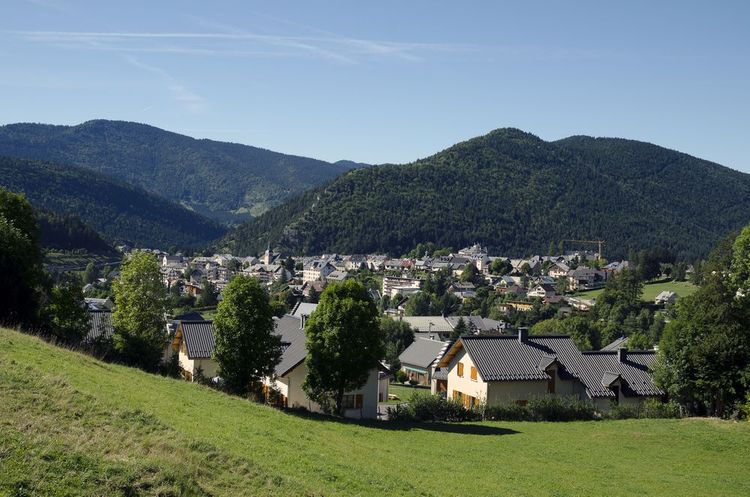
This 5.1-kilometer connecting hike with 319 meters of elevation gain crosses the heart of Vercors Regional Natural Park, linking two emblematic villages of the massif. The route follows old forest paths and sometimes follows the Furon river, which sculpts the landscape of northern Vercors.
The historic trail, once used by the priest of Saint-Nizier-du-Moucherotte to celebrate mass in Engins, crosses remarkable sites: Pas de la Corne, Goulet des Moulins and Pas du Cœur. This walk in preserved nature offers numerous opportunities to observe local wildlife and enjoy the tranquility of Vercors' undergrowth.
In conclusion, the Vercors massif reveals through these 10 exceptional hikes all the richness of its landscapes and the diversity of its ecosystems. From emblematic peaks to secret waterfalls, from wild plateaus to grandiose cirques, each route offers a unique experience in the heart of one of the most beautiful territories in the French Prealps. Whether you choose the demanding ascent of Grand Veymont or the family walk to Druise waterfall, Vercors will seduce you with its preserved beauty and authenticity. Don't hesitate to discover Grenoble, natural gateway to these alpine wonders, to best prepare your adventures in this exceptional massif.



Frequently Asked Questions
What's the best time to hike in Vercors?
The best period extends from May to October, with optimal conditions from June to September. At altitude, snow can persist until May on the high plateaus. Autumn offers superb colors but days shorten rapidly.
What difficulty level for beginners in Vercors?
For beginners, favor hikes to Druise waterfall, Choranche caves or the Saint-Nizier-Lans-en-Vercors trail. These accessible routes allow gentle discovery of the massif before tackling more demanding peaks.
Where to stay to explore Vercors?
Grenoble makes an ideal base with numerous accommodations and easy access to the massif. Villages like Lans-en-Vercors, Saint-Nizier-du-Moucherotte or Villard-de-Lans also offer lodging closest to hiking starting points.
Do you need special equipment to hike in Vercors?
Standard hiking equipment suffices: good shoes, clothing adapted to weather variations, water and food. For high peaks, plan warm layers as temperature drops rapidly with altitude. A map and compass remain essential despite trail marking.
À lire également