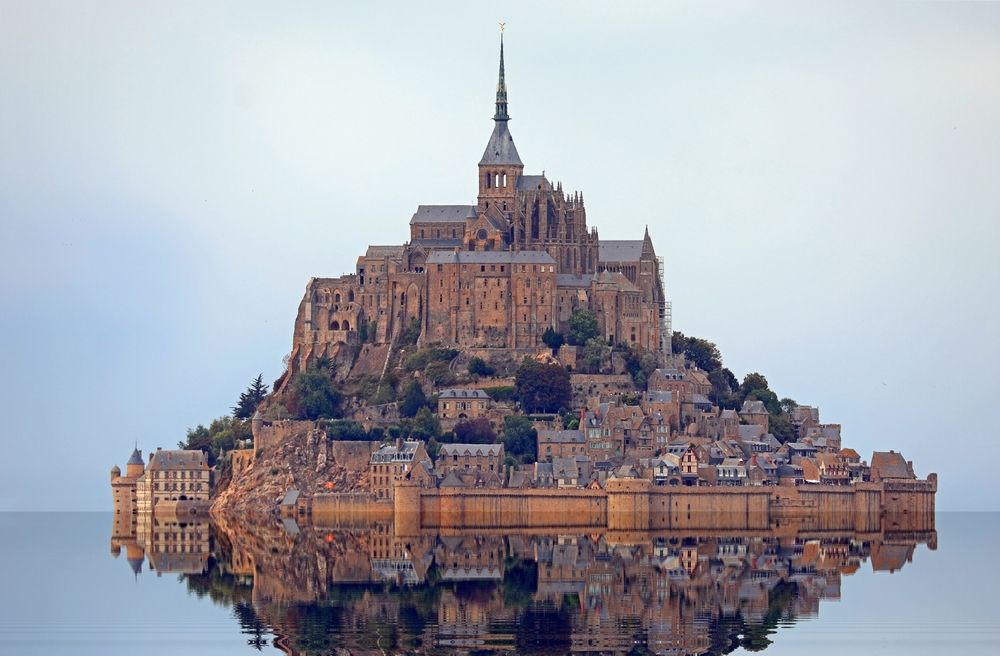
© Shutterstock
 Votre guide Ryo
How to Visit Mont-Saint-Michel Abbey?
Perched atop a rocky islet battered by Europe's greatest tides, Mont-Saint-Michel Abbey has fascinated for over a thousand years. This masterpiece of medieval architecture, inscribed on UNESCO's World Heritage List, attracts nearly 3 million visitors from around the world each year. Between millennial legends, architectural prowesses, and breathtaking landscapes, visiting Mont-Saint-Michel Abbey is an unforgettable experience that plunges you into the heart of France's history.
Why Visit Mont-Saint-Michel Abbey?
Mont-Saint-Michel Abbey represents much more than a simple historic monument. It's a true architectural marvel that has defied the laws of gravity for over a thousand years. Imagine a monumental building constructed atop a 92-meter-high rock, surrounded by Europe's greatest tides that can reach 14 meters of tidal range. This technical and artistic feat testifies to the genius of medieval builders.
Classified as UNESCO World Heritage since 1979, the abbey embodies the quintessence of Gothic and Romanesque art. Its majestic silhouette, recognizable among thousands, stands out on the horizon and creates a striking spectacle according to the tides and light. The "Marvel of the West," as it's nicknamed, houses exceptional architectural treasures: the suspended cloister with its fine columns, the light-filled refectory, the Knights' Hall with its majestic vaults, and the mysterious Romanesque crypts.
Beyond its remarkable architecture, the abbey is charged with a fascinating millennial history. A pilgrimage site since the Middle Ages, an impregnable fortress during the Hundred Years' War, a prison during the French Revolution, it has traversed the centuries while preserving its spiritual soul. Today still, a community of monks and nuns perpetuates the monastic tradition, adding a living dimension to your visit. If you wish to visit Rennes, you can easily organize a day trip to Mont-Saint-Michel, located less than an hour's drive from the Breton capital.
What to See and Do at Mont-Saint-Michel Abbey?
1. The Abbey Church: the Gothic Jewel
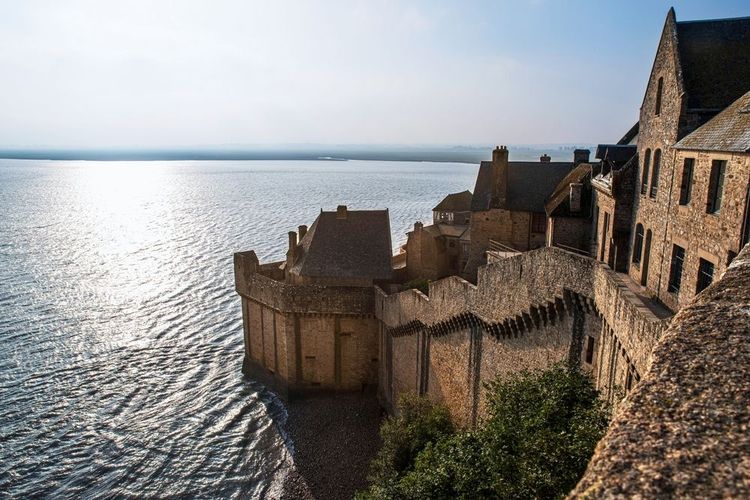
At the abbey's summit stands the abbey church, a true architectural feat built between the 11th and 16th centuries. Dedicated to the Archangel Saint Michael, this church elegantly blends Romanesque and flamboyant Gothic styles. Its soaring arches, finely sculpted side chapels, and luminous choir create an atmosphere conducive to contemplation. From the forecourt, the panoramic view of the bay is simply breathtaking, offering a changing spectacle according to the tides. The majestic proportions of the building and the exceptional quality of its sculptures make it one of the finest examples of medieval sacred architecture.
2. The Cloister: a Suspended Haven of Peace
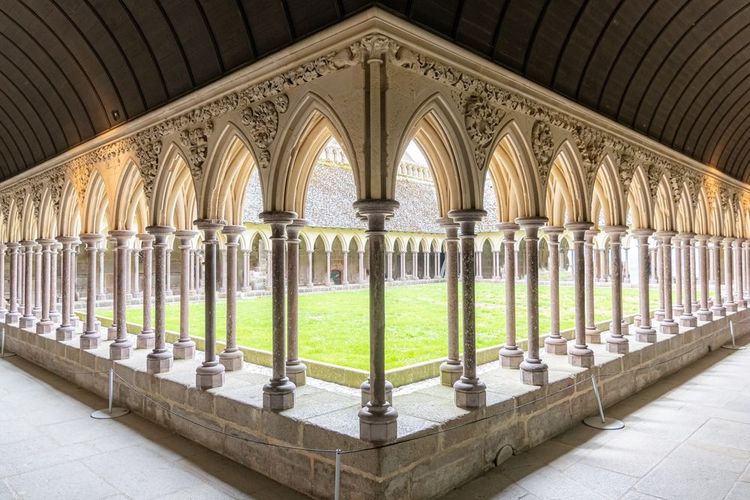
The 13th-century cloister constitutes one of the abbey's most enchanting spaces. A true hanging garden above the sea, this place of meditation for Benedictine monks seduces with its delicacy and elegance. The fine pink granite columns from Brittany, arranged in a quincunx pattern, create a fascinating play of shadows and light. The vegetal sculptures adorning the capitals testify to the talent of medieval craftsmen. From the cloister galleries, the panorama over Mont-Saint-Michel bay is absolutely striking, offering a unique perspective on this ever-changing landscape.
3. The Refectory: the Alliance of Light and Stone
The monks' refectory, dating from the 13th century, impresses with its exceptional luminosity. This immense vaulted hall, 27 meters long, once hosted the silent meals of the monastic community. The tall narrow windows, invisible from the interior, bathe the space in soft, uniform light that seems to come from nowhere. The slender pillars support audacious vaults, creating an atmosphere both sober and solemn. This place testifies to the austere life of the monks, punctuated by prayer, work, and spiritual readings that accompanied their meals.
4. La Merveille: a Gothic Masterpiece
La Merveille designates the Gothic architectural ensemble built on the north face of the rock in the 13th century. This prestigious name perfectly qualifies these three superimposed levels that defy the laws of balance. On the ground floor, the cellar and almonry welcomed pilgrims and visitors. On the first floor, the Guests' Hall received high-ranking personalities, while the Knights' Hall, with its imposing vaults supported by robust pillars, served as a scriptorium for copying monks. At the summit, the cloister and refectory magnificently crown this unique ensemble in the world. The audacious structure of La Merveille, built in only seventeen years, represents one of the greatest exploits of medieval architecture.
5. The Crypts: the Abbey's Mystical Heart
Beneath the abbey church, a network of Romanesque crypts supports the edifice while creating mysterious spaces for contemplation. The Saint-Martin crypt, dating from the 11th century, fascinates with its massive barrel vaults and contemplative atmosphere. The Gros Piliers crypt, built in the 15th century to support the new Gothic choir, impresses with the power of its monumental columns. These underground spaces, bathed in subdued light, offer a striking contrast with the luminosity of the abbey's upper parts. They remind us that monastic spirituality was deeply anchored in the Mont's stone and earth.
6. The Knights' Hall and Guests' Hall
These two medieval halls constitute jewels of monastic architecture. The Knights' Hall, contrary to what its name suggests, served as a scriptorium where monks copied and illuminated manuscripts. Its four naves with quadripartite vaults create a majestic space bathed in light. The two imposing fireplaces testify to the monks' concern for comfort during long Breton winters. The Guests' Hall, for its part, welcomed distinguished visitors. Its refined architecture, with its slender columns and elegant vaults, manifests the importance accorded to hospitality in the Benedictine rule. These spaces illustrate the abbey's double vocation: spiritual and intellectual.
7. The Terraces and Exceptional Panoramas
The abbey's terraces offer spectacular viewpoints over Mont-Saint-Michel bay and its famous great tides. From the ramparts and the abbey's different levels, you'll contemplate a landscape in perpetual transformation. At low tide, the bay transforms into a desert of sand extending as far as the eye can see. At high tide, the waters encircle the Mont, restoring its original insular character. The play of light on the bay, particularly at sunrise and sunset, creates magical atmospheres that photographers from around the world come to immortalize. These grandiose panoramas allow you to fully grasp the exceptional dimension of the site.
Download the audio-guided circuit to discover Rennes on foot and independently
To extend your discovery of the region, download our audio-guided circuit of Rennes which will allow you to explore the Breton capital independently. With 25 entertaining audio guides, set off to discover Rennes' historical treasures, its colorful half-timbered houses, its majestic Parliament of Brittany, and its lively squares. The Ryo app guides you step by step through medieval alleys and emblematic neighborhoods of this charming city, located only 50 minutes from Mont-Saint-Michel.
The Fascinating History of Mont-Saint-Michel Abbey
708: Bishop Aubert's Vision
The abbey's history begins in 708 with a divine apparition. Bishop Aubert of Avranches received three visits from the Archangel Saint Michael in dreams, who ordered him to build a sanctuary on Mont Tombe, a rocky islet battered by the tides. According to legend, the archangel even touched the bishop's forehead with his finger to convince him, leaving a hole in his skull, a relic now preserved at the Saint-Gervais basilica in Avranches. This miraculous foundation made Mont-Saint-Michel one of the oldest Christian pilgrimage sites in the West, attracting crowds of pilgrims from all over Europe since the Middle Ages.
The Middle Ages: Monastic Apogee
Between the 11th and 16th centuries, the abbey experienced its architectural and spiritual golden age. The Dukes of Normandy then the Kings of France competed in generosity toward the monastery. It was during this period that the main buildings that make the Mont's reputation today were erected: the Romanesque, then Gothic abbey church, La Merveille in the 13th century, and finally the flamboyant Gothic choir completed in 1523. The abbey became a radiating intellectual center, housing a prestigious library and renowned scriptorium. During the Hundred Years' War, the Mont heroically resisted English assaults, becoming a symbol of French resistance and reinforcing its patriotic dimension.
From Prison to Spiritual Renaissance
The French Revolution marked a dramatic turning point in the abbey's history. In 1793, the monks were expelled and the Mont was transformed into a state prison, ironically nicknamed "the Bastille of the seas." Hundreds of political prisoners were imprisoned there in deplorable conditions until 1863. This dark period left traces: buildings were degraded, floors were installed in Gothic halls to create cells. Fortunately, from 1874, the abbey was classified as a historic monument and important restoration work was undertaken. In 1969, monks and nuns returned to settle at the Mont, reviving the site's original spiritual vocation. Today, the monastic community perpetuates prayer and welcome, keeping Mont-Saint-Michel's soul alive.
Opening Hours and Prices for Visiting Mont-Saint-Michel Abbey
Abbey Opening Hours
Mont-Saint-Michel Abbey is open year-round, except for three public holidays. From May 1 to August 31, the doors are open from 9am to 7pm, with last admission at 6pm. From September 1 to April 30, the hours are slightly reduced: from 9:30am to 6pm, with last admission at 5pm. The abbey exceptionally closes on January 1, May 1, and December 25. It is strongly recommended to arrive early in the morning or late afternoon to avoid crowds, particularly during school holidays and summer. Visitors wishing to attend religious services celebrated by the monastic community can do so freely, respecting the solemnity of the places.
Entry Fees and Free Admission
The abbey entrance ticket is set at €13 for adults. One of Mont-Saint-Michel's remarkable features is total free admission for young people under 26 who are EU citizens or regular residents outside the EU. This measure allows families and young visitors to discover this exceptional heritage without financial constraints. The abbey also offers free access on the first Sunday of each month, from November to March inclusive, providing a good opportunity for free visits during low season. Thematic guided tours are offered for an additional fee of €7.50 for adults and €6 for 7-17 year-olds. Audio guides are available for rental at €5, enabling an enriched independent visit with detailed historical and architectural explanations.
How to Get to Mont-Saint-Michel?
Car Access and Parking
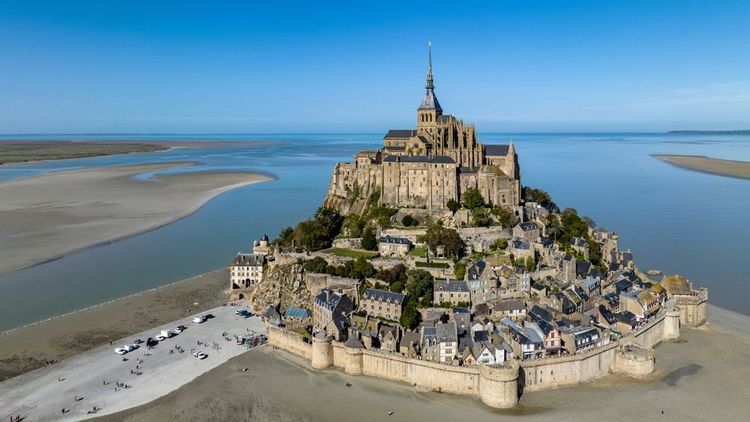
Mont-Saint-Michel is about 1 hour drive from Rennes and 3h30 from Paris via the A11 then A84. Since 2012, the Mont is no longer directly accessible by car. You must park at the official parking lots located 2.5 kilometers from the rock. These parking lots with a capacity of 4000 spaces are open 24/7 and offer seasonal pricing: expect around €14 for 24 hours in low season, €16 in mid-season and up to €22 in high season. Motorhomes have specific spaces at increased rates. Once parked, three options are available to reach the Mont: the free shuttle "Le Passeur" (12-minute journey), walking (about 45 minutes via the causeway) or horse-drawn carriages (paid service subject to availability).
The Free Shuttles "Le Passeur"
The "Le Passeur" shuttle constitutes the most practical and fastest way to reach the Mont from the parking lots. This free service operates continuously from 7:30am to midnight, with departures every 15 minutes approximately according to attendance. The shuttles are accessible to people with reduced mobility and can transport strollers. They drop you off 350 meters from the medieval village entrance, at the foot of the ramparts. The 12-minute journey allows you to admire the exceptional panorama over the bay and gradually see the Mont's majestic silhouette approach. During great tides, shuttles temporarily stop when water covers the access road, creating an impressive natural spectacle where the Mont regains its original insular character.
Other Transportation Means
For those who prefer public transportation, several options exist. Regular bus lines serve Mont-Saint-Michel from Rennes (line 2), Pontorson or Dol-de-Bretagne. The nearest SNCF stations are Pontorson (9 km) and Dol-de-Bretagne (23 km), from where dedicated shuttles depart. Many companies also offer organized excursions departing from Paris, Saint-Malo, Rennes or Caen, including transportation and sometimes a guided tour. For the more athletic, walking access from the parking lots via the footbridge offers a memorable experience, particularly at sunrise or sunset, when light sublimes Mont-Saint-Michel bay.
Practical Tips for a Successful Visit
Best Period and Visit Duration
Mont-Saint-Michel can be visited year-round, but each season offers a different experience. Spring and autumn constitute ideal periods, with pleasant temperatures and lower attendance than in summer. Winter presents the advantage of rediscovered authenticity, despite sometimes harsh weather. Great tides, which occur 36 to 48 hours after full and new moons, offer an extraordinary natural spectacle where the Mont becomes an island encircled by waters. To fully enjoy your visit, plan at least 2 to 3 hours: about 1h30 for the abbey itself, and the rest to stroll in the medieval village and on the ramparts. More passionate visitors can easily dedicate a full day, including a lunch break and thorough discovery of all the Mont's corners.
Recommended Equipment and Preparation
The abbey visit includes many stairs and narrow passages, sometimes slippery. Comfortable and non-slip shoes are therefore essential. Also plan clothing adapted to changing weather conditions: Mont-Saint-Michel bay is exposed to sea winds that can be strong, even in summer. A windbreaker or light jacket is always useful. In winter, temperatures can be cool inside the abbey despite its southern exposure. For photographers, remember to check tide times and weather to optimize your shots. A wide-angle lens will be particularly useful for capturing the amplitude of interior volumes and bay panoramas. Finally, although the abbey has a cafeteria, we recommend bringing a water bottle, especially in summer.
Avoiding Crowds: Insider Tips
Mont-Saint-Michel welcomes nearly 3 million visitors per year, which can make the visit uncomfortable during peak hours. To enjoy the site in the best conditions, prefer a very early arrival (at opening at 9am or 9:30am depending on the season) or late afternoon after 5pm. The months from November to March, outside school holidays, offer a much more peaceful and authentic atmosphere. Tuesdays, Wednesdays and Thursdays are generally less crowded than weekends. If possible, absolutely avoid May bank holidays and summer holidays, particularly July-August. Booking your ticket online allows you to avoid queuing at the ticket office. Finally, for a truly unique experience, consider spending a night at the Mont: very early in the morning or late evening, when most tourists have left, you'll discover a magical and mysterious Mont-Saint-Michel.
Also take advantage of your stay in Brittany to discover other regional wonders thanks to Ryo circuits. Our audio guide application accompanies you in your visits to Rennes and the most beautiful Breton cities, allowing you to explore at your own pace the historical and cultural riches of this fascinating region.
What to Do Around Mont-Saint-Michel Abbey?
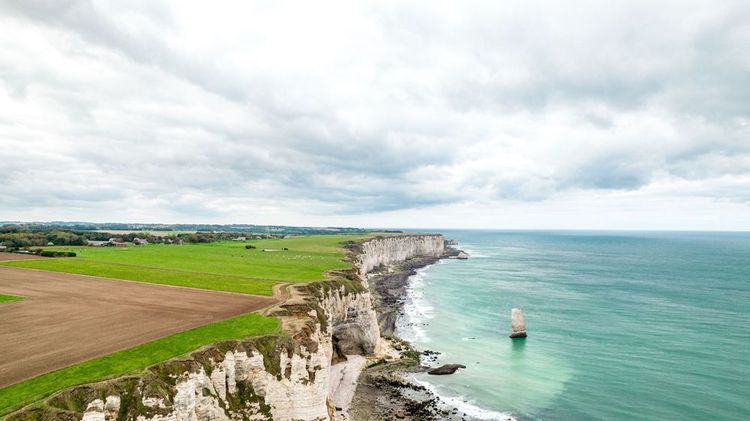
Explore the Medieval Village
The village of Mont-Saint-Michel, nestled between the ramparts and the abbey, deserves a thorough visit in itself. The Grande Rue, the main cobbled artery on a steep slope, winds between half-timbered houses dating from the 15th and 16th centuries. This picturesque street houses numerous local craft shops, art galleries and famous restaurants offering local specialties, notably the famous Mère Poulard omelette and salt-marsh lamb. Don't miss the parish church of Saint-Pierre, built between the 15th and 17th centuries, which houses a statue of Saint Michael slaying the dragon. The ramparts offer an accessible walkway allowing you to circle the Mont with spectacular views of the bay at different hours of the day.
Bay Crossing
One of the most memorable experiences at Mont-Saint-Michel is undoubtedly crossing the bay on foot, accompanied by an approved guide. These professionals perfectly know the bay's dangers: quicksand, fog, rapidly rising tide. A crossing generally lasts 2 to 3 hours and allows you to discover the exceptional fauna and flora of this unique environment, the rivers that wind through the sand, and to approach the Mont from the sea as medieval pilgrims did. The spectacle of the rising tide, which can advance "at the speed of a galloping horse" according to legend, is truly impressive. This activity, practicable from April to October according to tidal coefficients, suits families with children over 6 and requires no particular physical condition.
Nearby Corsair Cities
The Mont-Saint-Michel region abounds with treasures to discover. 40 minutes drive away, the corsair city of Saint-Malo will seduce you with its majestic ramparts, magnificent beaches and rich maritime heritage. Cancale, 30 minutes away, is the paradise for oyster lovers who can taste these shellfish directly from producers with a view of the bay. Further south, don't miss Fougères and its imposing medieval castle, one of the largest and best preserved in Europe. The city of Dinan, 45 minutes away, will charm you with its perfectly preserved medieval center, half-timbered houses and pleasure port on the Rance. Finally, Rennes, the Breton capital located less than an hour away, absolutely deserves a visit for its remarkable historic center, its Parliament of Brittany and dynamic student atmosphere.
In conclusion, visiting Mont-Saint-Michel Abbey represents much more than a simple tourist excursion: it's a journey through time that transports you to the heart of the Middle Ages, meeting millennial spirituality and exceptional architecture. Between the majestic vaults of La Merveille, mysterious crypts, the suspended cloister and breathtaking panoramas over the bay, every corner of the abbey tells a fascinating story. Whether you're passionate about history, an architecture enthusiast, a believer seeking spirituality or simply curious to discover one of France's most emblematic sites, Mont-Saint-Michel will amaze you. Don't forget to complete your Breton stay by exploring surrounding cities with our Ryo audio-guided circuits, which will allow you to discover all the riches of this magnificent region at your own pace.
FAQ: Your Questions About Mont-Saint-Michel Abbey
How long does it take to visit the abbey?
Count about 1h30 to 2h for a complete visit to Mont-Saint-Michel Abbey. This time allows you to explore the main halls, cloister, abbey church and enjoy panoramas from the terraces. If you want a thorough visit with audio guide or guided tour, plan rather 2h30 to 3h. Don't forget to add time to wander in the medieval village and on the ramparts.
Is the abbey accessible to people with reduced mobility?
The abbey's accessibility remains unfortunately limited due to its medieval architecture. The site has many stairs (about 350 steps), narrow passages and multiple levels. Some parts are nevertheless accessible to wheelchair users, notably the abbey church. It is recommended to contact the abbey beforehand to know the possibilities of adapted access and benefit from specific assistance.
Can you visit the abbey for free?
Yes, several options allow a free visit to Mont-Saint-Michel Abbey. Entry is free year-round for under-26s (EU citizens or regular residents outside EU). Additionally, the abbey opens its doors free to all visitors on the first Sunday of each month, from November to March inclusive. These provisions allow the greatest number to discover this exceptional heritage.
Do you need to book your visit in advance?
Booking is not mandatory but strongly recommended, particularly in high season (May to September) and during school holidays. Online booking allows you to avoid queuing at the ticket office and ensure you can visit the abbey at the desired time. Visitors without reservations risk waiting long, or even being unable to enter if the maximum number of visitors is reached.
Can you attend mass at the abbey?
Yes, the monastic community of the Monastic Fraternities of Jerusalem celebrates daily services in the abbey. Mass is sung every day at 12:15pm, except Monday, and Sunday at 11:15am. Access to services is free for faithful who wish to participate in prayer. Visitors are invited to respect the sacred character and contemplation during these celebrations. These moments offer a unique spiritual dimension to discovering Mont-Saint-Michel.
Is Mont-Saint-Michel really accessible at high tide?
Yes, Mont-Saint-Michel remains accessible in all circumstances thanks to the footbridge inaugurated in 2014. This structure maintains access to the Mont even during the greatest tides, while allowing water to circulate freely under the structure. During exceptional tidal coefficients (above 110), the esplanade in front of the Mont can be temporarily submerged, creating an impressive spectacle, but the village and abbey always remain accessible via the elevated bridge. This modern system has allowed reconciling permanent site accessibility with preserving the Mont's unique maritime character.