
Créé par Emilie, le 7 mai 2026
Votre guide Ryo
© Shutterstock
The Presqu'île is located in the heart of Lyon, between the Rhône and Saône rivers. It is filled with magnificent historic buildings in Gothic, Renaissance and Haussmannian styles, but locals and tourists also appreciate it for its shops, tourist attractions, friendly terraces, and gastronomy...
Place Bellecour and Place des Terreaux are 2 unmissable places in the Presqu'île of Lyon. Elegant and majestic, they are both rich in history and the perfect place for all shopping enthusiasts with a choice of big fashion names, trendy boutiques, and young designers sharing the space.
No less than 3,000 shops are available to you in the Golden Square of Lyon's Presqu'île.
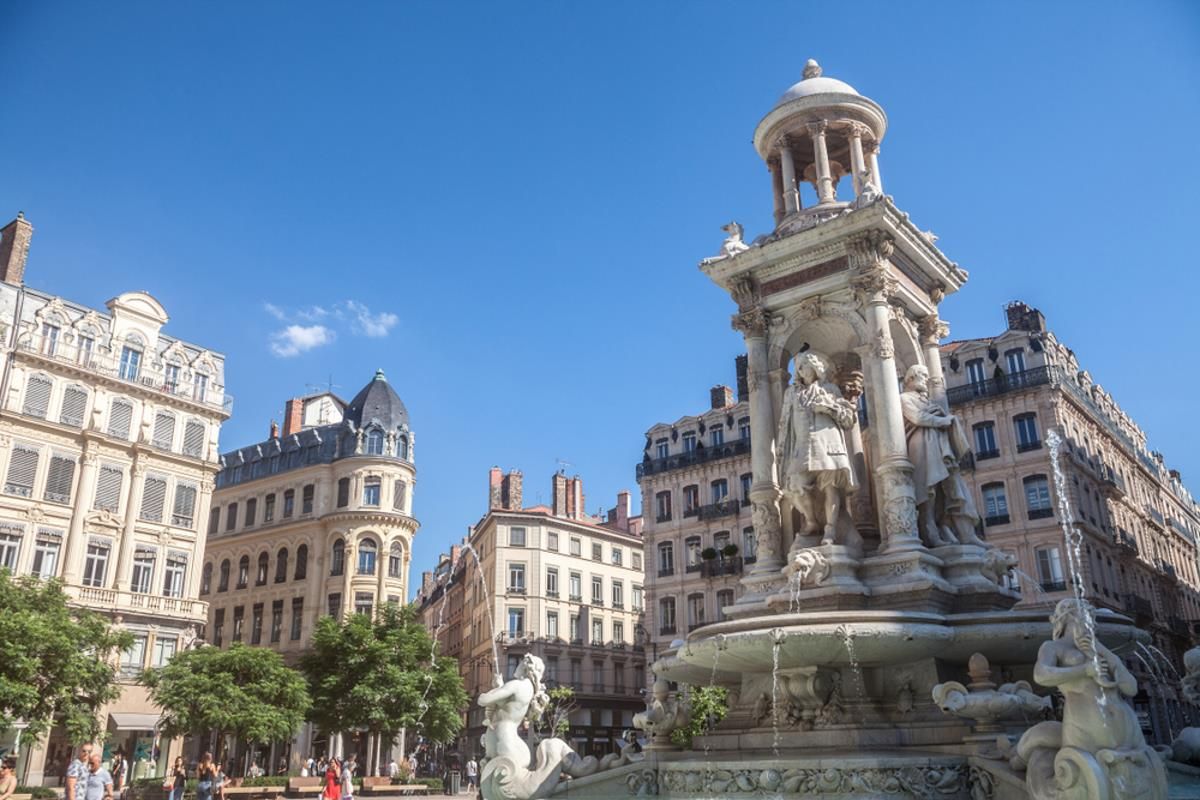
The majestic Bartholdi fountain, the Fine Arts museum where you can discover precious works by Picasso, Matisse, Degas, or Van Gogh in a former 17th century convent, the Printing museum or the Textiles and Decorative Arts museum are just a sample of all the activities waiting for you in Lyon's Presqu'île.
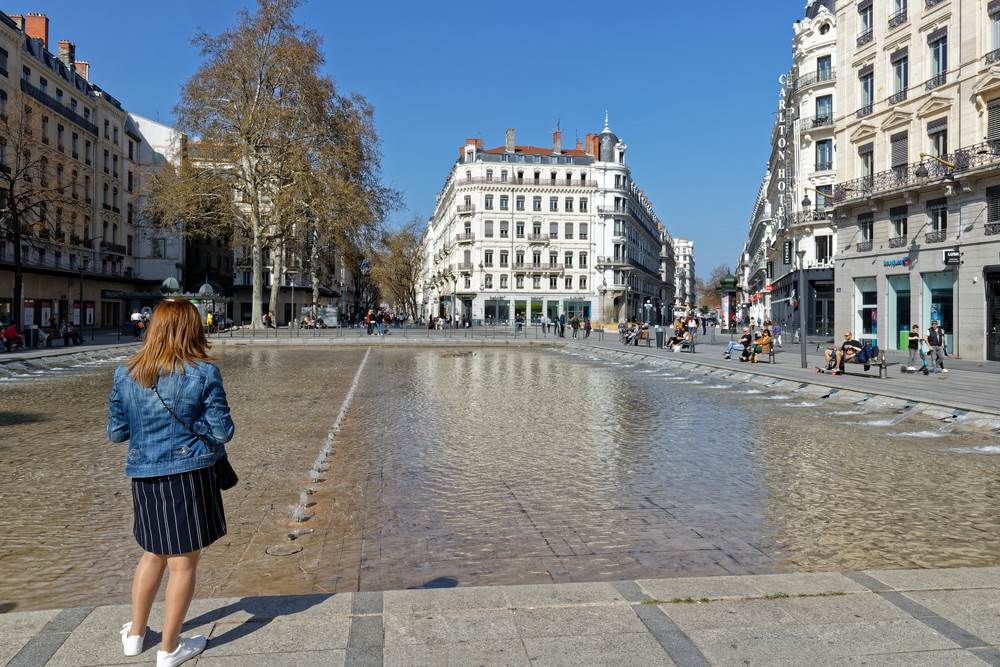
Presentation of the Presqu'île district of Lyon
Lyon's Presqu'île has undergone many changes throughout history. Today, it includes the districts of Terreaux, Saint-Nizier, Cordeliers, Grolée, Jacobins, Bellecour, and Ainay, which are all UNESCO listed. To which are added Carnot, Perrache, Sainte-Blandine and Confluence which are not classified.
Strolling through the streets of Lyon's Presqu'île, you'll move through varied architecture from the Gallo-Roman era to today in a maze of streets dotted with emblematic places. And if we often talk about Lugdanum, the former name of Lyon under Roman colonization, it was indeed with our Gallic ancestors, the Segusiavi, that the history of Lyon's Presqu'île began when they created a Celtic settlement called "Condate" below present-day Croix-Rousse.
Condate in Celtic means confluence, a perfect name for this island located between the Rhône and Saône! The inhabitants were mainly craftsmen, potters, glassmakers, bronze workers, weavers (the future canuts...).
After the Roman invasion, the peninsula would suffer during the Middle Ages from the ravages of the Huns, Saracens, floods... It was also during this time that the island became a peninsula and the abbey of Ainay was built, one of the most powerful. The bridge connecting it to the Old Lyon district was built in the 11th century, which had the consequence of attracting many merchants and craftsmen, and increasing the number of inhabitants.
During the Renaissance, the Presqu'île distinguished itself at a European level with the creation of Lyon fairs that attracted both intellectuals and quality entrepreneurs. This era marked the beginnings of printing with the arrival of Barthélémy Buyer in 1473. Lyon's Presqu'île gradually became the new center of the city. Three decades later, the city of Lyon had no fewer than 30 printing shops.
In the 19th century, Prefect Vaisse began titanic works that would forever transform the face of the Presqu'île. Small streets were transformed into grand boulevards and wide thoroughfares, and Haussmannian-style buildings appeared.
Today, the Confluence district is proof of the revitalization of the south of Lyon's Presqu'île, a vegetalized urban district of more than 41 hectares bringing together housing, offices and leisure, rehabilitated according to contemporary architecture.
What are the attractions to see on Lyon's Presqu'île?
Lyon's Presqu'île is not lacking in attractions. History enthusiasts, heritage lovers, architecture fans, shoppers and leisure seekers will all find something here!
Here are some gems not to miss:
1 – Place Bellecour
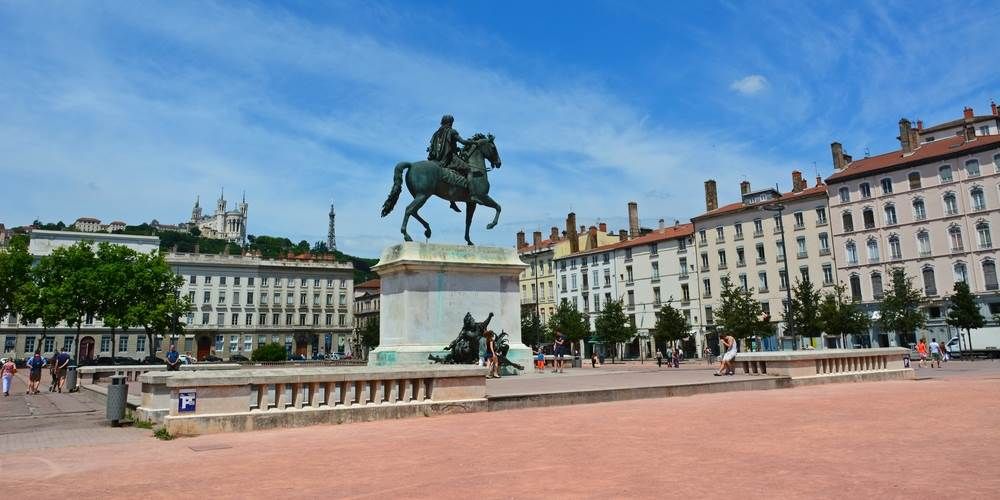
This immense and central square is the largest pedestrian square in Europe.
What was once a marshy area swept by floods was transformed, after its destruction during the French Revolution, into this magnificent square as we know it today, under the impetus of Emperor Napoleon who had grown fond of the city of Lyon. Place Bellecour hosts many festive, cultural and sporting events each year such as the festival of lights.
- An ice rink and Ferris wheel are installed in winter,
- The festival of lights on December 8, when Lyon residents place luminions on window sills and illuminations are projected onto the facades of the city's monuments and buildings. A fabulous spectacle to see at least once in your life!
- The majestic equestrian statue of Louis XIV dating from 1825, the original from 1713 having been destroyed by revolutionaries,
- The World War II memorial, the Stone Watcher,
- The statue of Saint-Exupéry sitting with the Little Prince erected in tribute to this Lyon writer, aviator and reporter,
- A park for children,
- Art galleries,
- Brasseries,
- Huilerie Richard,
- Taking a cooking class at the prestigious Institut Paul Bocuse...
2 – Place Antonin-Poncet
This square houses the Post Office building built in 1934 in which artist Louis Bouquet painted a fresco 54 m long and 4 m high in 1937. This fresco illustrates Lyon's influence on the world through radio waves and transport. Also to discover, the bell tower of the Charity hospital chapel (remnant of the building demolished in 1933), the embarkment point, and the Armenian genocide memorial in the form of tall columns.
3 – The Ainay district
The Basilica of Saint-Martin d'Ainay in Romanesque style, located in the south of Lyon's Presqu'île, has undergone multiple evolutions. Originally a Merovingian building then a Carolingian chapel in the 10th century, it was later elevated to abbey status. In 1600, King Henri IV stayed at the abbey on the occasion of his marriage to Marie de Médicis at Lyon cathedral.
But it was the Protestants who greatly damaged the building during the capture of Lyon in the 16th century. Only the Saint-Martin church survived and was restored in the 19th century. Flamboyant Gothic vaults, vaulted and beautifully painted naves, medieval iconographic sculptures, antique references and Romanesque elements succeed one another in perfect harmony.
You will also find in the Ainay district very beautiful 19th century bourgeois residences, notably on quai Maréchal-Joffre, but also art galleries and antique dealers.
4 – Auguste Comte, Victor Hugo and de la Charité streets
The chic streets of Lyon's Presqu'île.
Auguste Comte street is considered by some as the most beautiful street in Lyon. Art and antique shops are numerous and filled with precious objects: 50 antique dealers, 16 art galleries, 10 furniture and decoration stores, plus Maison Germain, this emblematic shop created under Louis XIV is a renowned silk store, bookshops, a glass engraver...
Victor Hugo street is a notable commercial artery in Lyon, where you'll find nearly 40 clothing stores (Jules, Armand Thiery, D.P.A.M., Camaïeu, Pimkie, Claire's, Brice, Jacqueline Riu, Undiz...) and about fifteen shoe stores (San Marina, Bocage...), but also the famous Voisin cafés and chocolates, perfume and cosmetics boutiques...
Charité street features many traditional and contemporary shops, characterful bourgeois buildings, and sumptuous private mansions.
5 – Rue des Marronniers
Despite its name, you won't find a single tree on this pedestrian street, but restaurants as well as 2 traboules including one at number 2 that leads you to Place Bellecour, and one at 3 bis that leads you to the Théâtre des Marronniers transformed into a cinema.
Little Lyon bouchons abound on rue des Marronniers, where you can taste emblematic dishes of Lyon cuisine: sapper's apron, quenelles and liver cake, andouillette, calf's head with gribiche sauce... La Mère Jean, Chez Mounier, Chabert et Fils, Aux Trois Cochons, la grange des Marronniers or chez M'man, are some examples of the twenty or so little Lyon bouchons where you can delight in local specialties.
6 – Rue de la République
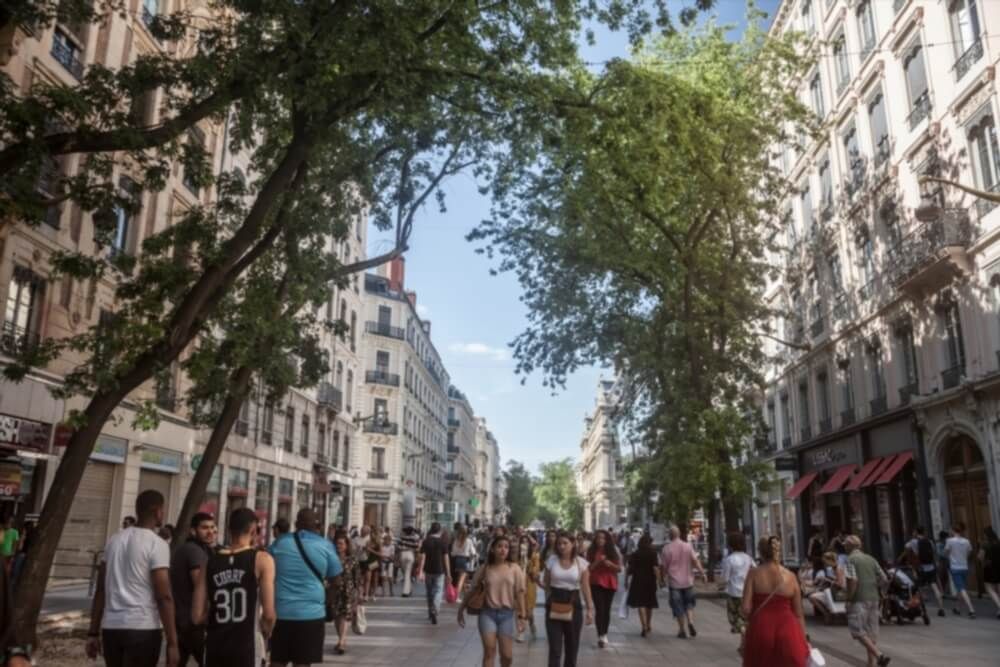
This main artery of Lyon's Presqu'île is among the most beautiful streets in the city with sculptural facades, ornamental doors or columns, beautiful wooden doors... Artists perform on this very busy street playing violin, accordion, pan flute, guitar, bagpipes...
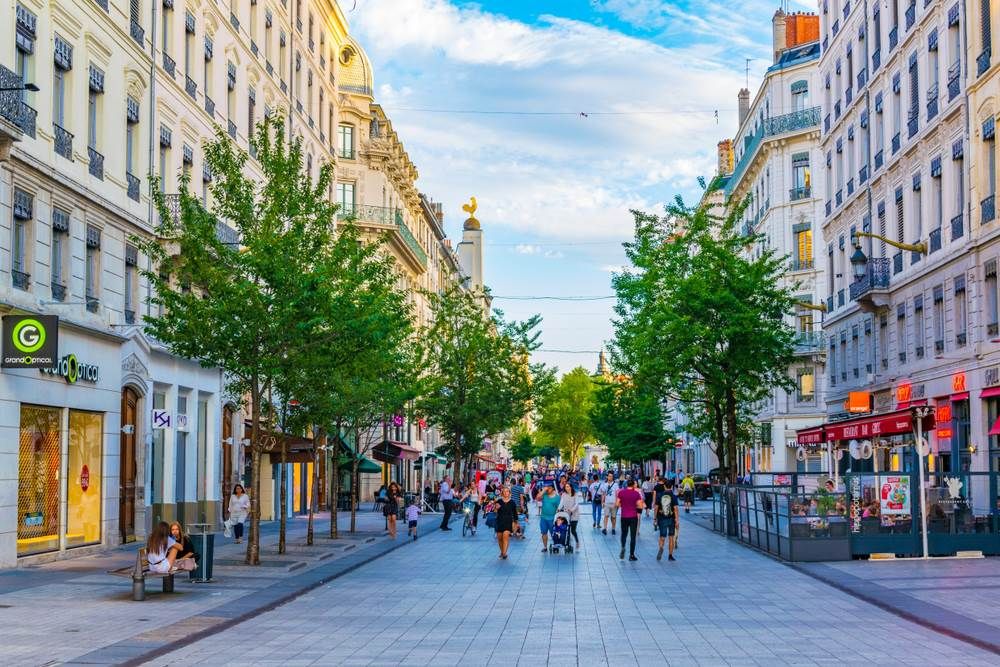
Other artists are present: designers reproducing paintings with chalk on the cobblestones, statue men... Not to mention the jewelry stores, diamond dealers and the many shops very present in this space. Rue de la République connects Place Bellecour to the Town Hall.
7 – Place de la République
Located in the center of rue de la République, it is adorned with a large fountain highlighted by spotlights at night.
8 – The Hôtel Dieu
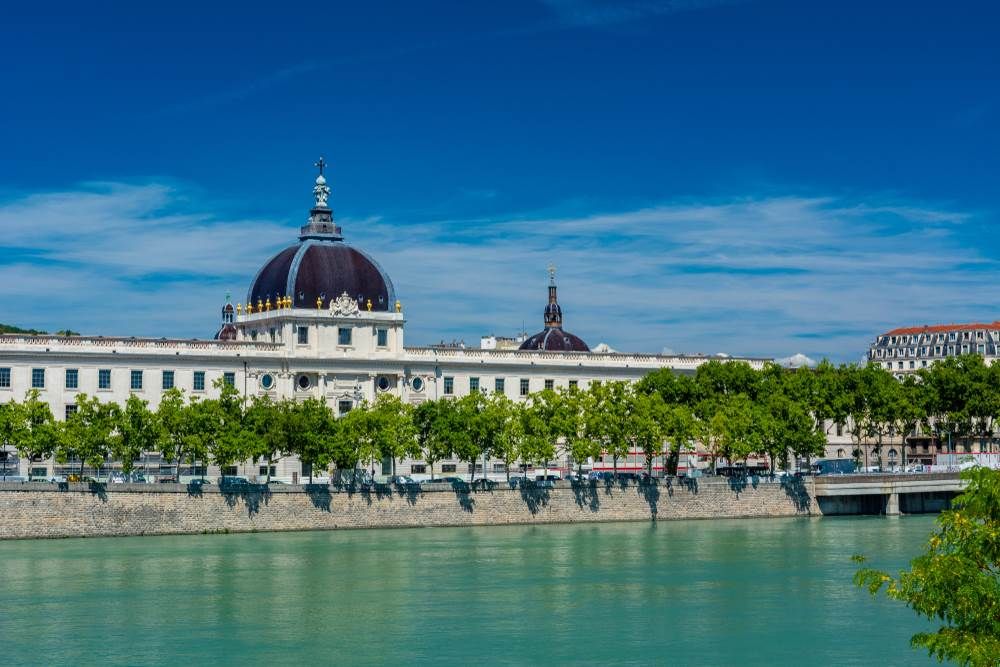
This building built in the 12th century was administered by different ecclesiastical orders until its sale to the city of Lyon in the 15th century. Hospice then hospital, then maternity ward, it is today a 5-star hotel as well as a commercial space dotted with very trendy boutiques, offices, restaurants... Where ancient and modern architecture mix.
9 – Place des Jacobins
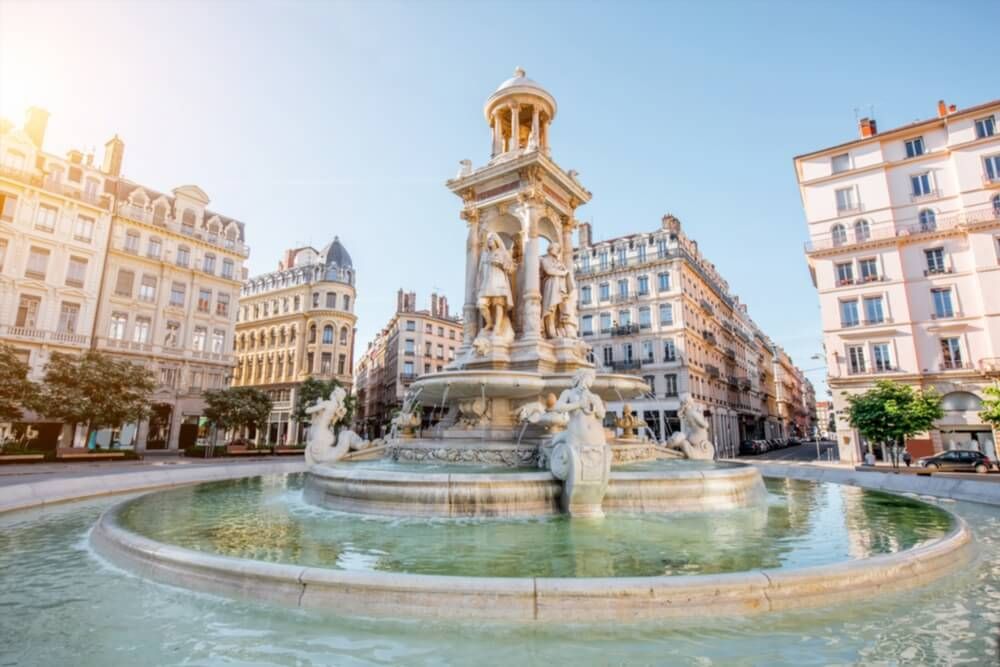
This square was once the site of a Jacobin convent destroyed in the 19th century. A magnificent white marble fountain stands in its center with statues representing Lyon artists: architect Philibert Delorme, sculptor Guillaume Coustou, engraver and designer Gérard Audran and painter Hippolyte Flandrin. Terraces and shops are plentiful near this square.
10 – The Stock Exchange Palace
The Stock Exchange Palace dates from the 19th century. It was built at the request of Lyon prefect Jean Marius Vaïsse, and was inaugurated by the Emperor and his wife Empress Eugénie in 1860. President of the Republic Sadi Carnot was assassinated by an anarchist near the stock exchange in 1894. A red paving stone marks the crime scene as well as a commemorative plaque on the wall of the Stock Exchange Palace.
The Corbeille room features sumptuous coat of arms on the ceiling, 24 caryatids and atlantes on the 3rd floor as well as a gigantic marble statue surmounting the first level clock.
11 – Saint-Bonaventure Basilica
It is located opposite the Stock Exchange Palace, built in 1327 in Gothic style. The interior is enhanced by numerous art objects: statues, paintings, decorations, tapestries, stained glass...
12 – Place de la Bourse
Facing the monumental palace of the same name, take time to admire the south facade built in white and pink stone, its columns and slate roof, the sculptures and clock at its summit. Place de la bourse, very pleasant, has been landscaped.
13 – Saint-Nizier Church
It bears the name of the bishop who was in office in Lyon in the 6th century and who was buried upon his death in what was then just a small church. Construction began in the 14th century and was completed in the 19th century. Saint-Nizier church is therefore one of Lyon's oldest churches and its two asymmetrical towers give it a completely unique character.
The portal is Renaissance style, the exterior vault is characterized by a coffered decoration of cherubs and roses. Inside, the 1825 organ is located above the door, stained glass windows, bas-reliefs, marble altars, statues elegantly match the flamboyant Gothic style.
14 – The Lyon Opera
This classical building, inaugurated in 1756, was bought and demolished by the city in the 19th century before being rebuilt in neo-classical style. In 1988, architect Jean Nouvel was chosen to rehabilitate a poorly maintained building. The reopening in 1993 was notably with the first opera given in 1688 at the opening of Lyon's Royal Academy of Music: Phaeton by Jean-Baptiste Lully.
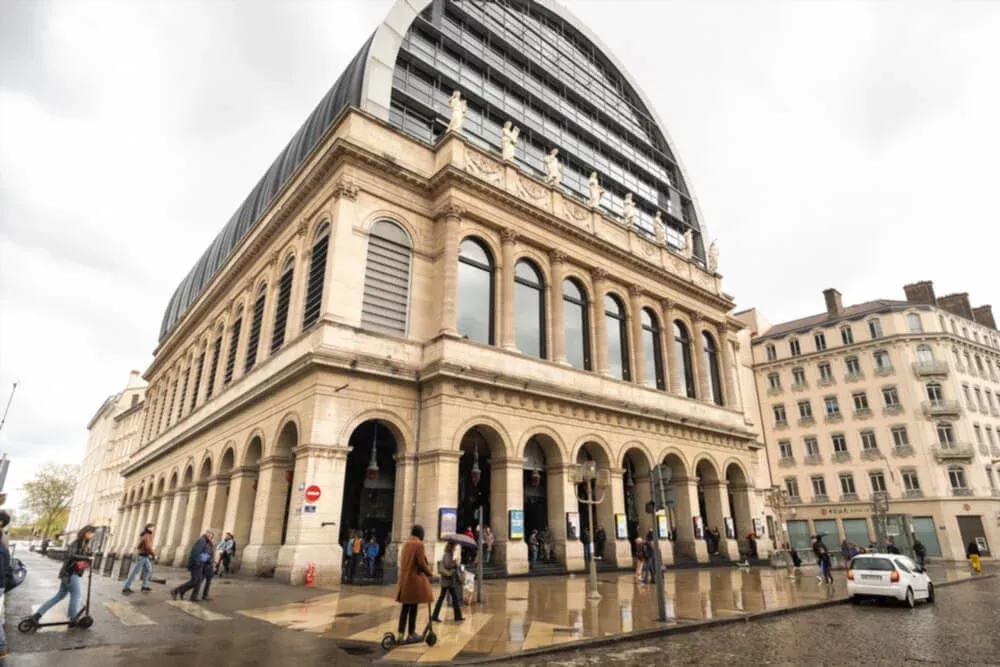
Only the walls were preserved including the neo-classical facade. A contemporary glass dome now covers the building with an addition of 8,000 red beacons. The grand foyer, dating from 1831, is the only room preserved from the old theater. Its original decor composed of paintings and gilding contrasts with the rest of the building. Lyon opera organizes shows that address all generations and all budgets!
15 – Place des Terreaux
This perfect rectangle is located at the foot of the magnificent Croix-Rousse district, and goes from the Town Hall to the Saint-Pierre palace. Formerly composed of marshy land, it was King Louis XII who pushed the boundaries of Lyon to this location in 1512. The Town Hall was built in 1672. Place des terreaux has always had an undeniable role in the political, public and cultural life of the city.
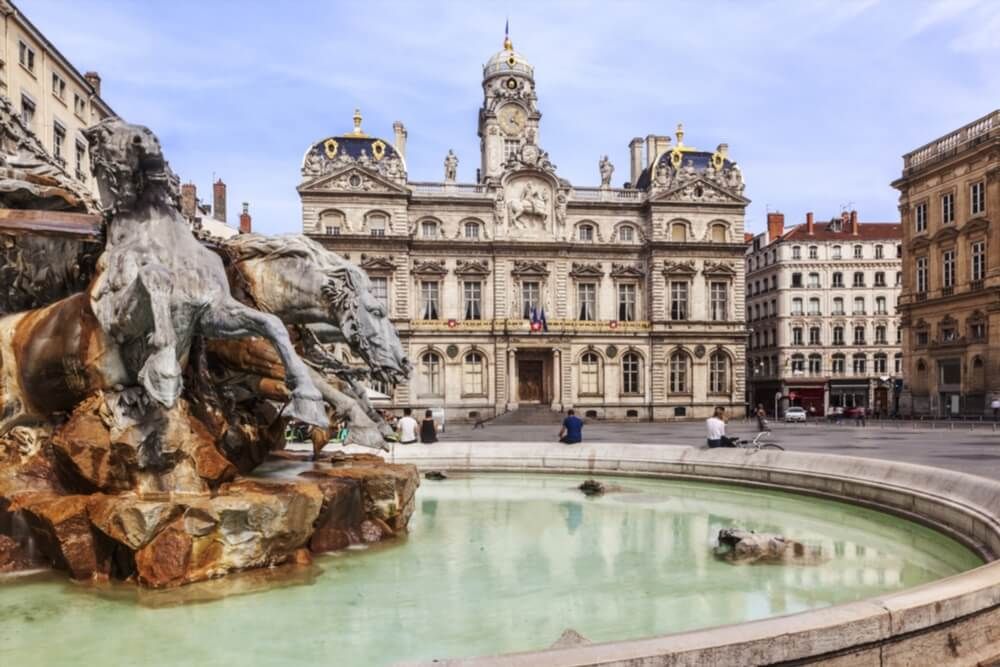
Site of public executions in the 17th century, a guillotine was installed there during the revolution. It was also the place of protest for the "two-sous riot" in 1786, then the Canuts uprising in 1831. Not to mention Bonaparte's visit, or that of General de Gaulle who proclaimed Lyon "capital of the Resistance" from the Town Hall balcony in 1944.
Sports or cultural events, free concerts, festival of lights on December 8... Place des terreaux is a place that Lyon residents particularly cherish.
The buildings, café terraces, the Town Hall, the superb Bartholdi fountain with its 15-meter diameter and its 4 horses that seem to emerge from the fountain with their smoking nostrils. The Saint-Pierre Palace, now the Fine Arts museum, where gardens, cloisters, a grand staircase, a 17th century refectory still remain... Among the remains that were not destroyed by revolutionaries and which are so many marvels to discover on this emblematic square.
16 – The Town Hall
Despite multiple fires that ravaged this building, it remains to this day one of the most beautiful monuments of the Presqu'île and Lyon. It took 26 years to complete the 4 pavilions, 2 courtyards and belfry that make up this building. The great hall decorations have as their theme "The Temple of Augustus" built by the 60 Gallic nations, that of the grand staircase "the fire of Lyon under Nero."
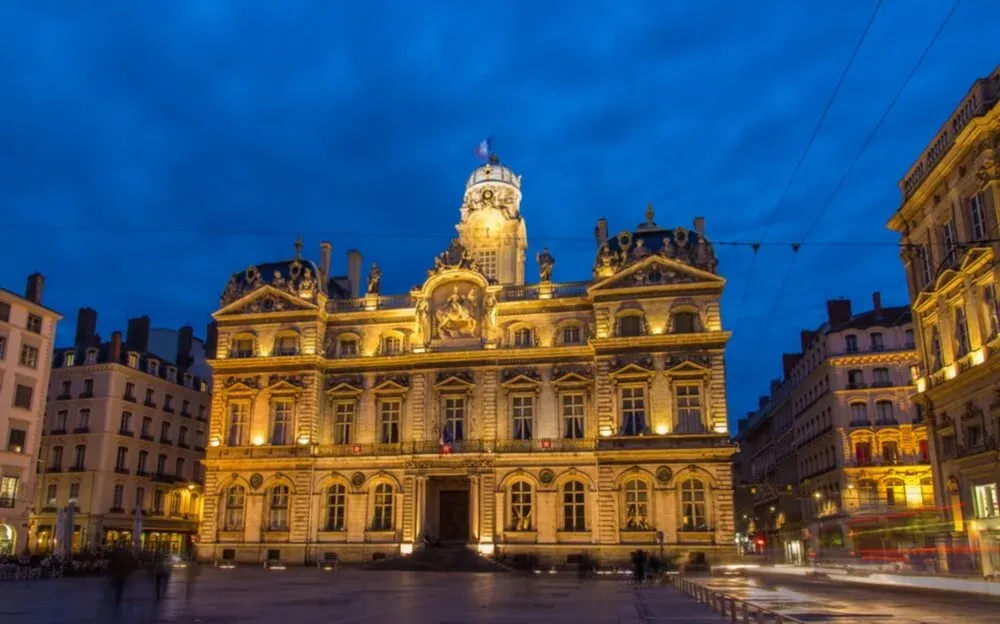
During the revolution, the courtyard became a courthouse and executions were numerous. The decorations destroyed during the revolution were reproduced in 1853: bronze medallions, statues, silks... The paintings were renovated. Lyon's Presqu'île Town Hall welcomed Emperor Napoleon III and Empress Eugénie three times in the 19th century.
17 – Rue Mercière
This street is one of the first streets of Lyon's Presqu'île. If it is nowadays renowned for its restaurants, it was initially one of Lyon's essential arteries between the different commercial bridges that fed the city. This street is, moreover, directly linked to the history of printing, from the 16th century.
Annual fairs offered wide distribution of works thanks to its 181 printing workshops. Rue Mercière was then the 3rd largest publishing site in Europe. Now pedestrian, rue Mercière delights locals and tourists with specialties of Lyon gastronomy.
Le Bistrot de Lyon, considered the flagship of Lyon brasserie by Gault&Millau, is also appreciated for its authentic decor with frescoes, mirrors and other gilding. Le Mercière, la traboulerie, and les enfants terribles are some examples among these Lyon bouchons that will awaken your taste buds!
18 – Place des Célestins
It takes its name from the former Celestine convent built in the 16th century which also served as a dormitory for the sick, refectory, chapter house, cells and library for 400 years. Sold in 1786 by the donor to an entrepreneur, the convent was transformed into commercial buildings as well as a theater. However, some architectural vestiges from this era remain such as:
- The vaulted passage topped with a 17th century statue of the Virgin at 11 place Antonin Gourju,
- The first two floors and the north and south doors of the 18th century convent at 8 to 10 quai des Célestins,
- A Latin inscription at 2 rue Charles Dullin...
19 – The Célestins Theater
For more than 200 years, this theater has continuously produced dramatic art plays like the Comédie-Française. This Italian-style theater, with 2 red and gold rooms, is full of projects and offers quality programming from repertoire or contemporary works. You can admire on its facade columns, as well as an attic sculpted with garlands, lions and angels, moldings and trompe-l'oeil.
What shops are present in the district?
Lyon's Presqu'île has enough to satisfy the desires of all shopping addicts with more than 3,000 shops. If you particularly like brands, you should go to rue Edouard Herriot. Victor Hugo and République streets are among the largest pedestrian shopping areas in Europe. As for the Part-Dieu shopping center, it's the largest in Europe. Antique lovers will find their happiness at Place Bellecour and in the Auguste Comte district.
To whet your appetite, here's a small non-exhaustive sample of shops on rue de la République:
1 – Uniqlo Lyon
This Japanese brand has the particularity of mastering the entire manufacturing process of its clothing lines, from design to production. Its philosophy: quality casual clothing accessible to everyone.
Uniqlo 9 – 11 rue du Président Carnot, 69002 Lyon.
2 – Lush Lyon
A range of handmade cosmetics made from natural ingredients. Bath bombs, shower jelly or solid shampoo, Lush Lyon offers products for the whole family!
Lush Lyon 71 rue de la République, 69002 Lyon.
3 – Dr Martens Lyon
We immediately recognize these shoes with their very particular style, but so comfortable and durable, which have gained followers worldwide. Classic or contemporary, come discover the entire collection!
Dr Martens 10 rue du Président Carnot, 69002 Lyon.
4 – Decathlon Lyon
Latest collections, second-hand sportswear at exceptional prices or short-term sports equipment rental, Decathlon Lyon welcomes you 3 rue du Président Carnot, 69002 Lyon.
5 – Snowleader Lyon
This shop specializes in selling equipment for skiing and other mountain sports.
Snowleader Lyon: 6 rue du Président Carnot, 69002 Lyon.
6 – Horace Lyon
Quality care and cosmetic products for men, made in France.
Horace Lyon 49 rue de la République, 69002 Lyon.
7 – Sephora Lyon
Makeup, skincare, perfume, eyebrow bar, or 45-minute makeup for a new top look, welcome to the world of beauty!
Séphora Lyon 53 place de la République Lyon 69002.
What museums should you visit on Lyon's Presqu'île?
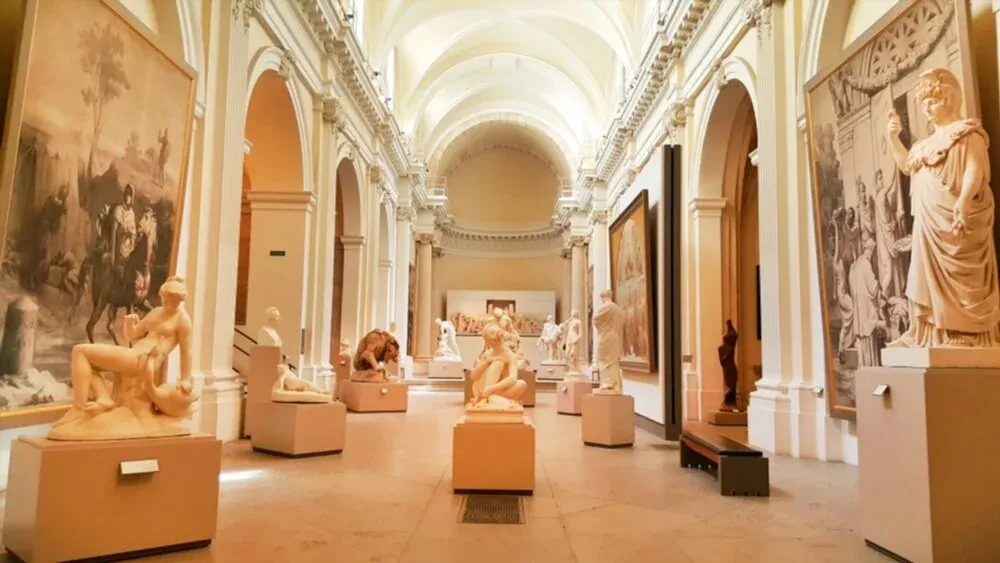
1 – The Fine Arts Museum, one of the largest in Europe
Located at Place des Terreaux, this museum presents a rich and varied collection of Mediterranean basin antiquities from the pharaohs to ancient Rome, sculptures from the Middle Ages and Renaissance to the 20th century, treasures of coins, medals, seals and other jewelry from all eras, art objects from the Middle Ages to the 20th century (ivories, Limoges enamels, earthenware...), paintings from the Middle Ages to modern art (Perugino, Veronese, Rubens, Fragonard, Géricault, Delacroix, Manet...), and finally, a graphic arts cabinet containing no less than 15,000 works from the 16th to 21st centuries.
All in one of the oldest monasteries in Gaul. Take time to admire the refectory and grand staircase from baroque art, the 17th century cloister and pink marble columns in the Greek vase room which was formerly the private oratory of the nuns' apartments.
Lyon Fine Arts Museum is located at 20 place des Terreaux, 69001 Lyon.
2 – The Printing and Graphic Communication Museum
The museum is located in a Renaissance-style building and immerses you in the history of books and various graphic techniques, from its origin to photocomposition. A permanent exhibition will allow you to discover hundreds of books, a copy of the Claudian Tables, prints as well as ephemeral printed matter covering a very wide period.
- Temporary exhibitions and workshops are offered year-round. Among the workshops offered, you'll find: typography, engraving, illustration, calligraphy, illumination...
- The oval gallery and tower are also worth seeing.
- The Printing and Graphic Communication Museum is located at 13 rue de la Poulaillerie, 69002 Lyon.
Where to sleep in Lyon's Presqu'île?
Prestigious hotels, bed & breakfasts or more accessible hotels, you'll find everything and at all prices in Lyon's Presqu'île.
1 – Prestigious hotel of Lyon's Presqu'île
Between €160-300 for a double room, great comfort, very pleasant setting and careful decoration 700 meters from Place Bellecour, 800 meters from Théâtre des Célestins and 1.6 km from the Fine Arts museum. 20 rue de l'Abbaye d'Ainay, 69002 Lyon
Nestled in the heart of a building listed as a historical monument, the Hôtel-Dieu, a 12th century monument. This luxury hotel offers service worthy of its 5 stars from €300 per night for a double room. 20 quai Jules Courmont, 69002 Lyon.
2 – Bed & Breakfast Lyon's Presqu'île
Located in a 19th century building, the 30 m2 room, with private bathroom and sitting area, offers all the charm of old apartments with high ceilings and period moldings. A subtle mix of classic and contemporary from €130 per night for a double room, 600 m from Place Bellecour and 200 m from Ampère metro. 11 rue Jarente, 69002 Lyon.
3 – More affordable hotels
From €55 per night, this charming hotel in the heart of Lyon's Presqu'île has kept an authentic side with its moldings, high ceilings and period fireplaces. This 2** hotel is located 100 meters from the Saône quays and Ainay Abbey. 28 rue Vaubecour, 69002, Lyon.
Soundproofed room and private bathroom from €54 per night, 700 meters from Lyon-Perrache station and 1 km from Lyon's old town. 24, quai Perrache, 69002 Lyon.
In conclusion
Lyon's Presqu'île does not lack charm, historical, architectural, gastronomic and artistic assets. A place that can please all kinds of vacationers: solo, with family, or with friends, whether for a weekend or longer. Come discover all the secrets of Lyon's Presqu'île from antiquity to today and leave with memories full of the capital of the Gauls!
Did you know?
"It's the hospital mocking charity" is a well-known expression in France, but do you know precisely where this expression comes from? From Lyon of course! And more precisely, from Lyon's Presqu'île where the Hôtel-Dieu and la Charité (of which only the bell tower remains at place Antonin Poncet) were rival hospices that denigrated the services provided by one or the other while doing exactly the same thing: welcoming the sick to the hospice, helping poor people... It implies that these 2 rivals ultimately had the same flaws, which is where this famous expression was born.