
Créé par Emilie, le 20 juin 2026
Votre guide Ryo
Frioul Islands: 15 Must-Do Things in 2026
© Shutterstock
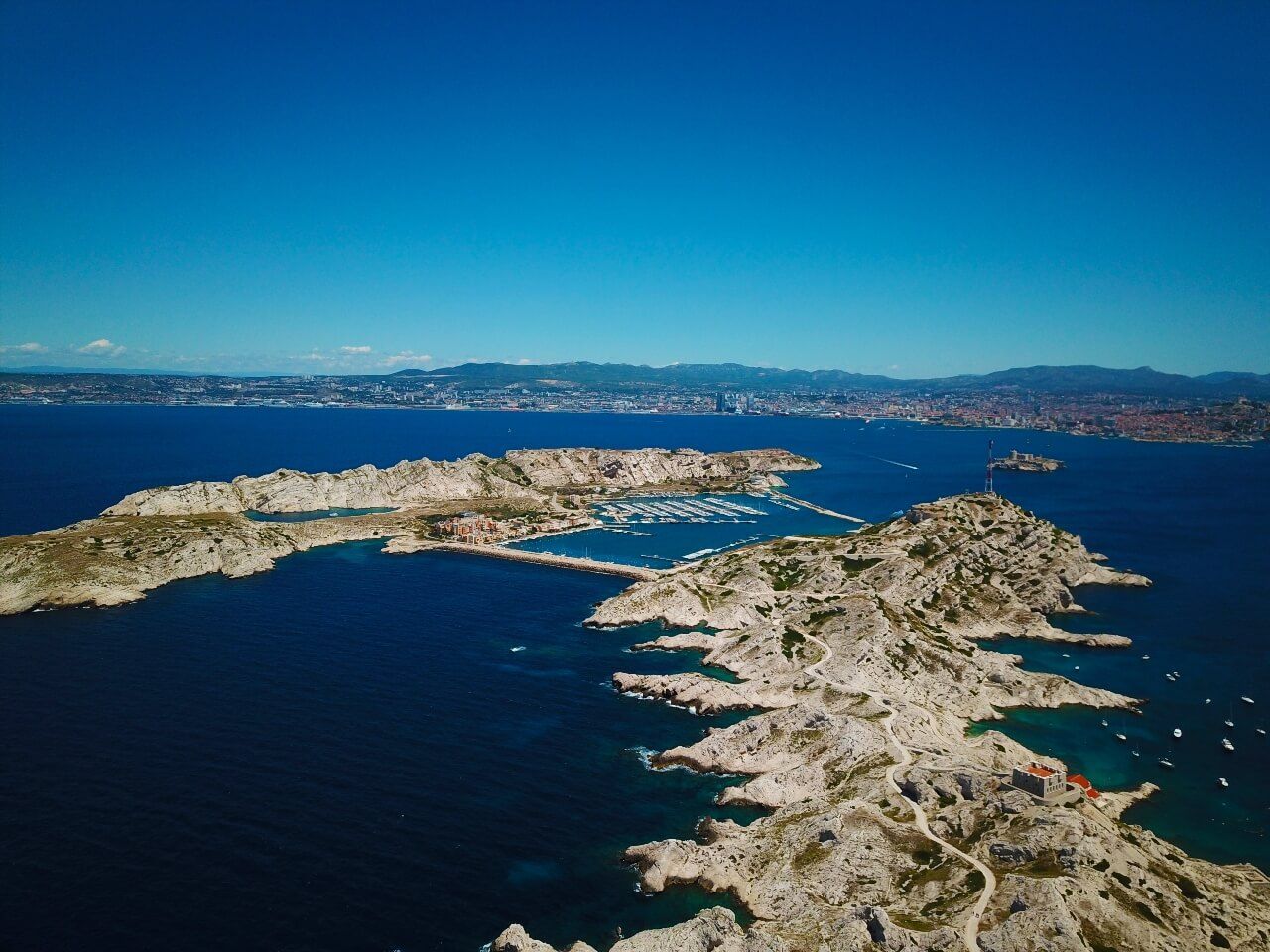
Twenty minutes by boat from the Old Port, the Frioul archipelago is one of the most surprising getaways on the Mediterranean coast, a destination that many Marseille locals themselves have never truly explored. You wonder, for a Frioul island, what to do in a day or weekend? Four limestone islands, turquoise water ranked among the clearest in the French Mediterranean, and a château made famous by Alexandre Dumas: Frioul concentrates exceptional sites in less than 200 hectares for an island accessible as a day trip. With the Ryo audio guide, you can approach these islands at your own pace, without following the marked itineraries of group excursions.
What you'll discover here is far from the postcard image: a 19th-century military hospital, calanques still deserted in midsummer, a sporting event where thousands of swimmers imitate the fictional escape of the Count of Monte Cristo, and cliffs where seabird species nest that are unfindable on the mainland. Whether you come for a day or a complete weekend, the Frioul islands offer much more than a swim.
1. Take the Shuttle from the Old Port
Everything begins at quai des Belges (now quai de la Fraternité), the boarding point for the maritime shuttle that serves the Frioul archipelago from the heart of Marseille. The company Frioul If Express (the Bateau Frioul If, operated by the metropolitan transport authority) runs rotations year-round, with increased frequency between April and September. The crossing lasts between 25 and 30 minutes and already offers a first spectacle: the city silhouette receding, Château d'If emerging to starboard, and the white cliffs of Frioul drawing closer.
The round-trip fare for one island (Old Port to Frioul, or Old Port to If island) is around 11 euros per adult at full price (2025 rate), with reductions for children; a combined ticket serving both Frioul and Château d'If costs slightly more. It's possible to buy your ticket at boarding, but in high season, particularly July and August, booking online the day before avoids queues and disappointments. Some rotations also stop at Château d'If before continuing to Ratonneau: check the itinerary when purchasing to not miss your stop.
2. Discover Ratonneau Island
Ratonneau is the largest of the two inhabited Frioul islands, and the first you'll set foot on when getting off the boat. Frioul port (Ratonneau Island, 13007 Marseille, rated 4.6/5 on Google for 3,415 reviews), a few dozen pleasure boats moored in front of a handful of restaurants, gives a first impression of tranquility almost anachronistic compared to the effervescence of Marseille visible on the horizon.
The island measures about 2.5 km long and can be traversed entirely on foot in half a day, combining the northern coastal path with the plateau heights. Landscapes change dramatically depending on the side: port side, fragrant garrigue and dry stone walls; north side, vertical white limestone cliffs plunging into water whose color shifts from celadon green to cobalt blue depending on the hour.
Ratonneau also houses most of the archipelago's accommodations and restaurants, a municipal campsite, and the nautical center where you can rent kayaks and diving equipment. It's the natural starting point to explore Pomègues, as the two islands are connected by a dike built in the 19th century, or to venture on the Hôpital Caroline trails to the southeast. Take time to stroll in the port early morning, before the shuttles unload their first hundreds of visitors.
The houses of Ratonneau's unique village, painted white and ochre, have resisted decades of tourism development. The buildings remain modest, almost spartan, giving the island an authenticity that the largest coastal resorts lost long ago. It's precisely this contrast, wild Mediterranean five kilometers from France's second city, that makes Ratonneau a place apart.
3. Explore Pomègues Island
Ratonneau and Pomègues are connected by a dike supporting Frioul port, but the two islands have very distinct personalities. Pomègues is the southernmost, slightly larger (3 km long, 1 km wide), and bears traces of several centuries of military and sanitary history.
The northwest side houses the former fort de Pomègues, a fortification whose origins date back to the 17th century and was progressively enlarged until the 19th century. Today property of the French Navy and partially inaccessible, the fort remains visible from overlooking paths and constitutes a striking photographic subject with the sea as backdrop. A barracks is still active there, explaining why some southern island accesses are closed or restricted.
Pomègues' east coast offers the archipelago's calmest waters, protected from prevailing winds. The calanques cutting into the white limestone cliffs are deeper and more preserved than on Ratonneau. The coastal path along this eastern face is one of the archipelago's most beautiful: allow an hour and a half to traverse it from the dike to the southern point, with permanent views of the open sea and distant Tiboulen and Maïre islands.
To explore Pomègues autonomously and not miss any historical detail, the Ryo app offers audio content mixing geology, military history, and marine biodiversity, enriching the hike without needing an on-site guide.
4. Visit Château d'If
The Château d'If (If Island, 13007 Marseille, rated 4.6/5 on Google for 5,547 reviews) is technically a separate island, the archipelago's smallest at 3 hectares, but is systematically associated with Frioul in collective imagination and shuttle circuits. Built between 1524 and 1531 on François I's order to defend Marseille port, the fortress was never actually attacked by enemies: it mainly served as a state prison, housing hundreds of political and religious prisoners over the centuries.
Alexandre Dumas ensured the place's immortality: in The Count of Monte Cristo (1844), he made Château d'If Edmond Dantès' prison. While the character is fictional, the so-called 'Monte Cristo' cell is real, or rather reconstructed for tourist purposes, and continues to fascinate visitors from around the world. The figure of Mirabeau is also evoked, the famous revolutionary orator imprisoned there in 1774.
The château is managed by the Centre des monuments nationaux and can be freely visited once on the island (entrance ticket separate from shuttle fare). Lower halls, underground passages, and ramparts are accessible. Climb the north ramparts for the most spectacular view: Marseille to the left, Frioul to the right, and before you a blue expanse unobstructed to the horizon. On clear days, you can see the snow-capped Alps to the northeast.
Allow one to one and a half hours for a thorough visit of the château itself, plus travel time from Marseille. Most shuttles from the Old Port offer either a direct stop at If island, or a combined If + Frioul itinerary. If targeting both in one day, leave early: the last return shuttles from Frioul depart late afternoon and don't systematically stop at If on return. Check schedules at boarding.
The least crowded period to visit Château d'If is in May-June or September: school groups and tour operators are fewer, waiting lines reduced, and Mediterranean light is at its best for photography. In full July or August, expect up to 45 minutes queue at Old Port boarding in the morning.
5. Swim at Sainte-Estève Beach
On Ratonneau island, Sainte-Estève beach (Ratonneau Island, 13007 Marseille, rated 4.4/5 on Google for 1,118 reviews) is one of the archipelago's most frequented, and for good reason: its fine sand, full south exposure, and shallow waters make it ideal for families. It's located about fifteen minutes' walk from Frioul port, following the coast southwest.
The water is remarkably clear; the sea transparency around Frioul is often cited as among the best on the Provençal coast, thanks to the absence of industrial discharge and shallow depth over much of the coastline. In summer, water temperature easily rises to 23-25°C, pleasantly extending swims in July and August. The sandy and pebble bottom allows gradual entry into the water, without surprises from slippery rock slabs found on other parts of the coastline.
No lifeguard service is provided on Frioul beaches: swim at your own risk, and be careful if northwest winds (mistral) blow, as they can make the sea rough even in usually calm areas. Bring your water and provisions; the island's only shops are at the port.
6. Swim in the Archipelago's Calanques
Developed beaches are only a tiny part of Frioul's coastline. The real reward awaits those who put on hiking sandals and venture on coastal paths: dozens of wild calanques carved into white limestone, accessible only on foot, most of which don't appear on any tourist map distributed at the port.
The calanques on Pomègues' east coast are the most preserved: they require a 30 to 60-minute walk from the port and remain deserted even in high season. The water is deep and cold, with underwater visibility that can exceed 15 meters in calm weather, paradise for masks and snorkels. Some calanques offer no proper beach, just flat rock slabs where you can lay your towel before diving.
On Ratonneau, coves on the north side are less accessible but offer striking panoramas of the Marseille coast. Caution: northern coastal paths can be vertiginous in places, with exposed passages above cliffs. Closed shoes recommended, and avoid these itineraries in strong wind.
The Frioul archipelago is part of Calanques National Park, created in 2012. Regulations prohibit fires, unauthorized camping, and plant picking. Respecting these rules largely explains why Frioul's marine and terrestrial biodiversity remains in such good condition despite heavy summer attendance.
7. Hike on the Archipelago's Trails
Frioul lends itself particularly well to hiking, even for inexperienced walkers: elevation changes remain modest (Ratonneau's highest point doesn't reach 90 meters), trails are generally well-marked, and you're never very far from a return point to the port.
The complete Ratonneau circuit represents about 7 to 8 km and takes three to four hours comfortably, including swimming breaks. The Pomègues circuit is slightly longer (9 to 10 km) and wilder, with isolated sections far from any shelter. Combining both islands via the dike, a full day of walking naturally presents itself.
Frioul's vegetation is characteristic of Mediterranean garrigue: rosemary, thyme, spurges, and in the most protected areas, Aleppo pines that the wind sculpts into tormented silhouettes. In spring (March-April), wild orchids bloom in rocky hollows, a surprise for those who associate the archipelago only with summer beach activities.
Several useful landmarks for planning your hike: the fort de Pomègues trail offers the best view of the entire archipelago from the heights; Ratonneau's north belvedere, accessible in about twenty minutes from the port, is perfect for sunrise if you sleep on the island; and the path along Ratonneau's east face toward Hôpital Caroline combines history and biodiversity in one route.
Remember to bring enough water. There are no drinking water points on the trails, and Mediterranean heat can quickly exhaust even in overcast weather. In July and August, start hiking before 9am or after 5pm to avoid midday heat. Trails are not shaded.
If you want hiking to also be cultural and naturalist exploration, Ryo's audio-guided archipelago course enriches each stage with historical anecdotes and fauna/flora information, without needing a physical guide on site. A way to transform a walk into true discovery.
8. Visit Hôpital Caroline
The Hôpital Caroline (Ratonneau Island, 13007 Marseille, rated 4.3/5 on Google for 130 reviews) is undoubtedly Frioul's least known and most fascinating monument. Built between 1823 and 1828 by architect Michel-Robert Penchaud, it was named in honor of Caroline de Bourbon-Sicile, Duchess of Berry. It was intended to quarantine sailors and passengers arriving in Marseille from epidemic-contaminated areas: yellow fever, cholera, or plague. The Frioul archipelago had already played this sanitary role during great epidemics that ravaged Marseille, like the 1720 plague.
The complex's architecture is impressive: a vast neoclassical complex organized in pavilions around a central courtyard, at whose heart a fully glazed chapel allowed patients to follow services from their pavilion, without direct contact. The design aimed to isolate the contagious from convalescents and medical staff. Integrated mid-19th century into the 'islands' lazaret', the hospital was long considered the largest and most efficient in the entire Mediterranean.
The site was largely destroyed during Allied bombing in August 1944, then abandoned until the islands were bought by Marseille city in 1978. Today, Hôpital Caroline is listed as a historic monument (since 1980) and undergoes slow restoration carried out each summer by volunteer workshops. Visits and events (including the MIMI festival) are organized in season: inquire directly with Marseille's tourist office or the association managing the site before your visit.
Even if the interior isn't always accessible, the exterior is worth the trip. Hôpital Caroline is located at Ratonneau's southeast tip, about 40 minutes' walk from the port. The climb from the coastal path is steep for the last few hundred meters, but the archipelago view from the hospital heights is one of Frioul's most striking.
The site attracts relatively modest attendance compared to beaches and Château d'If. This is an advantage: you'll often be almost alone, in silence punctuated only by wind and seagull cries. The place's atmosphere, partially ruined buildings, vegetation reclaiming rights over walls, sea visible from every opening, has something of a romantic wasteland in the literal sense of the term.
To place Hôpital Caroline in Marseille's sanitary history and understand quarantines' role in 19th-century Mediterranean economy, the Ryo audio guide offers detailed narration placing the monument in its context, much richer than information panels installed on site.
9. Observe Marine Fauna and Biodiversity
The Frioul archipelago is a protected area of Calanques National Park, making it one of the best-preserved marine natural spaces on the Provençal coast. Waters are particularly rich: groupers, breams, scorpionfish, moray eels and even octopuses are easily spotted with simple mask and snorkel in shallow rocky areas.
On land, amateur ornithologists will be delighted: the archipelago hosts colonies of yellow-legged gulls, but also Mediterranean shearwaters (the yelkouan shearwater, a vulnerable species) that nest in inaccessible cliffs and perform low flights over the sea at dusk. The crested cormorant also frequents sun-exposed rocks, identifiable by its characteristic posture with wings spread for drying.
The best time to observe fauna is early morning, before the first shuttles arrive. Gulls are particularly active at dawn, and still-calm waters facilitate fish observation in shallow areas. Avoid marked nesting areas you'll find signaled on trails: approaching during reproduction period (March-July) is prohibited and can cause nest abandonment.
10. Practice Scuba Diving
Frioul is one of the most accessible diving sites in the Marseille region. Several wrecks rest in the archipelago's waters, some at depths accessible to beginner divers. The water, among the clearest in the Mediterranean with visibility of 15 to 30 meters in good weather, offers exceptional conditions for both scuba diving and freediving.
The most frequented site is Planier, a lighthouse on an isolated islet a few nautical miles offshore from Frioul, renowned for its spectacular drop-offs. For dives from Frioul itself, the underwater faults and caves of Pomègues' east coast attract experienced divers. Several Marseille diving clubs offer regular outings departing from Frioul port or the Old Port.
If you wish to dive without having brought your own equipment, the Frioul nautical center, located at Ratonneau port, offers equipment rentals and can direct you to certified instructors. Book in advance during season: slots fill quickly and weather conditions (wind, visibility) sometimes impose last-minute cancellations.
Freediving and snorkeling remain the most accessible activities for most visitors. Pomègues' east coast shallow calanques and Ratonneau's north rocky bottoms allow observing rich marine fauna without prior training. Mask, snorkel, and fins suffice; you can bring them from Marseille or rent on site.
11. Kayaking and Water Sports
Exploring Frioul's coasts by sea kayak is an experience in itself. From Ratonneau port, it's possible to rent single or double kayaks and skirt the cliffs accessing coves totally inaccessible on foot. Required technique remains modest for usual summer conditions, calm sea, light wind, but monitoring weather is essential: the mistral can rise quickly and make return to port difficult.
Stand-up paddleboards (SUP) enjoy growing success around the archipelago, particularly in sheltered areas between the dike and port. SUP easily reaches small Pomègues beaches that sea kayaks struggle to approach due to reduced depth.
For older children (10+ years), most providers offer initiations in protected environments, with mandatory life jackets. Expect about 15 to 25 euros per hour depending on craft and duration. In high season, equipment stock may be limited late in the day: arrive early or book in advance if coming on an August weekend.
12. Attend the Monte Cristo Challenge
Each year in June, the Frioul archipelago hosts a unique sporting and literary event in Europe: the Monte Cristo Challenge, an open water swimming race created in 1999. The principle is simple but spectacular: thousands of swimmers launch from Château d'If to reach Prado beaches in Marseille, 5 km in open sea for the main event, honoring Edmond Dantès' fictional escape in Dumas' novel.
The main event is reserved for experienced swimmers, capable of covering the distance in water at 18-20°C depending on the year. But the event also offers shorter formats (1 km, 2 km, 2.5 km, 3.5 km, with or without fins), accessible to intermediate-level swimmers. Wetsuits are authorized on most events.
The Monte Cristo Challenge brings together several thousand participants annually (around 6,000 swimmers expected for the 2026 edition) from all over Europe, making it one of the continent's largest open water swimming gatherings. The logistical organization is impressive, with safety boats positioned throughout the course. The atmosphere around the event matches the setting: a sea festival as much as a sports competition.
Even if you're not a swimmer, attend the event from Frioul port or Ratonneau heights. The spectacle of hundreds of colored caps progressing in the sea, with Château d'If as backdrop and Marseille hills on the horizon, remains etched in memory. The exact date varies each year around June: check the event's official website for registrations and schedules.
The Monte Cristo Challenge joins a long tradition of nautical events around Frioul. The archipelago also hosts regattas and occasional rowing competitions throughout summer, animating the port and attracting spectators unrelated to the sports world.
13. Taste Cuisine at Frioul Port
Dining on the island is mainly concentrated around Frioul port, on Ratonneau, with a small handful of restaurants and snack bars open in season. Don't expect an elaborate gastronomic scene: it's honest, straightforward port cuisine, where seafood takes center stage.
Bouillabaisse isn't generally served in these establishments - that's business for major Marseille restaurants with their own protocol - but grilled fish, tellines, sea urchins (in season, November to April), and seafood platters naturally find their place in this setting. Several establishments offer lunch formulas around 15 to 25 euros, reasonable considering insularity and supply logistics costs.
A practical tip: arrive at restaurants before noon or after 1:30 PM to avoid morning shuttle crowds. Terrace tables facing the port, with direct views of pleasure boats and distant city profile, fill quickly in summer. Some restaurants require reservations for lunch service in July-August, worth checking by phone before leaving Marseille.
For economical lunch, several snack bars offer sandwiches and salads. Note there's no supermarket on the island, and the port's sole grocery prices unsurprisingly reflect maritime supply constraints. If planning a full day or calanque picnic, buy provisions in Marseille before embarking.
14. Sleep on the Island
Spending a night on Frioul radically changes the archipelago experience. Once the last shuttles leave in late afternoon, the island shifts into absolute calm that day visitors never know. The night sky, far from Marseille lights, reveals stars with clarity rare for a site so close to a major urban area.
The most affordable option is Ratonneau municipal campsite, open May to September, offering bare tent sites. Facilities are basic but functional: restrooms, running water, reception, and the setting largely compensates for spartan comfort. The campsite is generally full on July and August weekends: book several weeks in advance.
The archipelago also has some seasonal rentals (apartments, small houses) rented by the week in high season. Prices reflect rarity and demand; don't expect camping rates. These rentals can be found on usual platforms searching geographically for 'Frioul'. A few private gites exist on Ratonneau, with limited capacity for 2 to 6 people.
On Pomègues, accommodation possibilities are virtually non-existent for the general public; French Navy presence and the southern sector's protected natural status considerably limit tourism development. This is what preserves this island's wild character.
A Frioul night also allows witnessing sunrise over the sea from Ratonneau heights, one of the archipelago's most striking visual spectacles, totally impossible to schedule during a day visit.
15. Photograph Sunsets and Panoramas
Frioul is an exceptional playground for landscape photography. Late-day Mediterranean light transforms white limestone cliffs into shades of gold and orange, with Tiboulen islets silhouettes and Marseille profile as backdrop.
The best sunset viewpoint is on Ratonneau's northwest plateau heights, about twenty minutes from the port. Château d'If silhouettes against the sea at sunset in a way that alone justifies bringing a camera. For drone enthusiasts, overflights are subject to Calanques National Park regulations and require prior authorization; inquire with the Park before your visit.
FAQ
How Long to Visit the Frioul Islands?
One day suffices to discover essential points: Ratonneau port, Hôpital Caroline, a swim, and a meal. But Frioul easily deserves two days to combine both islands, a complete hike, diving, and a night on site. With Château d'If as additional option, plan an extra half-day or dedicated day.
What Is the Shuttle Fare to Frioul?
The round-trip fare for one island (Frioul or Château d'If) is around 11 euros per adult at full price (2025 rate, to verify for 2026). Children benefit from reduced fares. A combined ticket serving both Frioul and Château d'If costs slightly more, and château entrance remains payable extra. The shuttle departs from quai des Belges (quai de la Fraternité), at Marseille's Old Port.
Can You Eat on Frioul Island?
Yes, several restaurants and snack bars are open at Frioul port on Ratonneau, from about May to September. They mainly offer seafood, salads, and grilled items. Prices are slightly higher than in Marseille due to supply logistics. Off-season, offering is very limited or non-existent: bring your meal.
Can You Sleep on Frioul Island?
Yes, Ratonneau island has a municipal campsite (open May to September), some seasonal rentals, and private gites. Offering is limited and fills quickly in high season. Book several weeks in advance for a July or August weekend. Pomègues offers no accommodation accessible to the general public.
What Is the Best Time to Visit the Frioul Islands?
May-June and September are ideal months: the sea is already swimmable (water at 20-22°C), crowds are significantly lower than in midsummer, and hikes are more pleasant without July-August heat. The archipelago is also magnificent in winter for hikers, but most restaurants and services close from October to April.
Are the Frioul Islands Part of Calanques National Park?
Yes, the Frioul archipelago is integrated into Calanques National Park created in 2012. Regulations prohibit fires, unauthorized camping, plant gathering, and drone flights without authorization. The exceptional water quality and marine biodiversity you'll observe at Frioul is directly linked to this protection.
Conclusion
The Frioul islands are a fortunate anomaly: wild and historic territory a few cables from Marseille, accessible in less than an hour's transport from downtown. Between Château d'If's narrative force, Hôpital Caroline's silence, and water clarity in Pomègues calanques, the archipelago offers variety of experiences that few comparable destinations can claim at this distance from a major city.
To prepare your visit and miss no detail, historical, naturalist, or practical, Ryo's audio-guided tour accompanies you island by island, at your own pace. Download our Ryo app before boarding the shuttle: once on the archipelago, network isn't always reliable.