
Créé par Emilie, le 20 juin 2026
Votre guide Ryo
Best Beaches in Marseille: Complete Guide 2026
© Shutterstock
Marseille is one of the rare French cities where you can lunch by the Vieux-Port and swim in turquoise waters before 3 PM. For those seeking the best beaches in Marseille, the choice is overwhelming: the 57 kilometers of municipal coastline, a figure even many Marseille locals ignore, stretches from the industrial north to the first cliffs of the Calanques National Park, covering very different realities: sandy beaches equipped with metro access, rocky coves accessible on foot, and islands twenty minutes away by ferry. To explore the city before heading to the sea, the Ryo audio tour of Marseille covers the Vieux-Port, Le Panier and the historic districts in 3 hours of walking.
This guide covers 12 spots, from downtown to the most remote calanques: a beach created with debris from the metro construction, a cove with a sandy bottom where water reaches lagoon-like transparency at less than 3 meters deep, an archipelago inhabited since antiquity with underwater fauna accessible with mask and snorkel, and a calanque requiring mandatory booking in summer to protect its walls. With access information by public transport for each site.
Plage des Catalans Beach
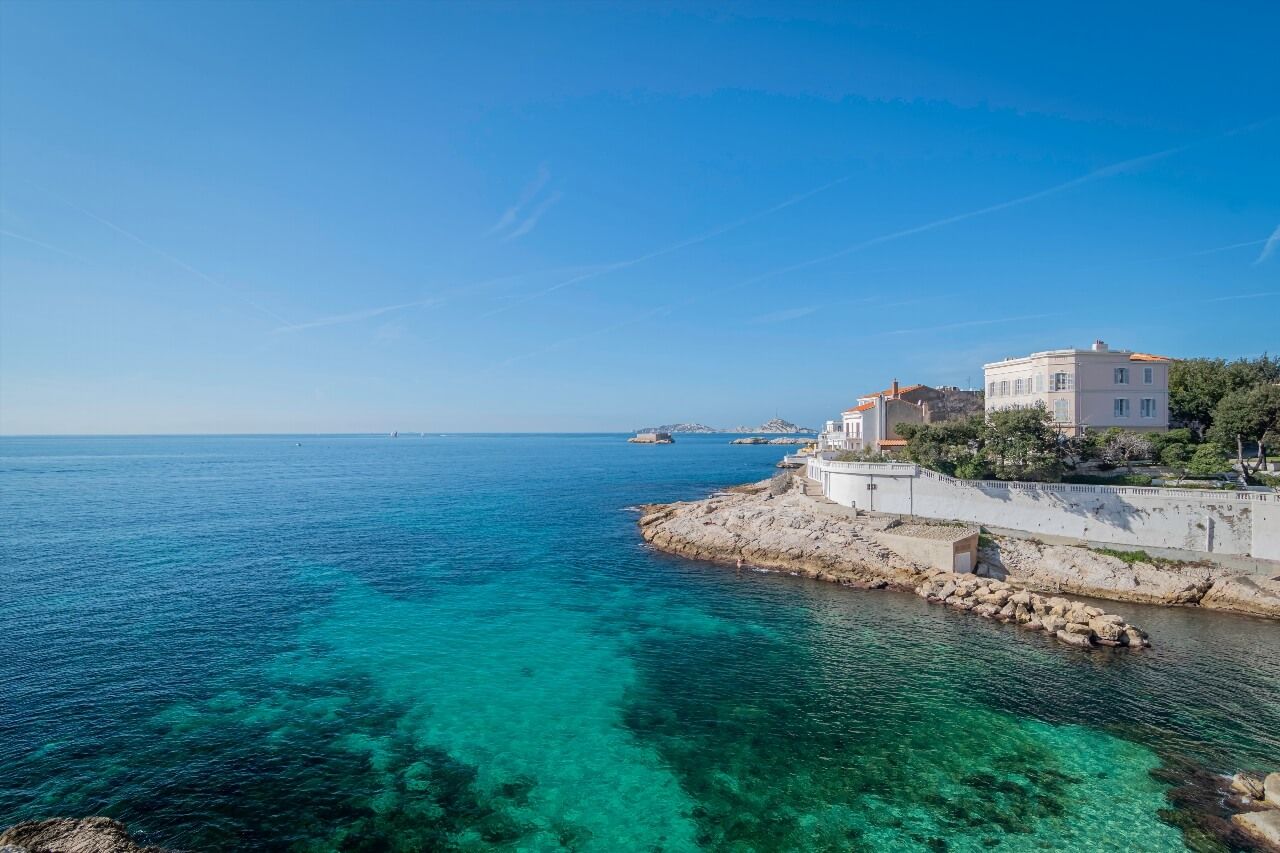
Plage des Catalans (Corniche Kennedy, 13007 Marseille, rated 4/5 on Google for 4,600 reviews) is Marseille's most central urban beach, nestled in a protected natural cove ten minutes walk from the Vieux-Port. It measures approximately 250 meters long by thirty meters wide, with a sandy bottom that slopes gradually, ideal for children and beginner swimmers. Swimming is supervised each summer from mid-June to mid-September, with an active lifeguard station and designated areas for swimmers.
The beach takes its name from the Catalan fishermen who settled there in the 18th century, attracted after the 1720 plague and by the authorization to fish freely along the coast granted in 1761. This history of a village within the city can still be felt today: pétanque players occupy the upper esplanade while Marseille families settle on the sand below. In the evening, the raking light on the Mediterranean and the silhouette of Château d'If in the distance make this corner of the corniche one of the city's most pleasant settings.
To get there, bus 83 from the Vieux-Port is the fastest solution. In high season, parking in the area is almost impossible before 9 AM; better not to attempt the adventure by car on a Saturday in August.
Anse de Malmousque
Anse de Malmousque (Corniche John Fitzgerald Kennedy, 13007 Marseille, rated 4.4/5 on Google for 1,200 reviews) opens between two rocky headlands on Corniche Kennedy, a few minutes' walk from Catalans. This is one of those coves that Marseille locals jealously guard for themselves: no supervision, no showers, rocky bottom interspersed with sandy areas, water of unusual clarity for a beach this close to downtown. Free-diving enthusiasts appreciate the accessible underwater formations without heavy equipment. Access is via stairs carved into the rock from the promenade, discreet if you don't know where to look.
Plage du Prophète Beach
Plage du Prophète (Avenue du Prado, 13008 Marseille, rated 4/5 on Google for 2,175 reviews) stretches for approximately 400 meters along Corniche Kennedy, just before the Prado beaches. Unlike Catalans, it's fully equipped: showers, toilets, lifeguard stations, water sports equipment rental, and access for people with reduced mobility. It's one of the best-equipped beaches on the Corniche, and it shows, attracting numerous families each summer.
The sand is fine, the bottom gentle, and the cove's orientation protects from swells most days. In the evening, when the Corniche fills with joggers and cyclists, the beach takes on a more relaxed atmosphere, with views of the open sea and the Frioul islands in the background. Accessible by bus 83 or 19 from the center, or on foot from the Vieux-Port in 35 minutes along the sea.
Prado Beaches and Escale Borély
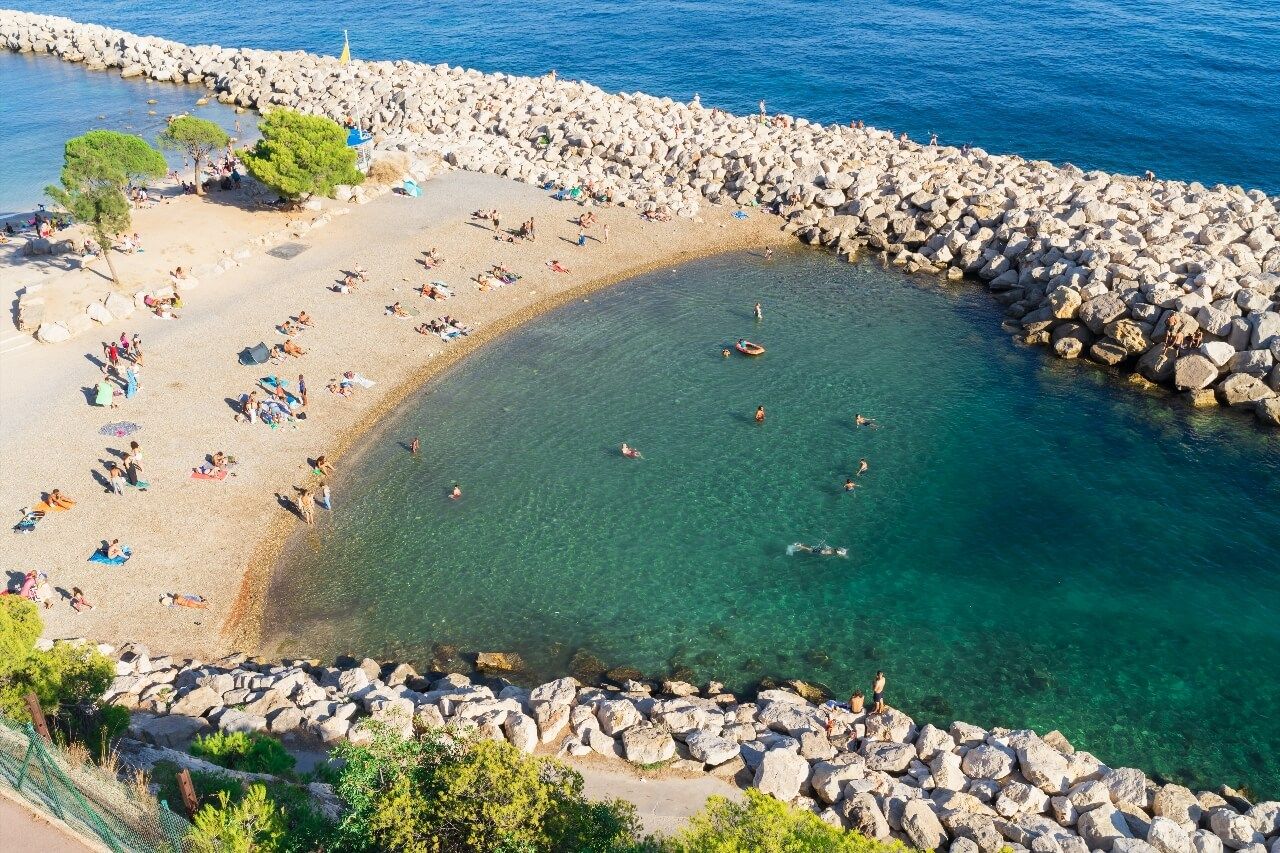
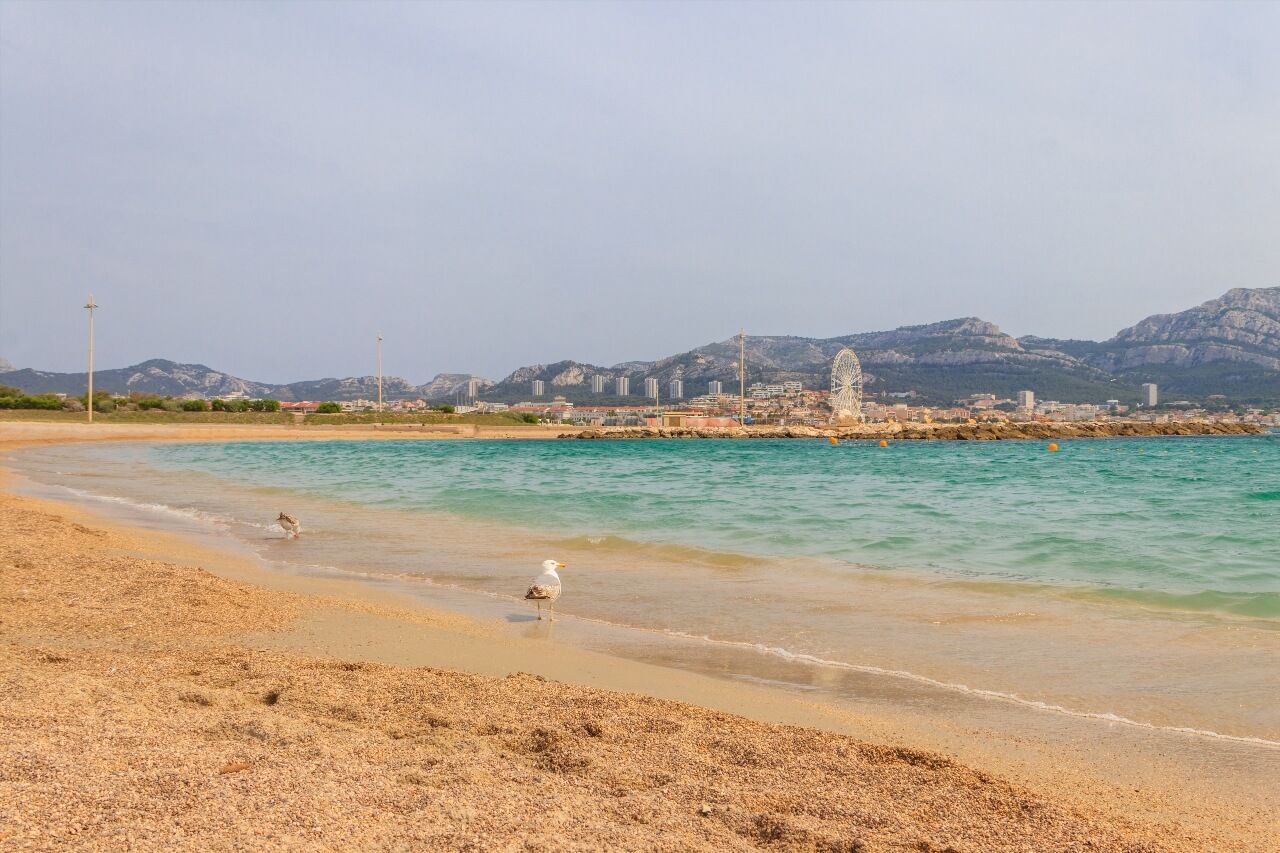
Prado beaches form Marseille's largest beach complex, and their origin is unusual: they were created in the 1970s with millions of cubic meters of rocks and debris extracted during the excavation of the Marseille metro. What we call Prado beaches today simply didn't exist before 1976, it was open sea. Result: 3.5 kilometers of developed coast, divided into distinct sectors (Bonneveine, Grand Pavois, Borély), visited by more than 3.5 million visitors each year.
Swimming is supervised from mid-June to mid-September across all sectors. Each area has showers, toilets and water sports equipment rental. Parc Borély, immediately behind, offers shade and green spaces to extend the day away from direct sun. On weekdays outside peak weekends, it's still possible to find a spot on the lawns separating the beach from Avenue du Prado.
Escale Borély (Avenue Pierre Mendès France, 13008 Marseille, rated 4.3/5 on Google for 7,240 reviews) deserves special mention: it's the liveliest sector, with a concentration of restaurants and snack bars directly on the waterfront. The beach is well-maintained, sand regularly renewed, and children's facilities in good condition. This is where Marseille families ritually set up their parasols each summer. Practical tip: parking saturates from July, take bus 19 from Rond-Point du Prado metro, you'll save time and stress.
To discover Marseille's Ryocity and prepare the rest of your stay between sea and monuments, 24 audio tracks cover the city's main stages in 3 hours of walking.
Pointe-Rouge Beach
Among the most beautiful beaches in Marseille on the south side, Pointe-Rouge beach (Avenue de Montredon, 13008 Marseille, rated 4.1/5 on Google for 686 reviews) marks a transition in the coastline's character: beyond Prado, the city tightens, buildings recede and the coast regains something more intimate. This approximately 300-meter beach borders an active marina where cruising sailboats, dinghies and sea kayaks mingle. The atmosphere is distinctly local, fewer tourists than at Prado, more Marseille locals who have laid their towels in the same spot for years.
Sailing clubs established here offer courses in sailing, stand-up paddle and sea kayaking for all levels, making it a practical starting point for exploring the southern coast by paddle. It's also one of the favorite spots for open-water swimmers who follow the coast southward, where limestone rocks begin to surface and some snorkeling spots accessible without a boat complete the day.
Frioul Islands: Saint-Estève Beach
The Frioul archipelago is often the surprise for visitors who thought they knew Marseille. Four limestone islands 20 minutes by ferry from the Vieux-Port, Ratonneau, Pomègues, If and Tiboulen, inhabited since antiquity and protected since the 1970s. The water around Frioul has a transparency that surprises even calanques regulars, due to the depth of the seabed and the almost total absence of sedimentary disturbance.
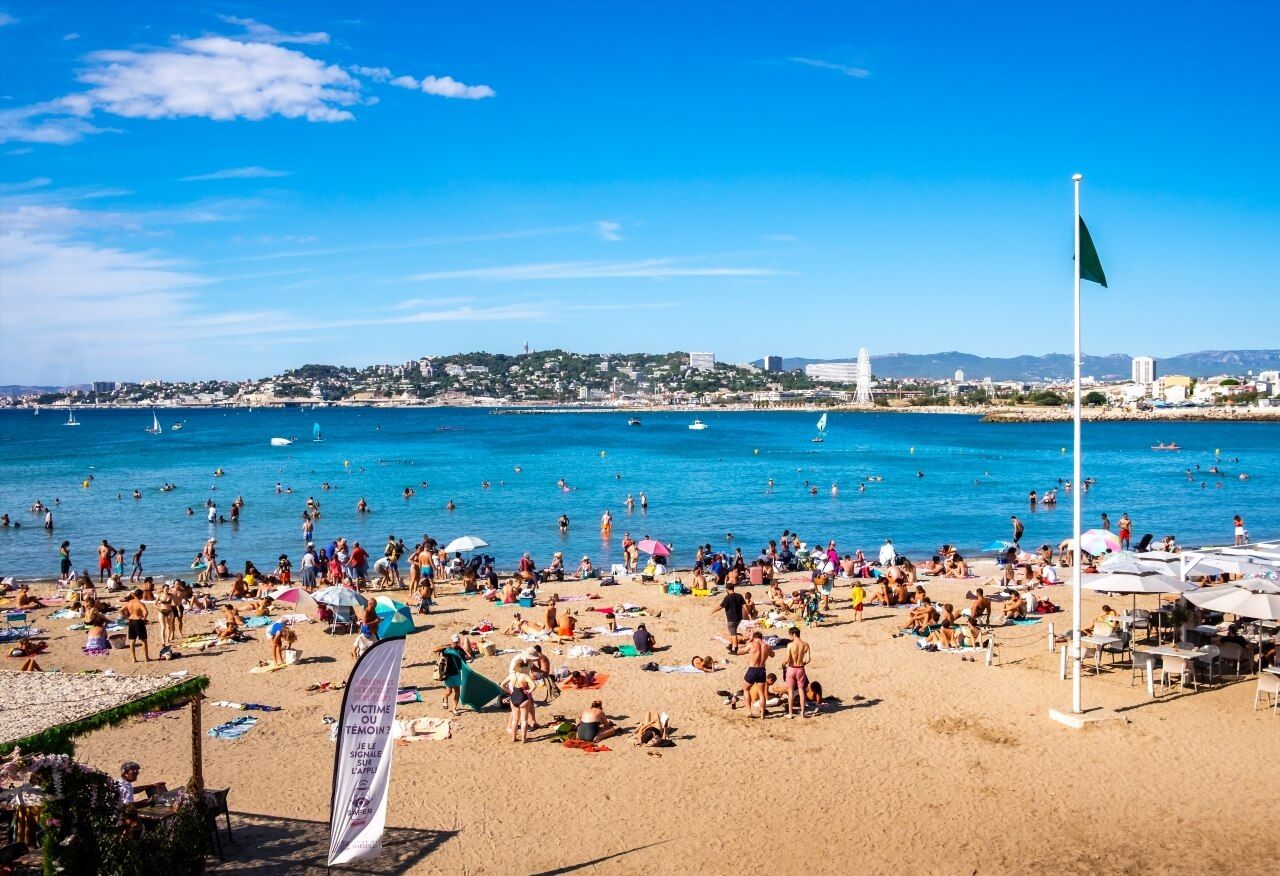
Saint-Estève beach (Île de Ratonneau, 13007 Marseille, rated 4.4/5 on Google for 1,114 reviews), on Ratonneau island, is the archipelago's only real beach: white pebbles and sand in a cove well sheltered from the mistral, with supervised swimming in July and August. Less than two meters from the surface, masks and snorkels reveal octopi, bream and gilt-head bream that site protection has made quite fearless. The archipelago also houses Fort Ratonneau, built in the 18th century, and remains of Caroline hospital that served for ship quarantine during cholera epidemics.
The ferry departs from Quai des Belges at the Vieux-Port, with regular departures year-round (more frequent in summer). By combining Frioul and Château d'If on the same day, you cover the essence of Marseille's maritime history without returning to shore between the two. Leave early morning to avoid tour groups that arrive mid-morning.
Sormiou Calanque
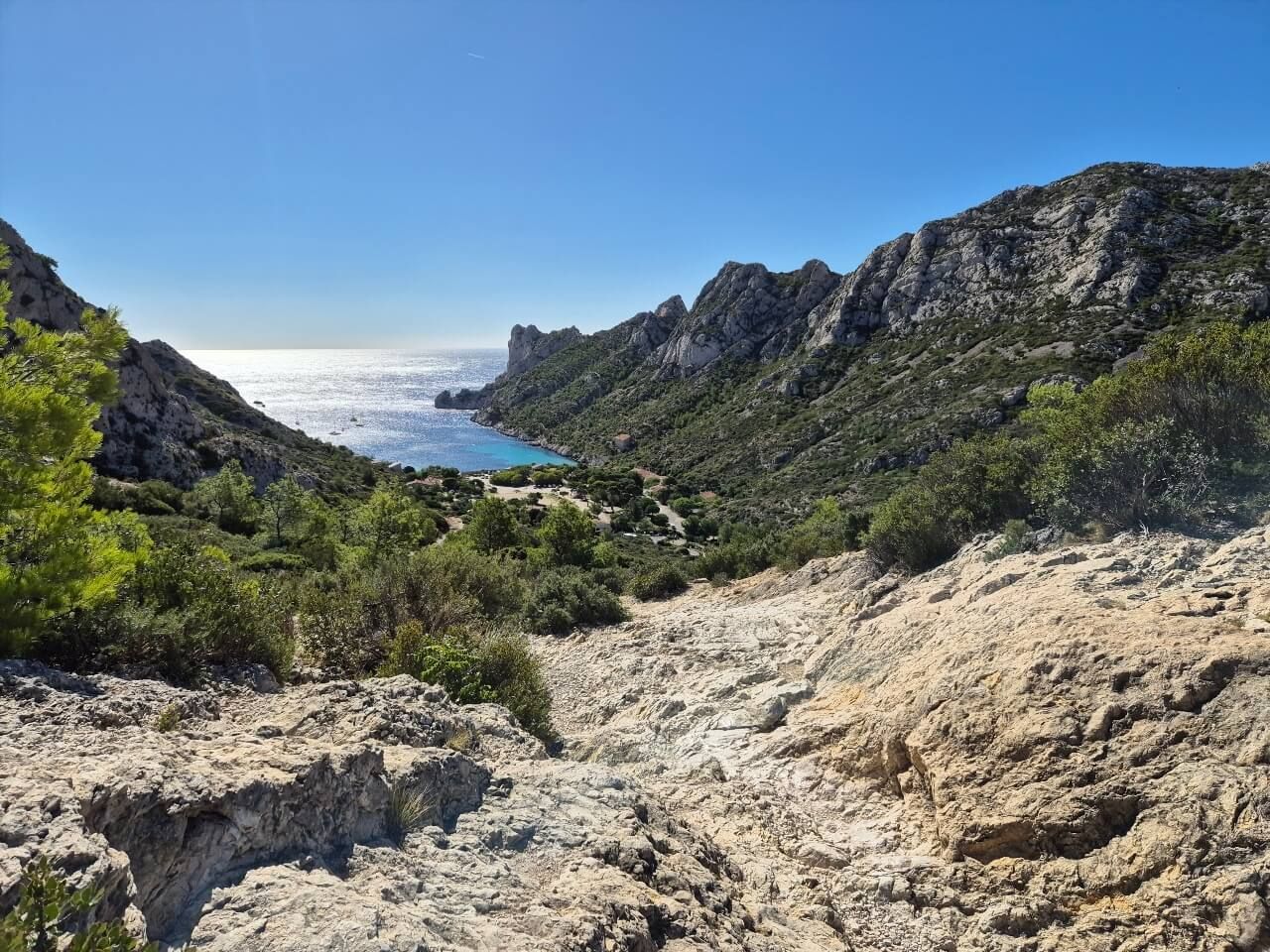
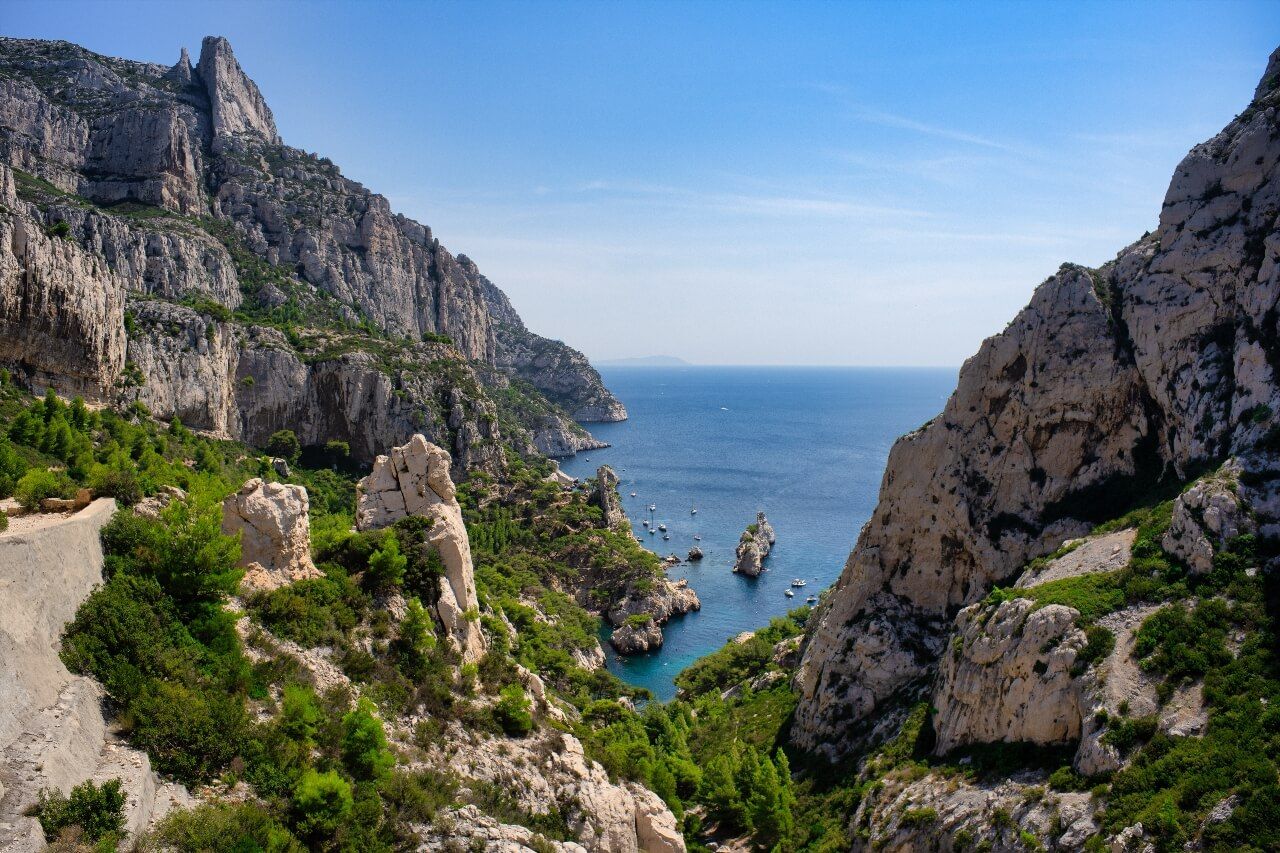
Sormiou is undoubtedly the most accessible calanque among those that have preserved true wild nature. It penetrates deep into an enclosed limestone valley, between two white cliffs that plunge directly into blue-green water of disturbing clarity. The white sand bottom slopes gently to 4 to 5 meters deep, perfect for free-diving, and even for beginner swimmers who just want to look through a mask at what the water reveals.
Access road is closed to motorized vehicles daily from 7 AM to 7 PM from June 15 to August 31 (and weekends and holidays from April). From the ridge parking lot, count 35 to 45 minutes walking on a rocky path, bring plenty of water, the elevation is moderate but sun exposure can surprise. Boat shuttles are organized in summer from Prado beaches by local operators, representing a comfortable alternative and allowing you to see the calanque from the sea before landing.
At the water's edge, several fishing cabin restaurants have served bouillabaisse for decades in establishments passed down from generation to generation. This is one of the rare opportunities to eat facing the sea in an authentically Marseille setting rather than touristy. Book in advance in July-August: these addresses are fully booked from June.
Sormiou also hides an underwater secret: it's a few hundred meters offshore that divers discovered in 1991 Cosquer Cave, decorated with cave paintings dating from approximately 27,000 years ago and accessible only at 37 meters deep. The original site is protected and closed, but a complete replica, Cosquer Méditerranée, is exhibited at Villa Méditerranée, next to MUCEM. This gives an additional dimension to swimming under these cliffs.
Morgiou Calanque
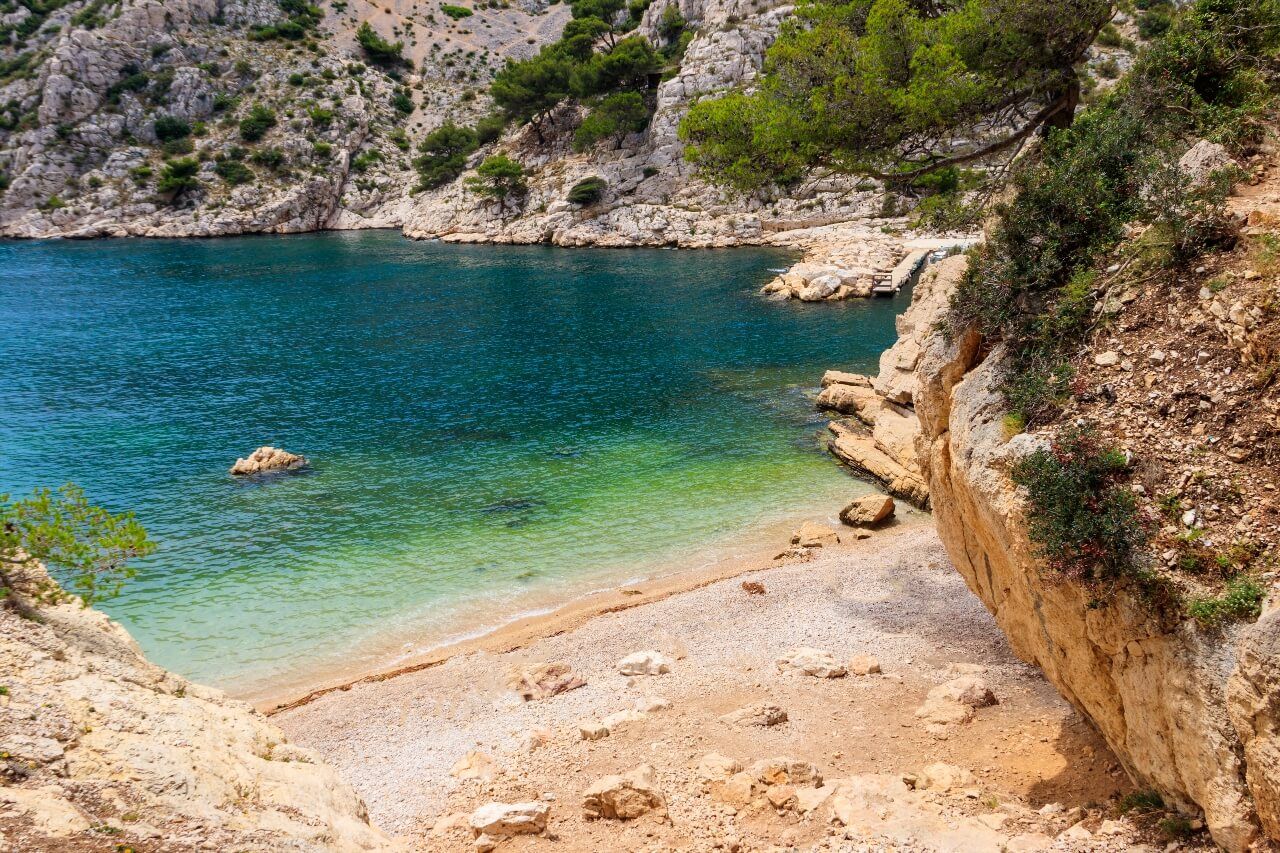
Neighboring Sormiou, Morgiou calanque (Calanque de Morgiou, 13009 Marseille, rated 4.7/5 on Google for 3,900 reviews) is smaller and more enclosed. A tiny fishing port survives there, with a handful of white-painted cabins bordering the quay, one of the most photographed landscapes in the National Park, and one of the hardest to find if you're not motorized or used to hiking. The beach is reduced to a few dozen meters of pebbles, but the water is exceptionally clear, protected by the valley's enclosure.
The road is also closed to motorized vehicles in peak season, following the same schedule as Sormiou. From Gardiole parking, count 40 minutes on foot on a trail following limestone ridges. The path connecting Morgiou to Sormiou via the ridges is one of the most spectacular hikes in the metropolis, with plunging views over both calanques and the open sea to the south.
Sugiton Calanque
Sugiton calanque (Chemin de Luminy, 13009 Marseille, rated 4.8/5 on Google for 550 reviews) is the most accessible wild calanque from Luminy university campus, in the 9th district. From the campus entrance (bus 21 from Rond-Point du Prado metro), the hiking trail takes 45 minutes for a reasonable elevation gain. The arrival is striking: cliffs plunge on each side into translucent water whose wall shadows tint the bottom deep blue at midday.
Since summer 2022, a mandatory and free booking system is in place from June to mid-September to limit visitor numbers. Bookings open at D-3 at 9 AM and close at D-1 at 6 PM on the Calanques National Park website. Outside summer season, no booking is required. The calanque houses several free-diving spots, notably under Torpilleur cliff, accessible without boat from shore.
En-Vau Calanque
En-Vau calanque (Calanque d'En-Vau, 13260 Cassis, rated 4.9/5 on Google for 33 reviews) is often designated as the most spectacular in the entire massif, a claim hard to dispute when discovering for the first time its limestone pinnacles framing a turquoise cove a few dozen meters wide, with walls reaching 150 meters high. The climbing routes traversing these cliffs rank among the region's most challenging.
Technically, En-Vau is more easily accessible from Cassis than from Marseille. From Cassis, two options: 1h30 to 2h walking on the ridge trail, or 30 minutes by boat from the port. From Marseille, the pedestrian approach from Col de la Gineste requires 2h30 minimum. In peak season, boat shuttles from Cassis remain the fastest and most comfortable solution to enjoy the site without arriving exhausted. The water, of absolute transparency, reveals white rocks several meters deep even without a mask.
En-Vau alone justifies the detour from Marseille. To prepare your stay in the Phocaean city before exploring the calanques, the Ryo audio guide of Marseille offers 24 stages tracing the Greek, Roman and baroque city.
Callelongue and the Goudes Coast
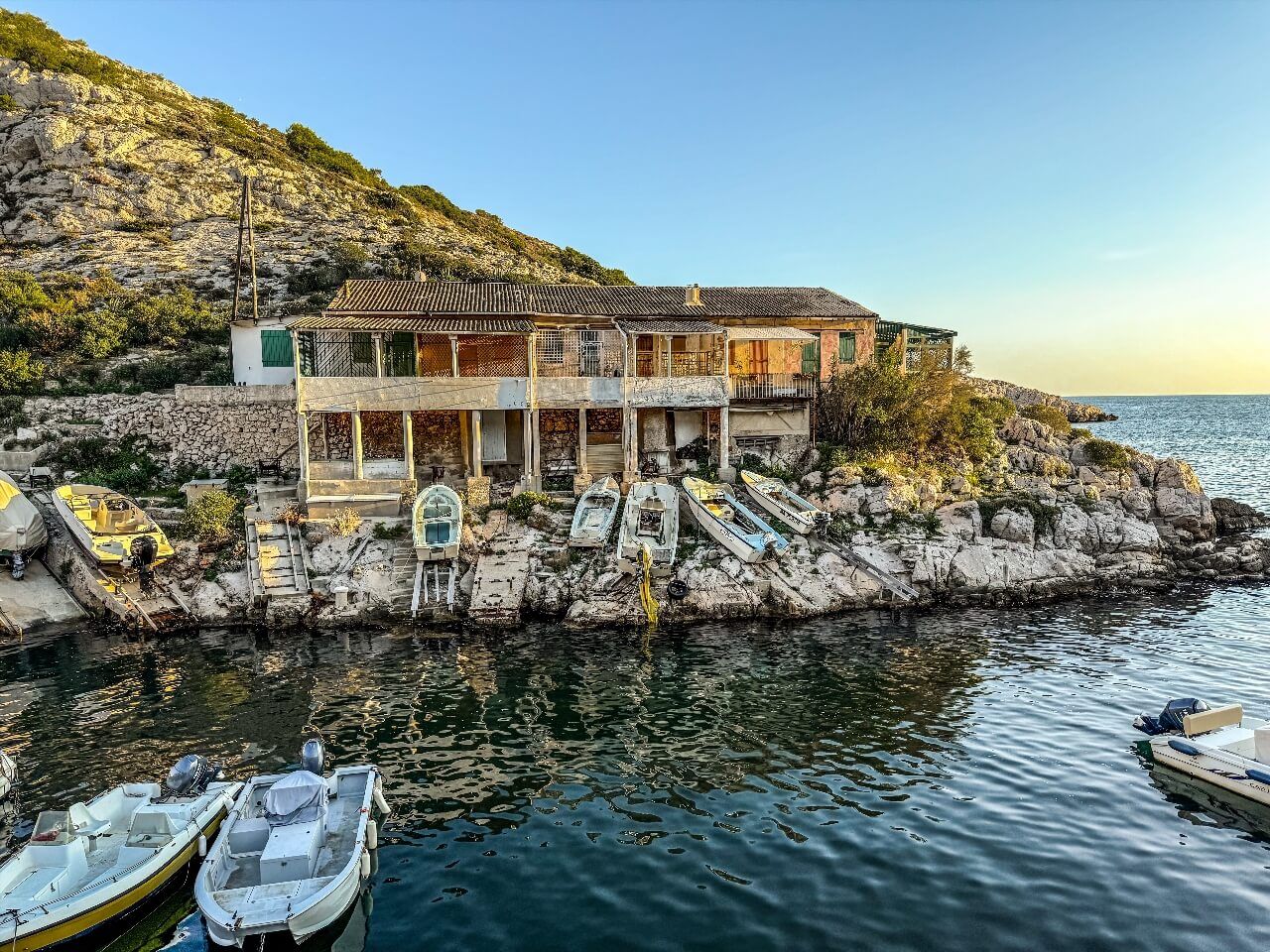
Callelongue calanque (Les Goudes, 13008 Marseille, rated 4.6/5 on Google for 159 reviews) marks Marseille's southern limit, at the terminus of the Goudes road. This is where the city stops and the National Park begins: a few fishing cabins, a tiny port, a narrow pebble beach surrounded by pine groves and limestone rock. On weekdays off-season, you can have the calanque to yourself less than fifteen minutes by car from downtown. Divers and kayakers use it as a base to explore neighboring coves accessible only from the sea.
How to Reach the Beaches from Downtown Marseille
Marseille has the advantage of concentrating its best beaches on a fairly linear axis, which simplifies day planning.
By bus: bus 83 serves the entire Corniche Kennedy from the Vieux-Port, with stops at Catalans, Malmousque and Prophète. Bus 19 continues to Prado beaches and Escale Borély from Rond-Point du Prado metro (line 2). For Sugiton, bus 21 from the same metro reaches Luminy campus in about 30 minutes. These lines are particularly frequent in summer.
By ferry: Frioul is accessible from Quai des Belges at the Vieux-Port, with departures approximately every hour in high season. The journey takes 20 minutes. Round-trip tickets cost from about €11 per adult (count around €16 for a combined Frioul and Château d'If). Seasonal shuttles also connect Prado beaches to Sormiou and Morgiou calanques in July-August.
By car: useful for Morgiou, Sormiou (outside summer closure period) and the Goudes coast. Beware of prefectural closures of calanque roads in summer for fire risk, check access status the day before on the Bouches-du-Rhône prefecture website. Ridge parking for Sormiou and Morgiou are small and saturate from 9 AM in July-August.
By bicycle: the cycle path follows the Corniche to Prado beaches. Bike-sharing (Le Vélo) are available from downtown. The climb to Luminy or Goudes is steep and not recommended without an electric bike.
For closed calanques: En-Vau is most simply approached from Cassis by boat (departures from Cassis port). The Cassis-calanques shuttle operates from March to October.
FAQ
What is the most beautiful beach in Marseille?
It depends on what you're looking for. For an urban beach with amenities, Prado beaches stand out for their size and services. For wild beauty and exceptional water, Sormiou calanque is the local consensus. If you have time for a detour, En-Vau calanque accessible from Cassis is in a class of its own.
Are Marseille beaches clean?
Water quality has significantly improved since the 1990s. The supervised beaches of Prado and Corniche are classified as category A or B by European health authorities. The calanques in the National Park generally have excellent water. Monitoring results are published each summer on the city's website and on baignades.sante.gouv.fr.
When to swim in Marseille?
Swimming is pleasant from June to October. July-August represents the high bathing season with water between 24 and 26°C. September is often the best month in all aspects: water stays warm, beaches and calanques empty notably, and weather remains stable. In April-May and October, water is around 18-20°C, bearable with a few minutes of adaptation.
How to get to the calanques without a car?
Sugiton is accessible by bus 21 from Rond-Point du Prado metro to Luminy campus. Seasonal boat shuttles from Prado beaches serve Sormiou and Morgiou in July-August. The Frioul archipelago is accessible by ferry from the Vieux-Port year-round. For En-Vau, the easiest is by boat from Cassis port.
Are there naturist beaches in Marseille?
Several isolated coves and creeks in the 8th and 9th districts unofficially welcome naturist bathers, notably around Pointe-Rouge and in some calanques accessible on foot. There's no officially designated naturist beach by the city, but the practice is tolerated in the most remote areas.
Do you need to book to go to the calanques?
Yes, for Sugiton only since 2022: mandatory and free booking on the Calanques National Park website, from June to mid-September (opens at D-3, 9 AM). For Sormiou, Morgiou, Callelongue and others, no booking is needed, but road closures due to fire risk (prefectural decree) can block car access without notice.
Can you swim off-season in the calanques?
Yes. There's no swimming ban off-season in most calanques. Access trails remain open except for prefectural closures for fire risk, which only apply in summer. In winter, water drops to 13-15°C, a diving suit is recommended to stay more than ten minutes.
Conclusion
From Catalans beach accessible by bus from the Vieux-Port to En-Vau's walls that only the sea allows easy approach, Marseille's coastline lines up some of France's most beautiful beaches that few major cities can offer within such a small perimeter. Start with the Corniche, push on to the calanques: Marseille's best waters often require walking, but they're worth every minute of effort.
To discover Marseille beyond the beaches, the Ryo audio tour of Marseille, 24 audio tracks, 7.3 km, 3 hours, covers the Phocaean city from Greek antiquity to the contemporary architecture of MuCEM.