

Créé par Emilie, le 20 juin 2026
Votre guide Ryo
What are the most beautiful villages to discover around Marseille?
© Shutterstock
Between the Mediterranean Sea and the inland countryside, the surroundings of Marseille reveal exceptional heritage consisting of perched villages, preserved historic centers, and breathtaking landscapes. From the Bouches du Rhône department to the borders of Var, passing through the heights of Mont Ventoux, this region of southern France offers remarkable diversity. Whether you're traveling with family, are a hiking enthusiast or history lover, these characterful villages constitute essential stops during your stay in Provence. Let yourself be charmed by these authentic destinations where time seems suspended, between shaded squares, Romanesque churches, and panoramas over the valley.
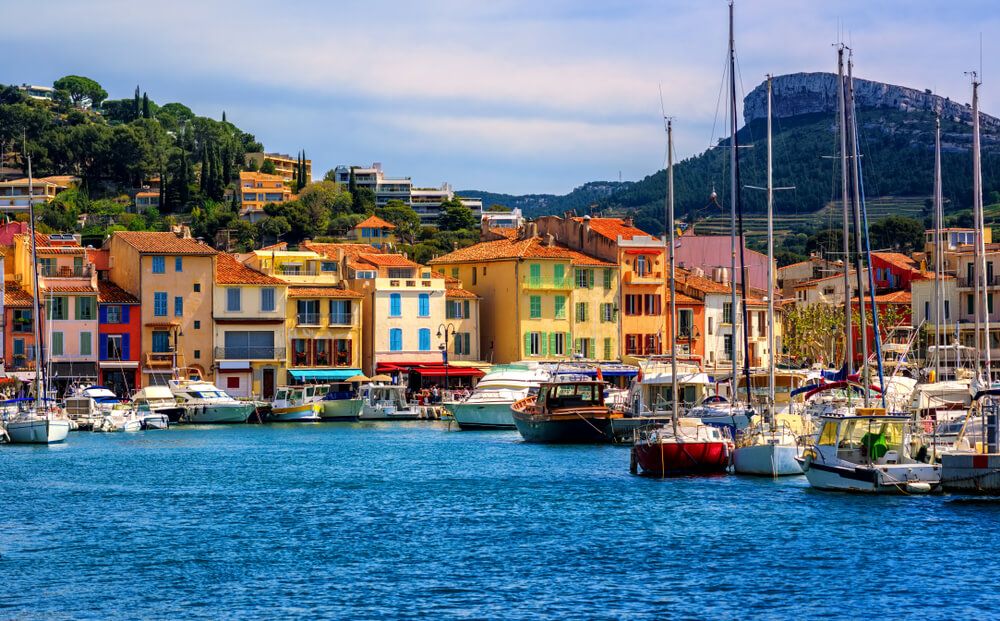
Cassis, the pearl of the Côte Bleue
Just 25 kilometers from Marseille, Cassis stands out as one of the region's most sought-after destinations. This charming Mediterranean fishing port, dominated by a centuries-old castle, offers an idyllic setting with its pebble beaches and famous calanques. The small harbor with colorful houses shelters numerous café terraces and restaurants where you can savor local specialties.
The surrounding vineyards produce the famous white wine of Cassis, while local producers perpetuate viticultural traditions in this exceptional terroir. The trails of Cap Canaille offer exceptional panoramas over the sea, revealing landscapes where Mediterranean garrigue and wild coastline blend. The authentic atmosphere of the historic center, with its cobbled streets and shaded squares, invites strolling between artisan shops and market stalls.
This authentic destination (13260 Cassis, France) will charm you with its preserved Mediterranean atmosphere and privileged location at the gates of the Calanques National Park, a true natural jewel where sea air and garrigue fragrances blend harmoniously.
Les Baux-de-Provence, medieval fortress in the Alpilles
Les Baux-de-Provence (13520 Les Baux-de-Provence, France) undoubtedly constitutes one of the most beautiful villages in France. A true eagle's nest perched in the heart of the Alpilles, this exceptional site has preserved its medieval character with its cobbled streets and blonde stone houses.
The castle of Les Baux, classified as a historic monument, dominates sublime landscapes and offers a fascinating dive into the medieval history of Provence. From the ramparts, the view extends over the valley to the Alpine peaks on clear days, revealing a unique mineral environment where the remains of a glorious past stand. The stairs carved into the rock lead to the keep, testament to the strategic importance of this fortress in the Middle Ages.
The famous Carrières des Lumières, located in former limestone quarries, offer immersive audiovisual shows featuring the greatest artists in history. This village of artists and craftsmen perpetuates Provençal traditions in an exceptional setting, where workshops and art galleries stand alongside historic residences with sculpted facades.
Lourmarin, elegance and good living in the Luberon
Nestled in the heart of the Luberon Regional Natural Park, Lourmarin (84160 Lourmarin, France) embodies the Provençal art of living in all its splendor. This village classified among the Most Beautiful Villages of France charms with its preserved Renaissance architecture and its 15th-century castle that regularly hosts contemporary art exhibitions.
The flowery streets invite strolling between art galleries, craft shops, and colorful markets where lavender and Provençal herbs scents mingle. Local producers offer artisanal olive oil, goat cheeses, and terroir specialties on the weekly market stalls. The parish church and Protestant temple testify to the complex religious history of this borderland between different denominations.
Albert Camus and Henri Bosco found inspiration here, attracted by the peaceful atmosphere of this village surrounded by centenary vineyards and olive groves. Lourmarin has preserved its authenticity while developing a quality cultural offer that attracts numerous artists and writers, perpetuating this literary tradition in a preserved setting in the heart of Provençal lands.
Roussillon, the village of a thousand ochre colors
Located in the heart of one of the world's largest ochre deposits, Roussillon offers a unique spectacle with its red cliffs and former quarries. Each village house displays a different hue, creating a color palette ranging from yellow to deep red that evokes the landscapes of the Provençal Colorado.
The Ochre Trail allows discovering these exceptional geological formations during a family walk through pine forests and undergrowth. Geology enthusiasts will appreciate this instructive walk that reveals the importance of this mining exploitation in the local economy. The ancient underground passages and galleries testify to the work of laborers who shaped this unique landscape in Europe.
The village itself, with its belfry and colorful streets, constitutes a true open-air museum of traditional Provençal architecture. Shaded squares invite rest, while artisan shops offer creations inspired by local natural pigments. The parish church, perched on the heights, offers an exceptional viewpoint over the valley and surrounding massifs.
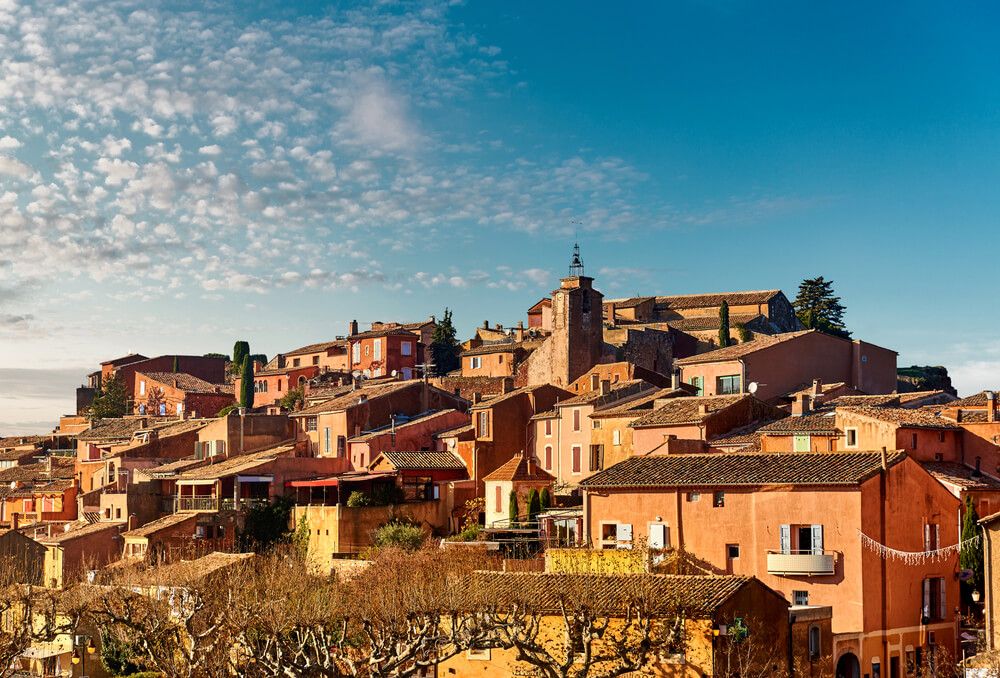
Gordes, village suspended facing the Luberon
Gordes, one of the most photographed villages in Provence, stands majestically on the foothills of the Vaucluse mountains. Its dry stone houses rise in a natural amphitheater facing the Luberon massif, creating a landscape of striking beauty where each building seems to defy the laws of balance.
The village houses numerous art galleries, shops, and cafés nestled in historic buildings with thick walls. The parish church and Renaissance castle dominate this remarkable architectural ensemble that has inspired numerous painters who came seeking the particular light of this Provençal high place. The stepped streets reveal new perspectives on the cultivated valley below at every turn.
Nearby, the abbey of Sénanque and its lavender fields offer one of the most emblematic panoramas of Provence. The village of bories, with its dry stone constructions from the 18th century, testifies to the ingenuity of farmers of yesteryear. These traditional farmhouses, surrounded by low walls and olive groves, constitute exceptional rural heritage in a preserved environment.
Saint-Rémy-de-Provence, on Van Gogh's trail
Saint-Rémy-de-Provence (13210 Saint-Rémy-de-Provence, France), birthplace of Nostradamus, also welcomed and inspired Vincent van Gogh. Located at the foot of the Alpilles, this authentic village offers numerous art galleries and refined shops in a preserved architectural setting where Roman influences and Provençal traditions blend.
The archaeological site of Glanum testifies to the ancient occupation of the region, revealing the remains of a prosperous city where Greek and Roman cultures mingled. The thermal baths, forum, and patrician residences offer a journey through time in the heart of the Provençal countryside. The triumphal arch and mausoleum of the Antiques constitute exceptional monuments testifying to past grandeur.
The town center invites discovery of its shaded squares and Provençal markets where local producers offer olive oil, artisanal cheeses, and terroir specialties. The surrounding landscapes, immortalized by Van Gogh, retain their wild beauty and particular luminosity that continues to attract artists and art lovers from around the world.
Moustiers-Sainte-Marie, the pearl of the Verdon Gorges
Moustiers-Sainte-Marie, classified among the Most Beautiful Villages of France, nestles in an exceptional natural setting between two rocky cliffs. Famous for its artisanal faience since the 17th century, the village perpetuates this tradition of excellence in numerous workshops open to visitors where master artisans transmit their ancestral know-how.
The golden star suspended above the village according to the legend of a crusader knight adds to the magic of the place. This secular tradition, regularly renewed, symbolizes the faith and hope of this mountain community. The cobbled streets wind between pottery workshops and art shops, revealing exceptional artisanal heritage.
Near the Verdon Gorges and Lake Sainte-Croix, Moustiers constitutes an ideal base for exploring these natural wonders. Hikers will appreciate the marked trails leading to viewpoints, while water sports enthusiasts will enjoy the turquoise waters of the lake. The parish church, clinging to the cliff, offers a striking viewpoint over this valley where the crystal-clear waters of the river flow.
Eygalières, preserved authenticity in the Alpilles
Eygalières (13810 Eygalières, France), probably one of the most beautiful villages in the Alpilles, has preserved its authentic character far from tourist crowds. Surrounded by vast fields of centenary olive trees and vineyards, the village offers a peaceful setting on the northern slope of the Alpilles where olive groves and orchards stretch as far as the eye can see.
Its limestone houses with sculpted doors testify to Provençal artisanal know-how. The vaulted passages and flowery squares create an intimate atmosphere conducive to contemplation. The chapel of Saint-Sixte, surrounded by cypresses, constitutes one of the most emblematic images of Provence, perfectly embodying the harmony between traditional architecture and Mediterranean landscape.
The village restaurants offer refined cuisine highlighting local products in a preserved setting that attracts a clientele seeking authenticity. Traditional oil mills perpetuate ancestral gestures, producing exceptional olive oils from family olive groves. This land of winegrowers and olive growers offers a preserved way of life in the heart of Provençal lands.
Aubagne, in Marcel Pagnol's footsteps
Aubagne, birthplace of Marcel Pagnol, invites you to discover the writer-filmmaker's universe through its historic streets and santon workshops. This authentic city has preserved its old center with its Penitents chapels and its clock tower dominating the city, testimonies to its rich historical past.
Download the audio-guided circuit to discover Aubagne on foot and independently
Set out to discover Aubagne with our audio-guided itinerary that will take you on Marcel Pagnol's trail through 18 points of interest. From the writer's birth house to santon makers' workshops, passing by medieval remains and viewpoints over the Garlaban massif, this 2.2 km itinerary will reveal all the secrets of this authentic Provençal city in 1 hour of visit.
The Garlaban hills surrounding the city offer magnificent hikes on Pagnol's characters' trail, revealing landscapes of garrigue and pine forests dear to the writer. Traditional farmhouses and terraces testify to the traditional agriculture of this region where vines, olive groves, and market gardens blend. Ceramics workshops perpetuate a millennial artisanal tradition, producing the famous santons that make the city's reputation throughout Europe.
Aix-en-Provence, the city of a thousand fountains
Aix-en-Provence, former capital of Provence, deserves a place of choice in this selection for its exceptional architectural heritage and legendary art of living. The Cours Mirabeau, lined with centenary plane trees and fountains, constitutes the main artery of this dynamic student city where tradition and modernity blend.
Download the audio-guided circuit to discover Aix-en-Provence on foot and independently
The Mazarin quarter and its 17th-century private mansions testify to the city's past wealth, revealing sculpted facades, courtyards of honor, and French gardens. The numerous museums, including the Granet museum, perpetuate the Aix artistic tradition in remarkably preserved historic buildings.
The unique atmosphere of Aix is felt in its literary cafés, old bookshops, and colorful markets where producers from the surrounding area offer the treasures of Provençal terroir. The fountains that punctuate the city create particular music, contributing to this gentleness of living that has charmed numerous artists and intellectuals over the centuries.
Arles, 2000 years of history
Arles, inscribed on UNESCO's World Heritage list, unveils 2000 years of history through its exceptionally preserved Roman monuments. The Roman amphitheater, still in activity, and the ancient theater testify to the grandeur of the former Roman colony where Mediterranean cultures mingled.
Download the audio-guided circuit to discover Arles on foot and independently
Discover the treasures of Arles with our guided itinerary of 3.7 km that will lead you in 1h30 through 18 remarkable sites. From the ancient arenas to the Van Gogh space, passing by the Forum square immortalized by the painter, this itinerary will reveal all the richness of this millennial city at the gates of Camargue.
Van Gogh found inspiration here for more than 300 works, captivated by the particular light of this borderland between Provence and Camargue. The Foundation dedicated to him perpetuates this artistic tradition in a remarkable architectural setting. The streets of the Roquette quarter invite strolling between art galleries and artisan workshops, while the surroundings offer access to the natural wonders of Camargue, kingdom of horses and flamingos.
Coastal villages and calanques: La Ciotat and surroundings
La Ciotat, birthplace of cinema, combines industrial heritage and natural beauty with its wild calanques and historic old town. The Mugel park and Figuerolles calanques offer preserved nature settings where Mediterranean pine forests and crystal-clear waters blend. The Crêtes corniche reveals spectacular panoramas over the Mediterranean, revealing the jagged coast to the first foothills of the Sainte-Baume massif.
This family seaside resort has preserved its Provençal authenticity while developing a quality tourist offer, between sheltered beaches and hiking trails offering breathtaking views over the Var coastline. The historic center, with its cobbled streets and shaded squares, invites discovering the maritime history of this city that saw the birth of the seventh art.
The surrounding calanques constitute an exceptional playground for diving and water sports enthusiasts, while coastal paths allow discovering preserved Mediterranean flora in an exceptional natural environment between sea and garrigue.
Miramas le vieux, sentinel above the pond
Perched on a rocky spur dominating the Berre pond, Miramas le vieux offers an authentic escape less than an hour from Marseille. This medieval hamlet, a true eagle's nest on the heights, has preserved its character of yesteryear with its vaulted passages, stepped streets, and blonde stone houses typical of the region.
The village's Romanesque church, sober and elegant, testifies to Provençal religious art of the Middle Ages. From the keep remains, the view extends to Mont Ventoux on clear days, offering an exceptional panorama over the surrounding plain and Alpine massifs. The 15th-century bread oven and ancient cisterns recall daily life of the period, while a treasure hunt allows families to discover this heritage in a fun way.
The peaceful atmosphere of the place, far from urban agitation, invites contemplation and restorative breaks. Photography enthusiasts will particularly appreciate the interplay of shadow and light on tuff facades, creating an authentic setting in the heart of Provençal garrigue where cicadas sing.
Ménerbes, fortress village of the Luberon
Dominating the valley from its limestone spur, Ménerbes stands as one of the Luberon jewels. This fortified village, surrounded by vines and orchards, offers a breathtaking view that extends to the Alpine peaks on clear days. The former Huguenot bastide has preserved its ramparts and medieval charm, attracting artists and writers for decades to this land of inspiration.
The cobbled streets wind between stone residences, leading to the parish church and Renaissance castle remains. Art enthusiasts can discover local artists' workshops, perpetuating the creative tradition of this cultural high place. Wine cellars offer Luberon AOC wine tastings in family domains where ancestral know-how is transmitted.
The tourist office regularly organizes guided tours allowing discovery of this village's turbulent history, theater of numerous religious conflicts. The surroundings offer magnificent hiking trails through garrigue and olive groves, revealing exceptional panoramas over the distant Sainte-Baume mountain and cultivated valleys of this land blessed by the gods.
Ansouis, secret pearl of the southern Luberon
Classified among the most beautiful villages in France, Ansouis proudly stands on the hillside, crowned by its Renaissance castle. This remarkable property, built in the 10th century then redesigned over the centuries, dominates the Provençal tile roofs and vine terraces that rise below in a harmonious landscape.
Saint-Martin church harmoniously blends Romanesque and Gothic styles, housing rich liturgical furniture and remarkable sacred art collections. The main square, shaded by old plane trees, regularly hosts markets where local producers offer olive oil, artisanal cheeses, and terroir specialties in a friendly atmosphere.
The stone-paved streets invite strolling, revealing at each turn sculpted doors, ancient fountains, and flowery inner courtyards. The Protestant temple testifies to the region's complex religious history, while vaulted passages create a mysterious atmosphere particularly appreciated by visitors seeking authenticity in this land of winegrowers and artisans.
In conclusion, the Marseille region offers exceptional diversity of outstanding villages, each revealing a particular facet of Provençal identity. Between historical heritage, natural beauties, and living traditions, these destinations promise memorable escapes to discover according to your desires and passions.
From the perched villages of the Alpilles to medieval cities of the Luberon, passing through authentic ports of the Côte d'Azur, each stop unveils a unique way of life where Mediterranean influences and ancestral traditions blend. The Provençal lands, which inspired Albert Camus, Henri Bosco, and so many others, continue to exercise their charm on today's visitors.
The authenticity of these places is felt in every detail: centenary oil mills, artisan workshops perpetuating past gestures, passionate producers sharing their terroir treasures. These human encounters, in the heart of preserved landscapes between pine forests and olive groves, often constitute the most beautiful travel memories.
Let yourself be charmed by the gentle way of life of these havens of peace where time seems suspended, and set out to meet cultural heritage of incredible richness thanks to Ryo circuits that will accompany you in your discoveries in the heart of this eternal Provence.
What is the best time to visit villages around Marseille?
Spring (April-May) and autumn (September-October) offer ideal conditions with mild temperatures and less tourist crowds. Summer allows fully enjoying the coastline, but villages can be very crowded.
How much time to plan for visiting these villages?
Allow a minimum half-day per village to appreciate the essentials. A week allows comfortably discovering 8 to 10 villages while taking time to stroll and enjoy the Provençal way of life.
How to travel between villages?
Car remains the most practical way to explore the region at your own pace. Some villages are accessible by public transport from Marseille, notably Aix-en-Provence, Arles, and Aubagne.
Which villages to visit as a priority around Marseille?
For a first discovery, prioritize Cassis for its calanques, Les Baux-de-Provence for its medieval heritage, and Aix-en-Provence for its way of life. These three destinations offer a representative overview of Provençal diversity.