© Shutterstock
 Votre guide Ryo
What to Do in Menton and Surroundings: The Complete 2026 Guide
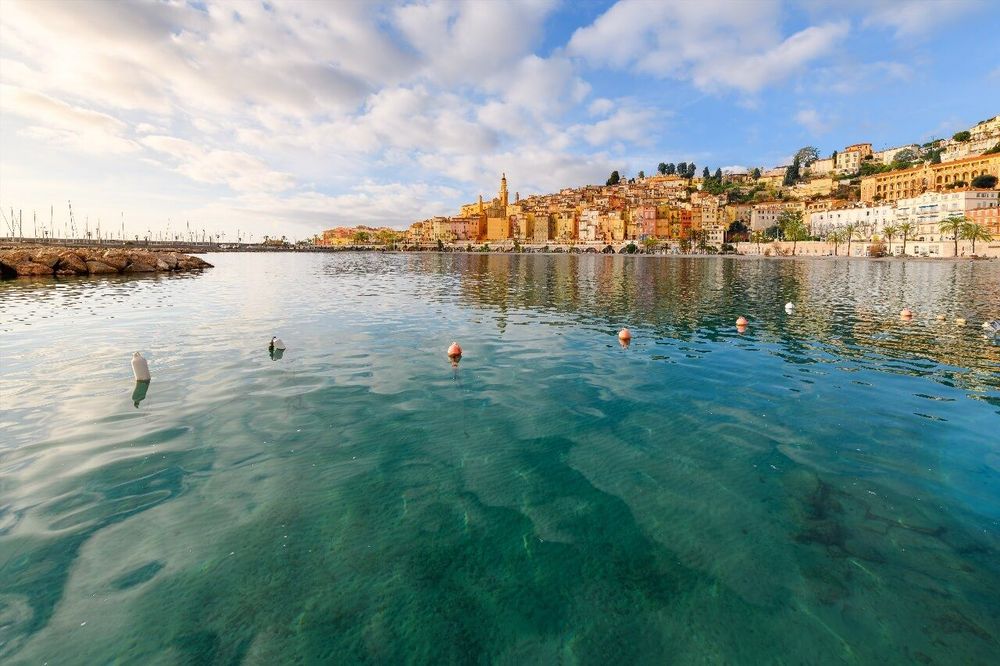
Menton lies exactly two kilometres from the Italian border, in a pocket of mild climate that earned it the unofficial nickname of "Pearl of France". A microclimate so unique that lemons are still grown here in the middle of winter, when the rest of the Riviera is drowning under grey clouds. When it comes to activities, Menton and its surroundings play a distinctive tune on the Riviera. What surprises those who come looking for things to do in Menton and the surrounding area is the depth of the territory: behind the seaside facade lies a baroque old town with ochre façades that holds its own against the Ligurian towns on the other side of the border, botanical gardens created by eccentric English aristocrats of the last century, and a network of hilltop villages just twenty minutes away along winding roads. To enter the city in style, the Ryo audio-guided tour La Perle de la France covers 4.8 km across 22 audio stops, ideal for understanding the baroque architecture and the history of Menton before heading out to explore the surroundings.
To make the most of activities in Menton and the surrounding area, plan for at least two full days. The basilica of Saint-Michel and its carruggi, the collections of the Cocteau museum, the quiet beaches outside July and August, the hilltop villages of Sainte-Agnès and Sospel, and day trips to Monaco or Vintimille are not sights to rush.
Getting Lost in Old Menton
Old Menton is organised around a system of climbing alleyways that the locals call "carruggi", a word borrowed from their Genoese neighbours that neatly sums up the Italian influence on this part of the city. The district developed between the 13th and 18th centuries on a rocky promontory, and its silhouette of yellow and ochre façades is recognisable from the sea several kilometres away.
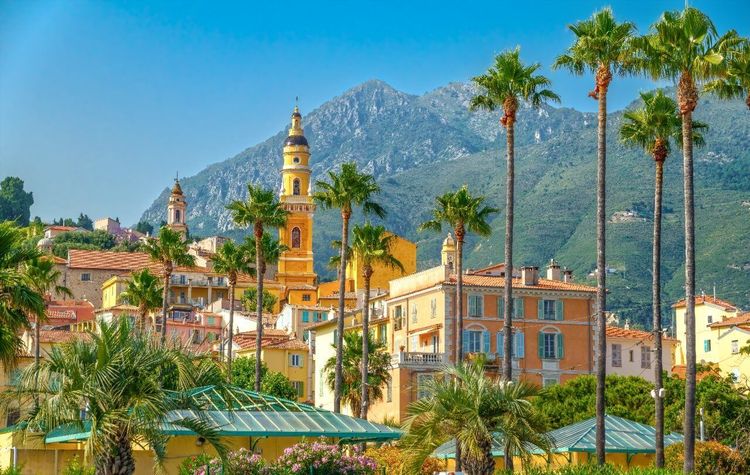
The Basilica of Saint-Michel-Archange has dominated the square of the same name since 1675. Its trompe-l'œil façade, typical of the Nice baroque style, is one of the finest in the region: look closely at the painted columns and ornaments that create an illusion of depth. The interior preserves a monumental altarpiece and a 17th-century organ loft. Directly opposite, the Chapelle des Pénitents-Blancs completes the ensemble with an equally elaborate façade.
On the way back down to the sea along the rue Saint-Michel, stop at the Marché des Halles. Open every morning until 1 pm, it is one of the best places on the Côte d'Azur to buy IGP-certified Menton lemons and local olives. The vendors often speak Italian as fluently as French. The stalls at the back sell fresh socca made on the spot, eaten standing up for two euros.
At the top of old Menton, the Vieux-Château cemetery is one of the city's most surprising curiosities. Perched 74 metres above sea level on the rock that once enclosed the medieval town, it offers a 180-degree panorama over the bay of Menton, the Alps in the background and, on a clear day, the coast stretching all the way to Italy. Several notable figures are buried here, including the English painter Aubrey Beardsley. Entry is free, and it provides the best view accessible without any particular physical effort.
The Parvis Saint-Michel itself is worth lingering on: this esplanade paved with mosaic pebbles, overlooked by two bell towers, hosts chamber music concerts every summer in a setting unmatched on the Riviera. Photos of the square at dusk, when the façades turn orange, do the rounds on social media every summer.
Allow at least an hour and a half for this stroll through the carruggi, and wear shoes with non-slip soles: the calades (river pebbles laid on their sides) are slippery in wet weather. Rue Saint-Michel and the ramps up to the basilica are stops on our audio walking tour.
Menton's Extraordinary Gardens
Menton has an unrivalled concentration of botanical gardens on the Riviera. This is the direct legacy of the British and Russian aristocracy who wintered here at the end of the 19th century and the beginning of the 20th. These wealthy families imported exotic species from around the world, taking advantage of Menton's microclimate to cultivate plants that would not survive anywhere else in metropolitan France.
The Jardin Serre de la Madone (74 route de Gorbio, 06500 Menton, rated 4.2/5 on Google from 353 reviews) is perhaps the most remarkable. Created between 1924 and 1939 by Lawrence Johnston — the same English amateur gardener behind Hidcote Manor in England — it extends across 2.5 hectares of successive terraces, with pools and pergolas draped in rare species from South Africa and Mexico. It has been listed as a historic monument since 1990.
The Jardin Botanique Val Rahmeh belongs to the National Museum of Natural History and houses one of the most important collections of tropical and subtropical plants in France: around 700 species in less than one hectare. Entry costs around €7 but is well worth it for botany enthusiasts.
If you have time, the Jardins du Palais Carnolès complete the circuit. This former residence of the princes of Monaco, managed by the city and freely accessible year-round, holds the largest citrus collection in the region: more than 137 varieties of orange trees, lemon trees and rare hybrids.
Menton's Museums
Menton has around 28,000 inhabitants, yet its museums display a level of quality unexpected for a town of this size.
The Musée Jean Cocteau, Collection Séverin Wunderman is the most ambitious. Inaugurated in 2011 in a contemporary building designed by Rudy Ricciotti, it brings together nearly 1,800 works by the poet-painter-filmmaker: tapestries, ceramics, drawings and jewellery. Cocteau had a strong personal connection with Menton. He had decorated the wedding hall of the town hall (accessible separately, by appointment), and transformed a 17th-century Bastion into a seaside museum, included in the same ticket.
The Musée de Préhistoire Régionale is more discreet but fascinating for anyone interested in the history of the Alpes-Maritimes. It houses the skull of the Grimaldi Man, a Homo sapiens dated to 25,000 years ago found in the Balzi Rossi caves, just across the border at Vintimille.
Both municipal museums are free on the first Sunday of every month — a useful detail if you are planning your stay on a tight budget.
Beaches and the Seafront
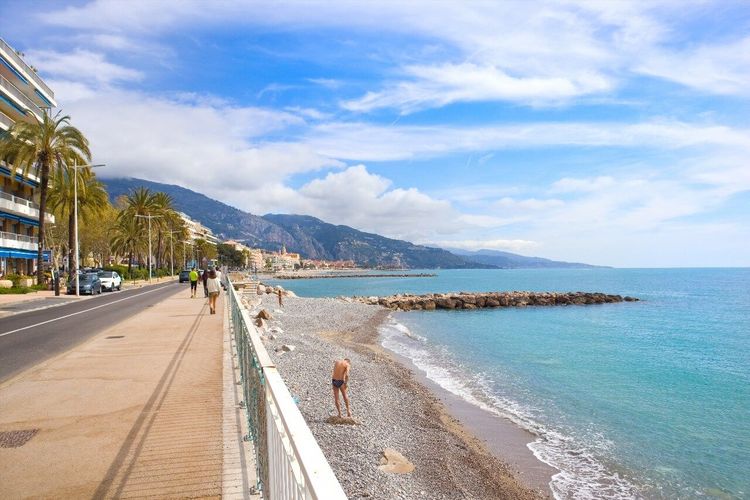
The Promenade du Soleil runs along the seafront for nearly two kilometres between the harbour and the town centre. It is the main promenade for locals, especially early in the morning before the influx of holidaymakers in summer. The beaches lining it are mainly pebble, characteristic of the eastern Côte d'Azur.
The Plage des Sablettes, east of the harbour, is the favourite with families as it has a little sand mixed in with the pebbles and shallow waters. Outside July and August, you will find space there even on a weekday. The public beach of Roya, to the west, is frequented by locals looking to avoid the tourist crowds.
For scuba diving, the clarity of Menton's waters is a pleasant surprise: average visibility of 15 to 20 metres depending on the season. Several clubs offer introductory dives and PADI training from Menton harbour. The nearby Monaco marine reserve is home to groupers and conger eels rarely spotted from the surface.
Gastronomy: Much More Than Lemons
Menton is known throughout France for its lemons, and rightly so. The local variety, protected by a PGI label since 2015, is sweeter and less acidic than lemons imported from Spain or Sicily, with a thin, highly fragrant skin. But reducing Menton's cuisine to lemons alone would mean missing the point entirely.
The Italian border, just two kilometres from the centre, profoundly influences the local table. Ligurian focaccia and fresh pasta sit alongside Nice specialities on restaurant menus. Socca (a grilled chickpea flour pancake) can be found at the Marché des Halles every morning. The barbagiuan (a fritter filled with Swiss chard and cheese) is Menton's signature speciality, best sampled in the bakeries of old Menton.
To find out more about local producers and addresses, check out the Ryo article on Menton's culinary specialities: restaurants, markets and flavours to discover during your stay.
Day Trips from Menton: Monaco, Roquebrune and Italy
Menton enjoys an exceptional geographical position: Monaco is 11 km away, Vintimille in Italy is 10 km away, and Nice is 30 km by motorway. This proximity makes the city an excellent base for day trips without changing accommodation, and considerably broadens the range of activities in Menton and its surroundings.
Monaco deserves at least half a day. Le Rocher, the historic quarter overlooking the harbour, concentrates the princely palace, the cathedral where Grace Kelly is buried, and the remarkable Oceanographic Museum founded by Prince Albert I in 1910. The latter features spectacular aquariums with sharks and sea turtles, plus a panoramic terrace overlooking the Mediterranean. The train journey from Menton takes 12 minutes and costs less than €3.
Roquebrune-Cap-Martin, between Menton and Monaco, deserves a stop in its own right. The perched medieval village has dominated the coast since a 10th-century keep — one of the oldest castles in France still standing. Its vaulted alleyways are less crowded than those of old Menton despite comparable beauty. Below, Cap-Martin is accessible via a coastal path that follows the sea for 6 km to Monaco, passing the ruins of Eileen Gray's Villa E-1027.
On the Italian side, Vintimille (Ventimiglia) is 15 minutes away by regional train. Its Friday market is renowned throughout the region for its fruit and cheeses at Italian prices. The old town has an 11th-century Romanesque cathedral and a baptistery from the same period — two buildings that hurried tourists overlook in favour of the market. For garden lovers, the Hanbury Gardens at La Mortola (5 km from Vintimille) rank among the finest in Liguria, with spectacular terraces facing the sea.
Finally, note that the Italian border itself is now little more than a formality within the Schengen area: you can walk from the beach at Menton to the beach at Grimaldi in twenty minutes, with no passport control or paperwork.
The Hinterland: Hilltop Villages and Secret Valleys
The Menton hinterland is one of the least touristy areas of the Côte d'Azur, and that is precisely its appeal. Thirty minutes' drive from Menton, the landscapes change dramatically: palm trees give way to chestnut trees, and grey-stone villages cling to cliffs above narrow valleys.
Sainte-Agnès claims the title of highest coastal village in Europe, perched at 671 metres above sea level with a direct view over the Mediterranean. The drive from Menton takes 25 minutes along a winding but paved road. The village itself has around a hundred permanent residents, a recently restored medieval garden, and an underground Maginot fort dating from 1932, open for visits at weekends from March to October (admission: around €5). The view from the castle ruins takes in the bay of Menton and, on a clear day, the Ligurian coast as far as Genoa.
Sospel, in the Bévéra valley, is 20 km from Menton, around 35 minutes by bus (line 905). This medieval market town is often nicknamed the "Little Venice" of the Alpes-Maritimes because of the old bridge spanning the Bévéra at its centre, with a medieval toll tower still standing in the middle of the bridge deck. The place Saint-Nicolas, surrounded by houses with trompe-l'œil façades and lined with arcades, extends the walk just a stone's throw away.
Castellar and Gorbio, less than 10 km from Menton, are two even more discreet villages. Gorbio hosts the Corpus Christi Festival every June, when residents carpet the streets with fresh flowers and coloured sawdust — a unique spectacle in the region, well worth the detour if your stay coincides with that June weekend.
Hiking and Outdoor Activities
The Mercantour National Park, whose first slopes begin around forty kilometres from Menton, is one of the French national parks most easily accessible from the sea. But for hikers who do not wish to travel that far, the area offers quality routes without leaving the immediate surroundings.
The Sentier des Douaniers (or GR51) follows the coastline from Menton to Roquebrune-Cap-Martin over approximately 10 km. The hike is accessible, with moderate elevation gain and constant sea views. Pine forest sections alternate with viewpoints over the Belle Époque villas of Cap-Martin. Allow 3 hours one way.
From Sainte-Agnès, the trail to mont Agel (1,148 m) is a half-day hike with, on a clear day, a panoramic view over the entire Riviera stretching as far as Corsica. The route passes through partly restricted military zones: check with the Menton tourist office before setting out.
For water-based activities, sea kayaking along the coast between Menton and Roquebrune allows you to see cliffs and coves inaccessible by road. Several operators offer half-day rentals from Menton harbour, with or without a guide.
Menton with Children
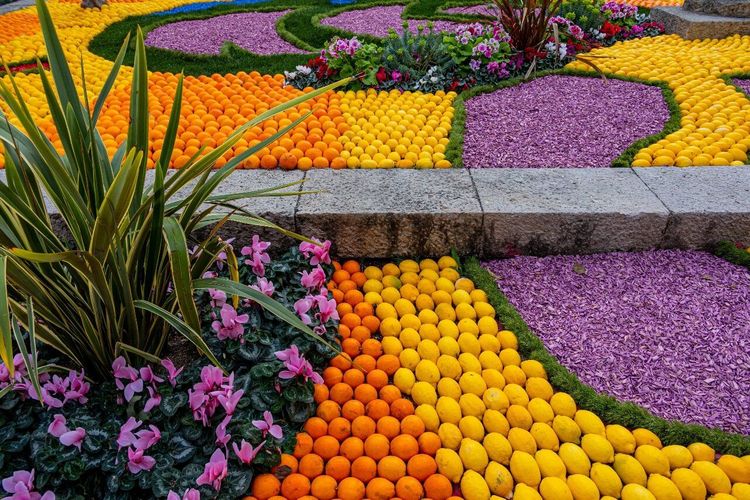
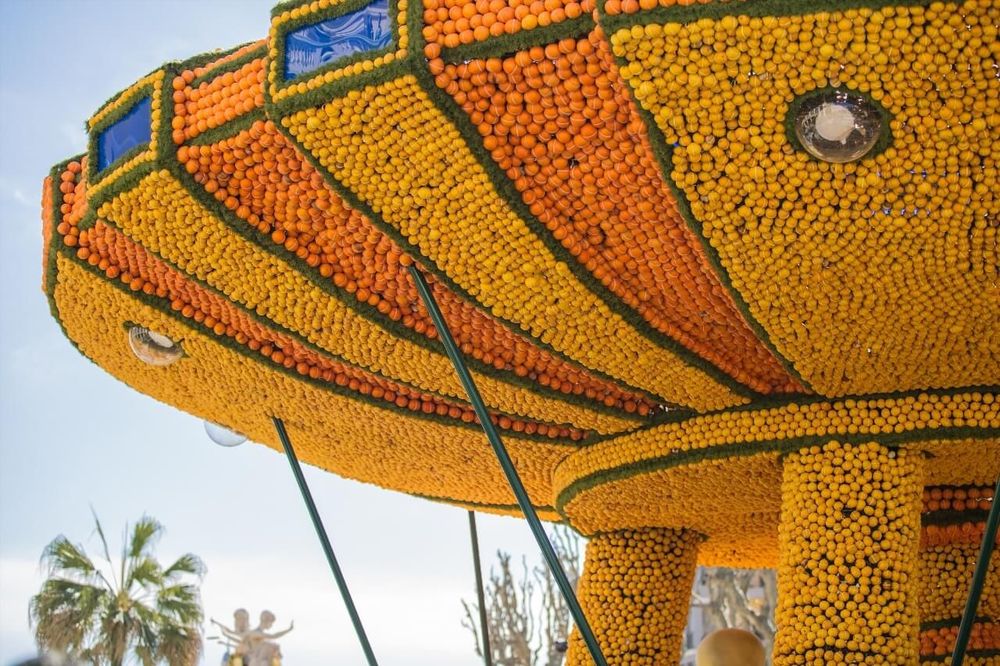
Menton is a family-friendly city. The Jardin Biovès, right in the town centre, is a public park with play areas and fountains that younger visitors will love. It is also the main venue for the Lemon Festival in February, with its monumental sculptures made from several tonnes of citrus fruit.
The aquarium at the Monaco Oceanographic Museum (Avenue Saint-Martin, 98000 Monaco, rated 4.5/5 on Google from 32,435 reviews) is one of the best in the region for captivating children: shark tanks, octopuses and sea turtles make for a memorable half-day. Allow 2 to 3 hours on site.
For everything you need to know about the Lemon Festival, Menton's biggest celebration, check out the Ryo article dedicated to the Menton Lemon Festival: programme, dates and practical tips for attending with children.
When to Visit Menton?
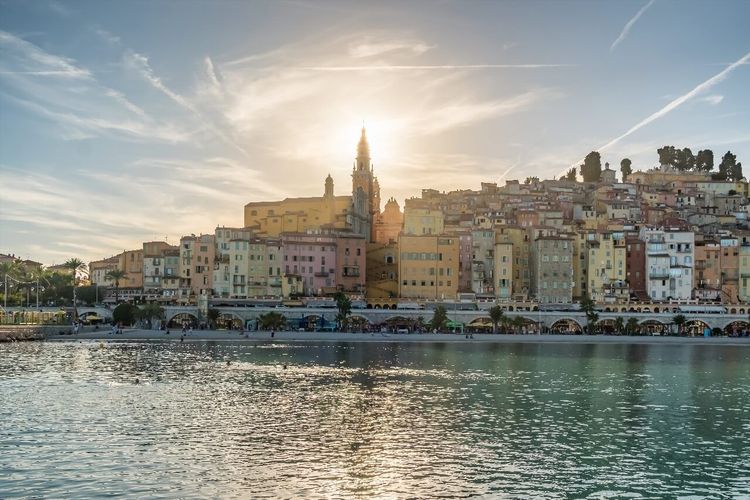
Menton's microclimate makes it one of the sunniest cities in France: 316 sunny days per year on average, compared to 300 for Nice. January temperatures rarely drop below 10 °C.
For an ideal visit, September–October offers a still-warm sea (22–24 °C), few crowds and accommodation prices noticeably lower than in summer. April–May is also excellent: the gardens are in bloom, terraces are open, and the beaches are still quiet.
July–August is peak tourist season: beaches are packed, restaurants are fully booked in the evenings, and accommodation prices can triple compared to the low season. Best avoided if you want to enjoy the gardens and old Menton without the crowds.
In early February, the Lemon Festival (lasting around three weeks) draws several hundred thousand visitors to a town of 28,000 inhabitants: spectacular, but hotels fill up months in advance.
Getting Around Menton and Its Surroundings
Reaching the various points of interest and organising activities in Menton and the surrounding area is fairly straightforward, provided you intelligently combine train, bus and car depending on your destination for the day.
By train: the Nice–Vintimille line is the backbone of travel along the Riviera. From Menton, Monaco is 12 minutes away, Nice is 40 minutes away, and Vintimille is 15 minutes away. Trains run every 30 minutes at peak times.
By bus: the Zou! network serves the hinterland. Sospel (line 905) and Sainte-Agnès (line 907) are accessible from Menton station. Timetables are limited outside school days, so check before you go.
By car: essential for the hilltop villages and the Mercantour. Parking in Menton is paid in season in all areas close to the seafront.
On foot: the town centre and old Menton are entirely walkable. Some carruggi alleyways are inaccessible to cars, which is rather good news.
FAQ
How many days do you need to visit Menton and its surroundings?
Two days are enough to cover old Menton, the gardens and one excursion (Monaco or the hinterland). To add the Italian coast, Sospel and Sainte-Agnès, allow a minimum of four days.
Does the Lemon Festival take place every year?
Yes, the Lemon Festival is held every year in February over approximately three weeks. It features decorated float parades with several tonnes of citrus fruit and exhibitions in the Jardin Biovès. Tickets for the parades should be booked in advance during peak season.
Do you need a car to visit the Menton hinterland?
For Sainte-Agnès and Gorbio, a car is strongly recommended: bus connections exist but are infrequent, especially on weekends. For Sospel, bus 905 from Menton station is a viable option.
Is Menton worth visiting compared to Nice or Cannes?
Menton is quieter at night and less commercial, but its old town, its botanical gardens — unique in France — and its proximity to Italy make it a destination in its own right. The setting is more intimate than Nice, and there are far fewer tourists.
Are there free activities in Menton?
Yes: the Promenade du Soleil, public beaches, the Vieux-Château cemetery, the Jardin Biovès, the Jardins du Palais Carnolès and the municipal museums (on the first Sunday of the month) are all free to visit. Our 23-stop audio-guided tour links them, from the seafront up to the old château.
Conclusion
After this overview of activities in Menton and its surroundings, one thing is certain: Menton holds a unique place on the Côte d'Azur. Too quiet for some, too far from Nice for others, it draws above all those who seek to understand rather than skim the surface. Its gardens demand time, its old town rewards those who explore it on foot, and its surroundings repay those who venture beyond the well-trodden paths of the Riviera. To begin exploring the city in good company, the Menton audio-guided tour La Perle de la France offers 23 audio stops across 4.3 km of guided discovery in old Menton — a first step before losing yourself in the carruggi at your own pace.