© Shutterstock
 Votre guide Ryo
Walking in Mulhouse: Walking Itineraries and Escapes Around the City in 2026
Mulhouse lacks the immediate fame of Strasbourg or Colmar, and that is precisely what makes a walk in Mulhouse different: fewer crowds on the Place de la Réunion, more space along the canal, and a ring of forests and lakes that begins just a few minutes from the city centre. This Mulhouse walking guide 2026 brings together the best on-foot itineraries and the finest escapes in the surrounding area, from the old half-timbered centre to the lakes of Haut-Rhin. This former textile city of the nineteenth century has kept its factory chimneys and workers' housing estates, but it has also replanted dozens of hectares of parks and now draws its residents towards the water, the Rebberg hill and the trails of the Sundgau.
In the pages that follow, you will find everything you need to build a tailor-made itinerary: the old half-timbered centre around the Temple Saint-Étienne, a visit to Parc Salvator or the Forêt du Waldeck, a stroll along the canal de Huningue, the affluent Rebberg hill with its Belle Époque villas, and several ideas for leaving the city behind — towards the Écomusée d'Alsace, the lakes of Haut-Rhin or even the German Black Forest, less than an hour's drive away. Enough to fill an entire weekend without retracing your steps. And if the urge to walk follows you beyond Alsace, the Ryo audio-guided tour of a walk in Central Park in New York is a reminder of how powerfully a city reveals itself at walking pace: with the Ryo app, you carry this kind of audio guide in your pocket to plan the next leg of the trip, once Mulhouse has been explored.
The Old Town of Mulhouse: a Walk Through the Historic Centre
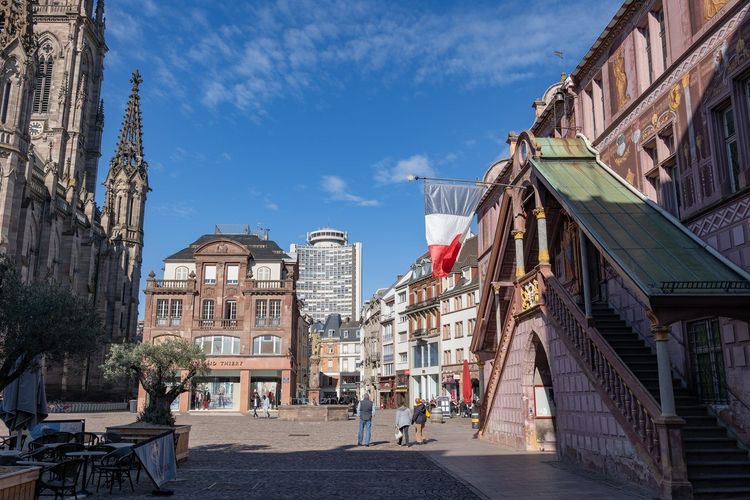
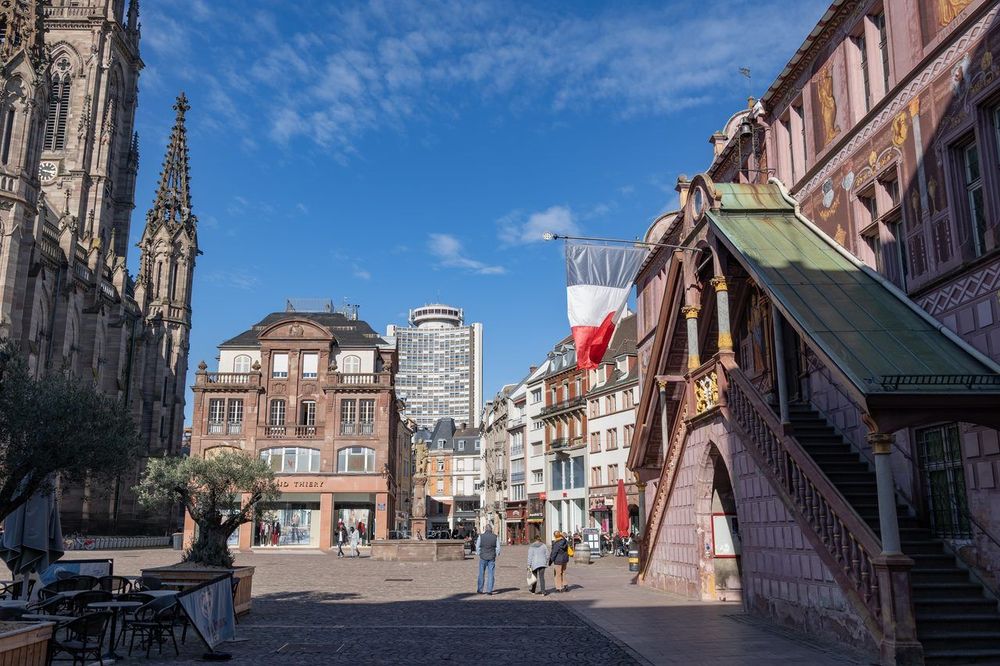
Mulhouse only joined France in 1798. For more than four centuries it functioned as a small independent republic, allied to the Swiss Confederation rather than to the neighbouring French kingdom. It was that vote of unification, held on the main square, that gave the Place de la Réunion (Place de la Réunion, 68100 Mulhouse) its name — the beating heart of the historic centre and the natural starting point for any walk in Mulhouse.
Dominating the square is the Temple Saint-Étienne, a neo-Gothic building whose foundation stone was laid in 1859 and which was inaugurated in 1866. Its spire reaches 97 metres, making it the tallest bell tower in Haut-Rhin and the tallest Protestant steeple in France. Inside, several fourteenth-century stained-glass windows were salvaged from the former Gothic church demolished to make way for the current temple — a contrast that never fails to surprise visitors expecting stylistic unity. Directly opposite, the Hôtel de Ville, whose pink sandstone façade is adorned with sixteenth-century trompe-l'œil frescoes depicting virtues and the coats of arms of allied Swiss cantons, now houses the city's history museum.
Moving a few streets south, you enter the tanners' district and the old merchants' houses, with their half-timbered façades repainted in vivid colours since the 1980s. Take time to look up: the wrought-iron signs and the hidden inner courtyards tell the story of a trading city that lived from the textile trade long before industrialisation. A detour to the Musée de l'Impression sur Étoffes (3 Rue des Bonnes Gens, 68100 Mulhouse, rated 4.3/5 on Google based on 595 reviews) usefully rounds out the walk for anyone wanting to understand why Mulhouse was nicknamed the French Manchester in the nineteenth century, with its dozens of printed-cotton mills employing several thousand workers. Its collections of printed fabrics rank among the richest in the world and serve as a reminder that design and colour made the city's fortune long before the automotive and railway museums that define its reputation today.
Weekday mornings are the best time to photograph the square before the café terraces crowd it at midday. Allow an hour and a half for this route if you go inside both museums, or just half an hour if you stick to the square and surrounding streets.
Parc Salvator, the Green Lung at the Heart of the City
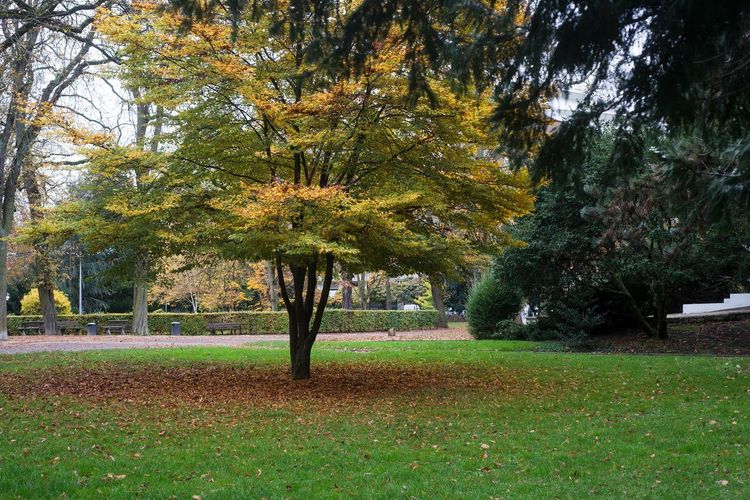
Ten minutes' walk from the old town, Parc Salvator (Avenue Robert Schuman, 68100 Mulhouse, rated 4.2/5 on Google based on 1,737 reviews) occupies former private gardens handed over to the municipality at the start of the twentieth century. Its century-old trees — including several remarkable sequoias and copper beeches — make it one of the green spaces most frequented by Mulhouse residents on weekdays, well ahead of tourists.
The park combines open lawns, a bandstand and a small rose garden that blooms from May to September. Families come as much for the play area as for the relative calm of the shaded paths, away from the traffic of the centre. You will also come across early-morning joggers doing laps before work — a sure sign that this green corner belongs first and foremost to the daily life of local residents.
If you visit with children, bring some stale bread for the ducks on the small pond — a local habit that persists despite the signs discouraging it. The park is open from sunrise to sunset with no fixed schedule, and admission is free all year round. To extend the outing, the rose garden of Parc Salvator pairs well with a visit to Parc Steinbach, a little further north — less well known but equally pleasant for a shady pause between stages of the day.
A Walk Along the Canal and the Banks of the Ill
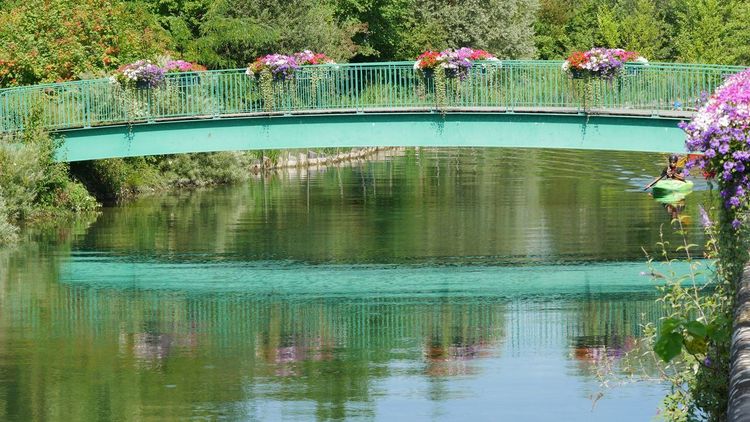
Mulhouse owes part of its industrial rise to the canal de Huningue (Quai des Pêcheurs, 68100 Mulhouse), completed in 1834 to link the city to the Rhine and ease the transport of coal and printed fabrics. Today its landscaped banks offer one of the most relaxing walks in the city, well away from road traffic.
The path follows the water for several kilometres, shaded by plane trees and dotted with benches where residents come to read or picnic at the end of the day. You will pass fishermen who have been there since dawn, families on bicycles and, on some summer evenings, groups taking advantage of the picnic tables set up near the basin. The raking evening light on the canal's calm water is one of the most photogenic moments of any walk in Mulhouse, particularly between June and August.
Upstream, the canal meets the river Ill, which also flows through Strasbourg further north. If this riverside atmosphere appeals to you, the Ryo audio guide dedicated to a boat trip in Strasbourg will show you another way of following the water, this time along the Strasbourg Ill and its covered bridges.
For a complete loop, allow roughly 5 kilometres by following the canal as far as the Dornach neighbourhood and returning via the quiet residential streets. Wear closed shoes: the path is walkable in all weather, but some unpaved sections become slippery after rain.
The Rebberg: a Belle Époque Walk in the Heights of Mulhouse
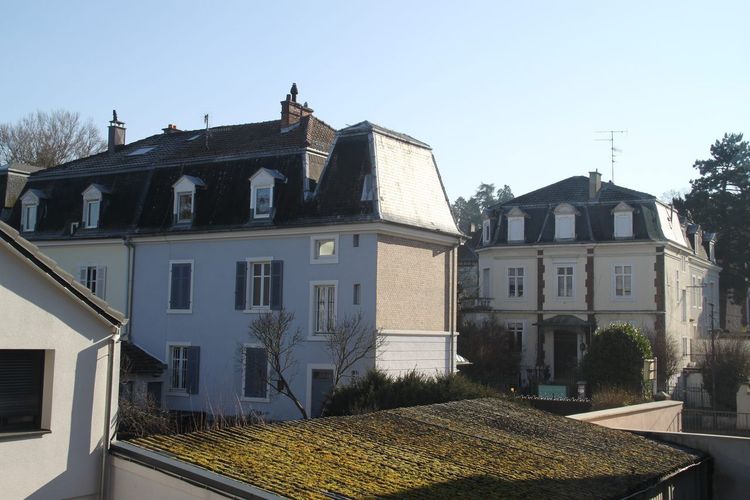
Above the city centre, the Rebberg hill — literally the vineyard hill, even though the vines have long since given way to villas — concentrates the finest residential heritage of Mulhouse's great industrial families of the nineteenth century: the Dollfus, the Koechlins, the Schlumbergers.
The sloping streets, lined with lime trees and horse chestnuts, reveal an eclectic architecture: neo-Renaissance villas, chalets inspired by the Swiss style, and later Art Nouveau façades. Each family clearly sought to distinguish itself from its neighbours, giving this walk the feel of an open-air architecture catalogue rather than a uniform neighbourhood. Take time to study the gates, the verandas and the rooflines: few French districts make the ambitions of an industrial bourgeoisie so legible in stone.
The Rebberg water tower, a brick watchtower built at the end of the nineteenth century, marks the highest point of the neighbourhood and offers an open view over the rooftops of Mulhouse and, on clear days, the first foothills of the Vosges. The climb from the centre takes about twenty minutes on foot, more if you stop repeatedly to photograph the wrought-iron gates of the properties. This neighbourhood is well suited to a late-morning walk, when the light brings out the façades without washing out the colours. Unlike the historic centre, the Rebberg attracts few passing visitors, making it a tranquil parenthesis within a fuller programme.
The Zoo and Botanical Garden: a Family Nature Walk

Founded in 1868 by industrialists led by Charles Thierry-Mieg, the Zoo de Mulhouse (51 Rue du Jardin Zoologique, 68100 Mulhouse, rated 4.2/5 on Google based on 11,124 reviews) is one of the oldest zoological parks in France still in operation. It is home today to several hundred animal species and actively participates in European endangered-species breeding programmes, alongside a botanical garden planted across the same 25 hectares.
The visit also works as a genuine landscape walk: winding paths between remarkable trees planted in the nineteenth century, ponds, immersive aviaries and shaded areas that make it possible to spend half a day there even in summer. Children generally linger longest in front of the snow leopards and the sea lions, whose enclosures have been renovated in recent years to more closely replicate natural conditions.
If you come with young children, plan to arrive at opening time: the paths fill up quickly at weekends and the scheduled feeding sessions, often announced early in the morning, draw crowds fast. Bringing a picnic to the designated areas is a more economical option than the on-site catering, especially for larger families.
The Forêt du Waldeck: a Wild Escape at the Gates of Mulhouse
Just a few minutes from the last tram stop, the Forêt du Waldeck (Rue du Waldeck, 68100 Mulhouse, rated 4.6/5 on Google based on 53 reviews) shifts the atmosphere entirely: woodland paths, soft ground, birdsong that replaces city noise almost instantly.
The trails, mostly unmarked, are aimed primarily at regulars and local joggers, but remain easy enough to follow for an hour's walk without any real risk of getting lost for long. The forest acts as a buffer zone between Mulhouse and neighbouring communes, and it shelters discreet wildlife — roe deer included — that you are most likely to spot early in the morning or at the end of the day. It is a place valued by residents for unwinding after work, less for its heritage interest than for its immediate proximity to the city. Simply wear good shoes after rain, as the ground becomes muddy in places.
Family Outings Around Mulhouse: the Écomusée d'Alsace and the Parc du Petit Prince
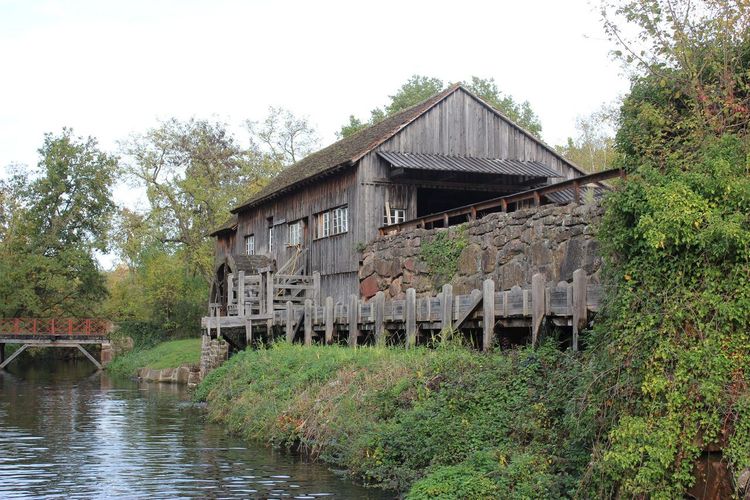
About fifteen kilometres to the northwest, on the site of a former potash mine at Ungersheim, the Écomusée d'Alsace reconstructs a full-scale Alsatian village from historic buildings saved from demolition and reassembled piece by piece. More than seventy half-timbered houses, barns and workshops form a village brought to life by costumed interpreters, with a blacksmith, a weaver and a baker at work on open days.
The visit is done entirely on foot across several kilometres of paths, making it a genuine family walk around Mulhouse rather than a conventional static museum. The storks, reintroduced to the region in the 1980s, nest on several rooftops across the site and have become one of its emblems.
Right next door, the Parc du Petit Prince (Chemin du Schlossmatt, 68190 Ungersheim, rated 4.1/5 on Google based on 4,617 reviews), opened in 2014 on a former spoil heap from the same mine, offers a different experience: tethered hot-air balloons rising to over 150 metres, zip lines and activities inspired by the world of Saint-Exupéry. The two sites complement each other well for a full day out — one focused on rural heritage, the other on sensation and an aerial view over the Alsace plain.
Allow a good half-day for each site if you want to avoid rushing from one attraction to the next, especially with young children who tire quickly on this kind of packed programme.
A Day Trip to the Black Forest, Less than an Hour Away
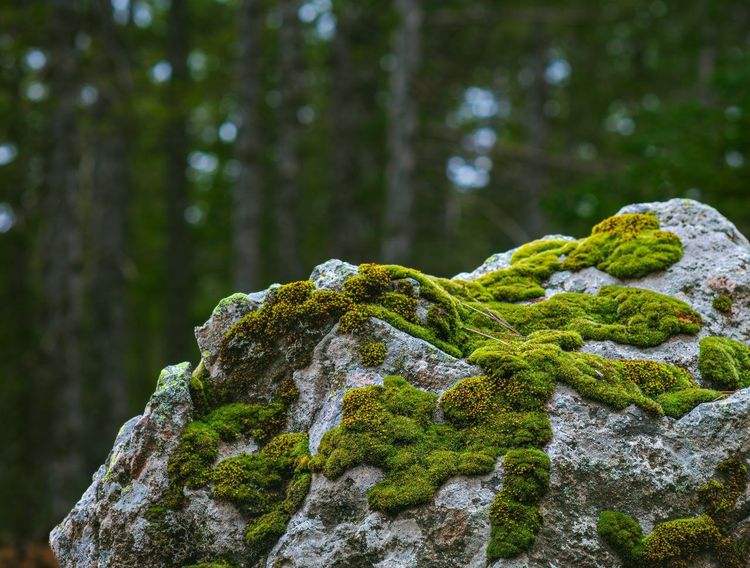
Mulhouse is surprisingly close to Germany: allow roughly 45 minutes to an hour's drive to reach the first foothills of the Black Forest, crossing the Rhine at Basel or further north towards Neuenburg.
Freiburg im Breisgau, a lively university city with its open-air streams known as Bächle, is often the first stop before climbing into the wooded heights. Further on, Titisee lake draws visitors for its lakeside walk and shops selling local specialities, while the village of Triberg, known for its waterfalls and clockmaking workshops, delights fans of traditional cuckoo clocks.
This excursion calls for a full day if you want to enjoy the forest trails as well as the villages, since the road between points of interest winds through fir-tree landscapes that contrast sharply with the Alsace plain. Remember to check your identity documents before you leave: border crossings are generally smooth within the Schengen area, but a spot check is never completely out of the question.
Lakes and Ponds of Haut-Rhin for a Waterside Walk
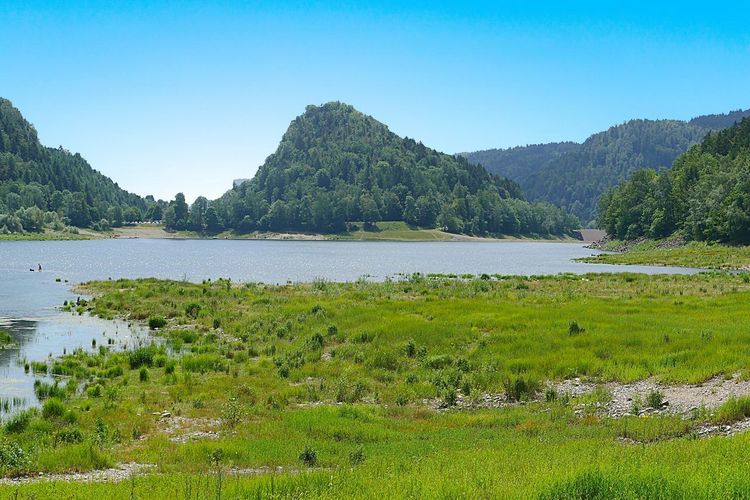
For a walk in Haut-Rhin without leaving nature behind, two stretches of water stand out particularly around Mulhouse. Lac de Kruth-Wildenstein, an artificial reservoir nestled in the Thur valley at the foot of the Vosges, can be covered in a loop of roughly 5 kilometres offering views of the surrounding summits at every bend in the trail.
Closer to the city centre, about fifteen kilometres away, the plan d'eau de Reiningue (Route de Reiningue, 68950 Reiningue, rated 4/5 on Google based on 559 reviews) offers a more family-friendly setting: a walking path around the lake, a supervised swimming area in season and shaded picnic spaces that fill up from the first fine days of the year.
The two sites suit different profiles: Kruth-Wildenstein for a more active hike in the mid-mountain terrain, Reiningue for a relaxed outing accessible to the whole family in less than twenty minutes by car from Mulhouse.
Cycling in Mulhouse: Bike Paths and Easy Rides
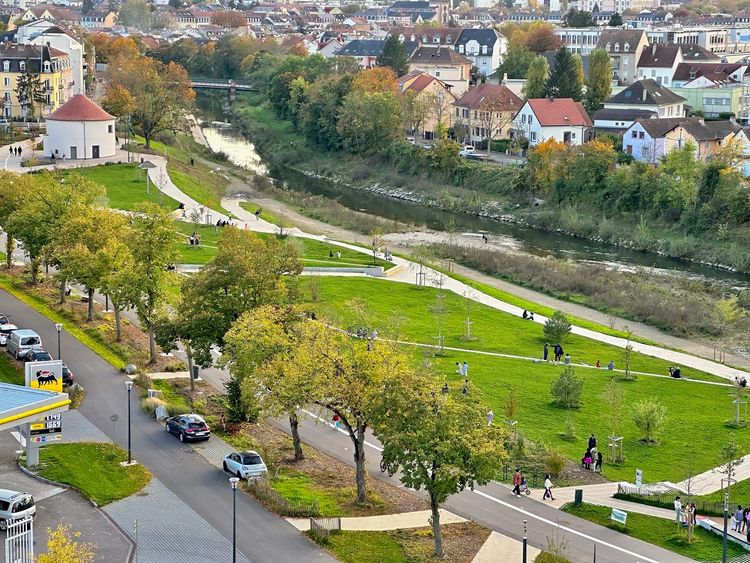
The city has invested heavily in its cycling network in recent years, so that a good number of the itineraries described above can be covered just as easily by bike as on foot. The cycle route running alongside the canal de Huningue reaches the German border at the Three Countries Bridge, and forms part of the EuroVelo 6 long-distance route that crosses the continent from west to east along the great rivers.
Dedicated lanes separated from traffic cross the city centre, run alongside the canal and serve Parc Salvator, making it possible to link several stages of this walk without ever getting back in the car. The bike-share stations, distributed across the centre and nearby districts, remain a practical option for visitors who do not want to bring their own equipment.
If this cycling format appeals, Ryo also offers an itinerary dedicated to a bike ride in Amsterdam, a city where cycling occupies a central place in daily life. A good way to compare two very different approaches to two-wheeled travel, between Dutch canals and the Alsatian waterway.
Practical Information: When and How to Explore Mulhouse on Foot
Spring and early autumn remain the most pleasant seasons for exploring the city on foot, combining mild temperatures with flattering low-angle light for photographs. Summer is better suited to walks around the lakes and in the forests, in the shade of the trees, while winter retains its charm on the Place de la Réunion, particularly during the Christmas market. The tram and bus network serves outlying neighbourhoods such as the Rebberg and the Forêt du Waldeck well, which is useful if tiredness sets in mid-route. On the budget side, most of the walks described here are free: only the zoo, the Écomusée d'Alsace and the Parc du Petit Prince charge an entrance fee. Download the Ryo app before you leave to access your audio tours even without a connection.
FAQ
How much time should I allow for a walk in Mulhouse?
Half a day is enough for the historic centre and Parc Salvator. Allow a full day if you add the canal, the Rebberg and the zoo, and two days to include a trip to the Écomusée d'Alsace or the lakes of Haut-Rhin.
What is the easiest walk for toddlers?
Parc Salvator and the canal banks offer flat, shaded paths with no significant elevation change, and there are play areas nearby. The zoo is also very well suited thanks to its wide paths and the many opportunities for breaks.
Are there free walks in Mulhouse?
Yes, the old town, Parc Salvator, the canal banks, the Rebberg and the Forêt du Waldeck can all be visited freely, with no entrance fee. Only the zoo, the Écomusée d'Alsace and the Parc du Petit Prince charge admission.
Can you reach the Black Forest without a car from Mulhouse?
It is possible by train to Freiburg im Breisgau via Basel, but more remote villages like Triberg remain more easily reached by car or on an organised excursion, as German public transport connections into the forest are limited.
What is the best neighbourhood for a quiet walk away from tourists?
The Rebberg is the safest choice: its residential streets lined with Belle Époque villas attract mainly local residents rather than visitor groups, who tend to stay concentrated around the Place de la Réunion.
Is the walk around Lac de Kruth-Wildenstein suitable for families?
The loop around the lake, covering roughly 5 kilometres on generally flat waterside terrain, is suitable for children used to walking, even though the drive from Mulhouse takes just under an hour.
Do you need to book in advance to visit the Écomusée d'Alsace or the Parc du Petit Prince?
Booking is generally not required on weekdays, but it is recommended on busy weekends and during school holidays, particularly for hot-air balloon slots at the Parc du Petit Prince.
Extending the Walk Beyond Mulhouse
Mulhouse rewards most those who take the time to venture beyond the centre: the city reveals itself as much through its half-timbered streets as through its forests, canals and lakes just a few kilometres away. A walk in Mulhouse can last a morning or stretch across an entire weekend, depending on whether you stay in the old centre or push on to the Écomusée and the Vosges.
Whether you follow a set itinerary or wander freely through the neighbourhoods, the Ryo audio-guided tour makes a fine companion for giving meaning to what you see, and it travels with you well beyond Alsace. In the same spirit of urban wandering, the Ryo audio guide for a walk through the elegant neighbourhoods of Buenos Aires keeps the desire to walk going, from Mulhouse to the other side of the world — turning every stroll, here or in another city, into a richer discovery.