
Créé par Emilie, le 20 juin 2026
Votre guide Ryo
The 15 Largest Cities in France by Population: 2026 Rankings
© Shutterstock
The ranking of France's largest cities holds some surprises for those who think they know it. The country's first municipality alone concentrates more inhabitants than the next nine combined within their strict administrative boundaries. Toulouse has long closely followed Lyon for third place, within a few thousand inhabitants according to successive census revisions. And Montpellier, which was only a medium-sized city thirty years ago, now closely follows Nantes with a growth rate that no other French metropolis approaches. To explore the first of them in depth, the Ryo audio guide of Paris takes you in 3h40 and 8.9 km from the Champs-Élysées to Notre-Dame.
This ranking concerns the municipal population as defined by INSEE: the number of residents within the administrative municipality boundaries, excluding urban unit and metropolitan area. This is the official reference for comparing French cities with each other. The data presented here comes from the INSEE 2023 census, effective January 1, 2026 (final figures are always published with a two to three year delay). The distinction between municipality and metropolitan area radically changes the rankings: Nantes, 6th municipality, weighs nearly 1 million inhabitants in its urban area; Nice, 5th municipality, brings together 1.1 million people in its metropolis. Keeping these two levels in mind means understanding the country's true human geography.
1. Paris, 2,119,412 Inhabitants
Paris dominates by far with 2,119,412 inhabitants within its municipal boundaries (INSEE 2023 census). The figure may seem modest compared to Asian megalopolises, Tokyo exceeds 13 million in its central city alone, but it is misleading: the Paris urban area brings together 10.7 million people, which places Paris among the twenty largest agglomerations in Europe.
The municipality of Paris is divided into 20 arrondissements organized in a spiral from the historic heart. The 1st, around the Louvre and Les Halles, is the least populated with about 16,000 inhabitants. The 15th, in the southwest, is the densest with more than 230,000 residents. This internal disparity says something essential: Paris is not a uniform city but a mosaic of urban villages with very distinct identities.
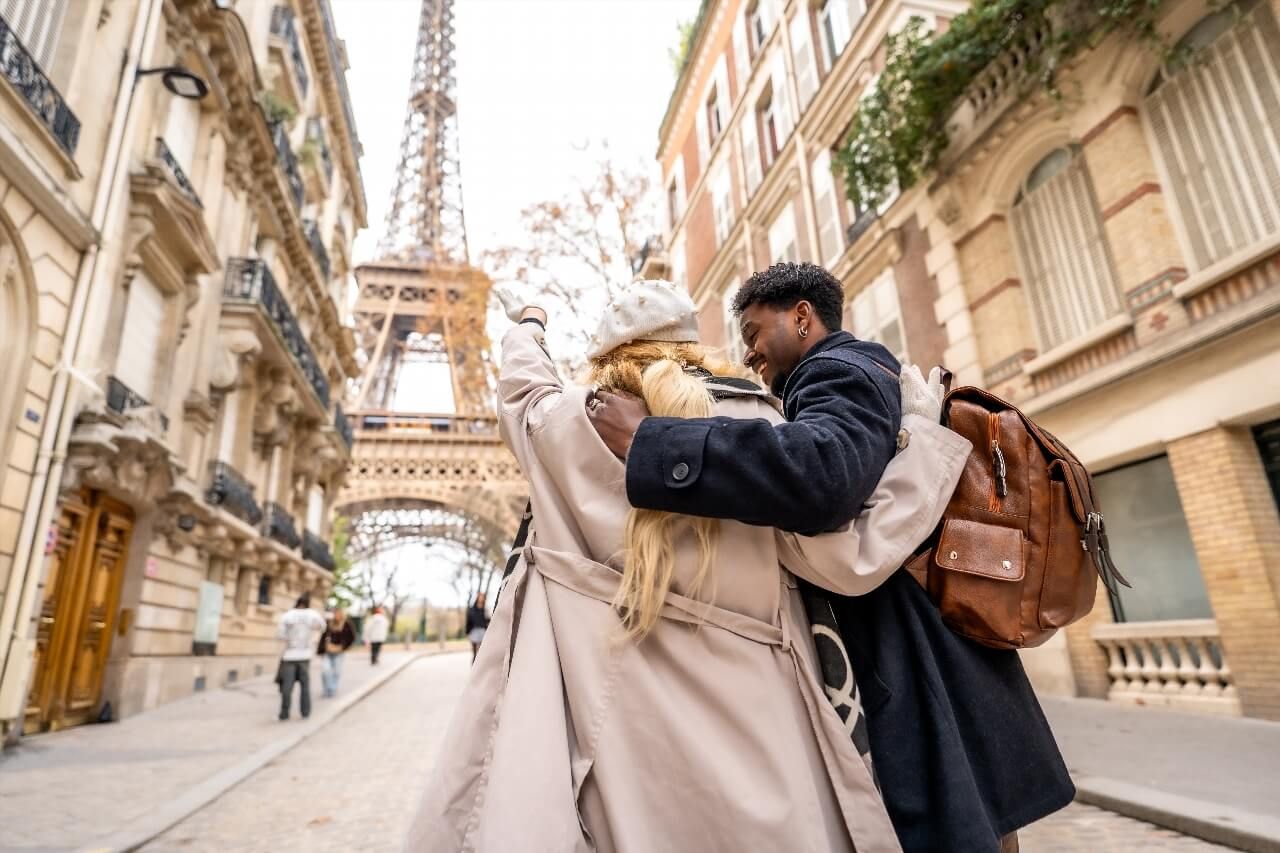
What strikes in Paris is the superposition of eras without apparent seams. The square of Notre-Dame de Paris, whose restoration after the April 2019 fire was completed in December 2024, again welcomes millions of visitors facing an intact medieval facade. Two kilometers away, the Eiffel Tower, built for the 1889 Universal Exhibition, receives more than 6 million visitors annually, making it the most visited paid monument in the world. Further east, the Catacombs house the remains of more than 6 million Parisians who died between the 13th and 19th centuries in 300 kilometers of underground galleries.
Paris concentrates 30% of jobs in the French private sector and remains the world's leading tourist hub, with 30 to 40 million foreign visitors annually depending on the year. The Parisian real estate market remains the most tense in France: the average price per square meter exceeds 9,500 euros in 2026, with differences ranging from the 6th arrondissement (more than 15,000 euros) to the 19th (around 7,000 euros). This land pressure explains the slight demographic decline of the municipality in recent years, families migrating to the first ring, even though the city continues to attract students and young professionals. The Grand Paris Express, Europe's largest public transport construction project, will add 200 km of new metro lines by 2030.
2. Marseille, 892,391 Inhabitants
Marseille is the second city in France with 892,391 inhabitants (INSEE 2023). Founded around 600 BC by Greek colonists from Phocaea, hence its nickname "Phocaean City," it is one of the oldest cities in France and certainly the most Mediterranean. Explore the city from the seafront with the Ryo audio tour of Marseille, 24 audios and 7.3 km that go up from La Canebière to Notre-Dame-de-la-Garde.
The Old Port remains the beating heart of the city, even though industrial fishing boats have long given way to pleasure boaters and ferries to Corsica. Every morning, a handful of fishermen still sell their catch directly on the quay, a scene that Marseillais jealously defend. At the port entrance, the MuCEM (Museum of European and Mediterranean Civilizations), inaugurated in 2013 for Marseille European Capital of Culture, connects by a suspended footbridge Fort Saint-Jean and a lace concrete architecture designed by Rudy Ricciotti.
Marseille is also the city of Calanques: 20 kilometers of white limestone cliffs, turquoise coves and trails barely 20 minutes from the center. The Calanques National Park, created in 2012, is the only peri-urban national park in Europe, which says something about the extraordinary geography of this metropolis. Economically, the city hosts France's largest port and the third port in the Mediterranean for cargo traffic. Marseille-Provence airport has crossed the 10 million annual passengers mark. The Aix-Marseille-Provence Metropolis, within its expanded boundaries, exceeds 1.8 million inhabitants, the second French agglomeration far behind Greater Paris.
3. Lyon, 523,314 Inhabitants
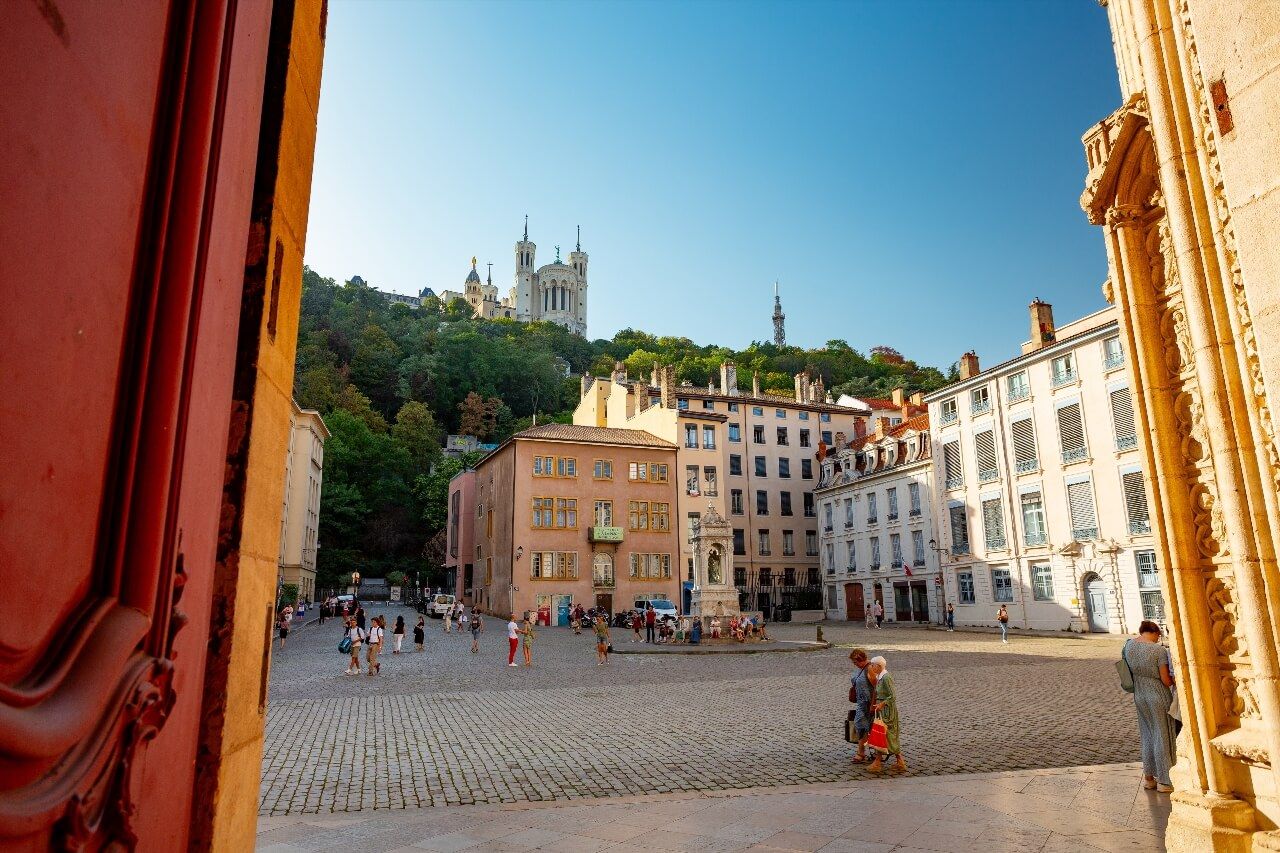
Lyon ranks third with 523,314 inhabitants in the municipality. The Lyon Metropolis, created in 2015, brings together 1.4 million inhabitants across 59 municipalities. The city is built between two rivers, the Rhône to the east, the Saône to the west, and two hills: Fourvière, where the Romans founded Lugdunum in 43 BC, and Croix-Rousse, historic stronghold of the canuts, those silk weavers who triggered the first great worker revolts in France in 1831 and 1834.
The Ryocity of Lyon offers a 26-audio and 7.9 km route following the two hills. To immerse yourself in the working history of Croix-Rousse, the Meeting the Canuts route (16 audios, 4.4 km) traces this often unknown social page.
Lyon is unanimously recognized as the gastronomic capital of France. Lyon bouchons, those bistros that serve quenelles, tablier de sapeur and praline tart, constitute an institution inscribed in the region's intangible cultural heritage since 2019. The Halles Bocuse, renamed after the chef who died in 2018, remain the reference covered market for French gastronomy. The Old Lyon, UNESCO World Heritage listed, is one of the best-preserved Renaissance ensembles in Europe, with its interior courtyards crossed by passages called traboules. Allow a morning to explore this labyrinth of passages and ochre facades.
4. Toulouse, 519,940 Inhabitants
With 519,940 inhabitants, Toulouse is the fourth city in France and the first in the Greater Southwest. Its demographic growth is one of the most sustained among major French metropolises: the city gains about 15,000 new inhabitants per year for ten years, driven by its aerospace and space hub. The Basilica Saint-Sernin, built from the 11th century, is the largest preserved Romanesque building in the world with a 115-meter nave.
Toulouse is nicknamed "the Pink City" for its pink terracotta bricks that give facades a changing hue depending on the time, golden at sunrise, almost violet at dusk. The Place du Capitole, civic heart, is dominated by its white and pink neoclassical facade that deliberately contrasts with the rest of the built environment. The aerospace industry makes the city a world capital of the sector: Airbus has its headquarters and main assembly units there, and the Toulouse Space Center (CNES) coordinates a good part of European programs. If you pass through the Pink City, the Ryo audio guide of Toulouse covers the historic center in 2h40 and 6.5 km.
Greater Toulouse Metropolis exceeds 800,000 inhabitants, fourth urban area in France behind Paris, Lyon and Marseille. The gap with Lyon for third place municipality is minimal, barely a few thousand inhabitants, and future census revisions could still reverse it.
5. Nice, 360,710 Inhabitants
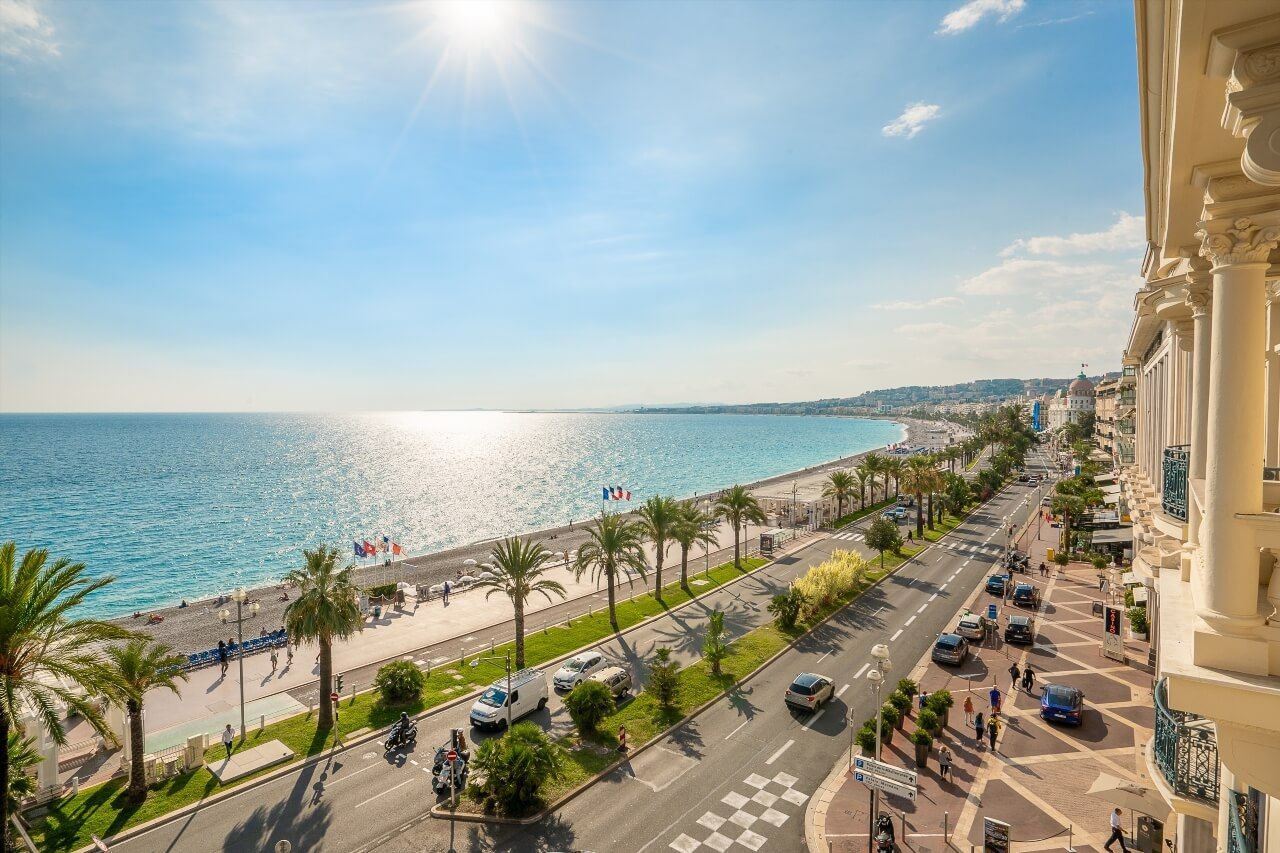
Nice has 360,710 inhabitants and positions itself as the fifth city in France. Attached to France only in 1860, formerly capital of the County of Nice under Sardinian domination, it retains a singular cultural identity, with its own language (Niçard, a Ligurian dialect) and cuisine that borrows as much from Italy as from Provence. The Promenade des Anglais, which runs along the Baie des Anges for 7 kilometers, is the most famous avenue on the Côte d'Azur. Its name comes from the English community that, from the 18th century, wintered in Nice for its mild climate.
The Old Nice, or the old town, is organized around the Cours Saleya where one of France's most beautiful flower and fruit markets is held every morning. Culturally, the city has the Matisse museum (housed in a 17th-century villa in the middle of a park of centennial olive trees), the Marc Chagall museum and the Mamac. The Nice Côte d'Azur Metropolis brings together 49 municipalities for more than 1.1 million inhabitants. The Ryocity of Nice covers 27 audios and 7.1 km to discover "Nissa la Bella" in all its facets.
6. Nantes, 332,515 Inhabitants
Nantes brings together 332,515 inhabitants and ranks 6th. Former capital of the Dukes of Brittany, administratively attached to Pays de la Loire since 1956, the city maintains an ambiguous relationship with its regional identity, a majority of Nantais still consider themselves Breton. To walk through the city at your own pace, the Ryo audio tour of Nantes unfolds 30 audios over 6.4 km, "From Grand Dukes to Petit Lu."
The Castle of the Dukes of Brittany (4 Place Marc Elder, 44000 Nantes, rated 4.5/5 on Google for 24,283 reviews), medieval fortress in the city center, hosts the Nantes history museum across 32 rooms. The visit tells without detour the city's role in the slave trade: from the 17th to 19th centuries, Nantes was France's first slave port, with more than 1,700 expeditions recorded to the Americas. This past is now acknowledged in the museum tour and in the memorial abolished inaugurated on the Île de Nantes.
The city reinvented itself from the 2000s around artistic creation and converted industrial spaces. The Machines de l'Île, giant mechanical elephant, carousel of marine worlds, are among the most visited attractions in the West. Forty percent of municipal territory consists of green spaces, and the tram network is one of the densest in France.
7. Montpellier, 313,712 Inhabitants
Montpellier reaches 313,712 inhabitants and rises to 7th place. It is the French city that has experienced the strongest demographic growth over the last thirty years: it has almost doubled its population since 1990, going from about 160,000 to more than 310,000 inhabitants. Its dynamism is based on a massive student population, 70,000 students for a city of this size, one of the highest ratios in Europe, and on promising sectors like health, digital and precision agriculture.
Founded in the 10th century without being a Gallo-Roman city, Montpellier is a "young" city on the French historical scale. Its medical school, created in 1220, is the oldest still in operation in the world. Rabelais studied there in the 16th century. The Place de la Comédie, with its Three Graces in the center and the Opéra Comédie in the background, constitutes the city's salon, animated until late at night all year round. The Antigone district, designed by Catalan architect Ricardo Bofill from 1979, offers monumental neoclassical architecture in white concrete that still divides residents between admiration and perplexity. Discover the historic center via the Ryocity of Montpellier, 19 audios in 1h30.
8. Strasbourg, 296,552 Inhabitants
With 296,552 inhabitants, Strasbourg is the 8th city in France and the de facto capital of the European Union: it hosts the European Parliament, the Council of Europe and the European Court of Human Rights. This triple institutional function gives it a unique diplomatic dimension among French provincial cities.
Strasbourg's history oscillates between France and Germany for centuries. Annexed by the German Empire in 1871, returned to France in 1918, reincorporated into the Reich in 1940, liberated in 1944, the city bears in its architecture the layers of this alternation. The Cathedral Notre-Dame de Strasbourg (Place de la Cathédrale, 67000 Strasbourg, rated 4.8/5 on Google for 76,487 reviews), in pink Vosges sandstone, was for two centuries the world's tallest building (142 meters) between 1647 and 1874. The Petite France quarter, with its half-timbered houses reflected in the arms of the Ill, is one of the most photographed in Alsace. But Strasbourg is also worth visiting for its Neustadt, the new town built by the Germans from 1880, UNESCO World Heritage listed in 2017 for its remarkably intact Wilhelminian urbanism. The Ryo audio tour of Strasbourg covers 32 audios and 6.6 km between Petite France and Grande Europe.
9. Bordeaux, 271,552 Inhabitants
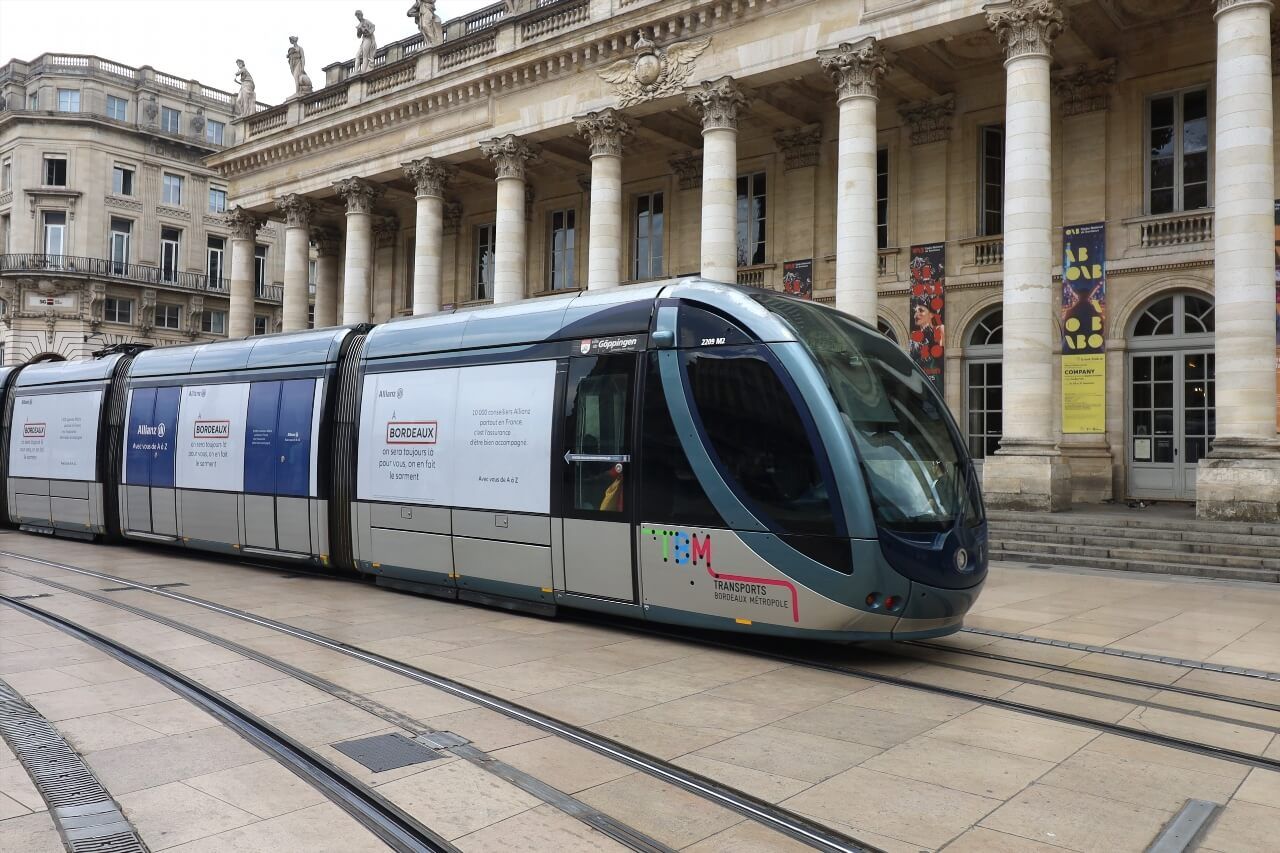
Bordeaux records 271,552 inhabitants in its municipality. Long nicknamed "the Sleeping Beauty" for its conservatism, the city has experienced since 2004, with the arrival of the tramway and the rehabilitation of the Garonne quays, a spectacular urban transformation that earned it the title of France's most dynamic city for several consecutive years.
The Water Mirror (Place de la Bourse), inaugurated in 2006, is today the most instagrammed public space in France outside Paris: 3,450 m² of black granite reflect the classical facade of the 18th-century Palais de la Bourse in a thin sheet of water that renews every half hour. The historic center, UNESCO World Heritage listed in 2007 under the name "Port of the Moon," is one of the most coherent 18th-century urban ensembles in Europe. The Cité du Vin, inaugurated in 2016, has exceeded 5 million visitors since its opening. The Ryo audio guide of Bordeaux offers 29 audios and 6.2 km to grasp the soul of the city in 2h30.
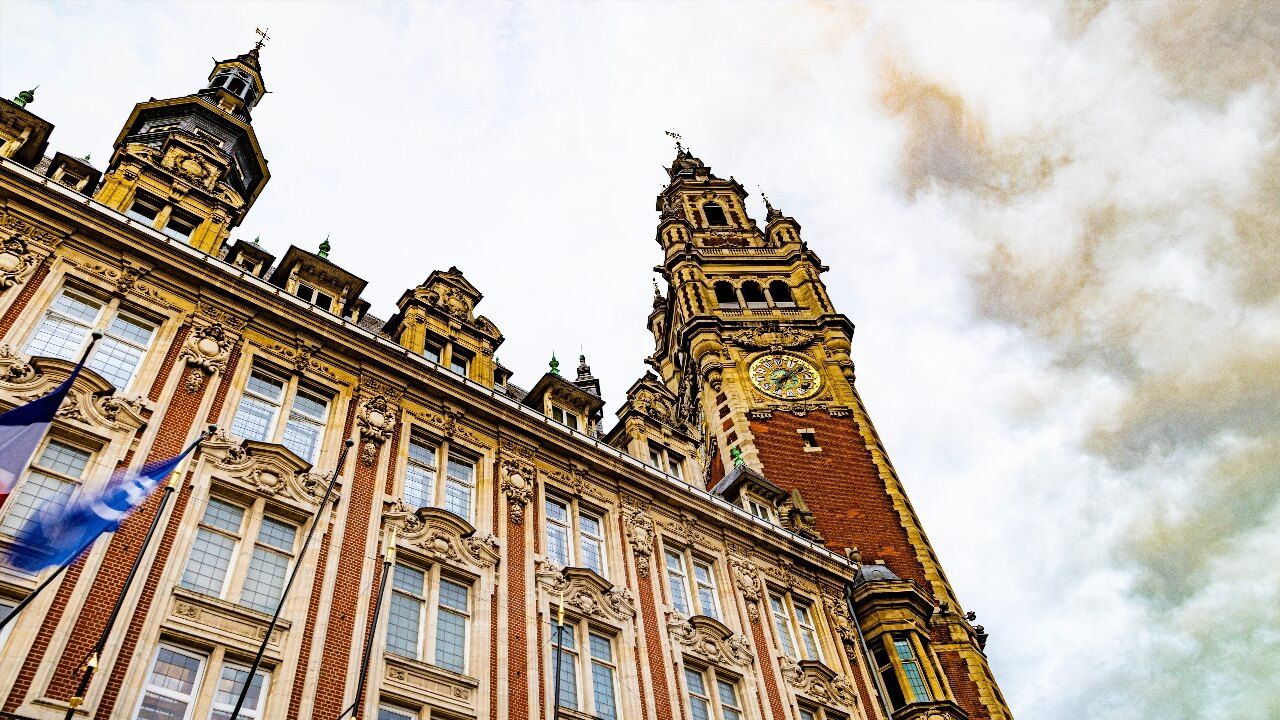
10. Lille, 240,109 Inhabitants
Lille has 240,109 inhabitants and occupies 10th place. Capital of Hauts-de-France, it is also the central city of a transborder metropolis which, with Roubaix, Tourcoing, Mouscron and Tournai on the Belgian side, forms a conurbation of about 1.5 million inhabitants on both sides of the border.
Flemish for centuries, Spanish under Philip II, French definitively since the Treaty of Nijmegen in 1678, Lille bears these layers in its architecture. The Grand-Place (officially Place du Général-de-Gaulle) is bordered by stepped gables and red brick facades typically Flemish. The Vauban Citadel, built in 1670-1672 for Louis XIV, remains one of the best illustrations of the Sun King's military architecture. Every first weekend in September, the Lille Braderie transforms 200 kilometers of streets into Europe's largest open-air market. To explore the Flemish capital, the Ryocity of Lille covers 22 audios and 6 km.
11. Rennes, 234,950 Inhabitants
Rennes brings together 234,950 inhabitants and positions itself as the 11th city in France. Capital of Brittany, it shares with Montpellier the title of France's most student city proportionally: 70,000 students for a municipality of this size. The historic center is an open architecture book: the half-timbered houses of rue Saint-Georges, some dating from the 15th century, testify to a medieval city preserved partly thanks to the paradox of the 1720 fire, which precisely spared the wood-structured neighborhoods.
The Transmusicales de Rennes, created in 1979, are France's most important contemporary music festival for discovering new artists. The Lices market, every Saturday morning since the 17th century, is one of the country's largest food markets. Set off on foot to discover the Breton heart with the Ryocity of Rennes: 25 audios, 1h50 and 4.7 km in the footsteps of "The Queen of Brittany."
12. Toulon, 180,774 Inhabitants
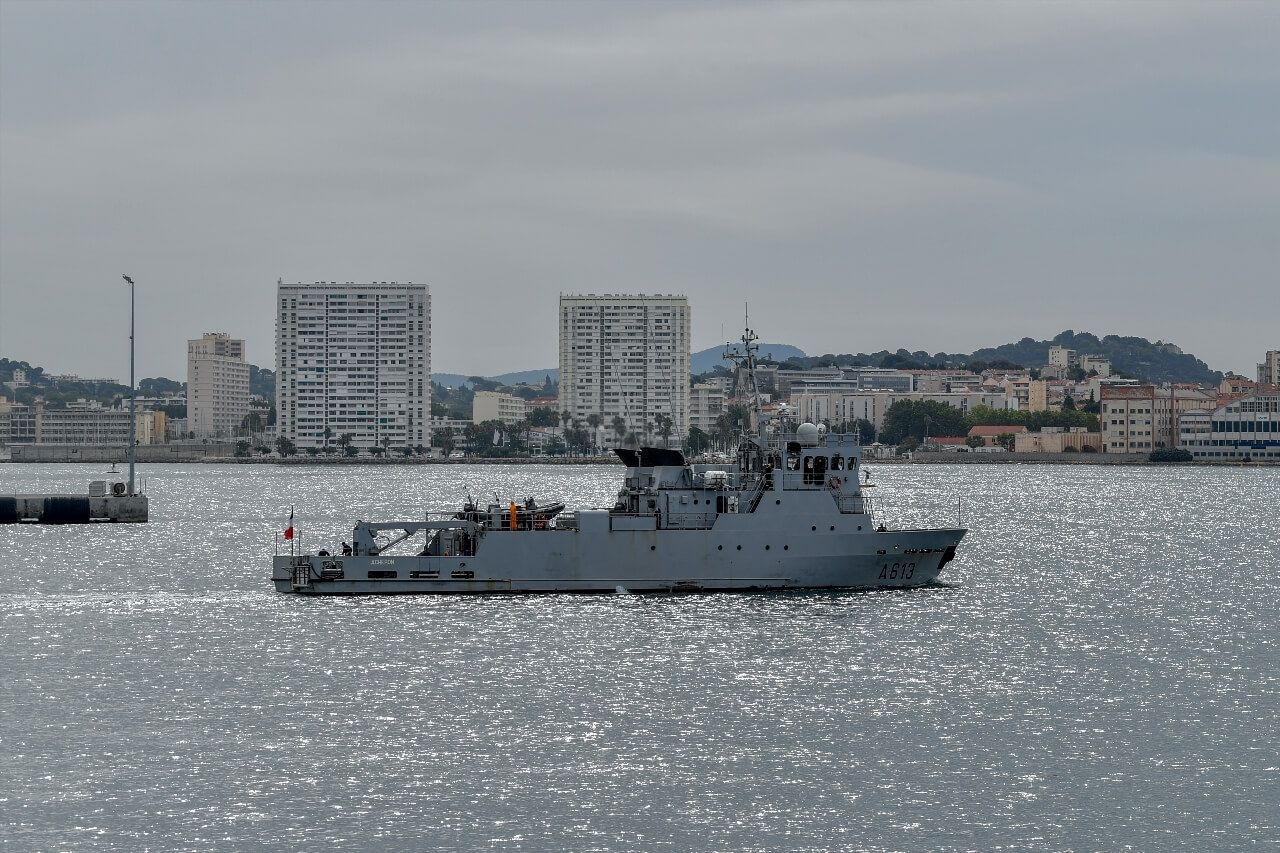
Toulon houses 180,774 inhabitants and ranks 12th, ahead of Reims by only a few dozen inhabitants. Military city par excellence, it hosts the main naval base of the French Navy and the largest in the Mediterranean, whose arsenal occupies a significant part of the coastline. Frigates and nuclear submarines are permanently docked there. The National Maritime Museum of Toulon, installed in the former royal ropery, traces the history of the base since the 17th century with a collection of models and figureheads unique in France. Mont Faron, accessible by cable car from downtown, offers a panoramic view of the roadstead and the Hyères islands, Napoleon made his first forays there during the 1793 siege. The Ryo audio guide of Toulon explores the old military town in 19 audios and 4.6 km.
13. Reims, 180,733 Inhabitants
With 180,733 inhabitants, Reims occupies 13th place, neck and neck with Toulon. City of Coronation, 33 kings of France were crowned there between 816 and 1825, it is also the world capital of champagne, with the great Houses (Taittinger, Veuve Clicquot, Pommery, Ruinart) that each possess underground chalk cellars carved on several floors under the city. The Cathedral Notre-Dame de Reims (Place du Cardinal Luçon, 51100 Reims, rated 4.8/5 on Google for 28,840 reviews) is one of the masterpieces of French Gothic art, with almost all of its 2,300 original statues preserved, including the 13th-century smiling angel that became the city's emblem. The chalk cellars of Reims are UNESCO World Heritage listed. Discover the city of Coronation on foot via the Ryocity of Reims: 21 audios and 4 km.
14. Saint-Étienne, 174,698 Inhabitants
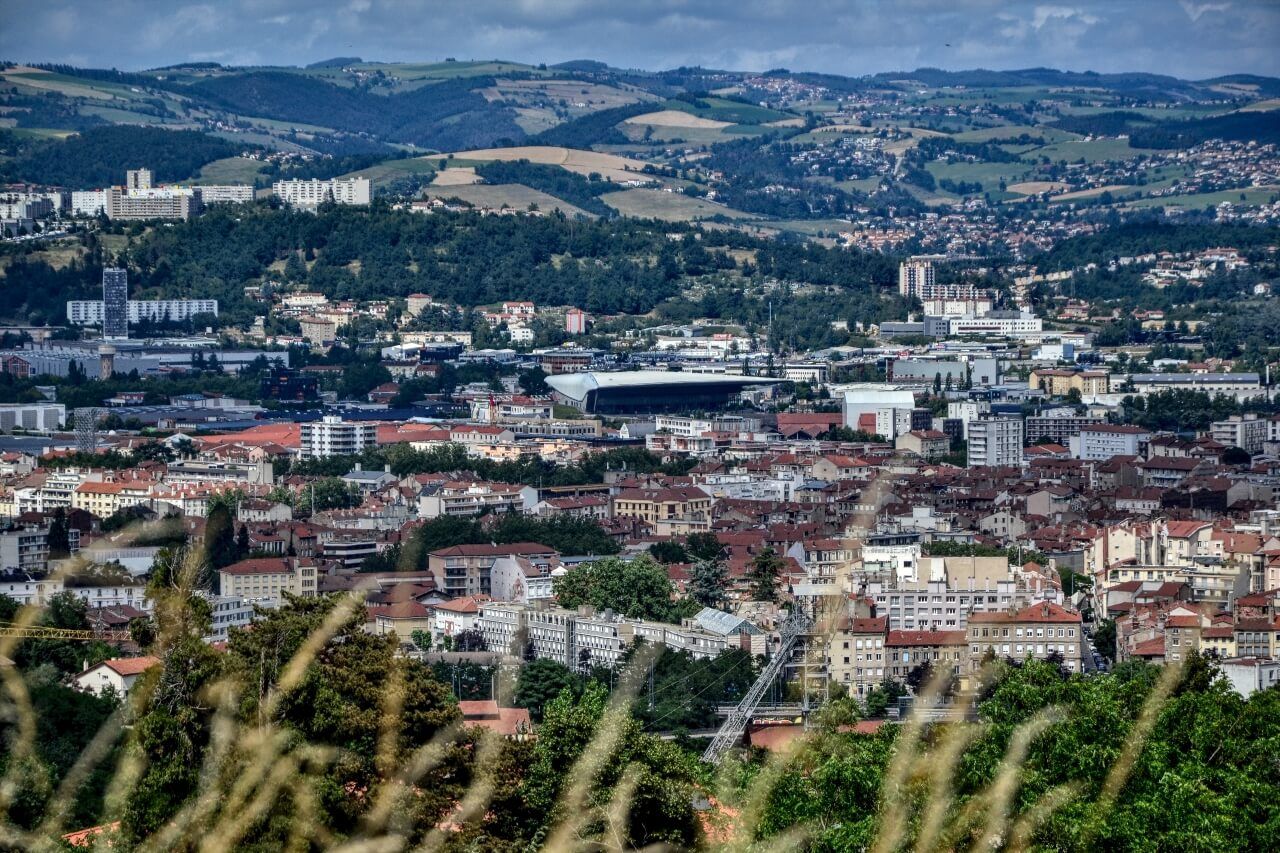
Saint-Étienne brings together 174,698 inhabitants and ranks 14th. The city built its identity on coal and steel: the Saint-Étienne coal basin was one of the most important in France until the last mine closed in 1983. This post-industrial reconversion, painful for several decades, has generated an unexpected creative fabric. Saint-Étienne became in 2010 the first French city designated UNESCO Creative City in the Design category, recognition of its design school and art manufactures. The Museum of Modern and Contemporary Art has one of the most important public collections of modern art in France outside Paris. To walk through this industrial past that invents the future, the Ryocity of Saint-Étienne offers 19 audios and 3.6 km.
15. Le Havre, 168,588 Inhabitants
Le Havre closes this ranking with 168,588 inhabitants. Founded in 1517 by François I to compensate for the silting of Honfleur port, the city was entirely destroyed during the September 1944 bombings then rebuilt between 1945 and 1964 by architect Auguste Perret, pioneer of reinforced concrete. This reconstructed city center has been UNESCO World Heritage listed since 2005, one of the rare worldwide examples of post-war modernist architecture distinguished in this way.
Le Havre is France's second port for container traffic, behind Marseille-Fos. The city also houses the MuMa (André Malraux Museum of Modern Art), whose Impressionist collection, Boudin, Monet, Pissarro, is the second in France after the Musée d'Orsay. Le Havre beach, 2 kilometers long in the city center, is one of the few large sand beaches accessible on foot from a TGV station (2h05 from Paris Saint-Lazare). The Ryo audio tour of Le Havre explores "The Ocean Gateway" in 18 audios and 6.2 km.
Municipalities and Metropolitan Areas: Two Very Different Rankings
The ranking by municipal population measures the administrative municipality alone. INSEE offers a second reading, that of urban attraction areas (AAV), which integrates municipalities where a significant share of workers work in the central hub. These two grids give very different results:
| Municipality Rank | City | Municipality (inhab.) | Metropolitan Area (inhab.) | |---|---|---|---| | 1 | Paris | 2,119,412 | ~12,800,000 | | 2 | Marseille | 892,391 | ~1,900,000 | | 3 | Lyon | 523,314 | ~2,300,000 | | 4 | Toulouse | 519,940 | ~1,400,000 | | 5 | Nice | 360,710 | ~1,100,000 | | 6 | Nantes | 332,515 | ~970,000 | | 7 | Montpellier | 313,712 | ~650,000 | | 8 | Strasbourg | 296,552 | ~840,000 | | 9 | Bordeaux | 271,552 | ~1,000,000 | | 10 | Lille | 240,109 | ~1,500,000 |
Lyon, 3rd municipality, weighs more in metropolitan area than Marseille (2.3 versus 1.9 million). Bordeaux, 9th municipality, approaches one million in its attraction area. These figures remind us that the real economic and demographic weight of a city always extends far beyond its administrative boundaries.
It should also be noted that municipal area can strongly influence comparisons. Marseille, with its 240 km², is one of France's most extensive municipalities among large cities, which explains its relatively moderate population density (about 3,700 inhab./km²) despite its rank as 2nd city. Paris, with only 105 km², displays a density of more than 20,000 inhab./km², one of the highest in the world for a large city.
FAQ
What Is the Largest City in France?
Paris is the largest city in France with 2,119,412 inhabitants within its municipal boundaries (INSEE 2023 census, effective January 1, 2026). If we consider the extended urban area, Paris exceeds 10.7 million inhabitants, making it the only French metropolis of global dimension and one of the twenty largest agglomerations in Europe.
What Is the Second Largest City in France?
Marseille is the second largest city in France with 892,391 inhabitants, far ahead of Lyon which occupies third place with 523,314 inhabitants. The gap between Marseille and Lyon is considerable: the Phocaean City has about 369,000 more inhabitants than the capital of Gaul within their respective municipal boundaries.
Which French City Has the Strongest Population Growth?
Montpellier is the French metropolis that has experienced the strongest growth since the 1990s, having practically doubled its population in thirty years. Toulouse and Rennes follow with growth rates among the highest. Conversely, cities like Saint-Étienne and Reims have long lost inhabitants since the 1970s, although they are beginning a slight recovery.
What Is the Largest City in France by Area?
The ranking by area is very different from that by population. Among large cities, Marseille is one of the most extensive with 240 km². Paris is only the 26th municipality in France by area (105 km²). The largest French municipalities by area are often rural or mountainous municipalities (particularly in the Alps). Area is therefore not a good indicator of demographic size.
Is Toulouse Ahead of Lyon in the Rankings?
The answer depends on the reference census. Toulouse has long closely followed Lyon for 3rd place, with the gap between the two cities counting in a few thousand inhabitants. With 523,314 inhabitants versus 519,940 for Toulouse (INSEE 2023), Lyon retains 3rd place, but the gap is minimal and future revisions could still reverse it. The Lyon Metropolis nevertheless remains more populated than Greater Toulouse in their respective areas.
How Does INSEE Rank French Cities by Population?
INSEE ranks municipalities according to their municipal population, that is, the number of residents within the administrative municipality boundaries. This figure differs from the population of the urban unit (physical agglomeration) or the area of attraction (zone of economic influence). Censuses are conducted annually on a rotating sample of municipalities; final figures are published with a two to three year delay. For 2026, the official data in effect is from the 2023 census.
Which French City Has the Largest Port?
Marseille-Fos is France's first port for overall cargo traffic and the second in the Mediterranean. Le Havre is France's first port specifically for containers. These two ports together handle most of France's maritime trade with the rest of the world, ahead of Dunkerque and Nantes-Saint-Nazaire.
Conclusion
From Paris and its 2.1 million inhabitants to Le Havre and its 168,000 residents, these fifteen municipalities draw a contrasted human geography. Southern metropolises, Marseille, Toulouse, Nice, Montpellier, Bordeaux, capture the majority of national demographic growth. Cities like Reims, Saint-Étienne or Le Havre, long in decline, are reinventing their identity around heritage, design or modern architecture. Each deserves much more than a population figure, and Ryo offers audio-guided tours for all these cities, from Ryocity Paris to tours of Toulon, Reims or Le Havre. Download the Ryo app, choose your city and let yourself be guided at the pace of your curiosity.