
Créé par Emilie, le 20 juin 2026
Votre guide Ryo
The 15 Most Beautiful Gorges to Visit in France
© Shutterstock
France is full of natural wonders sculpted by time and water. Among these geological treasures, gorges offer grandiose spectacles where vertiginous cliffs, turquoise waters and lush vegetation blend to create breathtaking landscapes. From the imposing Verdon gorges to the red gorges of Daluis, through the wild gorges of Tarn, each site reveals unique beauty. Whether you are a hiking enthusiast, climbing passionate, canoe-kayak lover or simply a nature lover, these exceptional canyons promise unforgettable experiences in the heart of the most beautiful landscapes of France.
1. The Verdon Gorges
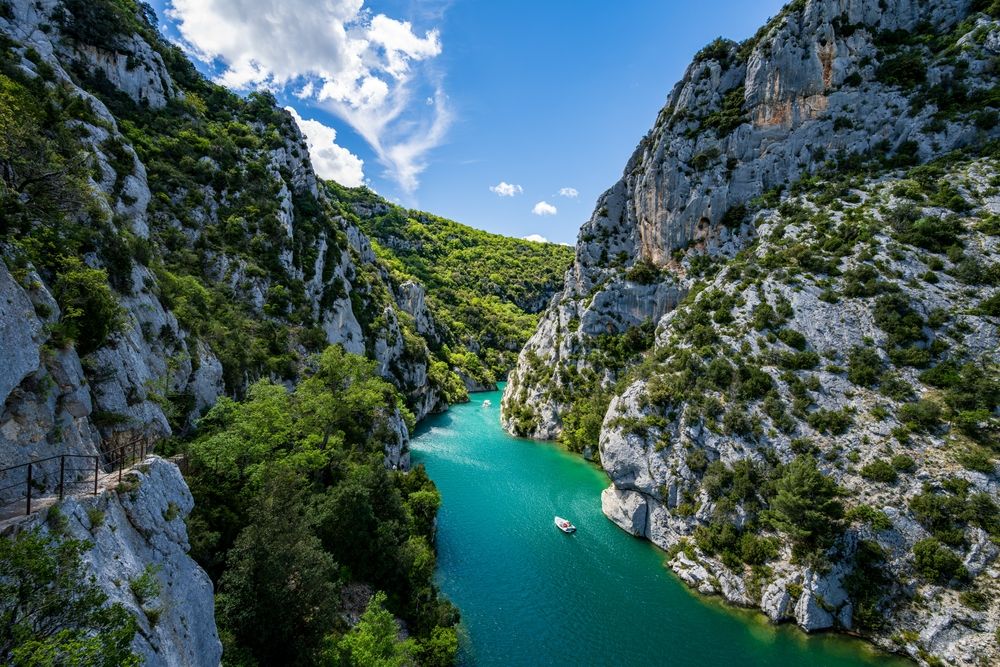
Considered the French "Grand Canyon", the Verdon gorges constitute Europe's largest canyon with nearly 25 kilometers in length and cliffs reaching 700 meters in height. Located between the Alpes-de-Haute-Provence and Var, between Castellane and Moustiers-Sainte-Marie, they offer an absolutely breathtaking natural spectacle.
The Verdon river, of an intense emerald green, winds at the bottom of the canyon before flowing into Lake Sainte-Croix. The translucent waters invite swimming and water sports. Two panoramic routes allow admiring the gorges: the Crêtes road on the right bank and the Sublime corniche on the left bank, offering spectacular viewpoints like Point Sublime or the Escalès viewpoint.
The Verdon gorges are a paradise for outdoor activity enthusiasts: climbing on limestone walls, hiking on the mythical Martel trail or Imbut trail, canoe-kayak on turquoise waters, canyoning in tributaries, paragliding above the canyon. The site attracts millions of visitors from around the world each year to admire this geological wonder classified as a Grand Site of France.
2. The Ardèche Gorges
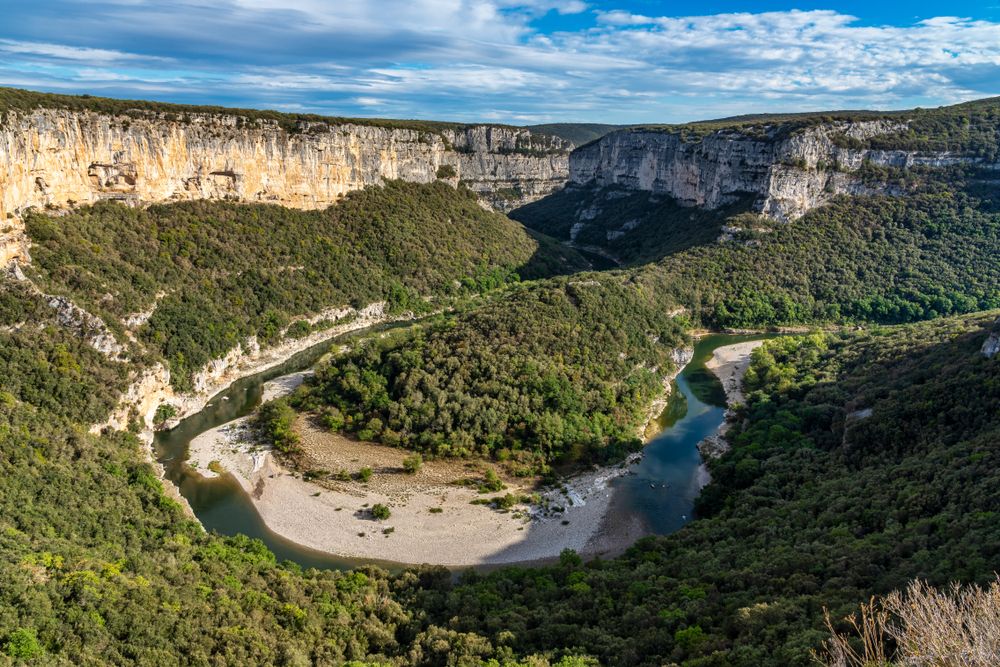
In the heart of a national nature reserve, the Ardèche gorges extend over approximately 30 kilometers between Vallon-Pont-d'Arc and Saint-Martin-d'Ardèche. The site is dominated by the emblematic Pont d'Arc, a natural arch 54 meters high that majestically spans the Ardèche river. This spectacular geological formation marks the entrance to the gorges and constitutes one of France's most photographed natural sites.
The tourist road of the gorges, also called the panoramic route, winds along the cliffs and offers eleven viewpoints with breathtaking views: the Serre de Tourre viewpoint, the Gaud viewpoint, the cathedral or the Templars' balcony. The limestone walls sculpted by erosion form stone cathedrals where numerous species of cliff-dwelling birds nest.
The Ardèche gorges are world-renowned for canoe-kayak descent, a two-day adventure with bivouac by the water. The site also houses the Chauvet cave, UNESCO World Heritage listed, which contains the oldest known cave paintings in the world. Hikers can take the Via Ardèche, a pedestrian trail running along the gorges for 8 kilometers.
3. The Tarn Gorges
Between Lozère and Aveyron, the Tarn gorges deploy their spectacular meanders in the heart of the Grands Causses Regional Natural Park. Over nearly 53 kilometers, the Tarn river has carved an impressive canyon between the Méjean and Sauveterre causses, creating vertiginous cliffs reaching 500 meters in height. The steep walls alternate with pebble beaches and verdant cirques.
The site offers varied and preserved landscapes where charming picturesque villages nestle like Sainte-Enimie, classified among France's Most Beautiful Villages, or La Malène with its Renaissance castle. These medieval boroughs with slate roofs preserve authentic charm and constitute ideal stops to discover local heritage. The gorges also house numerous perched castles and troglodyte hermitages testifying to a rich history.
The descent of the Tarn gorges by traditional boat with local boatmen offers a unique perspective on the cliffs and allows observing fauna and flora. Thrill seekers will appreciate canyoning, climbing on limestone walls or paragliding. The Causse Méjean corniche trail offers a spectacular hike dominating the gorges by 400 meters.
4. The Kakuetta Gorges
Hidden in the heart of the Pyrénées-Atlantiques, the Kakuetta gorges constitute one of the most spectacular canyons in the Basque Country. Located in the municipality of Sainte-Engrâce in the Soule valley, these narrow and deep gorges extend over about 2 kilometers. The limestone walls rise to more than 200 meters in height, creating a mysterious and impressive atmosphere.
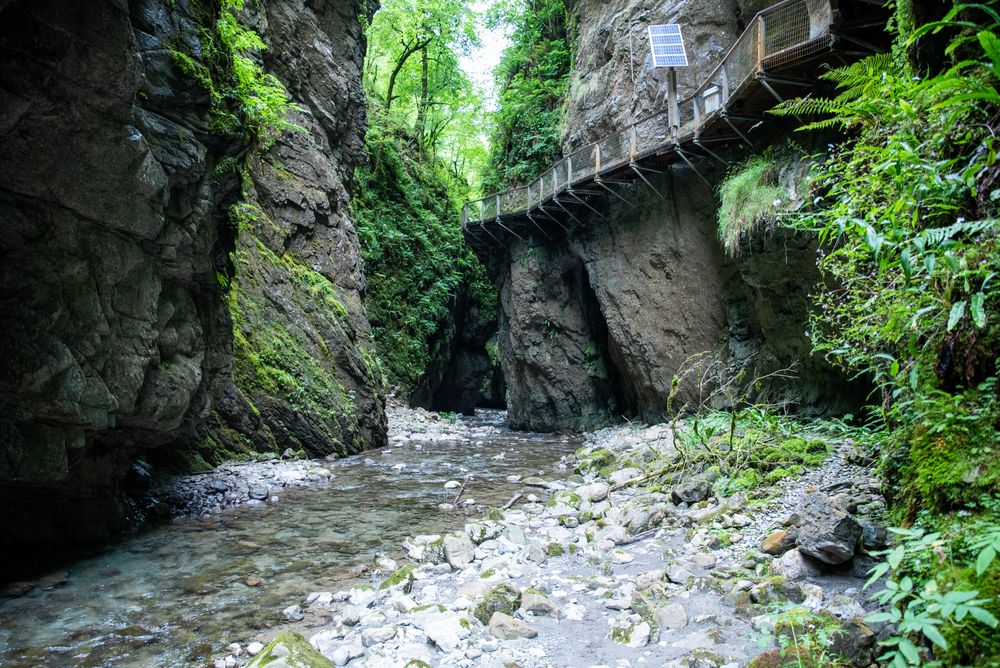
The developed route follows the torrent that has sculpted these cliffs for millennia. Metal footbridges allow safe movement above the crystal-clear waters. Lush vegetation covers the walls: mosses, ferns, lichens create a green setting in this mineral cathedral. The permanent humidity and freshness that reign in the gorges make it a particularly pleasant place during hot summer days.
The visit route, accessible to all, leads to an impressive 20-meter waterfall and opens onto a cave decorated with stalactites and stalagmites. Light effects on the humid walls create a magical atmosphere. The site, open from March to November, constitutes an essential nature excursion in the Pyrenees. The more athletic can continue to the Kakuetta chasm, explorable only with a professional guide.
5. The Hérault Gorges
Labeled Grand Site of France, the Hérault gorges extend southeast of the Séranne massif in Occitanie. Between arid lands and limestone cliffs, the Hérault river has carved a spectacular canyon offering exceptional panoramas. The site benefits from remarkable natural and cultural richness, combining landscape beauty, historical heritage and character villages.
The medieval village of Saint-Guilhem-le-Désert, classified among France's Most Beautiful Villages and major stop on the Santiago de Compostela pilgrimage route, majestically dominates the gorges. Its Romanesque abbey founded in the 9th century, UNESCO World Heritage listed, constitutes an architectural jewel. The Devil's Bridge, also UNESCO Heritage listed, has spanned the Hérault since the 11th century and ranks among France's oldest medieval bridges still in use.
The Hérault gorges offer numerous activity possibilities: swimming in clear waters, canoe-kayak, hiking on the GR653 or gorges trail, climbing on limestone cliffs. Pebble beaches nestled in the meanders' hollows constitute havens of freshness much appreciated in summer. The site's exceptional biodiversity shelters numerous protected species, notably raptors and remarkable Mediterranean flora.
6. The Gardon Gorges
Located in the Gard, the Gardon gorges are inseparable from the famous Pont du Gard, masterpiece of Roman architecture classified as UNESCO World Heritage. This monumental 1st-century aqueduct, 49 meters high, majestically spans the Gardon river and constitutes one of the world's best-preserved ancient monuments. The three levels of arches are reflected in the clear waters, creating an unforgettable architectural and natural spectacle.
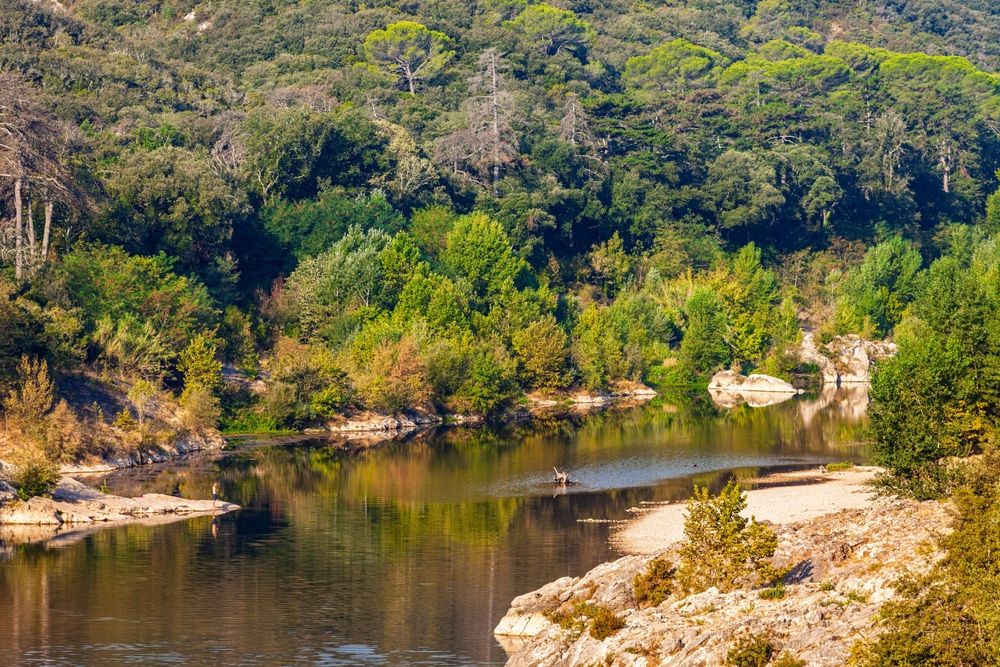
The gorges extend from Collias to Remoulins over about 15 kilometers, offering a preserved natural setting in the heart of Mediterranean garrigue. The steep limestone cliffs dominate the turquoise waters of the Gardon, a capricious river that can become torrential during Cévennes floods. The site benefits from remarkable biodiversity with typically Mediterranean fauna and flora: holm oaks, Aleppo pines, thyme, rosemary perfume the air while beavers, herons and kingfishers populate the banks.
Canoe-kayak descent constitutes the flagship activity to discover the Gardon gorges. The 8-kilometer route from Collias allows admiring the Pont du Gard from the river, offering a unique perspective on this historic monument. Pebble beaches invite swimming and picnicking. Marked hiking trails run along the gorges, notably the garrigue trail offering beautiful panoramic viewpoints. Themed guided tours are offered to discover local fauna, particularly beavers that have recolonized the site.
7. The Galamus Gorges
At the border between Catalan and Cathar countries, the Galamus gorges offer a striking spectacle where the road seems to defy the laws of gravity. Located between the Aude and Pyrénées-Orientales departments, these narrow and deep gorges have been carved by the Agly through the limestone rocks of the Fenouillèdes massif. The vertiginous cliffs sometimes narrow to just a few meters, creating an impressive atmosphere.
The road that crosses the gorges, carved into the cliff face in the 19th century, constitutes an engineering feat. Only 3 meters wide, it winds through spectacular passages where rock overhangs the void. This bold route offers vertiginous viewpoints over the canyon and stream flowing below. The hermitage of Saint-Antoine-de-Galamus, clinging to the rocky wall, has dominated the gorges since the 8th century and constitutes a remarkable spiritual site accessible after 100 steps carved in rock.
Descending the gorges by canoe-kayak on the Agly waters allows appreciating all the site's majesty from a unique viewpoint. The route alternates calm passages and technical rapids, offering sensations and discovery of the canyon's wild beauty. Climbers appreciate the numerous climbing routes on limestone walls. The site is classified and protected to preserve its ecological richness, notably the griffon vulture colonies that nest in the cliffs. The Galamus mill testifies to the region's artisanal heritage.
8. The Jonte Gorges
Between Lozère and Aveyron, the Jonte gorges constitute one of the natural jewels of the Grands Causses Regional Natural Park. Extending over about 20 kilometers between the Méjean causse and Noir causse, these gorges less deep than neighboring Tarn ones are no less spectacular. The dolomitic cliffs with orange and gray tints create a mineral landscape of striking beauty, where chaotic rock formations with tormented shapes are drawn.
The village of Le Rozier, nestled at the confluence of the Jonte and Tarn, constitutes the ideal starting point to explore the gorges. The picturesque road that runs along the river offers magnificent panoramas over the cliffs and rock formations. The limestone walls shelter a griffon vulture colony successfully reintroduced in the 1970s, alongside monk vultures, Egyptian vultures and golden eagles. Observing these majestic raptors in flight constitutes a fascinating spectacle for ornithology enthusiasts.
The Jonte gorges offer exceptional playground for climbing enthusiasts, with numerous equipped routes of all levels. Hikers will appreciate the Cross trail that climbs to a viewpoint offering panoramic view over the gorges and perched village of Peyreleau. The site benefits from preserved tranquility, far from neighboring Tarn gorges' crowds, allowing total immersion in Causses wild nature. The clear waters of the Jonte shelter trout and crayfish, delighting fishermen.
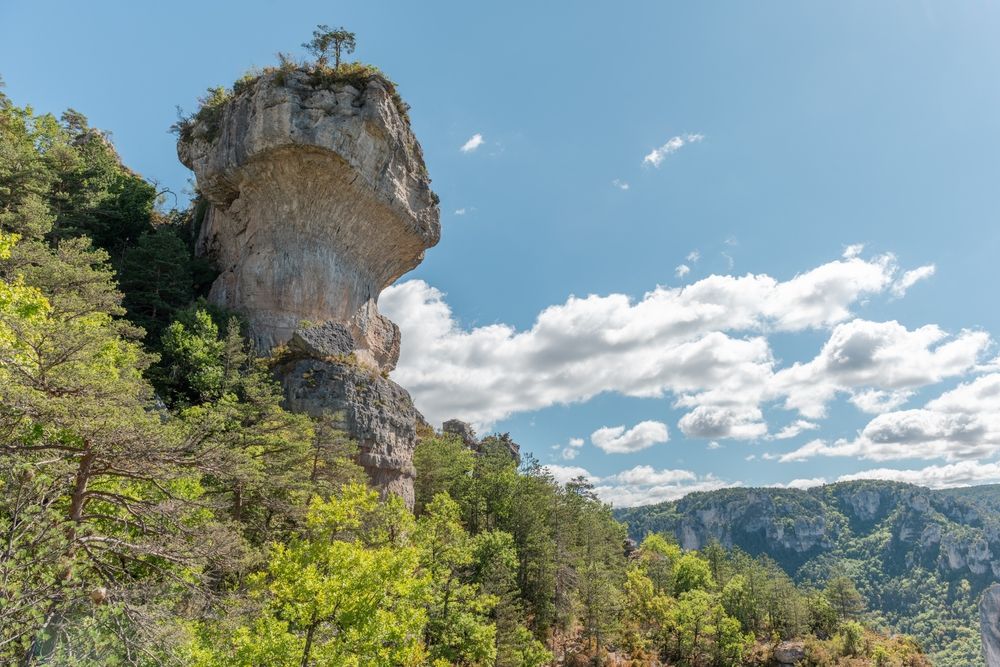
9. The Holzarte Gorges
In the heart of the Basque Country and Pyrénées-Atlantiques, the Holzarte gorges offer a grandiose natural spectacle and an unforgettable hike. Located in the municipality of Larrau, these deep gorges have been carved by the Olhadoko Erreka torrent flowing 180 meters below. The vertical cliffs rise on either side of a narrow canyon, creating a vertiginous and wild atmosphere in the heart of a beech and fir forest.
The site's main attraction is the spectacular Holzarte footbridge, suspended 180 meters above the void. This 67-meter metal footbridge, built in 1920 for forest exploitation, now allows hikers to cross the gorges safely while enjoying a vertiginous plunging view over the torrent. Crossing this footbridge, which oscillates slightly when passing, constitutes an impressive experience reserved for people without vertigo.
The hike to the Holzarte footbridge, accessible from Larrau, extends over about 10 kilometers round trip and requires 3 to 4 hours of walking. The trail winds through magnificent primary forest, crosses pastures where Manech sheep graze and offers superb viewpoints over Pyrenean peaks. The route also allows discovering vestiges of former forestry activity with old wooden slides used to slide trunks. Autumn, when foliage takes on flamboyant colors, constitutes a particularly spectacular period for this hike.
10. The Doubs Gorges
At the natural border between France and Switzerland, the Doubs gorges constitute an exceptional natural site labeled Grand National Site. Between Franche-Comté and Neuchâtel canton, the Doubs has carved a spectacular canyon in the heart of the Jura massif, creating grandiose landscapes where limestone cliffs, deep forests and tumultuous waters harmoniously combine. The site extends over several kilometers, offering a succession of breathtaking panoramas.
The major attraction of the Doubs gorges is the impressive Saut-du-Doubs waterfall, 27 meters high. This majestic waterfall, located between Villers and Moron lakes, deploys all its power in a rocky amphitheater where mist created by foaming water. The spectacle is particularly striking in spring during snowmelt, when flow reaches its maximum. Developed viewpoints on French and Swiss sides offer complementary views of this natural wonder.
Discovery of the Doubs gorges is ideally done by boat from Villers-le-Lac. This 45-minute commented cruise allows admiring the vertiginous cliffs that dominate the river, natural caves and lush vegetation covering the walls. After docking at the waterfall's base, visitors can take a trail leading to different viewpoints offering spectacular panoramic views. Hikers will also appreciate the Death Ladders trail, vertiginous path carved in rock in the 19th century, which runs along the gorges and offers breathtaking panoramas. The site shelters remarkable fauna and flora, notably the boreal lynx reintroduced in the Jura massif.
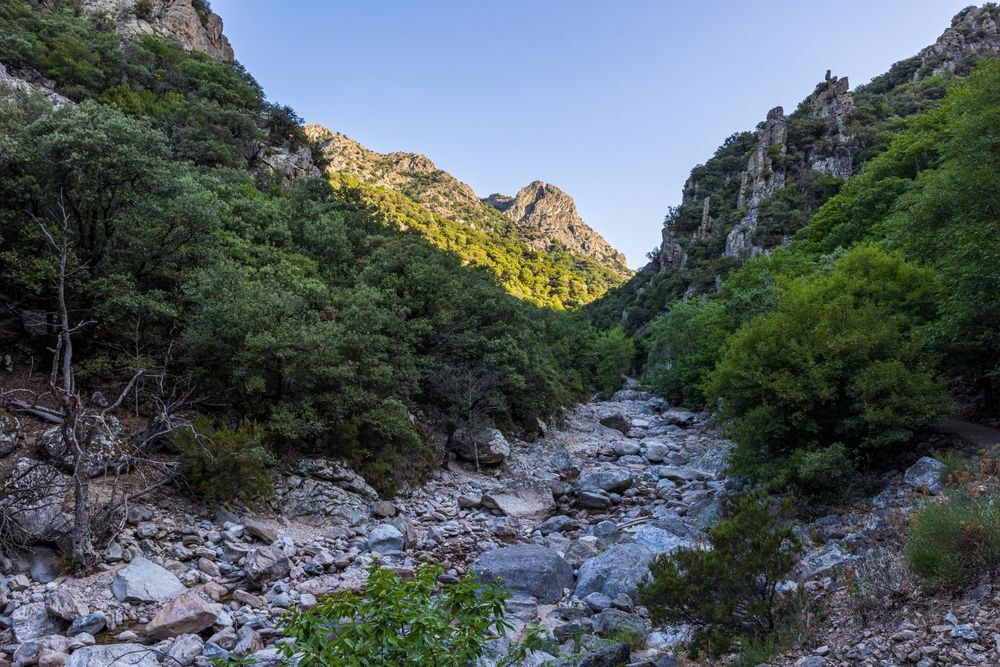
11. The Héric Gorges
In the heart of the Haut-Languedoc Regional Natural Park, in the Hérault department, the Héric gorges constitute an exceptional natural site still relatively preserved from mass tourism. Located in the municipalities of Mons-la-Trivalle and Rosis, these wild gorges have been carved by the Héric stream in the metamorphic rocks of the Caroux massif. Unlike limestone gorges, the walls here consist of gneiss, ancient rock offering gray and pink tones particularly photogenic.
The Héric gorges trail, about 6 kilometers long, goes up the torrent bed through a succession of clear water pools, waterfalls and giant's cauldrons sculpted by erosion. The hike, accessible and family-friendly, alternates passages by the water's edge and more airy sections dominating the stream. The path winds between gneiss blocks polished by water, crosses wooden footbridges and offers numerous swimming spots in fresh and transparent water, particularly appreciated during hot summer days.
The site presents major geological interest with its basaltic organs and rocky chaos shaped by millions of years of erosion. Mediterranean and mountain fauna and flora cohabit in this remarkable ecosystem: centenary chestnuts, beeches, holm oaks coexist while salamanders, trout and aquatic insects populate the stream. The gneiss walls attract numerous climbers who appreciate the rock quality and multiple equipped routes of all levels. The Héric hamlet, accessible at the hike's end, houses some restored stone houses testifying to former pastoral habitat.
12. The Aveyron Gorges
Between Tarn-et-Garonne and Aveyron, the Aveyron gorges deploy their meanders over more than 60 kilometers from Laguépie to Montauban. The Aveyron river has carved a spectacular limestone canyon with steep cliffs, creating a contrasted landscape where wild nature and exceptional historical heritage mix. The site offers a succession of grandiose panoramas where brilliant white rock dominates the Aveyron's emerald waters.
The gorges route reveals remarkable medieval heritage with numerous perched villages and castles dominating the valley. Saint-Antonin-Noble-Val, one of France's Most Beautiful Villages, displays its medieval streets and remarkable 12th-century Romanesque house. Bruniquel castle stands proudly on its rocky spur, while the bastides of Puycelsi and Cordes-sur-Ciel crown the surrounding heights. These architectural jewels testify to the valley's strategic importance in the Middle Ages.
The Aveyron gorges constitute a privileged playground for outdoor activities. The river's calm waters lend themselves ideally to canoe-kayak, allowing original discovery of gorges and villages from water. The 8 to 12-kilometer descent between Saint-Antonin and Cazals offers a varied route accessible to all. Cyclists will appreciate numerous mountain bike and road bike circuits that crisscross the gorges, notably the V86 cycle route that uses former railway lines. The Bosc cave, located at Cajarc, allows admiring millenary stalactites and stalagmites in an underground fairyland setting.
13. The Fier Gorges
Located in Haute-Savoie at Lovagny, only 10 kilometers from Annecy, the Fier gorges constitute a remarkable natural site developed for visits since 1869. This exceptional geological curiosity allows discovering a narrow and deep canyon where the Fier has carved its bed in Urgonian limestone for millennia. The vertical walls sometimes narrow to less than 3 meters wide while rising more than 70 meters high, creating an impressive and mysterious atmosphere.
The visit is carried out on metal footbridges fixed to the rocky wall, suspended 25 meters above the tumultuous Fier waters. The 250-meter developed route allows admiring giant's cauldrons, circular pools carved by pebble swirling, and impressive geological strata that tell the story of the Alps formation. Light effects on humid and mossy walls create a fairyland atmosphere, reinforced by water grumbling echoing in the canyon's narrowness.
The Fier gorges site also presents major paleontological interest with the discovery of the "sea of rocks", limestone block chaos from a gigantic prehistoric rockslide. The developed geological route allows understanding karst erosion phenomena and gorges formation. In immediate proximity, Montrottier castle, 13th-century medieval fortress perched on a rocky promontory, offers an enriching cultural visit complement. The combined visit of gorges and castle allows spending a full day discovering Haute-Savoie's natural and historical heritage.
Download the audio-guided circuit to discover Annecy on foot and autonomously
After exploring the magnificent Haute-Savoie gorges, continue your discovery by visiting Annecy, the Venice of the Alps. Ryo offers you a complete audio-guided itinerary with 20 points of interest to explore the old town, romantic canals, castle and lakeshores in complete autonomy. The application guides you step by step through picturesque streets and reveals the history and anecdotes of this exceptional alpine city.
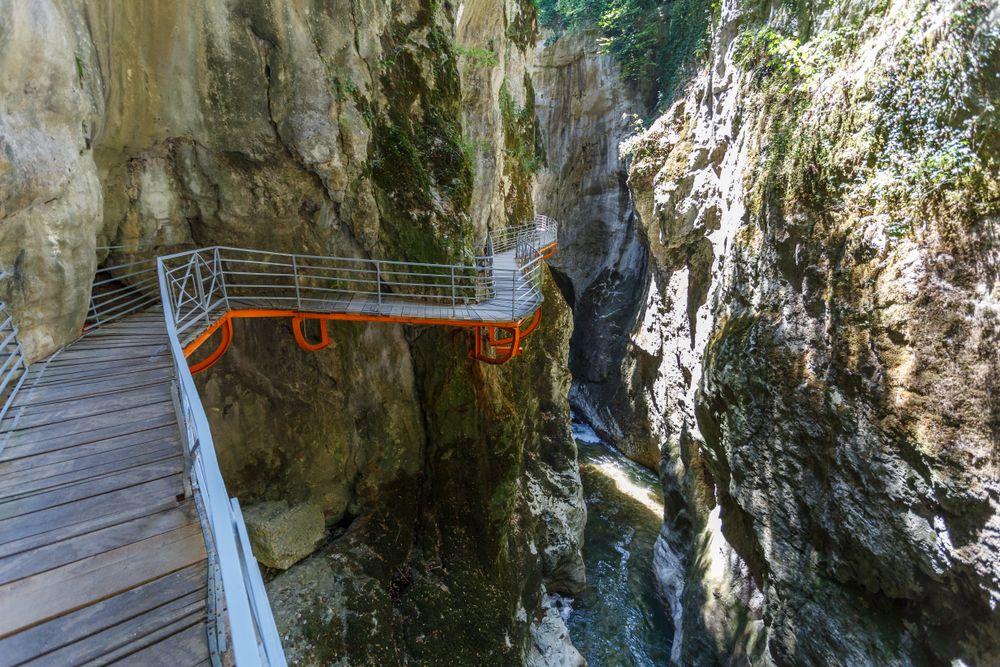
14. The Red Gorges of Daluis
In the Alpes-Maritimes, between the municipalities of Daluis and Guillaumes, the Daluis gorges offer an absolutely unique geological spectacle in France. Nicknamed the "Colorado Niçois", these spectacular gorges distinguish themselves by the intense wine-red color of their rocky walls. This exceptional tint comes from pelites, sedimentary rocks rich in iron oxide dating from the Permian, about 250 million years ago. The striking contrast between the flaming red of cliffs, deep blue sky and green vegetation creates a landscape of extraordinary beauty.
Departmental road 2202 winds through the gorges' heart over about 6 kilometers, offering a succession of breathtaking panoramas. Carved into the cliff face, it crosses 17 tunnels dug in rock and crosses the famous Mariée bridge, elegant engineering work spanning the Var. The vertiginous walls rise more than 900 meters high, creating an impressive canyon where the Var river has sculpted its bed for millions of years. The road offers natural viewpoints allowing admiring all the site's majesty.
The site is classified as Regional Natural Reserve to protect its exceptional geological and ecological richness. The gorges shelter remarkable biodiversity with flora adapted to extreme conditions: lavenders, junipers, Scots pines colonize the slopes. Raptors, notably golden eagle, short-toed snake eagle and peregrine falcon, nest in inaccessible cliffs. Hikers can take the old Amen village trail, allowing dominating the gorges from heights and appreciating the canyon's magnitude. The site also constitutes a paradise for photographers, particularly at sunrise and sunset when grazing rays set the red cliffs ablaze with magical light.
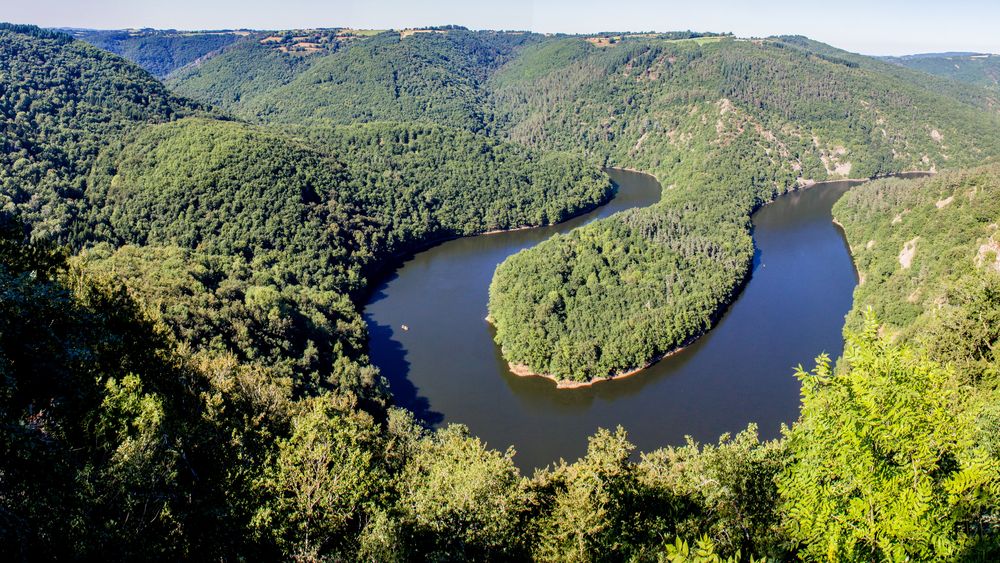
15. The Sioule Gorges
Between Puy-de-Dôme and Allier, the Sioule gorges deploy their sinuous meanders in the heart of the Massif Central. From the Queuille dam to Ébreuil, the Sioule river has carved deep and verdant gorges offering spectacular landscapes classified as Natura 2000 Zone and Natural Zone of Ecological, Faunistic and Floristic Interest. The basaltic cliffs alternate with wooded slopes, creating a preserved natural setting of great ecological richness.
The Queuille meander constitutes one of Auvergne's most famous viewpoints. From the developed viewpoint, the panorama embraces a perfect Sioule meander that draws a verdant peninsula 200 meters below. This emblematic landscape, photographed by thousands of visitors each year, symbolizes Auvergne gorges' wild beauty. The Queuille Castle-Rock, medieval fortress perched at the precipice's edge, also offers a vertiginous viewpoint over the gorges.
The Sioule gorges are a paradise for fishermen, the river sheltering an important population of brown trout and grayling in its clear and oxygenated waters. Canoe-kayak enthusiasts appreciate varied routes alternating technical rapids and calm sections allowing landscape admiration. The Fades viaduct, vertiginous railway work culminating at 132 meters above the Sioule, constitutes one of Europe's highest railway bridges and offers an impressive spectacle. Numerous hiking trails crisscross the gorges, notably the GR4 that runs along the river for several kilometers, allowing discovery of this preserved territory's natural and heritage riches.
In conclusion, French gorges constitute exceptional nature destinations where landscape beauty, geological richness and outdoor activity diversity combine. From the turquoise waters of Verdon to the red cliffs of Daluis, from Pyrenean canyons to Doubs meanders, each site reveals unique character shaped by millions of years of erosion. Whether you are an experienced hiker, whitewater sports enthusiast, geology passionate or simply seeking preserved nature, these 15 spectacular gorges offer unforgettable experiences in the heart of France's most beautiful landscapes. Don't hesitate to consult our audio-guided circuits to discover surrounding cities and regions and enrich your exploration of these natural wonders.
FAQ – France's Most Beautiful Gorges
What is the best period to visit gorges in France?
The ideal period extends from May to September to fully enjoy water activities and hiking. Spring offers abundant waterfalls thanks to snowmelt, while summer allows swimming. Autumn seduces with its flamboyant colors and lesser crowds. Avoid winter when some sites are closed and weather conditions can be difficult.
What activities can be practiced in French gorges?
Gorges offer a multitude of activities: canoe-kayak, hiking, climbing, canyoning, swimming, via ferrata, mountain biking, fishing, paragliding and wildlife observation. Each site offers specific activities adapted to its configuration. Verdon and Ardèche gorges are particularly renowned for canoeing, while Jonte gorges excel for vulture observation.
Are gorges accessible to families with children?
Many gorges offer amenities adapted to families: easy trails, secured footbridges, picnic areas and supervised swimming beaches. Fier, Kakuetta and Héric gorges offer accessible routes even with young children. For canoeing, favor short and calm routes with children who can swim. Always check access conditions and safety recommendations before your visit.
Should you book in advance to visit gorges?
For highly frequented sites like Verdon gorges in high season, it is strongly recommended to book accommodations and supervised activities several weeks in advance. Some sites like Fier or Kakuetta gorges require an entrance ticket that is better booked online. For canoe-kayak descents, a reservation 2-3 days in advance generally suffices outside July-August. Hiking trails are free access but think about leaving early to avoid crowds and heat.