
Créé par Emilie, le 4 juin 2026
Votre guide Ryo
The Most Beautiful Castles of France to Visit in 2026
© Shutterstock
France has over 40,000 recorded medieval fortifications, but the castles in France that truly deserve the journey are much rarer: those that combine a vertiginous natural position, a history of siege or resistance, and sufficient preservation for the stones to still speak. From the ramparts of Carcassonne to the Cathar fortresses clinging to Pyrenean ridges, from the Norman colossus of Château-Gaillard to the royal keep of Vincennes ten minutes from Paris, French medieval military heritage has no equivalent in Western Europe. To get your exploration off to a good start, the Ryo audio guide tour of Carcassonne immerses you in twenty-seven narrated stations along the ramparts and lists, a way to understand the whole before heading to other fortresses.
This tour of France's medieval fortresses has some surprises in store. A castle built over forty years at the exact moment when gunpowder artillery made it obsolete, yet which never endured the slightest assault. Cathar castles perched at over 800 meters altitude whose builders remain partly unknown. A royal fortress whose 52-meter keep is the highest in France, ignored by most Parisians. A medieval building site open since 1997 where stone masons are rebuilding identically, without machines, a 13th-century enclosure. Here are the fortresses worth the detour, classified by geographical area to facilitate organizing your stops.
Carcassonne: The Largest Medieval Fortress in Europe
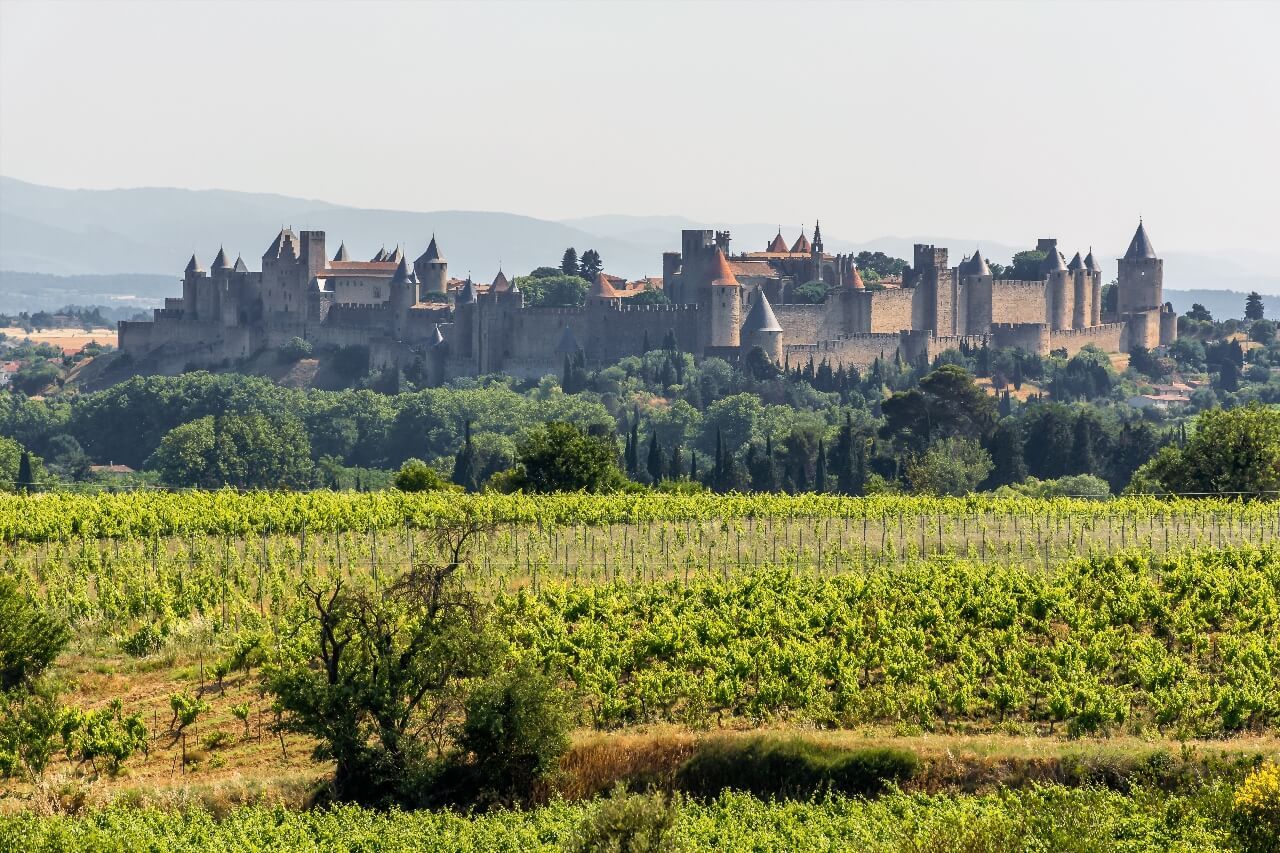
The Cité de Carcassonne (1 Rue Viollet le Duc, 11000 Carcassonne, rated 4.7/5 on Google for 91,824 reviews) is the most visited medieval fortress in France, and probably the best preserved in Western Europe. The figures are dizzying before you even cross the first drawbridge: 3 kilometers of double ramparts, 52 towers and bastions, two concentric enclosures separated by the lists, those military circulation corridors that allowed defenders to enfilade attackers who had breached the first wall.
The history of the Cité extends far beyond the Middle Ages. The first fortifications date back to the Romans, the Visigoths enlarged them, the Arabs briefly occupied, the Counts of Toulouse consolidated. But it was the crusade against the Albigensians (1209-1229) that definitively inscribed Carcassonne in history: Simon de Montfort seized it in 1209 and made it the symbol of Capetian domination over Languedoc. Raymond-Roger Trencavel, Viscount of Carcassonne, died in his own dungeons a few months after the surrender. These stones have absorbed tragedies that tourist guides often mention too quickly.
In the 19th century, Prosper Mérimée, Inspector of Historic Monuments, saved the Cité from demolition that was seriously considered. Eugène Viollet-le-Duc then directed the restoration from 1853, with documentary rigor that is still debated: the slate roofs of the towers are judged "hardly southern" by some historians, who would have preferred flat tile roofs. The fact remains that without Viollet-le-Duc, only stone quarries would remain.
Practically, access to the lists and streets of the Cité is free. Only the count's castle requires a ticket: 11 euros full price, free for under-18s and 18-25 year olds from the European Union. Arrive before 9am in summer to avoid saturation, from 10am, the central streets become impassable. In the evening, when the buses leave, the orange stones of the towers take on a light that photographs never quite faithfully render. From Toulouse, the Cité can be reached in 55 minutes via the A61 motorway, making it a perfectly feasible day trip.
The Ryo audio guide of Carcassonne covers twenty-seven stopping points in 2h30, from the count's castle to the north lists, a route you can take at your own pace without depending on the schedules of conventional guided tours.
Haut-Koenigsbourg: 755 Meters Above the Alsace Plain
The Haut-Koenigsbourg castle (Château du Haut-Koenigsbourg, 67600 Orschwiller, rated 4.7/5 on Google for 42,083 reviews) dominates the Alsace plain from 755 meters altitude, above the vineyards and half-timbered villages. On clear days, the view extends to the German Black Forest and Swiss Alpine peaks. This panorama alone would justify the trip; the castle's history adds a layer of political complexity that is not always suspected.
The original medieval fortress dates back to the 12th century, but what you see today results from an almost complete reconstruction ordered by Wilhelm II of Germany between 1900 and 1908, entrusted to architect Bodo Ebhardt. The gesture was as much political as archaeological: Alsace, annexed in 1871, needed to be offered a symbol of imperial power. The enterprise remains one of the most documented and controversial restorations in Europe, and one of the most visited, with about 500,000 visitors per year.
The interior collections are solid: armor, medieval weapons, reconstructed siege engines, Renaissance furniture. Prefer weekdays off-season to appreciate the volumes without crowds. From Strasbourg, where the Ryocity of Strasbourg offers 32 narrated stations on Alsatian history, Haut-Koenigsbourg can be reached in one hour's drive. Colmar is even closer: 25 kilometers from the city center.
Château-Gaillard: Richard the Lionheart's Defiant Fortress
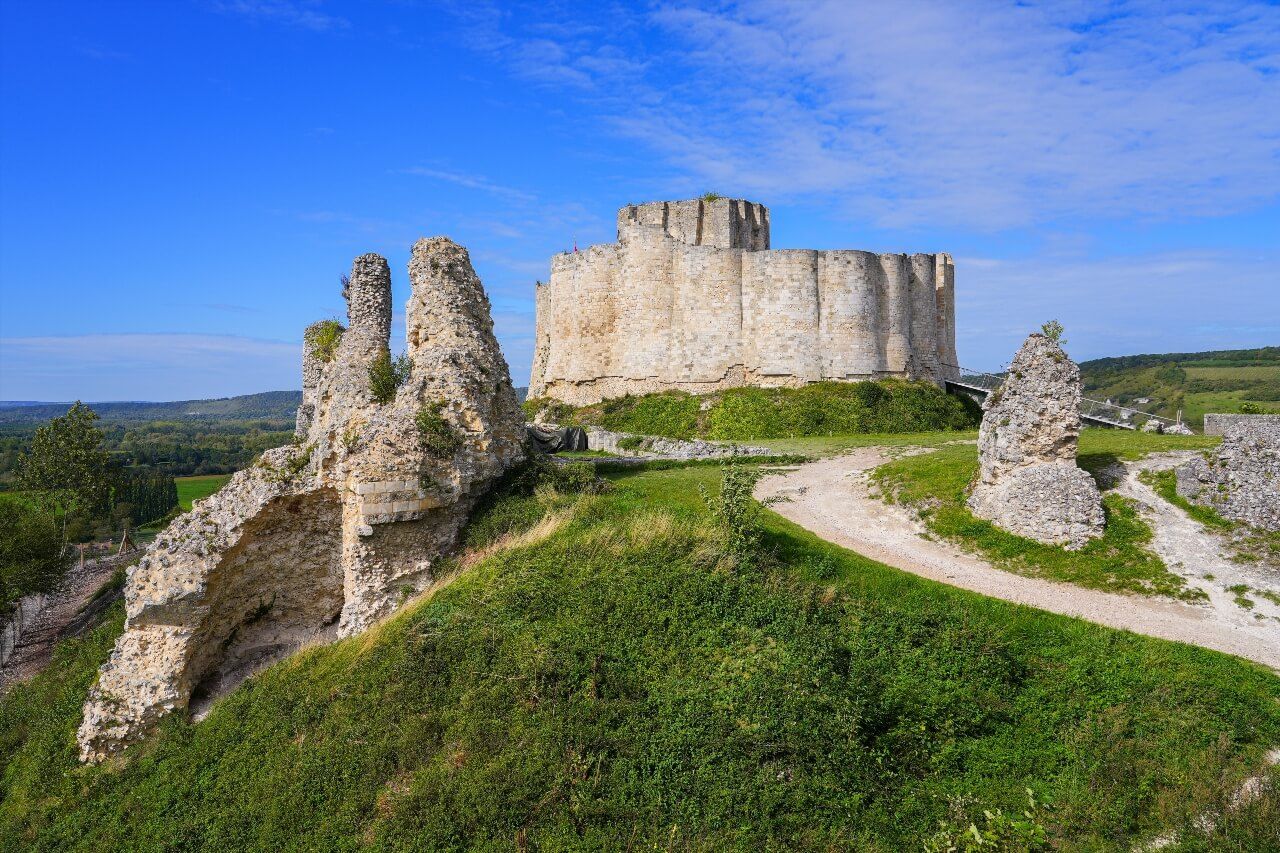
Château-Gaillard (Château-Gaillard, 27700 Les Andelys, rated 4.5/5 on Google for 5,044 reviews) is Normandy's most famous castle, built in less than a year between 1196 and 1198, an unprecedented logistical performance that would have mobilized up to 6,000 workers and cost the equivalent of two years of the English kingdom's revenues. Richard the Lionheart personally supervised the construction site and pronounced a phrase about it that sums up his temperament well: "I could hold it even if it were made of butter."
Richard died in 1199 without ever knowing that his fortress would fall six years later. In 1204, Philip Augustus took Château-Gaillard after an eight-month siege that remained famous in medieval military annals: the besiegers finally entered through the latrines, a detail that makes medievalists smile but mainly reveals the determination of both sides. Taking the castle allowed France to definitively annex Normandy.
Today, the ruins stand on a meander of the Seine, above Les Andelys. The view over the valley is striking. Most of the visit is outdoors: the chemise, the cylindrical keep and the ditches carved in white rock remain very legible. From Rouen, whose Ryo audio guide traces Norman history in 27 stages, Château-Gaillard can be reached in 45 minutes via the D313 which runs along the Seine.
Vincennes Castle: The Giant That Paris Forgets
Vincennes castle (Avenue de Paris, 94300 Vincennes, rated 4.5/5 on Google for 17,946 reviews) is the great royal fortress that the capital ignores. Yet, 10 minutes from the ring road by metro line 1, its 52-meter keep is the highest medieval keep preserved in Europe, information that surprises even native Parisians.
Built between 1361 and 1370 under Charles V, Vincennes was the main royal residence before Versailles. Henry V of England died there in 1422. Cardinal Mazarin breathed his last there in 1661. The Marquis de Sade was imprisoned there. Mirabeau wrote his first letters from behind bars there. Few buildings in France concentrate as many decisive moments of national history in such a compact space. The Sainte-Chapelle of Vincennes, contemporary with that of the royal palace, deserves a separate stop. Free entry on the first Sunday of the month except July-August.
To prepare your passage through Paris, the Ryocity of Paris offers 18 narrated stations on the capital's great monuments, Vincennes ideally combines with a day in the historic center.
Pierrefonds: Napoleon III's Medieval Illusion
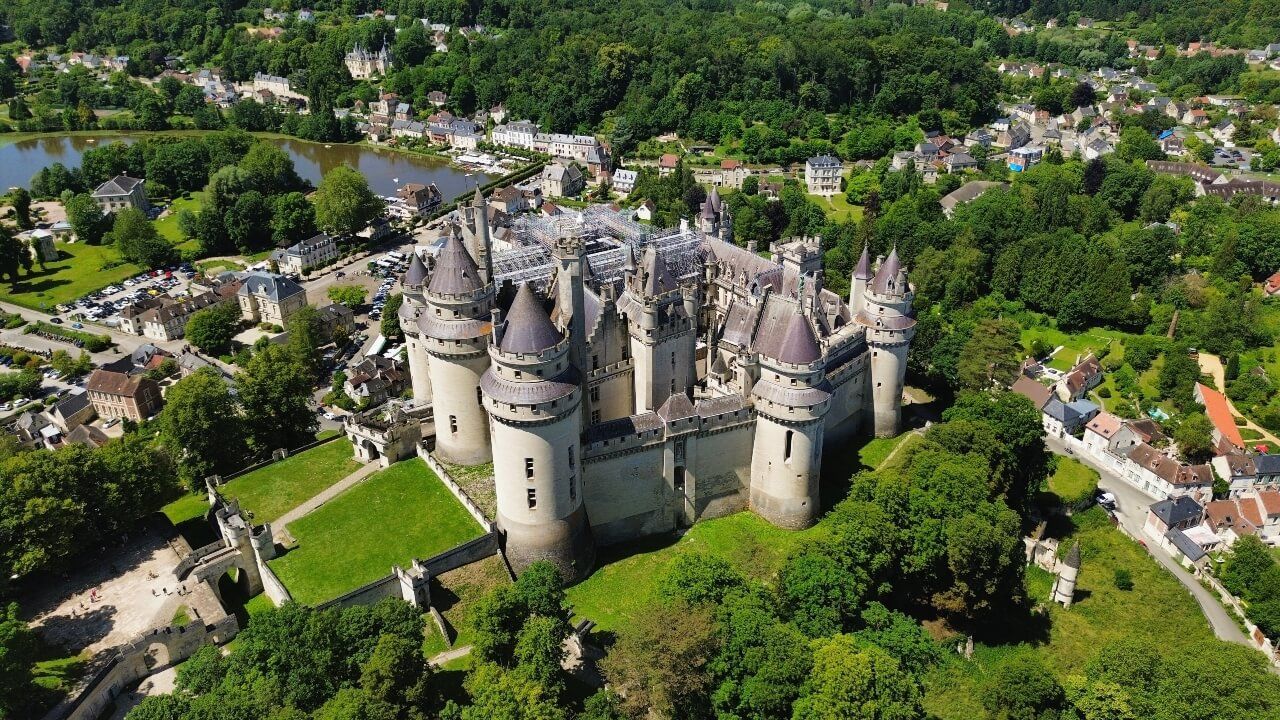
Pierrefonds castle (1 Rue Viollet le Duc, 60350 Pierrefonds, rated 4.6/5 on Google for 15,569 reviews) is a perfectly successful illusion. In 1857, Napoleon III commissioned Viollet-le-Duc to transform a 14th-century ruin into an imperial residence. The result is a 19th-century castle disguised as a medieval castle, and the imposture is so convincing that the British television series Merlin used it as the main setting for its five seasons.
This does not diminish the interest of the place. The massive towers, restored keep and honor court illustrate what a 19th-century architect imagined the ideal medieval castle to be: a document as much about Viollet-le-Duc's thinking as about the romantic aesthetic of his century. Pierrefonds can be visited in less than two hours and is located 80 kilometers from Paris, in the forest of Compiègne. The small town of Compiègne itself, whose Ryocity traces 17 historical stages, is 14 kilometers on the return route.
The Cathar Castles: Peyrepertuse, Quéribus and Montségur
The Cathar castles constitute one of the most striking experiences of French medieval heritage. These are not royal fortresses built by skilled architects with royal budgets, these are desperate defenses built on impossible ridges, sometimes reached on hands and knees, and which served as last refuges for a religion that the Church of Rome wanted to erase.
Peyrepertuse, the Fortress of Vertigo
Peyrepertuse castle emerges from a limestone ridge at 800 meters altitude in the Corbières, over a length of 300 meters with a width sometimes less than 10 meters. Seen from the plain, the fortress blends with the rock, it seems to have grown naturally from it. Seen from the inside, it reveals an impressive defensive organization: two distinct castles, lower Peyrepertuse and the castrum San Jordi, connected by a staircase carved in the rock that defenders could cross in one minute and that attackers could not take head-on.
Peyrepertuse only fell to the crusaders in 1240, without combat, by simple capitulation, the garrison having understood that a prolonged siege on this rock without sufficient water meant death by dehydration before any breach in the walls. Capetian France installed a royal garrison that further reinforced the defenses. Allow 1h30 round trip walk from the parking, with steep sections. Hiking boots are essential.
Quéribus, the Last Cathar Stronghold
Quéribus castle is perched at 728 meters altitude on a rocky peak visible for dozens of kilometers around. It was the last Cathar fortress to fall, in 1255, ten years after the pyre of Montségur. A Cathar deacon named Chabert de Barbaira had found refuge there with a few faithful and continued to celebrate the rites of the forbidden religion.
The interior of Quéribus holds an architectural surprise: a Gothic hall with a single central column, of unexpected elegance for a war fortress. The view from the rampart walk over the Corbières and, on clear days, to the Mediterranean Sea, remains one of the most beautiful in Languedoc. Quéribus and Peyrepertuse are 12 kilometers apart as the crow flies, and the road connecting them through the Galamus gorges is worth the journey itself. Perpignan, whose Ryo Ryocity covers Catalan history in 19 stages, is 55 kilometers away: a good starting point for exploring the southern Cathar castles.
Montségur, the Pyre of the Perfect
Montségur castle (09300 Montségur, rated 4.6/5 on Google for 2,440 reviews) is not the most spectacular of the Cathar castles in architectural terms, these are only thick walls on a pog, a rocky peak at 1,207 meters altitude. It's the history that makes it unsurpassable. On March 2, 1244, after ten months of siege, the defenders of Montségur capitulated. The 220 Cathar perfecti who refused to abjure their faith were burned alive at the foot of the rock, in what history has retained as one of the most documented religious massacres of the Western Middle Ages.
The ascent to the castle takes 45 minutes from the village. The museum of Catharism, at the foot of the trail, is essential to understand what you are going to see. Foix, whose castle is described below, is 30 kilometers away: the two sites can easily be combined in one day.
The Fortress of Salses: Between Two Worlds
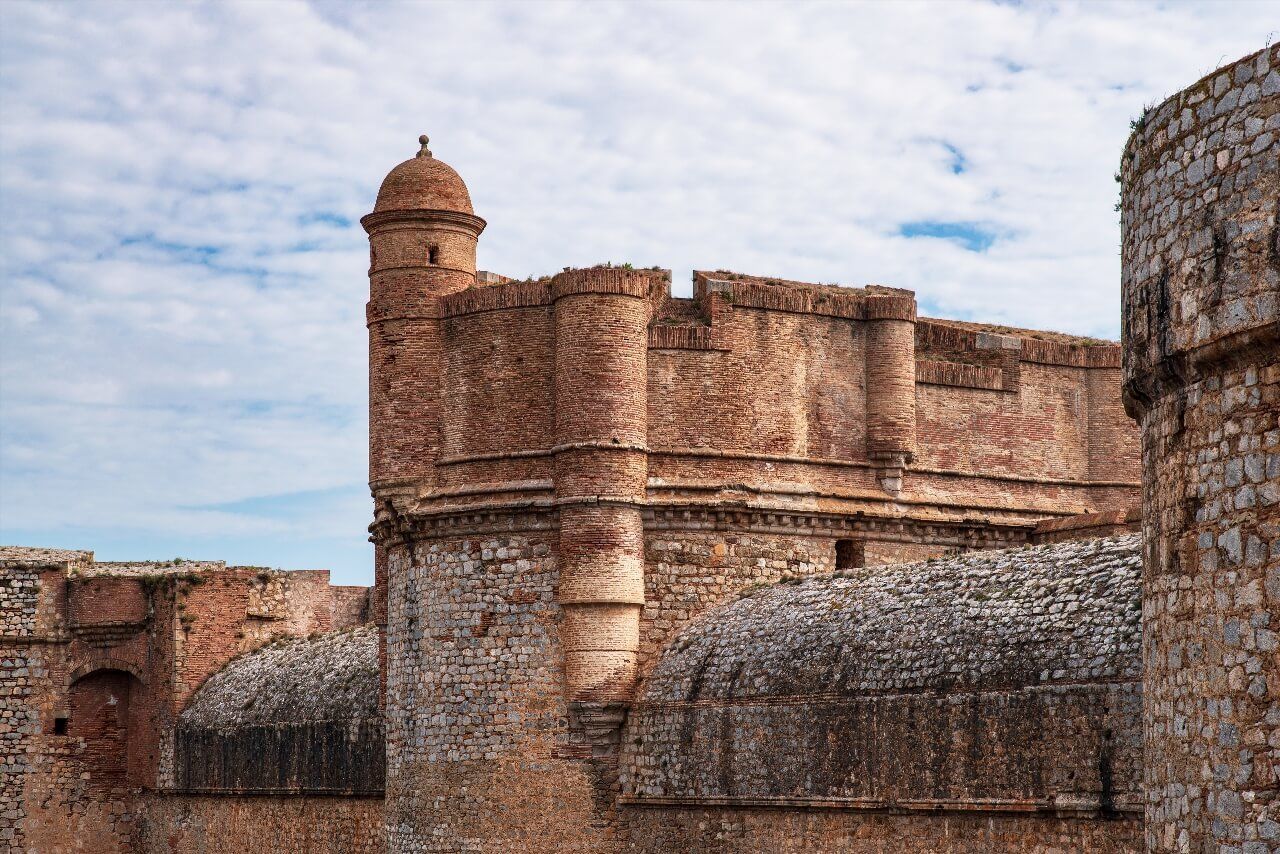
The fortress of Salses (66600 Salses-le-Château, rated 4.5/5 on Google for 8,684 reviews) is an anomaly in the landscape of French castles: built by the Spanish between 1497 and 1503 to defend access to Aragon from the kingdom of France, it represents the transition between the medieval castle and the bastioned fortification of the gunpowder era. Its walls are 9 meters thick in some places, designed to absorb cannonballs, not deflect them.
The fortress remains intact, its moats are filled with water, its underground passages run hundreds of meters beneath the ramparts. A guided tour is recommended to understand the interior defensive system, not easily readable without explanation. Salses is located 15 kilometers north of Perpignan, accessible by car in 20 minutes: half a day is enough for a complete visit before going up to the Cathar castles.
Foix Castle: The Emblem of Ariège
Foix castle (Domaine du Château, 09000 Foix, rated 4.4/5 on Google for 7,812 reviews) is one of the most immediately recognizable in France. Its three towers, one square from the 10th century, one round from the 14th, one hexagonal from the 15th, emerge from a limestone rock planted at the confluence of the Ariège and Arget, giving the impression that the town simply grew around it over the centuries.
The County of Foix was one of the last bastions of resistance to the Albigensian Crusade. Gaston IV of Foix stood up to Simon de Montfort without the fortress ever being taken, an inviolability that forged a reputation extending far beyond mere military architecture. Foix castle became a symbol of independence for the entire Pyrenean foothills, a status it retains in Ariège memory.
The Ariège departmental museum, installed in the towers since 1930, offers a prehistoric and medieval collection enriched by archaeological excavations of the site. The view from the battlements over the town and the first Pyrenean ridges is worth the climb alone. Allow 1h30 for a complete visit including the museum. In summer, sound and light shows animate the exterior walls on Friday and Saturday evenings. Toulouse, natural entry point for Ariège with its Ryo audio guide tour of 23 stages, is 1h15 drive away.
Castelnaud and Beynac: Medieval Périgord Face to Face
The black Périgord concentrates on a few kilometers of Dordogne valley a density of medieval fortifications unequaled in France. Two castles face each other from their respective rocky peaks, separated by the river: Castelnaud on the English side, Beynac on the French side. Throughout the Hundred Years War, they observed each other.
Beynac, the French Sentinel
On a rocky peak overlooking the Dordogne by 150 meters, Beynac castle alone summarized the Franco-English front line in 14th-century Périgord. The mandatory guided tour for the interior is particularly well conducted: guides describe with precision the logistics of life in a cliff castle, water supply from the river below, food storage for a wintering garrison, organization of guard duties.
The Périgord States hall, where the region's barons met, retains part of its original decoration. The village of Beynac below, classified among the most beautiful in France, deserves an extra hour. From the road along the Dordogne, the silhouette of the castle at sunset is one of the most photographed images of the Southwest.
Castelnaud and Its Museum of Medieval Warfare
Castelnaud castle (Castelnaud, 24250 Castelnaud-la-Chapelle, rated 4.6/5 on Google for 14,888 reviews) houses the Museum of Medieval Warfare, one of the most complete in Europe on medieval weaponry. Trebuchets, mangonels and siege crossbows reconstructed full-size occupy the inner courtyards. The weapons and armor collections from the 12th to 15th centuries, interactive educational devices and training weapon reproductions that children can handle make Castelnaud one of the best designed sites for families in this field.
Sarlat-la-Canéda, whose intact medieval center is one of the most remarkable in France, is 12 kilometers away on a road along the river. Castelnaud + Beynac + Sarlat constitute a dense and coherent medieval day in the black Périgord, three sites at different scales that complement each other without repetition.
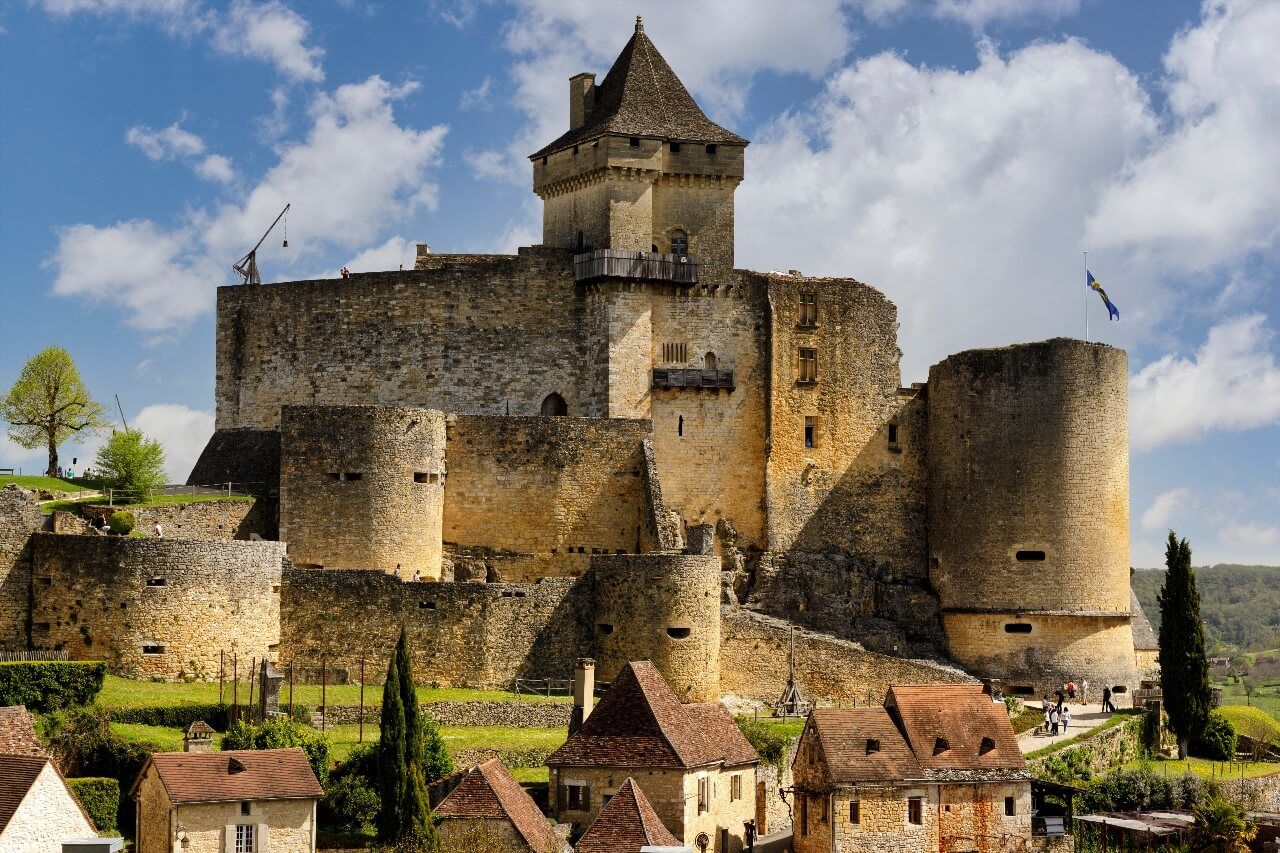
Bonaguil: The Last Castle of France
Bonaguil castle (Château de Bonaguil, 47500 Saint-Front-sur-Lémance, rated 4.6/5 on Google for 5,101 reviews) is a fascinating anomaly in the history of French military architecture. Built between 1483 and 1520, precisely at the time when gunpowder made these fortresses militarily obsolete, it represents the last great medieval fortress built in France. And paradoxically one of the best preserved, precisely because it never endured the slightest siege.
Its builder, Bérenger de Roquefeuil, was an eccentric and quarrelsome nobleman who devoted forty years of his life to building this impregnable fortress, in a context where no one made war this way anymore. Five towers, a keep with a pentagonal plan designed to deflect cannonballs, a barbican, gun loopholes for arquebusiers, the design integrates new firearms while maintaining medieval morphology. It's the object of a technological transition frozen in stone. Bonaguil is located in a wooded valley 7 kilometers from Fumel, in Lot-et-Garonne.
The Fortress of Loches: The Oldest Keep in Europe?
The fortress of Loches holds a title that few sites in Europe can contest. Its keep, built under Foulques Nerra, Count of Anjou, at the beginning of the 11th century, is one of the oldest keeps still standing in Europe. The fortress stretches over almost 2 kilometers from the medieval royal lodge to the Martelet, the dungeons where Louis XI imprisoned his political enemies in iron cages.
It was also at Loches that Joan of Arc convinced Charles VII, in June 1429, a few weeks after lifting the siege of Orléans, to continue the war towards Reims for the coronation. The Agnès Sorel tower, which houses the effigy of the royal favorite, completes a site that condenses two centuries of Capetian history in less than an hour's walk. Loches is located 40 kilometers south of Tours, in a green Indre valley.
Coucy-le-Château: The Vanished Colossus
Coucy castle (Coucy-le-Château-Auffrique, 02380 Coucy-le-Château-Auffrique, rated 4.6/5 on Google for 1,350 reviews) no longer exists, and it's perhaps for this reason that it still obsesses historians of medieval military architecture. Its keep, built between 1225 and 1230 for Enguerrand III de Coucy, reached 54 meters in height and 31 meters interior diameter, the largest cylindrical keep ever built in the Middle Ages in Europe. The Coucy family motto, engraved on the walls, gave the measure of their ambition: "Neither king am I, nor prince, nor duke, nor count either, I am the lord of Coucy."
In April 1917, the retreating German army blew up the keep with 28 tons of explosives. Only the curtain walls and tower bases remain, but even in ruins, Coucy castle is striking in scale. Visiting the ruins is free. 20 kilometers from Soissons, Coucy deserves half a day for those interested in what medieval military architecture was capable of accomplishing at its peak.
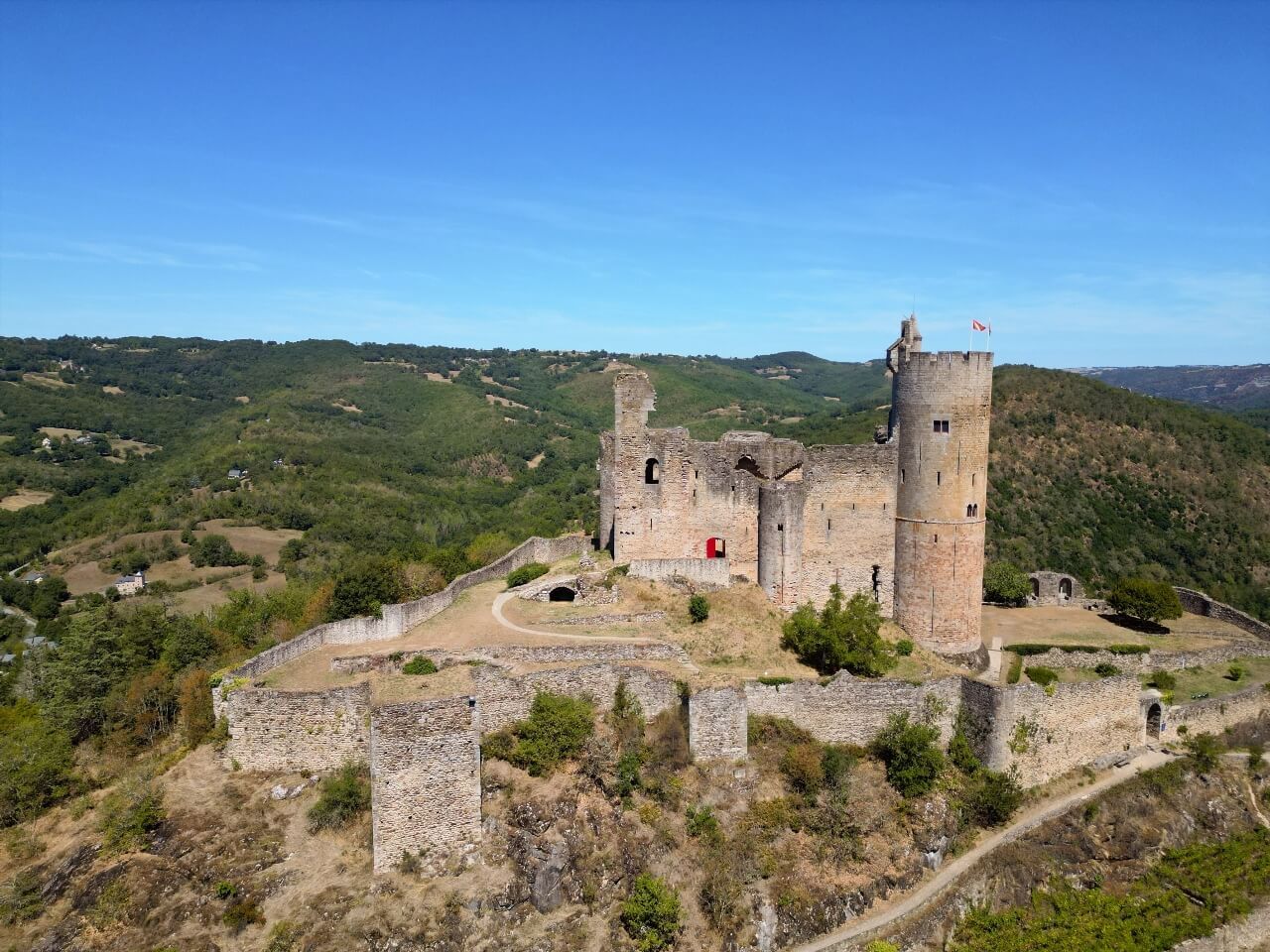
Najac Castle: The Spur of Aveyron
Najac castle emerges at the end of a rocky spur 258 meters above the Aveyron valley. The approach from the village, by a path that gradually climbs along the ridge, is one of the most impressive in France.
Built in the 13th century by Alphonse de Poitiers, brother of Louis IX, after the crusade against the Albigensians, it embodied Capetian domination over recently conquered lands. The cylindrical keep of 40 meters in height, pierced with double-bay Gothic windows extremely rare in military architecture, testifies to an era when the castle was beginning to open towards residential use. Prefer the visit in late afternoon for the golden light over the valley.
The Fortress of Fougères: Guardian of the Breton Border
The fortress of Fougères is one of the largest medieval fortifications in Europe by area. Built from the 11th century and constantly enlarged until the 15th, it has 13 towers and protected the border between the Duchy of Brittany and the Kingdom of France.
What strikes at Fougères is the location: the castle occupies the bottom of a valley, unlike almost all medieval fortresses that seek heights. Defense here relied on an artificial pond and the Nançon river forming a natural barrier. Victor Hugo, passing through in 1836, was so impressed that he inscribed Fougères in his novel Ninety-Three. The upper town offers the best views of the ensemble. The visit lasts two hours.
Sedan Castle: The Largest in Europe
Sedan castle holds an undisputed record: with 35,000 m² of floor space, it is the largest medieval castle in Europe. The fortress evolved continuously from the 15th to 17th centuries to respond to new artillery constraints: ear bastions, flanking, progressive thickening of walls.
Sedan is not a frozen medieval castle, it's a laboratory of defensive architecture evolution over two centuries. Part of the interior is converted into a hotel, which allows spending the night in former seigneurial apartments. For the guided tour, allow 1h30 to 2 hours.
Guédelon: A 13th Century Castle Under Construction Since 1997
The Guédelon construction site is a unique experience in Europe: since 1997, stone masons, carpenters, blacksmiths and rope makers have been rebuilding identically, without modern machines, a 13th-century castle in Burgundy, in the Puisaye forest. The sandstone quarry is exploited on site, ropes are braided by hand, mortars prepared according to medieval recipes.
Guédelon is not a static museum but a living construction site, with craftsmen who answer visitors' questions while working. The castle visibly advances from season to season: you can see what your visit from last year has produced since. The ensemble is open from April to November. Medieval Burgundy, whose heart is Dijon with its Ryo audio guide tour of 24 stations, is 80 kilometers northeast of Guédelon.
Practical Tips for Organizing Your Visits
Organize Your Itinerary by Zone
France is large, and castles are scattered across the entire territory. Rather than attempting a complete tour of France all at once, organize your trip by geographical zone:
- Languedoc-Pyrénées: Carcassonne + Cathar castles (Peyrepertuse, Quéribus, Montségur) + fortress of Salses + Foix castle. Allow 4 to 5 days from Toulouse or Perpignan.
- Black Périgord: Castelnaud + Beynac + Bonaguil + fortress of Loches going up towards the Loire. 2 to 3 days from Sarlat or Périgueux.
- Normandy and Île-de-France: Château-Gaillard + Vincennes + Pierrefonds + Coucy. 2 days from Paris or Rouen.
- Alsace: Haut-Koenigsbourg alone or combined with Fleckenstein castle 30 kilometers away. 1 day from Strasbourg or Colmar.
- Brittany: Fougères, to combine with visiting Rennes.
Prices and Tickets
Most major castles depend on the Centre des Monuments Nationaux (CMN), which applies consistent pricing: free for under-18s, free for 18-25 year olds from the European Union, full price between 7 and 12 euros depending on sites. An annual CMN subscription, around 50 euros, pays for itself after two or three visits.
Cathar sites (Peyrepertuse, Quéribus, Montségur) are managed by municipalities or associations and charge between 5 and 8 euros. Bonaguil, managed by the municipality of Saint-Front-sur-Lémance, is about 8 euros.
Season and Visiting Conditions
July and August concentrate most visitors. Carcassonne can welcome up to 10,000 people per day in peak season, a density that harms the quality of the experience. The best period is May-June or September-October: sites are open, crowds reasonable, late afternoon light on stones is most beautiful. Some sites close from November to March; always check schedules before traveling, especially for Cathar castles whose access can be made dangerous by wind or snow.
FAQ
What is the largest castle in France?
Sedan castle (Ardennes), with 35,000 m² of floor space, is the largest medieval castle in Europe. The Cité de Carcassonne surpasses all others in enclosure length with its 3 kilometers of double ramparts. These two sites measure different things: one the surface area, the other the fortified perimeter.
Which are the best preserved castles in France?
Carcassonne, thanks to Viollet-le-Duc's restoration, is the most intact medieval fortress overall. The fortress of Salses (Pyrénées-Orientales) is remarkably well preserved with its water-filled moats. Bonaguil, never having been taken by assault nor used after the 17th century, has kept a large part of its defensive structures intact. Vincennes, maintained as a royal residence until the 17th century, has kept its complete keep.
Which castle was never taken?
Bonaguil castle (Lot-et-Garonne) never underwent the slightest siege despite its elaborate defensive design, it was built at a time when no one was waging war this way anymore. More famously, Foix castle resisted all attempts by Simon de Montfort during the Albigensian Crusade in the 13th century. The fortress of Salses also did not fall by direct military siege during the Thirty Years' War.
Can you visit castles for free in France?
Yes. Vincennes castle is free on the first Sunday of the month except July-August. The ruins of Coucy-le-Château are freely accessible. Château-Gaillard at Les Andelys is partly accessible without a ticket (exteriors). Many sites offer free admission for under-18s and 18-25 year olds who are EU citizens. The Cathar Sites Passport covers several Corbières castles with an advantageous combined ticket.
What is the difference between a castle and a fortress?
A castle is a construction with exclusively military and defensive residential purposes, designed to withstand a siege: moats, arrow slits, flanking towers, single controlled access. A Renaissance or classical castle sacrifices defense for residence and representation: large windows, facades open to gardens, decorative moats. The transition occurred in France between the 14th and 16th centuries with the generalization of gunpowder artillery, which made vertical walls vulnerable.
What is the oldest castle in France?
The oldest medieval fortifications still standing date back to the 10th century. The square master tower of Foix castle dates from the 10th century. The fortress of Loches has a keep dated to the early 11th century, built under Foulques Nerra, Count of Anjou, one of the oldest keeps still standing in Europe. Many sites claim to hold this title, as precise dating of the earliest construction phases often remains debated by archaeologists.
How long does it take to visit the castles of France?
A complete tour of France of the castles presented in this article requires at least two weeks, organizing visits by geographical zones. If you have a week, focus on one region: Languedoc-Pyrénées (Carcassonne + Cathar castles + Foix) offers the highest density, with five to six top sites in four days of travel from Toulouse or Perpignan.
Conclusion
From the ramparts of Carcassonne to the Cathar peaks of the Corbières, from the keep of Vincennes to the colossal ruins of Coucy, the castles of France tell two centuries of military architecture through stones that have not finished speaking. Each deserves real visiting time, not a timed hour between two stops, but half a day where you take time to understand why they built here, why so high, why so thick.
To prepare your first stops, the Ryocity of Carcassonne is the best starting point: 27 audio guides, 2h30 of route, and an introduction to medieval defensive logic that will make other fortresses much more readable.