
Créé par Emilie, le 20 juin 2026
Votre guide Ryo
How to travel aboard the legendary Orient Express?
© Shutterstock
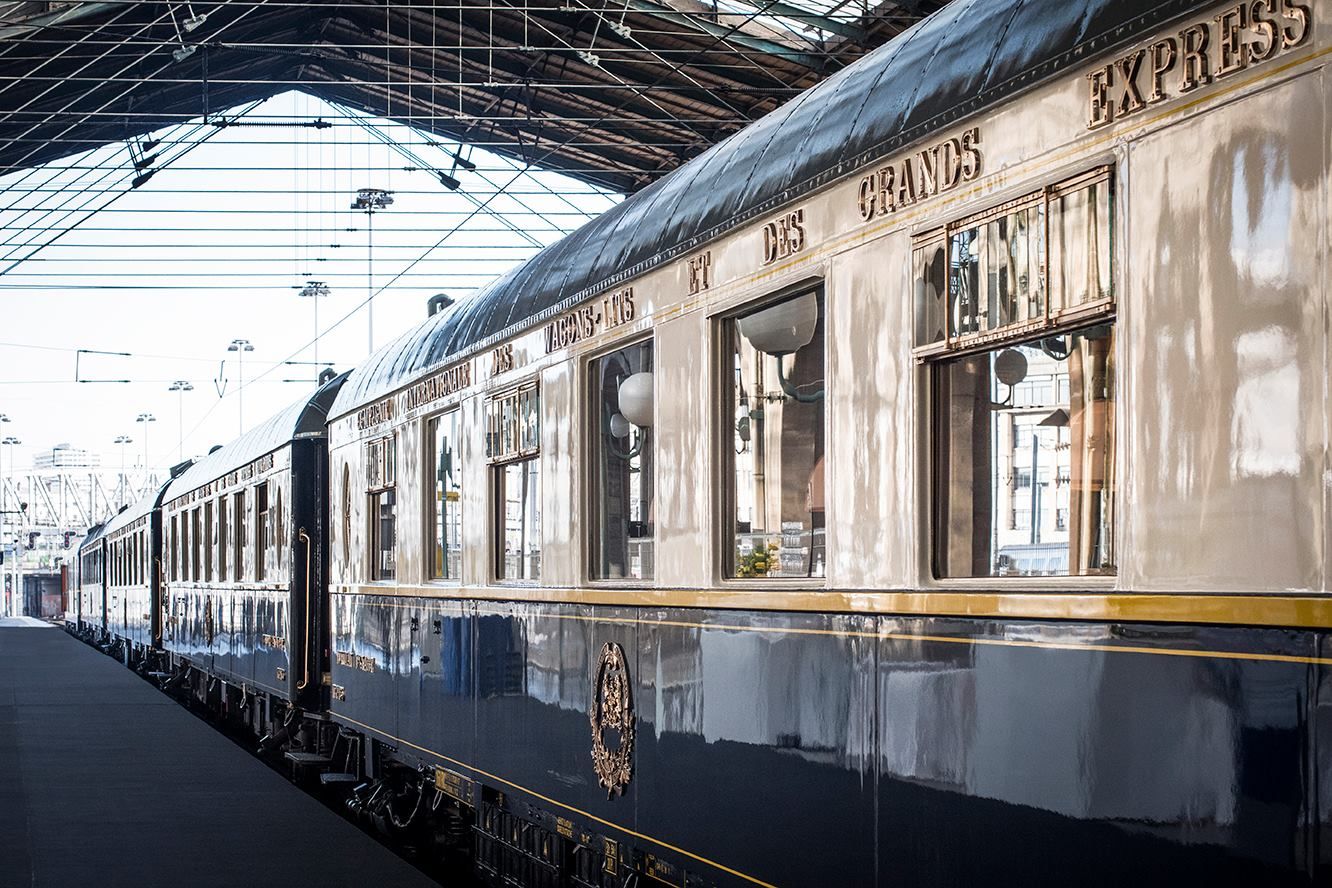
We all have images of the legendary Orient Express in mind. We can easily imagine the well-dressed passengers, the magnificent landscapes rolling past the windows, the finesse of the meals served in the restaurant car and the cozy atmosphere that reigns there.
If you thought that traveling aboard the Orient Express was reserved for characters in Agatha Christie's novels or at least from a bygone era, think again - it is now possible to relive the experience aboard the world's most famous train!
So yes, let's not fool ourselves, it's a budget! The Orient Express is one of those luxury trains whose name rhymes with class, luxury and sensuality. It's a bit like the Titanic of the rails, with a less tragic destiny.
Here's a little summary of everything you've always wanted to know about the Orient Express!
Traveling with the Orient Express
The birth of a myth:
The idea of creating luxury trains comes from a young Belgian engineer, Georges Nagelmackers, who, during a trip to the United States, experienced the sleeping cars of Pullman trains. He found them super efficient, but so uncomfortable that he thought there was a niche to be taken in luxury travel. And it worked!
He founded, in 1872, the sleeping car company, specialized in railway tourist services such as sleeping cars and couchettes, onboard catering, bar cars, etc. (it's still the company that manages catering in TGVs as well as in Italian and Austrian trains!)
Initially, the CWL only installed these cars at the back of existing trains. Then, in October 1882, it launched its first train connecting Paris to Vienna, it was the Lightning Train!
Given the success of this luxurious line, Georges Nagelmackers decided to extend the line to Constantinople! At the time, the Ottoman Empire was one of the most powerful in the world and fascinated Europeans!
On October 4, 1883 at 7:30 PM, the Orient Express departed from Strasbourg station in Paris (today's Gare de l'Est) and arrived in Constantinople (today Istanbul if you had any doubt) 4 days later, compared to two weeks by boat! The notion of long-distance travel was completely revolutionized, as was the geography of Europe which could then be crossed without stopping at borders!! Indeed, the company handled all customs formalities in advance! Never seen before!
The ticket price was then 700 gold francs, which represented half of an annual salary of a skilled worker.
In 1889, the train connection became direct with the construction of the last missing section, replacing the Danube crossing which had been done by ferry until then.
Technological feats:
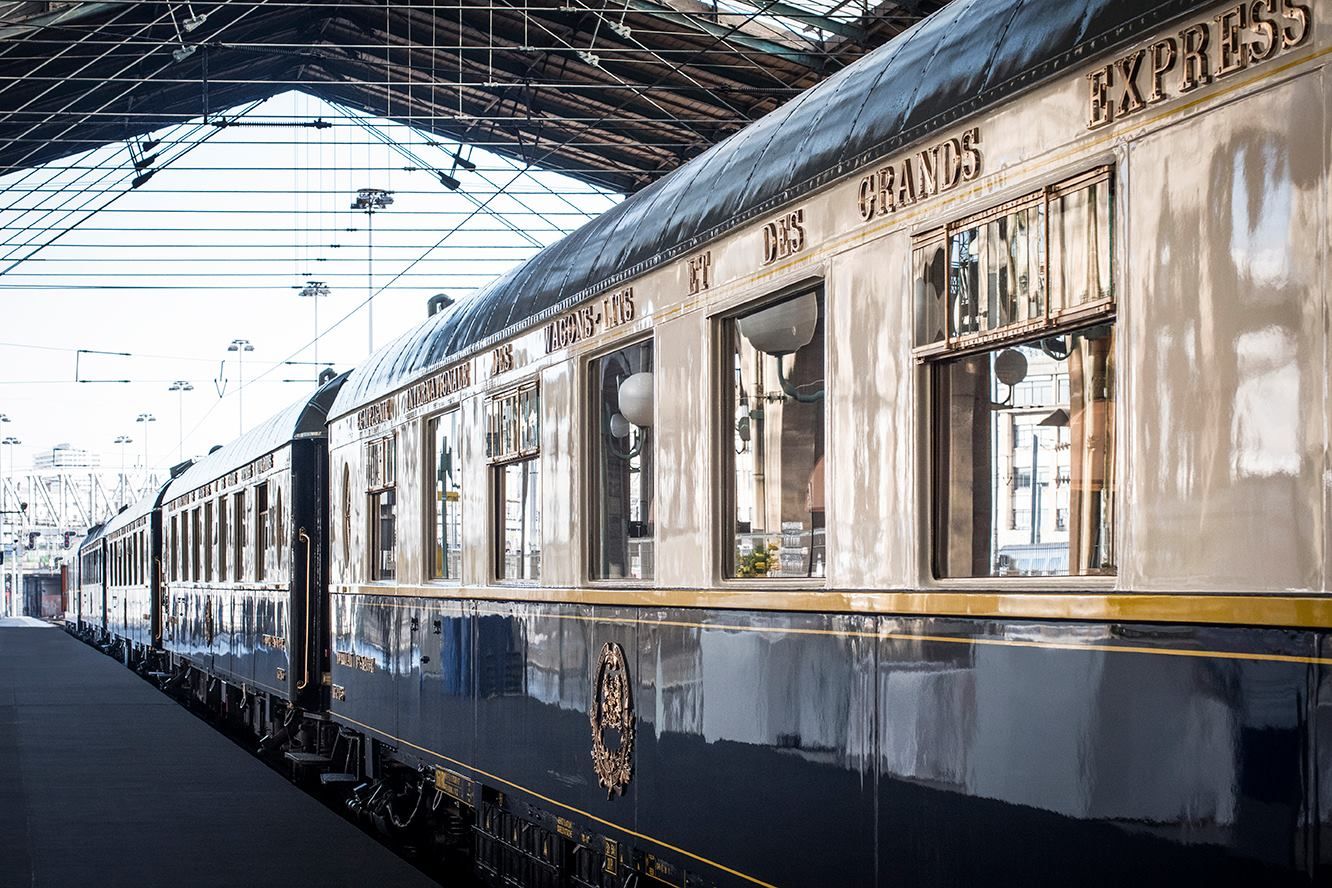
Photo Orient Express Facebook Page
From its inauguration, it was nicknamed the train of kings and the king of trains. Its cabins were then equipped with the best available at the time: central heating, hot water, gas lighting, etc. The same went for the decor: silk sheets, marble sanitary facilities, crystal glasses and silver cutlery. In the 1920s, interior decoration was left to renowned Art Deco artists. The train was adorned with precious wood marquetry and sumptuous glass panels and became a canvas for Art Deco expression.
Robbery and Cholera:
The risk with displaying wealth is obviously that it attracts highway bandits! Know that during the first journey of the Orient Express, travelers were advised to be armed! But in 1891, the train was attacked and robbed! The robbers left with loot estimated at 120,000 pounds sterling and 5 travelers as hostages!
The following year, it was a cholera epidemic that forced the train into quarantine!
The Armistice car!
During the First World War, cars present in the German Empire and Austro-Hungarian Empire were requisitioned to create their own sleeping car company. In the West, the cars were transformed into field ambulances. The fate of this international train would be debated during the Treaty of Versailles in 1919.
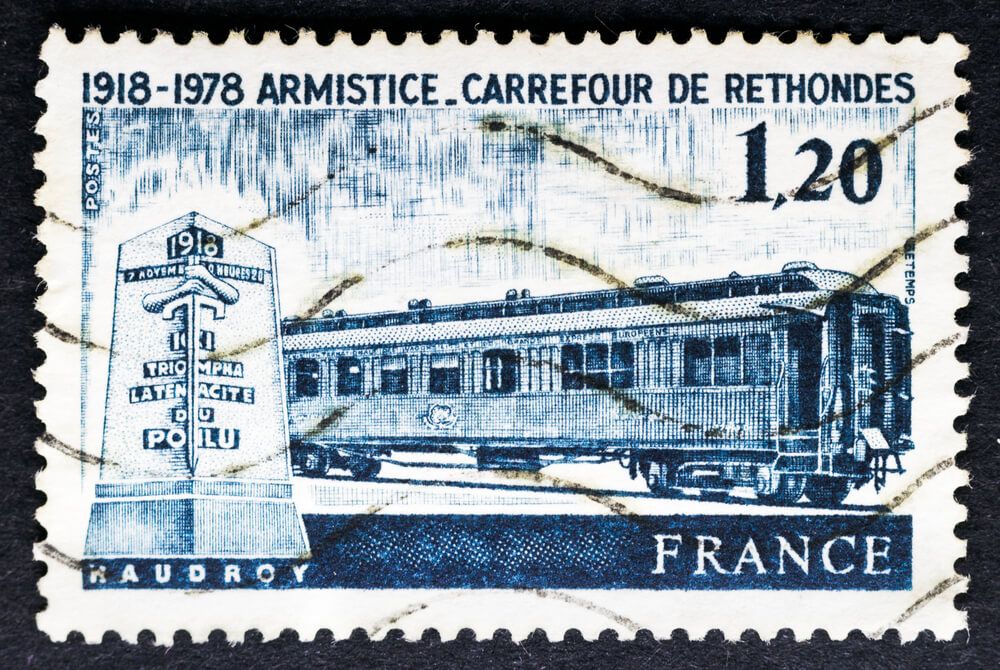
But if there's one Orient Express car that would enter History, it's car no. 2904, built in 1913!
You remember that the Armistice was signed in a car by General Foch, in the middle of nowhere (sorry, in the Rethondes clearing in the middle of Compiègne forest!) well it's our former grand luxury car, transformed for the occasion into an office where the historic Armistice between France and Germany would be signed, on November 11, 1918.
The Sleeping Car Company would donate this car to the French State in 1921. Unfortunately, you cannot see it today. It was long exhibited, but was destroyed by the SS on Hitler's orders, a month before the German capitulation in 1945.
A constellation of stars:
If the myth spread so quickly, it was also thanks to the personalities who took the Orient Express!
Here are some of them: King Ferdinand of Bulgaria, Leo Tolstoy, Marlene Dietrich, Coco Chanel, Ernest Hemingway, Lawrence of Arabia, Jean Cocteau, Albert Einstein, Sigmund Freud, spy Mata-Hari and of course Agatha Christie who would greatly contribute to the train's publicity by writing her famous novel.
Murder on the Orient Express
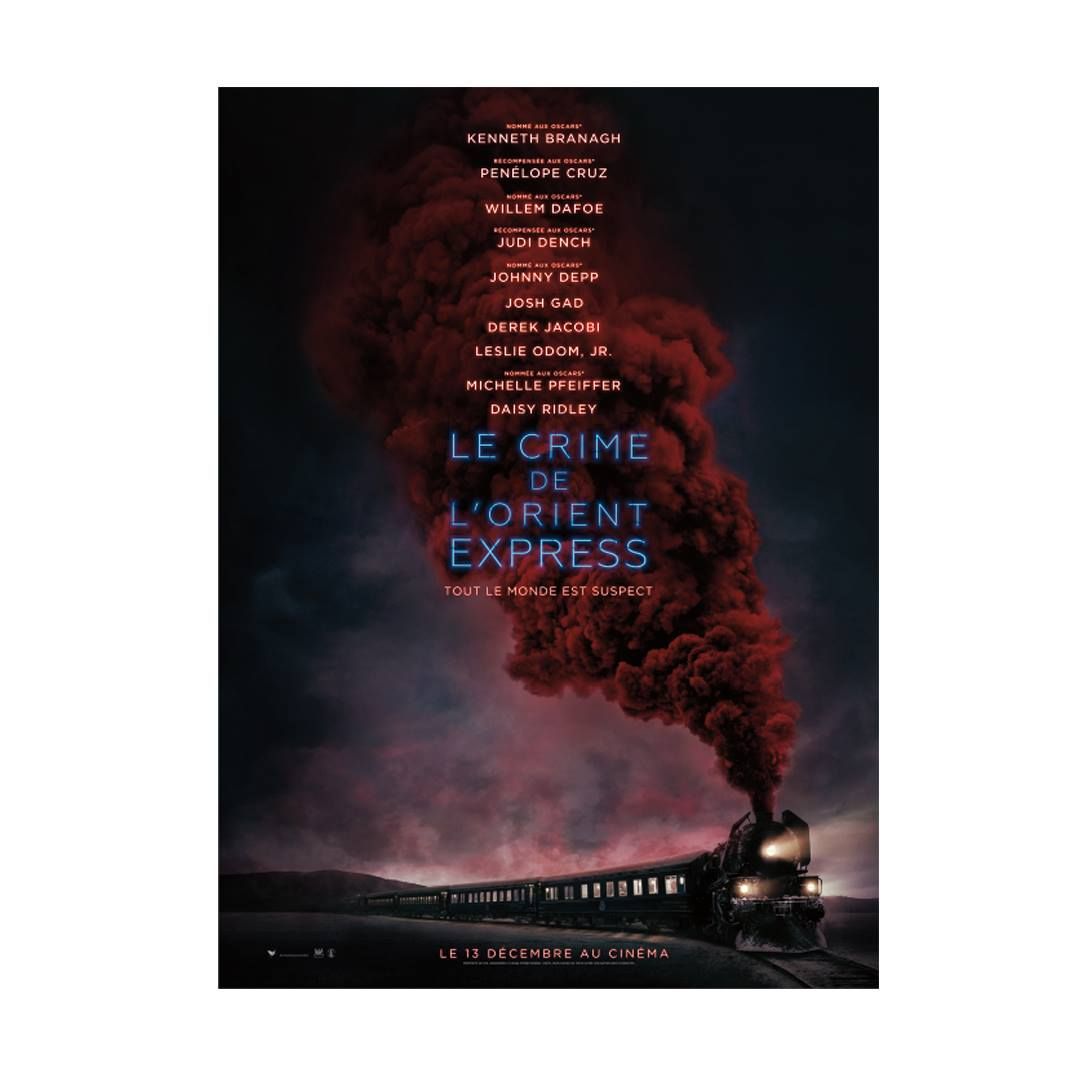
Photo Orient Express Facebook Page
In 1934, Agatha Christie published what would become her most famous novel: Murder on the Orient Express. First of all, know that there were never any murders aboard!
The English novelist was inspired by a real crime: the Lindbergh baby case, which shook the international press at the beginning of the 20th century, following the kidnapping and murder of famous aviator Charles Lindbergh's son. It was actually following this crime that the American Congress declared kidnapping a federal crime.
In short, Agatha staged the murder of this child's assassin, during his journey under a false name aboard the Orient Express, stuck during a blizzard lasting more than 6 days in Turkey (which incidentally really happened in February 1929).
The novel was a success, translated into more than 30 languages and adapted as radio serial then for cinema and even as comic book and video games!
It largely contributed to the collective memory of the Orient Express, adding a good dose of mystery.
The Orient Express's golden age
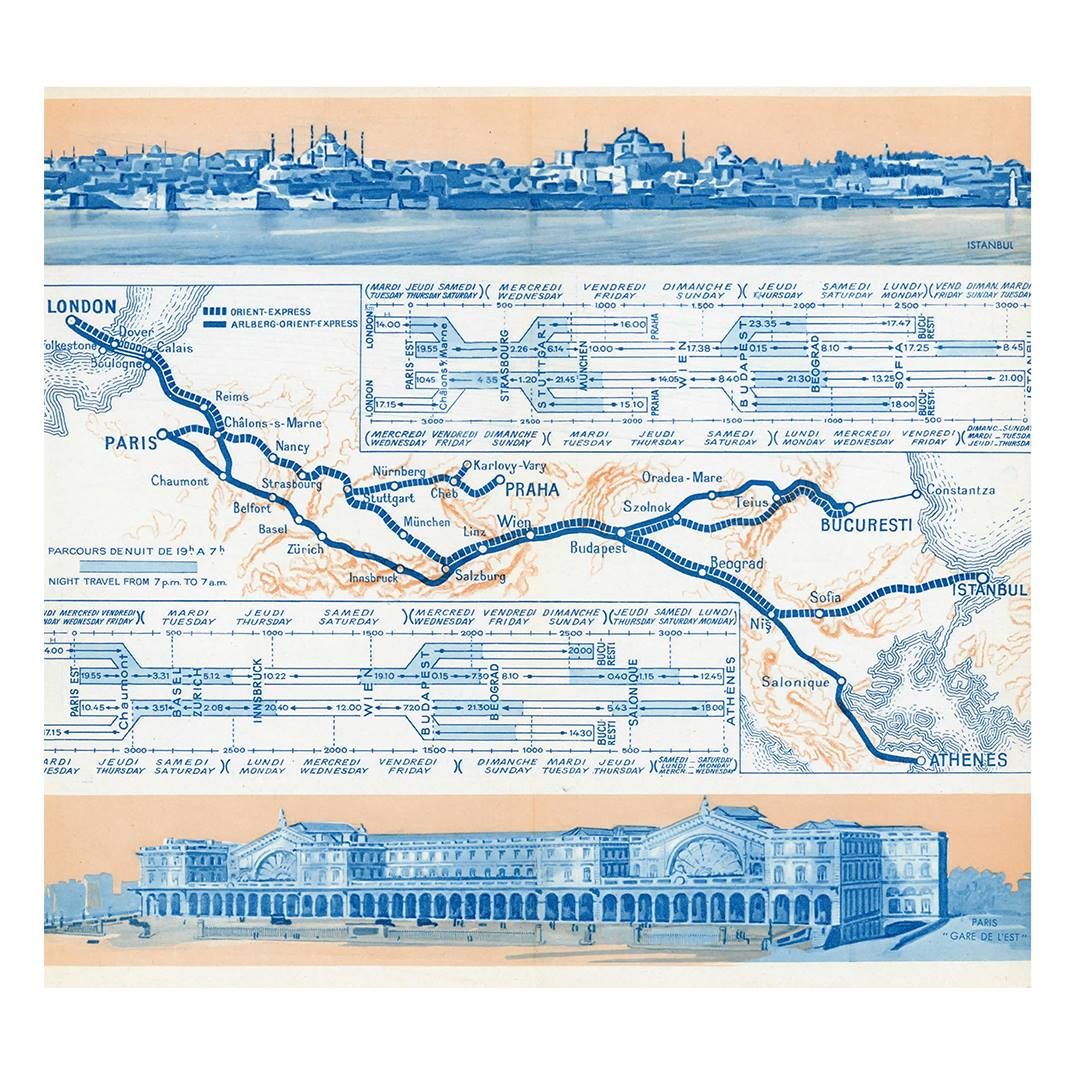
Photo Orient Express Facebook page
The interwar period would mark the renaissance and golden age of the Orient Express.
In 1919, after the First World War, it was no longer possible to cross Germany. But it takes more than that to destabilize the king of trains! The Orient Express would now pass through the Simplon tunnel, dug under the Alps in 1906. It was at the time the world's longest tunnel! Paris then connected to Istanbul via Milan and Venice, a technological feat! It adorned itself with new midnight blue cars for the occasion!
This was the birth of the first Simplon-Orient Express train and the opening of a historic route through the Alps. The train now took only 2 and a half days to reach Constantinople!
Other lines then came into being and in the 1930s, you had three possibilities:
- The classic Orient Express, which finally resumed its route and which ran: London-Calais-Paris-Strasbourg-Munich-Vienna-Budapest-Bucharest-Istanbul
- The Arlberg-Orient Express brand new, which passed through Switzerland running: London-Calais – Paris – Zurich – Innsbruck before joining Vienna and finishing with the usual route.
- The Simplon-Orient Express on the southern route which connected: London – Calais – Paris – Lausanne – Milan – Venice – Belgrade – Sofia and Istanbul
It makes you want to see the country!
From the travel revolution to decline
World War II was going to be another story! Bombing had made many stations, bridges and railway tracks unusable. Moreover, many cars had been destroyed! And on top of the material damage, you can add the tense geopolitics!! It was of course the Cold War and this new world cut in two that didn't want to hear about its neighbor! The border controls, pushed in Eastern Europe, would gradually make the Orient Express lose its reputation... as an Express, even though it remained the only train in the world that could cross the Berlin Wall!
Moreover, its commercial speed was only 55 km/h, which was no match for the evolution of the modern world! Not to mention the catastrophic state of the network and the democratization of air travel!
The Orient Express therefore made its last journey on May 20, 1977. Night trains, however, continued to run between Paris and Vienna until 2009.
Reviving the Orient Express epic
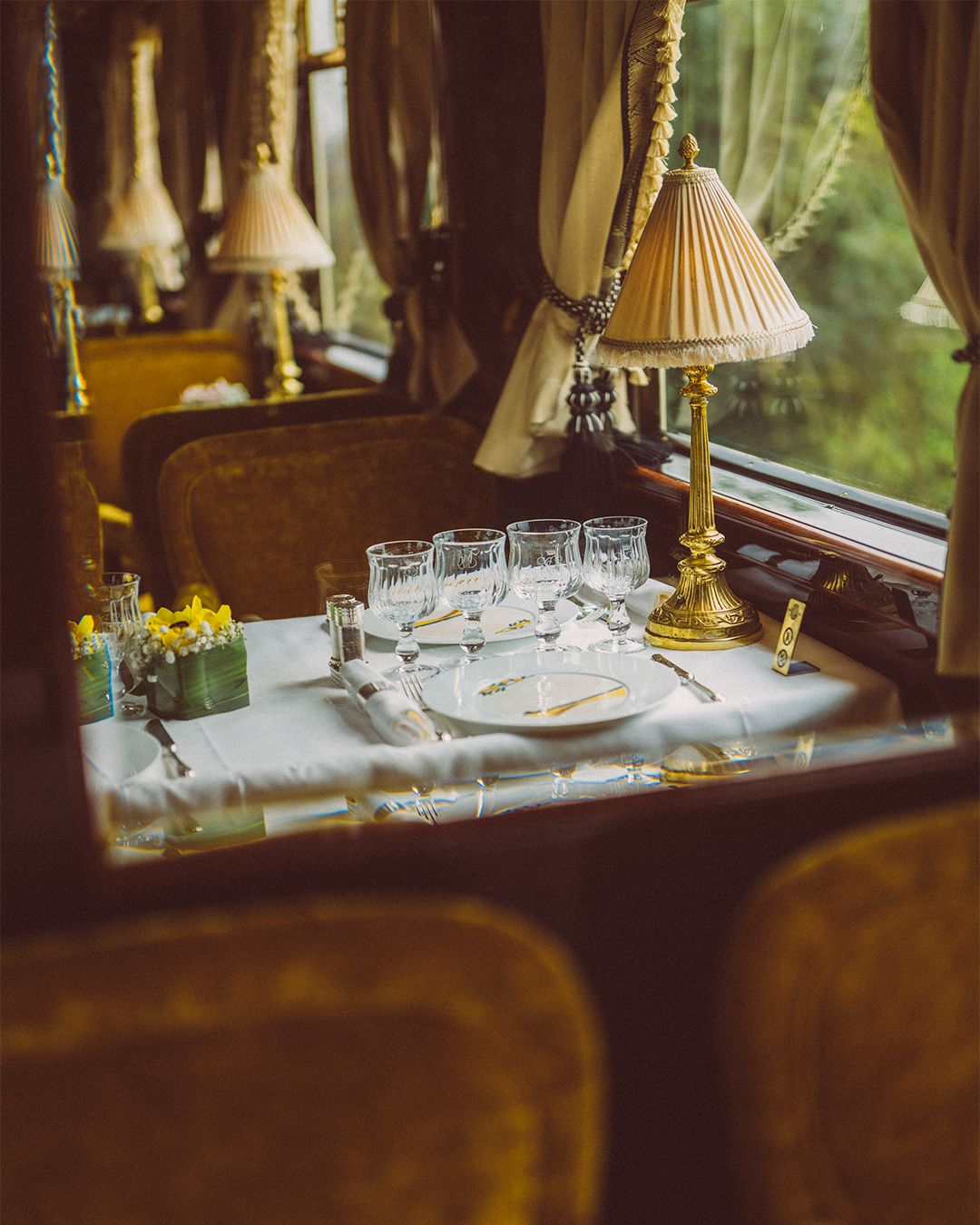
Photo Orient Express Facebook Page
The dream of traveling aboard the Orient Express didn't dissipate! In 1982, an American entrepreneur, James Sherwood, bought 18 former CWL cars and carefully restored them! His wife thought he was crazy, but he would carry out this project which cost him more than 80 million dollars!
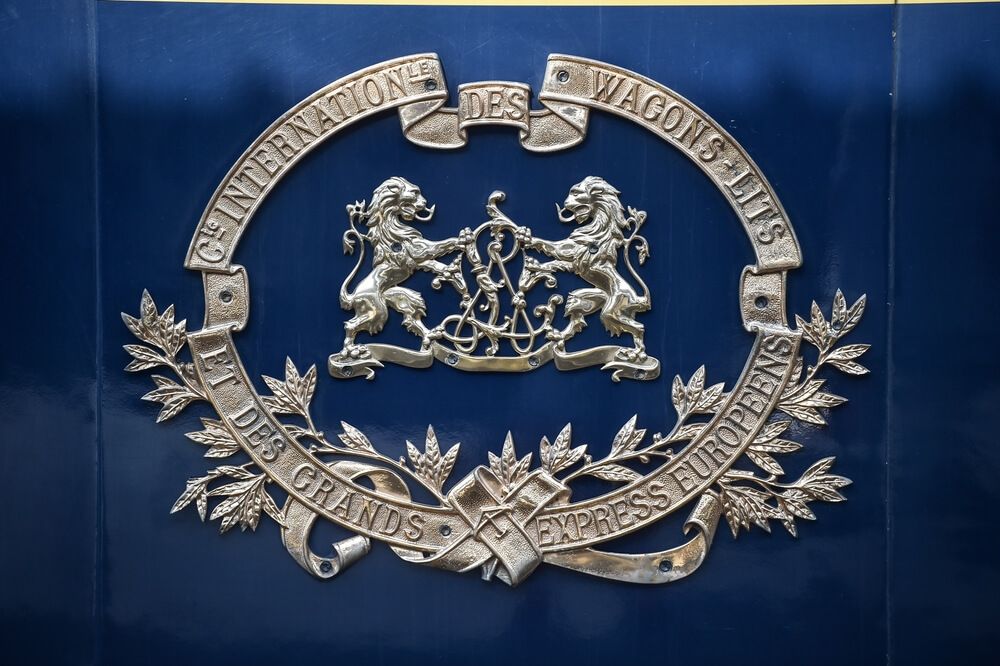
A new luxury train, stamped the Venice-Simplon-Orient Express, then took over on this legendary crossing. If it's forced to bear this extended name, it's because the "Orient Express" brand belongs to SNCF! Regardless, the Art Deco style was back and proper attire was required for lucky travelers!
The company that operates this line today is Belmond, the British luxury giant, bought in 2019 by LVMH (the French group Moët Hennessy Louis Vuitton)
In 2011, SNCF also bought 7 original cars from the sleeping car company. Holder of the famous brand, it took the opportunity to create a new company named Orient Express. The idea being obviously to relaunch the prestigious train line by combining the emblematic Art Deco and period craftsmanship with modern comfort and the latest technologies!
In 2017, AccorHotel group partnered with Orient Express company and shared 50/50 ownership with SNCF. It would thus be able to develop a whole range of hotels under the Orient Express brand by positioning itself in luxury hospitality.
The Orient Express at home!
In 2021, the brand new Orient Express company decided to make you wait by launching its collection of travel products under the name "Steam Dream"! 18 creators and artisans were brought together to make you experience the magic of travel in the famous sleeping cars speeding through Europe, through 5-star bedding, fine porcelain, luxury leather goods, board games, you get the idea!
Tomorrow's Orient Express... And the others...
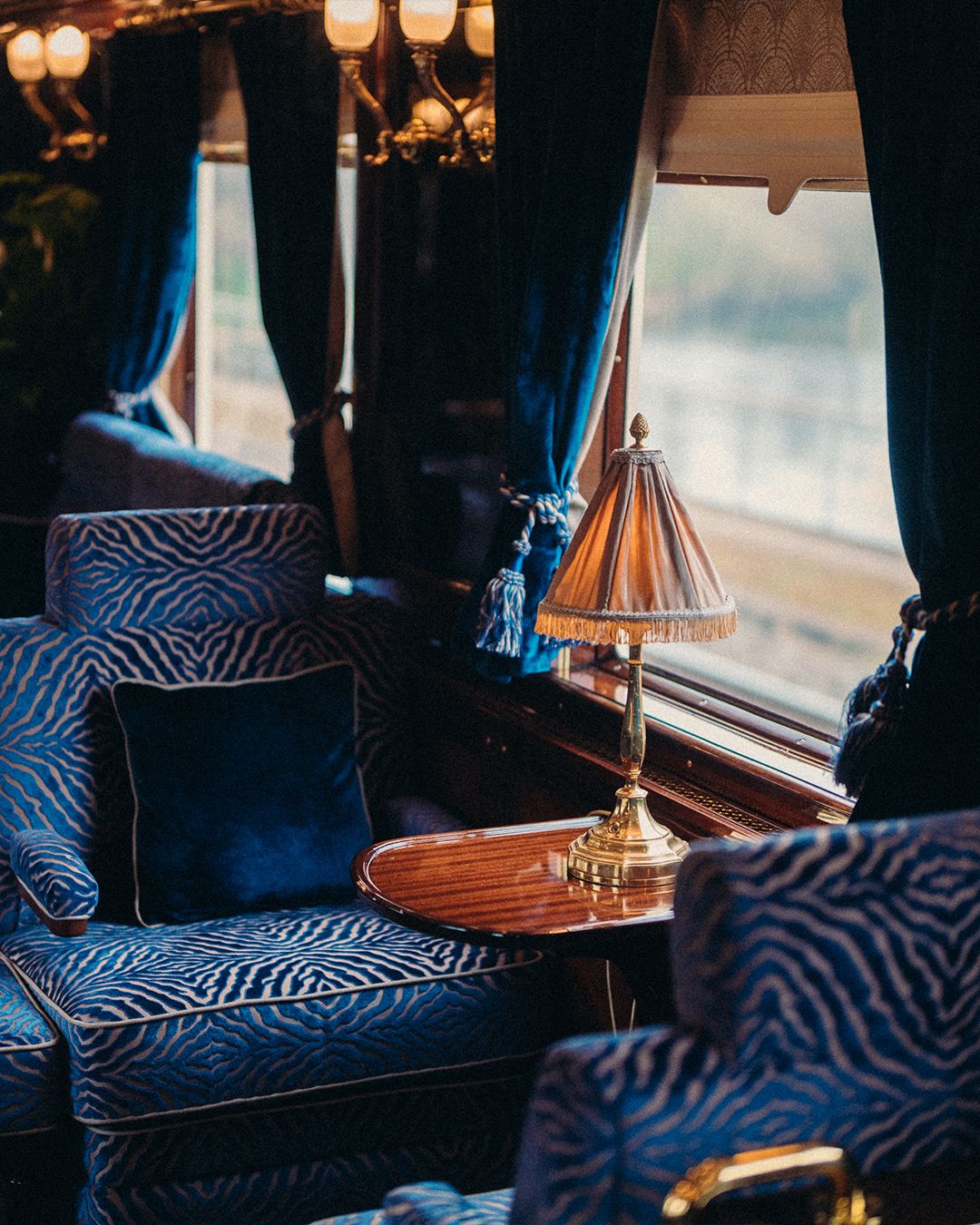
The French Orient Express company achieved its dream. By 2024, 6 trains will travel the mythical routes of Italy with the Dolce Vita Orient Express. A new train was created by Dimorestudio architecture and design studio to make you relive this ultimate experience as if it had never ceased to exist!
Other companies followed the movement, wanting to surf the wave of great luxury train epics. This is the case of Puy du Fou which launches a show train crossing France in 6 days and 11 stages among the most emblematic of the country.
The startup Midnight Trains, for its part, is mainly interested in ecological impact and reminds us that it would take 50 round trips Paris-Rome by train to emit the same amount of CO2 as one Paris-Rome flight. Not to mention the pleasant relaxation experience offered, avoiding airport stress.
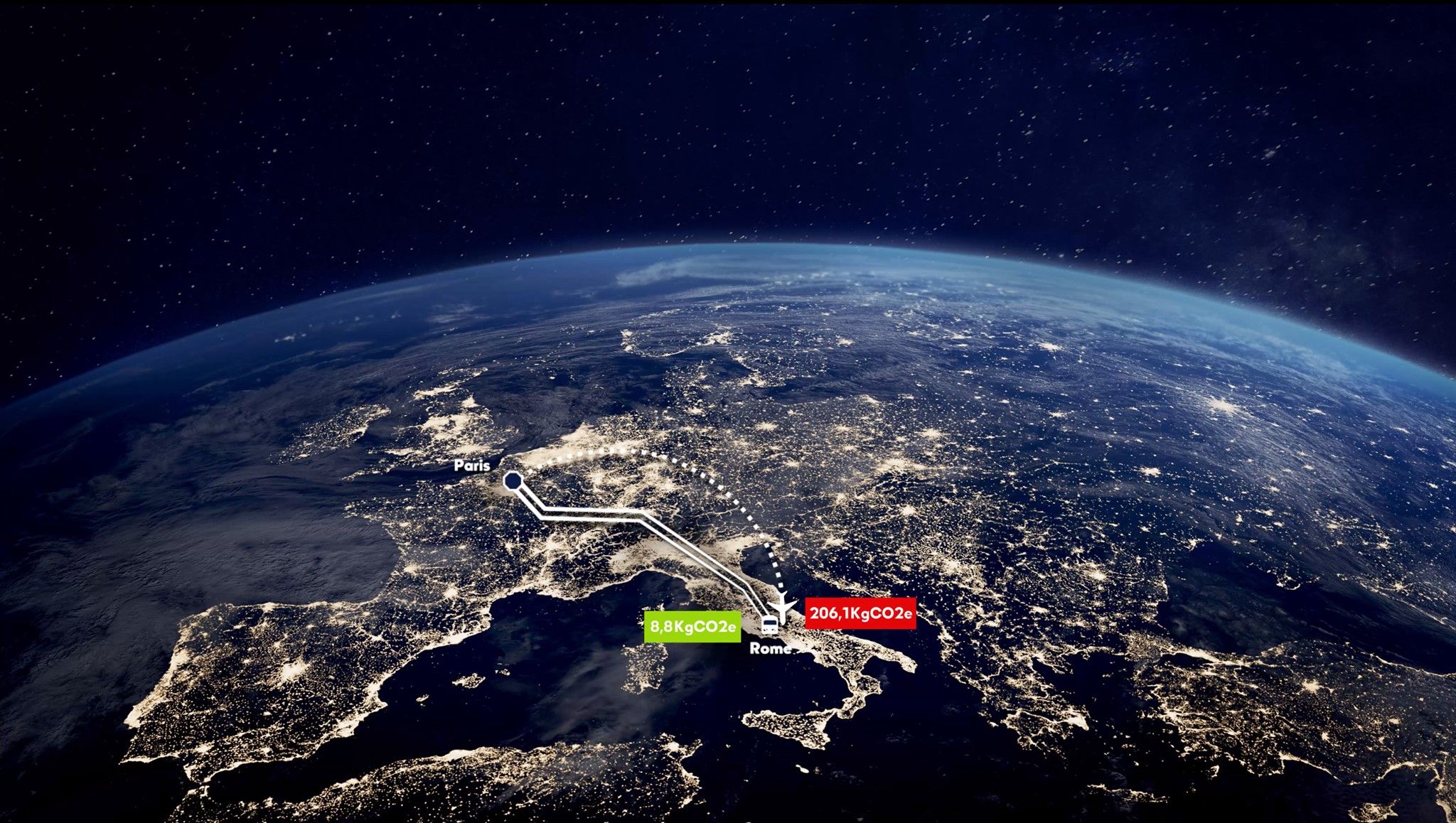
Photo Midnight Trains Facebook Page
At a time when we are asked to return to more environmentally friendly modes of transport, it seems that great train journeys are making their big comeback to center stage!
How much does it cost?
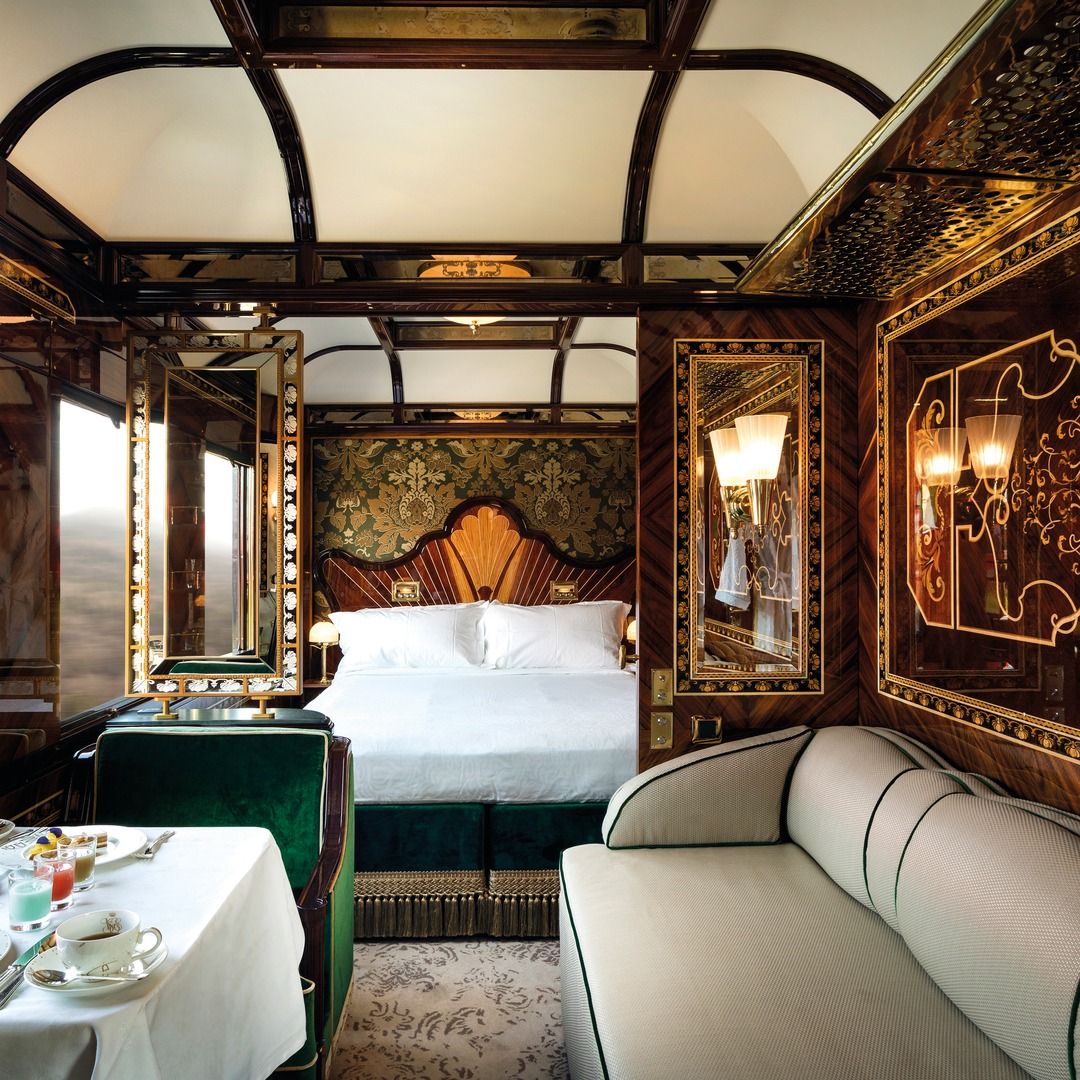
Because yes, this is all very well, but we must admit that this remains an experience reserved for the more affluent among us. Everything depends of course on your final destination as well as your travel dates, but to give you an idea of what to expect, let's take a little tour of the different offers on the market.
- With Belmond Company: You can take the Venice-Simplon-Orient Express. For 2D/1N aboard, you need to budget on average €3500 per person. For the Paris-Prague round trip in 5d/4n, count €5600 per person.
- With Dolce Vita Italy, you'll need to spend about €2000 per night per person.
- Puy du Fou's show train prices start at €4900 per person.
- Midnight Trains for its part, remains mysterious and has not yet revealed its prices at present. To be continued!
Let's recap... 8 points to understand
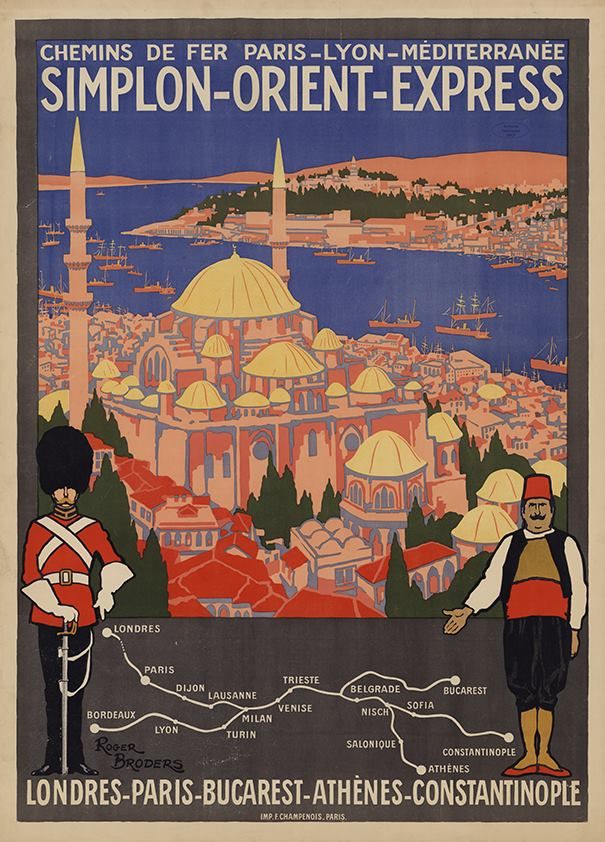
Photo Orient Express Facebook Page
- The Orient Express was invented by Georges Nagelmackers founder of the Sleeping Car Company (CWL).
- This luxury train operated from 1882 to 1977 with ups and downs due to world conflicts.
- At its peak, the Orient Express used three lines across Europe
- Today it no longer exists!
- A private luxury company, Belmond bought and renovated old cars and revived the Venice-Simplon-Orient Express line.
- SNCF owns the Orient Express brand and created a new company with that name
- The new Orient Express company will unveil its first trains through Italy from 2024, the Dolce Vita Orient Express.
- Other companies today offer travel-experience journeys by luxury train.
Regardless of the destination, here, it's the journey that counts
Traveling aboard the Orient Express is above all an experience! It's not so much the destination upon arrival that's at stake here, but what you're going to experience getting there.
In this world that speeds by at full speed, where we want to arrive before we've even left, we often forget that the journey is an integral part of the trip and that's what these train journeys try to remind us.