
Créé par Romane, le 20 juin 2026
Votre guide Ryo
Shopping in Paris: The Complete Guide by Neighborhoods, Markets & Addresses 2026
© Shutterstock
Where to shop in Paris when the city bewilders first-time shoppers? The capital brings together both the most expensive luxury brands on the planet and some of the densest flea markets in Europe, often separated by just two metro stops. This guide directs you neighborhood by neighborhood, from the Triangle d'Or to the aisles of Montreuil market, with concrete addresses for every budget. You'll also find the best thrift shops in the Marais, the lesser-known shopping streets of Pigalle, tax refund tips and Grands Boulevards schedules. To explore neighborhoods on foot between shopping sessions, the Ryo audio guide tour of Paris covers 8.9 km and 18 stops through the capital's liveliest streets.
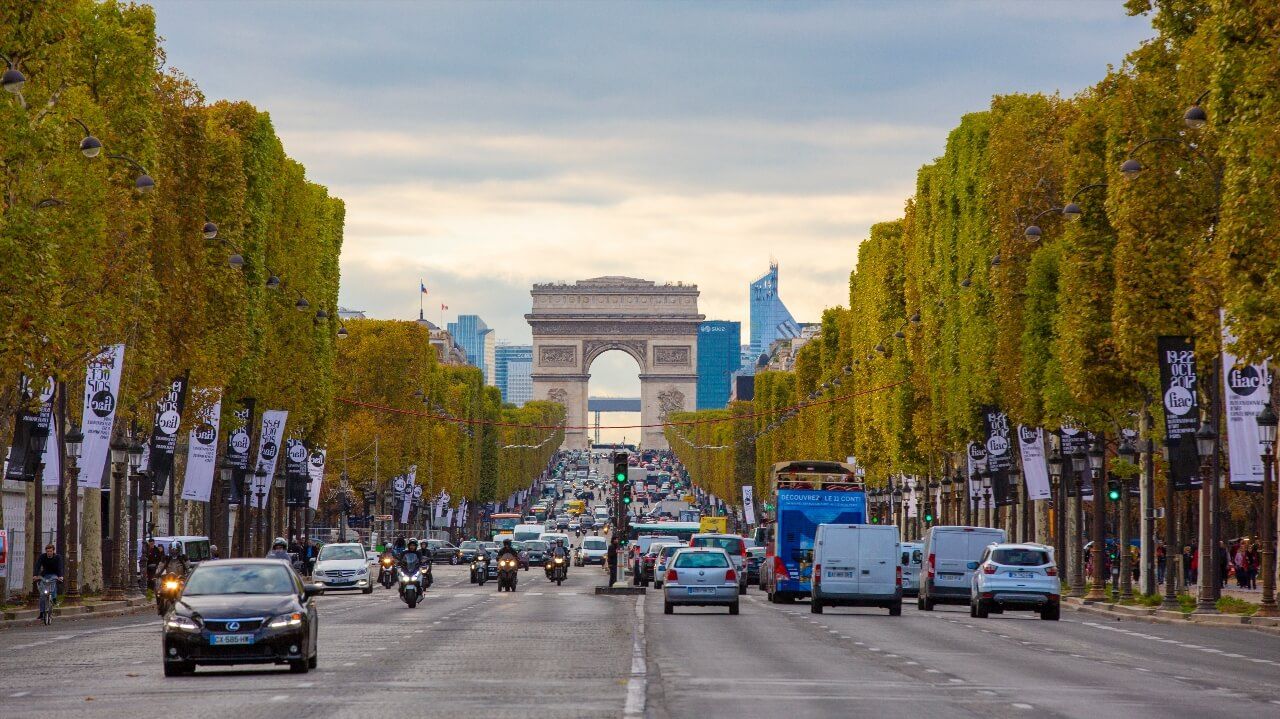
Champs-Élysées and the Triangle d'Or: Luxury and Flagships
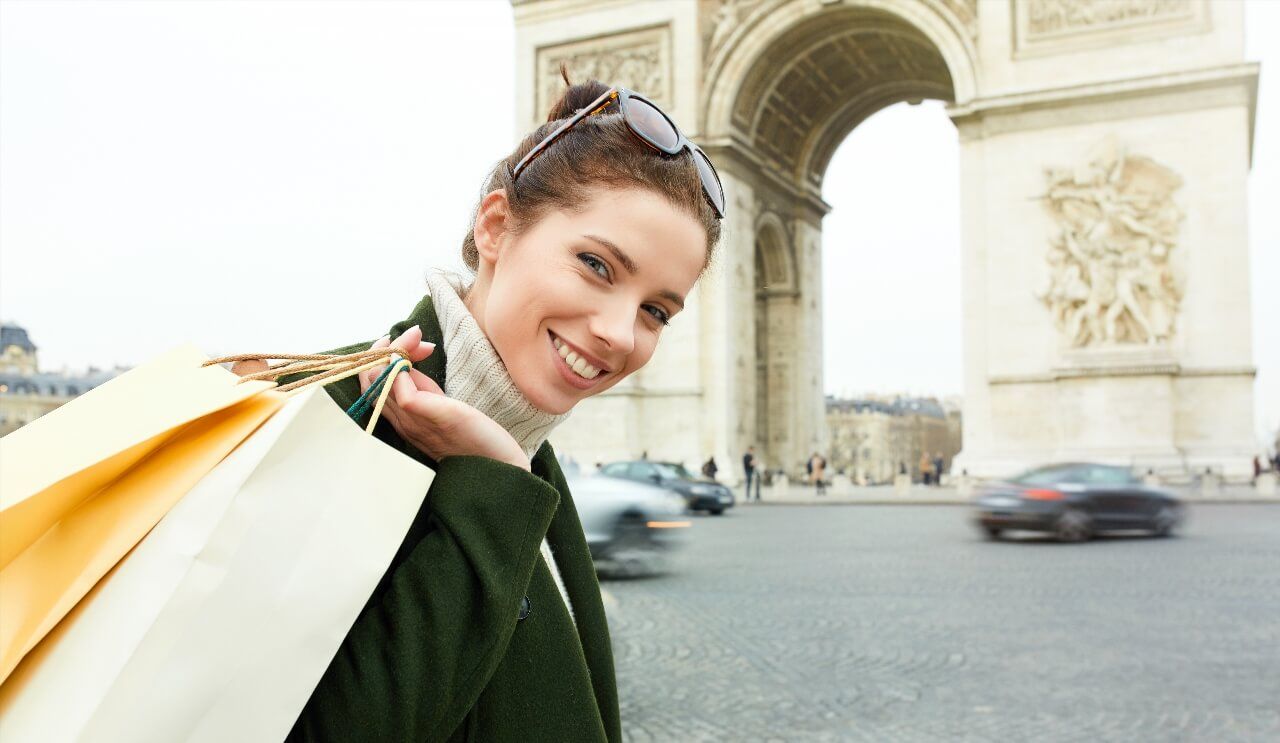
The Avenue des Champs-Élysées has long since ceased to be Paris's only chic address, but it remains the mandatory stop for major international brands and oversized flagships. Louis Vuitton, Zara (Europe's largest at 3,000 m²), Abercrombie & Fitch and now the Apple Store sit alongside each other for two kilometers between Place de l'Étoile and Place de la Concorde.
For haute couture, head down to the Triangle d'Or, the triangle formed by Avenue Montaigne, Avenue George-V and Rue François-Ier. This is where the most prestigious houses are concentrated: Dior (30, avenue Montaigne, renovated in 2022 with its integrated museum), Chanel, Valentino, Givenchy. The boutiques don't have prices in their windows, which sums up the spirit of the neighborhood quite well.
If luxury interests you without necessarily buying it, Rue du Faubourg-Saint-Honoré (8th arrondissement) extends the experience toward the Élysée. Hermès occupies number 24 in an 18th-century mansion. The boutique is worth a visit as an architectural space, regardless of budget. Further along, the major art galleries and antique dealers on Rue du Faubourg-Saint-Honoré offer a more unusual version of Parisian luxury.
A tip if you're planning substantial purchases: some Champs-Élysées flagships offer personal shopper services by appointment (notably Louis Vuitton and Dior), which avoids weekend queues and guarantees exclusive attention. Book at least 48 hours in advance by phone or on their website.
To make the most of your visit to this neighborhood, know that tax refund (VAT refund) applies from €100 in purchases in the same store for visitors from outside the EU. All Triangle d'Or boutiques have dedicated counters, ask for the tax refund form directly at checkout.
The Marais: Cutting-Edge Fashion, Designers and Vintage
The Marais (3rd and 4th arrondissements) is probably the Parisian neighborhood where the commercial offering is the densest and most varied in a restricted area. In twenty minutes on foot, you go from contemporary art gallery to collector sneaker boutique, from luxury thrift shop to Japanese gourmet grocery.
The Rue des Francs-Bourgeois is the main artery, lively seven days a week (which is an exception in Paris, where many boutiques close on Sundays). Sandro, Maje, Isabel Marant and the SMCP group brands have their flagship stores there. This is also where you'll find BHV Marais (Bazar de l'Hôtel de Ville), a multi-purpose department store particularly renowned for its DIY section but whose fashion and home floors deserve exploration.
For independent designers, turn toward Rue de Bretagne and the adjacent streets of the 3rd. Shops like Merci (111, boulevard Beaumarchais) invented the concept store format before its time: furniture, fashion, bookstore and café under the same brick roof. It's one of the most photographed places in Paris for décor and alternative fashion enthusiasts.
The Marais is also the Parisian capital of select vintage. Rue de la Verrerie and the streets around Rue Vieille-du-Temple house a concentration of high-end thrift shops: Kiliwatch (near Châtelet), Rag (rue de la Verrerie), Episode and the legendary Guerrisold on Rue des Écouffes. Prices are higher than at flea markets but the selection is already sorted, washed and sized.
One last tip for the Marais: avoid Saturday afternoon between 2 PM and 5 PM. This is absolute rush hour, especially around Place des Vosges and Rue des Francs-Bourgeois, where pedestrian density makes shopping less enjoyable. Sunday morning or weekdays remain the ideal option.
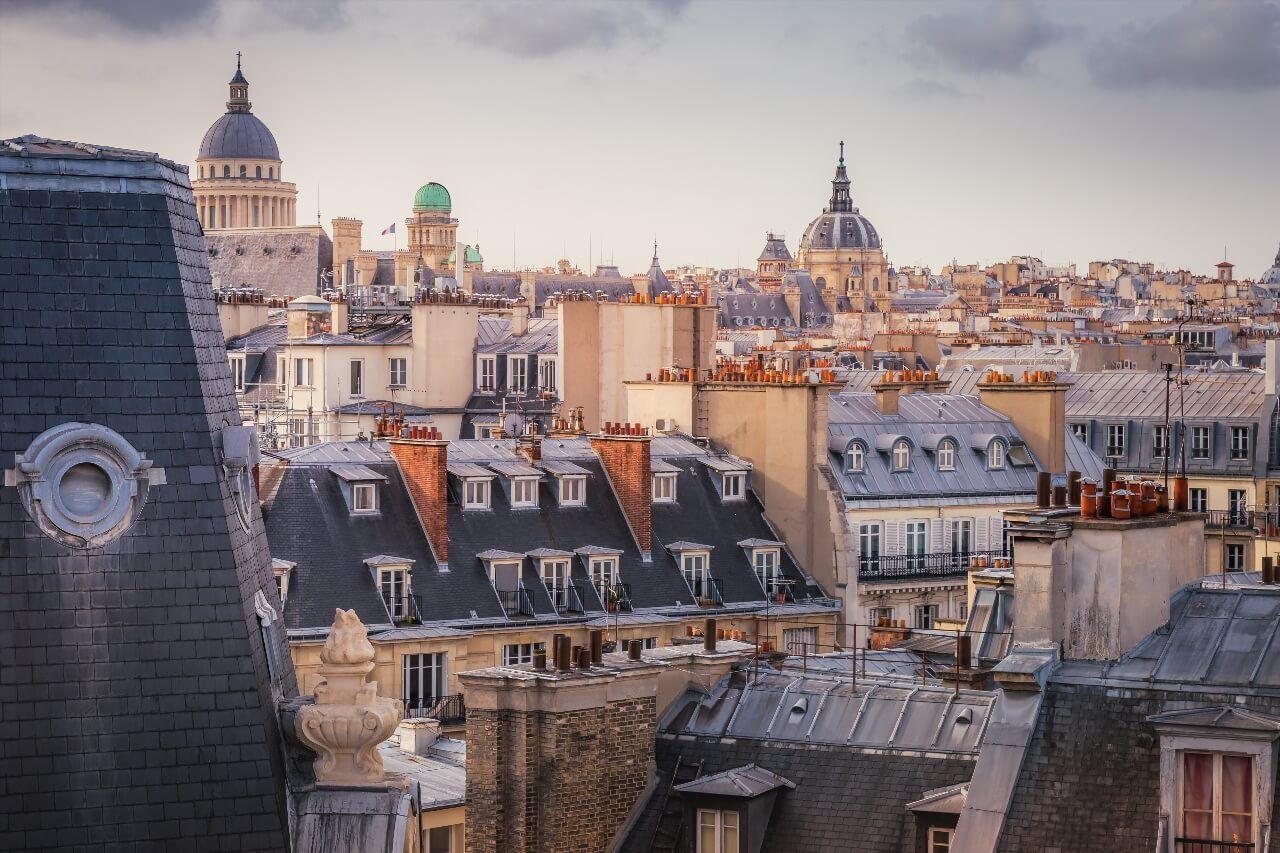
Saint-Germain-des-Prés and the Left Bank
Saint-Germain-des-Prés (6th arrondissement) was long the neighborhood of intellectuals, bookstores and literary cafés. Today it's also one of Paris's most expensive commercial areas, dominated by accessible luxury boutiques and high-end contemporary fashion brands.
The Rue de Rennes and Boulevard Saint-Germain concentrate major ready-to-wear brands: H&M, Uniqlo and LVMH group boutiques. For something more personal, head up toward Rue du Four and Rue des Saints-Pères, where brands like APC, Rouje or Officine Générale have their main boutiques.
The 6th arrondissement also houses Paris's best specialized bookstores, if you include books in your shopping. Librairie Galignani (224, rue de Rivoli) and La Procure (3, rue de Mézières) are unmissable addresses. For shopping arcades, Marché Saint-Germain (rue Lobineau) is more discreet than Palais-Royal but offers local designer boutiques in a pleasant covered setting.
For beauty shopping, Le Bon Marché (24, rue de Sèvres) remains the absolute reference on the Left Bank. A department store founded in 1852 by Aristide Boucicaut, it's considered the world's first modern department store. Its perfumery and cosmetics level is particularly comprehensive, with niche brands hard to find elsewhere (Le Labo, Byredo, Maison Margiela Fragrances). The gourmet grocery space, separate, across the street, is an attraction in itself.
Pigalle, South Pigalle (SoPi) and Creative Streets
Pigalle and its southern extension, dubbed SoPi (9th arrondissement), have been transformed in less than a decade. What was a neighborhood of cabarets and adult shops has become one of the epicenters of streetwear fashion and cutting-edge addresses in the capital.
The Rue des Martyrs alone is worth the trip. This descending shopping street from Notre-Dame-de-Lorette to Pigalle concentrates artisan cheese makers, independent roasters, owner wine cellars and cutting-edge fashion boutiques like Officine Générale or decorative concept stores. To explore this neighborhood between boutiques, the Ryo audio guide of Paris on Pigalle and Montmartre tells you the history of these streets.
Further north, Rue de Steinkerque at the foot of Montmartre hill is known for its fabric and haberdashery shops, a go-to address for sewing enthusiasts. For ready-to-wear fashion, Rue des Abbesses (18th) concentrates independent boutiques less known to classic tourist guides: ceramics, artisan jewelry, emerging fashion designers.
Pigalle itself houses brands that have become emblematic of French sneaker and streetwear culture. Pigalle Basketball (2, rue Duperre) launched a Nike collaboration that definitively put the neighborhood on the global streetwear map. Steps away, addresses like Tombées du Camion (rue Joseph de Maistre) follow in the tradition of the Parisian concept store for unusual objects and salvaged pieces.
Grands Boulevards and Opéra: The Department Stores
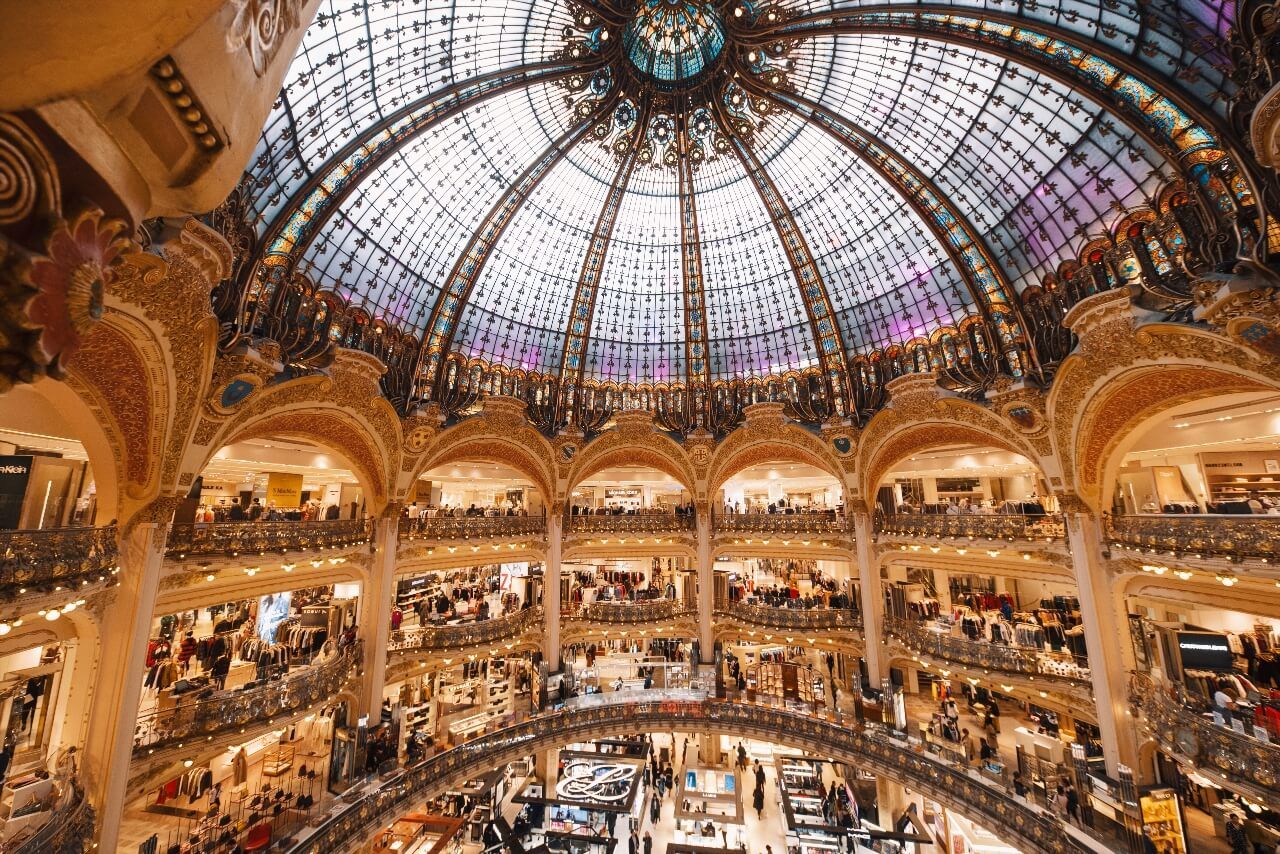
This is where Paris invented department stores in the 19th century. Even today, Boulevard Haussmann concentrates the two giants of Parisian shopping: Galeries Lafayette and Printemps, and their international clientele hasn't changed one bit since their inauguration.
The Galeries Lafayette Haussmann (40, boulevard Haussmann) are among the capital's most visited sites, with several tens of millions of visitors per year. The main building covers 70,000 m² spread across several buildings. The Art Nouveau dome of the central building, inaugurated in 1912, is free to visit, even without buying. At the top of the Dome building: panoramic terrace with free access and views over Paris.
The Printemps Haussmann (64, boulevard Haussmann) stands out for its beauty and home positioning, with a ninth floor entirely dedicated to dining and views. Its shoe department is one of the most comprehensive in the capital. For men's fashion, Printemps de l'Homme (cross the boulevard) is one of the rare large spaces dedicated to men's fashion in Europe.
For more affordable shopping in this area, Rue du Faubourg Montmartre and Rue de la Chaussée d'Antin offer an alternative to department store prices. You'll find notably the Inditex group brands (Zara, Pull&Bear, Bershka) in their large-format Parisian versions, as well as independent shoe stores at more reasonable prices.
République, Oberkampf and Belleville: Alternative Fashion
The République, Oberkampf, Belleville triangle (10th, 11th, 20th arrondissements) represents the less touristy Paris, where emerging fashion and alternative shopping have thrived since the 2000s. This is where many Parisian designers opened their first spaces.
The Rue Oberkampf and Rue de la Roquette concentrate independent designer boutiques, alternative bookstores and hybrid spaces (workshop open to the public, direct sales). Prices often reflect local production: higher than fast fashion, but with traceability that major brands don't offer. Among regularly cited addresses: Surface to Air (near République) for unisex fashion, Atelier Gardeur for artisan leather goods.
On the Belleville side (20th arrondissement), shopping takes on a more multicultural dimension. Rue de Belleville and its adjacent streets offer Asian and African product boutiques, import gourmet groceries and some vintage addresses not yet discovered by guides. This is the least formatted Paris for shopping tourism, and therefore the most authentic if you're looking for unique pieces.
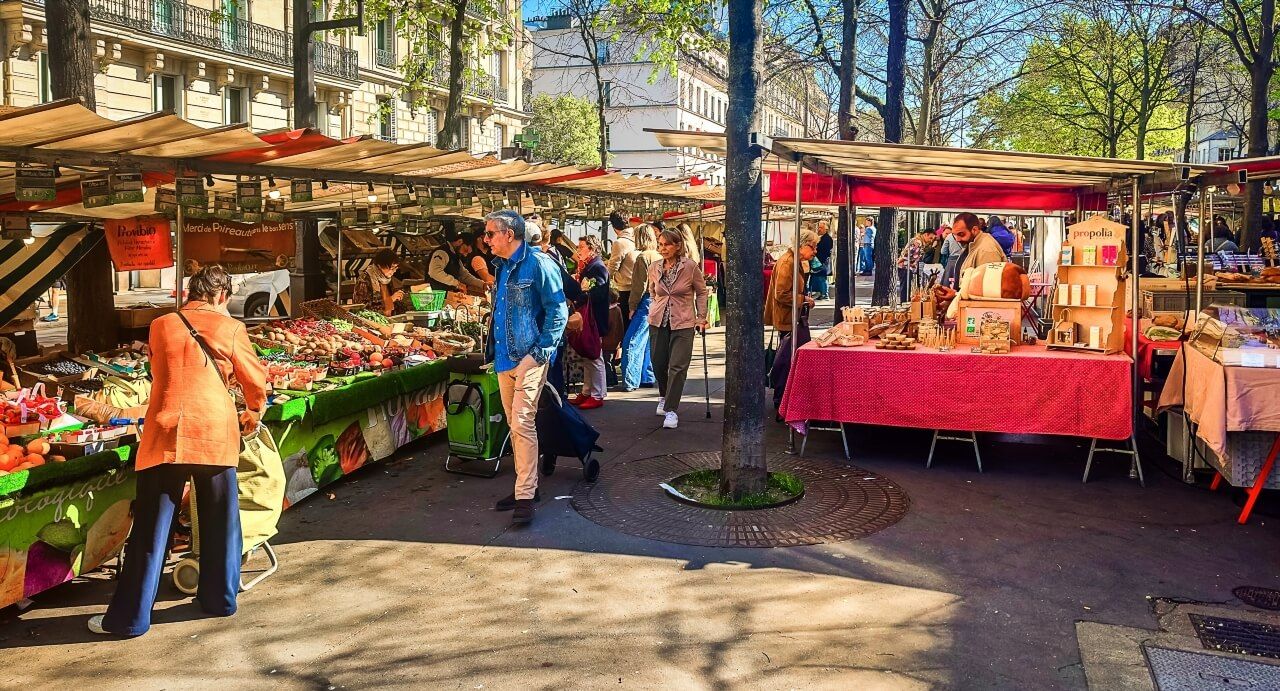
Batignolles, Montmartre and the Popular Right Bank
The Batignolles (17th arrondissement) constitute a village neighborhood little known to visitors, with a main shopping street (the Rue Brochant and the Batignolles covered market) and human-scale designer boutiques. It's the typical example of Parisian neighborhood commerce: butchers, cheese makers, local fashion concept stores.
Montmartre isn't the first address that comes to mind for shopping, but Rue Lepic and the streets around Sacré-Coeur concentrate local craft shops, photographic postcards and small galleries. The real surprise is on the Abbesses side: some independent fashion and artisan ceramics boutiques worth exploring. The Ryo guide on Pigalle and Montmartre shows you this neighborhood from another angle.
On the popular right bank side, Rue de Rivoli (1st arrondissement) remains an efficient mass shopping option: several kilometers long, it connects the Palais-Royal arcades to the Marais outskirts and concentrates mid-range brands and souvenir shops. Palais Royal itself houses the covered Beaujolais and Valois galleries, with vintage designer boutiques and jewelry antique dealers, a radically different atmosphere.
Flea Markets and Antiques: Saint-Ouen, Montreuil, Vanves
Paris is surrounded by flea markets that rank among the world's most important. They are destinations in their own right, each deserving a half-day.
The Saint-Ouen flea market (Porte de Clignancourt, 93400 Saint-Ouen) is the world's largest flea market with its 7 hectares and 2,000 dealers spread across 15 distinct markets (Marché Vernaison, Marché Paul Bert, Marché Serpette...). You'll find antiques, Art Deco furniture, vintage jewelry, tableware, vintage clothing and unusual objects. Open Saturday, Sunday and Monday, with hours generally from 10 AM to 6 PM depending on markets and season. Allow at least 3 hours to cover the main alleys.
The Montreuil flea market (Porte de Montreuil, 20th arrondissement) is more popular, denser and much less touristy than Saint-Ouen. You'll find mainly second-hand clothing, small electronics, toys and books. Very low prices, authentic atmosphere. Open Saturday, Sunday and Monday from 8 AM. Arrive early, the best pieces are gone before 10 AM.
The Vanves market (Porte de Vanves, 75014 Paris) is the smallest of the three but renowned for its quality selection. Serious collectors come to hunt for antique books, 20th-century ceramics and prints. Saturday and Sunday morning only, the market running until 1-2 PM. It's the most accessible market from central Paris (Malakoff-Rue Étienne Dolet metro or bus 58).
Thrift Shops and Select Vintage: The Best Addresses
Paris has several hundred thrift shops, but their quality is extremely variable. Here are the addresses that vintage enthusiasts agree on.
Kiliwatch (64, rue Tiquetonne, 2nd arrondissement) is one of Paris's oldest thrift shops still operating. Two floors of clothes sorted by era and style, with a particularly well-stocked vintage denim selection. Prices have risen in recent years but remain reasonable for the level of selection.
Free'P'Star (rue de la Verrerie, Marais and rue Sainte-Croix-de-la-Bretonnerie) offers vintage from the 70s to 90s, specializing in sportswear and American collections. Two shops in the Marais, run by the same team for over 20 years, a rarity in the Parisian vintage landscape.
La Petite Robe Noire (rue des Rosiers, Marais) is the recommended address for high-end women's vintage: 50s-60s evening gowns, second-hand Chanel suits, used luxury accessories. Prices match the standing.
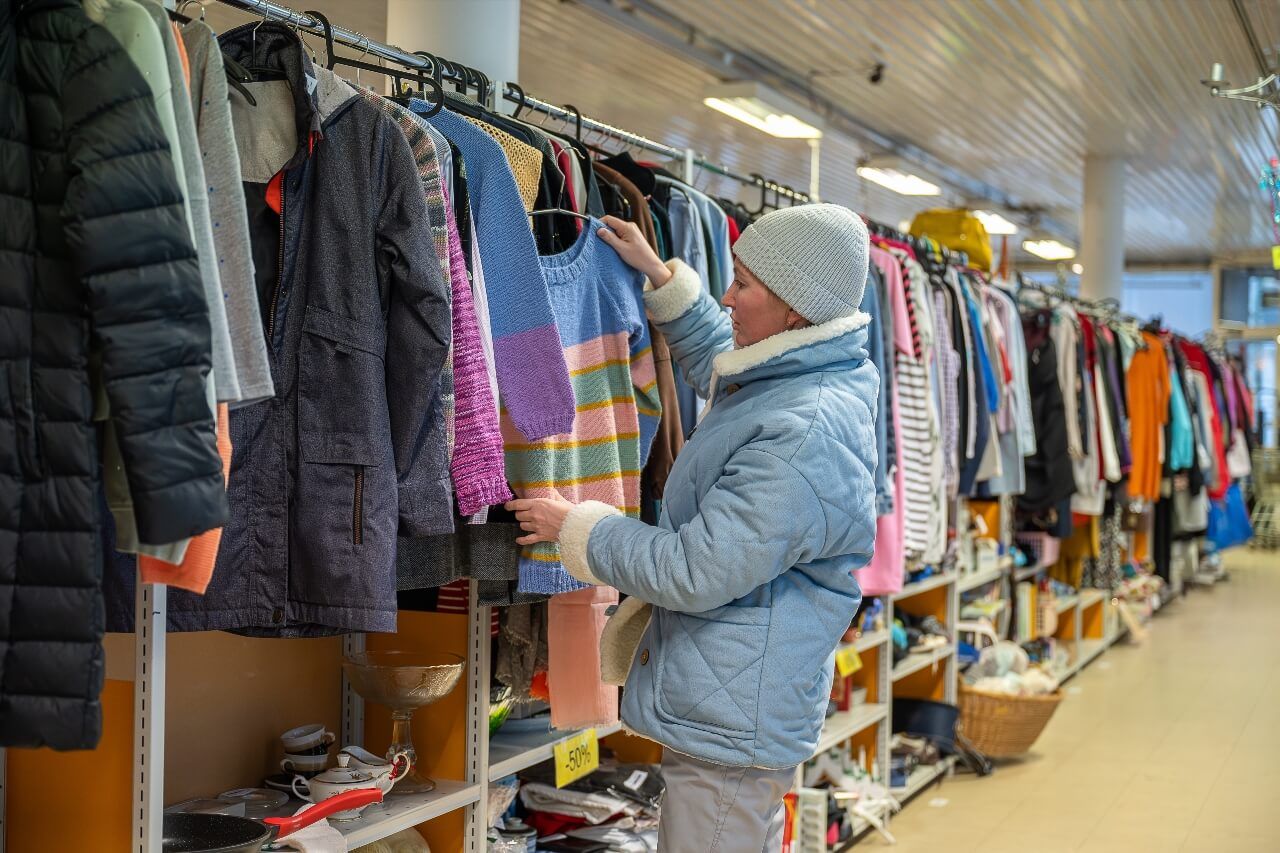
Rag (83-85, rue Saint-Martin, 3rd arrondissement) operates a pay-by-weight business model, around €30 to 45 per kilo depending on sections. It's the best value for vintage enthusiasts willing to dig.
For guaranteed authentic luxury vintage, Hermès bags, vintage watches, Chanel and Dior collection clothing, addresses are more toward Rue de la Paix (1st) and certain Palais-Royal galleries, with prices starting at several hundred euros.
Where to Shop Cheap in Paris
Paris isn't Europe's cheapest city for shopping, but good addresses for affordable shopping exist if you know where to look.
Sale periods are regulated by French law: twice a year, in January (beginning of the year, about 4-6 weeks) and in July (end of June, 4-6 weeks). The first days offer the best discounts (up to -70% in department stores) but also the longest queues.
The Forum des Halles (Châtelet-Les Halles, 1st arrondissement) remains one of Paris's most accessible shopping centers in terms of prices and transport connections (RER A/B/D hub + 5 metro lines). You'll find H&M, Zara, Uniqlo, but also lesser-known brands like Primark steps away, on Rue de Rivoli.
The covered shopping galleries of central Paris (Galerie Véro-Dodat, Passage des Panoramas) are less known for economical shopping but hide second-hand bookstores, stamp and card dealers, and small artisan workshops at moderate prices.
The Rue d'Alésia (14th arrondissement) deserves special mention: it's the street of major brand stocks. Brands like Sandro Stock, Maje Stock, Ba&sh Stock offer unsold items and end-of-season pieces at prices reduced by 30 to 60% compared to current collections. Less glamorous than the Marais, but much more profitable.
For very low-priced clothing, the area around Rue du Faubourg-Saint-Denis and Rue de Strasbourg (10th arrondissement) concentrates wholesalers and retailers of fashion at unbeatable prices, notably for basic clothing, accessories and fabrics. It's less "experiential" shopping but very efficient.
Practical Tips: Hours, Sales, Tax Refund, Transport
Hours: the vast majority of Parisian boutiques open between 10 AM and 10:30 AM. Department stores (Galeries Lafayette, Printemps) open at 9:30 AM. Flea markets (Saint-Ouen, Vanves) start as early as 7 AM. Sunday remains more limited, except in tourist neighborhoods like the Marais (Sunday opening almost universal) and on the Champs-Élysées. Closing is generally between 7 PM and 8 PM.
Tax refund: visitors residing outside the European Union can recover VAT (20%) on purchases over €100 in the same store. Ask for the tax refund form at checkout. Have it validated at the Pablo terminal at customs before boarding (Paris-CDG and Orly airports). Refund then occurs within 2 to 3 weeks on your credit card.
Transport: Paris is well connected. For shopping in several neighborhoods in one day, the daily Navigo pass (€8.65 in 2026 for zones 1-2) is the most economical solution. Vélib' (bike sharing) is ideal for connecting the Marais to Saint-Germain-des-Prés or Oberkampf to République without taking the metro.
Bags and packaging: since 2021, single-use plastic bags are banned in France. Bring a tote bag or reusable bag, or take advantage of paper bags offered by most boutiques.
FAQ
What Is the Best Neighborhood for Shopping in Paris?
It depends on your budget and what you're looking for. For luxury and high-end fashion houses, the Triangle d'Or (avenue Montaigne, rue du Faubourg-Saint-Honoré) is the global reference. For contemporary high-end fashion and designers, the Marais best combines accessibility and diversity. For general department stores with all brands under one roof, the Galeries Lafayette / Printemps area (boulevard Haussmann) is the most efficient. For budget shopping or bargains, Rue d'Alésia and the flea markets of Saint-Ouen or Montreuil are your best options.
What Time Do Shops Open in Paris?
Most Parisian shops open between 10 AM and 10:30 AM. Department stores (Galeries Lafayette, Printemps) open at 9:30 AM. Flea markets (Saint-Ouen, Vanves) start as early as 7 AM. Sunday opening is variable: widespread in the Marais and on the Champs-Élysées, more limited elsewhere. Closing is generally between 7 PM and 8 PM.
How Does Tax Refund Work in Paris?
VAT refund (20%) is available to visitors whose tax residence is outside the European Union. Condition: purchase at least €100 in the same store on the same day. Ask for the tax refund form at checkout. Have it validated at the Pablo terminal at customs before boarding (Paris-CDG and Orly airports). Refund then occurs within 2 to 3 weeks on your credit card.
What Are the Best Flea Markets in Paris?
The Saint-Ouen market (Porte de Clignancourt) is the largest and most varied. The Montreuil market is less touristy and cheaper, specializing in second-hand clothing. The Vanves market is the most select, with a quality selection of antique books and 20th-century objects. All three are open on weekends (Saturday and Sunday minimum).
Where to Find Cheap Designer Clothes in Paris?
Several options. Rue d'Alésia (14th) concentrates stock stores of French brands (Sandro, Maje, Ba&sh) with 30 to 60% discounts. Galeries Lafayette and Printemps organize private sales and clearances by registration. Marais thrift shops (Kiliwatch, Rag, Free'P'Star) offer designer pieces at prices well below new. Sales periods (January and July) remain the best time for major retailers.
Is the Marais Open on Sundays?
Yes, the Marais is open on Sundays, which is an exception in Parisian commerce. Most shops on Rue des Francs-Bourgeois and adjacent streets (Rue de Bretagne, Rue Vieille-du-Temple) open Sunday between 11 AM and 6-7 PM. It's often the busiest day. BHV Marais is also open on Sundays, as well as the many cafés and restaurants in the neighborhood.
Are There Shopping Centers in Paris?
Paris has several major shopping centers. Forum des Halles (Châtelet, 1st) is the most central. Beaugrenelle (15th, by the Seine) is more recent and very well served. Italie 2 (13th) and Les Quatre Temps (La Défense) are slightly outside Paris proper but offer a complete range. For luxury in department store form, Galeries Lafayette and Printemps at Haussmann remain hard to beat.
Conclusion
Paris isn't summed up by a single shopping address. It's a city where each arrondissement has its commercial identity, from the understated glamour of the Triangle d'Or to the bustling alleys of Montreuil, via the independent designers of the Marais and the brand stocks on Rue d'Alésia. The best shopping day in Paris is one you build according to your budget and desires, mixing styles rather than staying in a single neighborhood.
To discover Paris on foot between shopping sessions and understand the history of the neighborhoods you cross, the Ryo audio guide tour of Paris takes you on 8.9 km with 18 commented stops, a natural way to alternate culture and shopping over the course of a day.