

Créé par Emilie, le 20 juin 2026
Votre guide Ryo
A tour of the best places to eat around the world!
© Shutterstock
Let's not kid ourselves, one of the main attractions of traveling is the culinary discovery of the country visited!
If you go to McDonald's every lunch while traveling, this article is not for you! But for the others, those who salivate in advance at the idea of wandering through Bangkok's floating markets, tasting hundreds of curries in Mumbai or trying all the tacos in Mexico, then look no further, this list is made for you!
At the end of 2022, a "gastronomic scandal" just broke out. Indeed, the Taste Atlas site just published its ranking of the 95 best cuisines in the world and placed France in 9th position! Behind the United States!! Help! Being behind Italy or Greece is one thing, but behind the United States, the French have trouble digesting!
Faced with the outcry provoked, the site had to justify its methodology and explain that American cuisine was not limited to hamburgers.
Anyway, the world is full of flavors and colors, varied spices and ways of cooking. The dishes we prepare say a lot about our cultures, our desires and the geography of our regions, so let's take a little tour of what the world has in its kitchens!
Tell me what you eat, I'll tell you who you are...
The 12 dream destinations for a culinary journey!
(in no order of preference, don't get upset! And without France since we live there and already know it quite well!)
1. Mexico
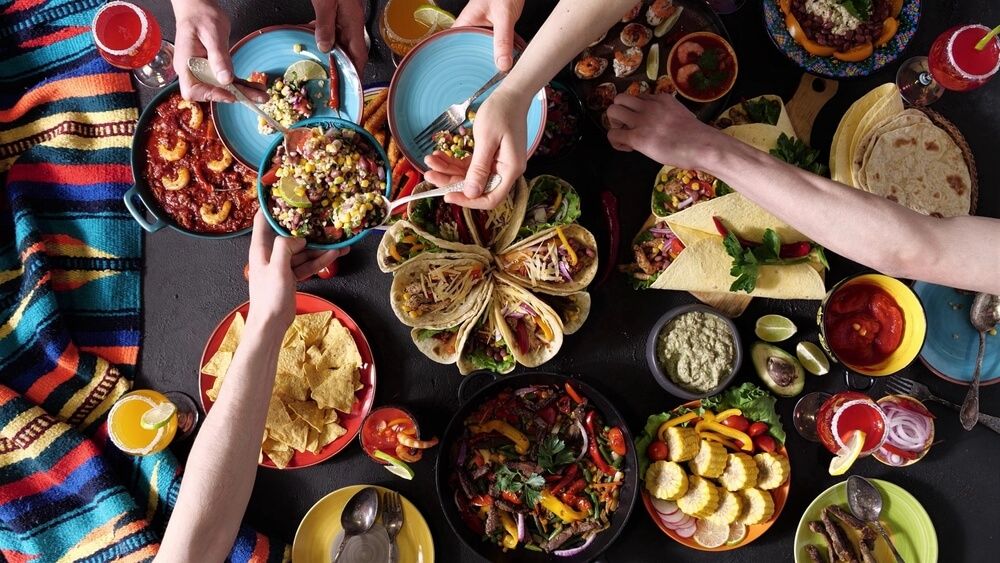
In Mexico, no long meals at the table. You eat standing up, in the street, at any hour of the day (and night).
The emblematic dish is the taco, this small tortilla made from corn or wheat flour and stuffed with various meats, fish or seafood, mixed with preparations based on onions, peppers, tomatoes and often accompanied by guacamole and spicy sauces.
But Mexican gastronomy doesn't stop there! Its history is ancestral and dates back to pre-Columbian civilizations, where corn was considered sacred. Today, Mexican gastronomy is the result of a pre-Hispanic heritage and European cultures, mainly Spanish, due to the conquest of the Aztec Empire in the 16th century. This explosive mixture was also influenced by African, Caribbean, Asian cuisines, which came with the slavery that took place throughout "New Spain". Quite a mixture and quite a result! So incredible that it is inscribed on UNESCO's World Heritage list.
A trip to Mexico is the promise of colorful taste discoveries!
Don't hesitate to have a breakfast of "Huevos Rancheros", choose the wonderful "Chile rellenos" at the corner restaurant, try the "tamales", taste all the "Mole" at the Oaxaca market and do tequila and mezcal tastings!
In Mexico, gastronomy rhymes with conviviality, so don't forget that life is a party and that the best dishes are those we share!
Buen Provecho!
2. Lebanon
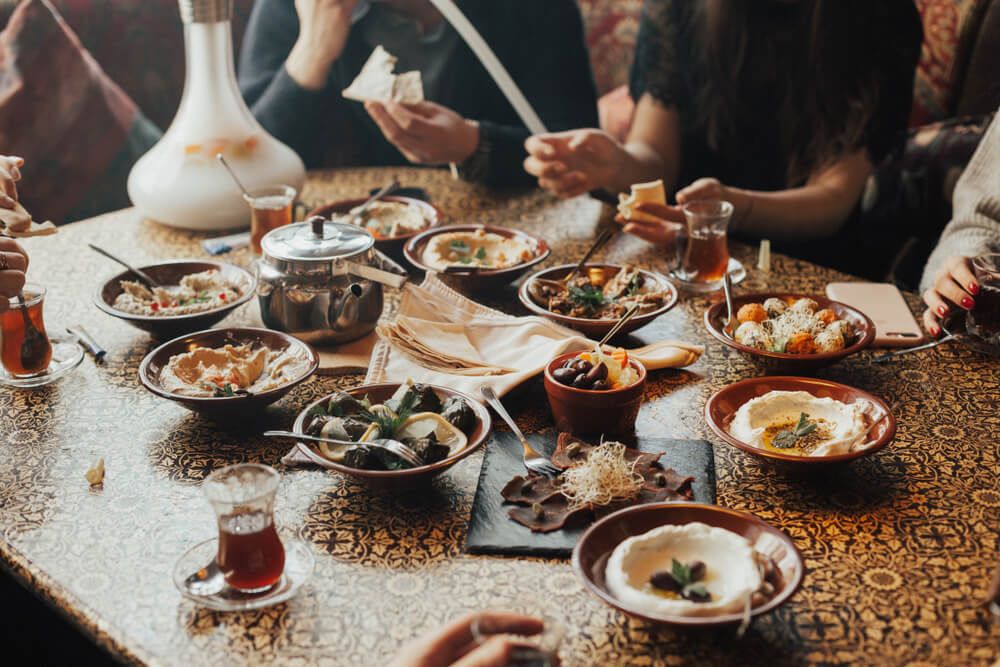
Given the number of Lebanese restaurants found in France, we can conclude that the French love Lebanese cuisine!
And how could it be otherwise? Lebanon is part of what is called Levantine cuisine, that is, from the Levant region, inspired by Mediterranean, Greek, Jewish and Arab cuisine. With such a mixture of flavors and know-how, we can only be charmed!
Its dishes reflect legendary Lebanese hospitality and are as healthy as they are flavorful! Very balanced, it mixes proteins, vitamins, salads, meats and many water-rich grains like chickpeas.
The best known dishes are hummus and tabbouleh that you all know, chicken or veal shawarma, served on a plate or in a sandwich, falafels, these spiced chickpea balls, or kefta, a meat skewer that can also be presented in ball form.
For dessert, we obviously think of Baklawas and osmaliyeh, a sweet made from fresh pasta vermicelli covered with honey and accompanied by fresh cheese or cream.
Sahten!
3. Greece
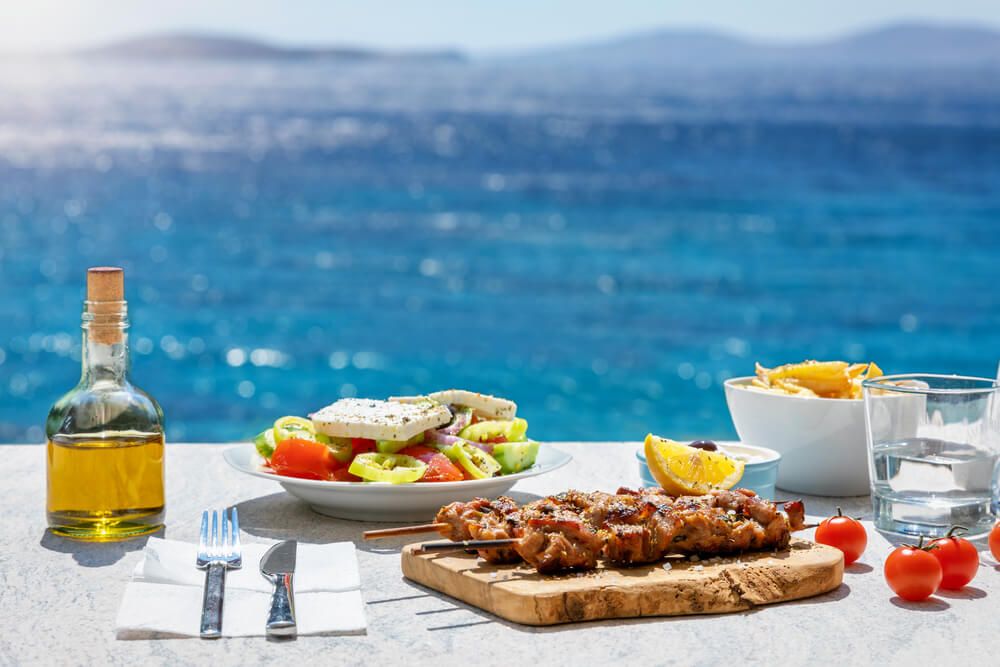
Greek cuisine has a reputation that has preceded it for millennia. The famous Mediterranean diet that would make you live long is even inscribed on UNESCO's intangible heritage list. Greek gastronomy is like its country, a real cultural mixing, born from infinite migrations within the cradle of Western civilization.
The typical ingredients of Greek cuisine taste like sunshine and vacation: olive oil, feta, black olives, tomatoes, tzatziki, etc.
You know almost all these dishes, but let's take a little tour of what you'll taste during your stay in Greece.
We start with the aperitif, with mezze, bites to share, halfway between appetizers and tapas. You have, for example, dolmadakias, these stuffed grape leaves, spanakopitas, small spinach and feta pastries, and Greek salad, a perfect marriage between black olives, red onion, cucumber, tomato and feta.
For the main course, we think of moussaka of course, but also souvlakis, grilled meat skewers, or pita gyros, the unshakeable Greek sandwich found everywhere!
If you prefer sweets, then you'll be well served, Ottoman influence is very present in Greece and you'll find many oriental sweets bathed in honey like baklavas. Also taste the Loukoumades, small donuts that were once offered to the winners of the Olympic Games in Ancient Greece!
And to wash it all down, a good shot of Ouzo, the country's typical anise alcohol!
καλή όρεξη !!
4. Thailand
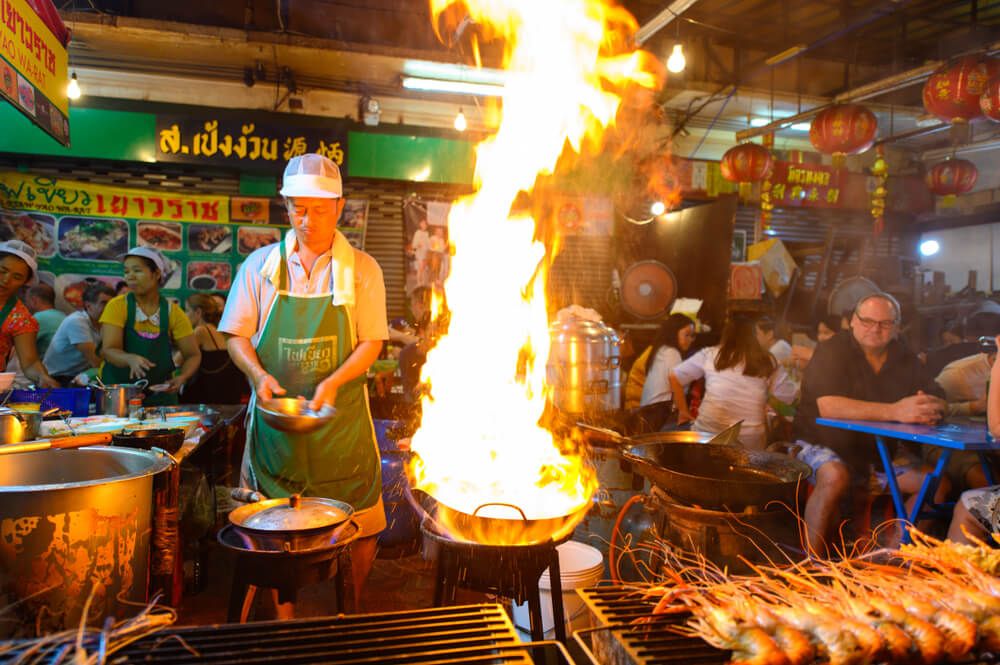
Aaah, Southeast Asia, paradise for lovers of culinary adventure! Here, everything is different from Europe. We don't think about ingredients the same way. We handle sweet and savory more easily, we don't fear spices or flavor explosions. A treat for the palate and a new dimension for our mind that doesn't understand what's happening to it!
Yes, it's spicy. Some will say that chili hides the taste and takes all the space, but chili, in reality, is that taste, impossible to find without the many ingredients that form curry pastes or the incredible sauces that enhance your dishes. I could have talked to you today about the fascinating Vietnamese, Malaysian, Indonesian, Laotian, Cambodian or even Chinese cuisines, but we have to make a choice and we're going to present Thai gastronomy.
The ingredients that give it this inimitable taste are mainly: ginger, galanga, lemongrass, cilantro, red basil, chili, peanuts, coconut milk and soy.
You've probably already tasted Pad Thai, one of the cheapest dishes sold on the street in the world! These are noodles stir-fried in a wok, accompanied by shrimp or chicken and sprinkled with peanuts and a lime drizzle. Another ultra-typical and delicious dish, Tom Yum, a spicy sweet and sour soup with pork, chicken or fish composed of broth, lime, and flavored with lemongrass and galanga. You'll also find grilled meats and fish like Crying Tiger, a spicy beef dish, or stir-fried chicken with spicy basil. Then come the famous curries, which come in all colors for delicious appetizing discoveries! Curry pastes (green, red, yellow, massaman, panang etc) are so many variations of spice and ingredient mixtures, which, mixed with coconut milk, offer a delicious creamy base for your meats, fish, vegetables or seafood.
เพลิดเพลินกับอาหารของคุณ !
5. Peru
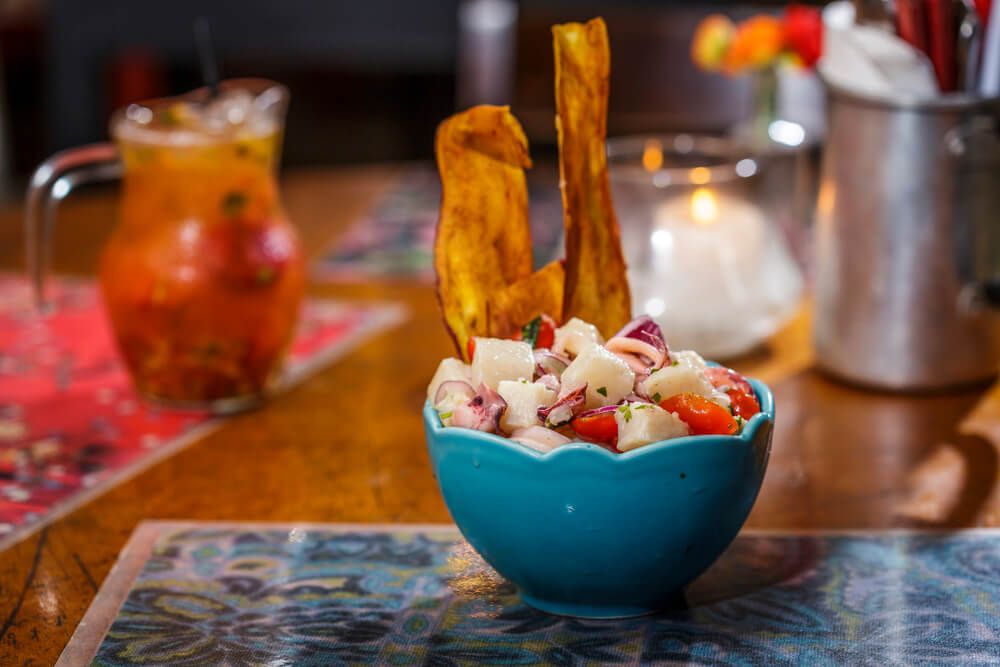
Peru is a major culinary surprise! Its gastronomy has been talked about for several years already and has elevated Peru to the rank of the world's great cuisines.
In 2013, the World Travel Awards even elected it "Best Culinary Destination of the Year!" So why? What's behind Peruvian gastronomy and what do you eat when you come down from Machu Picchu?
First, you have to understand that Peru's history is rich in migrations, and mixing, as we've seen, is the key to success when you start cooking! The Spanish thus brought with them the ingredients of the old continent and actually brought back... potatoes! Yes, thank you South America, without them, goodbye fries!
Then came the Italians, but also and especially, the Chinese and Japanese! You didn't expect that one, and yet, in Peru you eat really well in the Chi-Fa, Asian-Peruvian fusion restaurants!
Some dishes to test urgently: Ceviche, that famous raw fish, soaked in spicy lemon juice, usually accompanied by sweet potato, cassava and corn. Aji de Gallina, a creamy chicken dish flavored with yellow chili, served with rice. Lomo saltado, sliced beef with onions, influenced by Chinese cuisine. Anticuchos, beef heart skewers found everywhere on the street. Rocoto relleno, a sort of pepper stuffed with ground meat. Or Arroz chaufa, or arroz con marizcos, the typically Asian stir-fried rice dishes that are absolutely delicious!
Buen Provecho!
6. Japan
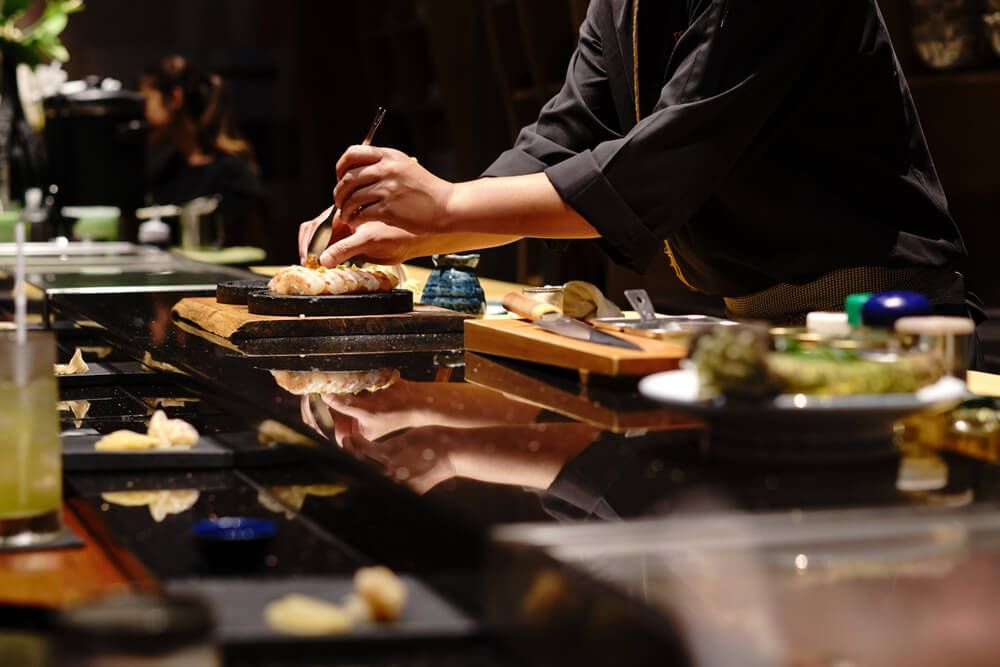
Japan has always been a dream for lovers of fine gastronomy. We easily imagine refined and delicate Japanese dishes, prepared with respect and know-how. Indeed, in Japan, they don't joke around with traditions and gastronomy is closely linked to philosophy.
Sushi, maki and sashimi, just like ramen, are naturally popular in France, but great Japanese gastronomy doesn't stop there! The legendary longevity of the Japanese obviously owes much to their healthy and balanced cuisine! The accuracy of flavors is incredible and the Japanese have even inspired the fifth basic flavor, much less known in French than the other 4 (salty, sweet, sour and bitter), it's umami. Which would translate as savory. Mmm, what does "savory" taste like?
Anyway, traditionally, the family menu is called ichijū sansai which you can translate as "One soup, three dishes". Rice, fish and seafood, and soy are the key elements of these classic menus. But know that Japan has incredible diversity of dishes and a multitude of local cuisines like that of Okinawa.
Outside these everyday dishes, there are three different types of traditional cuisine inherited from great ancestral traditions: Yūsoku cuisine, inherited from the imperial court of Heian, honzen cuisine, that of the Samurai, and kaseiki cuisine, that of merchants and artists to which is linked, for example, the tea ceremony. It's this last one that we mainly know today as high Japanese gastronomy.
ボナペティ
7. India
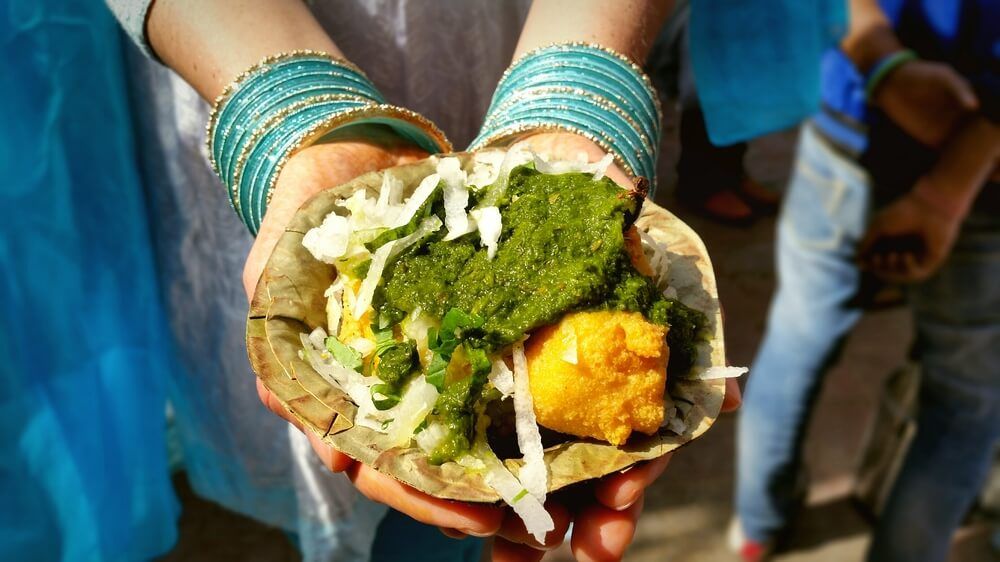
India is a key destination for lovers of new flavors and a vegetarian paradise!
As soon as its name is mentioned, your taste buds start thinking of cumin, turmeric, cardamom, saffron, nutmeg, curry, and feel the comforting warmth of traditional Indian dishes you eat at the corner restaurant. But you can imagine that in a country of this size, flavors vary enormously from North to South! You don't eat the same thing in the foothills of the Himalayas as on the southern beaches!
Indian geography has such diversity of soils, climates and cultures that its gastronomy perfectly reflects the thousand faces of the country.
Its global influence is gigantic and doesn't date from yesterday! Indeed, the spice trade between India and Europe was a key element of the great age of discovery from the 15th century. These new flavors bought in India and marketed in Europe influenced the cuisines of Europe, but also of the Middle East, Southeast Asia, Southern Africa and East Africa, North America, not to mention the islands (Fiji, Mauritius and Caribbean among others).
In the north, it's the opportunity to eat meat, chicken tikka masala, biryanis or tandoori cooking in tandoor ovens made of terracotta and traditionally buried in the ground. In the South, we're more vegetarian, and we enjoy Palak paneer, a creamy spinach dish served with Indian cheese and naans. Or vegetable korma, cooked in generous coconut cream mixed with tomato, yogurt and many spices. Not to mention, of course, lentil dhals, chapatis, samosas and tempuras.
अपने भोजन का आनंद लिजिये
8. Italy
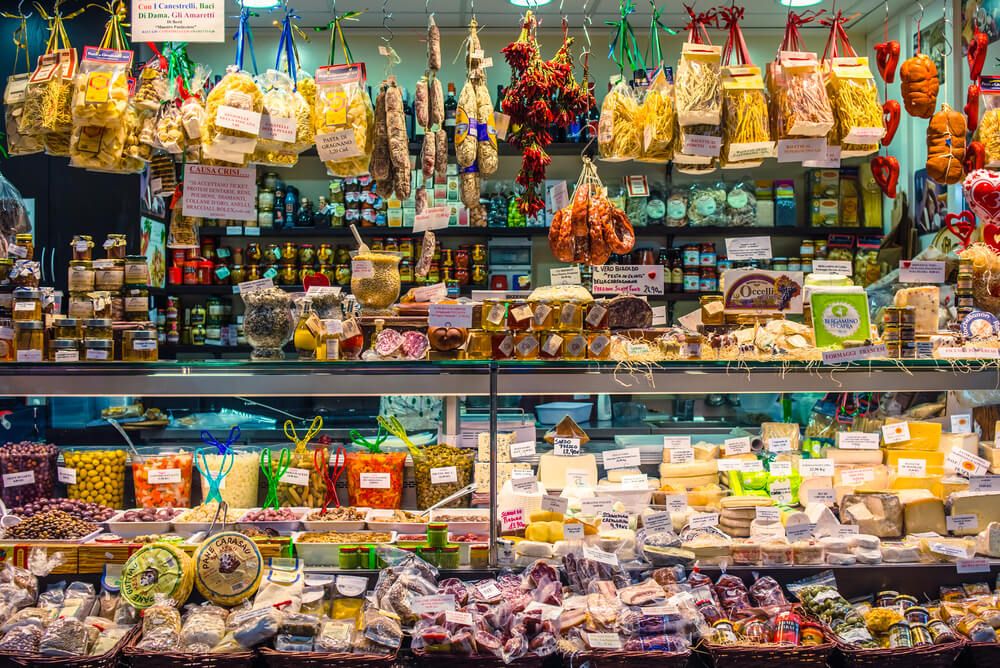
No need to introduce it, Italian gastronomy is indeed one of the most famous in the world. Ask anywhere, and everyone will be able to name at least 4 Italian specialties! Pizza regularly tops the list of favorite dishes of inhabitants around the world!
Heir to the cuisine of ancient Rome, the ingredients of Italian dishes mainly come from the Mediterranean basin, with great consumption of fruits, vegetables, cereals, olive oil and aromatic herbs, mixed with immense production of cheeses, charcuterie, wines and desserts, leaving an insane list of 5,300 traditional regional products.
A well-established belief tells that it was Marco Polo who brought pasta back from China in the 13th century. But, in reality, the Greeks and Romans already consumed fresh pasta as today!
What, on the other hand, will really revolutionize Italian cuisine, is not Marco Polo's journey but Christopher Columbus's! The products brought back from America, notably potatoes, tomatoes or coffee and chocolate, are all ingredients inseparable from current Italian gastronomy! Imagine a pizza without tomato sauce, Italy without its espressos or try making gnocchi without potatoes... Impossible...
The list of specialties is long, and a little Italian road trip is necessary if you want to discover the wonders of each region!
Buon appetito!
9. Spain
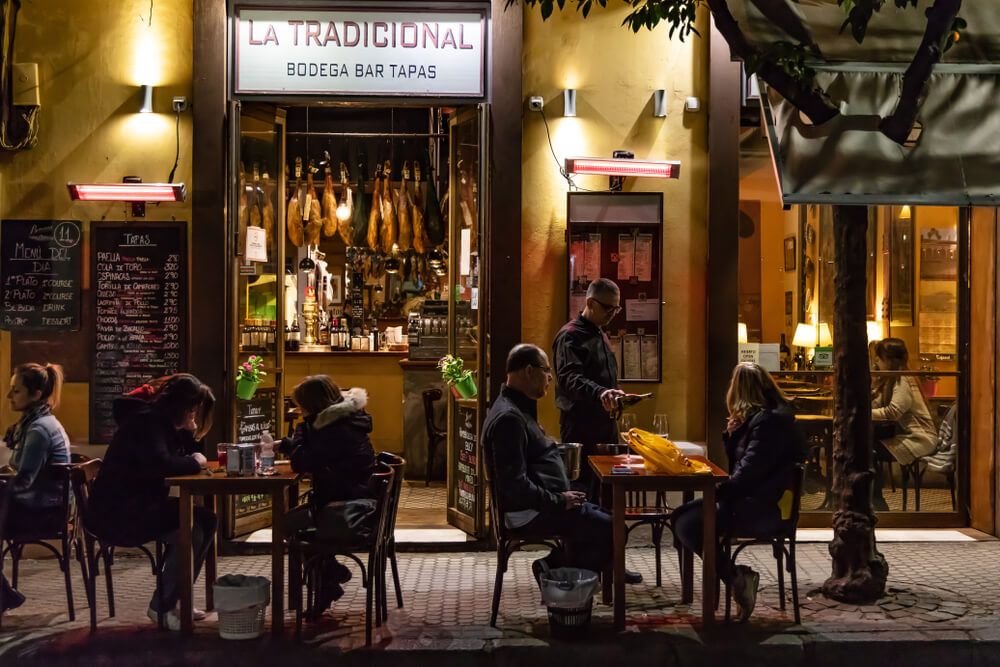
When we go on vacation to Spain, we know we're going to enjoy ourselves. That we're going to spend hours sitting on the terraces of bars and cafes, sharing delicious tapas next to fresh sangria or ice-cold caña.
Spain puts its gastronomy at the service of shared pleasures. It's a generous, joyful and popular cuisine, from a culture mixed by the different peoples who inhabited it (Phoenicians, Greeks, Romans, Moors...), as well as by the conquests of the Spanish crown (Latin America, Asia or Africa).
Its important climatic and cultural diversity also leaves traces in its cuisine which varies enormously from one region to another.
As in France or Italy, knowing Spanish specialties requires traveling a bit everywhere in the country!
You'll find tapas, paellas, croquetas, Pata Negra and Gazpacho everywhere, but traditional rural dishes will be very different if you're by the sea or in a village in the Sierra Nevada (I'm not telling you anything new).
Spanish cuisine also draws much of its inspiration from its religious roots. Many typical dishes are indeed made for particular Catholic holidays like Semana Santa.
Spain is the leading producer of olive oil and also has beautiful wine production. By area, the Spanish vineyard is even the largest in the world!
In any case, if you're looking for a country to make a little taste trip, Spain can only be at the top of your list!
Buen Provecho!
10. Morocco
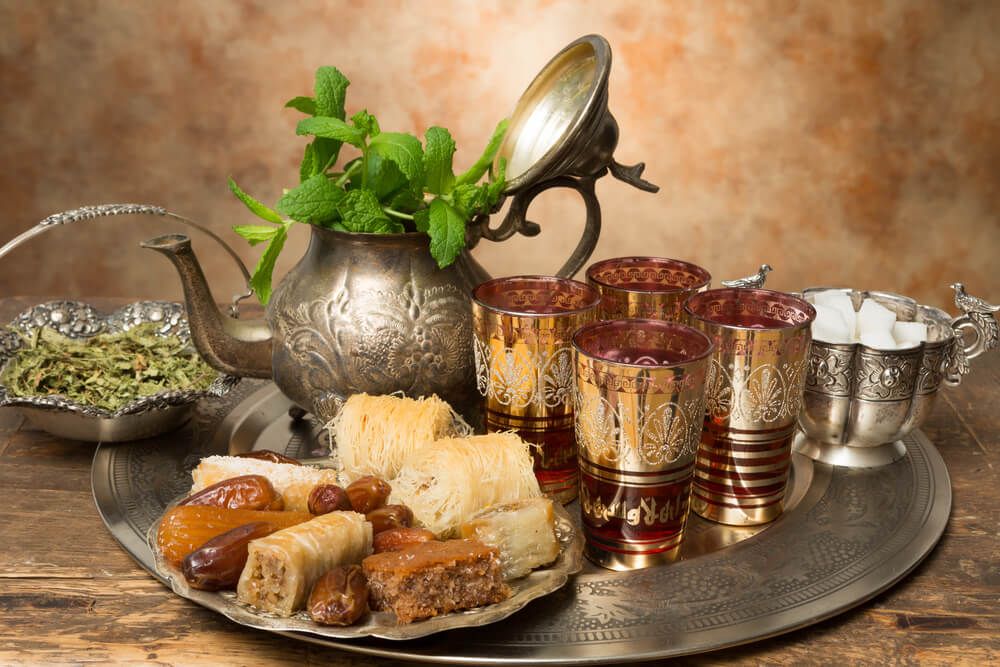
Direction Maghreb with the wonderful Moroccan gastronomy, ranked second cuisine in the world in 2015 by the British site Worldsim!
When you taste a dish in Morocco, it's the entire history of the country that you find on your plate. Tagine comes from the Berbers, who also brought dates, cereals, almonds. The Arabs came with spices, dried fruits and nuts. The Moors added olives, oil and citrus fruits, the Jews shared their preservation techniques like brines, and the British, you guessed it, imported their love of tea.
Spices are an integral part of Moroccan gastronomy. Saffron, clove, cumin, paprika, pepper, turmeric, dill, etc. The spice called "ras-el-hanout", which you all know and which literally means "head of the shop" is actually a mixture of 20 to 40 different spices, at the discretion of the owner of said shop.
In Morocco, it's women who are at the stoves. Don't look for precise recipes, traditions are passed from mother to daughter and measurements are done by eye.
The dishes you can discover during your trip to Morocco are flavorful and are enjoyed under the sign of sharing. They easily mix sweet and savory, nuts and legumes, dried fruits and meats or fish.
Whether you choose a Tagine, Couscous, Pastilla, Rfissa or Zalook, you won't be disappointed!
And I'm not even talking about the sweet delights! Seffa, Gazelle Horns, Chebakias, Makrouts etc. etc. etc...
شهية طيبة
11. Norway
Friends of wide open spaces and wild nature, Norway is made for you! And its gastronomy is like its landscapes: raw, beautiful and without artifice.
A country of fishermen and men and women used to the extreme conditions of Nordic countries, Norway reveals a cuisine that is both rustic and modern.
Its coasts carved by the Fjords offer it one of the world's largest coastlines and a fantastic reserve of fresh and healthy products.
But the country is also in the hands of inventive and ingenious Norwegian chefs. The country holds the highest number of medalists at the Bocuse d'Or, one of the most prestigious cooking competitions in the world (which Lyonnais know well)!
You can guess, here, salmon is king, it comes in all forms, or rather all cooking methods: cooked, raw, as gravlax, smoked, glazed or marinated.
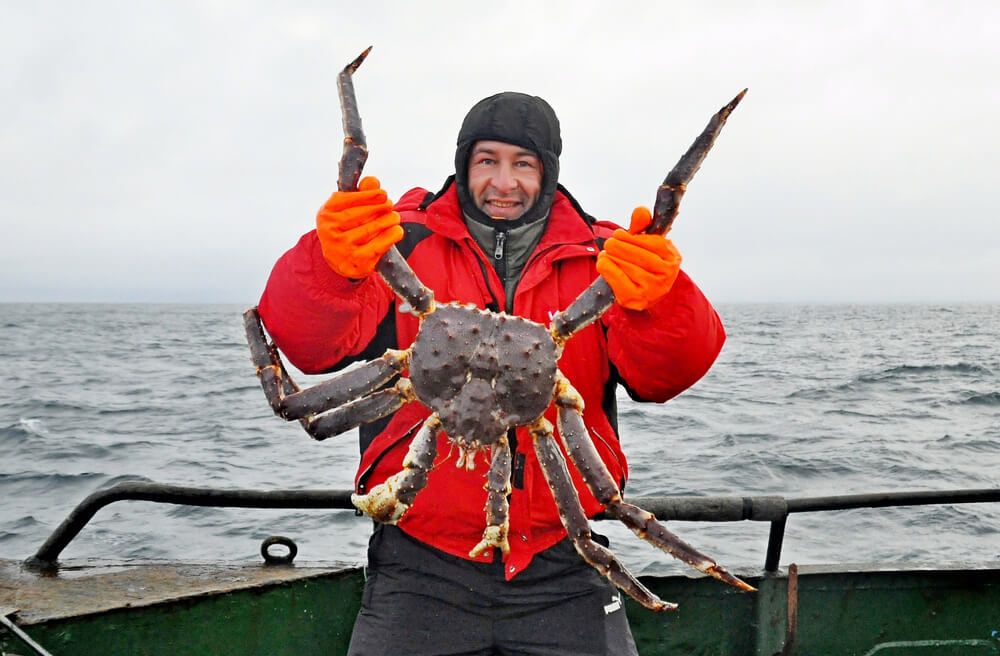
Norwegians love seafood! They consume a lot of herring, rakfisk (trout), tørrfisk (dried cod), but also seafood and this incredible king crab, giant of the northern seas.
On the meat side, we're not bad either! Elk, reindeer, and deer meat is also very present in traditional Norwegian dishes as well as in sausage making (know that they are big hot dog consumers!). You'll also find lamb or mutton dishes and lots of dried meats.
And finally, don't forget to taste their dairy products, known for being of unbeatable quality! Don't miss the strange Norwegian caramelized brown cheese (geitost)!
On the sweet side, let's not forget to mention its beautiful bakery, its typical Christmas cakes and the Norwegians' fascination with waffles. Yes, waffles. A real institution in Norway!!
Nyt maten din !
12. Poland
Less known than the other star cuisines on the list, Polish gastronomy is nonetheless not lacking! Ultra-comforting soups, fragrant sausages, fermented cabbage, smoked fish, potato pancakes... You get it, in Poland we're talking about cuisine that sticks to your ribs and warms the heart!
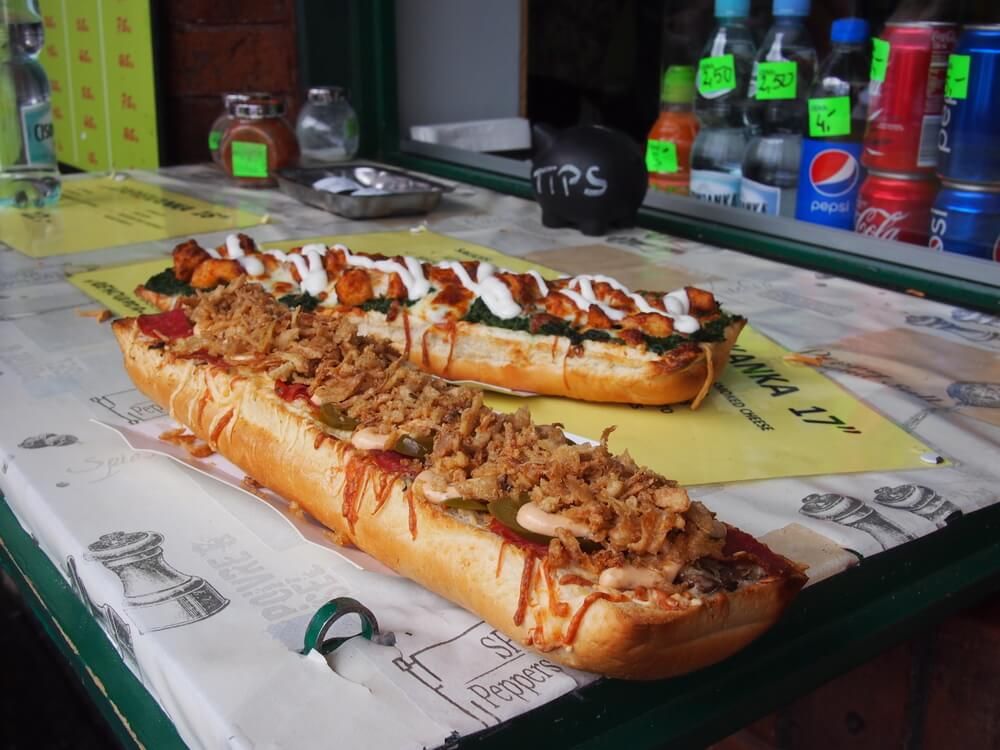
During a visit to Warsaw, Cracovie or elsewhere, don't hesitate to be tempted by the specialties sold on the street, like Zapiekanka, a half baguette gratin with cheese and covered with mushroom cream, or Obwarzanek, a bread similar to a bagel, to be enjoyed plain, with poppy or sesame.
Without forgetting of course, the most appreciated specialty, pierogis, a sort of large steamed ravioli usually stuffed with cabbage and mushrooms and available in infinite variations!
You'll even find sweet ones, covered with chocolate!
Apetyt!
Conclusion
The world is big, and its discovery is immense!
The earth has given us a multitude of flavors and ingredients, born at the top of a mountain, on the fertile plains of a volcano or in the middle of an arid desert.
Man, over the centuries, has cultivated these lands, tamed these ingredients and invented succulent dishes that are as much testimonies of the past as culture and traditions.
Men then ended up mixing and flavors traveled, evolved and continue to do so every day.
Cooking is what differentiates us from animals. We are the only species to prepare and improve our food. So, go explore what makes us human, to the four corners of the world! Taste everything, mix, see what your neighbor eats, be curious about their customs and traditions, you'll come back happy and satisfied, with memories full of eyes and recipes full of head!