
Créé par Romane, le 24 juin 2026
Votre guide Ryo
The Most Beautiful Villages around Perpignan: 10 Hidden Gems to Discover in 2026
© Shutterstock
Perpignan is often relegated to a supporting role, overshadowed by its Mediterranean neighbors. Yet within a 60-kilometer radius, the Pyrénées-Orientales conceal a constellation of villages that rank among the most beautiful in France: medieval citadels perched on rocky spurs, a village labeled 'the sunniest in France' with more than 325 sunny days a year, Vauban bastions listed as World Heritage Sites, and Catalan alleyways where time seems to have stood still since the 17th century. If you are looking for the most beautiful villages around Perpignan, this selection covers ten destinations reachable in under an hour, from the Roussillon vineyards to the foothills of the Pyrenees. To explore the starting city before hitting the road, the Ryo audio-guided tour of Perpignan, 19 stops in 1 hour over 2.4 km, will give you the keys to the Catalan culture that runs throughout the entire region.
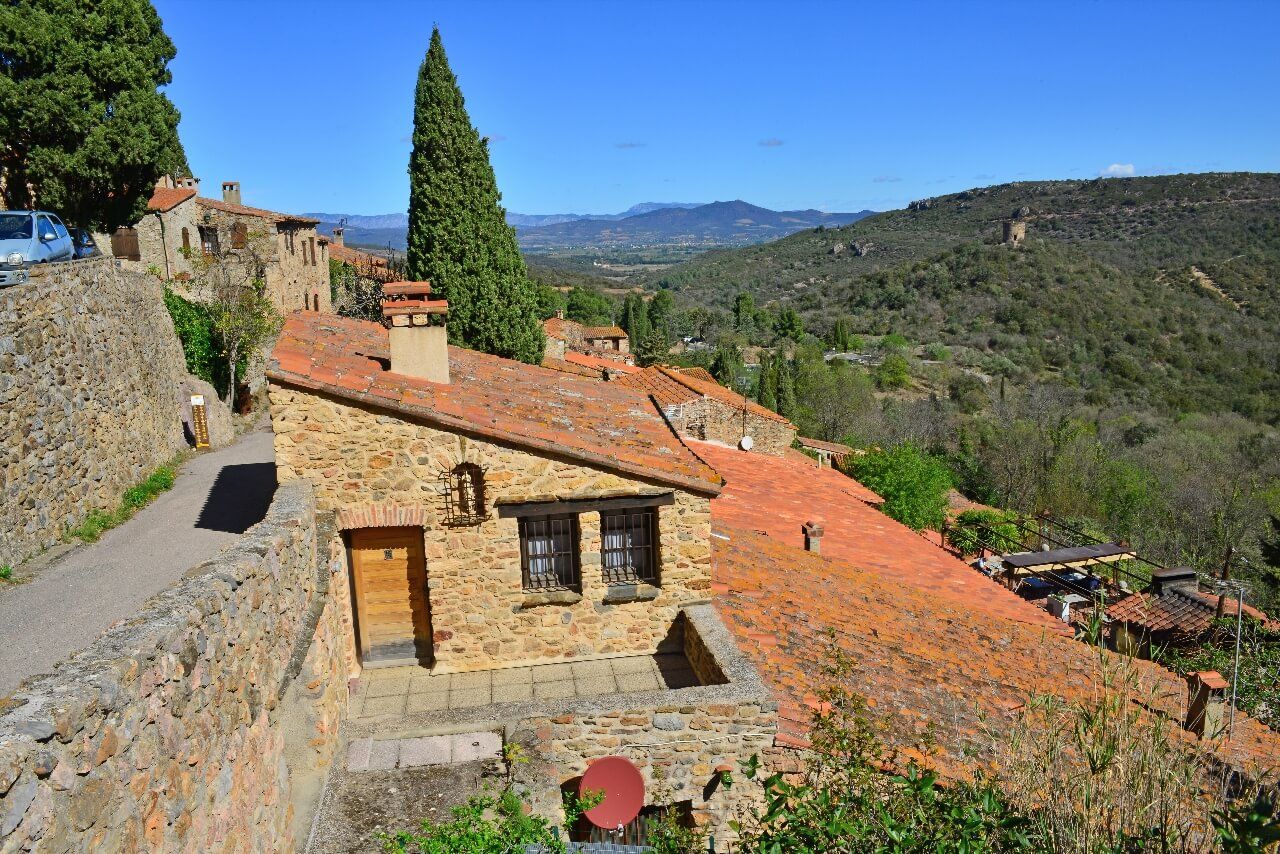
Castelnou, the Medieval Citadel at the Gateway to the Aspres
Just 20 kilometers southwest of Perpignan, Castelnou suddenly appears around a bend in the road, as if placed there by a medieval illuminator. The village is built in a semicircle around its 10th-century castle, with reddish-brown stone houses cascading down to a medieval gateway that still stands. Castelnou is one of the 'Most Beautiful Villages of France', a rare distinction that requires an exceptional built heritage and a population of fewer than 2,000 inhabitants.
The viscounts' castle dominates everything from its rocky platform. Built at the end of the 10th century, around 988–990, by the first lords of Castelnou, it is considered the oldest medieval fortress in the Roussillon and once guarded the border between the County of Roussillon and the County of Cerdagne. Now restored, it is open to visitors from April to November: allow 1h30 to tour it fully, taking time to read the panels recounting eight centuries of Catalan history. The view from the ramparts sweeps across the entire Roussillon plain all the way to the sea.
The village itself can be explored on foot in an hour. The paved alleyways, narrow enough to touch both walls by stretching out your arms, are home to a few craft workshops and a handful of art galleries. Don't miss the Sant Marti church, a Romanesque building from the 11th century whose typically Catalan square bell tower is visible from the plain. In the late afternoon, once the tourist coaches have left, Castelnou takes on an almost ghostly atmosphere—it's the best time to linger.
Two kilometers further down in the valley floor, the Jardin de la Mas Llaro offers Catalan aromatic and flower plants for sale—a good place to come home with something other than a souvenir bought off a shelf.
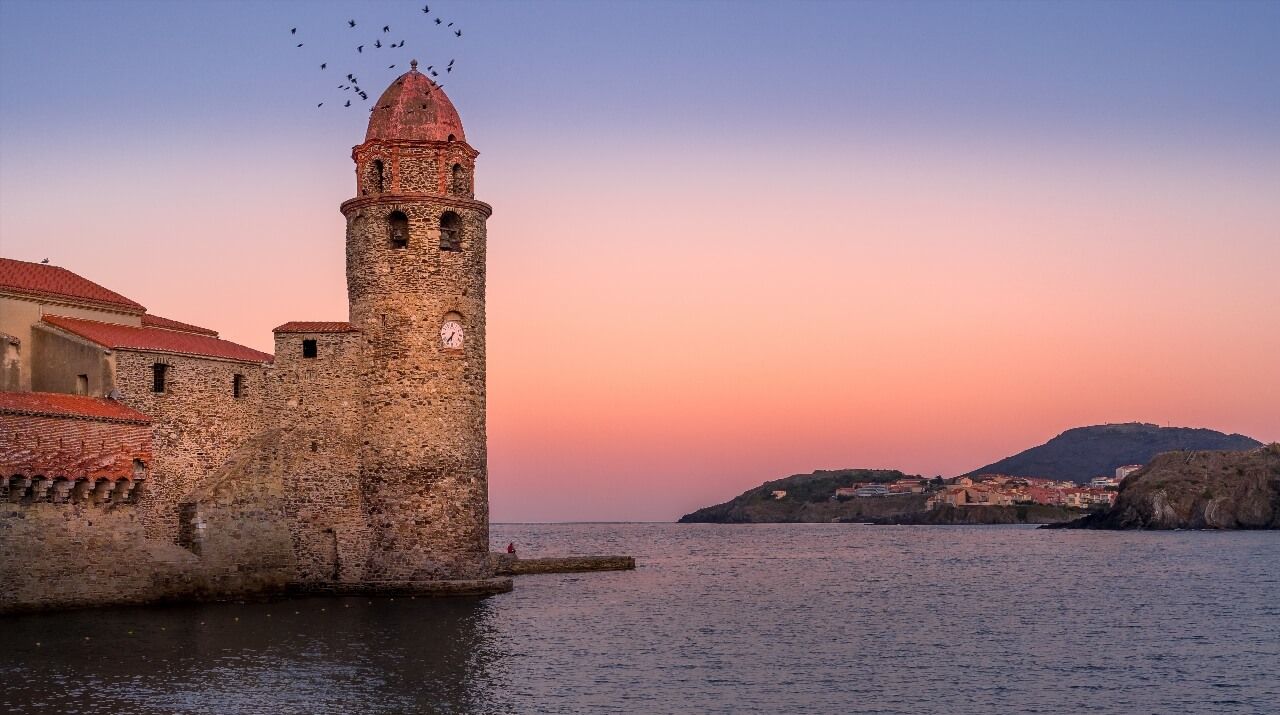
Collioure, Jewel of the Côte Vermeille
Collioure is not strictly 'around Perpignan'—28 kilometers separate the two towns—but no honest list of the region can ignore it. This fishing village nestled in a perfect bay inspired Matisse, Derain and the whole Fauvist crowd in the summer of 1905. It was here that they painted in pure color, as if dazzled by the Catalan light bouncing off the ochre facades and colorful boats.
The Château Royal de Collioure (Place du 8 mai 1945, 66190 Collioure, rated 4.6/5 on Google with 8,144 reviews) plunges its foundations into the sea. Built by the kings of Majorca in the 13th century, it was redesigned by Vauban in the 17th—his hallmark is visible in the angular bastions flanking the inner courtyard. The guided tour (adult admission: €7) takes about 1h30 and ends on a panoramic terrace overlooking the bay. Below, Collioure's three beaches—Boramar, Saint-Vincent, and the Plage du Château—are small but set in a landscape that alone justifies the trip.
The bell tower of the Notre-Dame-des-Anges church has historically served as a lighthouse: its round lantern, painted peach-pink, has become the symbol of the town. The Place du 18-Juin in front of the church is lined with café terraces. For dining, avoid the seafront restaurants in high season and look instead for addresses in the alleyways behind the Place du Marché—Collioure's anchovies marinated in olive oil deserve a proper tasting.
For those drawn more broadly to the Côte Vermeille, our guide on sites to discover on a cruise from the Côte Vermeille nicely complements this stop.
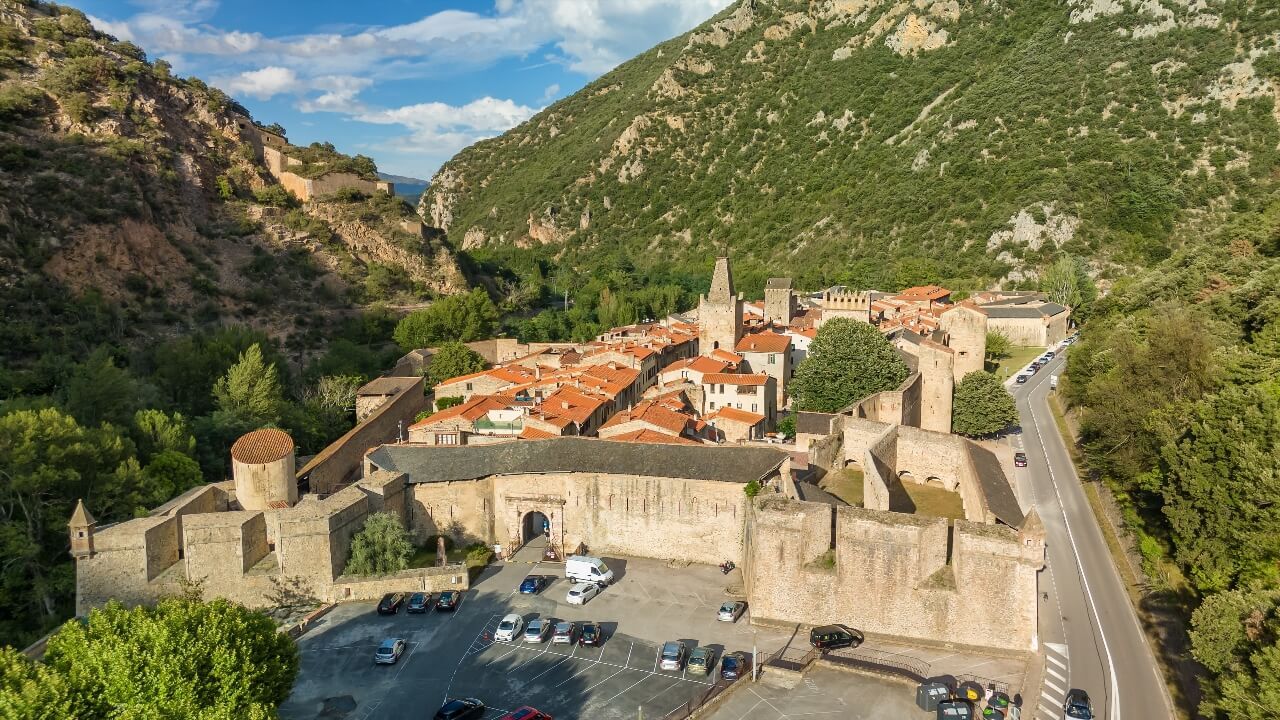
Villefranche-de-Conflent, a Masterpiece of Military Architecture
50 kilometers west of Perpignan, at the confluence of the Têt and the Cady, Villefranche-de-Conflent is a case apart. The entire town is a monument: its intact Vauban ramparts encircle a rectangle of medieval alleyways measuring 600 meters by 150. In 2008, UNESCO added it to the 'Vauban Fortifications,' alongside Carcassonne and Mont-Dauphin.
Vauban redesigned Villefranche between 1669 and 1681 on the orders of Louis XIV, following the Treaty of the Pyrenees that had brought the Roussillon under French rule. The strategic objective was to defend the route to Cerdagne against Spain. The result is an exceptionally well-preserved garrison town, still entered today through the same two medieval gateways used by the Sun King's soldiers. Allow €4 to access the ramparts and walk the parapet path—the view of the Canigou peak on a clear day is one of the most spectacular panoramas in the Pyrénées-Orientales.
Inside the walls, the église Saint-Jacques from the 12th century is worth a stop. Its Romanesque portal and sculpted capitals reveal the Lombard influence of the Catalan builders of the era. The Rue Saint-Jean, the main street, lines up local craft shops, mountain honey vendors, and cellars offering AOC Maury wines.
Villefranche is also the departure station of the Train Jaune, the Canari, a narrow-gauge line that climbs to Latour-de-Carol at an altitude of 1,232 meters, crossing gorges and viaducts over 63 kilometers. An unforgettable journey if you have an extra half day to spare.
Eus, the Sunniest Village in France
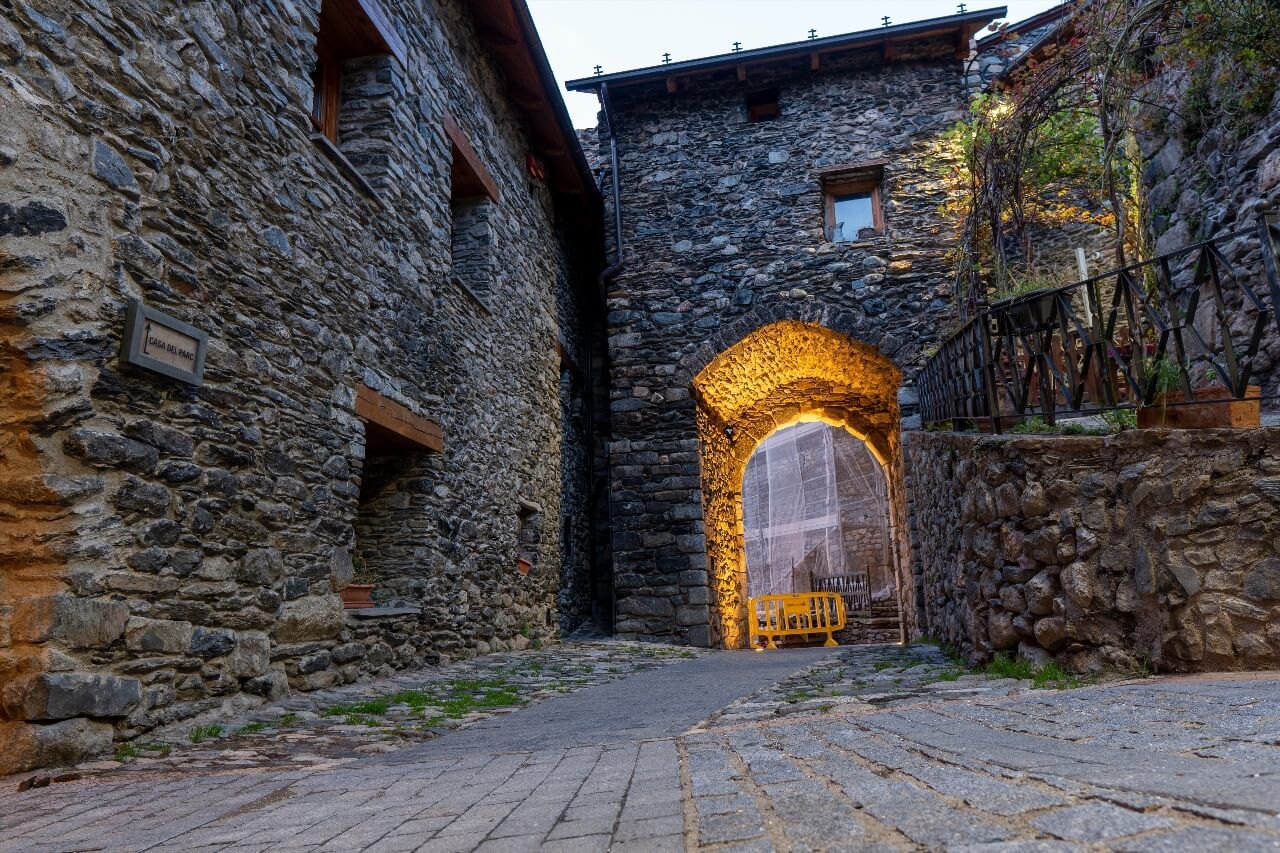
325 sunny days a year: that is the record claimed by Eus, labeled a 'Most Beautiful Village of France' and perched at 600 meters altitude facing the Canigou. The village rises in tiers along a rocky spur that dominates the Têt valley with quiet arrogance—from below, the houses look as though they have grown directly out of the rock.
Climbing through the alleyways of Eus is a physical experience: the lanes are not streets but staircases, vaulted passages, and narrow paths where two people brush against each other as they pass. Everything converges on the Sant Vicens church at the summit, whose bell tower offers a 360° panorama over the Roussillon plain, the snow-capped Canigou, and, on very clear days, the sea on the horizon.
Eus has attracted craftspeople and painters since the 1970s. A few studios remain open in season, alongside well-restored holiday homes. The village has fewer than 500 permanent residents but triples in size in summer. Plan your visit for early morning or late afternoon to enjoy it in peace.
Céret, the City of Arts in Catalan Country
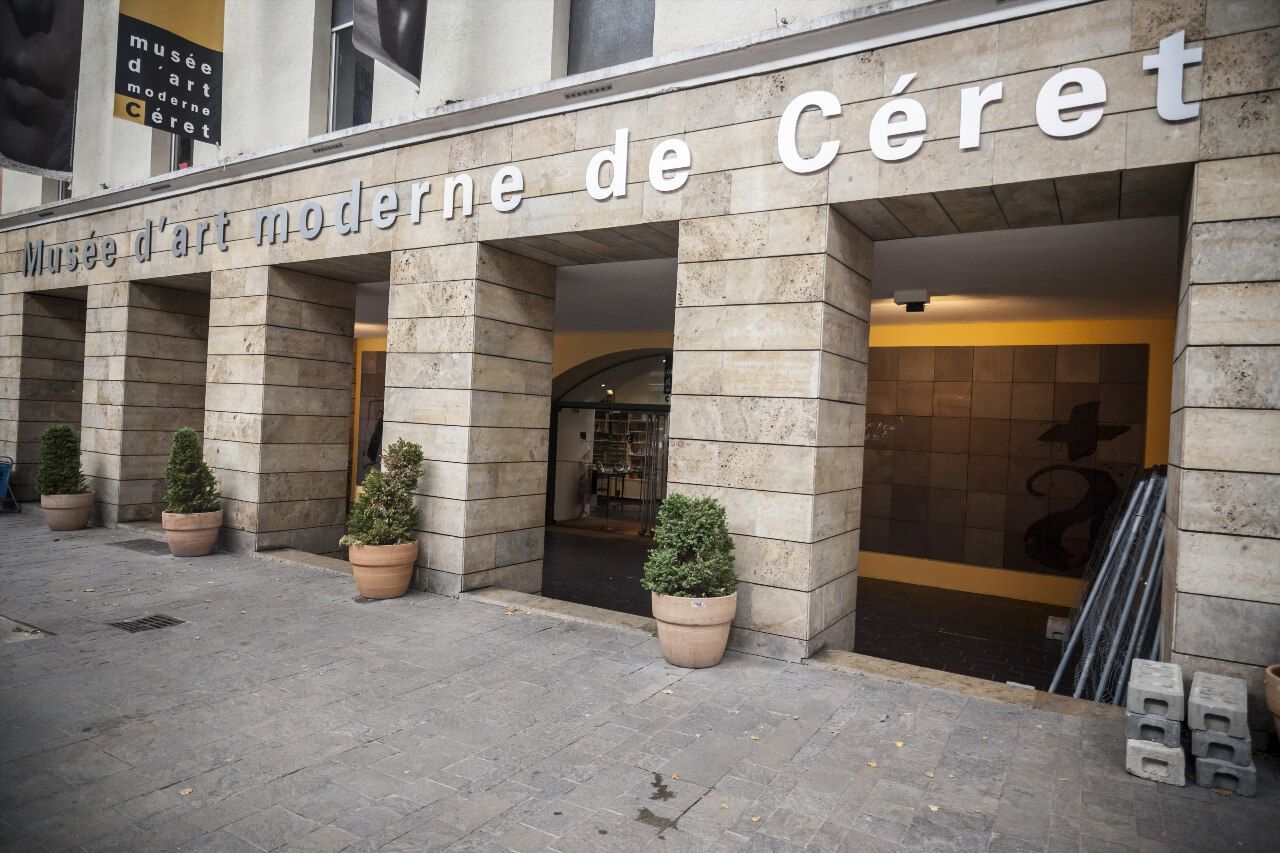
Céret plays in a different league. Just 30 kilometers southwest of Perpignan, in the Tech valley, this town of 8,000 inhabitants (too large to earn the official label, but no matter) was nicknamed the 'Mecca of Cubism' after Picasso, Braque, Gris, Chagall, and Soutine stayed here between 1911 and 1930. Several of them set up their studios in the town; today the Musée d'Art Moderne de Céret (8 Boulevard Maréchal Joffre, 66400 Céret, rated 4.5/5 on Google with 2,373 reviews), founded in 1950 with the support of Picasso and Matisse, holds a rich collection that these artists helped build through their donations—including 57 works gifted by Picasso himself, Chagalls in festive colors, and Soutines as intense as they are expressive.
The museum can be visited in 1h30 to 2 hours (full price: €10). The building's contemporary architecture provides a sober contrast with the century-old plane trees on the Place de la République. On leaving, cross the Pont du Diable, a medieval arch with a 45-meter span built in the 14th century—legend has it with the devil's help, in exchange for which the first soul to cross would be his. A cat was sent across as a scout.
Céret is also known for its cherries: France's first cherries of the season grow here, thanks to an exceptional microclimate. The annual cherry market in May is a regional institution. Out of season, the streets of the old town—Place de la Liberté, Rue Saint-Ferréol—retain an authentic daily life, far from the museified atmosphere of some labeled villages.
Mosset, a Flower-Filled Village in the Conflent
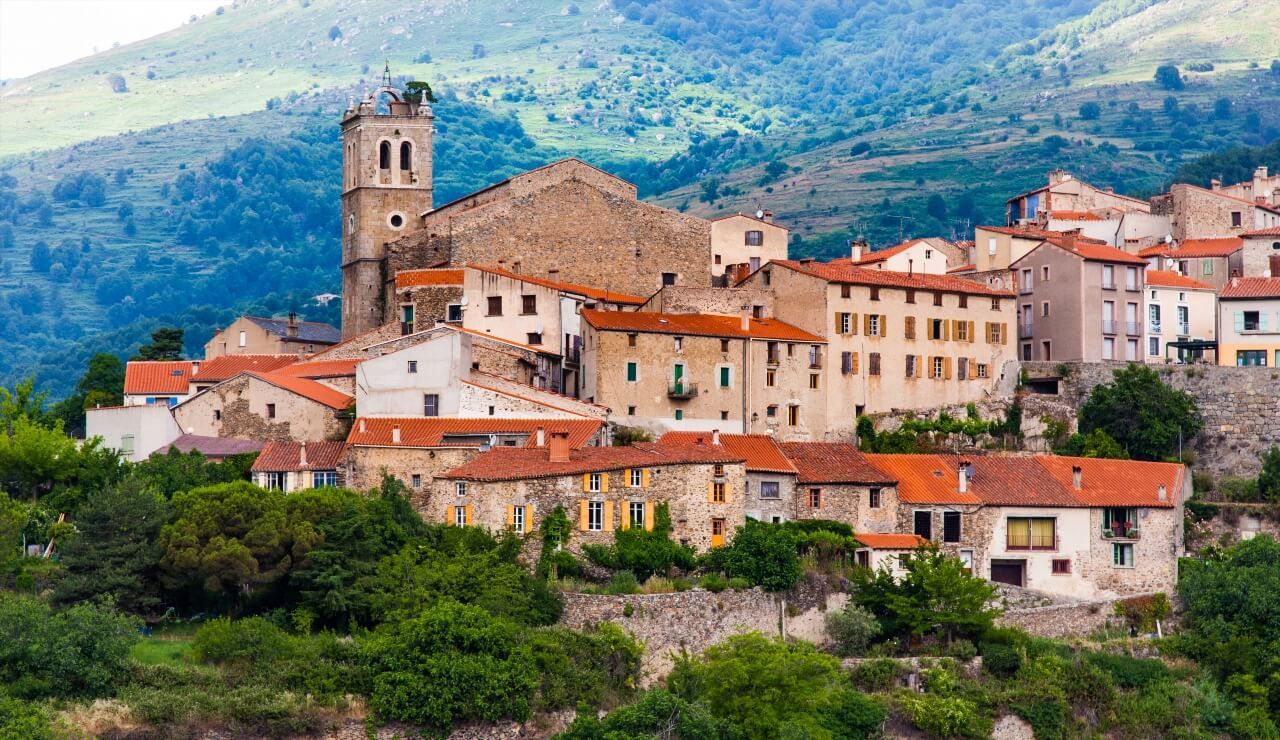
Mosset, labeled a 'Most Beautiful Village of France' since 2004, nestles in the Conflent 70 kilometers from Perpignan, at an altitude of 660 meters. It is one of the least well-known villages in this selection, which paradoxically makes it one of the most pleasant to visit out of season.
The medieval village can be crossed in twenty minutes, but deserves more time. The église Saint-Julien-et-Sainte-Basilisse, a Romanesque church from the 13th century, houses a Catalan Baroque altarpiece whose gilding seems anachronistic in such a small village. The central fountain, the red and ochre half-timbered houses, the flower boxes hanging from windows—Mosset is a village that takes good care of itself. It has won the national 'Villes et Villages Fleuris' award several times.
The surrounding area offers accessible hikes toward the Pic de Roque Rouge (1,606 m) or the Campôme forest—ideal for those wishing to combine culture and mountain scenery in the same day.
Evol, a Timeless Mountain Hamlet
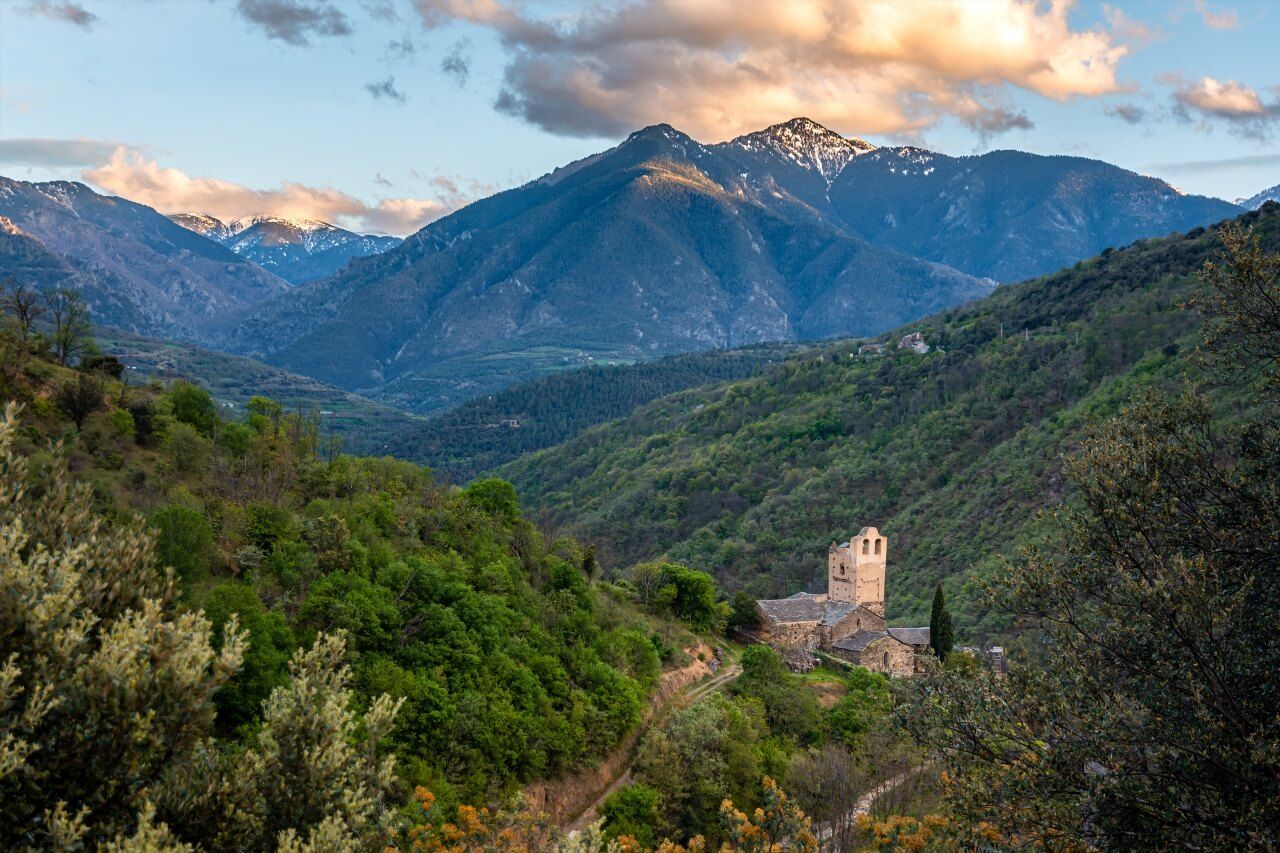
Evol is perhaps the most secretive village on this list. 68 kilometers from Perpignan, about thirty permanent residents, no shops—just a hamlet of granite and schist clinging to a cliff at 800 meters altitude in the upper Rotja valley.
What draws people to Evol is silence and integrity. Listed as a 'Most Beautiful Village of France,' it has barely changed since the 16th century: the dry-stone houses, the hay lofts, the square tower of the lords of Evol that has overlooked the hamlet since the 12th century. The Sant Andreu church, Romanesque in style, preserves a remarkable liturgical treasury (processional crosses, Romanesque Madonnas, reliquaries) viewable on request from the volunteer custodian.
Evol can be visited in under an hour, but the panoramas over the Têt valley from the rocks above the village more than reward the 20-minute trail. The place is particularly beautiful in spring, when the gorse covers the hillsides in bright yellow.
Prats-de-Mollo-la-Preste, at the End of the Valleys
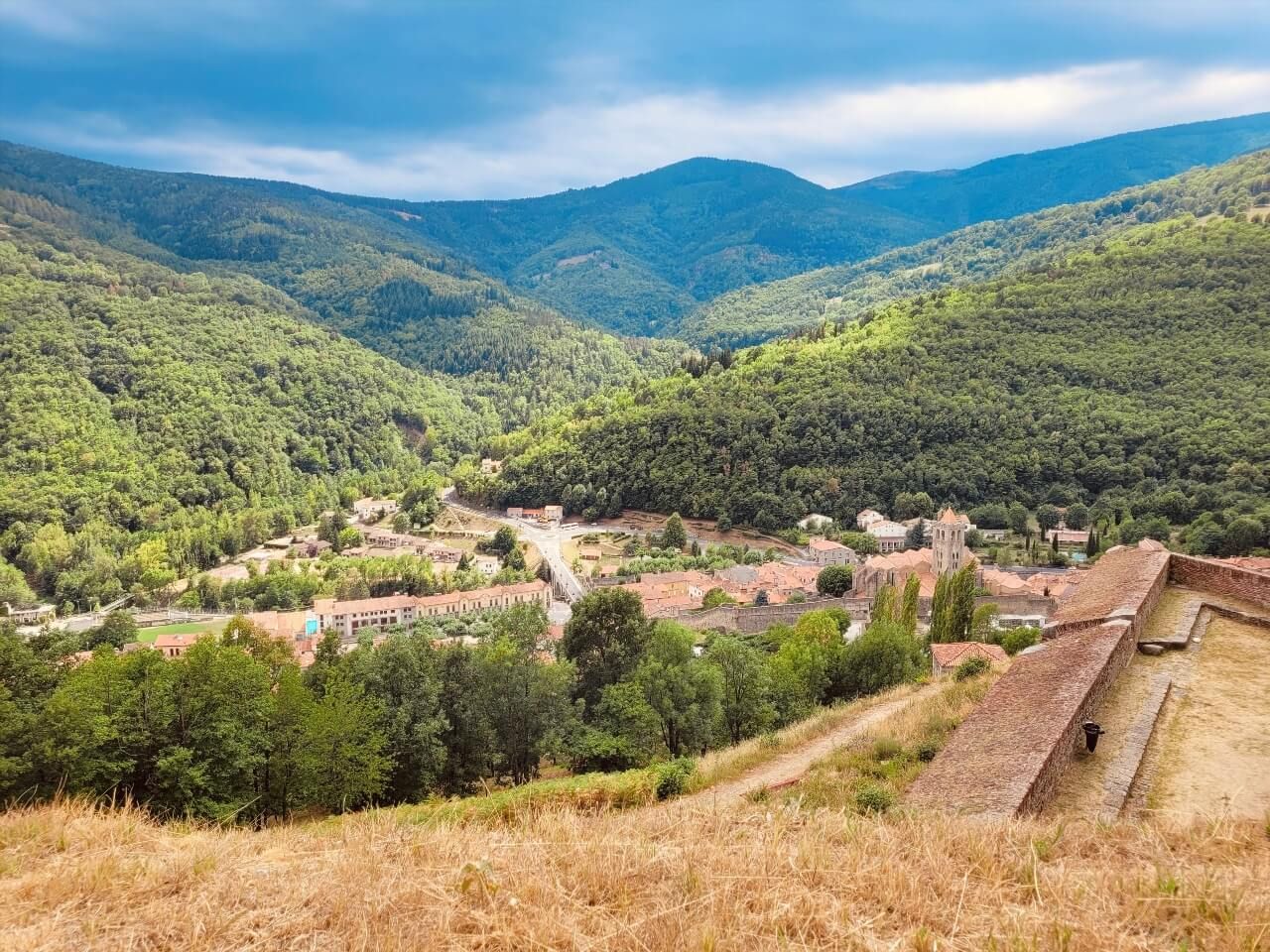
To reach Prats-de-Mollo-la-Preste, you have to mean it: the village lies 60 kilometers from Perpignan, at the far end of the Tech valley, at 750 meters altitude, a few kilometers from the Spanish border. But that relative inaccessibility is precisely what preserves it.
The upper village, Prats-de-Mollo, is ringed by 17th-century Vauban ramparts—Vauban again, who seems to have wanted to fortify the entire Pyrenean border. Fort Lagarde (Route du Fort, 66230 Prats-de-Mollo-la-Preste, rated 4.5/5 on Google with 671 reviews), above the village, completes this defensive system that has overlooked the valley from 300 meters above for centuries. The old town, with its Gothic collegiate church Sainte-Juste-et-Sainte-Ruffine and its arcaded alleyways, has preserved a remarkable architectural coherence.
The spa section, La Preste, lies 6 kilometers further up, at 1,130 meters. La Preste's sulphurous waters have been treating kidney ailments since the 19th century; the thermal spa is open from March to November. For hikers, the area opens access to the Costabonne massif and trails leading to Pyrenean lakes.
Palau-del-Vidre, the Catalan Art of Living 15 Minutes from Perpignan
Not all these Catalan villages are perched high in the mountains. Just 15 kilometers south of Perpignan, Palau-del-Vidre embodies the Catalan lowland art of living: vineyards, olive trees, and a remarkably well-preserved old center that the neighboring large seaside resorts have paradoxically shielded from real-estate pressure.
The Sant Esteve church from the 15th century, whose Catalan-style bell tower-facade stands on the main square, is worth a stop. The village organizes a Cherry Festival every summer as well as events centered on AOC Côtes Catalanes wines. For those who prefer to sleep outside the big cities, Palau-del-Vidre offers several bed-and-breakfasts in restored Catalan farmhouses, 20 minutes from the beaches of Argelès-sur-Mer.
Aguilar and Quéribus: the Cathar Castles within Driving Distance
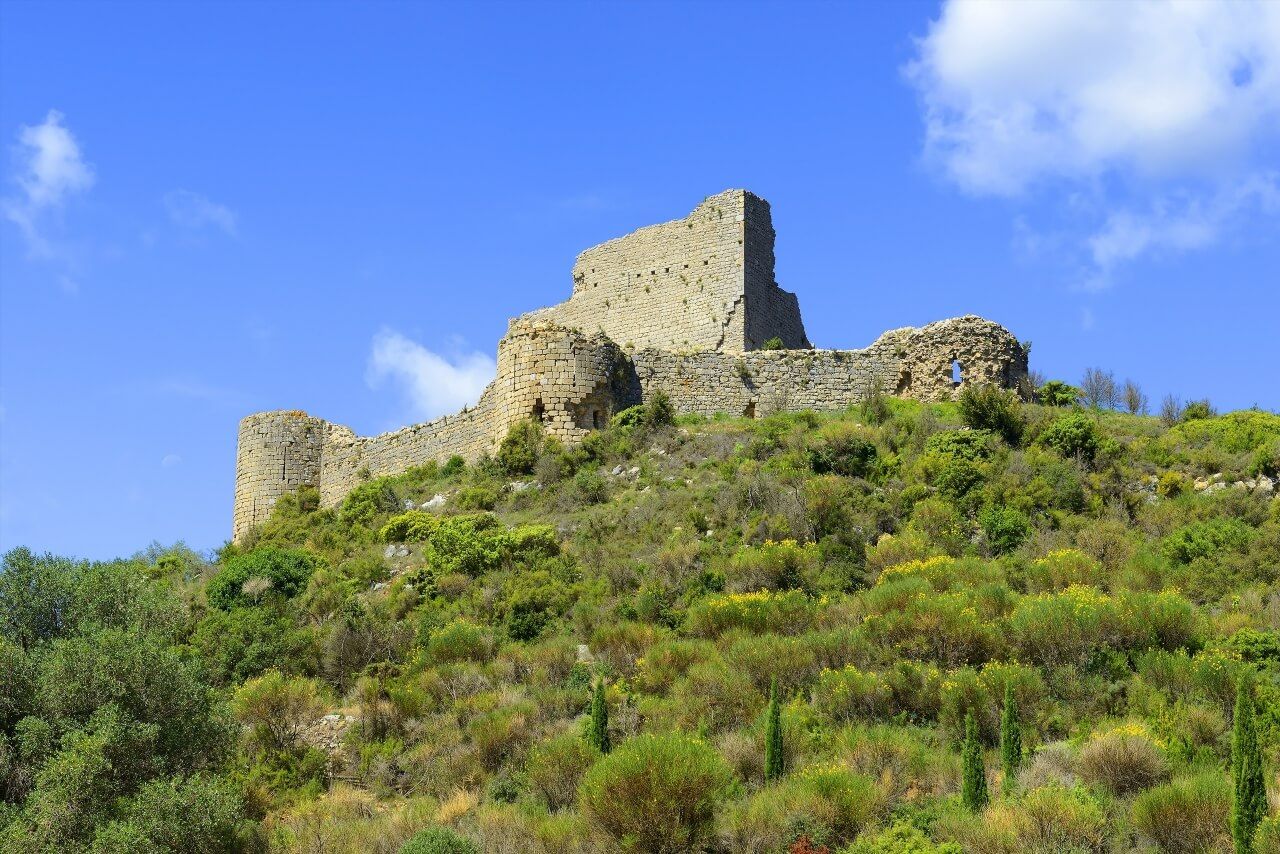
If you have a car and a passion for medieval villages, a detour to the Cathar castles on the northern edge of the Pyrénées-Orientales is a must. The Château d'Aguilar (Route du Château, 11350 Tuchan, rated 4.4/5 on Google with 807 reviews) (55 km north of Perpignan, in the commune of Tuchan) is a pentagon of sun-scorched stones perched at 295 meters, a remnant of the 13th-century Cathar wars. Free to access, it offers a panorama over the Corbières and the Aude lagoons. Thirty kilometers further on, the Château de Quéribus, at 728 meters altitude, was the last Cathar refuge to hold out—it did not fall until 1255, ten years after the fall of Montségur.
These two sites pair naturally with a day's drive from Perpignan, with a lunch stop at the cooperative wine cellars of Tuchan or Maury.
Planning Your Excursions from Perpignan
Most of these villages can be reached in under an hour from Perpignan, but a few logistical points are worth thinking through in advance.
By car is the most flexible option. The A9 motorway serves the coastal area (Collioure, Argelès) and the N116 national road heads into the Têt valley (Villefranche-de-Conflent, Eus, Mosset, Evol). Fill up on petrol before heading into the mountain valleys—fuel stations are scarce beyond Prades. A tip: download the Ryo Perpignan audio guide in advance to listen to the Catalan history of the region while driving, even offline.
By public transport, the TER line Perpignan–Villefranche-de-Conflent (extended to Latour-de-Carol by the Train Jaune) allows you to reach Villefranche, and even Mosset via a connecting service from Prades. Collioure is accessible by TER from Perpignan in 25 minutes. On the other hand, Castelnou, Eus, Evol, and Prats-de-Mollo remain difficult to reach without a car.
Planning your days: the four labeled villages (Castelnou, Eus, Mosset, Evol) can be combined into a two-to-three-day themed circuit. For the Côte Vermeille (Collioure), set aside a full day. Céret and Villefranche-de-Conflent each deserve at least a half day.
Before hitting the road, take the time to discover Perpignan itself with the Ryo audio guide of Perpignan, 19 sites in a 1-hour audio-guided walk through the Catalan city. Our article on things to do in Perpignan and the surrounding area complements this selection with further outing ideas in the region.
FAQ
Which villages around Perpignan are labeled 'Most Beautiful Villages of France'?
Four villages within a 70 km radius of Perpignan carry this official label: Castelnou (20 km, Catalan medieval village), Eus (50 km, perched facing the Canigou), Mosset (70 km, flower-filled village in the Conflent), and Evol (68 km, granite hamlet in a high valley). Villefranche-de-Conflent holds the status of 'Vauban Fortification' listed as a UNESCO World Heritage Site, a different but equally significant distinction.
Which is the closest village to Perpignan worth visiting?
Palau-del-Vidre is the closest village, just 15 kilometers south of Perpignan. For a labeled village, Castelnou comes first at 20 kilometers to the west, reachable in 25 minutes via the D615. Collioure, 28 km away, is accessible in 25 minutes by TER train from Perpignan station.
Can you visit Collioure by train from Perpignan?
Yes, Collioure is accessible by direct TER train from Perpignan station in about 25 minutes (Perpignan–Port-Bou line). Trains are frequent in summer. From Collioure, you can also continue to Port-Vendres or Banyuls-sur-Mer on the same line, for a lovely day along the Côte Vermeille.
What is the best time to visit the villages of the Pyrénées-Orientales?
Spring (April, June) and autumn (September, October) offer the best conditions: mild temperatures, smaller crowds, and exceptional photographic light. Summer (July, August) is peak season; Collioure and Castelnou can be very busy between 10am and 5pm. Winter allows you to visit the mountain villages (Mosset, Evol) in absolute silence, but some sites close or reduce their opening hours.
Are the villages around Perpignan family-friendly?
Yes, most of them are well suited for families, with a few nuances. Collioure and Castelnou are ideal for families: family-friendly visits, nearby beaches for Collioure, crêperies and green spaces for Castelnou. Villefranche-de-Conflent delights children with the Train Jaune and the ramparts to explore. On the other hand, Eus and Evol, with their stepped alleyways, require a certain agility—suitable footwear is recommended for young children.
How long does it take to visit Castelnou?
Allow 2 to 3 hours to enjoy Castelnou at your own pace: 30 minutes to walk around the village, 1h30 to visit the castle (from mid-March to mid-November), and a break on a terrace in the alleyways. Combining Castelnou with Thuir (the Byrrh capital, 8 km away) makes for a pleasant half-day from Perpignan.
Conclusion
From the medieval ramparts of Castelnou to the palm-fringed beaches of Collioure, from the Vauban citadels of Villefranche to the absolute isolation of Evol, the villages of the Pyrénées-Orientales form one of the densest and most varied rural heritages in southern France. They all share that uniquely Catalan light, the dry-stone and schist architecture, and the Franco-Catalan bilingualism that surfaces on street signs and shop fronts.
Perpignan is the ideal base from which to discover them. Start by immersing yourself in Catalan culture in the city with the Ryo Perpignan city guide, then let the roads of the Pyrénées-Orientales guide you from village to village. To go further in your exploration of the region, our selection of the most beautiful villages of the Pyrénées-Orientales lists further hidden gems beyond this ranking.