© Shutterstock
 Votre guide Ryo
Pink Granite Coast: Must-See Places to Explore in 2026
There are places that seem to come from another geology, and the Pink Granite Coast is Europe's most striking demonstration. Over about twenty kilometers in Côtes-d'Armor, between Perros-Guirec and Trébeurden, orange-pink granite blocks up to 15 meters high emerge from the Atlantic in such precise shapes—Napoleon's hat, a pancake, a sleeping turtle—that you instinctively look for the hand that sculpted them. There isn't one. Just 300 million years of frost, salt, and waves.
This guide brings together the sites that brochures summarize with a single photo: the Ploumanac'h chaos at dawn when the light turns the rocks cherry red, the colony of 20,000 gannets on the Seven Islands diving vertically at 100 km/h, the natural caves of Trégastel's marine aquarium carved into the rock itself, and Milliau Island accessible only at low tide. In the background, Lannion and its 15th-century half-timbered houses that almost no one takes time to see. For travelers who enjoy extending the sound exploration of a territory, the Ryo app offers audio-guided tours of comparable coastal destinations in Brittany and beyond.
Ploumanac'h, the Beating Heart of Pink Granite
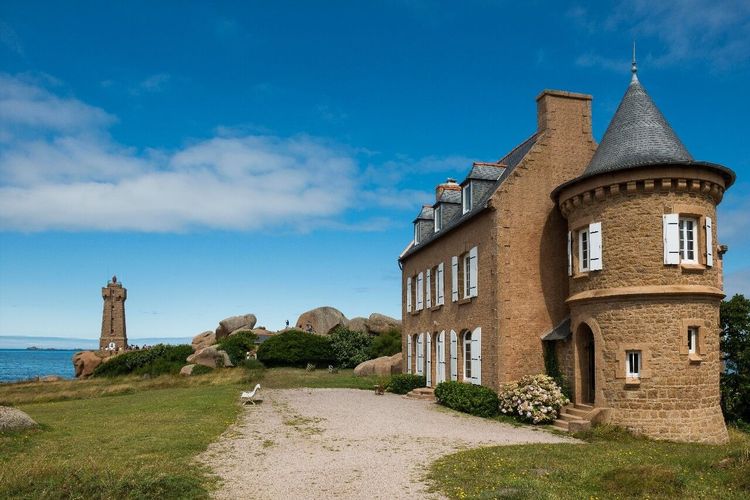
Ploumanac'h is not a town. It's a fishing hamlet attached to the commune of Perros-Guirec, a few dozen houses clustered around a tiny port, yet the most photographed site in all of northern Brittany. In 2015, France 2 viewers voted it France's Favorite Village, a distinction that surprised many, but not those who have set foot on the coastal path at sunrise.
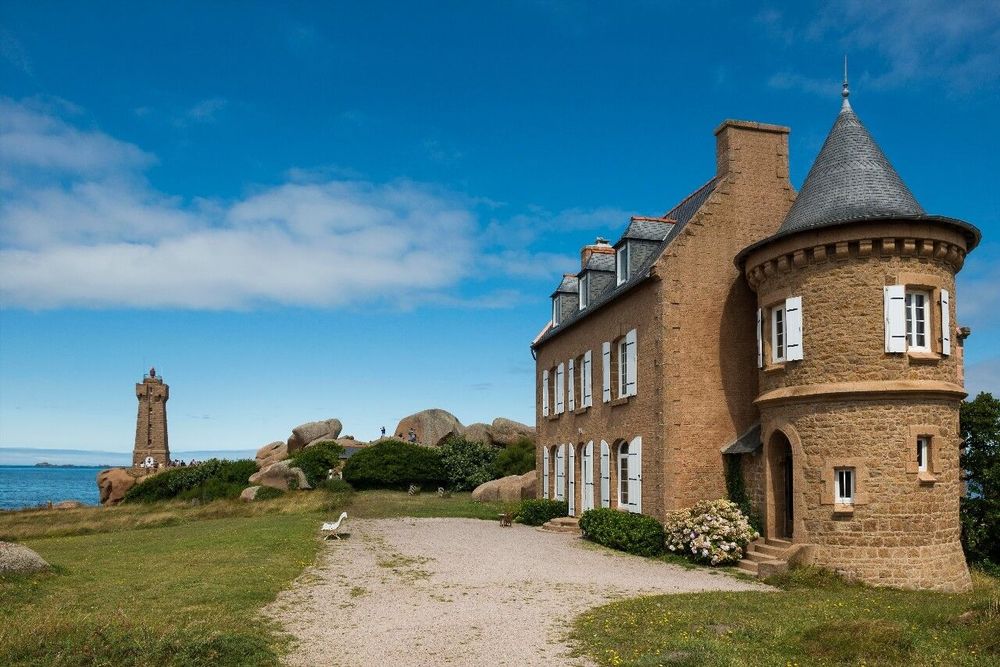
The port of Ploumanac'h is the logical entry point. Small, almost intimate, framed by pink granite blocks that plunge directly into the water, it sets the tone. Above, the Mean Ruz lighthouse sits on its enormous pink granite block. The first lighthouse was built in 1860 after several shipwrecks in this dangerous zone; destroyed by the German army in August 1944, it was rebuilt after the war and relit in 1948, entirely built from granite from La Clarté, the same stone as the surrounding rocks. The view from the surroundings is worth the detour alone, especially at high tide when the sea laps at the base of the blocks.
But the heart of the site is the Municipal Park of Ploumanac'h (Sentier des Douaniers, 22700 Perros-Guirec, rated 4.9/5 on Google for 675 reviews), nicknamed "the Chaos" by locals. Two kilometers of marked trail wind between rocks weighing several hundred tons, each with its own nickname and silhouette. The Turtle, Napoleon's Hat, the Pancake: these formations have been eroded into their current shape since the last glaciation, and they continue imperceptibly to change. Take time to leave the main path to climb onto an overlooking rock: the view over the English Channel, the islets and the distant lighthouse is one of the vastest on the Breton coast.
Arrive before 9 AM in July and August. After 10:30 AM, the site is invaded by organized groups and the most photographed rocks always have someone on them. Off season, September and October in particular, you can walk there alone for an hour without meeting anyone. This is where the place reveals all its power. The Ryo audio-guided tour, when it covers this type of coastline, makes perfect sense here: with headphones on, you advance at the rhythm of the story rather than that of the crowd.
Practical tip: Ploumanac'h parking saturates from mid-morning in high season. Park at the relay parking on Route de la Clarté and walk 15 minutes via the coastal path—you'll enter from the most spectacular side, with the first view of the rocks from the heights.
The Customs Officers' Path (GR34): Pink Granite as Far as the Eye Can See
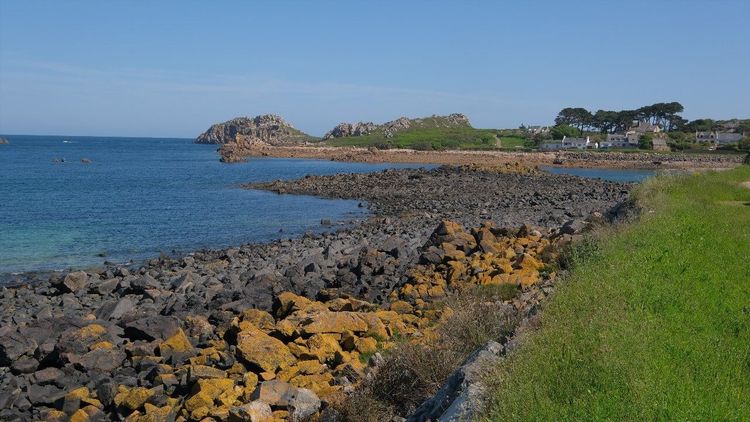
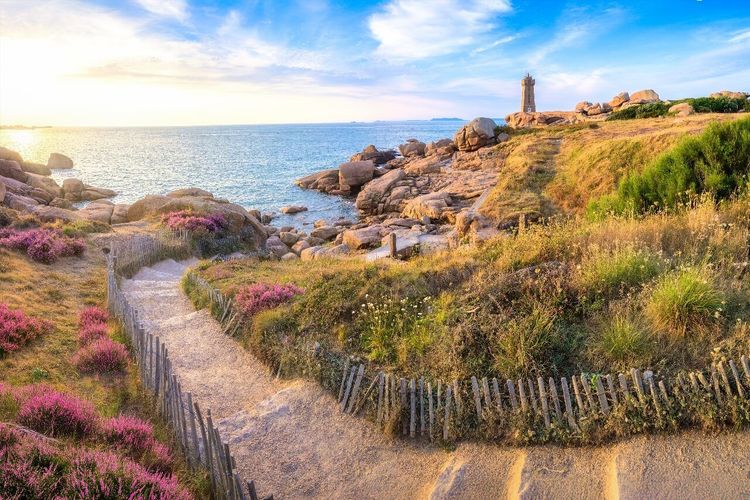
The GR34 runs along the entire Breton coastline for nearly 2,000 kilometers. The section between Perros-Guirec and Trébeurden concentrates what this trail offers most spectacularly on this coast: 15 kilometers alternating cliffs, sandy coves, rocky chaos, and heather moorlands in autumn.
The most popular section connects Perros-Guirec to Ploumanac'h (about 5 km, 1h30 without stopping, count double if you have a camera). It runs along Trestraou and Trestrignel beaches before diving into the pink granite formations. The signage is impeccable: white line on red on the rocks, wooden signs every 500 meters. If coastal hiking attracts you, our guide to hikes around Biarritz on the Basque coast extends the inspiration to other French shores.
If you have a whole day, continue to Trégastel (4 additional km) then to Trébeurden in the late afternoon. The return is by bus, line 3 of the Tibus network connects the coastal communes, and schedules are available on the region's website. Bring water and food: there are no shops between Ploumanac'h and Trégastel via the coastal path.
May and September are the two months that best combine weather, light, and attendance. Gorse blooms in May, heather in September. In strong westerly winds, some overhanging passages are frankly impressive—this isn't a trail for severe vertigo in a full storm, but outside extreme conditions it remains accessible to any regular walker.
Perros-Guirec: Beaches and Perched Chapel
Perros-Guirec is the region's center town: 7,500 inhabitants, three beaches, a casino, a marina. It's also the departure point for boats to the Seven Islands and the main logistics hub of the area.
Trestraou beach stretches over 500 meters of fine sand facing northeast, windy, popular with kitesurfing and land sailing enthusiasts. Trestrignel beach, smaller and better sheltered, is families' favorite with young children. Both beaches are supervised in July and August.
From the town center, climb up to the Chapel of Notre-Dame de la Clarté (Route de la Clarté, 22700 Perros-Guirec, rated 4.6/5 on Google for 534 reviews), whose construction began around 1445 and continued until the early 16th century, on the commune's heights. Legend has it that a shipowner had it built after escaping shipwreck thanks to a supernatural clarity in the Breton fog. Panoramic view over Lannion bay from the forecourt. Every August, the pardon of la Clarté brings together hundreds of faithful in traditional Breton costumes, one of the most colorful religious festivals in Trégor.
Perros-Guirec also concentrates most of the sector's hotel and restaurant offerings. If you come in July-August, book two to three months in advance.
The Seven Islands: The Archipelago with 20,000 Gannets
At 8 kilometers offshore from Perros-Guirec, the Seven Islands form the largest ornithological reserve in metropolitan France, classified since 1976 over some 320 hectares. No one lives there permanently, except the lighthouse keeper on Monks Island, but the archipelago welcomes one of Europe's densest concentrations of seabirds each spring.
The main attraction is Rouzic Island: it hosts France's only gannet colony, historically with more than 20,000 breeding pairs (numbers have fluctuated in recent years due to avian flu episodes). Their vertical dives from 30 meters high at about a hundred kilometers per hour are a hypnotic and unforgettable spectacle. Puffins nest in small numbers on the archipelago from April to July, their multicolored beaks making them highly sought-after subjects for nature photographers. Added to these are common guillemots, razorbills and several gull species breeding.
Armor Navigation company offers two options from Perros-Guirec: a 1h45 cruise around the archipelago (about 22 euros per adult) or a 2h30 excursion with a stop on Monks Island, the only island accessible to the public. You can discover an 18th-century military fort and Saint-Michel chapel. Book online several weeks in advance in July-August: places sell out fast.
Tip: leave late morning rather than on the first rotation. The light is better for photography, and bird colonies are most active between 10 AM and 2 PM. Bring binoculars, even basic ones: the difference between a cruise with and without binoculars is considerable, especially for spotting puffins.
Trégastel and Its Underwater Chaos
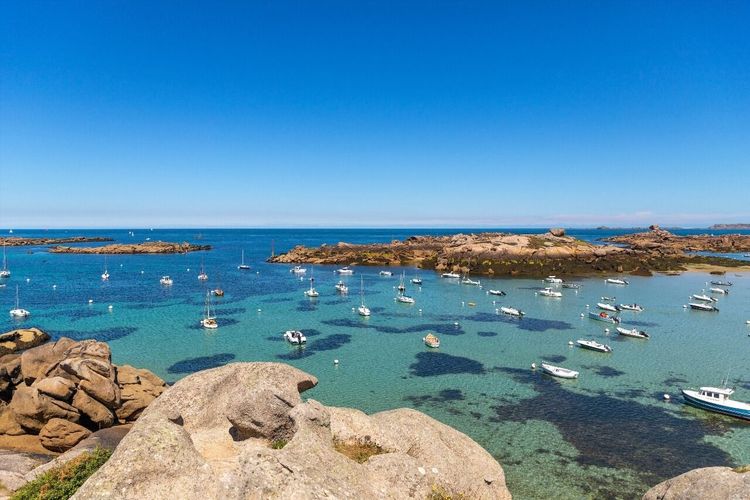
Trégastel is often overshadowed by Ploumanac'h in tourist rankings, wrongly. The commune has its own pink granite chaos, less concentrated but equally photogenic, and one of the sector's most pleasant beaches.
Coz-Porz beach faces due south, protected from westerly winds by a rocky promontory: shallow water, golden sand, ideal for families. For geological architecture enthusiasts, the Toad Rock and Stack of Pancakes Rock are two emblematic formations visible from the coastal road, named for their striking resemblance to their namesakes.
The most unexpected attraction remains the Trégastel Marine Aquarium (Allée du Gouffre, 22730 Trégastel, rated 3.7/5 on Google for 2,692 reviews), nestled in natural caves carved into pink granite over 300 million years ago. The tanks are carved directly into the stone and house local species: blue lobsters, cuttlefish, giant starfish, thornback rays. The place is cool even in midsummer, strange in its form and magnificent in its lighting. Count about 9 euros per adult, slightly under 7 euros for children.
If you're there late in the day, Renote Islet, a promontory connected to the mainland by a sandy isthmus, offers a 360-degree view of the coast without any technical difficulty. Allow a good half-day to combine all three sites.
Grande Island, Secret Ornithological Stop
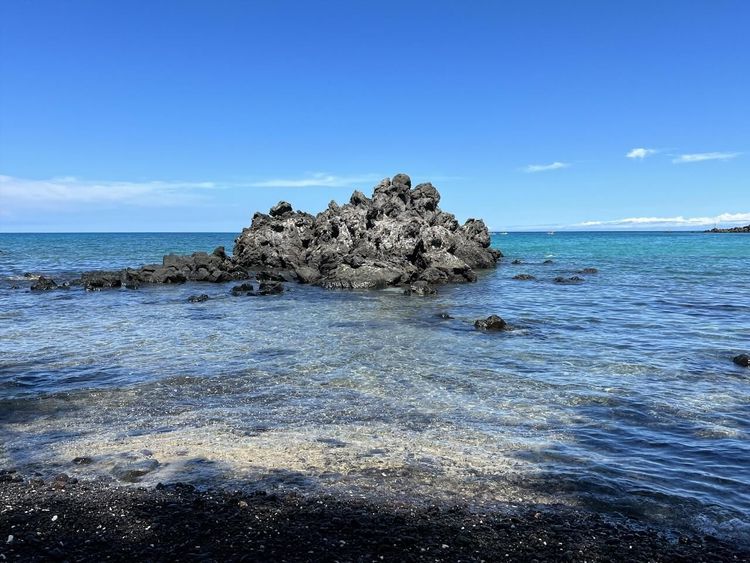
Grande Island, connected to the mainland by a bridge since 1930, is one of the sector's most unknown destinations. At less than 3 km², it can be covered in two hours on foot. Its discretion is its main asset: outside July-August weekends, the place is absolutely calm.
The LPO (League for Bird Protection) manages a care center and an active ringing station there since the 1980s. The coastal path runs along rocks where common terns, oystercatchers and great cormorants nest. In May and June, terns are brooding: strictly respect marked areas, nests are on the ground and difficult to see. The rest of the year, the island has only a café-grocery store and a few restored fishermen's houses as infrastructure. Ideal for a half-day break from summer tourist hustle.
Trébeurden and Milliau Island: The Southern Limit of Pink Granite
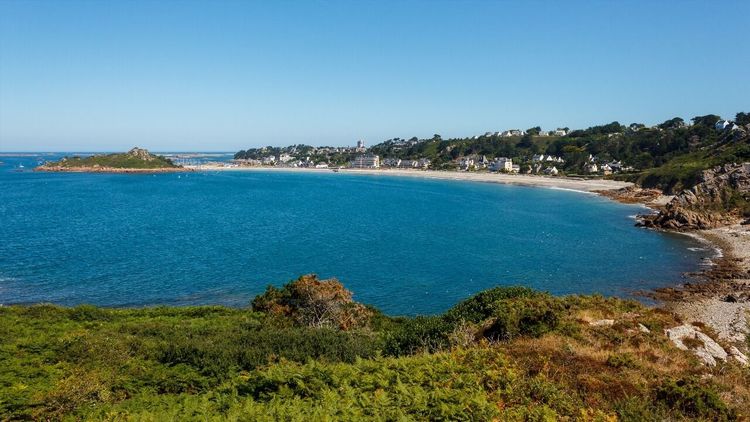
Trébeurden marks the southern border of the region. Calmer than Perros-Guirec, less emblematic than Ploumanac'h, it attracts a clientele of regulars who return for its discrete assets and generally cheaper accommodation than in the north.
Tresmeur beach (Route de Tresmeur, 22560 Trébeurden, rated 4.6/5 on Google for 97 reviews) stretches over 400 meters of white sand facing due west, one of the best orientations in the sector for sunsets. On spring tide days, the coast is revealed far out and shows rock formations usually submerged.
From Castel Point, Milliau Island can be reached on foot at low tide, via a passage of about a hundred meters that only appears at good coefficients. Property of the Coastal Conservatory, the 23-hectare island can be looped in about 45 minutes on foot, through heather moorlands and absolutely deserted pink granite beaches off season. You'll find a remarkable megalithic covered alley as well as an old farm converted into a guesthouse; information panels at the entrance summarize the site's history. Check tide times carefully before leaving: the passage closes quickly when waters rise.
Lannion, the Half-Timbered Town by the Léguer
Lannion is passed through without stopping by most tourists racing to the coast. This is a mistake. The old town gathers an exceptional concentration of half-timbered houses from the 15th and 16th centuries, some leaning slightly over the street with that calculated imbalance characteristic of medieval Breton architecture.
Place du Centre and Rue des Chapeliers concentrate the most beautiful facades. Climbing the 140 steps carved in schist that climb toward Brélévenez Church, a 12th-century Romanesque church attributed to the Templars, you overlook the entire town and Léguer valley. The view is worth the effort, especially in late afternoon when light turns golden on the slate roofs.
Often ignored local anecdote: a few kilometers away, the Pleumeur-Bodou site hosted the first transatlantic satellite television broadcast in 1962, from the United States via the Telstar satellite. The radome, that huge white sphere visible from the road, now houses the Telecommunications City, a surprising interactive museum for technology history enthusiasts. Count two hours minimum for Lannion, a whole morning on market days (Tuesday and Thursday).
Why Is This Granite Pink?
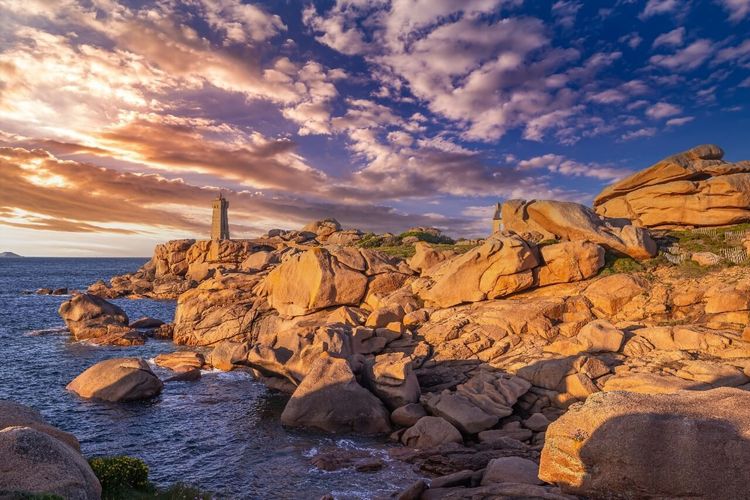
The question comes up on every visit. The answer is less mysterious than imagined. The pink-orange tint of pink granite is due to the concentration of orthoclase, a feldspathic mineral rich in potassium that takes this characteristic color when aging in contact with air. Ploumanac'h granite contains about 60 to 65% orthoclase versus 30 to 40% for classic gray granite.
The rounded and organic shapes of the rocks result from 300 million years of combined erosion: glaciers first, which tore off sharp edges, then salt, frost, and waves, which polished surfaces until giving these almost animal silhouettes. The size of the blocks, some reaching 15 to 20 meters high, is explained by the natural stratification of stone in horizontal slabs: when upper slabs collapse, they reveal increasingly massive structures below.
When to Go and How to Organize
The best window extends from mid-May to mid-September. July and August attract most tourist flow: Ploumanac'h parking saturated from 9:30 AM, accommodation two to three times more expensive, advance booking essential several months ahead for accommodation and Seven Islands cruises. June and September offer the best balance between decent weather, reasonable attendance, and accessible rates.
By car from Paris: count 4h30 (Rennes, then N12 toward Lannion). From Brest, 1h30. By bike, a secure cycle path connects Lannion to Perros-Guirec over 12 kilometers. The Vélodyssée (EuroVelo 1) passes near the area. To get in the mood before departure, the Ryo app offers audio stories to listen to along the way, like for its itineraries on the Côte Fleurie and its must-sees.
Quick budget: Ploumanac'h park free, Trégastel aquarium around 9 euros adult, Seven Islands cruise from 22 to 24.50 euros depending on formula. GR34 and Milliau Island: free.
Where to Eat and Where to Stay
Restaurant offerings concentrate in Perros-Guirec and Trégastel. On site, focus on traditional crêperies and seafood restaurants—lobster, crab, scallops depending on season—rather than tourist brasseries on the seafront in high season.
For accommodation, Trébeurden generally offers more reasonable rates than Perros-Guirec, 20 minutes by car from Ploumanac'h. Guesthouses and B&Bs away from the coast (around Lannion) combine hinterland calm with quick coastal access. Book in May for July-August: well-located accommodations go very fast.
FAQ
Where Exactly Is the Pink Granite Coast Located?
It extends over about twenty kilometers in Côtes-d'Armor (Brittany), between Perros-Guirec to the north and Trébeurden to the south. The most emblematic sites, Ploumanac'h and Trégastel, are located about thirty kilometers north of Lannion, the nearest town served by a SNCF train station.
Can You Visit the Coast Without a Car?
It's possible with organization. Lannion station is served from Paris (TGV to Guingamp, then TER). Tibus buses connect Lannion to Perros-Guirec, Trégastel and Trébeurden. Between sites, the GR34 is the ideal walking option, and the Lannion-Perros-Guirec cycle path allows cycling connections over 12 kilometers.
How Much Time Do You Need to Visit?
A weekend (2 days) covers the main sites: Ploumanac'h, the Customs Officers' Path, Trégastel and a cruise to the Seven Islands. Three days allow you to add Lannion, Grande Island and Trébeurden more leisurely. A week allows you to explore everything without ever rushing.
Are the Seven Islands Accessible Year-Round?
Armor Navigation cruises operate from March to November approximately, with reduced frequency outside July-August. In winter, trips depend on weather conditions. The puffin colony is present from April to July: this is the best time to observe them, even though gannets remain visible throughout the navigation season.
Is the Coast Suitable for Families with Children?
Yes, particularly. Trestrignel beach (Perros-Guirec) and Coz-Porz beach (Trégastel) are sheltered and shallow. The marine aquarium in Trégastel appeals to children from 4-5 years old. Ploumanac'h park can be partially explored with a stroller on the main path, although some rocky passages require carrying toddlers.
Are There Other Pink Granite Coasts in the World?
Two sites are often cited for comparison: the Guangdong region in China and the Maddalena archipelago in Sardinia. Neither offers the same density and diversity of forms as the Breton version, which explains why the Breton coast is considered a unique geological site on a global scale.
A Landscape That Rewards Those Who Slow Down
The coast doesn't reveal itself in a single glance from the road. It's a landscape that reveals its character to those who park their car, put on sneakers, and advance on foot between the rocks. Sitting on an overhanging block at sunset, taking the GR34 before the first organized groups, watching gannets dive from a boat deck: it's in these moments that the place justifies its reputation.
Whether you have a weekend or a week, the triangle of Perros-Guirec, Ploumanac'h, and Trégastel concentrates the essence of what this territory offers most uniquely. Audio-guided tour enthusiasts will appreciate that Ryo covers many French coastal destinations in its app, like its stories on the most beautiful beaches of the Côte d'Azur, to enrich the sound exploration of your next trips. Start with Ploumanac'h, cross the Chaos at dawn, and let the rest organize itself to the rhythm of the tides.