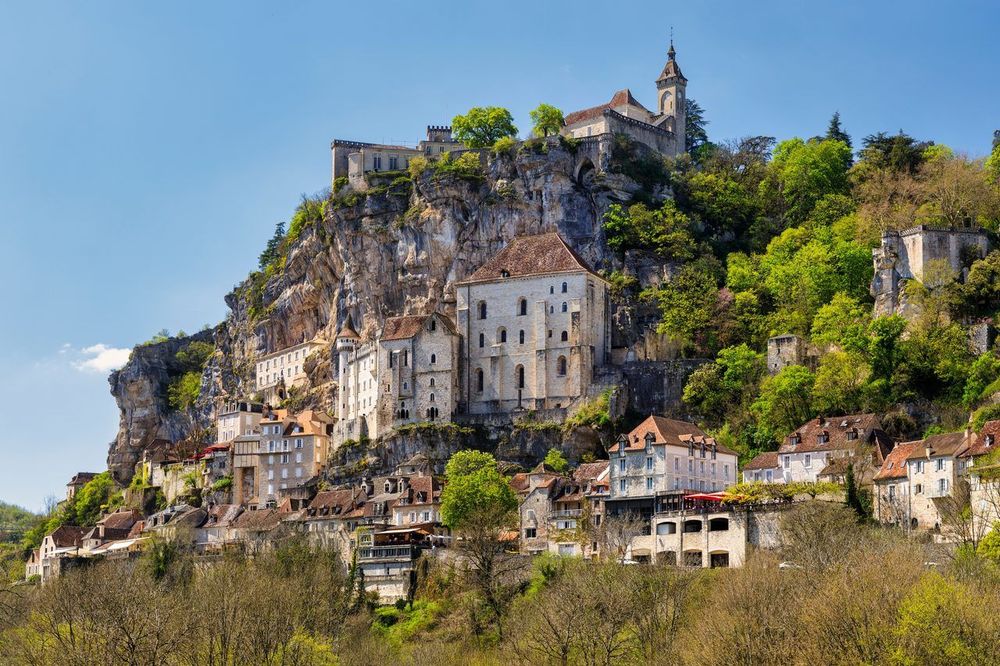
© Shutterstock
 Votre guide Ryo
What to Do in Rocamadour in 2026: 15 Must-See Experiences
Type "things to do in Rocamadour" into a search engine and you'll find the same seven places copied from one site to another. The reality of the causse is far richer. Rocamadour defies logic: an entire medieval village clings to a vertical cliff of 150 metres in the Lot, built right into the rock as if gravity were merely a suggestion. It ranks among the most visited sites in France, with 1.5 million visitors per year, and yet many leave having seen only a fraction of what the city has to offer. What is there to do in Rocamadour beyond a quick stroll through the lower town? The answer goes far beyond what express guides suggest.
Between the Black Madonna venerated since the 12th century, griffon vultures soaring freely above the Alzou valley, 150 Barbary macaques roaming semi-freely among the causse oaks, and one of the most impressive underground rivers in Europe just ten kilometres away, Rocamadour packs a rare density of experiences into a village of fewer than 700 inhabitants. An AOP cheese produced for centuries on this limestone plateau, viewpoints overlooking three valleys at once, a grand staircase that pilgrims still climb on their knees, and rock paintings 20,000 years old hidden in the cliff face itself — this article details the fifteen truly unmissable things to do during your visit.
1. Explore the Medieval City Terraced Across the Cliff Face
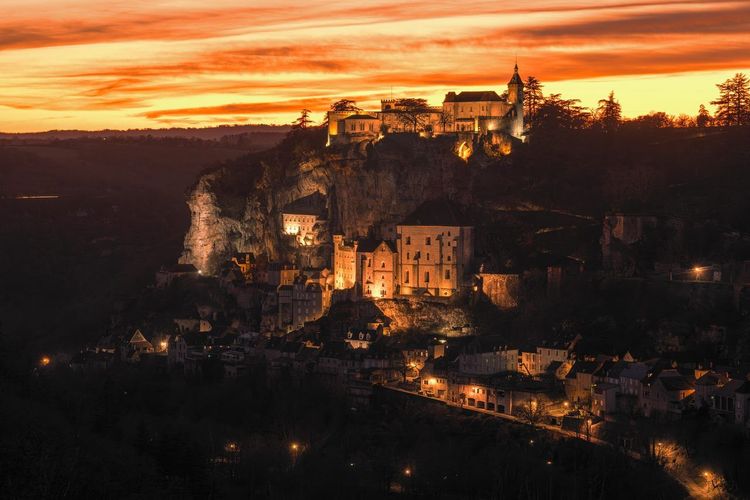
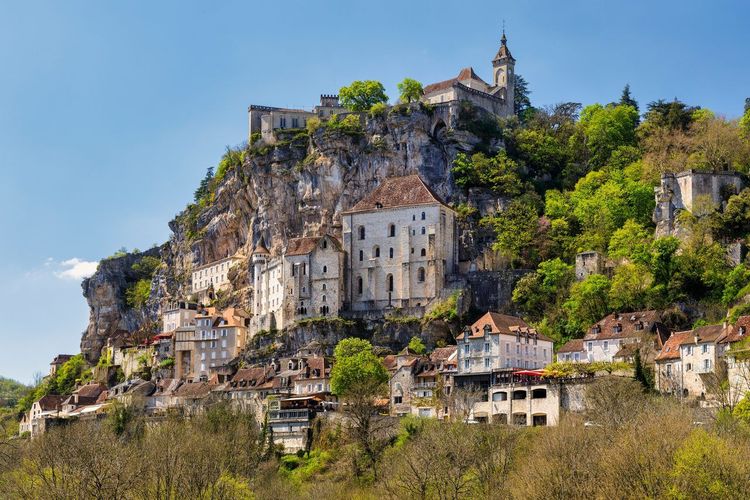
The Medieval City of Rocamadour (Rue de la Couronnerie, 46500 Rocamadour, rated 4.7/5 on Google with 315 reviews) is organized across three distinct levels, each accessible on foot or by elevator: the commercial lower town with its cobblestone lanes, the Parvis des Églises with its seven sanctuaries carved into the rock face, and finally the castle perched at the very top of the cliff. This system of levels was no accident — it reflects a medieval pilgrimage logic in which each tier represented a spiritual and physical stage on the way to the sanctuary.
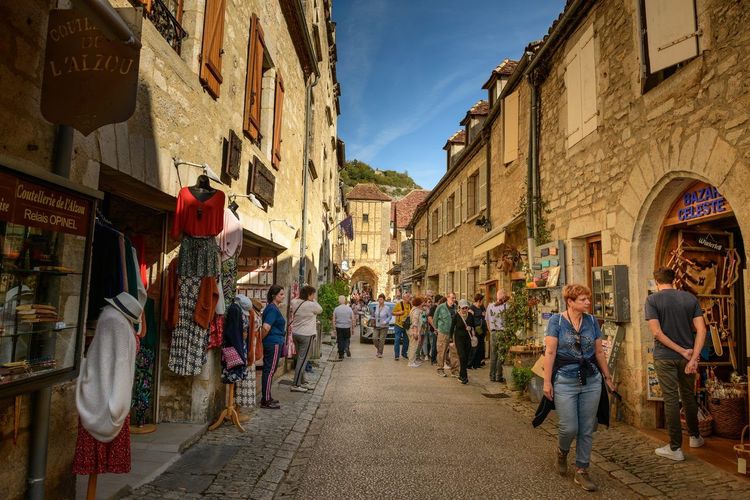
The lower town, also known as the Cité, stretches along a single main street, the Rue de la Couronnerie, lined with half-timbered houses dating from the 14th and 15th centuries. The architectural density is remarkable: facades press against one another, lintels bear dates carved seven centuries ago, and bare rock breaks through certain walls as if the builders had simply dressed the cliff rather than constructing from the ground up. Stroll through outside the 10am–3pm window in July and August, when organised tour groups crowd the main street to the point of making walking difficult.
What sets Rocamadour apart from other French medieval villages is its physical relationship with the void. The view from the Parvis des Églises, the second level, plunges down into the Alzou valley 127 metres below. The sensation of being suspended between rock and sky is present at every step. Children love the mesh balustrades overlooking the drop; adults rather less so, but it is precisely this verticality that makes Rocamadour unique in Europe.
The site is listed among the "Most Beautiful Villages of France." Its reputation as a major pilgrimage site dates back to the 12th century, when Pope Alexander III consecrated the sanctuary following the discovery of a mysterious tomb attributed to Saint Amadour. Legend holds that this saint was Zacchaeus, the tax collector of the Gospels, who came to Gaul after the death of Christ. Historically unverifiable, yet this founding ambiguity has contributed to the site's aura for nine centuries.
To get the most out of your visit, allow at least two hours for the lower town and Parvis des Églises levels alone, not counting the castle. Arrive preferably at opening time (around 9am) or in the evening after 5pm when the coaches have left and the golden evening light illuminates the cliff face from the Hospitalet viewpoint.
A practical tip often overlooked by tourist guides: explore the alleyway behind the main church, where the houses disappear and the raw cliff reasserts itself. A few niches carved into the rock, private stairways, and forgotten fragments of ramparts conceal themselves there. This is the Rocamadour off the beaten track, the one that hurried visitors never see.
The Ryo app offers geolocated audio commentary for several medieval sites in the Lot, particularly to help you explore at your own pace the architectural details that official signs don't mention. A useful option if you prefer independent discovery to guided group tours.
2. Step Inside the Chapelle Notre-Dame and Contemplate the Black Madonna
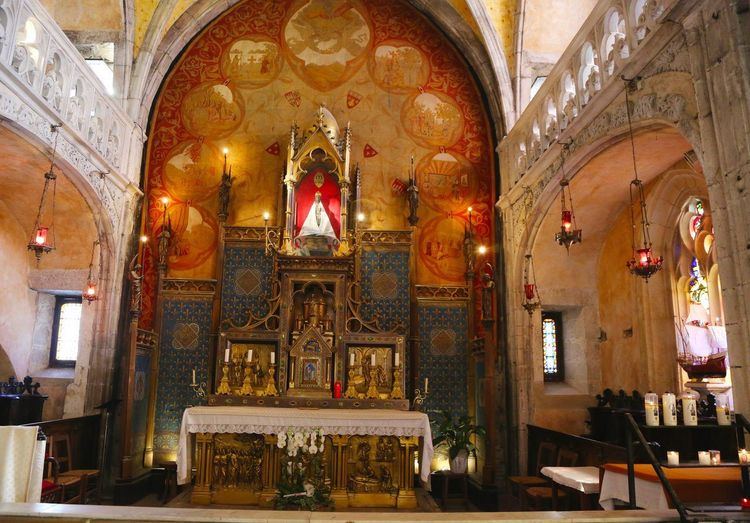
The spiritual heart of Rocamadour lies in the Chapelle Notre-Dame, a cramped space carved directly into the rock, accessible from the Parvis des Églises through a reinforced wooden door. Inside, the Black Madonna, a 69 cm walnut-wood statue dating probably from the 12th century, has stood on the altar for more than eight hundred years. Its dark colour is not original: it results from the oxidation of candles burned as offerings and the layers of paint applied over the centuries.
The bell that adorns the chapel vault deserves particular attention. Suspended from the ceiling, it was said to ring of its own accord with each miracle granted by the Virgin, notably when a sailor in danger of drowning called upon her aid. Votive tablets nailed to the walls since the Middle Ages document these granted graces: chains from freed captives, wooden legs, model boats, crutches abandoned after healing. These ex-votos form one of the oldest and most moving collections of their kind in France.
The Parvis des Églises actually brings together seven religious buildings side by side, carved across two storeys into the cliff face between the 12th and 15th centuries. The Basilique Saint-Sauveur, the largest, occupies most of the parvis. Its Romanesque nave, with pillars sculpted from the living rock, houses partially restored medieval frescoes and an organ whose pipes rise to the natural vault. The Chapelle Saint-Blaise and the Chapelle Saint-Jean-Baptiste, far smaller, flank the right side of the parvis.
Don't miss the Musée d'Art Sacré housed in the former episcopal apartments: its collection includes illuminated manuscripts from the 14th century and a Flemish tapestry of exceptional fineness. Admission to the sanctuaries is entirely free, which is remarkable for a site of this importance. Only the inclined elevator (around €2.60 one way, €4.20 return) and guided tours are paid.
One detail most visitors miss: on the rock face just to the left of the Chapelle Notre-Dame, a sword is embedded in the stone at shoulder height. According to local tradition, this is said to be Durandal, the legendary sword of the knight Roland. The story is apocryphal — the real Durandal, according to the Song of Roland, was thrown into a lake at Roncevaux — but seeing this metal blade buried in the cliff face for centuries remains a striking moment, even for the most rational of minds.
3. Climb to the Castle for the Panoramic View
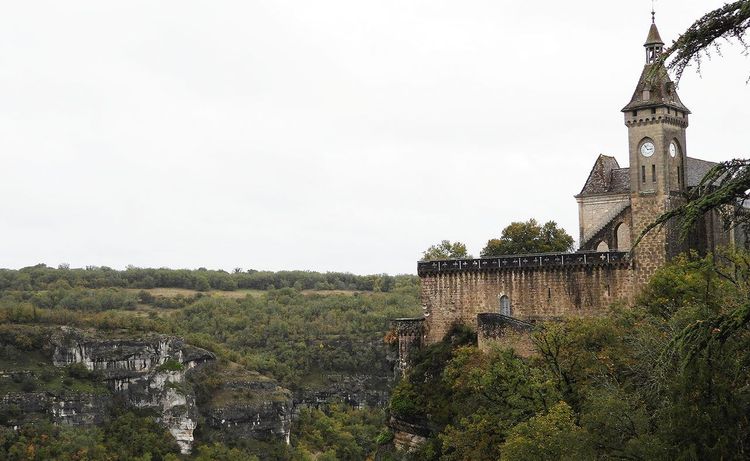
The Château de Rocamadour (Château, 46500 Rocamadour, rated 4.5/5 on Google with 274 reviews) crowns the top of the cliff, accessible either by elevator from the sanctuaries (paid, around €2), or by a rampart walkway from L'Hospitalet. It is not open for interior visits — it still belongs to the diocese of Cahors and serves as an episcopal residence — but the tour of the exterior ramparts offers the most breathtaking panorama of the site.
From the top of the ramparts, you take in at a single glance the entirety of the terraced city below, the Alzou valley stretching northward, and the Causse Gramat extending as far as the eye can see. Admission to the ramparts is €2 (2026 price), open from April to November. In high season, elevator queues can exceed 30 minutes; climbing on foot via the path from L'Hospitalet is often quicker and considerably more pleasant.
4. Climb the Grand Escalier of the Pilgrims
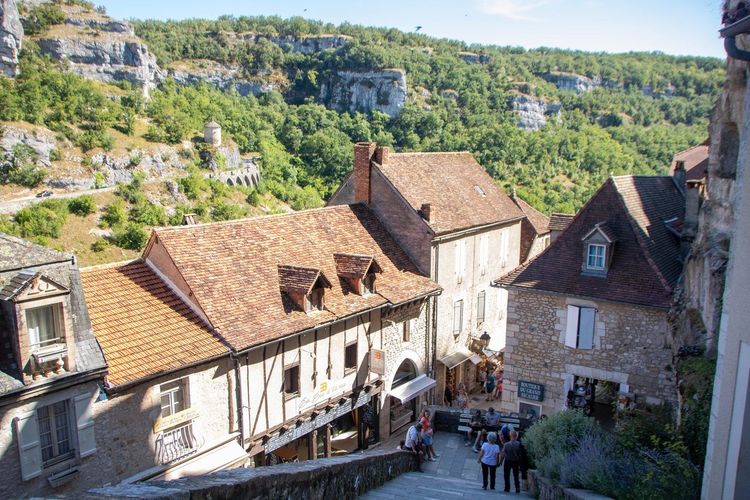
The Grand Escalier of Rocamadour has 216 steps linking the lower town to the Parvis des Églises. Since the Middle Ages, pilgrims have climbed them on their knees while reciting prayers — a practice still alive today, particularly during the Semaine Mariale in September, when thousands of the faithful converge on the sanctuary. Wear marks hollowed out by centuries of kneeling are visible on the first steps.
For non-pilgrim visitors, the staircase remains the most direct and most authentic route between the two levels. The ascent takes about 10 minutes at a good pace and offers ever-changing views of the cliff face and lower town. If your knees allow, prefer climbing on foot to descending: you can study the details of the sculpted limestone and the small votive niches dotted along the way. Non-slip-soled shoes are strongly recommended if the steps are wet.
5. Explore the Grotte des Merveilles and Its Prehistoric Paintings
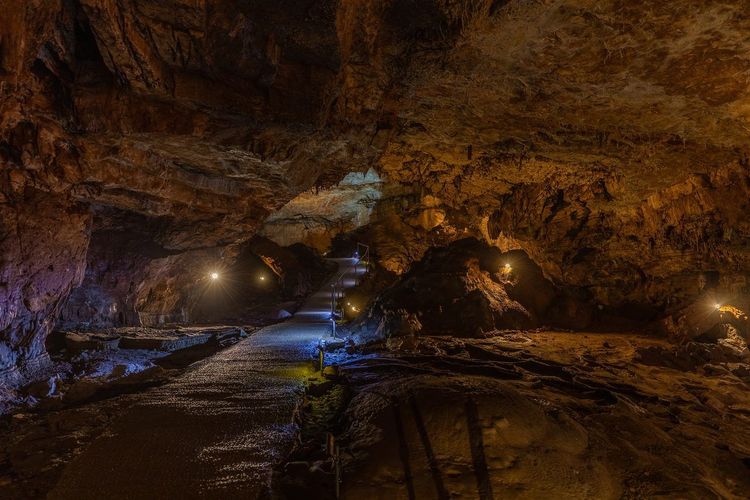
A stone's throw from the Parvis des Églises, hidden within the cliff face, the Grotte des Merveilles (Rue de la Couronnerie, 46500 Rocamadour, rated 4.1/5 on Google with 1,945 reviews) is one of the least-known decorated caves among the general public in France, which makes it, paradoxically, one of the most accessible and best-preserved. Discovered in 1920 during earthworks, it shelters a dozen rock paintings dated to more than 20,000 years ago: negative handprints blown in red ochre, deer traced in a single line, silhouettes of wild horses.
What makes the visit particularly immersive is the physical proximity to the works. Unlike the caves of Lascaux or Font-de-Gaume where access is strictly limited, the Grotte des Merveilles is visited in small groups of up to 20 people with a guide, and some of the painted panels are less than a metre from the marked path. The guide dims the torches, and suddenly bison and deer emerge from the limestone as ghosts rising through time.
The cave is approximately 120 metres long and comprises a main gallery and two side chambers. The interior temperature is a constant 13°C year-round — bring an extra layer even in the height of summer. The stalagmite formations growing alongside the prehistoric paintings create an unexpected dialogue between geological and human time: the same rock that served as a canvas for Palaeolithic hunters continues to slowly coat itself in calcite, layer by layer.
Adult admission: around €7.50, children €4.50. The guided tour lasts 45 minutes and departs every hour from 10am to 6pm in high season (closed November to March). In July and August, time slots often fill up before noon — buy your ticket at opening time or book online if the ticketing system allows.
The coexistence of this prehistoric cave with the medieval Christian sanctuaries a few dozen metres away reveals something essential about this site: the limestone cliff and the spring that gushes at its base have exerted a spiritual pull on humans for at least 20,000 years, long before the place was named Rocamadour. Radically different cultures have successively found here a place of convergence.
6. Watch the Birds of Prey Show at the Rocher des Aigles
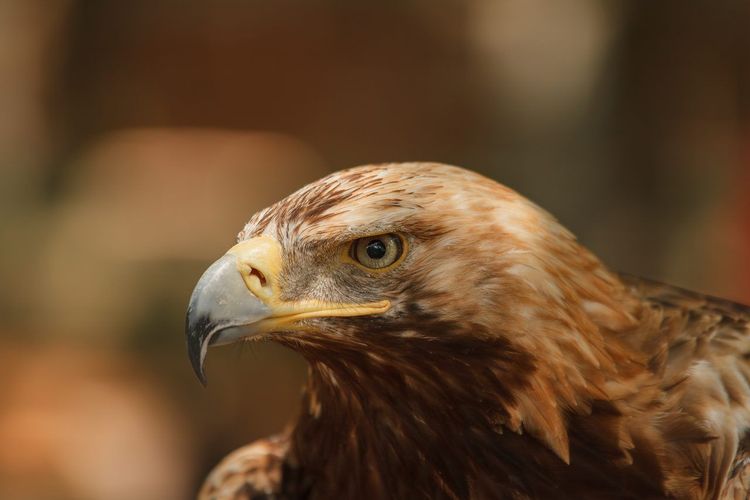
Just above the castle, on the Hospitalet plateau, the Rocher des Aigles (Plateau de L'Hospitalet, 46500 Rocamadour, rated 4.4/5 on Google with 4,288 reviews) is a falconry and bird-of-prey conservation centre that merits a visit in its own right. With more than 400 birds belonging to around a hundred species — griffon vultures, Andean condors, Bonelli's eagles, peregrine falcons, barn owls — it is one of the largest free-flight raptor centres in Europe.
The flight display, held two to four times a day, is nothing like an animal circus. The birds are released above the Alzou valley, more than 200 metres above the void, and hunt or soar in complete freedom before returning — or not — to the falconer's glove. Watching griffon vultures spread a wingspan of 2.65 metres just a few metres from spectators is a physically impressive experience that photography can only partially convey.
What many visitors don't know upon arrival: the Rocher des Aigles participates in several endangered species reintroduction programmes, notably the griffon vulture in the gorges of the Lot and the Tarn. The falconers who lead the displays are also biologists and conservationists. Commentary during the flights alternates between behavioural anecdotes, scientific data, and accounts of ongoing conservation programmes, which raises the standard of the visit considerably above what the word "show" might suggest.
Outside the flight times, the semi-free visiting area allows visitors to get close to the aviaries. Nocturnal raptors (eagle owls, tawny owls) are presented in a shaded section. The large eagles — African martial eagle, bateleur — occupy open enclosures at the edge of the plateau, with a direct view down over Rocamadour below.
2026 prices: around €12 adults, €8 children (4–13), free for the youngest. Open from April to November, with display times varying by season. In July and August, three daily shows take place at 11:30am, 2:30pm, and 4:30pm. Arrive at least 20 minutes early to secure a good spot in the flight zone. Since the afternoon sun is behind spectators between 2pm and 4pm, the 2:30pm slot is often the most photogenic.
7. Visit the Forêt des Singes
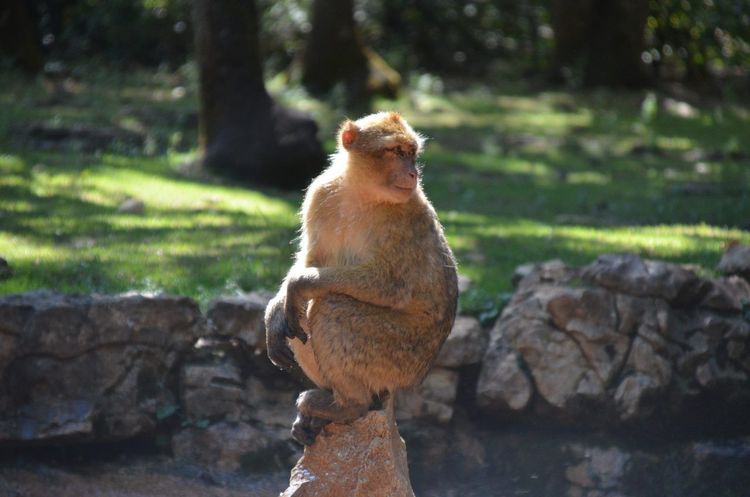
A few hundred metres from the Rocher des Aigles, on the same Hospitalet plateau, the Forêt des Singes (Plateau de L'Hospitalet, 46500 Rocamadour, rated 4.5/5 on Google with 8,715 reviews) is home to more than 150 Barbary macaques roaming semi-freely in a woodland of downy oaks. These monkeys, native to North Africa and Morocco, are classified as critically endangered in their natural habitat — the visit also serves as an awareness-raising experience about their situation.
The visit takes place with no physical barrier between visitors and animals. The macaques move freely and approach children and adults alike, particularly for the popcorn provided at the entrance. Expect to pay around €11 per adult, €7 per child for a visit of at least 45 minutes. The young monkeys born each spring are the undisputed stars of the summer season.
8. Descend into the Gouffre de Padirac
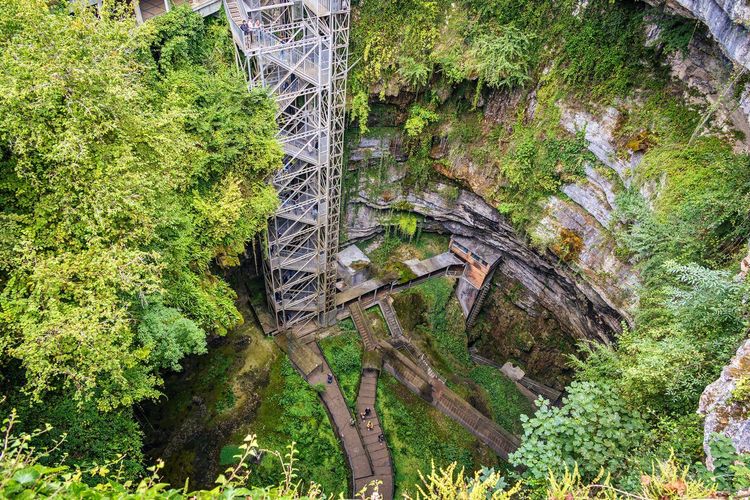
The Gouffre de Padirac (Lieu-dit Le Gouffre, 46500 Padirac, rated 4.7/5 on Google with 40,018 reviews) lies 10 kilometres from Rocamadour, on the Causse Gramat, and constitutes one of the most spectacular underground experiences in France. The chasm itself — a natural shaft 75 metres deep and 33 metres in diameter — opens in the causse floor like a vertical wound in the rock, surrounded by limestone vegetation and red kites circling above.
Once you have descended via the stairways or elevator installed since 1898, the visit continues by boat along the Rivière Plane, an underground river flowing 103 metres below the surface through a gallery whose ceiling reaches up to 78 metres in places. The boatman glides the craft silently across water of perfect clarity, lit by spotlights that pick out stalactites and calcite draperies. There is no engine noise, no music — just the oar on the water and the creak of the rock.
The final section of the visit, accessible on foot after climbing from the boats, reveals the Salle du Grand Dôme: a natural cathedral 94 metres high, adorned with giant stalactites descending 60 metres. The visual effect is comparable to the nave of a Gothic cathedral, scaled to heights human architecture has never achieved.
A few figures to frame the experience: the explored underground network extends over 22 kilometres in total, of which only 2 kilometres are open to the public. The underground river carries around 1,000 litres per second at average flow, and the interior temperature is a constant 13°C. Since its discovery by Édouard-Alfred Martel in 1889 (the site only opened to the public ten years later), more than 47 million visitors have descended into the chasm.
2026 prices: €19.50 adults, €14.50 children (4–12), free under 4. The visit lasts 1h15 to 1h30. In high season (July–August), queues without a prior booking can reach 3 hours — booking online is an absolute necessity for July and August. The site is open from late March to early November.
An often overlooked aspect: the Gouffre de Padirac also has a hanging garden on the rim of the shaft, accessible before descending, which allows you to observe from above the distinctive limestone vegetation that grows in the chasm's microclimate. A short path circles the shaft in twenty minutes — perfect for impatient children or to grasp the scale of things before plunging in.
The combination of Rocamadour + Gouffre de Padirac is the most classic in the region. Allow a full day to do both at your own pace: Rocamadour in the morning, when visitor numbers are manageable, and Padirac in the afternoon, after the lunchtime peaks.
9. Taste the Local Gastronomy: AOP Cheese, Walnuts, and Truffle
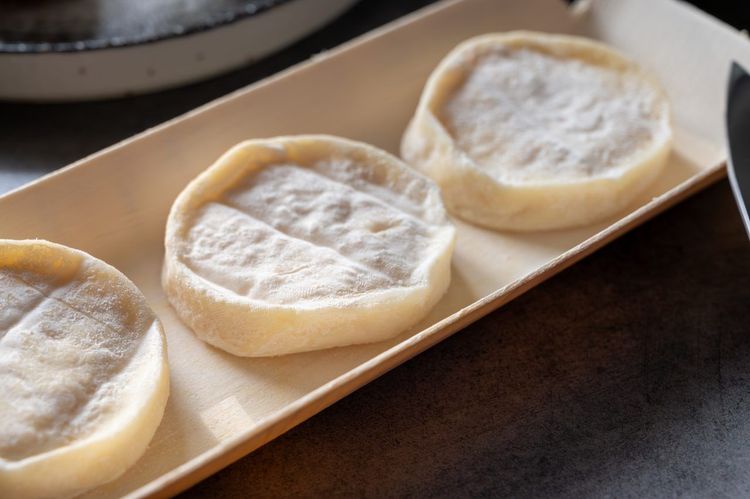
Rocamadour AOP is probably the most famous cheese from the Lot and one of the most recognised goat's cheeses in France. This small, round cheese averaging 35 grams — one of the smallest AOP cheeses in France — is produced exclusively on the Causse Gramat from the raw milk of Alpine or Saanen goats. Its texture varies according to the stage of ageing: melting and milky at 5 days, creamy with a supple paste at 10 days, firm with a slightly bluish rind at 20 days.
The appellation, recognised as an AOC as early as 1996 and elevated to AOP status in 1999, guarantees that production, processing, and ageing take place within a zone covering 215 communes in the Lot, Aveyron, and Tarn-et-Garonne. There are around 250 producers within the AOP zone, of which around twenty still practise traditional farmhouse production. When visiting Rocamadour, look for the fine food shops and fromageries in the lower town that offer cheeses at different stages of ageing — a comparative tasting on the spot is one of the best ways to understand how the same milk produces radically different flavour profiles depending on time spent in the cellar.
The gastronomy of the Quercy doesn't stop at cheese. Périgord walnuts AOP, produced in a zone straddling the Dordogne and the Lot, are found in all local food shops in the form of fresh kernels in autumn, cold-pressed walnut oil, or walnut wine (a local aperitif made from green walnuts macerated in rosé wine and plum marc). A bottle of walnut oil pressed at a traditional Lot mill makes one of the finest souvenirs to take home.
The black truffle of the Périgord (Tuber melanosporum) grows in the limestone truffle grounds of the Causse Gramat, just a few kilometres from Rocamadour. The season runs from December to March, but truffle products — sausages, terrines, foie gras, infused olive oils — are available year-round in the region's fine food shops. If you visit between late December and mid-February, the truffle market in Gramat (12 km) is held every week and offers an authentic experience well off the tourist circuit.
For lunch on site, the restaurants in the lower town serve platters of local charcuterie, salads with warm Rocamadour cheese, duck confit, and walnut desserts. Terrace prices on the main street in July–August are high — a starter and main course formula ranges between €16 and €22. To eat better for less, the indoor tables or the ferme-auberges on the Hospitalet plateau offer more reasonable prices with produce that is often of better quality.
10. Settle at the Viewpoints for Panoramas Over the City
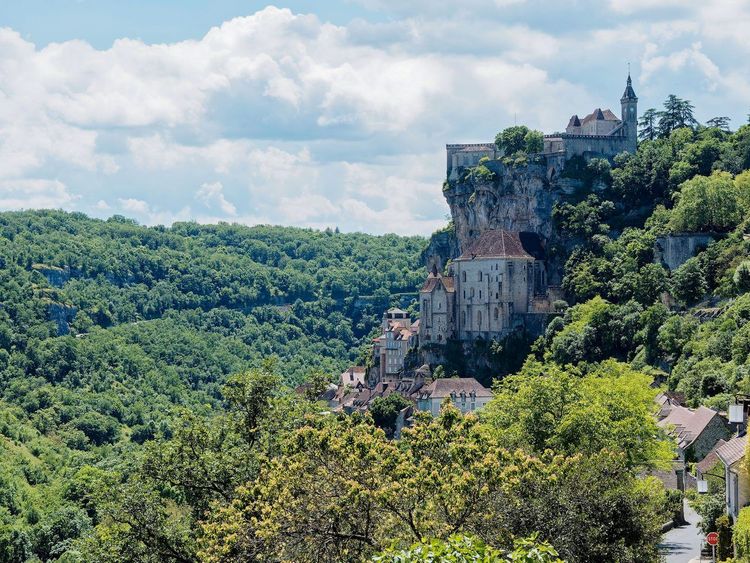
The most famous viewpoint over Rocamadour is the Belvédère de L'Hospitalet (L'Hospitalet, 46500 Rocamadour, rated 4.2/5 on Google with 847 reviews), located in the village of L'Hospitalet on the plateau above the site. This viewpoint is entirely free, accessible by car from the main car park (5 minutes on foot) or from Rocamadour itself via the Chemin de la Croix (20 minutes on foot). This is where the iconic photographs of the city in the cliff face are taken.
Two timing subtleties that most guides don't mention: at sunrise, between 6am and 8am depending on the season, the oblique light strikes the cliff face and city with an orange hue that fades quickly as the sun rises. And at dusk in high season (mid-July to late August), when the site's floodlights come on, the vision of Rocamadour at night from this viewpoint is of rare visual power — an entire cliff face blazing in the darkness.
A second, lesser-known viewpoint is worth the detour: the vantage point from the Chemin de la Croix, accessible via the rampart walkway heading north from the castle. This offset angle frames the sanctuaries in the foreground with the valley behind — less photographed, and therefore potentially more interesting for those seeking an original image.
For those wishing to see Rocamadour from the valley floor, the Chemin de l'Alzou leaves from the medieval bridge in the lower town and follows the river upstream for several kilometres. This waymarked trail (GR6) allows the city to reveal itself gradually from below, recreating the effect of vertical emergence that medieval pilgrims must have felt as they arrived through the valley. The river itself, in flow during the wetter seasons, adds a foreground of vegetation that completes the picture.
11. Visit Rocamadour as a Family with Children
Rocamadour is one of the best-adapted French medieval sites for families with children, provided the visit is organised accordingly. The combination of the medieval city + Rocher des Aigles + Forêt des Singes makes for a naturally well-paced day, with enough variety to hold children's attention from age 5–6 onwards.
Children respond very well to the verticality of the site — the view over the drop from the Parvis des Églises, the staircases cut into the rock, the ride through the cliff in the elevator: all these elements transform the visit into a small physical adventure. The Grand Escalier of 216 steps is generally perceived as a sporting challenge to be conquered, not a constraint. Under-8s will often prefer to come back down by elevator at the end of the visit, and that is perfectly reasonable.
At the Forêt des Singes, the Barbary macaques that approach to take popcorn from children's hands are generally the strongest memory of the day for younger visitors. The proximity is supervised but free enough to feel authentic. The falcons and vultures at the Rocher des Aigles produce a similar effect — the actual size of a griffon vulture in flight is never what you imagine before you see one spread its wings two metres away.
For families with very young children (under 4), be aware that the lower town is partially accessible by pushchair, but the Parvis des Églises and the staircase are not. The inclined elevator can accommodate lightweight pushchairs but not wide frames — a back carrier is preferable for very young children. The Chemin de l'Alzou in the valley bottom is, however, perfectly accessible for all-terrain pushchairs.
Budget for a family of four (2 adults + 2 children aged 8 and 10): expect around €70 to €80 for a full day including the Rocher des Aigles and Forêt des Singes, the elevators, and a simple meal. Since access to the sanctuaries is free, the cultural part of the day costs nothing but time. The Ryo audio guide also offers content tailored to different audiences at medieval sites in the Lot — a way to enrich the visit for older children without imposing a group guide.
12. Plan Your Day in Rocamadour: a Practical Itinerary
A well-organised day in Rocamadour, from 8am to 7pm, can cover the medieval city, the sanctuaries, the Grotte des Merveilles, the Rocher des Aigles, and the Gouffre de Padirac. Here is a realistic itinerary for a full day, without rushing.
8:00am – 9:30am: The medieval city before the crowds. Arriving at L'Hospitalet before 8am allows you to park without queuing and walk down to the medieval city via the rampart path before the shops open. At this hour, Rocamadour still belongs to early-morning pilgrims and photographers — an atmosphere radically different from the midday crowds.
9:30am – 11:30am: The sanctuaries and the Chapelle Notre-Dame. The Parvis des Églises comes to life from 9:30am. Visit the Basilique Saint-Sauveur, the Chapelle Notre-Dame (allow at least 20 minutes to appreciate the ex-votos), and climb to the castle for the view from the ramparts. The Grotte des Merveilles opens at 10am — buy your tickets at opening if you wish to visit during this time slot.
11:30am – 1:00pm: Grotte des Merveilles (45-minute visit), then lunch break in the lower town or at a café in L'Hospitalet. To avoid the high prices of the main street, head back up to L'Hospitalet, where several restaurants offer more accessible set menus with a view over the city.
1:30pm – 3:30pm: Rocher des Aigles and Forêt des Singes on the plateau. The 2:30pm flight display is the most accessible in terms of timing. Follow it up with the Forêt des Singes right next door — the two sites are only 300 metres apart.
4:00pm – 6:30pm: Gouffre de Padirac. Set off at around 3:45pm towards Padirac, 10 minutes by car. Afternoon queues thin out from 4pm. The visit (1h15) still leaves you time to return to Rocamadour for sunset from the Belvédère de L'Hospitalet.
Transport practicalities: Rocamadour is not accessible by train; the nearest station is at Gramat (10 km), served by a few regional trains from Brive-la-Gaillarde. A car remains the most efficient means of combining the sites. Seasonal shuttle buses run from Gramat in July and August.
For visiting Rocamadour on foot, from the L'Hospitalet car parks (free) or the lower town (paid), everything can be done without a car once you are on site. Climbing via the Grand Escalier (10 minutes) avoids the elevator on the way up. Descending by elevator and walking back to L'Hospitalet along the rampart path completes a natural two-hour loop.
Summary of Rocamadour 2026 admission prices:
- Access to sanctuaries and Chapelle Notre-Dame: free
- Inclined elevator: €2.60 one way / €4.20 return
- Castle ramparts: €2
- Grotte des Merveilles: €7.50 adult / €4.50 child
- Rocher des Aigles: €12 adult / €8 child
- Forêt des Singes: €11 adult / €7 child
- Gouffre de Padirac: €19.50 adult / €14.50 child
13. Explore the Most Beautiful Villages Around Rocamadour
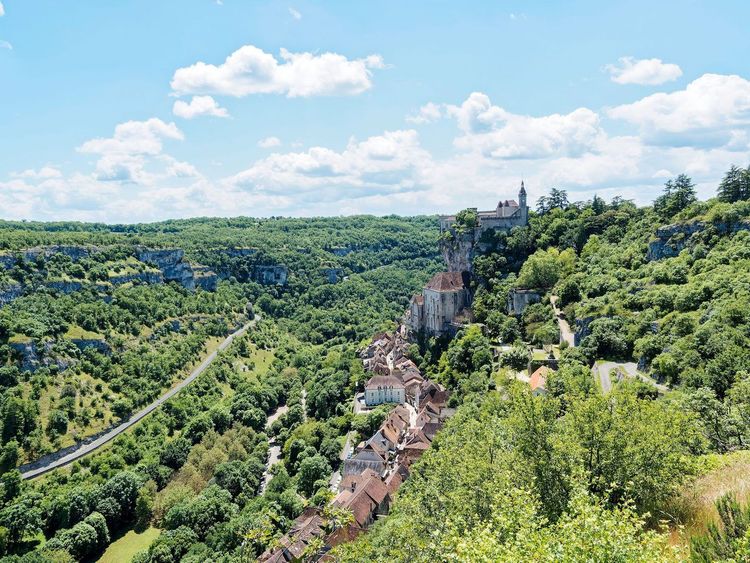
The Causse Gramat and the valleys of the Célé and the Lot are home to several of the most beautiful villages in France, reachable in under an hour's drive from Rocamadour. If you have a second day, here are the stops worth the journey.
Martel (15 km north) deserves an hour's stop for its seven medieval towers that earned it the nickname "the town of seven towers." The 13th-century central market hall, still used for the Wednesday weekly market, and the church of Saint-Maur with its Last Judgement tympanum make it one of the best-preserved medieval towns in the Lot. Martel is also the terminus of the Truffadou tourist railway, a steam train linking the Dordogne valley during the summer season.
Carennac (37 km to the north-east) is a medieval village built on an island in the Dordogne, with an 11th-century Cluniac priory and a sculpted portal tympanum considered one of the masterpieces of Quercy Romanesque art. The village, with its corbelled turret houses and gardens descending to the river, is listed among the "Most Beautiful Villages of France." Fénelon was its commendatory prior and is said to have drawn part of the inspiration for Télémaque there.
Saint-Cirq-Lapopie (Le Bourg, 46330 Saint-Cirq-Lapopie, rated 4.8/5 on Google with 5.2K reviews) (60 km to the east, in the Lot valley) is regularly ranked among the French people's favourite villages. Built on a rocky outcrop above a meander of the Lot, the village preserves an exceptional ensemble of 15th-century half-timbered houses. André Breton spent his final years there and said he no longer felt the urge to take his own life since discovering it — which, for a Surrealist, is perhaps the finest tribute a village can receive.
Figeac (45 km to the east) is the birthplace of Jean-François Champollion, the decipherer of hieroglyphics. The Musée Champollion it houses is one of the most original archaeology museums in the South: the floor of the Place Champollion is entirely paved with a giant reproduction of the Rosetta Stone, visible from the upper floor. Figeac's medieval town retains many houses with twin windows that give it a distinctive architectural atmosphere.
The village of Autoire (25 km), often left off lists, also merits a detour for its Renaissance turret houses and its waterfall tumbling into a rocky cirque just above the village. It is a half-hour stop that earns its keep at the end of a minor road, and is worth every kilometre travelled. And if your route extends to the neighbouring Périgord Noir, some fifty kilometres to the north-west, Sarlat-la-Canéda unfolds the densest ensemble of medieval and Renaissance lanes in the South-West: to discover every hidden courtyard at your own pace, the audio-guided tour of Sarlat-la-Canéda guides you step by step.
Rocamadour lends itself to an additional day's loop by car combining Martel in the morning, Carennac in the afternoon, and a return via the Dordogne meander towards Souillac (a remarkable Romanesque abbey church, 20 minutes away) — a circuit of around 120 km alternating built heritage and valley landscapes.
14. What to Do in Rocamadour When It Rains
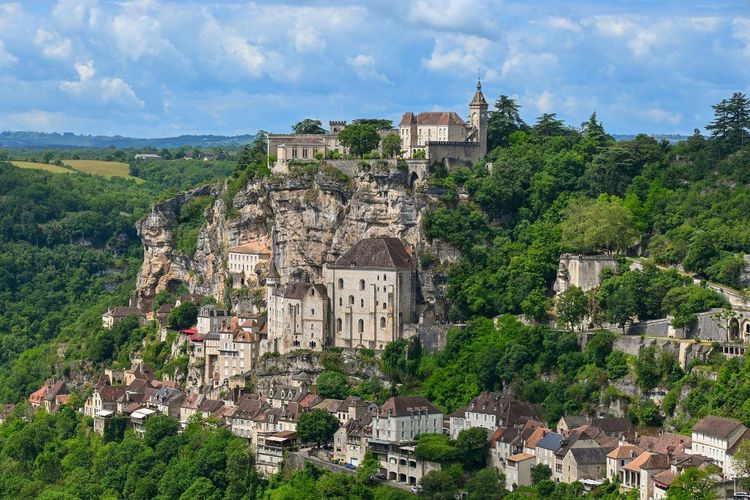
Rain transforms Rocamadour in surprising ways: the cliff face streams, the rock takes on a darker golden hue, and visitor numbers drop sharply. Some visitors consider it the best time to see the sanctuaries — no queues, with a subdued light inside the chapels that deepens their meditative character.
Covered sites available in wet weather: the Basilique Saint-Sauveur and the other chapels (free entry), the Grotte des Merveilles (entirely underground, unaffected by the weather), and the Musée d'Art Sacré in the former episcopal apartments (collection of medieval liturgical pieces and historic ex-votos, around €5). For food lovers, several fine food shops in the lower town hold Rocamadour AOP cheese tastings in covered, heated spaces.
The Gouffre de Padirac (10 km) is entirely unaffected by surface weather: the visit takes place underground at a constant 13°C, and queues are often shorter on rainy days. The Rocher des Aigles maintains its displays in light rain but cancels them in the event of a storm or strong wind — check on site before making the trip.
For those remaining in the city, a stroll through the lower town in the rain, among half-timbered houses empty of tourists, gives a vision of Rocamadour much closer to its everyday reality — an inhabited village, with its smells of wet stone and its tabby cats settled in the niches of doorways. This is the Rocamadour least often photographed, the one passing visitors never see.
15. Where to Stay in Rocamadour
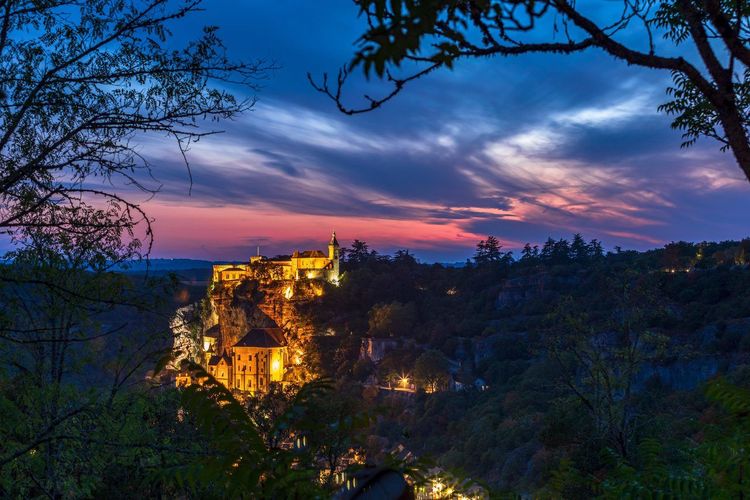
Staying in Rocamadour itself, in the lower town or at L'Hospitalet, allows you to experience the site after the tourist coaches have left and before they arrive the next morning — which radically transforms the experience. On summer evenings after 6pm, the city regains an almost intimate dimension: the shops close, lights come on in the chapels, and the only sounds are those of the stones and the owls in the cliff face.
In the city and its immediate surroundings: the Hôtel Les Esclargies (L'Hospitalet, 46500 Rocamadour, rated 4.6/5 on Google with 357 reviews) is the most accessible option directly on the plateau. For a stay in the heart of the city, the Logis de la Rampe in the lower town offers a few rooms with a direct view of the cliff face — booking several months in advance is essential in summer. The Domaine de la Rhue (a 4-star château hotel 4 km away) is the closest upmarket option.
In Gramat (12 km): the town of Gramat offers the best value for money in the area, with several logis hotels and comfortable bed-and-breakfasts between €60 and €95 per night in high season. It is the ideal base for day trips to Rocamadour, Padirac, and the causse villages without paying the tourist prices of the site itself.
Camping: the Le Roc campsite in Rocamadour itself, on the Hospitalet plateau, welcomes motorhomes and tents with a panoramic view over the city. In high season, pitches fill up several weeks in advance.
Self-catering: the Gîtes de France network in the Lot offers numerous gîtes within a 15 km radius, particularly in Alvignac, Miers, and Calès — quiet villages on the causse less than 15 minutes from Rocamadour. Gîte prices for four to six people range between €400 and €800 per week depending on the season and standard.
The Semaine Mariale in early September and the July–August weekends see accommodation within a 20 km radius fill up completely. Booking three to four months in advance for these periods is not merely a precaution — it is a necessity.
FAQ
How long does it take to visit Rocamadour?
One day in Rocamadour is enough for the essentials: allow a full day to see the medieval city, the sanctuaries, the Grotte des Merveilles, the Rocher des Aigles, the Forêt des Singes, and the Gouffre de Padirac. If you only visit the city and sanctuaries (without Padirac), a half-day of 3 to 4 hours is sufficient for a satisfying overview. For an in-depth visit including the surrounding villages, plan for a minimum of two days.
How much does it cost to visit Rocamadour?
Access to the medieval city and sanctuaries (including the Chapelle Notre-Dame) is entirely free. Paid attractions include the inclined elevator (€2.60 one way), the castle ramparts (€2), the Grotte des Merveilles (€7.50 adult), the Rocher des Aigles (€12), and the Forêt des Singes (€11). For the Gouffre de Padirac, expect to pay €19.50 per adult.
Can you visit Rocamadour entirely on foot?
Yes, the entire site is accessible on foot by climbing the Grand Escalier (216 steps) or the Chemin de la Croix from the lower town up to the sanctuaries, and then to the castle via the ramparts. Visiting Rocamadour on foot is the most authentic experience and retraces the pilgrims' route. Wear non-slip-soled shoes — the wet stone steps can be slippery.
What to do in Rocamadour when it rains?
The sanctuaries (free), the Grotte des Merveilles (entirely underground), and the Musée d'Art Sacré offer covered alternatives. The Gouffre de Padirac is completely unaffected by the weather. Fine food shops in the lower town sometimes offer Rocamadour AOP cheese tastings under shelter. Rain also has the advantage of significantly reducing visitor numbers at the site.
Rocamadour with children: from what age?
The Forêt des Singes (free-roaming macaques), the Rocher des Aigles (birds of prey in flight), and the dramatic verticality of the city create a memorable day from age 5–6. The Gouffre de Padirac is very popular with children over 6. For very young children, areas with staircases and significant elevation changes are not pushchair-accessible — a baby carrier is recommended.
What are the most beautiful villages around Rocamadour?
Saint-Cirq-Lapopie (60 km), Carennac (37 km, Cluniac priory), Martel (15 km, seven medieval towers), and Figeac (45 km, Musée Champollion) are the four most interesting stops within an hour's drive. The village of Autoire (25 km) and its waterfalls also deserve a stop along the way.
Rocamadour packs into a few cliff-face hectares a density of heritage, nature, and gastronomy unique in the Lot. Each level of the city holds details that a quick visit doesn't reveal, and the surrounding sites — from Padirac to the causse villages — extend the experience well beyond the cliff itself. To explore at your own pace with commentary on every monument and neighbourhood, the Ryo app offers geolocated audio tours for several medieval destinations in the Lot — a way to go further than the official signs, whether you have half a day or two days ahead of you. And if your journey continues toward the neighbouring Périgord, the audio walking tour of Sarlat-la-Canéda takes over to explore one of the most beautiful medieval cities in the South-West.