© Shutterstock
 Votre guide Ryo
Discovering the Most Beautiful Villages of Corrèze in 2026
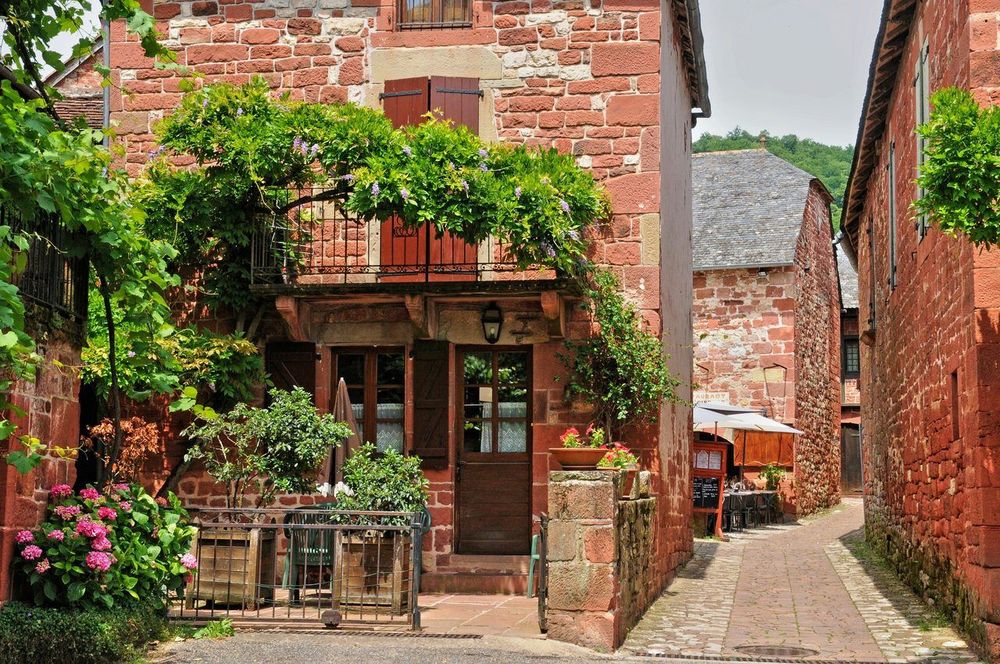
Corrèze is one of the few French départements to boast six villages labeled "Most Beautiful Villages of France", making it one of the highest per-capita densities in the entire country for a territory of 241,000 inhabitants. This is no coincidence: the blood-red sandstone of the Bas-Limousin, the granite of the Plateau de Millevaches, and the Dordogne gorges have preserved nearly intact medieval villages here, far from the demolitions that disfigured so many French historic centers in the 1960s and 1970s.
Collonges-la-Rouge is the best known. But Turenne, Curemonte, Saint-Robert, Ségur-le-Château, and Beaulieu-sur-Dordogne carry the same label, and about ten other villages — Uzerche, Argentat, Treignac, Arnac-Pompadour — are just as worth the trip. This guide covers the villages not to be missed in Corrèze, from the most famous to the most discreet, with practical information to help you plan your itinerary. To explore these heritage sites with historical context, the Ryo app offers audio guides on the region's remarkable landmarks.
Corrèze: a Unique Concentration of Heritage
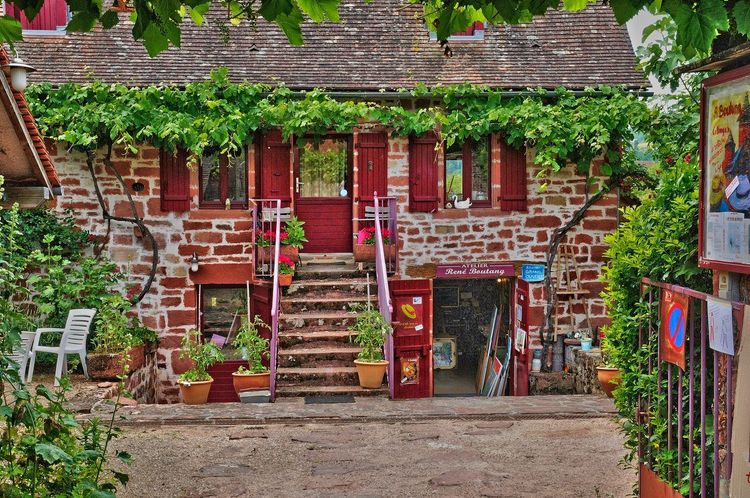
Six labeled villages for a single département is an achievement few territories can match. By comparison, Île-de-France and its twelve million inhabitants has none. Corrèze owes this richness to a particular history: sitting at the crossroads of Limousin, Auvergne, and Quercy, the département long served as a borderland where competing fiefdoms fortified and embellished themselves to assert their power. The result is a mosaic of distinct architectures shaped by local geology: blood-red sandstone around Collonges, white limestone at Turenne and on the Causse, and grey granite on the Plateau de Millevaches.
This diversity was also protected by an economic factor: Corrèze never experienced mass industrialization. The villages survived not because they were protected, but because no one had reason to demolish them. What you see as you wander these lanes is authentic — the half-timbered houses and 14th-century towers are still standing for the same reasons they were built: durable Corrèze stone and the pride of those who lived there.
Allow at least 3 to 4 days to cover the essential sites. A long weekend is enough for the six labeled villages; a full week allows you to add Uzerche, Argentat, the gorges, and the Plateau de Millevaches.
When to Visit Corrèze?
May, June, and September are the best windows. Temperatures remain mild, vegetation perfectly frames the stone facades, and museums are open without the August crowds. Spring brings blossoms to the Dordogne valley.
July–August: the six labeled villages host festivals, night markets, and medieval events. Collonges-la-Rouge can receive several hundred visitors per hour on a Saturday in July. On weekdays, even in high season, mornings before 10 a.m. remain relatively calm.
October–November: autumn offers spectacular colors in the Vézère gorges and around Lac de Vassivière. Some shops and accommodations reduce their hours or close.
In winter, villages can be visited freely (outdoor areas are always accessible), but local gîtes and restaurants often close. A car remains essential whatever the season — public transport between villages is virtually nonexistent in Corrèze.
Collonges-la-Rouge, the Red Sandstone Village
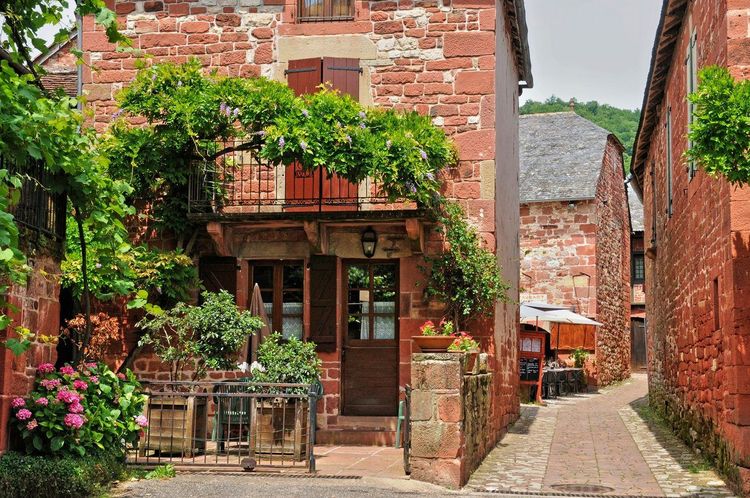
Collonges-la-Rouge (Village de Collonges-la-Rouge, 19500 Collonges-la-Rouge, rated 4.7/5 on Google from 8,200 reviews) is unique in France: every building in the village — from ordinary houses to towers and the Romanesque church — is built from blood-red sandstone that gives the town a uniform, almost surreal color. This is no architectural coincidence; it is a deliberate choice maintained by residents since the 12th century. Collonges also holds a special place in the history of the label: it was here, in 1982, that Charles Ceyrac, then mayor of the village, founded the association "Les Plus Beaux Villages de France." The very first labeled village was therefore Collonges-la-Rouge itself.
The village has around thirty towers and turrets, a direct legacy of the noble families who competed for supremacy under the Viscountcy of Turenne. Highlights of the walk include the Maison de la Sirène (16th century) with its sculpted dormers, the Tour de Malet, the grain market hall roofed with lauze stone, and the Romanesque church whose 12th-century tympanum depicts Christ in Majesty. The color of the sandstone shifts with the light — at sunset, the village turns a deep red that photographers travel far to capture.
Allow 1.5 to 2 hours to walk through the village entirely on foot. The village center is almost entirely pedestrianized; parking areas are located at the entrance with clear signage from the D38. In July and August, arrive before 10 a.m. or after 5 p.m. to avoid the tourist coaches that converge at midday.
Several restaurants are set up in red sandstone houses, and the local Corrèze produce (duck confit, walnuts, cheeses from the Plateau) is well represented. A summer market takes place on Tuesday mornings in season.
Collonges-la-Rouge is located 23 km south of Brive-la-Gaillarde, about 30 minutes via the D38. 5 km to the northeast, the village of Meyssac uses the same red sandstone in a much quieter atmosphere — a natural complementary stop for the morning without retracing the same road.
Turenne, the Perched Former Viscountcy
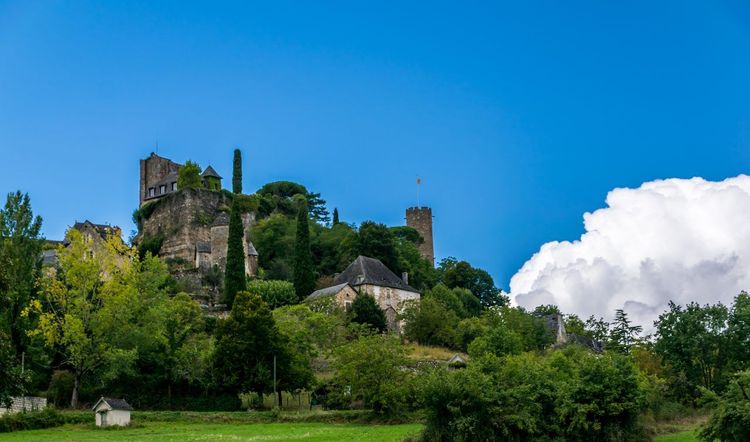
Turenne looks out over the plain from a limestone butte at 372 meters above sea level. This town of 800 inhabitants was, until 1738, the capital of a viscountcy that was nearly independent of the French kingdom — an exceptional status that earned it an architectural wealth disproportionate to its current size.
Two medieval towers dominate the site: the Tour de César (12th century), accessible via an interior staircase, and the Tour du Trésor (14th century). From the top of the Tour de César, the panorama takes in the Dordogne valley, the Monts du Cantal, and on a clear day, the foothills of the Massif Central — one of the most sweeping viewpoints in the département.
Below, the village lines its noble houses along cobbled lanes. The Église Saint-Jean-Baptiste houses a 15th-century Pietà bas-relief. The Place du Foirail, with its corbelled houses, is an ideal spot for a lunch break.
Access: Turenne is 15 km southeast of Brive via the D8. Free parking at the entrance. Allow 1.5 hours including the Tour de César (paid admission, approx. €4). The Viscountcy of Turenne once included Collonges-la-Rouge within its territory — making the round trip between the two in a half-day a classic combination.
Curemonte, the Village of Three Castles
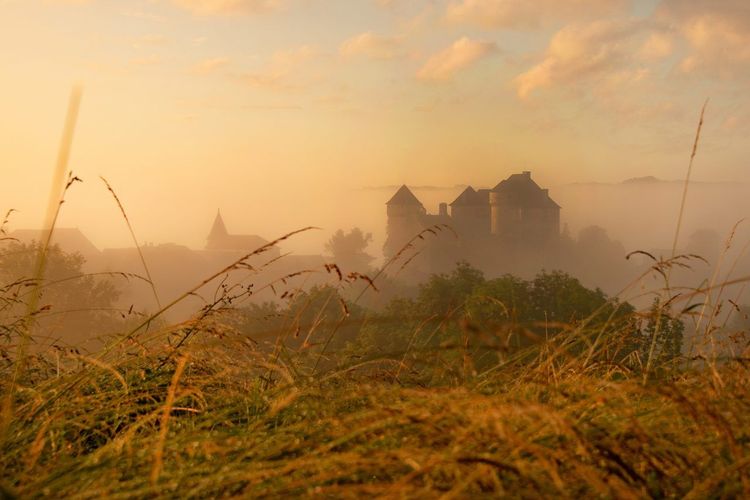
Curemonte (Village de Curemonte, 19500 Curemonte, rated 4.6/5 on Google from 820 reviews) is recognizable from afar by its three medieval castles lined along its ridge like an uneven crown. These are the castles of la Johannie, Saint-Hilaire, and Plas — three fortresses built by three different families that coexisted within a single village of 200 inhabitants. This unique configuration explains the nickname "village of three castles."
The writer Colette stayed here in 1940–1941, during the early years of the Occupation. A plaque marks her presence at a house in the village. The Collégiale Saint-Barthélemy (11th–12th century) has a Romanesque bell tower typical of the Bas-Limousin. The castles are not open for interior visits, but their exterior facades and the panoramas over the Souvigne valley justify a 45-minute to one-hour stop.
A quiet, lightly visited village even in season, Curemonte makes a perfect stop between Turenne and Beaulieu-sur-Dordogne, each about 20–25 km away.
Saint-Robert and Its Romanesque Church
Saint-Robert (Village de Saint-Robert, 19310 Saint-Robert, rated 4.4/5 on Google from 45 reviews) is perhaps the least known of Corrèze's six labeled villages, but it is one of the most authentic for lovers of religious architecture. Its 12th-century collegiate church features a chevet with radiating apsidioles — a floor plan typical of Auvergnat Romanesque architecture that reflects the geographical proximity of the Massif Central. The building is among the best preserved in the département.
The village itself is small, barely 300 inhabitants. Granite and sandstone houses cluster around the church on a gentle rise. The view from the forecourt opens onto the hills of the Bas-Limousin. The church is generally open from 9 a.m. to 6 p.m. in season, free admission. Allow 45 minutes including the village.
Saint-Robert lies on the D5, between Objat and Ayen, 20 km northwest of Brive. Combine it with Arnac-Pompadour (20 km to the west) for a half-day in the northern part of the département.
Ségur-le-Château, the Hidden Gem of the Auvézère
Ségur-le-Château (Village de Ségur-le-Château, 19230 Ségur-le-Château, rated 4.6/5 on Google from 620 reviews) is the Corrèze village that most surprises those who have never been. The medieval village forms a loop around an almost fully enclosed meander of the Auvézère river, at the foot of the ruins of an 11th-century castle. In the 15th and 16th centuries, Ségur was the judicial capital of the Bas-Limousin, which explains the density of its noble residences with turrets and corbelling: in a village of 200 inhabitants, there are around twenty seigneurial houses from the 15th and 16th centuries.
A stroll through the lanes takes 1 to 1.5 hours. The Auvézère river, accessible from the lower part of the village, offers a picnic spot or a short swim in summer. The recommended approach is via the D6 from Uzerche (22 km) rather than secondary roads from the south — faster and more enjoyable.
Ségur-le-Château attracts far fewer visitors than Collonges-la-Rouge despite comparable heritage quality. For those seeking authenticity without the summer crowds, this is the village to prioritize. The Ryo audio guide, available on the app, can accompany this kind of heritage exploration off the beaten tourist track.
The village has no year-round shops; bring a picnic or have lunch in Uzerche before heading down.
Beaulieu-sur-Dordogne, between Abbey and River
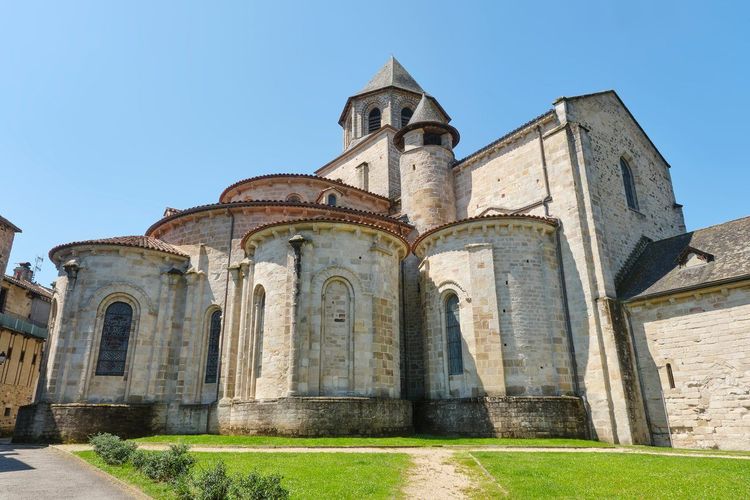
Beaulieu-sur-Dordogne is the sixth and most recently admitted of Corrèze's labeled villages. Its main draw is undeniable: the tympanum of the Abbatiale Saint-Pierre (12th century), ranked among the masterpieces of French Romanesque sculpture. This bas-relief depicting the Last Judgment rivals those of Moissac and Conques. The enthroned Christ surrounded by his apostles commands the church entrance in a composition of remarkable precision and expressiveness for its era.
The town developed along the banks of the Dordogne, which curves widely here. The quays offer a pleasant walk, and the river is suitable for swimming in summer — Beaulieu has a supervised beach popular with families. The old town, set back from the quays, is lined with half-timbered houses from the 15th and 16th centuries.
Beaulieu is a stop on the Santiago de Compostela pilgrimage route (GR 652). In July, the town hosts a nationally recognized chamber music festival. In terms of accommodation, it is one of the best bases for day trips to Curemonte and Turenne, 20–25 km away. Several hotels, B&Bs, and a campsite on the Dordogne riverbank offer affordable rates outside August.
Beaulieu-sur-Dordogne is 45 km east of Brive via the D940, and 15 km from the border with Lot.
Uzerche, the Pearl of Limousin
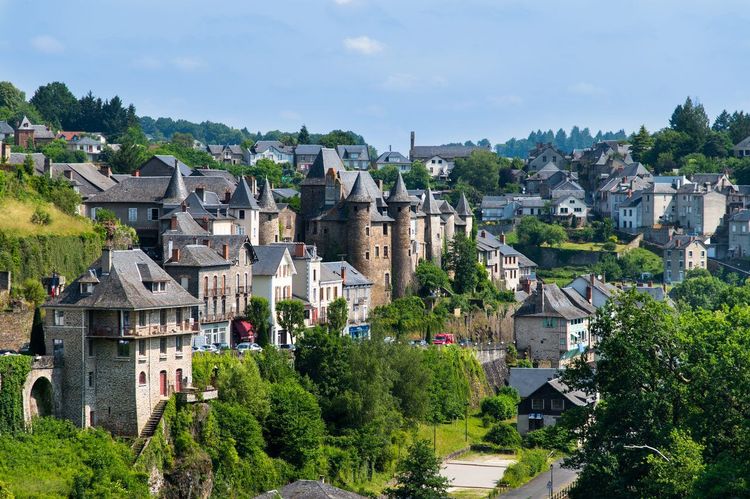
Uzerche (Uzerche, 19140 Uzerche, rated 4.5/5 on Google from 1,100 reviews) does not appear among the six labeled villages, yet it has carried the nickname "Pearl of Limousin" for centuries. This small town of 3,000 inhabitants sits on a granite promontory above the Vézère river, its silhouette of towers and bell towers visible for miles around. It is said to have never been taken by an enemy — a claim its residents still recall with pride.
The Porte Bécharie (12th century) gives access to the historic center through a Romanesque arch. The Abbatiale Saint-Pierre has a pre-Romanesque crypt from the 10th century and a particularly well-preserved 11th-century apse. The lanes of the old town climb between private-towered houses from the 15th and 16th centuries — Uzerche concentrates a remarkable number of seigneurial residences for its size.
The terrace of the Chapelle des Récollets offers a panorama over the Vézère meander — allow 30 minutes for this walk alone. The whole visit merits 1.5 to 2 hours.
Uzerche sits on the A20 (Paris–Toulouse), 38 km north of Brive. It is often the first remarkable Corrèze village spotted when heading south — a good reason to leave the motorway rather than pass through without stopping.
Argentat-sur-Dordogne, the Boatmen's Quays
Argentat-sur-Dordogne (Quais d'Argentat, 19400 Argentat-sur-Dordogne, rated 5/5 on Google from 3 reviews) owes its distinctiveness to its 17th–18th-century quays, lined with houses of lauze and flat-tile roofs. This architecture reflects a riverine history: until the 19th century, boatmen known as "gabarriers" transported timber, cheese, and oil on flat-bottomed boats called gabarres all the way to Bordeaux. The merchants' and boatmen's houses line the Dordogne riverbank directly, their doors opening onto the water.
The quays of Argentat are among the most photogenic in the Massif Central. The town offers water activities in season (canoeing, kayaking, fishing) on the Dordogne. In August, a reenactment of gabarre navigation attracts several thousand visitors.
Access: Argentat is 45 km east of Brive via the D980, following the Dordogne upstream. The road skirts the gorges for several kilometers — the journey is as rewarding as the destination.
Treignac-sur-Vézère, between Medieval Towers and Lake
Treignac (Treignac, 19260 Treignac, rated 4.4/5 on Google from 530 reviews) is a compact medieval town with the feel of a village, perched above the Vézère on a granite outcrop. Its towers, partial ramparts, and old market hall give it a skyline visible from the heights of the Monédières. The Chapelle Notre-Dame (15th century) overlooks the river from a rocky spur accessible via a cobbled path.
5 km to the north, the Lac des Bariousses (76 ha) offers swimming, sailing, and cycling on its developed shores — one of the most frequented water leisure sites in the département in summer. Treignac is also the gateway to the Parc Naturel Régional de Millevaches, a preserved natural area with a distinctly wild character.
Coming from Limoges or the north, Treignac is the first remarkable Corrèze village on the D44, 58 km northeast of Tulle.
Arnac-Pompadour, the Horse Capital

Arnac-Pompadour is known for two closely related reasons: its castle, made famous by the Marquise de Pompadour in the 18th century, and its National Stud Farm founded in 1761 by Louis XV, one of the oldest in France. The town revolves entirely around the equestrian sector, with horse racing and a nationally ranked training center.
The Château de Pompadour (14th–15th century) remains the property of the National Stud Farms. Guided tours provide access to the royal stables and allow visitors to see the stallions. In July and August, flat and jump racing at the adjacent hippodrome draws a loyal crowd.
Pompadour is located 42 km northwest of Brive via the D901. Combine it with Saint-Robert (20 km to the east) for a half-day in the northern part of the département.
Meyssac, Gimel, and Other Hidden Gems of Corrèze
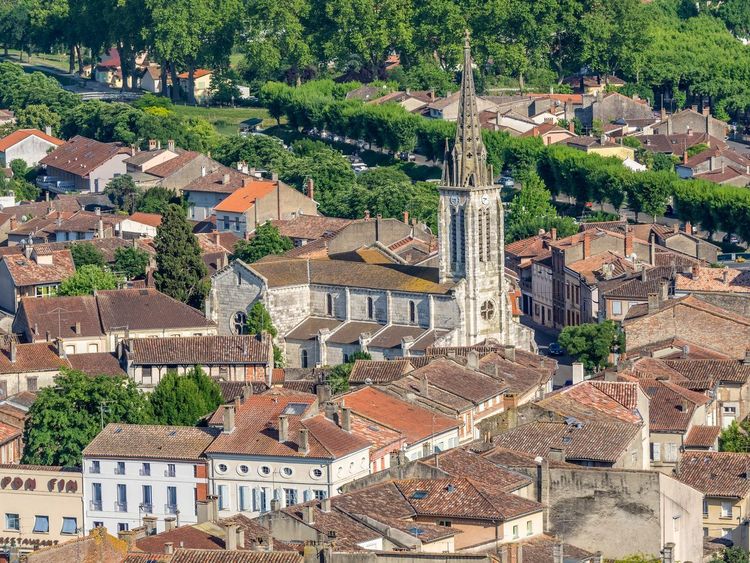
Meyssac shares Collonges-la-Rouge's red sandstone architecture, but in an infinitely calmer atmosphere. This village of 1,200 inhabitants has a medieval market hall, a Romanesque church, and several 14th-century houses — all without the tourist coaches or queues. It is often a visit that travelers regret missing after seeing Collonges. Allow 45 minutes on site.
Gimel-les-Cascades (Gimel-les-Cascades, 19800 Gimel-les-Cascades, rated 4.3/5 on Google from 2,996 reviews) offers a rare natural spectacle in the heart of the Massif Central: three waterfalls cascading through a wooded gorge, the tallest reaching 60 meters. The discovery trail (about 1 hour round trip) descends into the canyon. The village church preserves a remarkable Romanesque treasure — a 12th-century enameled copper reliquary.
Donzenac, on the N20 north of Brive, is worth a stop if you are arriving from Limoges. This medieval town of black schist houses has several preserved towers and an open view over the Brive plain. Less touristic, but enjoyable for 30 minutes.
The village of Corrèze (the eponymous commune, 25 km north of Tulle) is a peaceful town crossed by the Corrèze river, with a quiet main square and a weekly market. To explore other remarkable rural heritage sites in France, the Ryo app lists audio guides on France's most notable villages — a useful resource to continue your discoveries beyond Corrèze.
How to Plan Your Stay in Corrèze
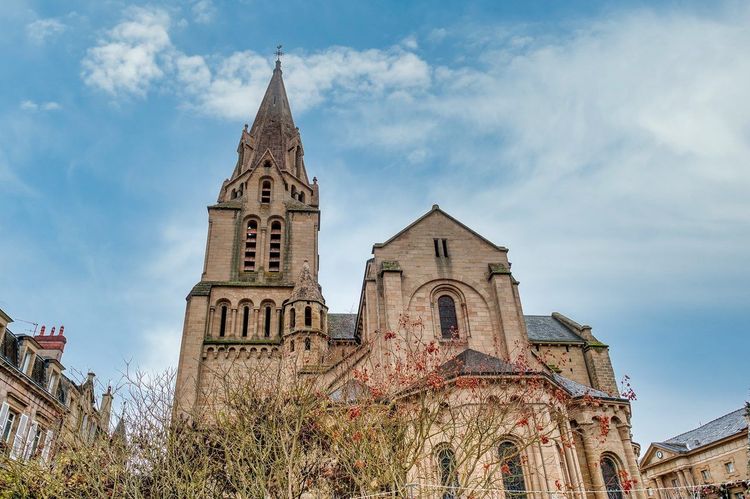
Two Days for the Six Labeled Villages
With a car and good organization, two full days are enough for the six labeled villages. Brive-la-Gaillarde is the ideal logistical base: a hub city with a TGV station (Paris in 4 hours), an airport, and a wide choice of accommodations for all budgets.
Sample itinerary:
- Day 1: Brive → Collonges-la-Rouge (morning, 2 hrs) → Meyssac (30 min) → Turenne (1.5 hrs) → Curemonte (1 hr) → overnight in Beaulieu-sur-Dordogne
- Day 2: Beaulieu-sur-Dordogne (morning, abbey + quays) → Saint-Robert (45 min) → Ségur-le-Château (1.5 hrs) → Uzerche (1.5 hrs) → return to Brive
Four to Five Days for the Grand Tour
By adding Argentat, Treignac, Arnac-Pompadour, and Gimel-les-Cascades, a stay of 4 to 5 days covers the essentials without rushing. Plan two bases: Brive-la-Gaillarde for the south and west of the département, Tulle or Argentat for the center and east.
Getting Around
A car is essential. Intercity public transport in Corrèze does not serve the labeled villages. Renting a car in Brive or Tulle is the only realistic option. Secondary roads (D roads) are well maintained but narrow, particularly in the gorges: 30 km on a D road can take 45 minutes.
GPS is reliable in most areas. Be cautious in the Dordogne gorges and on the Plateau de Millevaches, where mobile network coverage can be intermittent — download offline maps before setting off.
Budget
The vast majority of villages are free to visit. Paid attractions are rare: the Tour de César in Turenne (approx. €4), guided tours of the royal stables at Arnac-Pompadour (variable pricing depending on the package), and a few small local museums (€2–3). The Abbatiale de Beaulieu-sur-Dordogne is free to enter.
Accommodation: B&Bs and gîtes in Corrèze remain affordable outside July–August — expect €60 to €90 per night for a double room at good value. Campsites along the Dordogne offer attractive rates for families. In July–August, book at least 6 to 8 weeks in advance for Collonges, Turenne, and Beaulieu.
Food: the Corrèze terroir is an extra reason to linger — duck confit, Corrèze walnuts (AOP), Cornil cheese, and Corrèze veal are well worth the investment. Budget €15 to €25 per person for a local lunch in the villages.
FAQ
How Many Most Beautiful Villages of France Are There in Corrèze?
Corrèze has six villages bearing this national label: Collonges-la-Rouge, Turenne, Curemonte, Saint-Robert, Ségur-le-Château, and Beaulieu-sur-Dordogne. The label is awarded by the national association of the same name, founded in 1982 at the initiative of Charles Ceyrac, then mayor of Collonges-la-Rouge. Among candidate municipalities, only those meeting strict criteria for heritage, architecture, upkeep, and local vitality are selected. Corrèze has the distinction of being the founding département of this initiative.
Which Is the Most Beautiful Village in Corrèze?
Collonges-la-Rouge is the most visited and most iconic, thanks to its architecture built entirely from blood-red sandstone. But the answer depends on what you are looking for. For authenticity and tranquility, Ségur-le-Château is often preferred by those who know the region well. For Romanesque architecture, Beaulieu-sur-Dordogne and its 12th-century tympanum are essential for anyone interested in medieval sculpture. For panoramas, Turenne from its Tour de César has no equal in the département.
Can You Visit Several Villages in One Weekend?
Yes, provided you have a car. A long weekend (Friday evening to Sunday) allows you to comfortably cover four to five villages, departing from Brive-la-Gaillarde. The classic circuit Collonges → Turenne → Curemonte → Beaulieu fits into two full days including lunch breaks. If you only have a Saturday, Collonges-la-Rouge and Turenne are each enough for a lovely half-day, leaving early in the morning.
When Are the Villages of Corrèze Least Crowded?
May, June, and September are the best periods to visit without battling the crowds. Attendance explodes in July and August, particularly at Collonges-la-Rouge. On weekdays, even in high season, mornings before 10 a.m. remain noticeably calmer than midday. Autumn (October) offers spectacular colors in the Dordogne gorges, but some shops and accommodations gradually close from mid-October onward.
Are There Other Beautiful Villages in Neighboring Départements?
Yes, and the neighboring Dordogne makes for a natural extension. The Périgord is also home to dozens of remarkable villages, some of them labeled. If you extend your stay beyond the Corrèze border, the Ryo guide to the 13 most beautiful villages of Dordogne lists the unmissable stops between Périgueux and Sarlat. More broadly, consult the complete guide Visiting the Most Beautiful Villages of France to plan an itinerary across the entire country.
Corrèze is one of the few French départements where you can visit six exceptional villages in two days without ever feeling rushed. The red sandstone architecture and the Dordogne gorges form a coherent heritage backdrop, accessible from Brive in under an hour in every direction. To prepare your itinerary or explore other French regions with historical context in hand, discover the Ryo audio guides on France's remarkable heritage sites, and travel better informed.