
Créé par Romane, le 20 juin 2026
Votre guide Ryo
Ferry France to Ireland: Routes, Companies and Practical Tips 2026
© Shutterstock
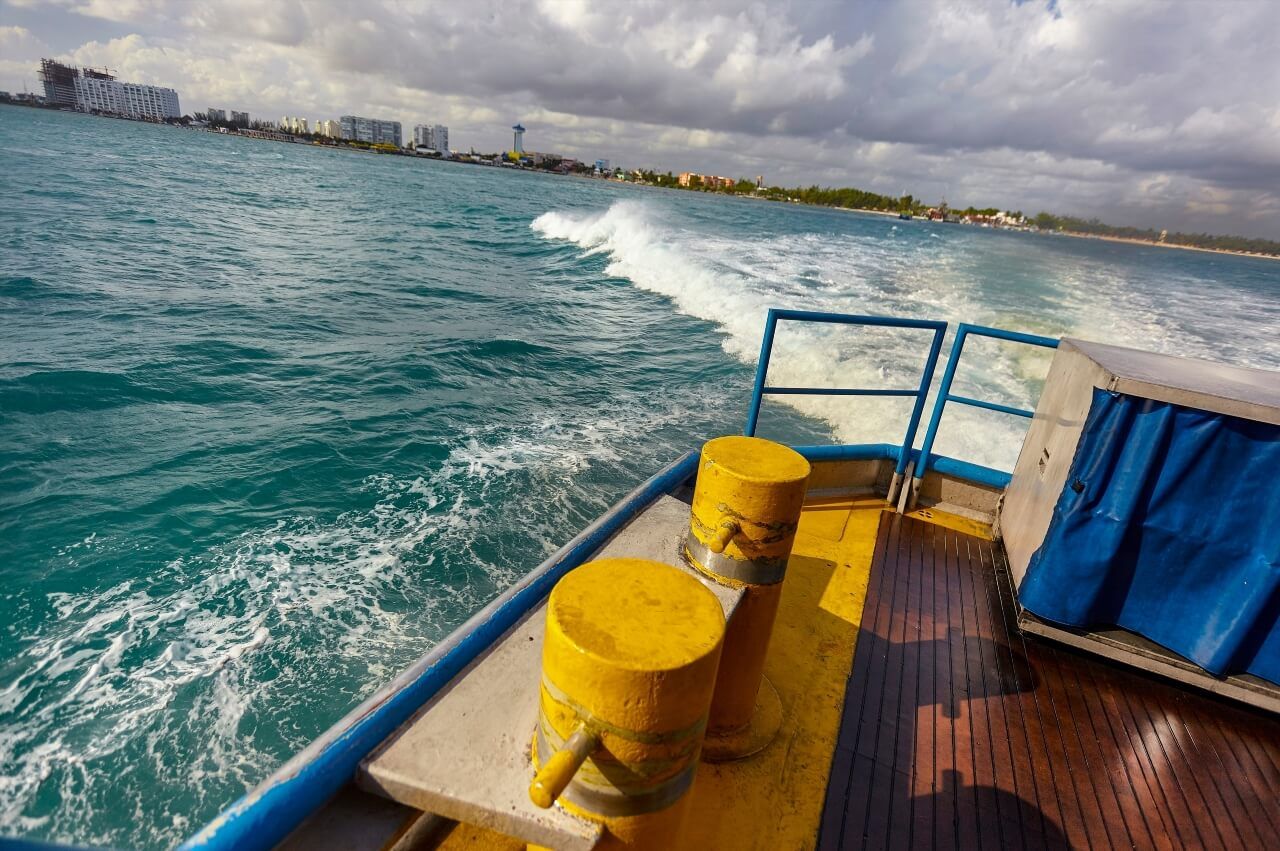
There's something profoundly different about taking the sea from Cherbourg in the late afternoon, dining facing the Atlantic and waking up with the Irish coasts beyond the porthole. The ferry France Ireland is unlike any other journey: no luggage weighed to the gram, no security queue, your car in the holds and the crossing itself becoming a moment in its own right. Two major companies, Brittany Ferries and Irish Ferries, connect France to Ireland directly from two French ports, Cherbourg in Normandy and Roscoff in Brittany, to three Irish ports: Dublin, Rosslare and Cork. This guide covers everything you need to know before booking: actual durations, 2026 rates, cabin comparison, tips for motorhomes and animals, differences between routes, and what awaits you once you disembark in Dublin. To prepare your arrival in the capital, the Ryo audio-guided tour of Dublin offers 20 audio stages over 8 km of walking, an efficient way to discover the city with complete autonomy from day one.
Why Choose the Ferry to Reach Ireland from France
The immediate argument against the ferry France Ireland is time. A Paris to Dublin flight takes 2 hours; the sea crossing takes 19. But this comparison misses the essential: what we transport, how we travel, and what we do with this time.
For a family with a car, the calculation quickly shifts. Four plane tickets, a car rental on site for 7 days, checked baggage: the sum easily exceeds 900 to 1,200 € not including airport transfers. The ferry embarks car, passengers and unlimited luggage in the trunk for an often lower rate. And as soon as you set foot in Dublin or Rosslare, you are immediately mobile.
There's also the argument of the journey itself. The Cliffs of Moher, the Ring of Kerry, Connemara, the roads of western Ireland: these landscapes are not experienced by taxi from an airport. With your own vehicle, you take the small roads, you stop at the first farm selling artisanal cheese, you sleep where you want. The ferry is the only mode of transport that gives you this level of autonomy upon arrival.
Finally, the night crossing is a concrete asset. You board in the late afternoon, you dine, you sleep, you wake up in Ireland. No hotel night is wasted. It's a real saving on a week-long stay.
The 5 France to Ireland Routes Summarized
The table below summarizes the direct connections operated in 2026. "Direct" means without stopover in Great Britain.
From Cherbourg (Normandy):
- Cherbourg → Dublin: Irish Ferries, ~19-20h, year-round
- Cherbourg → Rosslare: Irish Ferries + Brittany Ferries, ~17-18h, year-round
From Roscoff (Brittany):
- Roscoff → Cork: Brittany Ferries, ~13-14h, reduced season in winter
Via Great Britain (Stena Line, indirect option):
- Calais/Dunkirk → Channel crossing → Holyhead → Dublin: count 8 to 12h total transit time depending on connections
The choice between these ferry France Ireland routes depends mainly on two factors: your starting point in France, and your destination in Ireland. A traveler departing from Lyon or Paris will naturally gravitate towards Cherbourg, while a resident of Rennes or Nantes saves time by going through Roscoff. On the Irish side, if your stay begins in Dublin, the direct Cherbourg to Dublin route is logical; if you start with Kerry or Cork, Rosslare or Ringaskiddy terminal are much more strategic.
An important clarification: there is no direct France to Ireland connection from Le Havre, Calais, Dieppe or Saint-Malo. These ports only serve England.
Brittany Ferries: The Historic Company from Roscoff and Cherbourg
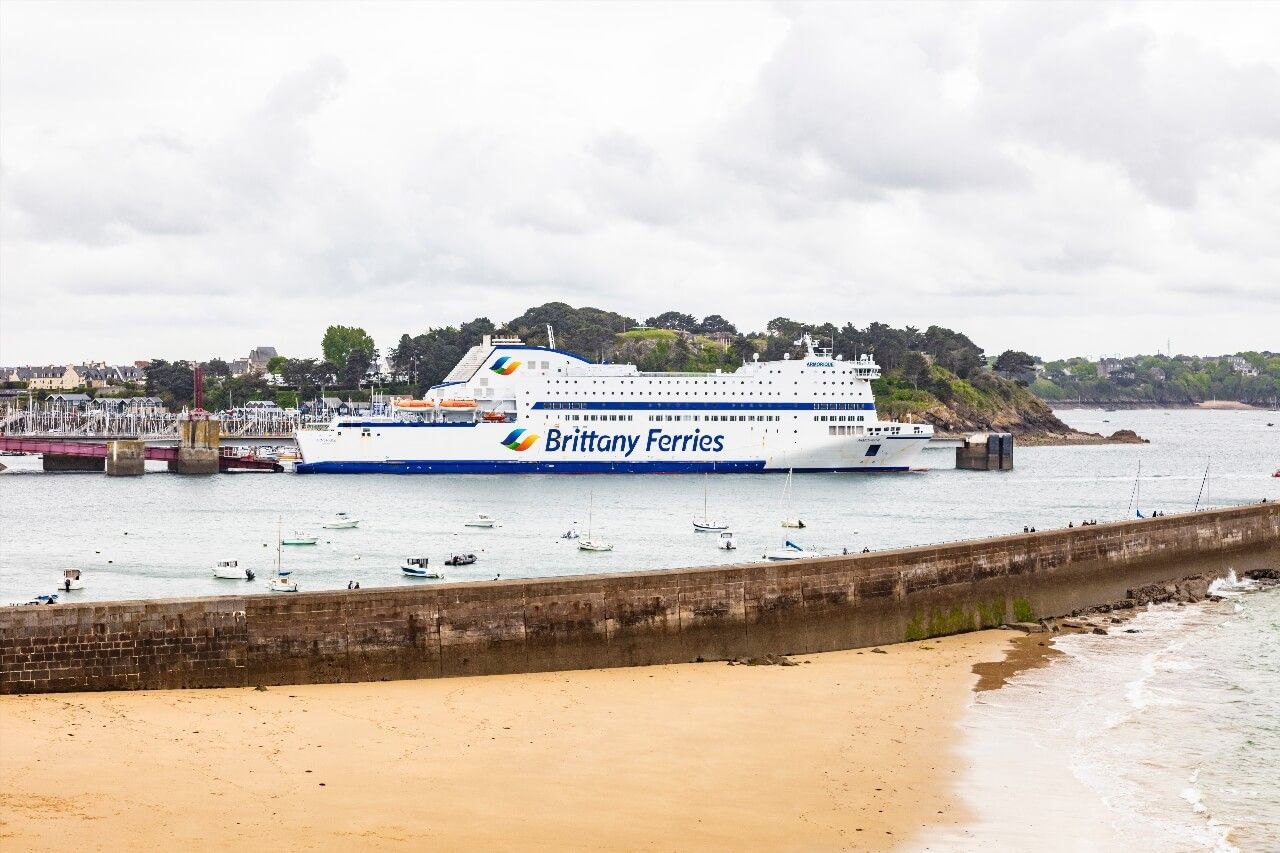
Founded in 1972 to export artichokes and cauliflowers from Léon to England, Brittany Ferries has become in fifty years the dominant operator of maritime connections between France and the British Isles. On the France to Ireland route, the company operates two connections: Roscoff to Cork, and especially Cherbourg to Rosslare, now daily year-round since 2026 (after Stena Line's withdrawal from this route at the end of 2025).
Its most emblematic ship on these lines is the Pont-Aven. Put into service in 2004, 184 meters long, it can accommodate up to 2,400 passengers and embarks 653 vehicles. It's the largest ship in the Brittany Ferries fleet, and its level of equipment approaches the ferry-cruise rather than the simple ferry: four restaurants and bars, a duty-free shop, a wellness area with jacuzzi and massages, cabins on five comfort levels, and an outdoor terrace at the stern to enjoy the sunset at sea.
On the Roscoff to Cork route, Brittany Ferries also operates the Connemara, a chartered ropax ship (former Norman Asturias) with more modest capacity, around 500 passengers and 195 cars. It offers more streamlined services than the Pont-Aven, with 2 or 4-berth cabins and an evening bar.
Brittany Ferries crossings operate almost exclusively overnight. The typical departure from Roscoff or Cherbourg takes place in the late afternoon (4 PM to 8 PM depending on season and ship), for a morning arrival in Ireland. This format is calibrated for families and travelers with cars: you load your belongings, you go to your cabin, and you emerge rested, ready to start your Irish day.
The Brittany Ferries pricing structure is dynamic, comparable to airlines: tickets booked early are the cheapest. For two passengers with a standard car:
- Early Saver (non-flexible, non-refundable): from 220 to 380 € one-way in low season
- Standard Rate (modifiable under conditions): from 320 to 500 € in low season, 700 to 1,200 € in high season
- Commodore Deluxe Cabin in high season: up to 1,500 € one-way
Brittany Ferries has a Club program: annual subscription that gives access to preferential rates and flash offers. If you take the ferry twice or more per year, it's worth calculating.
For motorhomes, Brittany Ferries is the reference on this route. The vehicle decks of large ships are sized for vehicles up to 8 to 9 meters long and 3.8 meters high. Specify exact dimensions when booking. The company also accepts pets in "pet-friendly" cabins on certain ships, with access to a walking area on the outer deck.
A concrete advantage of Brittany Ferries: French-speaking customer service. For a company serving routes from France, it's obvious, but the quality of telephone assistance and booking follow-up is notably superior to some competitors.
Irish Ferries: The Direct Cherbourg to Dublin Connection
Irish Ferries is the second major operator on the France to Ireland route, with a decisive particularity: the company is the only one to offer a direct Cherbourg to Dublin connection, without stopover in Great Britain. For French travelers targeting the Irish capital, it's often the first choice.
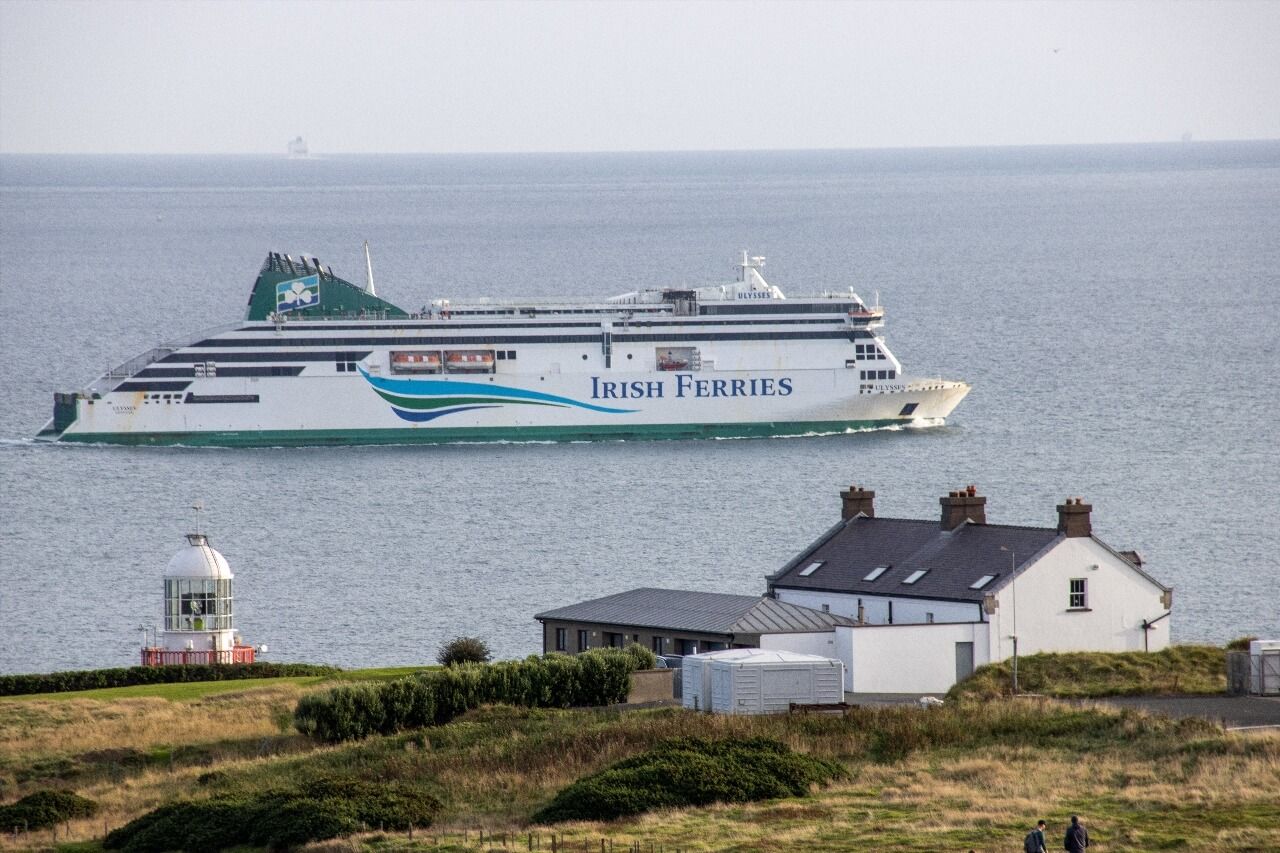
Its flagship vessel on this route is the W.B. Yeats, which entered the fleet in 2019. 218 meters long, it carries up to 1,800 passengers and 400 vehicles. The interior is more like a Nordic ferry than a classic boat: four restaurants including a panoramic one at the bow, a cinema club, an extensive duty-free shop, and cabins spread over several levels from the "reclining seat" to the superior suite with panoramic window. Irish Ferries reinforces the Cherbourg to Dublin line with the Oscar Wilde, a chartered ship that comes to support the W.B. Yeats on the longest crossing.
For Rosslare, however, you must turn to Brittany Ferries: Irish Ferries now concentrates its departures from Cherbourg on Dublin.
The Irish Ferries pricing policy works on the same yield model as Brittany Ferries. For Cherbourg to Dublin one-way, 2 passengers + 1 car:
- Low season, 2-berth inside cabin: 220 to 380 €
- High season, 2-berth inside cabin: 450 to 700 €
- Outside cabin with porthole (high season): 750 to 950 €
- Superior cabin with large window: up to 1,200 € in August
Irish Ferries publishes "price drops" in September and October for the following summer's crossings. If you travel in July or August and have fixed dates, set up price alerts from the previous September, the first Irish Ferries tickets for summer sell out before Christmas.
The company also offers a Mastercard program with rates reserved for cardholders. Check if you're eligible before booking at public rates.
A nuance to know: Irish Ferries is a subsidiary of ICG (Irish Continental Group), a group listed on the Dublin Stock Exchange. The company also serves the Dublin to Holyhead route (Wales, 3h15), but for departures from France, only Cherbourg matters.
Stena Line: The Option via Great Britain
Stena Line does not offer a direct France to Ireland connection. The Swedish company operates exclusively between Great Britain and Ireland: Holyhead to Dublin (3h15, up to 6 crossings per day), Fishguard to Rosslare (3h30) and Cairnryan to Belfast (2h15 for Northern Ireland).
It becomes relevant for French travelers in a specific case: you depart from eastern or central France, Strasbourg, Lyon, Bordeaux, and Cherbourg represents a 4 to 5-hour detour. In this case, the route via Calais or Dunkirk (quick Channel crossing with P&O or DFDS, 1h30) then drive to Wales and Stena Line to Dublin may be faster overall.
The calculation deserves to be done honestly for your starting point. Generally, if you depart from Paris, Rennes, Nantes, Bordeaux or Caen, direct connections from Cherbourg or Roscoff remain simpler and often less expensive.
Cherbourg to Dublin in Detail: Boarding, Duration, Stops
Cherbourg is today the most used departure port for a ferry France Ireland, and for solid geographical reasons. The tip of Cotentin is the closest point of metropolitan France to Ireland, which mechanically reduces crossing duration and fuel costs passed on to tickets.
Access to Cherbourg is direct from Paris (3h by car via A13 and A84, or 3h by train from Paris Saint-Lazare, SNCF offers 5 to 6 daily TER). From Caen, count 1h15. The ferry terminal is 10 minutes from downtown Cherbourg.
The typical boarding schedule for the Cherbourg to Dublin crossing:
- Terminal opening: 2h to 3h before departure
- Vehicle check-in: arrive within this window, not too early (vehicle lanes remain empty 3h before), not too late (vehicle deck ramps close 30 to 45 min before departure)
- Actual departure: generally between 5:30 PM and 8 PM depending on company and season
- Arrival at Dublin Port: 7 AM to 10 AM the following morning
The Cherbourg to Dublin crossing lasts 19h on average on the W.B. Yeats from Irish Ferries. Weather can extend this duration by 1 to 2 hours in case of strong swells in the Irish Sea, a rare phenomenon from June to September, more common from November to March.
Dublin Port (Alexandra Road, D01 Dublin, rated 3.8/5 on Google for 2.1K reviews) is located about 3 km from the city center. By car from the terminal, reaching the Temple Bar area or O'Connell Bridge takes 10 to 15 minutes depending on morning traffic. Public buses (line 53a) serve the center in 20 minutes for passengers without cars.
A logistical detail often ignored: Irish Ferries operates on this route 365 days a year. Even during the holidays, even in January, you can cross from Cherbourg to Dublin. Frequencies are reduced in low season (2 to 3 departures per week depending on period), but the connection doesn't stop.
If you plan a trip outbound to Dublin and return from Rosslare (or vice versa), Irish Ferries offers combined tickets on both routes. It's the ideal format for a loop itinerary that crosses Ireland from east to west without retracing your steps.
Cherbourg to Rosslare: Heading to Kerry, Cork and the Wild Atlantic Way
Rosslare Europort (Rosslare Harbour, Wexford, Ireland, rated 3.7/5 on Google for 1.4K reviews) is often presented as Ireland's secondary port, when it's strategically superior to Dublin for a large part of French travelers. If your itinerary includes Cork, Kerry, Killarney, the Cliffs of Moher or Connemara, arriving in Rosslare saves you 1h30 to 2h of driving compared to Dublin.
The Cherbourg to Rosslare crossing is operated by Brittany Ferries. Duration: about 17 to 18 hours. Evening departure from Cherbourg, arrival the following day mid-morning in Rosslare. Since 2026, the line has moved to daily departure year-round, making it one of the most flexible connections on this ferry France Ireland.
From Rosslare, driving distances are telling:
- Wexford: 15 km (beautiful medieval town with its Norman ramparts, 45,000 inhabitants)
- Waterford: 1h (Ireland's oldest city, founded by Vikings in the 9th century)
- Cork: 2h30 (country's second city, gastronomy, English Market, Georgian architecture)
- Killarney: 3h30 (gateway to Ring of Kerry and Lakes of Killarney)
- Dublin: 1h45 (for those who still want to reach the capital)
Rosslare is a functional port, without particular tourist charm, but that's precisely the advantage. You disembark, get in your car, and in less than ten minutes you're driving on Irish secondary roads. No capital traffic jams to negotiate at 8 AM.
A practical point: unlike Dublin port, there's no direct public bus from Rosslare Europort to Cork or Dublin. If you don't have a car, check Bus Éireann shuttles from the port.
Roscoff to Cork: The Breton Crossing, the Shortest from France
Roscoff is the port for western travelers. For a resident of Rennes, Nantes, Brest or Bordeaux, boarding at Roscoff rather than Cherbourg represents 2 to 4 hours of driving saved, a non-negligible gain when the crossing already takes 14 hours.
The Roscoff to Cork connection is operated exclusively by Brittany Ferries and lasts about 13 to 14 hours, it's the shortest direct crossing from France to Ireland. Departure is generally in early evening from Roscoff, with arrival in Cork the following day mid-afternoon. In high season, two to three weekly departures are available. In low season (November to March), frequencies drop sharply and the line may be suspended certain weeks.
Cork (Corcaigh in Irish, "the marsh") is Ireland's second city with about 210,000 inhabitants in its urban area. The city is built on an island between two arms of the River Lee, with a compact pedestrian center. The English Market, an 18th-century covered market hall, remains the essential place for local gastronomy enthusiasts: Cork cheeses, Irish beef, fresh fish from Atlantic coasts. The city was named European Capital of Culture in 2005 and has a very active music and cultural scene.
Brittany Ferries arrives at Ringaskiddy terminal, 15 km south of Cork center. A shuttle bus service is available during high season. By car, Cork center is 20 minutes away.
From Cork, the roads of the Wild Atlantic Way are directly accessible:
- Kinsale: 30 km (fishing village, gastronomic capital of the county, 17th-century ramparts)
- Blarney Castle: 12 km (medieval castle, the famous stone to kiss for "the gift of gab")
- Killarney and Ring of Kerry: 1h40
- Cliffs of Moher: 2h30 driving northwest
If Roscoff to Cork is the natural Breton route, it requires a point of vigilance: check precise operating dates before booking, particularly if you travel from September to April. The Brittany Ferries schedule on this line is less regular than on Cherbourg routes.
Cabins: Choosing the Right Comfort Level for 14 to 20 Hours at Sea
On crossings of this duration, cabin choice is a practical decision that directly affects the quality of the journey. Here's how the two major companies organize their offer.
Reclining seat: the most economical option. No private cabin, you sleep in a semi-reclining seat in a closed collective space, similar to long-haul economy class on a plane. Acceptable for a solo traveler with a good sleep mask and earplugs. Less suitable for families with children or people sensitive to collective noise.
4-berth inside cabin: closed room, without window, with two bunk beds. Shared between members of the same group or family. It's the optimal value for a family of four: complete privacy, comfortable berths, and rate well below cabins with portholes.
2-berth inside cabin: same configuration, but reserved for two people. The absence of a window is compensated by the fact that you sleep most of the time.
Outside cabin with porthole or side window: same configuration as the previous, with an opening to the outside. The porthole doesn't always give an unobstructed view (some are partially obstructed by deck structures), but the sense of space and morning light are significantly superior. Supplement: 50 to 150 € compared to inside cabin depending on season.
Commodore/Prestige cabin (Brittany Ferries) or superior cabin (Irish Ferries): the high-end of the crossing. Large panoramic window, hotel-quality bedding (cotton sheets, down pillows), private bathroom with shower, sometimes sofa or armchair. On the Pont-Aven, the Commodore Deluxe cabins at the bow offer a frontal view of the sea of rare visual quality. If you book this level of comfort, arrive aboard early to enjoy the sunset from your cabin.
Suite: available on the largest ships (W.B. Yeats, Pont-Aven). Living room separate from bedroom, premium amenities, breakfast service in cabin possible on some companies. Rate: 300 to 600 € additional compared to standard Commodore cabin. For business travel or special occasions.
For families with young children, consider booking a cabin with sea side (outside): natural light helps children adjust their biological clock. 4-berth inside cabins are functional but can be stressful if children don't fall asleep easily in closed environments.
Packing advice for the cabin night: take a separate cabin bag with essentials (pajamas, toiletries, chargers, medications if needed). Vehicle decks are not accessible during the crossing in open sea. Leave your large suitcases in the trunk.
Onboard Services: Dining, Bars, Entertainment, WiFi
Large France to Ireland ferries carry services that far exceed what is generally imagined under the term "ferry".
Dining: each large capacity ship offers two to four options. The buffet restaurant (dinner between 8 PM and 10 PM, breakfast between 6 AM and 8 AM) is the most used formula. Correct quality and improving in recent years, Nordic ferries have influenced standards. Count 24 to 32 € per adult for buffet dinner, 12 to 16 € for breakfast. The à la carte restaurant is available on large ships, quieter and better cooked: starter, main, dessert around 40 to 55 € per person. Some ships also offer a snack bar or pizzeria for families with children who don't dine at fixed times.
Bars: generally two types of atmosphere on the same ship. A lively evening bar, sometimes with live music or karaoke, frequented by groups and passengers in festive mood. And a quieter lounge bar for those who want to read, work or simply watch the sea. The duty-free shop is open from departure: alcohol, perfumes, chocolates, travel accessories, at generally lower prices than terrestrial shops.
Entertainment: the W.B. Yeats and Pont-Aven have a cinema space with evening screenings. Practical for families whose children don't fall asleep immediately. Solo travelers often find their entire evening sorted.
WiFi: available on large ferries, but don't plan your digital life around it. Satellite connection in open sea is slow and charged by consumption or hourly package. Download your movies, podcasts and playlists before boarding.
Wellness: on the Pont-Aven from Brittany Ferries, a spa area with jacuzzi, sauna and massages is accessible for an additional fee (reservation recommended). It's the kind of service you don't expect on a ferry, but which transforms a long crossing into a real recovery moment.
2026 Rates: Price Ranges by Season and Cabin Type
Ferry France Ireland prices follow a dynamic pricing logic identical to airlines. Across all ferry France Ireland connections, the gaps between low and high season are considerable. Tickets booked early are the cheapest, last available places the most expensive.
The ranges below correspond to a one-way trip for 2 adults + 1 standard car (less than 5.10 m, height under 2 m):
Low season (October, March, outside French school holidays):
- Reclining seat: 140 to 220 €
- 2-berth inside cabin: 200 to 340 €
- 2-berth outside cabin (porthole): 280 to 450 €
- Commodore/Prestige cabin: 420 to 680 €
Mid-season (April, June, September, October, school holidays excluding summer):
- Reclining seat: 200 to 320 €
- 2-berth inside cabin: 300 to 480 €
- 2-berth outside cabin: 420 to 600 €
- Commodore/Prestige cabin: 600 to 950 €
High season (July, August, Christmas to New Year):
- Reclining seat: 280 to 440 €
- 2-berth inside cabin: 400 to 650 €
- 2-berth outside cabin: 560 to 900 €
- Commodore/Prestige cabin: 900 to 1,500 €
Each additional passenger (child over 4 years) is charged between 20 and 90 € depending on company and season. Under 4s generally travel free. Motorcycles benefit from specific rates: from 80 to 200 € for the motorcycle alone (excluding passengers), depending on company and period.
For motorhomes, the vehicle rate is calculated on total length (including trailer for caravans). A 7m motorhome averages 40 to 80% more than a standard car for the same cabin category.
These ranges are indicative. Actual prices vary according to current promotions, exact date, and last-minute changes. Comparing the two companies on the same route and same date takes five minutes on their respective websites.
When to Book and How to Pay Less
The rule is simple and always true: the earlier you book, the less you pay. July and August crossings with cabins fill up from January, February for both companies. If you travel in summer with a car, booking 4 to 6 months in advance is the norm, not the exception.
For low season (November to March excluding holidays), prices remain accessible until 4 to 6 weeks before departure. But reduced frequencies limit flexibility on dates, check first the days when the connection operates before comparing prices.
Brittany Ferries' Early Saver tickets are non-refundable and non-modifiable, but offer 15 to 25% discount compared to flexible rate. They're the best option if your dates are certain. Flexi tickets (modifiable under conditions, 50% refundable after fees) are useful if you have uncertainties, but they cost 20 to 40% more.
Some concrete levers to reduce the bill:
Subscribe to newsletters: Brittany Ferries and Irish Ferries regularly send flash offers, often outside high season. "Private sale" promotions can reach 30% discount.
Compare both companies on the same route: on Cherbourg to Rosslare for example, both Irish Ferries and Brittany Ferries operate. Prices can vary by 50 to 150 € for the same cabin type on close dates.
Choose weekday crossings: Sunday evening and Friday evening departures are more in demand. A Tuesday or Wednesday departure is often 10 to 20% cheaper.
Avoid the first week of August: it's the absolute peak demand from France. Leaving a week before or after can save 150 to 300 € on the total.
Car, Motorcycle, Motorhome: Everything About Vehicle Boarding
Boarding your own vehicle is one of the main advantages of ferry France Ireland, and all companies on these connections are equipped for vehicles. Here's the practical information by vehicle type.
Standard cars (less than 5.10 m long, less than 2 m high): no particular formality beyond dimensions. You give approximate data when booking, an agent directs you to your deck when boarding.
SUVs, minivans, station wagons with roof rack: check total height with roof rack installed. Most vehicle decks accept up to 2 m to 2.50 m. Beyond, your vehicle is classified "high vehicle" with a rate supplement of 15 to 30%. If in doubt, mention it when booking.
Motorcycles: motorcycles are loaded on specific decks, secured with straps provided aboard. Bring your own quality straps if you have a heavy motorcycle. Motorcycle rate (without passenger) varies from 80 to 200 € one-way depending on company and season.
Motorhomes and caravans: total length and height are the two critical parameters. Most ships accept vehicles up to 8 m to 9 m long and 4 m high. Beyond, contact the company directly to verify availability of suitable deck. Rates are significantly higher, a 7m motorhome typically costs double a standard car in high season.
In practice, arrive at the ferry terminal 2 to 3 hours before departure for travelers with vehicles. Vehicle lanes generally open 2h30 before departure time. Present yourself with your booking confirmation and identity documents, agents verify your vehicle dimensions at the entrance gate.
The vehicle deck is inaccessible during the crossing in open sea for safety reasons. Take in your cabin bag everything you'll need for the night (medicines, chargers, nightwear, passport). Leave your large suitcases in the trunk.
Pets, Luggage and Mandatory Documents
Pets: both major companies accept dogs and cats. Ireland applies strict health rules that suffer no approximation. Three cumulative requirements:
- European pet passport (annotated vaccination record is not sufficient)
- Rabies vaccination currently valid
- Antiparasitic treatment (anti-tapeworm) administered by a veterinarian between 1 and 5 days before arrival in Ireland, this window is strict, neither too early nor too late
Animals stay in your car on the vehicle deck during crossing. On some Brittany Ferries ships, pet-friendly cabins are available with the animal allowed to stay in the passenger cabin (rate supplement, limited stock). A walking area is accessible at defined times on the outdoor deck.
Luggage: unlike planes, no strict weight limit for luggage loaded in your car. What you can physically load in your vehicle, you can take. For hand luggage brought to the cabin, limit yourself to essentials for the night.
Identity documents: for French nationals, a valid French national identity card is sufficient to enter Ireland. Ireland is a member of the European Union but is not in the Schengen area. Identity check takes place when boarding in France and on arrival in Ireland. Your European driving license is valid without restriction. Check your identity card expiration date before booking, some companies refuse expired documents.
Ferry or Plane: The Real Comparison for Going to Ireland
For a ferry France Ireland, the choice between the two modes of transport isn't just about duration. Here are the real parameters.
Total door-to-door time: a Paris to Dublin flight takes 2h in the air, but add 2h for access and check-in at CDG, 45 min on arrival, then the question of mobility on site. The ferry takes 19h, but you sleep 8h and arrive with your car. The "lost" time is actually sleeping time.
Real cost: for solo travel or couples without a car, plane is often cheaper (Ryanair, Aer Lingus and Air France serve Dublin from Paris). For a family of 4 with car, ferry is systematically cheaper than 4 plane tickets plus a 7-day vehicle rental. The comparison is generally made for trips of a week or more.
Freedom of mobility in Ireland: this is the decisive argument. Ireland is discovered by car, not by public transport. The Irish bus network is limited outside major cities. If you want to see the Cliffs of Moher, Connemara, Ring of Kerry and Galway in a week, you need a vehicle. The ferry provides it at no extra charge.
Comfort: no security line, no restrictions on liquids, no luggage to weigh. You board with everything you need, including medicines, sports equipment, hiking gear.
The honest verdict: for a round-trip weekend flight alone or as a couple, plane is more practical. For a week-long family stay, ferry is almost always the most economical and comfortable choice.
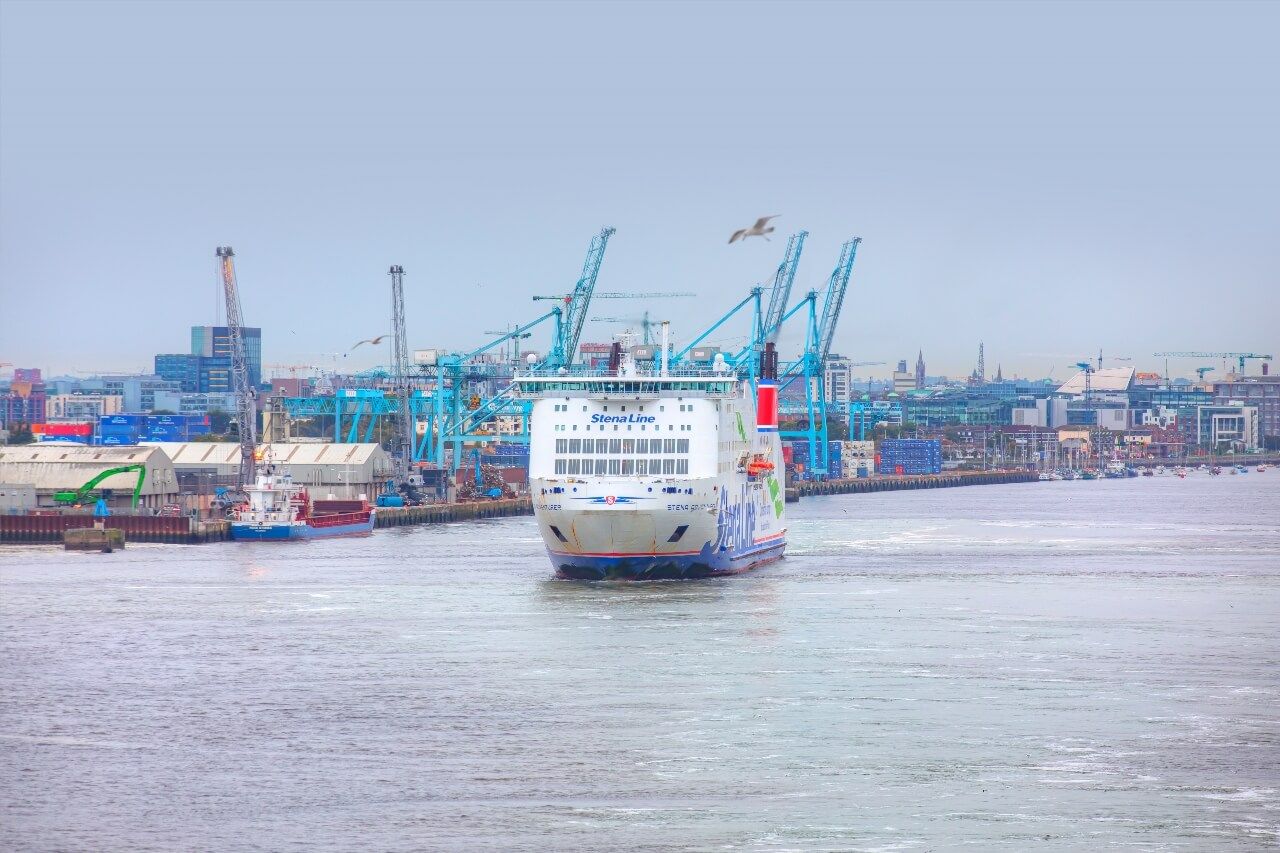
Seasickness and Rough Crossing: What You Need to Know
The Irish Sea and Celtic corridor are among the most changeable European seas. The question of seasickness legitimately arises, and it's better to address it honestly.
From June to September, sea conditions are generally correct on these routes, not calm waters like the Mediterranean, but comfortable crossings for the vast majority of passengers. From November to March, the situation is different: frequent swells, sometimes strong. Companies rarely cancel (large capacity ships are designed to stay upright in difficult conditions), but a rough crossing can be trying.
If you're sensitive to seasickness, some concrete preventive measures: antihistamine medication (Nautamine or equivalent) taken the evening before departure, Scopoderm patch applied 4 to 6 hours before boarding, and booking a cabin on the ship's lower decks (less movement than high decks). Staying in the fresh air on the outdoor deck helps more than staying confined in the cabin. Avoid heavy meals just before or during crossing if you're sensitive.
In Dublin After Disembarkation: First Day Must-Sees
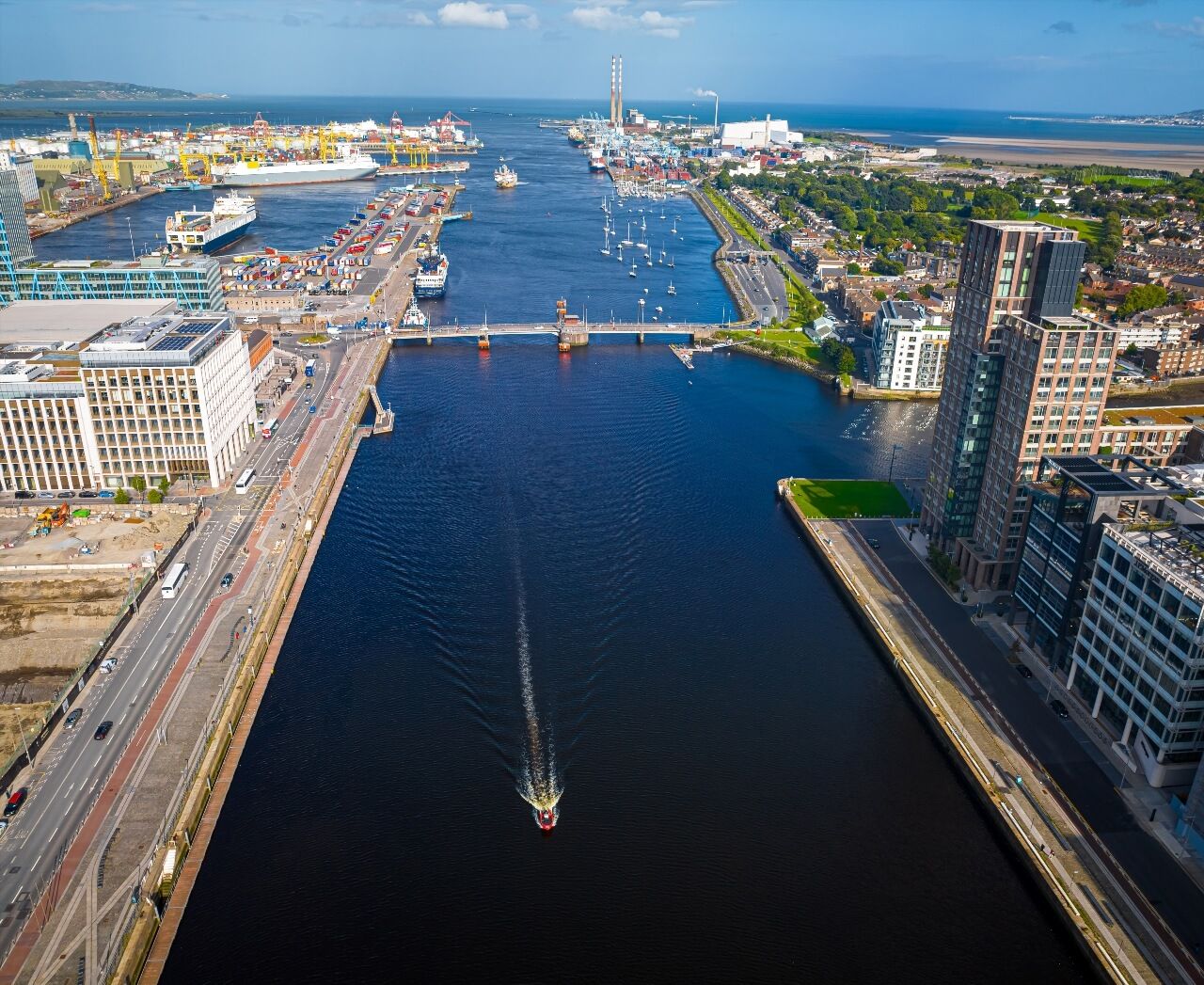
You disembark at Dublin Port early morning, your car in the holds. The Irish capital extends 3 km in front of you and the day is full.
What strikes first in Dublin is its human scale. No skyscrapers, cobbled streets, Georgian red brick facades, pubs that open at 10:30 AM. The historic center can be walked entirely: from Trinity College (founded 1592, Book of Kells library with paid access) to Temple Bar district (cobbled streets, art galleries, traditional bars), it's only 800 meters as the crow flies.
To miss nothing of the must-sees independently, the Ryo Dublin Ryocity offers an audio-guided tour of 20 stages over 8 km, from the banks of the Liffey to the redeveloped docks, passing through the castle and medieval quarters. Estimated duration: 3h45 at your pace, without physical guide or advance booking.
Some practical landmarks for the first day:
Dublin Castle is the historic administrative heart of the city since the 13th century. The inner courtyards are freely accessible, State Apartments on guided tour. Nearby, Saint Patrick's Cathedral (1191, Ireland's largest) and Christ Church Cathedral (1030, founded by Vikings) close the medieval triangle of the center.
The Guinness Storehouse, in the former Saint-James's Gate brewery, is Ireland's most visited private museum: 1.7 million visitors per year. The visit lasts 1h30 to 2h and ends with a pint on the top floor with 360° panoramic view of the city. Count 26 to 30 € entry in 2026, book online to avoid queues.
Phoenix Park deserves half a day if you have time. Its 707 hectares make it one of Europe's largest urban parks, bigger than Central Park. You can encounter wild deer (present since the 17th century), Dublin Zoo, the Irish President's residence and the American Ambassador's. The drive from the center takes 15 minutes.
To eat from the first day, avoid the immediate tourist radius of Temple Bar (high prices, variable quality). The neighborhoods of Rathmines, Portobello and Stoneybatter offer local addresses much more interesting at reasonable prices. Dublin's gastronomic scene has considerably expanded: quality Irish products (Angus beef, Aran Islands lamb, Dublin Bay seafood) worked in contemporary formats.
In the evening, the question poses itself: a drink in a Temple Bar pub. The atmosphere is admittedly touristy but the setting of cobbled streets still merits at least one visit.
FAQ
How Long Is the Ferry Crossing Between France and Ireland?
It depends on the route chosen. The shortest crossing is Roscoff to Cork (Brittany Ferries): about 13 to 14 hours, departure in the evening, arrival the following day in early afternoon. The Cherbourg to Rosslare route lasts 17 to 18 hours (Irish Ferries or Brittany Ferries). The longest direct connection is Cherbourg to Dublin: 19 to 20 hours depending on vessel and weather conditions. These durations correspond to pure navigation; add 1 to 2 hours for boarding and disembarking. In rough seas (mainly from November to March), companies may extend crossings by 1 to 2 additional hours.
Which French Ports Serve Ireland by Direct Ferry?
Two ports in metropolitan France offer direct connections to Ireland: Cherbourg (Normandy) and Roscoff (Brittany). From Cherbourg, you can reach Dublin (Irish Ferries) and Rosslare (Brittany Ferries). From Roscoff, the only available connection serves Cork, operated by Brittany Ferries. There is no direct France to Ireland connection from Le Havre, Calais, Dieppe, Saint-Malo or Brest. These ports operate only to England.
Do France to Ireland Ferries Operate Year-Round?
Yes, with important nuances depending on routes. The Cherbourg to Dublin connection operates 12 months a year (Irish Ferries), with reduced frequencies from November to March (2 to 3 departures per week). The Cherbourg to Rosslare route is also operated year-round. However, the Roscoff to Cork connection may be suspended or greatly reduced from January to mid-March depending on the year. Check schedules directly on Brittany Ferries and Irish Ferries websites for your exact travel period.
Can You Board with Your Car, Caravan or Motorhome?
Yes, all ferries on these routes are car ferries designed for vehicles. Standard cars, SUVs, motorcycles, caravans and motorhomes are accepted. For large vehicles, specify total length (including trailer) and height when booking, as each vehicle deck has different maximum dimensions. Most ships accept motorhomes up to 8 to 9 meters. Rates for large vehicles are significantly higher than for a standard car.
What Is the Average Price of a France to Ireland Ferry in 2026?
For a one-way trip with 2 adults and a standard car in an inside cabin, the 2026 ranges are: between 200 and 340 € in low season (October, March), between 300 and 480 € in mid-season, and between 400 and 650 € in high season (July, August). Commodore or prestige cabins in high season can reach 1,200 to 1,500 €. Prices are dynamic, booking early (4 to 6 months in advance for summer) allows access to the lowest rates.
Do You Need a Passport for the France to Ireland Ferry?
No, for French nationals. A valid French national identity card is sufficient to enter Ireland, which is a member of the European Union. An identity check takes place at boarding and on arrival. Ireland is not in the Schengen area, but this doesn't change anything for EU citizens. Make sure your identity card hasn't expired, some companies apply zero tolerance on this point. Your European driving license is valid without restriction in Ireland.
Which Company to Choose Between Brittany Ferries and Irish Ferries?
The choice essentially depends on two parameters: your departure port in France, and your destination in Ireland. Brittany Ferries is the only option from Roscoff (to Cork); from Cherbourg, it serves Rosslare. Irish Ferries is the only company offering the direct Cherbourg to Dublin connection. For Cherbourg to Rosslare, it's Brittany Ferries (daily departure year-round since 2026). If you're targeting Dublin: Irish Ferries, without hesitation. If you're heading to Cork or Kerry: Brittany Ferries, via Roscoff to Cork or Cherbourg to Rosslare depending on your starting point in France.
Conclusion
Taking the ferry from France to Ireland is a choice that's almost always justified for families with cars, and often also for travelers who want to arrive rested and free to move from the first morning. Brittany Ferries from Roscoff or Cherbourg, Irish Ferries from Cherbourg: each has its strengths depending on your starting point and your itinerary in Ireland. Book early for summer, July and August cabin crossings fill up before spring.
Once in Dublin, the Ryo app accompanies you to discover the capital at your own pace. The Ryo audio guide to Dublin covers 20 stages and 8 km of walking, from the banks of the Liffey to Temple Bar's alleys, for a first day in total autonomy, exactly in the spirit of ferry travel.