
Créé par Emilie, le 20 juin 2026
Votre guide Ryo
Sardinia: The Must-See and Must-Do Experiences in 2026
© Shutterstock
Looking for things to do in Sardinia beyond postcard beaches? The island surprises those who come only for its turquoise waters. Yes, the coves of the Costa Smeralda rank among the most beautiful in the Mediterranean, but behind this scenery lies an island with a radically independent personality, shaped by 7,000 stone towers dating back 3,500 years and pastoral traditions that have borrowed almost nothing from mainland Italy. Among the must-do experiences in Sardinia: exploring the Gorropu gorges (the deepest in Southern Europe), diving into the sea caves of the Gulf of Orosei, savoring a pecorino sardo aged twelve months at a remote agriturismo in the Gennargentu, or deciphering the mural paintings of the bandits of Orgosolo. This guide covers the island from north to south, from the La Maddalena archipelago to the white beaches of Sulcis, with the places that truly deserve a detour, practical advice for planning your stay, and a link to the Ryo audio guide for Cagliari to explore the Sardinian capital without missing a thing.
When to Go and How Long to Stay
Sardinia is ideally visited from May to June or from mid-September to mid-October: mild temperatures (22–27°C), a sea that's already warm, and visitor numbers roughly three times lower than in July–August. At the height of summer, ferry and accommodation prices reach their peak, and the most beautiful beaches like la Pelosa or Cala Mariolu turn into umbrella-packed parking lots.
For a first visit of 7 days, you can cover the essentials: two days in Cagliari and the south, two days on the east coast (Gulf of Orosei), two days in the north (Olbia, La Maddalena, Alghero), and one day for the interior. With 10 to 15 days, you can afford the detours: the nuragic sites of Barumini and Tharros, the coastal road of the Riviera del Corallo, or a trek through the Gorropu gorges.
Winter remains pleasant for visiting Cagliari and archaeological sites, with an average of 14°C in January, but most beaches and boat rentals close from October to April. Booking a rental car is essential for getting off the main roads: Sardinia has no dense rail network, and the most beautiful spots require 40 minutes on a dirt track.
One piece of advice before finalizing your itinerary: never underestimate distances. On the map, the island looks compact, but driving from Cagliari (south) to Santa Teresa Gallura (far north) takes nearly 4 hours, not counting detours through the interior where you rarely exceed 50 km/h. It's better to choose two or three bases and explore from there, rather than changing hotels every night.
The Northeast: Olbia, the Costa Smeralda, and the La Maddalena Archipelago
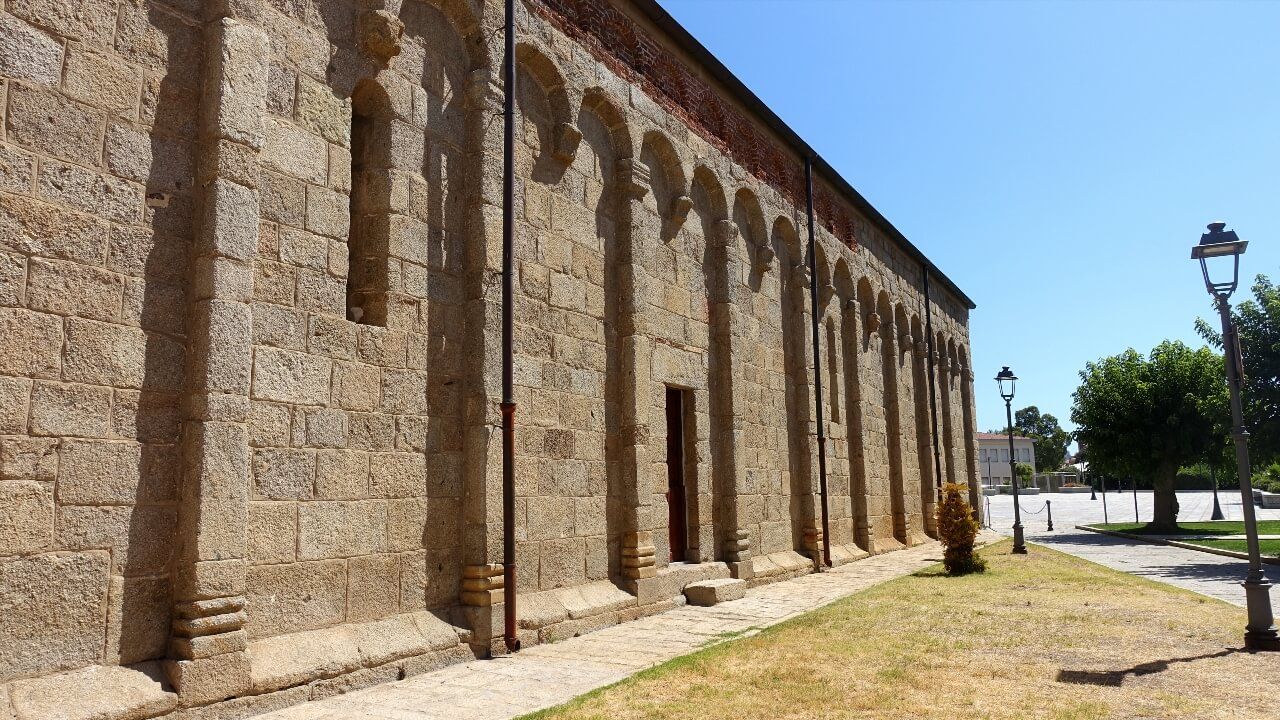
Olbia is the most convenient entry point for the north of the island; its airport receives the majority of direct flights from France. The city itself is more functional than charming, but the Basilica di San Simplicio, built in the 11th century from grey granite, is worth an hour's stop.
Twenty minutes by car to the southwest, the Costa Smeralda is an almost entirely artificial creation: billionaire Karim Aga Khan IV discovered it in the early 1960s and in 1962 founded the consortium that would turn it into the most exclusive beach resort in the Mediterranean. Porto Cervo (Porto Cervo, 07021 Arzachena, rated 4.5/5 on Google with 3.8K reviews) is its flagship village, with luxury boutiques, eight-figure yachts, and hotels at €2,000 a night. It is as much a sociological curiosity as a tourist destination: even without a billionaire's budget, the adjacent public beaches such as Cala di Volpe and Liscia Ruja are freely accessible and rank among the most beautiful in northern Sardinia.
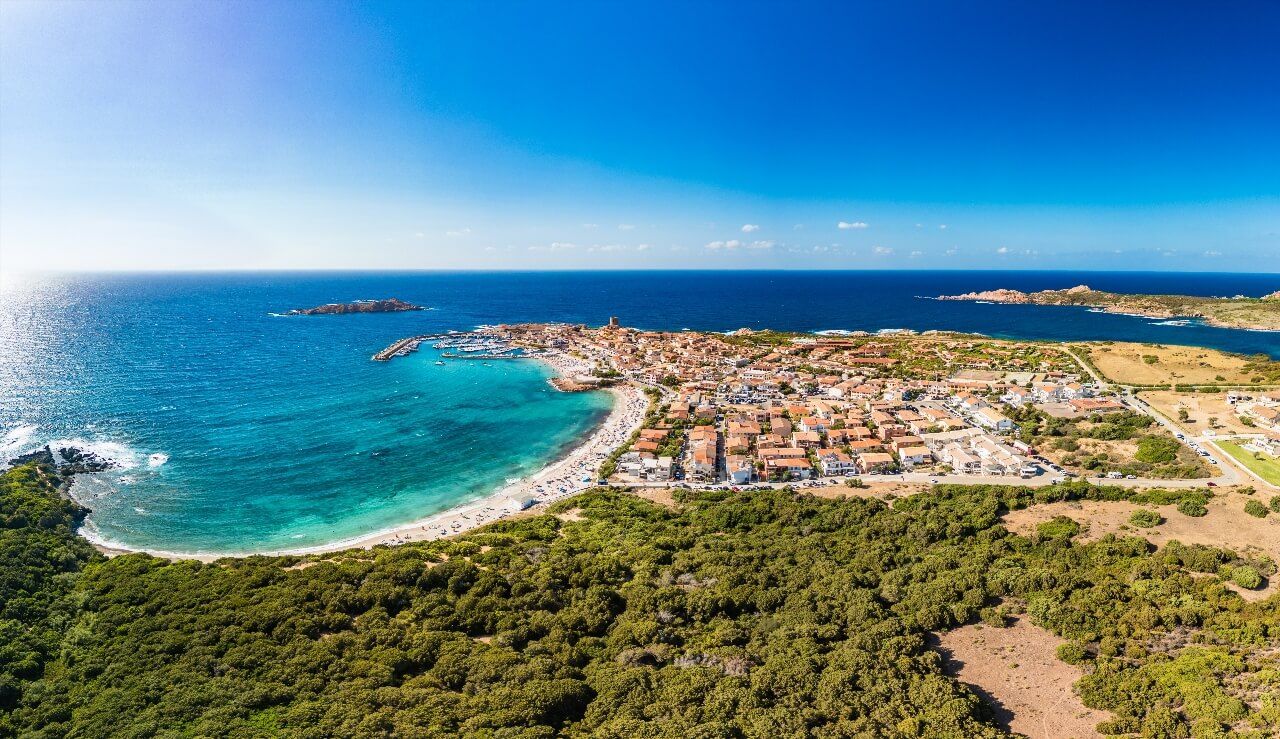
The true gem of the northeast, however, is the La Maddalena archipelago. This marine national park brings together 62 islands and islets between Sardinia and Corsica, with remarkably rich underwater environments. The ferry crossing from Palau takes ten minutes. On the main island, rent a bike or scooter to reach the beaches of Cala Lunga and Spalmatore: emerald waters, white sand, not a concrete structure in sight. For more remote islets like Budelli (the famous Spiaggia Rosa, the pink beach, now protected and off-limits) or Santa Maria, boat excursions depart every morning from La Maddalena or Palau.
Budelli is strictly protected; landing on it is forbidden. Excursions pass by without stopping, which is ultimately good news for the ecosystem. If you can, book your boat tour the day before: in high season, spots fill up fast, and afternoon departures offer softer light for photographing the turquoise waters.
The Northwest: Alghero, the Neptune's Cave, and Stintino
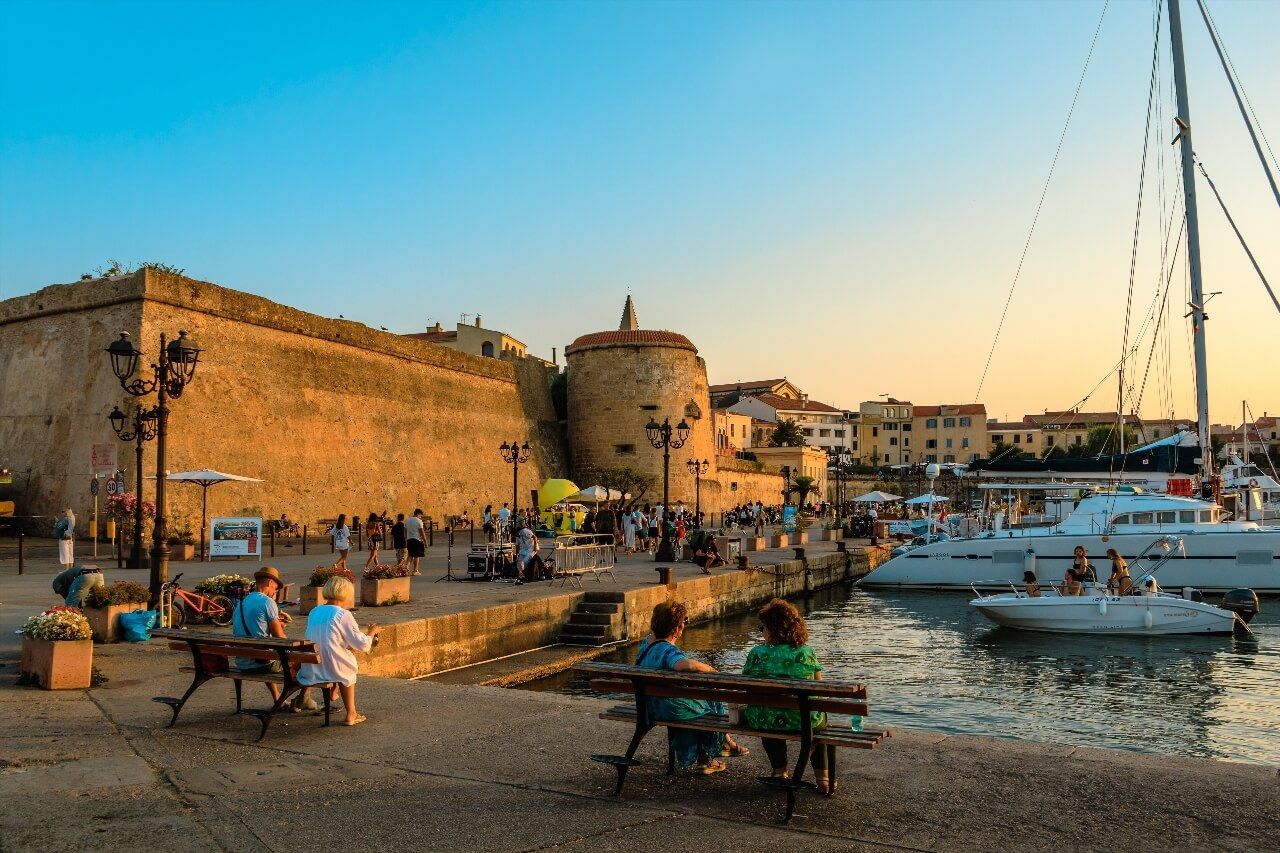
Alghero is one of Sardinia's most delightful surprises. This city of 44,000 inhabitants boasts an intact medieval old town flanked by limestone ramparts gilded by the setting sun, and its residents still speak a Catalan dialect, a legacy of 14th-century Aragonese colonization. Stroll through the Historic Quarter in the early evening, have a drink under the arcades of the Piazza Civica, and climb the ramparts to watch the sea turn pink.
Twelve kilometres to the north, the Neptune's Cave (Grotta di Nettuno) is one of the largest sea caves in the Mediterranean. You descend via the staircase cut into the cliff, the Escala del Cabirol with its 654 steps (allow 40 minutes), or you arrive by boat from Alghero harbour — the second option spares your knees and offers a spectacular view of the Cap Caccia cliff. Inside: a forest of stalactites, an underground lake called Lamarmora, and acoustics that turn the faintest whisper into an echo. Opening hours: every day from April to October; online booking required.
For lovers of wild beaches, Stintino and the Spiaggia della Pelosa (Stintino, 07040 Sassari, rated 4.5/5 on Google with 16,680 reviews) are located an hour north of Alghero. La Pelosa is regularly cited as one of the most beautiful beaches in Europe: transparent waters shifting from green to turquoise, a fine sandy bottom, and a small Aragonese tower silhouetted on the horizon. In July–August, access requires a mandatory paid reservation (around €3.50 per person per day) to limit attendance to 1,500 people a day; reservations are made online on the official website, with a QR code to present at the entrance.
Arrive at opening time (8:30 a.m.) or in the late afternoon to avoid the midday crowds. The golden light at 5 p.m. is also the most beautiful for photos. Remember to bring water shoes: to protect the fine sand, it is now forbidden to lay your towel directly on the ground without a mat, and regular beach towels are discouraged.
The Wild Interior: The Nuraghi, Orgosolo, and the Gorropu Gorges
The Sardinian interior is the least photographed part of the island, and by far the most original. It rewards the effort: narrow roads winding through the maquis, villages clinging to mountainsides, and a pastoral culture as vibrant as it is impervious to mass tourism.
Start with Barumini and its nuragic site of Su Nuraxi, listed as a UNESCO World Heritage Site since 1997. A nuraghe is a dry-stone tower in the shape of a truncated cone, built by the Nuragic civilization between 1800 and 500 BC — a culture about which almost nothing is known, as it left no written texts. Su Nuraxi is the largest nuragic complex on the island: an entire village with streets, wells, and circular dwellings surrounding a 15-metre central tower. Allow 1h30 for the guided tour (mandatory), which is the only way to access the site. Admission is around €15, guide included.
There are 7,000 nuraghi recorded across the island; some experts put the real figure at 12,000, with half still buried under vegetation. You will encounter them at every turn on the country roads.
An hour to the north, the village of Orgosolo is famous for its murales: more than 150 political and cultural frescoes painted directly on house façades since the 1960s, first by local anarchists, then by artists from around the world. The themes range from Sardinian resistance to mainland occupation, to denunciations of the mafia, to the local banditry traditions that long gave Orgosolo its (sulphurous) reputation. The visit is free and unguided; allow an hour to walk around the village. Park at the bottom of the village and walk up: the lanes are narrow and most of the frescoes are discovered through an unplanned wander with no fixed route.
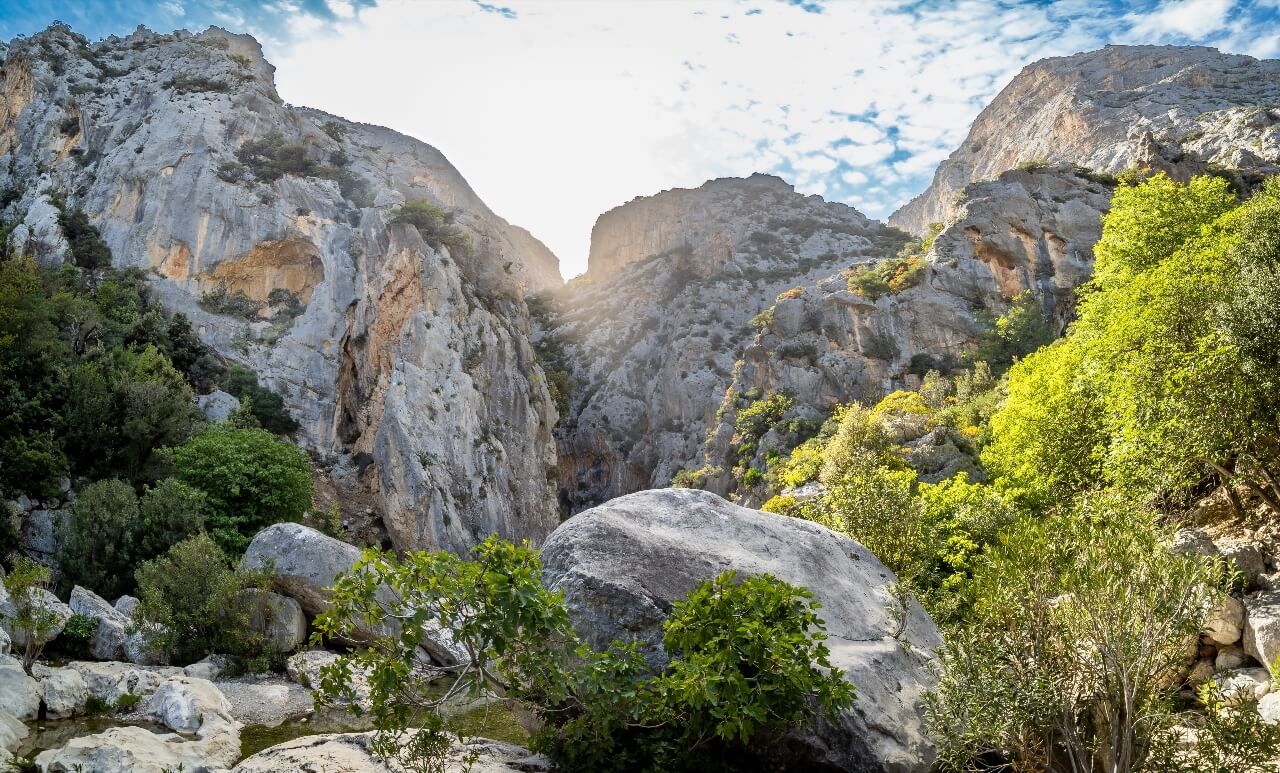
For experienced hikers, the Gorropu gorges (Strada Statale 125, 08022 Dorgali, rated 4.7/5 on Google with 2,661 reviews) (Gola di Gorropu) are unmissable. Located in the Gennargentu massif, these gorges carved by the Flumineddu torrent reach depths of 500 metres and widths of just 4 metres in places — a canyon of rare geological violence, the deepest in Italy and one of the deepest in Europe. Access is from the Genna Silana agriturismo or from Dorgali, with an approach walk of 4 to 6 kilometres depending on your starting point. Inside the gorges, progress is partly through the torrent bed (appropriate footwear required and, outside the dry season, gaiters). Difficulty: intermediate to hard depending on the season. Good to know: the deepest part of the canyon is only accessible with a guide and specific equipment; the rest can be explored freely.
The Supramonte surrounding the gorges is also one of the last habitats of the Sardinian deer (Cervus elaphus corsicanus), an endemic subspecies whose population was brought back from 200 individuals in the 1970s to several thousand today thanks to reintroduction programmes.
The East Coast: the Gulf of Orosei and the Wild Coves
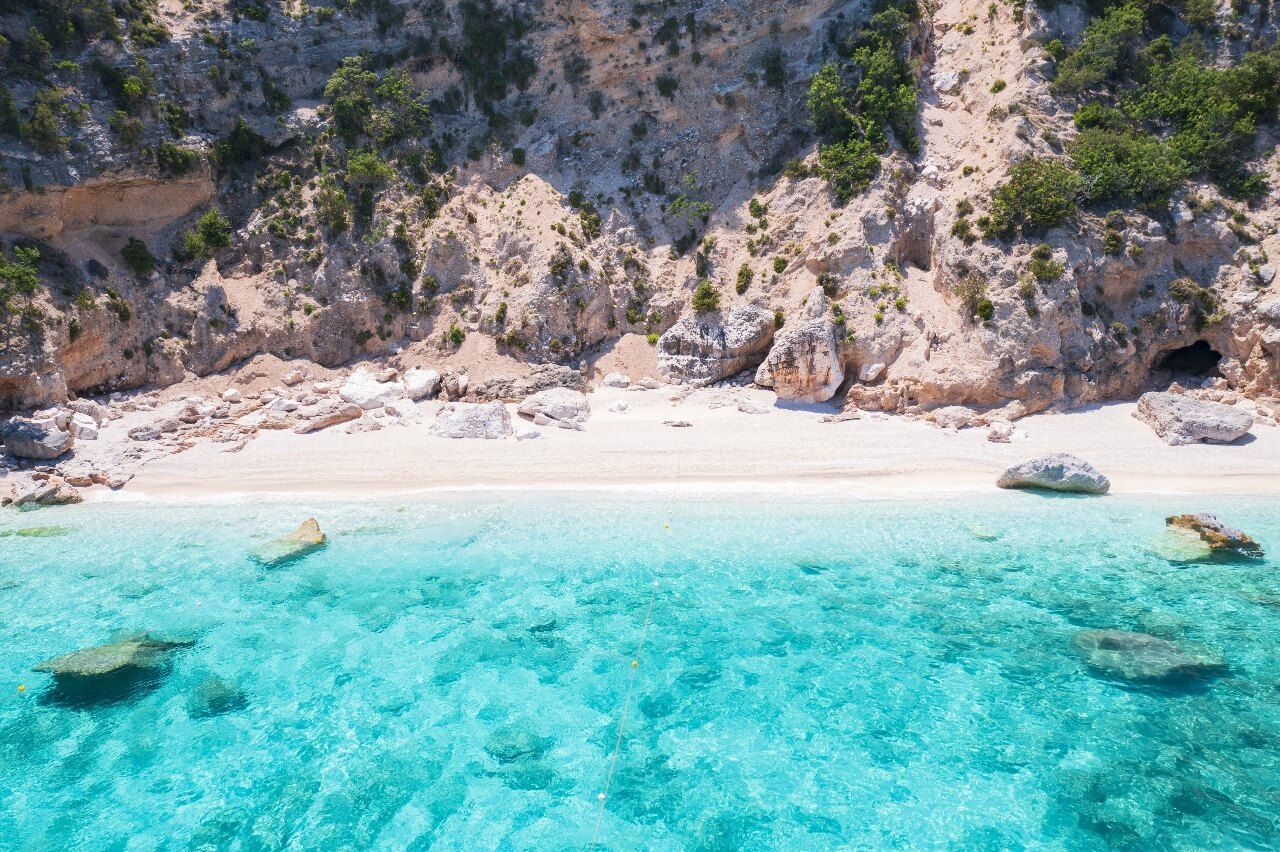
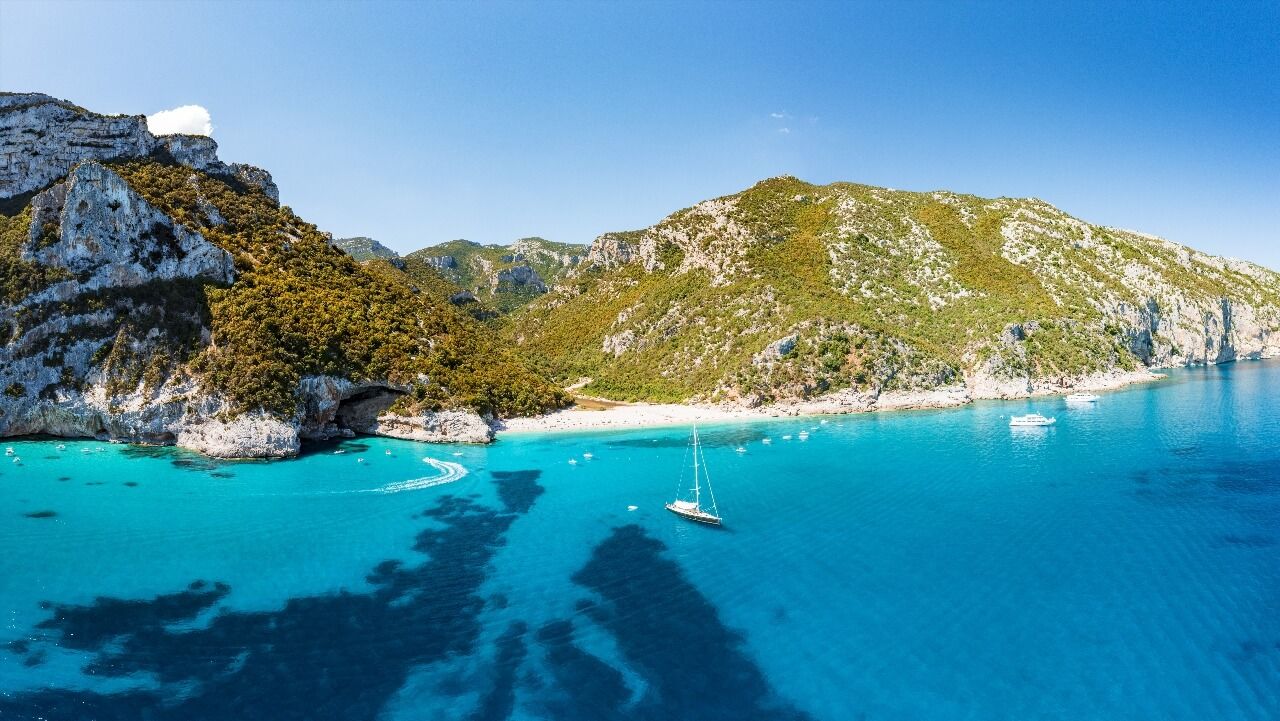
The Gulf of Orosei is one of Italy's most spectacular coastlines. Flanked by limestone cliffs dropping sheer into the sea, this 30-kilometre bay has no coastal road; the beaches are accessible only on foot, by kayak, or by boat. That is what has preserved them.
Cala Gonone is the departure village for all excursions. Boat shuttles leave every morning from the harbour and serve the most remote beaches: Cala Luna (also reachable via a 2-hour trail from Baunei), Cala Mariolu with its white pebbles and almost surreally blue waters, and Cala Sisine, surrounded by maquis and wild fig trees.
If you have several days on the east coast, the Sentiero Selvaggio Blu deserves special mention. This 7-stage trek (around 45 km) links Santa Maria Navarrese to Cala Gonone along the cliffs of the gulf, and regularly features among the ten most challenging hikes in Europe. Reserved for experienced, well-equipped hikers, it requires ropes for certain passages and knowledge of the tides to cross some beaches.
Dorgali, inland above Cala Gonone, also houses the Grotta di Ispinigoli (Strada Statale 125, 08022 Dorgali, rated 4.6/5 on Google with 3,242 reviews), a cave whose central limestone column, at 38 metres, is the tallest in Europe, as well as a Phoenician sacrificial corridor that yielded the bones of several dozen young women — one of the most haunting archaeological sites on the island. You descend via a staircase of 280 steps, at a constant temperature of 15°C.
The West: Oristano, Flamingos, and Roman Sites
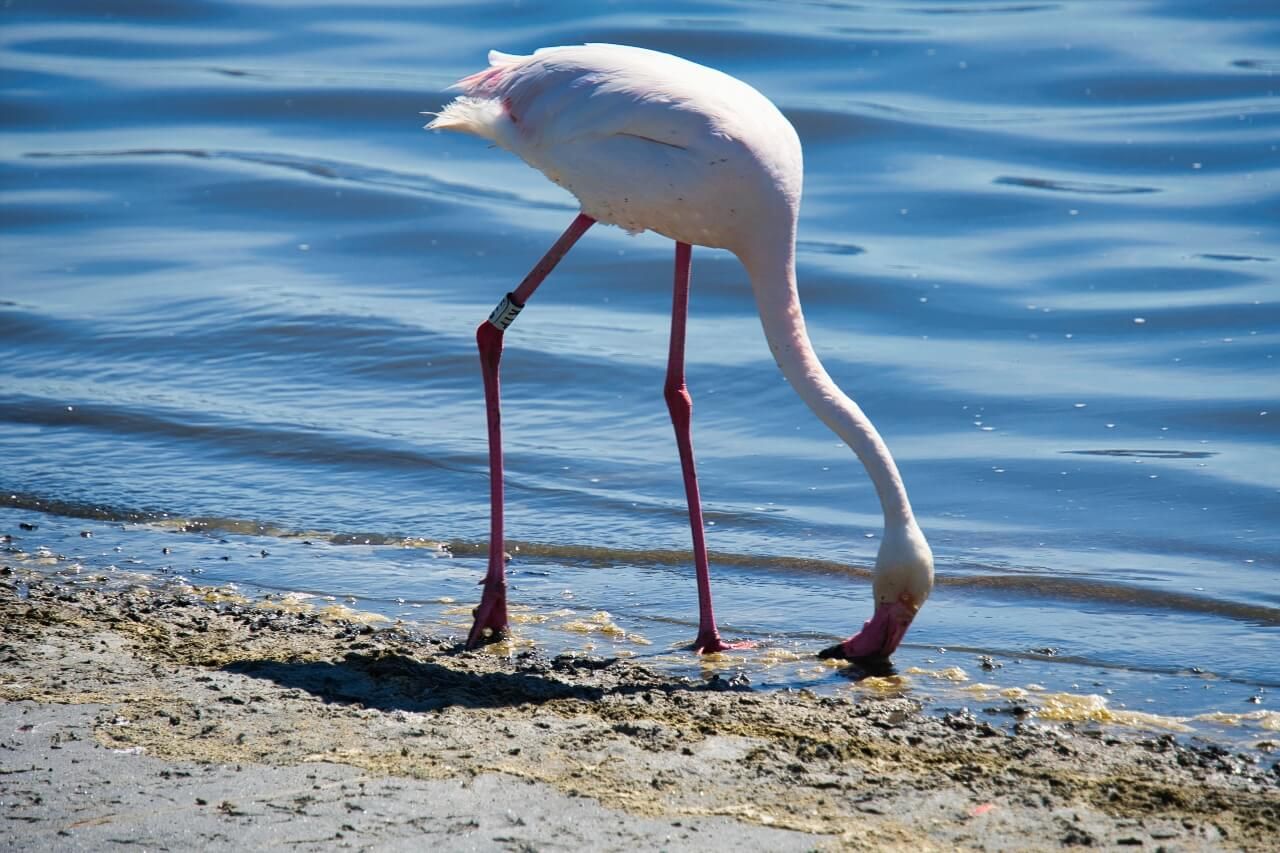
Western Sardinia is often overlooked in favour of the east coast or the north. That is a mistake. The Campidano plain and the Oristano lagoons are home to one of the rare pink flamingo colonies in Western Europe — between 10,000 and 30,000 individuals depending on the season — gathering on the Sale Porcus and Cabras ponds, visible from the road without any special equipment.
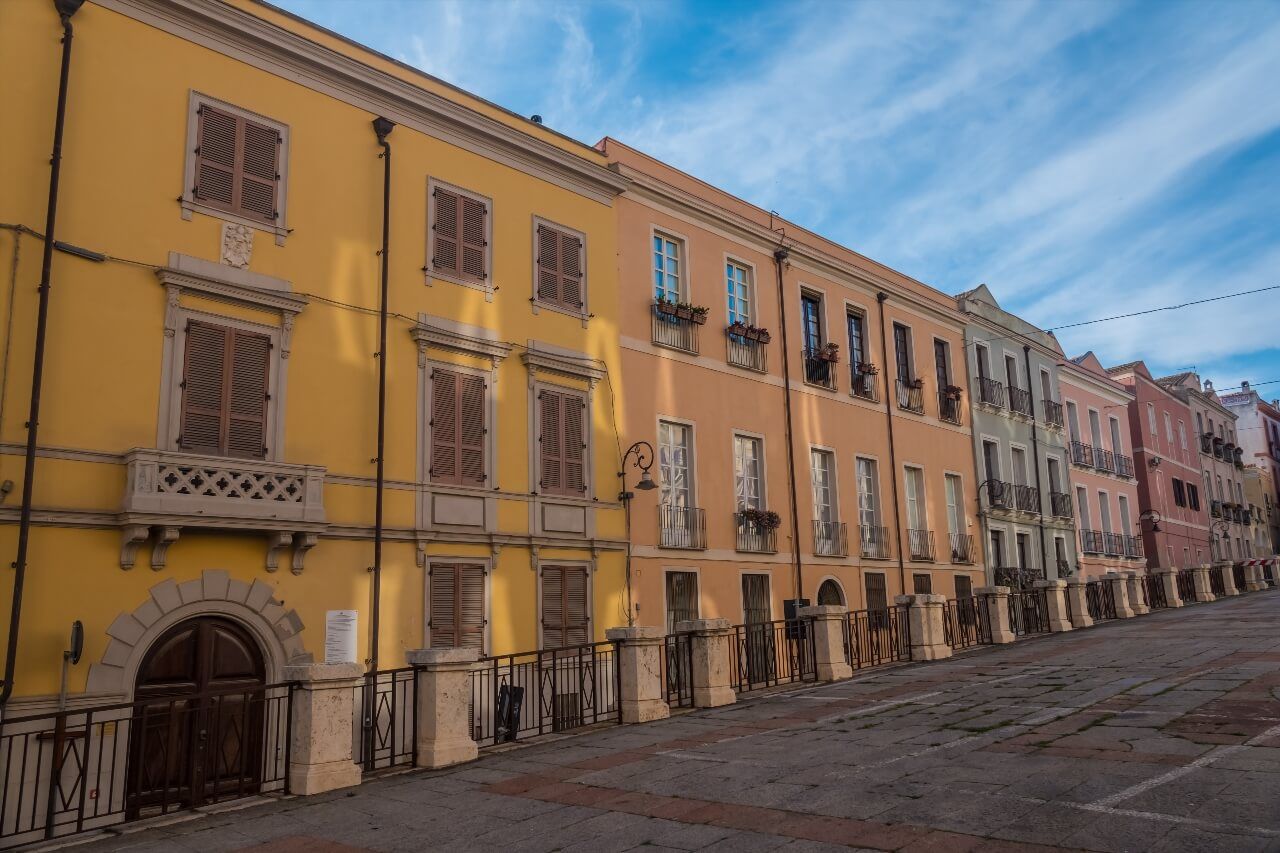
Oristano is an authentic Sardinian city, far from mass tourism, with a lovely pedestrian old town centred on the Piazza Eleonora d'Arborea. It is from here that you access the two major archaeological sites of the west.
Tharros is a Phoenician-Roman city built on a promontory above the sea, facing the islands. Founded in the 7th century BC by the Phoenicians, colonised by the Carthaginians and then by Rome, abandoned in the 11th century under pressure from Arab raids, it is now partially excavated and offers a spectacular panorama over the Gulf of Oristano. Open year-round (reduced hours in winter); admission around €5.
Nora, south of Cagliari, is the island's other great Roman site: a Punic then Roman port partially submerged, with a Roman theatre on the seafront still used for performances in summer, thermal baths, and an exceptional mosaic preserved in situ.
The mines of Sardinia also merit a stop, particularly in the Sulcis-Iglesiente to the west. The Buggerru and Iglesias area is dotted with 19th-century mining remains, integrated into the UNESCO Geopark of Sardinia. The Mining Museum of Iglesias offers tours of underground galleries, a striking immersion into the industrial past of an island one would never spontaneously associate with mining.
Cagliari and the South of the Island
The capital of Sardinia, Cagliari concentrates on a promontory of just a few hectares a historical density that few southern cities can match. The Castello quarter, a medieval fortress perched on a rocky outcrop, has dominated the city and the lagoon from its 13th-century Pisan ramparts for centuries. This is where the cathedral, the citadel of museums, and the best terraces for watching the sun set over the Molentargius pond are located.
The Bastione di Saint Remy is Cagliari's architectural landmark: this monumental belvedere, built between 1896 and 1902, connects the Castello to the lower city via a grand staircase. Sweeping views over the golden rooftops and the two lagoons from the Umberto I terrace. Admission is free.
To explore Cagliari in depth — the Castello, the shopping streets of the Marina, the pleasures of the Poetto, and the San Benedetto market — the Ryo audio guide Le Trésor Sarde offers 17 commented points of interest over 4.5 km and 1h50 of walking: an ideal introduction to the city before diving into the streets at your own pace.
The Poetto is Cagliari's urban beach: 8 kilometres of fine sand 15 minutes from the city centre by bus. It is used year-round by locals for morning jogs, beach volleyball, and evening drinks. At the northern end of the Poetto lies the Molentargius lagoon, a natural park of salt ponds where pink flamingos breed just a 5-minute walk from the first houses of the city.
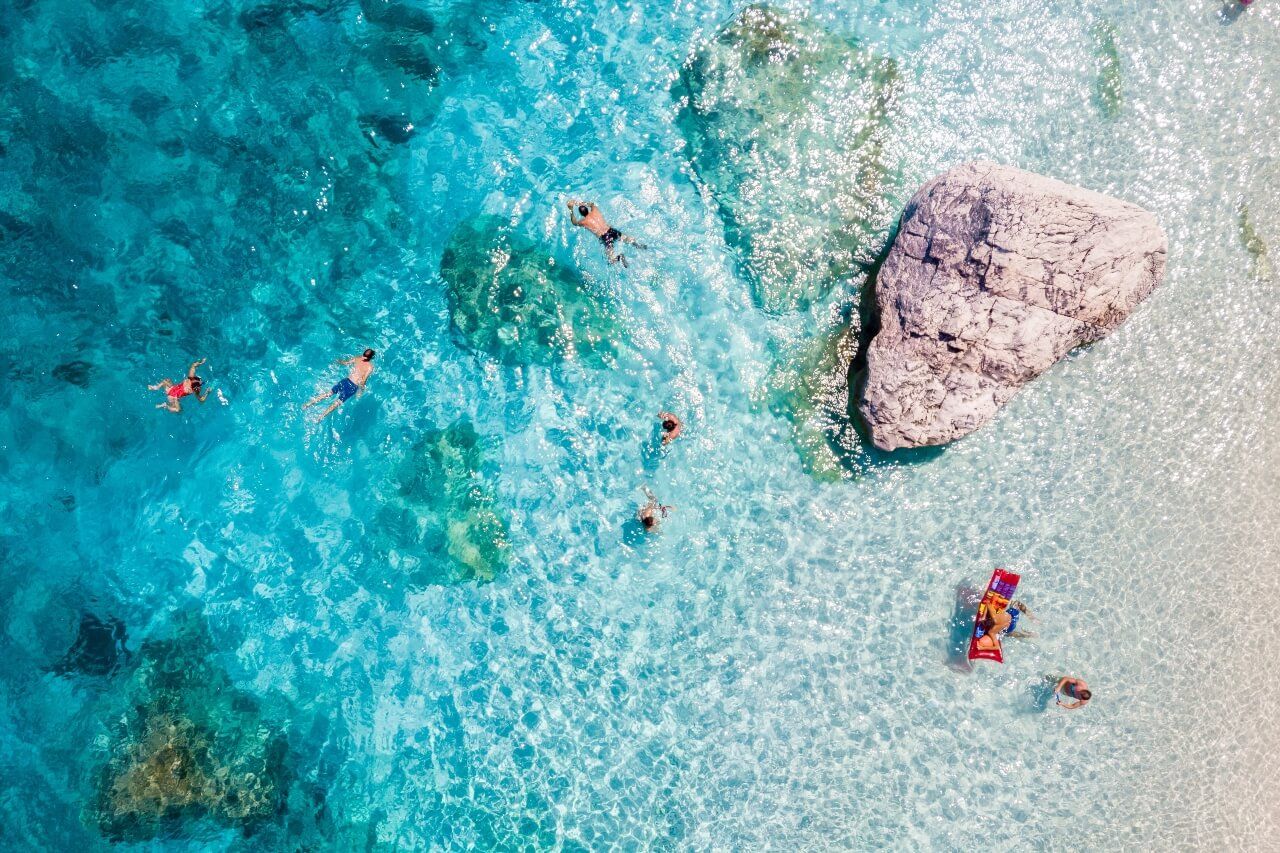
In the southeast, Villasimius and the Costa Rei offer some of the most beautiful waters in all of Sardinia, with lagoons protected by sandbars and crystal-clear water down to 10 metres depth. Capo Carbonara (Villasimius, 09049 Villasimius, rated 4.8/5 on Google with 283 reviews) is a national marine reserve offering exceptional diving and snorkelling.
For further reading about the Sardinian capital, see our selection of the most beautiful beaches in Cagliari or the overview of the most beautiful places to visit in Sardinia.
The Must-See Beaches of Sardinia
Sardinia has more than 1,850 kilometres of coastline and around 300 catalogued beaches. Here is an overview by area, to guide your choice depending on which part of the island you are visiting.
Northwest: The Spiaggia della Pelosa (Stintino) is the star, but also one of the most crowded. The lesser-known alternative: Spiaggia di Capo Falcone, a 10-minute boat ride from Stintino, less accessible and therefore nearly deserted even in August.
Northeast: Liscia Ruja (Costa Smeralda) is the favourite of the yachting crowd, but its beauty is accessible on foot from the car park. Spiaggia di Capriccioli is more discreet, framed by pink granite rocks.
East (Gulf of Orosei): Cala Mariolu tops almost every ranking. White pebbles and waters that shift from blue to violet depending on the light. Accessible only by boat or after a 2-hour hike.
Southeast: Cala Trana and Porto Giunco are less famous than la Pelosa but technically just as beautiful, with the added advantage of a protected lagoon that keeps the water glassy even in the wind.
Southwest (Sulcis): Is Arutas (SP 86, 09070 Cabras, rated 4.7/5 on Google with 9,182 reviews), with its sand made of quartz grains the size of a grain of rice (rust and beige in colour), is a geological anomaly found nowhere else in the Mediterranean. Collecting the sand is prohibited and subject to fines.
Whatever beach you choose, arrive before 9:30 a.m. from June to September to find a decent spot. Car parks at the most famous beaches reach full capacity before 10 a.m. in peak season, and several now operate on a paid reservation system in high season: check the access rules the evening before to avoid being turned away at the entrance.
Hiking, Water Sports, and Adventure
Sardinia is a top-tier outdoor destination, far beyond its beaches. Sports enthusiasts will find exceptional conditions across several disciplines.
Hiking: beyond the Gorropu gorges already mentioned, the Gennargentu (highest point: Punta La Marmora, 1,834 m) offers austere mountain landscapes with marked trails for all abilities. The Parco Nazionale del Gennargentu e del Golfo di Orosei encompasses a large share of these trails. Best seasons: May–June and September–October.
Scuba diving: Sardinia is one of Europe's best diving destinations. The north (La Maddalena, Capo Testa) offers wrecks and spectacular rock formations. The east (Gulf of Orosei, Cala Gonone) features underwater caves and vertical walls covered in gorgonians. Capo Carbonara, in the southeast, is a marine reserve with remarkably well-preserved seabeds.
Kitesurfing and windsurfing: Porto Pollo (Strada per Porto Pollo, 07020 Palau, rated 4.5/5 on Google with 146 reviews), at the northern tip of the island facing Corsica, is considered one of the five best kitesurfing spots in Europe thanks to the Maestrale, the northwesterly wind that blows steadily at 25 to 35 knots from May to September. Kite schools operate on site from June to September.
Sea kayaking: the Gulf of Orosei is the ideal playground. Agencies in Cala Gonone organise day trips or multi-day crossings with bivouac nights on the inaccessible beaches. Level required: intermediate.
Caving: Sardinia is riddled with caves; beyond the Neptune's Cave and Ispinigoli, the Dorgali and Nuoro area offers underground systems accessible to beginners with a guide.
Gastronomy: What You Absolutely Must Try in Sardinia
Sardinian cuisine is one of the most distinctive in Italy, and is almost independent of it. Unlike the cooking of mainland regions, it is deeply rooted in sheep farming and pastoral tradition. A few essential stops:
**The pane carasau***: this flat, crispy bread, also called *carta da musica ("sheet music"), baked twice until translucent. Originally designed for shepherds heading out on transhumance, it keeps for weeks. Eaten plain with oil and salt, or dipped in broth — the foundation of almost every Sardinian meal.
**The pecorino sardo and fiore sardo***: sheep's milk cheeses with an aromatic richness unmatched anywhere on the peninsula. The fiore sardo, smoked and cave-aged, is the most typical. Try it at a local *caseificio, not in a souvenir shop.
**The *porceddu***: suckling pig spit-roasted for several hours, served with freshly picked myrtle. It is the quintessential celebration dish, and the best versions are found in inland agriturismos, not by the seaside.
The bottarga di Cabras: dried and pressed mullet roe, grated over pasta or scrambled eggs. The most prized production comes from the Cabras pond in the Oristano area. Intense, salty, slightly bitter — a product that divides opinion, but whose fans are unconditional.
**The mirto***: liqueur made from myrtle berries, to be enjoyed as a digestif after the meal. Two versions exist: *mirto rosso (ripe berries, sweet) and mirto bianco (unripe berries, more herbal). Both are found everywhere in Sardinia.
For the gastronomy of the Sardinian capital, the guide to the culinary specialities of Cagliari lists nine typical dishes along with the best places to try them.
Getting Around Sardinia
A rental car is the only truly viable solution for exploring the island, with the exception of Cagliari. The intercity bus network (ARST) serves most municipalities, but with very low frequencies (2 to 3 return trips per day on some routes) and timetables that are poorly suited to a tourist itinerary.
Car rental: budget €30 to €60 per day in low season, €80 to €120 in July–August. Booking in advance is essential in peak summer, as counters are often out of vehicles. Local agencies are generally cheaper than international chains.
The rail network serves Cagliari–Sassari and Cagliari–Olbia, with long journey times (2h30 to 3h). A tourist train called the Trenino Verde (Little Green Train) runs scenic routes through the interior of the island — slow but magnificent.
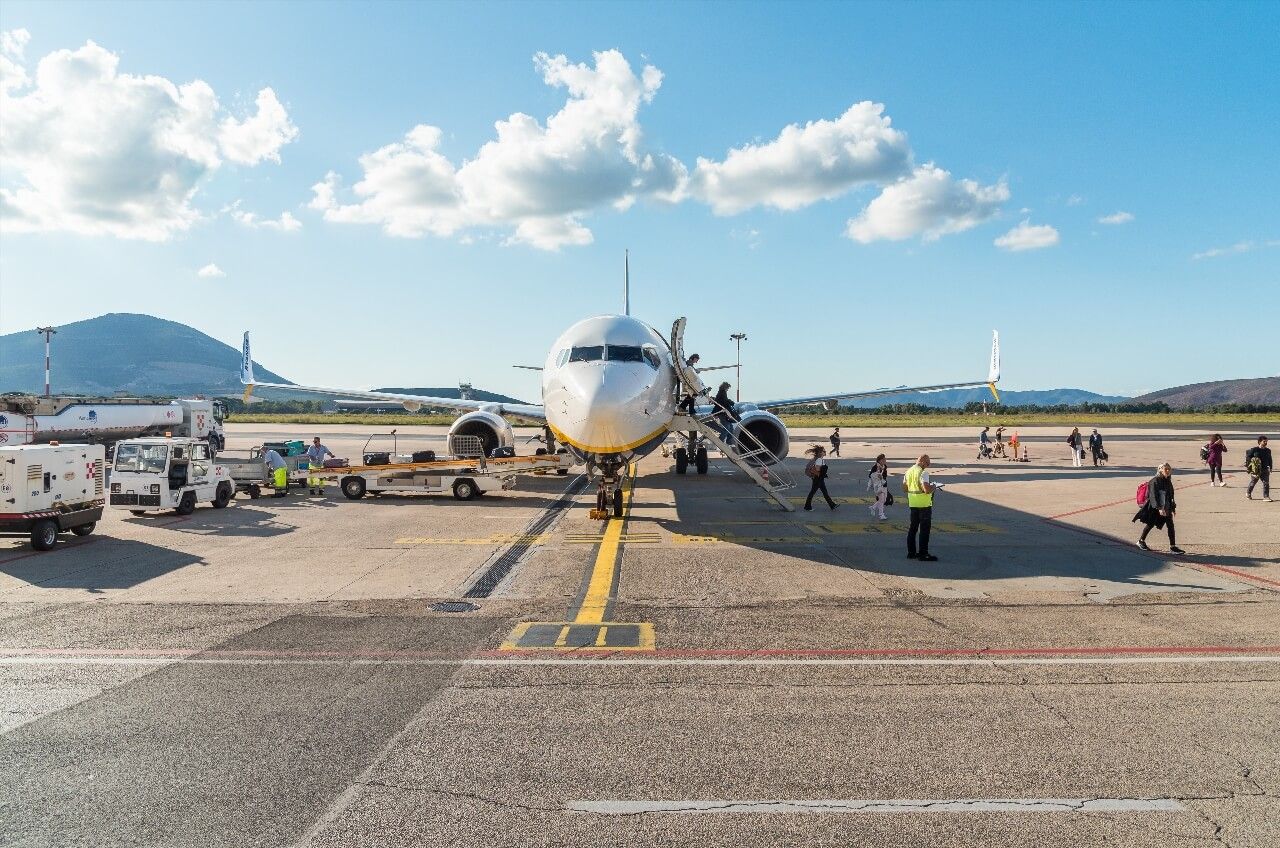
To reach the island from France: ferries connect Nice, Marseille, Toulon, and Genoa to Porto Torres, Olbia, and Cagliari, directly or via a connection through Corsica. The crossing from Marseille to Cagliari takes around 20 hours (overnight in a cabin). By plane, Cagliari (CAG), Olbia (OLB), and Alghero (AHO) receive direct flights from several French cities, mainly from May to September.
Where to Stay in Sardinia
Accommodation options cover every budget, but the geography calls for a few strategic choices.
Agriturismo: the most authentic option on the island. These farms converted into accommodation typically offer half-board with home-produced goods (cheeses, cured meats, local wines). Expect €50 to €90 per person on half-board. A must in the interior: Barbagia, Gennargentu, Nuoro.
Seaside hotels: prices range from €80 in low season to €300–500 for a well-rated hotel in peak season on the Costa Smeralda. Coastal villages like Villasimius, Cala Gonone, or Santa Teresa Gallura offer good value for money in May and September.
Apartments and holiday rentals: ideal for week-long stays with a fixed base. On rental platforms, expect €700 to €1,500/week for a two-bedroom seaside apartment in July.
Cagliari is the most practical base for a trip combining city and sea: the Poetto is 15 minutes away by bus, and the southern sites (Villasimius, Nora, Is Arutas) are within 1h30 by car. For things to do in Cagliari, see our dedicated selection.
Budget and Practical Information
Sardinia is cheaper than the French Riviera but more expensive than most mainland Italian destinations, especially in peak season.
Indicative daily budget (per person):
- Budget (hostel/agriturismo, picnic lunch and one restaurant meal): €60–80/day
- Comfortable (3-star hotel, two restaurant meals, excursions): €130–180/day
- Upscale (4–5-star coastal hotel, car hire, activities): €300+/day
Site admission fees:
- Su Nuraxi di Barumini: €15 (guided tour mandatory)
- Neptune's Cave: €16 (boat access not included)
- Grotta di Ispinigoli: €9
- Tharros: €5
- Spiaggia della Pelosa (July–August): €3.50 access fee
Phone and network coverage: 4G coverage is adequate along the coast and in the main cities, but virtually non-existent in the Gennargentu and parts of the Supramonte. Download offline maps before heading into the interior.
Language: Italian is the main language, but Sardinian (lingua sarda) remains alive, particularly in inland villages. Catalan is still spoken in Alghero. English is understood in tourist areas, less so in the interior.
FAQ
What is the best time to visit Sardinia?
May, June, and September are the ideal months: pleasant temperatures (22–27°C), a swimmable sea, and prices roughly half those of the July–August peak. Summer is touristally saturated on the most famous beaches, and ferry prices skyrocket. The shoulder season (October) remains lovely for archaeological sites and cities, but beaches start to close.
Do You Need to Rent a Car in Sardinia?
Yes, without hesitation if you want to venture beyond the main cities. The bus network technically covers the whole island, but with frequencies of just 2 to 3 trips per day on smaller routes. Without a car, you'll be limited to Cagliari, Olbia, Alghero, and a handful of beaches reachable by tourist shuttle.
How Many Days Do You Need to Visit Sardinia?
Seven days is the minimum for a balanced view of the island (north, interior, east coast, south). Ten to fifteen days allow you to explore each area without moving every day. For a first trip, a good approach is to choose two zones (for example: northeast + east, or Cagliari + east) rather than racing across the entire island.
How Do You Get to Sardinia from France?
By plane: direct flights from Paris (CDG, Orly), Lyon, Marseille, Nice, and Bordeaux to Cagliari, Olbia, or Alghero, mainly from May to September. By ferry: several companies serve Porto Torres, Olbia, and Cagliari from Marseille, Toulon, Nice, and Genoa. The crossing from Marseille to Cagliari takes around 20 hours; book a cabin for a comfortable journey.
What Are the Typical Dishes You Absolutely Must Try?
The porceddu (myrtle-roasted suckling pig), pane carasau (crispy flatbread), sheep's milk cheeses (pecorino sardo, fiore sardo), bottarga from Cabras over spaghetti, and culurgiones (potato-and-mint-filled ravioli, a specialty of Ogliastra). To finish: a glass of mirto as a digestif.
Are the Nuraghi Really Worth the Detour?
Absolutely, and even more so than you might expect. Su Nuraxi di Barumini is the most impressive site, but lesser-known nuraghi such as Nuraghe Losa (Abbasanta) or Nuraghe Arrubiu (Orroli) see fewer visitors and are just as fascinating. The Nuragic civilization remains little known to the general public, which makes visiting all the more otherworldly — no official narrative imposed, just 3,000-year-old stones that resist every interpretation.
Discover Sardinia in a Different Way
Sardinia is an island that rewards those who take the time to get lost in it: a mountain road with no particular destination, an agriturismo discovered by chance, a beach reached after an hour's walk. Its beaches may be among the most photographed in Europe, but they tell only part of the story of an island whose soul lies elsewhere — in the nuragic towers, in the gorges of the Supramonte, in the Catalan dialect of Alghero, or in the murals of Orgosolo.
To begin your exploration from the capital, the Ryo Ryocity of Cagliari Le Trésor Sarde guides you through the Castello, the Marina, and the historic quarters with 17 commented stops — a way of taking the pulse of the island before heading out on its roads with your Ryo audio guide in hand.