© Shutterstock
 Votre guide Ryo
Visiting Liguria: the Must-Sees of the Italian Riviera (2026)
Liguria resembles a parenthesis wedged between sea and mountain: a crescent of 350 kilometres of coastline where villages literally tumble into the water, where medieval lanes smell of pesto, and where trains run along vertiginous cliffs. Yet most travellers simply pass through by car, hurrying on to Tuscany or the Côte d'Azur. That is a mistake. Visiting Liguria means discovering Gênes and its caruggi — those dark alleyways that open onto Renaissance palaces; it means climbing up to the Cinque Terre before 9 in the morning, when the first trails are still deserted; it means taking the ferry from La Spezia to arrive at Porto Venere by sea. This guide covers the entire region, from Ventimille on the French border to La Spezia on the Tuscan side, with the essential stops, practical tips for planning, and the best of each city. To explore Gênes at your own pace, the Ryo audio-guided tour of La Superba features 21 points of interest over 4.6 km.
Why Liguria? An Extraordinary Setting
Ligurian geography has no equivalent in Italy. The Apennines plunge almost directly into the Mediterranean, leaving only a few hundred metres between the ridge and the shore. The result: villages built vertically, terraces cultivated since the Middle Ages, roads that wind above sheer cliffs. This configuration also explains why the region has remained relatively unspoilt — you cannot build beach resorts en masse when every flat patch of land is scarce.
Liguria divides into two zones: the Riviera di Levante to the east (Gênes, Portofino, Cinque Terre, La Spezia) and the Riviera di Ponente to the west (Savone, Albenga, Sanremo, Ventimille). The Levante is wilder, with cliffs and coves that are hard to reach. The Ponante is gentler, with sandy beaches and a microclimate that allows palm trees to grow outdoors throughout the winter.
Two weeks are enough to cover the essentials. One week forces you to choose between the Levante and the Ponante. A weekend: focus on Gênes or the Cinque Terre, not both.
Gênes, the Overlooked 'Superba'
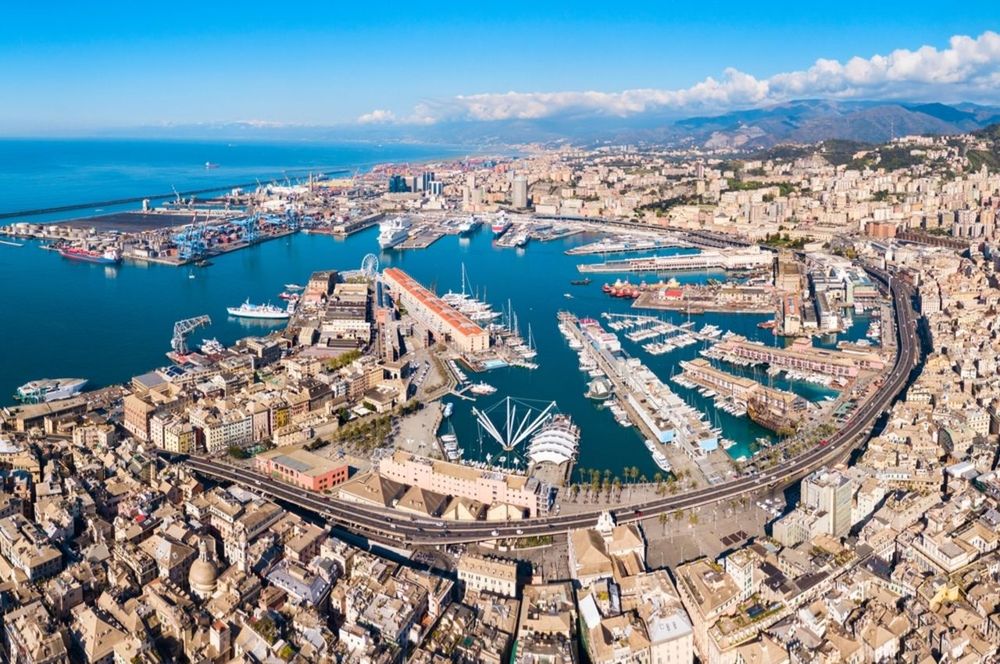
Gênes is arguably the least-known major Italian city among foreign tourists. This is incomprehensible once you walk through it on foot. The system of Strade Nuove and Palazzi dei Rolli, at the heart of the medieval city, has been a UNESCO World Heritage Site since 2006. All around it spreads a labyrinth of caruggi (alleyways) where sunlight sometimes penetrates for only an hour a day. The Cattedrale di San Lorenzo has stood there since the 12th century, flanked by two asymmetrical towers that give the whole structure an unmistakable silhouette. Inside, a chapel preserves what tradition calls the Sacro Catino, a green glass bowl that the Crusaders believed to be the Holy Grail.
The Via Garibaldi (formerly Strada Nuova) is lined with the palaces of the great merchant families of the 16th century. Palazzo Rosso, Palazzo Bianco, Palazzo Doria Tursi: three museums arranged along a few hundred metres, grouped under the name Musei di Strada Nuova, with collections ranging from Van Dyck to Paganini's violins. The view from the roof of Palazzo Rosso over the orange rooftops and harbour basins is one of the finest in the city.
The Porto Antico, redesigned by Renzo Piano for Expo 1992, offers a striking contrast with the old city. The Acquario di Genova (Ponte Spinola, 16128 Gênes, rated 4.4/5 on Google with 80,701 reviews), the largest aquarium in Western Europe with 70 tanks, deserves 3 hours if you are visiting with children. Without children: an hour is enough for the sharks and jellyfish, then move on to the terraces overlooking the basins.
To make sure you miss none of the caruggi and palaces, the Ryo audio guide La Superba covers 22 stops in 1h50, from Via Garibaldi to the Palazzo Rosso, ideal for a first morning. Also check out the top 5 things to do in Gênes to round out your itinerary. Allow a minimum of 2 days for Gênes, 3 if you want to head up to the Castello d'Albertis and the sanctuary of the Madonna della Guardia that overlooks the city.
Portofino and the Gulf of Tigullio
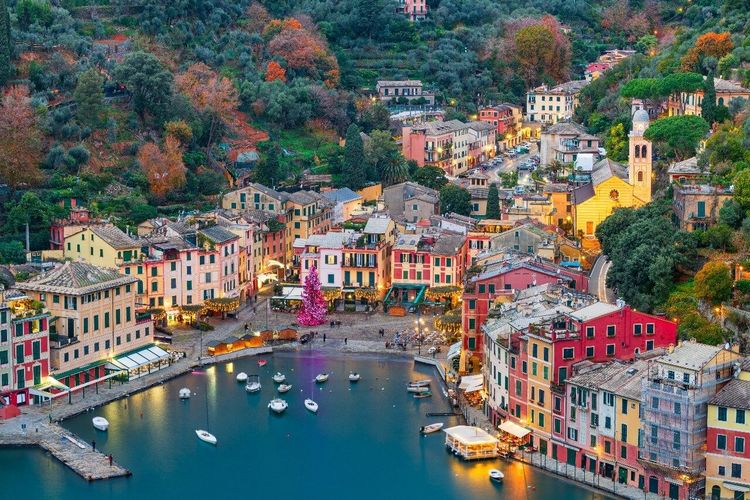
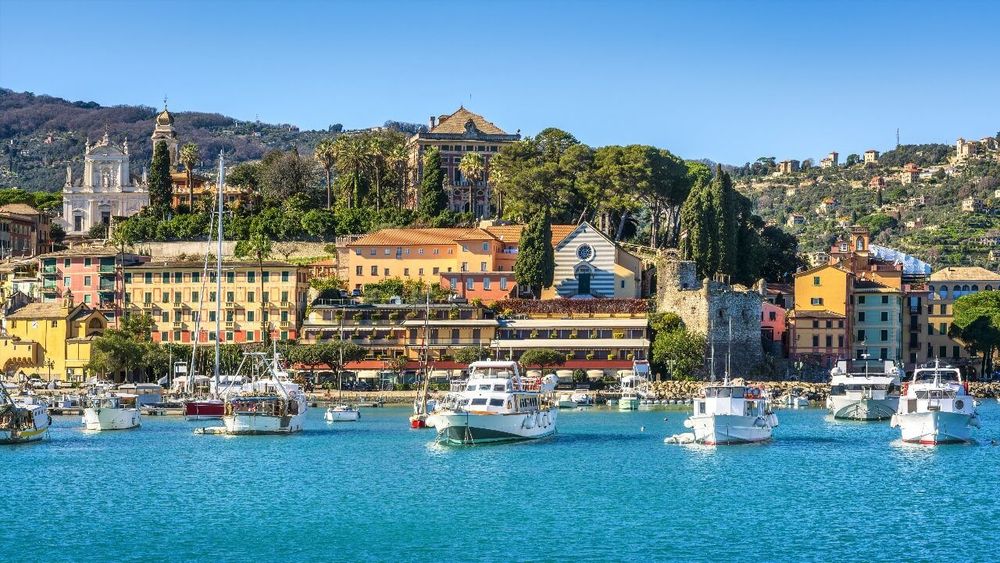
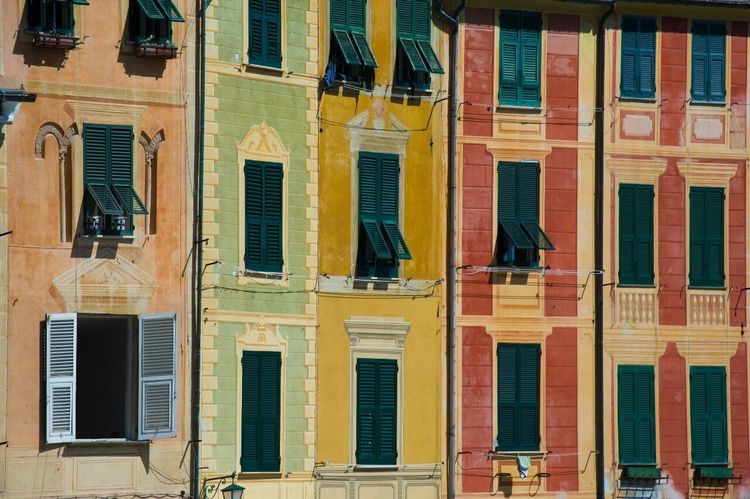
Portofino is one of the most photographed villages in Italy and one of the smallest: 400 permanent residents, a little piazzetta with colourful houses, and a marina where millionaires' yachts sit alongside fishermen's dinghies. The village is largely pedestrianised and access by car is very restricted: leave your vehicle in Santa Margherita Ligure (paid seafront car parks, around €1 per hour), then make your way to Portofino. The most pleasant way to arrive is by ferry from Santa Margherita Ligure or Rapallo — about fifteen minutes' crossing for a few euros.
The hike from Santa Margherita Ligure to Castello Brown (2 hours return, moderate elevation) offers the best views of the village and the lighthouse. The castle itself, formerly the residence of British consul Montague Yeats Brown, is open on weekdays out of season for a few euros' entry.
Around the Gulf of Tigullio, Camogli (Via della Repubblica, 16032 Camogli, rated 4.6/5 on Google with 9K reviews) deserves half a day: its trompe-l'œil painted houses (façades mimicking windows and balconies that do not actually exist) stem from a maritime tradition designed to deceive pirates. Fishing is still a real activity; on Sunday mornings, the fish market on the harbour sells the night's catch.
Rapallo, more touristy and less authentic, serves as a decent logistical base: more affordable hotels, a station on the main line, and a well-stocked covered market.
The Cinque Terre: 5 Villages Clinging to the Cliffs
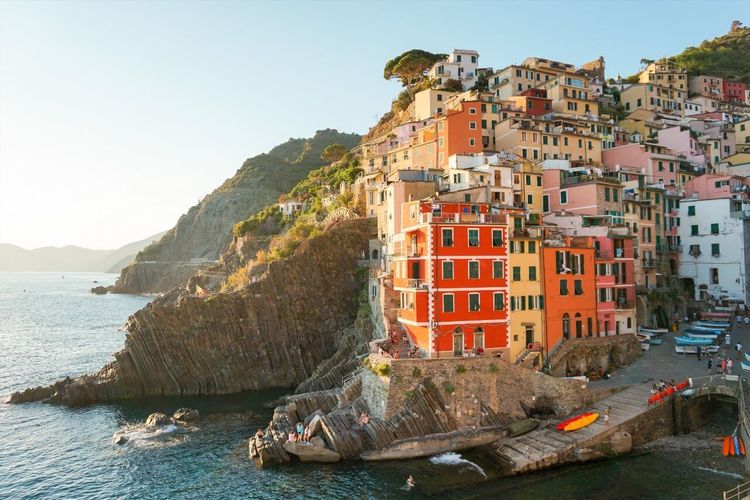
Riomaggiore, Manarola, Corniglia, Vernazza, Monterosso al Mare (Via Roma, 19016 Monterosso al Mare, rated 4.6/5 on Google with 13K reviews): five villages built between the 14th and 15th centuries on limestone cliffs that have been terraced for vineyards since the Middle Ages. Listed as a UNESCO World Heritage Site, the area also forms Italy's smallest national park, which today enforces strict regulation of visitor flows: in July and August, access to certain trails is limited and some sections require a paid booking in advance.
Riomaggiore is the arrival village from La Spezia (10 minutes by train). This is where crowds are densest in high season. The alleyways descend in steps to a small harbour crowded with colourful boats. The Via dell'Amore, a romantic path cut into the cliff between Riomaggiore and Manarola, reopened in 2024 after twelve years of closure for safety works. Paid access (€10, online booking recommended).
Manarola is often cited as the most photogenic village: its orange and ochre houses form a natural pyramid above a basin where locals dive from the rocks. Arrive before 8:30 to see the sun light up the façades without tourists in the foreground.
Vernazza has the only true natural harbour of the five villages, with a small pebble beach and a medieval tower you can visit. Piazza Marconi facing the sea is the ideal spot for an alfresco dinner; restaurants serve trofie al pesto (local pasta with Genoese basil sauce) and acciughe fritte (fried anchovies, a Ligurian speciality).
Corniglia is the only village that does not touch the sea directly: you must climb 382 steps from the station. Many pass through, few stop, and that is precisely what makes it one of the quietest. Monterosso al Mare, at the other end, is the largest and most resort-like of the five. Sandy beach (paid), hotels, fish restaurants: it is the most comfortable logistical base for exploring the park. The trail between Monterosso and Vernazza (1h30, moderate level) is one of the most spectacular on the coast.
The Cinque Terre Card (from €7.50 per day for the Trekking version) covers access to the park's official trails; the more expensive Train version adds unlimited regional trains between the villages. Buy it at La Spezia station or online.
La Spezia and Porto Venere
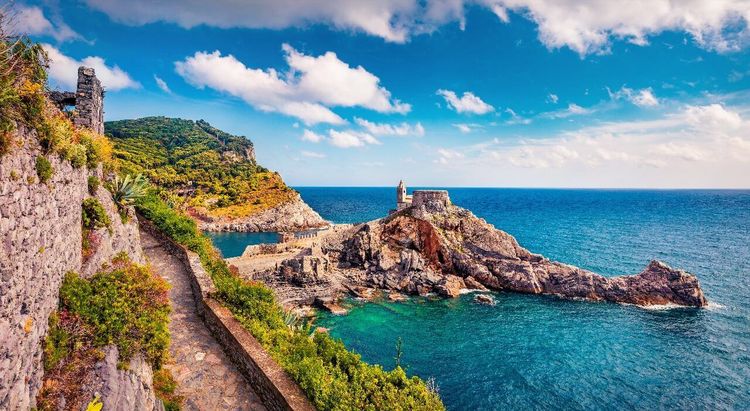
La Spezia is not a tourist destination in the strict sense, but it is the logistical hub of eastern Liguria. This military and industrial city has a remarkable naval museum, the Museo Tecnico Navale (Piazzale Amendola 1, 19121 La Spezia, rated 4.5/5 on Google with 2,256 reviews), which displays human torpedoes, scale warships and one of Europe's most important collections of carved figureheads. Entry: €6.
Thirteen kilometres to the west, Porto Venere more than justifies the detour. The medieval village clings to a rocky peninsula facing the islands of Palmaria, Tino and Tinetto. The church of San Pietro, built on a promontory above the sea in the 13th century, offers a panorama over the Gulf of Poets — Byron regularly swam across between Porto Venere and Lerici on the other side of the gulf.
The ferry from La Spezia (30 minutes, around €8 return) is by far the best option: you arrive by sea facing the colourful houses, just as 19th-century travellers did. The island of Palmaria, 200 metres from the shore, has a sea cave accessible by kayak and a few almost deserted hiking trails.
Levanto and the Forgotten Villages of the Levante
Levanto (Piazza del Popolo, 19015 Levanto, rated 4.4/5 on Google with 3K reviews) is the town just north of the Cinque Terre, reachable in 5 minutes by train from Monterosso, yet it remains surprisingly quiet even at the height of the season. Its long sandy beach (the largest in the Levante after Monterosso) and well-preserved medieval centre make it an excellent base for visiting the park without enduring the prices and crowds of the five villages.
Further north, Sestri Levante, nicknamed the 'city of two seas' for its peninsula wedged between two bays, welcomed Hans Christian Andersen in 1833: the Danish storyteller stayed there, and the Baia delle Favole ('bay of fairy tales') now bears his name in tribute. The Baia del Silenzio, closed to traffic and off-limits to motorboats, remains one of the most beautiful bays in the entire Levante. Chiavari and Lavagna form a pleasant and authentic pair of provincial towns, free from over-tourism.
Savone and the Riviera del Ponente
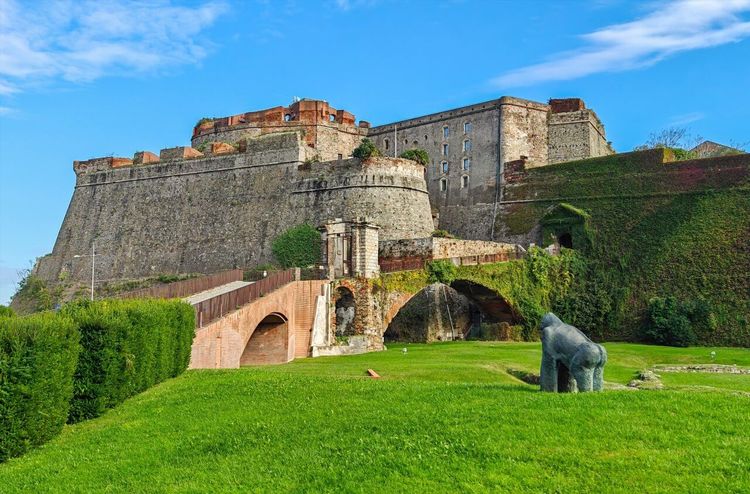
Savone is the second city of Liguria after Gênes, yet it receives few foreign visitors. Its Priamàr fortress, built by the Genoese in the 16th century on a promontory overlooking the harbour, now houses two museums (Ligurian archaeology and modern art) and an open view of the Mediterranean. Free entry to the site, a few euros for the museums.
The historic centre of Savone, rebuilt after the 1944 bombings, retains a few alleyways and the Cathedral of the Assumption with a 5th-century early Christian baptistery. The city is primarily a cruise hub; if you visit Savone, do so early in the morning before the cruise ships arrive.
Around Savone, Noli is one of the best-preserved medieval villages on the Ligurian coast: Genoese towers, a Romanesque church, an uncrowded beach. A 20-minute drive inland, the santuario di Nostra Signora di Montegrazie perched on the hillside is worth a stop for the view.
Sanremo, the City of Flowers
Sanremo combines several overlapping identities: Belle Époque seaside resort, world capital of cut flowers (30% of the roses sold in Europe come from its greenhouses), home of the Italian Song Festival and… a casino table. The Casino di Sanremo (Corso degli Inglesi 18, 18038 Sanremo, rated 4.3/5 on Google with 8,145 reviews), opened in 1905 in an imposing Art Nouveau building, remains one of Italy's four legal casinos, alongside Venice, Saint-Vincent and Campione d'Italia.
La Pigna, the medieval old town perched on the hill, is the perfect counterpoint to the seaside promenade. Its narrow lanes, fortified gateways and cathedral of San Siro (12th century) are a 10-minute walk from the seafront, yet feel like another century entirely. Most tourists do not make the climb, which leaves the alleyways almost empty outside weekends.
The flower market (Mercato dei Fiori) takes place at night: it is in principle closed to the public, but hotels can sometimes arrange guided visits in the early morning. The Museo del Fiore tells the history of this century-old industry. The Pista Ciclabile, a 24 km cycle path built on a former railway line along the coast between Ospedaletti and San Lorenzo al Mare via Sanremo, is one of the most enjoyable in Italy for a family ride along the sea.
Albenga and the Val Nervia
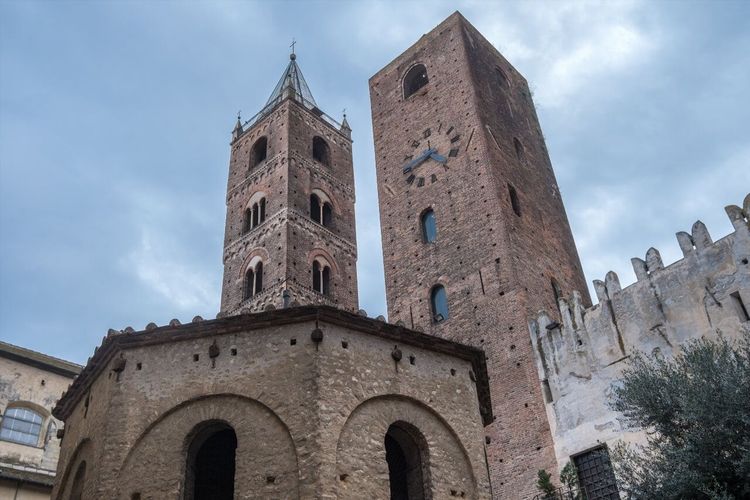
Albenga is the best-preserved Roman town in Liguria. Its early Christian baptistery (5th century) with an octagonal plan is one of the few from that period still intact in Italy; the Byzantine mosaics in its dome date from the 5th century. The medieval historic centre, with its three medieval towers aligned on the Piazza dei Leoni, has not changed its skyline since the 15th century.
Eight kilometres north of Albenga, the Gallinara island, a fully protected marine reserve since 1989, can be seen from the coast. Access is forbidden except for snorkelling around the perimeter. The seabed of the reserve is among the richest in the western Mediterranean.
In the hinterland, the Val Nervia winds up towards Dolceacqua, a medieval village famous for its humpback bridge and its ruined Doria castle. Monet painted it twice. The village produces Rossese di Dolceacqua (Piazza Garibaldi, 18035 Dolceacqua, rated 4.6/5 on Google with 4K reviews), a light red wine with DOC status that Napoleon was particularly fond of.
Ventimille, Gateway to Liguria from France
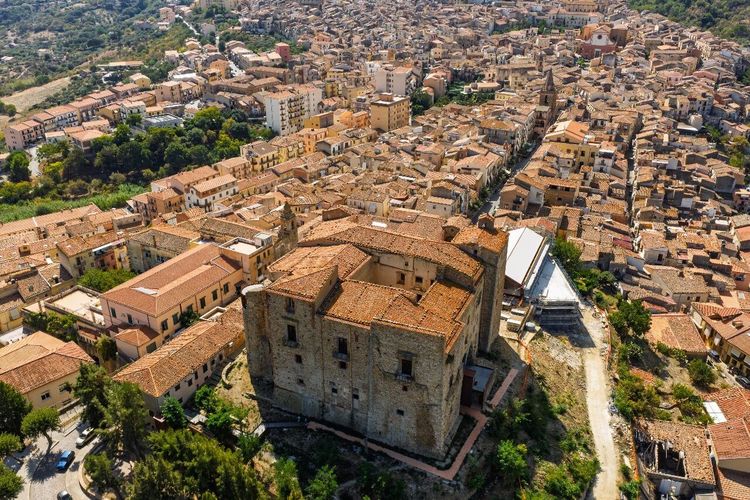
Ventimille (Via Cavour, 18039 Ventimille, rated 4.1/5 on Google with 2K reviews) (Vintimille in French) is the first Italian town after the Franco-Italian border. Ten minutes from the Menton customs post, it long lived in the shadow of the Côte d'Azur; people from Nice came here mainly for the big Friday market, renowned for its prices on flowers, fruit and charcuterie.
The medieval upper town, distinct from the modern coastal town, deserves an hour's stroll: a Romanesque cathedral, lanes that smell of lavender and citrus, views over the sea and the Val Roja. The Museo Civico Girolamo Rossi displays a Ligurian-Roman archaeological collection, with several pieces from the ancient city of Albintimilium, visible below.
From Ventimille, the Val Roja winds up towards Tende and the French Alpes-Maritimes — a spectacular road that passes through limestone gorges and several hilltop villages.
Visiting Liguria by Car or by Train?
This question comes up every time, and the answer depends on your itinerary.
By train, the coastal line Gênes–Vintimille is one of the most beautiful in Italy: it follows the sea, passes through tunnels carved into the cliff, and crosses viaducts above coves. The Cinque Terre are entirely accessible by train (10 minutes between each village) and a car is useless there — coastal car parks charge €5–7 per hour. From Gênes, regional trains serve the entire coast every 30 to 60 minutes depending on the section.
By car, the Autostrada dei Fiori (A10/A26) allows you to cover the whole region quickly, but tolls are high (allow €20–25 for Gênes–Ventimille). The coastal national road (SP1, former Via Aurelia) is far more scenic but slower — allow 3 extra hours for the full route. A car becomes essential for the hinterland: Val Nervia, Val Roja, hilltop villages above Savone or Sanremo.
The best compromise? Train for the coast and the Cinque Terre, a car rental for two or three days to explore the interior. For the cities themselves, a Ryo audio guide in your pocket saves you from getting lost in the caruggi while bringing the history of each palace to life.
When to Visit Liguria?
April, May and September, October are the best periods. The sea is warm enough for swimming in May (19–20°C) and in September (24–25°C), the beaches are not saturated, and accommodation prices drop by 30–40% compared to the summer peak. The Cinque Terre trails are open and walkable without excessive heat.
June to August: absolute high season. The Cinque Terre impose daily quotas on the most heavily used trails. Portofino becomes saturated at weekends. Prices double. If you go anyway, book accommodation and ferries 2–3 months in advance and set out walking before 8am.
November to March: mild winter (12–14°C during the day), beautiful photographic light, very few tourists. Some restaurants and hotels in the Cinque Terre close from November to March. Gênes, Sanremo and the Riviera del Ponante remain open and fully operational year-round.
Where to Stay in Liguria?
Your choice of base depends directly on what you want to do.
Gênes is the best base for exploring the centre and east of the region: hotels in every price range, frequent trains to the Cinque Terre (1h30 from Brignole station), lively restaurants even out of season. The old-town district (caruggi) concentrates the boutique hotels and independent B&Bs. Stazione Principe serves the west; Brignole serves the east.
La Spezia is the perfect logistical base for the Cinque Terre: cheaper than the park villages, trains every 10–15 minutes to Riomaggiore. Decent hotels without exceptional charm.
Levanto or Monterosso al Mare if you want to sleep within the Cinque Terre without paying the premium prices of the most popular villages. Monterosso has the greatest number of accommodation options.
Sanremo for the Riviera del Ponante: a wide choice of Art Nouveau seafront hotels, reasonable prices outside summer, central location between Albenga and Ventimille.
Avoid sleeping in Portofino unless you have an unlimited budget — the few available rooms regularly exceed €500 per night in summer. Santa Margherita Ligure, 5 km away, offers alternatives 3 to 5 times cheaper with the same access to the gulf.



FAQ
How many days do you need to visit Liguria?
Seven to ten days allow you to cover the whole region without rushing: two days in Gênes, one day on the Gulf of Tigullio (Portofino, Camogli), two days in the Cinque Terre and La Spezia, one day in Sanremo and Albenga, and a final day in Ventimille and the hinterland. With five days, choose between the Levante (Gênes, Cinque Terre, Porto Venere) or the Ponante (Sanremo, Albenga, medieval villages); doing both in five days is too fast a pace to be enjoyable.
How do you get around the Cinque Terre?
By train only if you are staying between the five villages. The Gênes–La Spezia line serves each village roughly every 30 minutes. The Cinque Terre Card covers regional trains and the park's official trails. Cars are strongly discouraged: saturated car parks, timed one-way roads, paid access in season. If you are coming from La Spezia or Levanto, the ferry (in season from April to October) is a spectacular alternative.
Is Liguria accessible for families?
Yes, with a few precautions. The Cinque Terre require children who can walk 2–3 hours on rocky, hilly trails. For families with young children, Monterosso al Mare (sandy beach, restaurants) and Levanto are far more suitable. The Riviera del Ponante, in particular Sanremo's cycle path (24 km, flat, along the seafront), is easy to ride as a family, and Gênes with its aquarium is perfectly suited to children aged 5 and over.
Do you need to book the Cinque Terre trails in advance?
In July and August, certain sections of the coastal trail (particularly between Monterosso and Vernazza) are subject to daily quotas and require advance online booking on the national park's website. The Via dell'Amore (Riomaggiore–Manarola) also requires a paid reservation since its reopening in 2024. Outside peak season, the trails are freely accessible with the Cinque Terre Card.
Can you visit Liguria from France by train?
Yes, without complicated connections. From Nice, regional trains run directly to Ventimille, Sanremo and as far as Savone. From Marseille, allow for one connection in Gênes (via Milan or directly depending on Trenitalia timetables). The Nice–Gênes journey takes about 3 hours. From Paris, the TGV to Nice followed by a regional train to Gênes is the most common combination (allow 6–7 hours in total).
What is Liguria's culinary speciality?
The pesto genovese is the regional signature: Pra basil (protected designation), pine nuts, pecorino, parmesan, garlic and olive oil. Trofie (small twisted pasta) and trenette are the traditional pasta formats for serving it. Acciughe sotto sale (salted anchovies from Monterosso) hold a PDO. Focaccia di Recco, a thin flatbread filled with melted cheese, is protected by a PGI and may legally bear that name only if produced in Recco or the surrounding municipalities. To taste these specialities in context, the Genoese caruggi are full of trattorias serving these dishes at reasonable prices.
Conclusion
Liguria fits into a crescent of coastline, yet its density of discoveries far exceeds what its size might suggest. Gênes and its palaces deserve two days that almost no one gives them. The Cinque Terre are worth the trip, provided you arrive early and avoid July and August. The Ligurian hinterland, from the roses of Sanremo to the gorges of the Val Roja, remains one of the least explored areas of northern Italy.
To prepare your stay in Gênes, the Ryo audio-guided tour La Superba offers 22 commented stops over 4.6 km to explore the caruggi and Renaissance palaces at your own pace, without a guide or a group.