© Shutterstock
 Votre guide Ryo
Activities in Tokyo and Surroundings: The Complete 2026 Guide
Planning activities in Tokyo and its surroundings can be overwhelming — not from the skyscrapers, but from the sheer range of possibilities. Thirty-five million people live in the metropolitan area, yet just two hours away by train you can stand alone before a fifteen-meter-tall Great Buddha or watch Fuji rise above a high-altitude lake at sunrise. That is one of Japan's most striking qualities: a megacity that folds into itself within just a few dozen minutes of rail travel.
This guide covers the best activities in Tokyo and its surroundings for 2026: from city-center highlights like crossing Shibuya at dusk or visiting Senso-ji temple at dawn, to day trips to the shrines of Nikko, the hot springs of Hakone, or the Zen temples of Kamakura. To start exploring the capital from the moment you arrive, the Ryo Tokyo audio tour guides you through the most iconic neighborhoods without any complicated preparation.
Exploring Tokyo Neighborhood by Neighborhood
Tokyo is not a single city — it is a collection of urban villages connected by one of the most efficient transport networks in the world. Understanding this layout of self-contained neighborhoods is already understanding the logic of the city. Each ward (ward) has its own personality, its own architecture, its own rhythm.
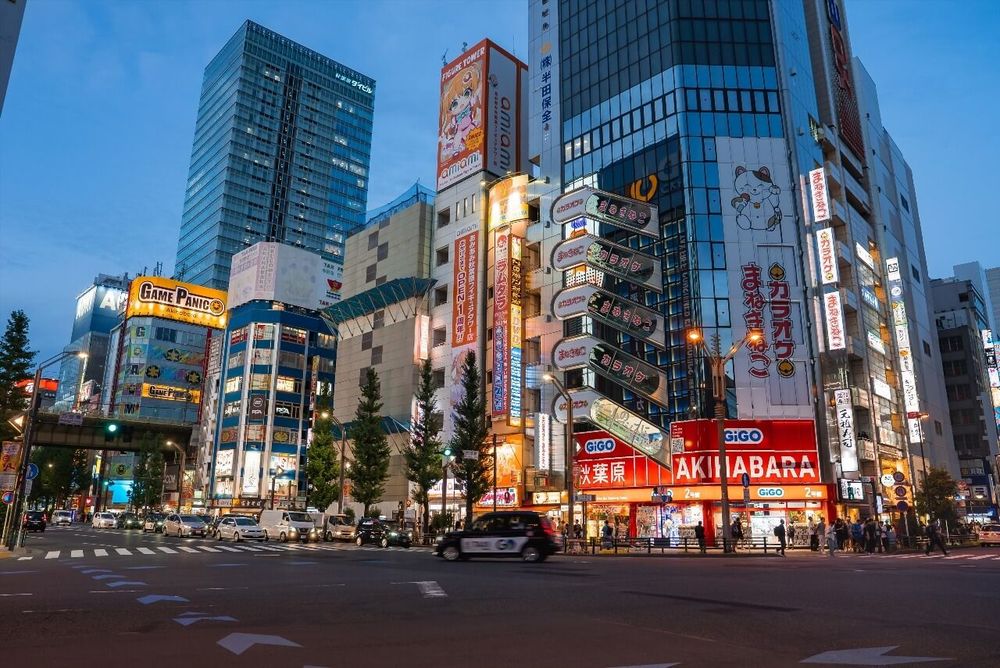
Akihabara is the kingdom of manga, video games, and electronics. Buildings are plastered with seven-story neon signs, and shops spill out onto the pavements from the moment they open. Hard to spend less than an hour here if you have any interest in Japanese pop culture.
Yanaka offers the opposite experience. This northeastern neighborhood escaped the 1945 bombings and the bulldozers of postwar reconstruction. Its sloping lanes, wooden houses, artisans' workshops, and old Buddhist cemetery form a surprisingly intimate tableau just a few metro stops from the center. Few visitors put it on their list — and they miss one of the finest moments Tokyo has to offer.
Shimokitazawa is the city's other face: live music in eighty-seat basement venues, vinyl cafés, weekend vintage markets. This is where Tokyo's alternative youth gathers, in a tangle of alleyways where getting pleasantly lost is almost inevitable.
The Tsukiji Outer Market is worth an early-morning stop even though the official fish market moved to Toyosu in 2018. The fresh seafood stalls, restaurants open from 5 a.m., and hand-forged chef's knives remain essential for understanding Tokyo's food culture.
Finally, Odaiba plays a completely different register: this artificial island in Tokyo Bay combines futuristic museums, shopping centers, and views of the Rainbow Bridge. On clear days, Mount Fuji appears on the horizon at sunset from the waterfront terraces.
Asakusa and Ueno: Between Tradition and Modernity
All it takes is arriving at Asakusa station at dawn, before the tour groups descend, to understand what "living tradition" means in Japan. Senso-ji, Tokyo's oldest temple founded in 645, is active at all hours: devotees burning incense sticks, merchants selling omamori (amulets), monks in kimono. The Kaminarimon gate with its enormous 700-kilogram red lantern remains one of the most photographed images in Japan, yet it never fails to impress in person.
The Nakamise-dori street leading to the temple is lined with stalls selling traditional sweets, painted fans, and quality souvenirs. Arrive before 9 a.m. to enjoy the atmosphere before the mid-morning crowds arrive.
To explore Asakusa and the history of the area at your own pace, the Ryo Between Tradition and Modernity audio guide covers exactly this part of Tokyo: ideal for catching every architectural and historical detail of the neighborhood, from the origins of the shrine to the meaning of the rituals still practiced today.
A ten-minute walk to the west, Ueno Park is home to several major cultural institutions. The Tokyo National Museum holds the world's largest collection of Japanese art objects — more than 110,000 pieces, including samurai armor, Song ceramics, and ukiyo-e woodblock prints.
Lake Shinobazu within the park is worth a pause: its blooming lotus flowers from July to August, its motionless herons, and its pedal boats contrast sharply with the bustle of the city just beyond the trees. Ueno Zoo, founded in 1882, is Japan's oldest and is home to giant pandas, among other animals. The pond and Ueno Park are both stops on our Phoenix City audio walking tour.
Shibuya, Shinjuku, and Harajuku: Tokyo Alive
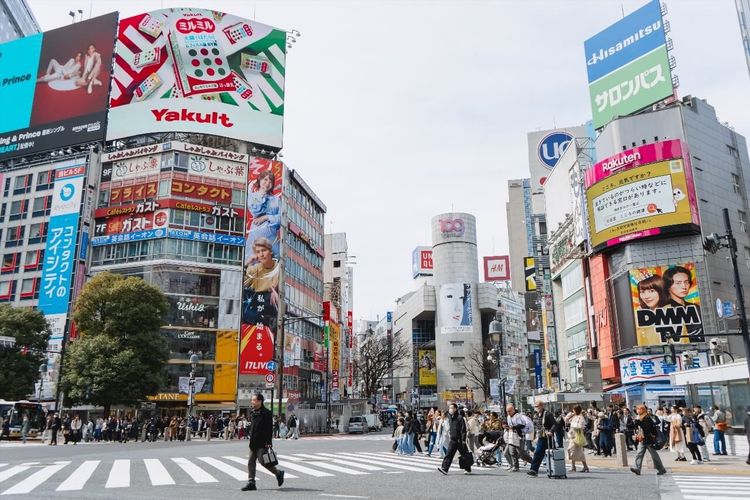
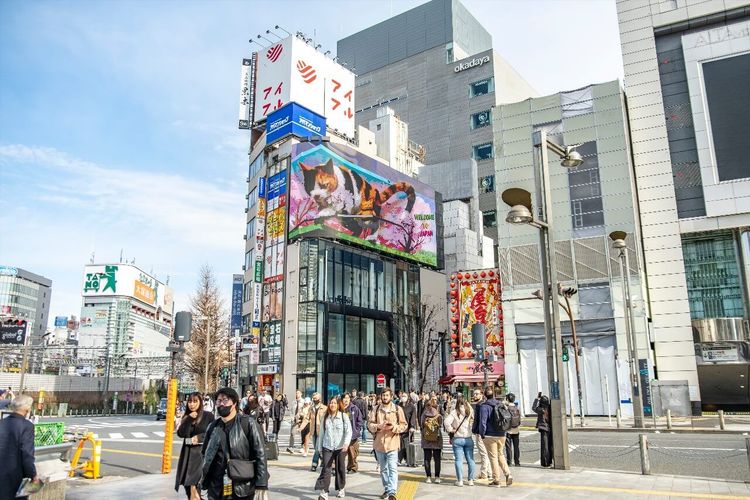
Shibuya is perhaps Japan's most iconic contemporary scene. Shibuya Crossing, where up to 3,000 people cross simultaneously in every direction at each green light, functions as a symbol of the entire city. Watch it from above on the first floor of the Starbucks, or better yet from the Shibuya Sky terrace on the 46th floor of Scramble Square Tower: a sweeping view over the neon lights and human flows below.
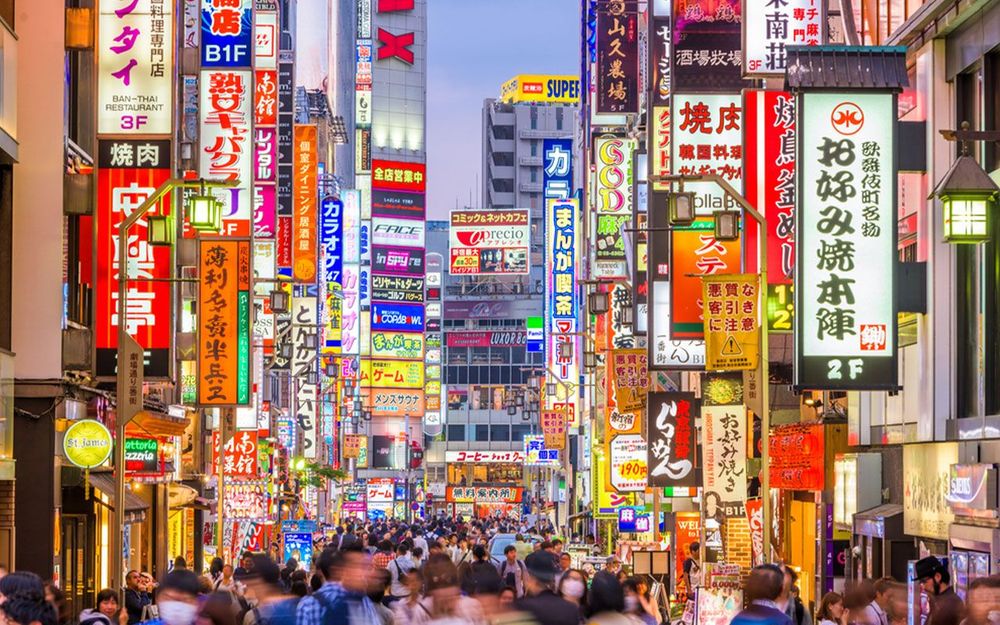
Shinjuku operates on two registers. By day: the Takashimaya department stores and Shinjuku Gyoen National Garden, 58 hectares of greenery with French, English, and Japanese landscaped zones. By night: Kabukicho and its thousands of bars, karaoke joints, and restaurants open until dawn. Golden Gai, a network of six parallel alleyways with more than 200 tiny bars seating about ten each, is an experience in its own right after 10 p.m. when the regulars arrive.
Between the two, Harajuku offers a colorful interlude. Takeshita Street, narrow and perpetually packed, is the laboratory of Japanese street fashion. Just a few steps away, Meiji Shrine plunges you into an unexpected wooded silence: dedicated to Emperor Meiji and Empress Shoken, this vast forested complex of 70 hectares at the heart of the city hosts near-daily Shinto ceremonies. Moving from one atmosphere to the other in five minutes on foot sums up Tokyo's talent for juxtaposing opposites.
Tokyo's Green Side: Gardens, Temples, and Panoramas
Tokyo's reputation for concrete hides a greener reality. The city has several thousand temples and shrines, imperial gardens open to the public, and several large-scale parks. In March and April, it is transformed by hanami, the cherry blossom festival.
The Koishikawa Korakuen Garden (1629) is Tokyo's oldest, designated a Special Historic Site. Its ponds, islets, carefully trimmed pines, and reconstructed waterfall recreate in miniature famous landscapes from Japan and China. It is one of the most peaceful gardens in the capital, often overlooked in favor of Shinjuku Gyoen.
For panoramic views, the Tokyo Skytree (634 meters) remains the city's highest vantage point. Queues can be long — book online. More accessible and far less touristy, the free observatory at the Tokyo Metropolitan Government Building in Shinjuku offers a comparable view of Mount Fuji on clear days, with no queue and no ticket.
Yokohama: The Great Neighbor with Many Faces
Just 28 minutes from Tokyo by the Tokaido Line from Shinagawa, Yokohama is too often dismissed as a suburb of the capital. With 3.7 million inhabitants, it is Japan's second-largest city, and its port waterfront — one of the first opened to Western trade in 1859 — has a distinct personality of its own.
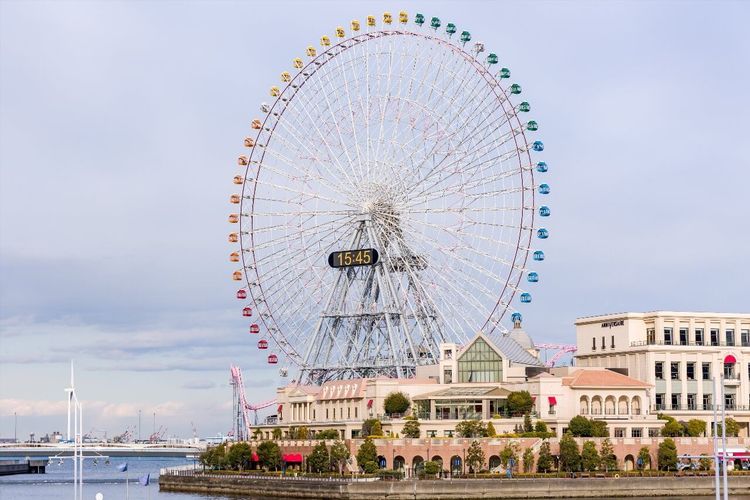
The Minato Mirai district concentrates contemporary architecture: the Yokohama Landmark Tower (296 meters), the Yokohama Museum of Art, and the Cosmo Clock 21 Ferris wheel dominate a carefully redesigned waterfront. In the evening, the reflections of the lights on the bay alone make the trip worthwhile.
The Yokohama Chinatown is the largest Chinatown in Asia outside China: 500 restaurants and shops spread across a network of colorful alleyways. The nikuman (steamed meat buns) and dim sum restaurants in the Chukagai area are unmissable at lunchtime.
The Sankeien Garden (1906), on the eastern side of the city, brings together about ten historic buildings relocated from various regions of Japan within an 18-hectare park. Rarely visited by international tourists, it is ideal for a slow afternoon stroll after the density of Chinatown. From Tokyo, allow around 550 yen by IC Card.
Kamakura and Kita-Kamakura: The Great Buddha and Zen Temples
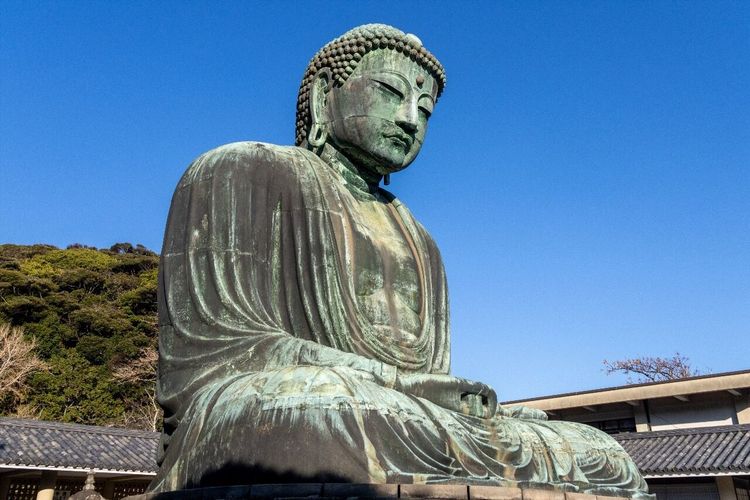
Just 1 hour from Tokyo by the Yokosuka or Shonan-Shinjuku line, Kamakura is the most classic day trip from the capital — and it fully deserves its reputation. This former shogunate capital (1185–1333) holds an exceptional concentration of temples, shrines, and Buddhist sculptures set amid forested hills overlooking the sea.
The Kotoku-in houses the Great Buddha of Kamakura (Kamakura Daibutsu): a bronze statue 11.4 meters tall (13.35 meters with the base), cast in 1252 and left in the open air after a tsunami destroyed the building sheltering it in the 15th century. The effect is striking. The statue sits enthroned in a garden of trees and hills, visible from a distance. You can enter inside the statue for an additional 50 yen.
The Tsurugaoka Hachimangu shrine (2-1-31 Yukinoshita, Kamakura, Kanagawa 248-0005, rated 4.4/5 on Google from 28,958 reviews) is the historic heart of Kamakura. Its 1.8-km processional avenue lined with cherry trees leads to a stone staircase and a beautifully red Shinto shrine, with views of the sea on clear days.
From Kamakura, head up to Kita-Kamakura by train (one stop) or on foot in 30 minutes along the hills. This quieter area groups the great Zen temples founded in the 13th century. Engaku-ji (1282) spreads its buildings through a bamboo forest; Kencho-ji (1253) is the oldest Zen temple still active in Japan; Tokei-ji, a former refuge temple for women seeking divorce, has a plum garden that is stunning in February.
Plan a full day for both areas. Hiking trails connect the temples through the hills above the town: the Daibutsu Hiking Course is the best known, accessible to all fitness levels, and offers sea views between the Japanese cedar trees.
Enoshima: The Sacred Island, One Hour from Tokyo
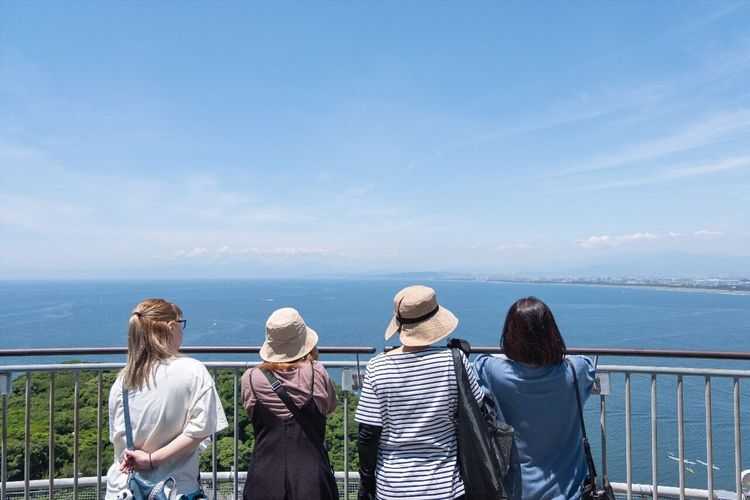
Enoshima is often visited alongside Kamakura, as both destinations are served by the same rail line. This small island connected to the coast by a 600-meter pedestrian bridge is home to a Shinto shrine dedicated to the goddess Benten, a series of sea caves, and terraces with views of Mount Fuji.
The Enoshima Shrine (Enoshima Jinja) is actually a set of three interconnected shrines linked by a stepped pathway. The climb is enlivened by stalls selling grilled squid crackers and shirasu, the tiny white fish that are a local specialty. The Iwaya Caves at the far end of the island, carved by marine erosion, shelter Buddhist and Shinto statuettes in a damp and mysterious atmosphere.
The best moment is sunset from the terrace of the Enoshima Sea Candle, the island's panoramic lighthouse, when the sky turns orange over the sea. Allow around 800 yen to reach the top, and 260 yen from Kamakura by the Enoden, the small coastal tram line.
Nikko: Shrines and Sacred Forests in the Mountains
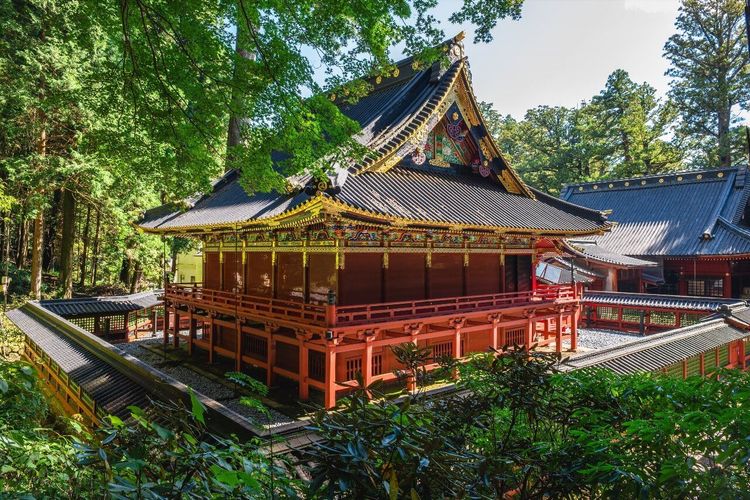
Just 2 hours from Tokyo by the Tobu Spacia from Asakusa, Nikko may be Japan's most gilded and lacquered town. The Nikko shrine complex has been a UNESCO World Heritage Site since 1999: its 103 buildings scattered through a forest of centuries-old Japanese cedar trees form the best-preserved Edo monumental ensemble in the country.
The Tosho-gu is the main shrine, dedicated to shogun Tokugawa Ieyasu. Its ornamentation is breathtaking: façades covered in painted carvings depicting birds, mythical figures, and fantastical creatures against a gold background. The famous Three Wise Monkeys panel (mizaru, kikazaru, iwazaru) — "see no evil, hear no evil, speak no evil" — is found on the sacred stable (Shinyasha). It is one of the most copied motifs in Japan, and this is where the original resides.
Quieter but equally remarkable, the Taiyuin-byo mausoleum (dedicated to the third shogun Tokugawa Iemitsu) and the Futarasan-jinja shrine are well worth a detour. A 15-minute bus ride from the center, the Kegon no taki falls plunge 97 meters: one of Japan's most famous waterfalls.
Nikko can be done as a day trip from Tokyo, but staying one night in a traditional ryokan allows you to enjoy the shrines in the evening and early morning before the tour groups arrive. The dawns in the Japanese cedar forest alone justify the overnight stay.
Hakone: Mount Fuji, Onsen, and the Valley of Hell
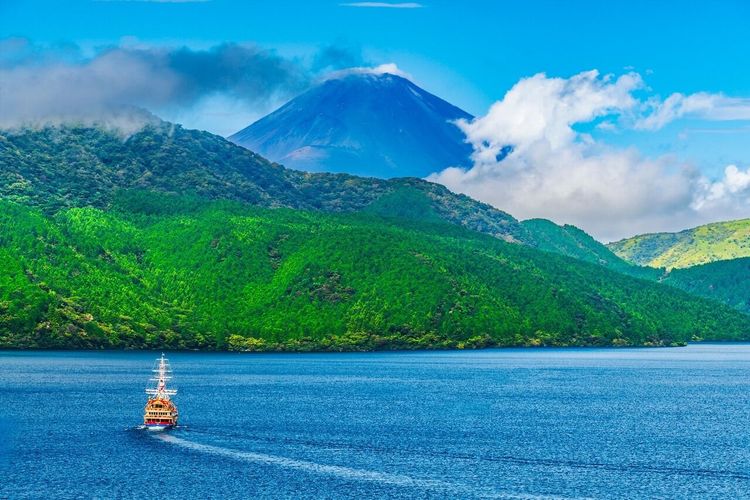
If you only have time for one major excursion from Tokyo, choose Hakone. This mountain region 1h30 from Shinjuku by the Odakyu Romancecar packs a remarkable range of experiences: views of Mount Fuji, hot springs (onsen), a volcanic lake, an open-air museum, and an active geothermal valley.
Lake Ashi (Ashinoko) is the heart of Hakone. On clear days, Fuji's silhouette is reflected in the water. Winter mornings are often the most favorable for this view. Slightly kitschy historic boats cross the lake between Hakone-machi and Togendai. From Togendai, the Hakone Ropeway cable car glides over the Owakudani valley, an active geothermal zone where sulfurous fumes escape from the ground. This is where the famous black eggs cooked in thermal springs are sold — said to add seven years to your life according to local legend.
The Hakone Open Air Museum (1121 Ninotaira, Hakone, Ashigarashimo District, Kanagawa 250-0493, rated 4.5/5 on Google from 15,576 reviews) is a category of its own: an outdoor sculpture park spanning 70,000 m², combining works by Rodin and contemporary Japanese sculptors against a mountain backdrop. Admission costs 2,000 yen (1,800 yen booked online), and several indoor pavilions round out the visit. The entire room dedicated to Picasso is worth the stop on its own.
For thermal bathing, options range from large public establishments with day-use access (Hakone Yuryo, Tenzan) to ryokan with private baths. Note that tattoos are prohibited in most establishments — check the policy before booking. The Hakone Free Pass (around 6,100 yen from Shinjuku) covers all transportation in the region for two days.
Kawaguchiko and the Fuji Five Lakes
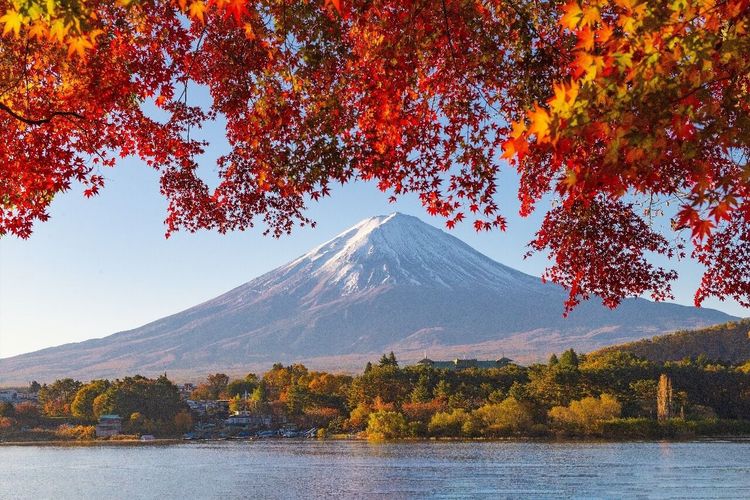
While Hakone offers the most accessible views of Fuji, Kawaguchiko offers the most photogenic. Lake Kawaguchiko is the easiest of the Fuji Five Lakes (Fujigoko) to reach from Tokyo: 2 hours from Shinjuku by direct bus (1,800 yen one way), or 2h30 by train via Otsuki.
The classic shot — lake with cherry trees in the foreground and Fuji in the background — is taken from the northern shore in spring. Other seasons offer their own spectacles: lavender in July, red kochia in autumn. The Chureito Pagoda overlooking Fujiyoshida, reached after 400 steps from Shimoyoshida station, offers the most imitated image in all of Japan: a five-tiered pagoda with Fuji in the background.
For those wishing to climb Fuji itself, the official season runs from early July to mid-September. The Yoshida Trail, the most popular route, starts from the 5th Station at 2,305 meters and requires 5 to 8 hours of climbing. Outside this period, the access roads are closed for safety reasons.
Kawagoe: The "Little Edo"
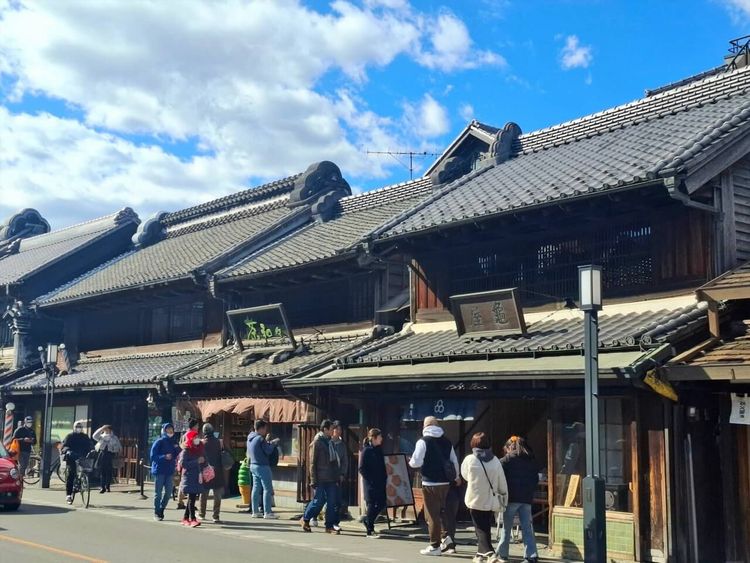
Just 40 minutes from Shinjuku by the Seibu Shinjuku Line or the Tobu Tojo Line, Kawagoe is one of the most overlooked day trips from Tokyo. Nicknamed "Little Edo", this suburban town has preserved a historic merchant district (Kurazukuri no Machinami) with black-clay Edo-era warehouses dating back to the 17th and 18th centuries.
The clock tower (Toki no Kane, 17th century) has rung four times a day since 1624: it is the symbol of the town. Kashiya Yokocho, the candy lane, gathers dozens of shops selling traditional sweets and confections in an early-20th-century setting. After dark, the lit warehouses and lanterns create an atmosphere you would never expect from a satellite town of Tokyo.
Mount Takao: The Weekend Hike
Just 50 minutes from Shinjuku by the Keio Line, Mount Takao (Takao-san, 599 meters) is the most visited mountain in the world, with around 2.5 million climbers per year. Its popularity is well deserved: several trails of varying difficulty, a Buddhist temple (Yakuo-in) halfway up, beech forests that blaze with color in autumn, and on clear days a direct view of Fuji from the summit.
Trail No. 1, the most classic route, takes 1h30 at a steady pace. A cable car (Takao-san Ropeway) lets you skip the first half. Autumn, from mid-November to early December, is peak foliage season: aim to set off before 8 a.m. or choose a weekday to avoid the crowds on the ridges.
Planning Day Trips from Tokyo
From Tokyo or Shinjuku station, virtually every destination in this guide is reachable by train without a rental car. The JR, Tobu, Odakyu, and Seibu networks are dense, punctual, and well signposted in English in recent years.
An IC Card (Suica or Pasmo, rechargeable with a 2,000-yen deposit) covers all suburban journeys and public transport in Tokyo, Yokohama, and Kamakura. For more distant destinations, themed passes are often more economical:
- Kamakura and Enoshima: Kamakura Enoshima Pass (1,520 yen from Tokyo), valid for 2 days on the Shonan-Shinjuku Line and the Enoden
- Nikko: Nikko All Area Pass (4,520 yen, 2 days), covers the train from Asakusa and local buses
- Hakone: Hakone Free Pass (6,100 yen from Shinjuku, 2 days), covers the Romancecar, buses, ropeway, and boats on Lake Ashi
- Kawaguchiko: single ticket from Shinjuku (around 1,800 yen by Keio bus)
For real-time timetables and connection planning, the HyperDia app or Google Maps Japan are reliable. Always allow one or two trains of margin: even in Japan, tight connections between different rail lines can catch first-time visitors off guard.
In terms of pacing, it is better to schedule day trips in the middle of your stay once you are comfortable with the transport network, and to dedicate the first and last days to exploring Tokyo's inner-city neighborhoods.
FAQ
What is the best day trip from Tokyo?
It depends on your priorities. For nature and views of Fuji, Hakone is the most well-rounded choice. For culture and history, Kamakura and its Zen temples are the obvious pick. For an urban counterpoint to Tokyo, Yokohama and its harbor waterfront are worth the trip. If you're looking for something less touristy and more surprising, Kawagoe often catches visitors off guard — it's just 40 minutes from Shinjuku.
Can you see Mount Fuji from Tokyo?
Yes, on very clear days, especially in winter when the air is dry and visibility is at its best. In favorable conditions, Fuji is visible from Tokyo's high points: the Skytree, the Shinjuku observatory, or the Odaiba terraces. But for a truly satisfying view, you need to head to Hakone or Kawaguchiko, where the mountain dominates the entire horizon.
How much time should I allow for Kamakura?
A full day allows you to visit Kamakura and Kita-Kamakura comfortably: the Great Buddha and the Hase area in the morning (45 minutes from central Tokyo), then Tsurugaoka Hachimangu shrine and the Zen temples of Kita-Kamakura in the afternoon. If you add Enoshima, plan for a day and a half or accept a very brisk pace.
Do I need a JR Pass for day trips around Tokyo?
Not necessarily. The JR Pass (around 50,000 yen for 7 days in 2026) only pays off if you're making several long-distance shinkansen trips to Kyoto, Osaka, or Hiroshima. For day trips around Tokyo alone, regional passes (Hakone Free Pass, Nikko All Area Pass) or a simple Suica IC Card are far more economical.
What is the best time of year to visit Tokyo and its surroundings?
Spring (March–April) for the cherry blossoms and autumn (October–November) for the fall foliage (koyo) are the two favorite seasons. Summer (July–August) is hot and humid, with possible typhoons in September. Winter (December–February) is cold but often sunny: snow on Fuji is at its peak and queues at major sites are shorter. Hanami from late March to mid-April is a unique experience, but parks and trains are very busy on weekends.
Is Tokyo easy to explore alone?
Very much so. Tokyo is one of the safest cities in the world for solo travelers of any nationality. Metro signs are bilingual in Japanese and English, and ATMs in 7-Eleven stores and major stations accept foreign cards. To navigate the neighborhoods without missing anything, our Ryo Tokyo audio tour is available offline once downloaded to your phone.
Conclusion
Tokyo and its surroundings form a rare travel region: one of the world's densest megacities, equipped with a transport network so efficient that it becomes the ideal base for exploration. From the cherry trees of Shinjuku Gyoen to the fumaroles of Owakudani, from the medieval lanes of Kawagoe to the Zen pathways of Kita-Kamakura, each excursion reveals another facet of a Japan that never stops surprising.
To explore Tokyo itself without getting lost or missing the essentials, the Ryo Tokyo audio guide accompanies you through the neighborhoods richest in history and culture. A simple way to begin your exploration before venturing into the surroundings.